
How to Put Transferable Skills on Your Resume: 120 Skills, Examples, & Tips

Customer service skills from a retail job? Yes! Your transferable skills may surprise you, and they can make a compelling addition to your resume.
Updated:
|

16 min read

Table of Contents


What You’ll Learn
- Transferable skills are abilities that apply across jobs and industries, such as communication, customer service, data analysis, leadership, and problem-solving.
- Career changers, recent graduates, and professionals returning to work after an employment gap can use transferable skills to connect experience from different settings to a new role.
- The best transferable skills for your resume are the four to six skills that most closely match the job description’s requirements.
- Transferable skills can appear in your summary or objective, skills, work experience, and other optional resume sections, such as projects or volunteer experience.
- The strongest transferable skills on a resume are supported by specific accomplishments and measurable results.
Your experience can be relevant to a new job even when the connection isn’t obvious at first. The link often lies in the skills you’ve built along the way—the transferable skills you can carry into your next role.
This guide covers 120 examples of transferable skills to help you recognize the capabilities you already have and translate your experience into resume-ready language. You’ll also find realistic resume examples for different scenarios and tips for highlighting your skills throughout your resume.
What Are Transferable Skills?
Transferable skills are abilities you can apply across different jobs, roles, and industries. They can include both soft skills, such as communication, problem-solving, and leadership, and hard skills, such as data analysis, project management, and technical proficiency.
Unlike job-specific skills that may apply only to a particular position or field, transferable skills carry across roles, industries, and contexts. They’re especially valuable when changing careers, entering the workforce as a student or recent graduate, or returning after an employment gap.
For example, customer service experience can build strong communication and conflict-resolution skills that are valuable in sales, healthcare, administration, and many other careers.
120 Examples of Transferable Skills for Resumes
Transferable skills can include both soft and hard skills, from communication and problem-solving to data analysis, project management, and technical proficiency. Which skills are most transferable depends on the role, industry, and requirements of the job you’re targeting.
Below are 120 examples of transferable skills for your resume, divided into categories. Within each category are more specific abilities you may have developed through work, school, volunteering, or other experiences. You don’t need to use all of them—focus on four to six skills that best match the job you’re targeting.
Communication Skills
Communication skills help you exchange information clearly and effectively with coworkers, customers, managers, and other audiences. Transferable skills include:
- Active listening
- Cross-functional communication
- Nonverbal communication
- Persuasive communication
- Presentation skills
- Professional correspondence
- Public speaking
- Technical writing
- Verbal communication
- Written communication
Interpersonal & Teamwork Skills
Interpersonal skills shape how you work and build relationships with others. They can be valuable in roles that involve teamwork, clients, coworkers, or other professional relationships. Transferable skills include:
- Collaboration
- Conflict resolution
- Cultural awareness
- Diplomacy
- Emotional intelligence
- Empathy
- Networking
- Rapport-building
- Relationship-building
- Teamwork
Analytical, Critical Thinking, & Problem-Solving Skills
Analytical, critical thinking, and problem-solving skills demonstrate your ability to assess information, work through challenges, and make informed decisions. Transferable skills include:
- Analytical thinking
- Critical thinking
- Data interpretation
- Decision-making
- Process improvement
- Problem-solving
- Research
- Root cause analysis
- Strategic thinking
- Troubleshooting
Organization & Time Management Skills
Organization and time management skills can demonstrate your ability to manage responsibilities, meet deadlines, and keep work moving efficiently. Transferable skills include:
- Attention to detail
- Deadline management
- Goal-setting
- Multitasking
- Planning
- Prioritization
- Resource allocation
- Scheduling
- Time management
- Workflow management
Adaptability Skills
Adaptability skills reflect how effectively you respond to changing priorities, unfamiliar situations, new responsibilities, and workplace challenges. Transferable skills include:
- Adaptability
- Change management
- Flexibility
- Growth mindset
- Initiative
- Learning agility
- Resilience
- Resourcefulness
- Self-motivation
- Stress management
Leadership & Management Skills
Leadership and management skills aren’t limited to people managers. Experience guiding projects, supporting coworkers, or owning results can build transferable leadership abilities. Transferable skills include:
- Coaching
- Delegation
- Mentoring
- Motivation
- Performance management
- Project leadership
- Staff development
- Stakeholder management
- Team-building
- Team leadership
Technical & Digital Skills
Technical and digital skills can transfer across many industries as employers increasingly rely on software, online platforms, and digital tools to perform everyday work. Transferable skills include:
- AI productivity tools
- Content management systems (CMS)
- Customer relationship management (CRM) software
- Data entry
- Database management
- Digital literacy
- Google Workspace
- Microsoft Office
- Spreadsheet management
- Videoconferencing
Administrative Skills
Administrative skills support the day-to-day organization and operation of a workplace and can transfer to roles across business, healthcare, education, government, and other industries. Transferable skills include:
- Calendar management
- Document preparation
- Filing
- Inventory management
- Meeting coordination
- Office management
- Order processing
- Records management
- Report preparation
- Travel coordination
Creative Skills
Creative skills extend beyond traditionally artistic careers. They can demonstrate your ability to develop ideas, communicate concepts, and approach projects from new perspectives. Transferable skills include:
- Brainstorming
- Brand development
- Concept development
- Content creation
- Copywriting
- Creative direction
- Editing
- Graphic design
- Storytelling
- Visual communication
Customer Service Skills
Customer service skills can transfer to any role involving clients, patients, customers, members, or other external stakeholders. Transferable skills include:
- Client support
- Complaint resolution
- Customer education
- Customer needs assessment
- Customer relationship management
- Customer retention
- De-escalation
- Product knowledge
- Service quality management
- Service recovery
Sales Skills
Sales skills demonstrate your ability to understand customer needs, communicate value, develop relationships, and contribute to business growth. Transferable skills include:
- Account management
- Closing
- Cross-selling
- Lead generation
- Market research
- Negotiation
- Pipeline management
- Prospecting
- Sales forecasting
- Upselling
Finance Skills
Finance skills can transfer across roles that involve managing budgets, tracking expenses, processing transactions, or evaluating financial information. Transferable skills include:
- Account reconciliation
- Bookkeeping
- Budgeting
- Cost analysis
- Expense management
- Financial analysis
- Financial reporting
- Invoicing
- Payroll processing
- Revenue forecasting
 Pro Tip
Don’t overlook the tools, software, and systems you’ve used in previous roles. Experience with platforms such as Microsoft Office, Google Workspace, CRM software, or project management tools can transfer across industries and demonstrate your ability to learn new technology.
How to Identify Your Transferable Skills in 4 Steps
To identify your transferable skills, review your work experience, education, projects, volunteer work, and other responsibilities for skills you’ve used repeatedly or successfully. Then compare those abilities with your target job’s requirements and prioritize the ones most relevant to the role.
Here’s how you can do that in a few simple steps:
- Step 1:
Review Your Past Experience
Audit your previous jobs, projects, relevant courses, volunteer roles, internships, and other responsibilities. Prioritize the abilities you used repeatedly or successfully, not just the duties associated with your job title.
Consider responsibilities like:
- Training or mentoring coworkers
- Managing schedules, deadlines, or competing priorities
- Communicating with customers, clients, or team members
- Solving problems or resolving complaints
- Tracking budgets, inventory, or other data
- Coordinating projects, meetings, or events
- Creating reports, presentations, or written materials
- Using software, digital platforms, or workplace technology
- Step 2:
Translate Responsibilities Into Transferable Skills
Next, translate those responsibilities into skills that employers recognize across industries.
For example:
- Training new employees → Leadership, coaching, communication
- Creating staff schedules → Planning, prioritization, resource allocation
- Handling customer complaints → Conflict resolution, problem-solving, customer service
- Preparing reports → Written communication, data analysis, attention to detail
- Step 3:
Compare Your Skills With the Job Description
Review the job description for the skills, tools, and qualifications the employer is looking for. Compare those requirements with the skills you’ve identified from your own experience to determine where your background aligns and which transferable skills are most relevant to highlight.
- Step 4:
Choose Your Most Relevant Transferable Skills
Prioritize the four to six skills that create the strongest connection between your background and the target job. Those are the skills you’ll want to reinforce throughout your resume summary, skills section, and work experience.
Where & How Do You Put Transferable Skills on a Resume?
You can put transferable skills throughout your resume, including your summary or objective, skills section, work experience, and additional sections, such as education, projects, or volunteer experience.
Consider a retail store manager applying for a customer success specialist role. The job posting emphasizes client communication, relationship management, problem-solving, data analysis, CRM software, and process improvement. Although the candidate doesn’t have direct customer success experience, they’ve developed many of these skills through retail management and independent projects.
The examples throughout this section show how this professional can highlight those transferable skills across their resume.
Follow these five tips when learning how to highlight transferable skills on resumes:

Choose a Resume Format
Choose a resume format that makes your most relevant transferable skills easy to identify while giving employers the context they need to understand your experience.
Three approaches, depending on your situation, are:
- A chronological resume format organizes your work experience from most to least recent. It’s the standard format and generally works best when you have a consistent employment history and can demonstrate relevant transferable skills through your previous roles.
- A combination (hybrid) resume format balances a prominent skills section with a chronological work history. It’s generally the better option when your transferable skills are highly relevant to the target job, but your previous job titles or industry aren’t an obvious match. It lets you emphasize relevant skills while still giving employers a clear view of your experience and career progression.
- A functional resume format emphasizes skills more than work history. It may fit specific circumstances, such as a significant career transition or a unique portfolio career that doesn’t fully represent how your experience fits together. Use it cautiously, however, since some ATS may have difficulty consistently parsing this format, and recruiters often prefer to see a clear timeline of experience and career progression.
For most job seekers, a chronological resume works best for a traditional career path, while a combination resume is generally the stronger choice when transferable skills need more emphasis.
Functional resumes can be well-suited to specific situations, but a combination format often strikes a better balance between highlighting skills and demonstrating clear career progression.

Highlight Transferable Skills in Your Summary or Objective
Feature two or three transferable skills in your resume summary or objective that directly relate to the target job. Rather than simply listing those skills, connect them to your experience, accomplishments, or scope of responsibility to immediately show an employer how your background applies to the role.
For example, a retail manager transitioning into customer success could emphasize customer relationship management, conflict resolution, and communication.
Resume summary example:
Professional SummaryCustomer-focused retail manager with five years of experience building customer relationships, resolving complex issues, and using performance data to improve service. Skilled in client communication, problem-solving, relationship management, and process improvement.

Add Transferable Skills to Your Skills Section
Use your skills section to give employers a quick overview of the abilities you bring to the role. Prioritize skills that appear in the job description and accurately reflect your experience, including your most relevant transferable skills. Use the employer’s terminology when appropriate.
Skills section example:
Skills- Client communication
- Relationship management
- Problem-solving
- Data analysis
- CRM software
- Process improvement

Demonstrate Transferable Skills Throughout Your Work Experience Bullets
Your work experience section should provide evidence of the transferable skills you’ve listed elsewhere on your resume. Focus each bullet on what you accomplished or improved, then use numbers, percentages, time frames, or other details to show the scope or impact of your work.
Work experience example:
Work ExperienceRetail Store Manager
Northside Retail Co., Philadelphia, PA | March 2022–Present- Manage daily customer service operations for a high-volume retail location, supporting hundreds of customer interactions each week.
- Coordinate weekly schedules and staffing needs for 25+ employees, maintaining coverage during peak periods and seasonal demand.
- Resolve escalated customer concerns by developing solutions that have increased customer satisfaction scores by 18%.
- Analyze weekly sales and inventory data to identify trends and adjust priorities, reducing out-of-stock merchandise by 12%.

Showcase Transferable Skills in Additional Resume Sections (Optional)
Experience outside of traditional employment can also demonstrate transferable skills. Add optional resume sections, like coursework, projects, internships, volunteer work, certifications, or other experiences, to strengthen your qualifications for the target job.
For example, putting successful projects on your resume can demonstrate transferable skills you’ve developed through academic, professional, freelance, volunteer, or personal work.
Projects example:
ProjectsCustomer Feedback Analysis
Northside Retail Co. | August 2026- Analyzed 300+ customer survey responses to identify recurring service issues and satisfaction trends.
- Organized feedback into key themes and evaluated patterns in customer needs and concerns.
- Developed five recommendations for improving customer communication and service processes.
Customer Interaction Tracking System
Freelance Project | March 2026- Built a spreadsheet-based system to organize customer interactions, follow-up needs, and recurring service issues.
- Created categories and reporting fields to track customer concerns and resolution outcomes.
- Used collected data to identify common issues and opportunities for improving follow-up processes.
Transferable Skills Resume Examples
The following transferable skills resume examples show how a career changer, recent graduate, and professional returning after an employment gap can position relevant experience for a new role.
Career Changer
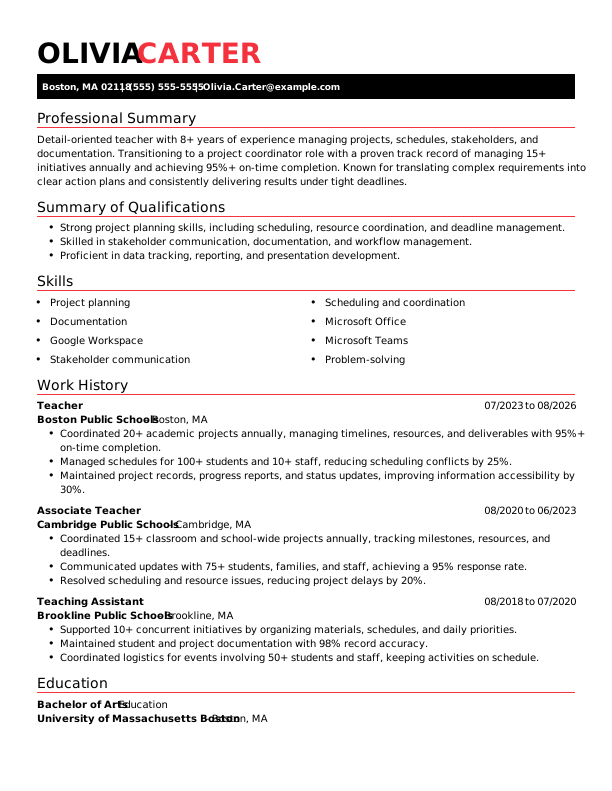
This career change resume example shows how a teacher transitioning into a project coordinator role can position experience managing schedules, coordinating activities, communicating with stakeholders, and balancing competing priorities as relevant project management skills.
Entry-Level or New Grad
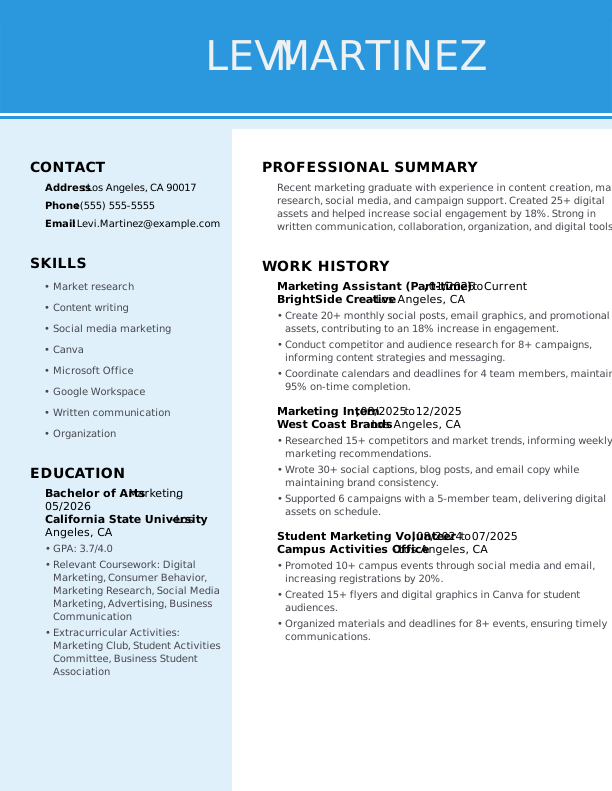
This example shows how a recent graduate applying for a marketing assistant role can draw relevant skills from education, internships, part-time work, projects, and other early-career experience.
Returning to Work After an Employment Gap
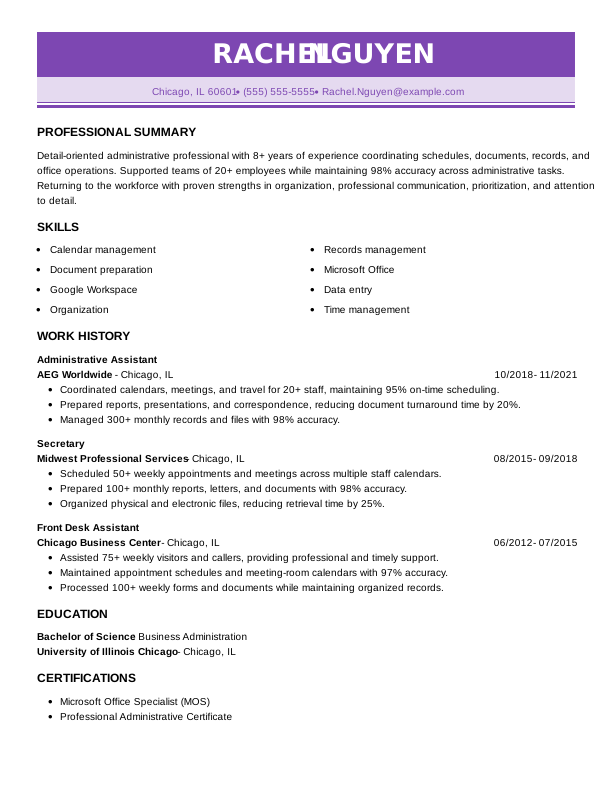
This example shows how a professional returning to the workforce after an employment gap can emphasize prior experience and transferable administrative skills when applying for an administrative assistant role.
Dos & Don’ts When Highlighting Transferable Skills on Resumes
When learning how to write a resume with transferable skills, use the job description to prioritize relevant skills, then show how you’ve applied them through your experience.
Follow these tips (and avoid these mistakes) when creating your transferable skills resume:

Do
Tailor your skills to each job. Prioritize transferable skills that match the job description and your experience.
Show skills in action. Demonstrate them through work, projects, education, or volunteer experience.
Use specific examples and measurable results. Include numbers, percentages, time frames, or other details when possible.
Use terminology employers recognize. Translate experience from your previous field into clear, relevant language.
Include relevant hard and soft skills. Pair skills such as communication and problem-solving with relevant technical or job-related abilities.

Don't
List every transferable skill you have. A targeted selection is stronger than a generic list.
Use generic buzzwords. Terms like “hardworking,” “people person,” and “go-getter” don’t show what you can actually do.
Claim skills you can’t support. Be prepared to demonstrate any skill you list.
Make employers connect the dots. Clearly explain how your previous experience applies to the target role.
Overlook experience outside paid work. Projects, coursework, internships, volunteering, and other experiences can demonstrate relevant skills.
Showcase Your Versatility With Transferable Skills
Transferable skills can help you make a stronger case for your qualifications, even when your background doesn’t follow a direct path to the role you’re targeting. Focus on the skills most relevant to the job, show how you’ve applied them through measurable accomplishments, and reinforce them throughout your resume.
A targeted resume with transferable skills can show employers why your experience—directly relevant or not—has prepared you to succeed in the role and make a meaningful contribution to their organization.
Frequently Asked Questions
How do you describe transferable skills on a resume?
You can describe transferable skills on a resume by connecting them to specific experiences, accomplishments, and results. Instead of simply stating that you have leadership or problem-solving skills, show how you’ve used those abilities in work experience, projects, education, or volunteer roles.
What are the seven transferable skills?
Seven common transferable skills are communication, teamwork, problem-solving, critical thinking, organization, adaptability, and leadership. These skills are considered “transferable” because they can be valuable across different jobs and industries.
Where do transferable skills go on a resume?
You can include transferable skills in your resume summary or objective, skills section, work experience, and additional sections such as projects, education, or volunteer experience. Include your most relevant skills in the summary/objective and skills section, then use accomplishment-focused examples throughout your experience to demonstrate how you’ve applied them.

Kirsten Chorpenning is a career advice writer who empowers job seekers to take control of their career paths using Monster’s comprehensive job search and resume tools. She specializes in helping job seekers find rewarding jobs in today’s dynamic work environment.
See More From Kirsten ChorpenningExplore Related Career Advice

Job Hugging Statistics: Nearly 9 in 10 Workers Have “Hugged” a Job

Updated:
Oct 13, 2026
|
9 min read

Nearly 3 in 10 LinkedIn Users Have Updated a Past Job After Leaving It
Updated:
Oct 7, 2026
|
7 min read

Employee Loyalty Statistics: 90% Say Companies Expect More Than They Give
Updated:
Oct 5, 2026
|
7 min read


Overqualified Hiring Stats: 57% Would Cut Resume Experience to Get Hired
Updated:
Sep 28, 2026
|
9 min read

20 First Job Interview Questions & Sample Answers: Tips to Land Your First Job
Updated:
Sep 24, 2026
|
20 min read

“Do You Have Any Questions for Me?” How to Answer in an Interview (30 Examples)
Updated:
Sep 18, 2026
|
14 min read


Manage Your Career Like an Expert
Take control of your professional journey with Monster’s expert resources. Explore advice, research, and tips to make informed decisions and advance your career with confidence.

Job Search
Discover strategies to get noticed, network effectively, and streamline your job search process.

Resumes
Get practical tips to create a resume or CV that stands out to employers and wins interviews.

Cover Letters
Learn how to craft a compelling cover letter that highlights your experience and fit for the role.

Career Paths
Explore career paths, industry trends, and growth opportunities to plan your next move.

Interviewing
Prepare for interviews with tips on answering common questions and following up effectively.

Career Development
Develop key skills and knowledge to grow in your current role or pivot to new opportunities.

Leaving a Job
Navigate job changes and career transitions with practical advice and planning resources.