
How to Write a Career Change Resume That Gets Interviews (& Examples)

Build a career change resume that highlights transferable skills, relevant training, and experience, with step-by-step tips and examples.
Updated:
|

15 min read
Table of Contents


Switching careers can feel intimidating, but the right resume can make your transition clear and appealing to employers. Strong career change resumes highlight transferable skills, relevant training, and experience to show you’re motivated, prepared, and well-suited for a switch.
In this guide, learn how to write a resume for a career change step by step, choose the best format, and review examples that show it all in practice.
What Is a Career Change Resume?
A career change resume is a resume designed to highlight transferable skills, relevant experience, and training to support a move into a new role or industry. Instead of focusing only on past job titles, it emphasizes the strengths and qualifications that apply to where you want to go next.
Career change resumes are commonly used by people who are returning to the workforce after a gap, transitioning from military to civilian roles, switching industries mid-career, or pivoting after a layoff.
Choosing the Best Resume Format for a Career Change
Choosing the right career transition resume format helps present your experience clearly and makes it easier for employers to see your potential in a new field.
Functional vs Combination vs Chronological Resumes
Each resume format presents your experience differently, so choosing the right one can make your career change clearer and more compelling to employers.
- Chronological resume: Lists your work history in reverse chronological order and works best for candidates staying in the same field with steady experience, but it can make a career change harder to explain because it emphasizes past job titles over transferable skills.
- Functional resume: Focuses primarily on skills instead of work history, though some employers are less familiar with this format, and certain applicant tracking systems (ATS) may not favor it.
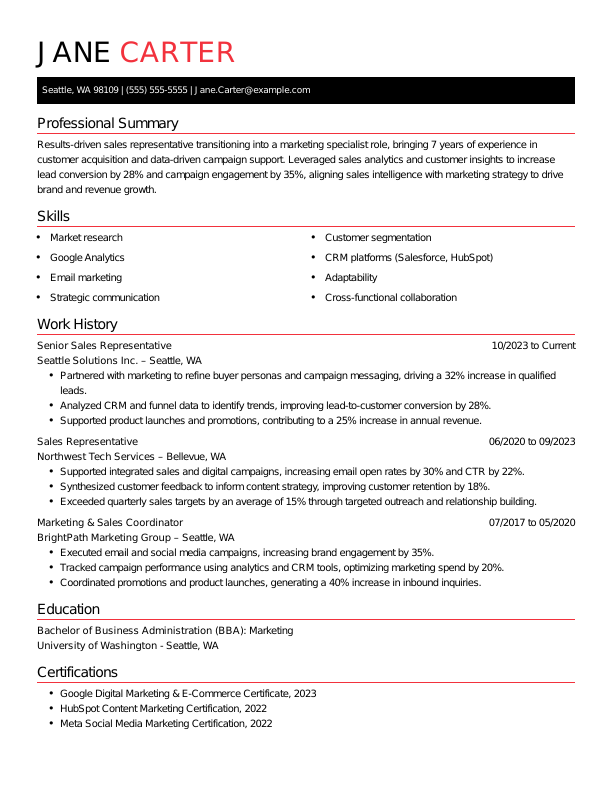
- Combination (hybrid) resume: Blends a skills-focused section with reverse-chronological work history, allowing you to highlight your skills first while still showing a clear employment timeline.
 Pro Tip
Reviewing resume templates can help you visualize how different formats organize skills, experience, and education for career changers.
Why the Combination Resume Works Best for Career Changers
The combination format is often the best choice for career changers because it allows you to write a resume that leads with relevant strengths and training while still providing enough work history to show consistency, growth, and credibility.
How to Write a Career Change Resume: 7 Steps With Examples
Explore the seven key steps below to build an impressive and effective resume for switching careers.
- Step 1:
Do Industry Keyword Research
Before jumping into resume writing, research the skills, education, and experience employers expect in your target field. This helps you understand how your background aligns and what gaps you may need to address, and it’ll shape everything from your resume summary to your skills and experience sections.
You’ll also want to learn the language employers use. Industry jargon and role-specific terms appear in job descriptions and ATS, so using the right keywords can help your resume get noticed and understood.
To complete this step, focus on a few simple actions:
- Analyze job postings. Review several openings for your target role and note repeated skills, tools, certifications, and responsibilities.
- Seek advice from your network. Connect with professionals in your desired field and ask what skills and experience matter most.
- Review industry content. Read articles, blogs, newsletters, and publications to understand trends, terminology, and expectations.
- Step 2:
Start With a Strong Professional Summary or Objective
Your professional summary or resume objective is often the first section employers read, so it should highlight transferable skills, include relevant training or certifications, and show how your background supports your new direction.
Review strong professional summary and resume objective examples below to learn the difference between the two.
Professional Summary
A professional summary is a short paragraph at the top of your resume that highlights your most relevant experience, transferable skills, and strengths. It’s best for career changers who already have related experience or clearly transferable skills that support their new direction.
Example:
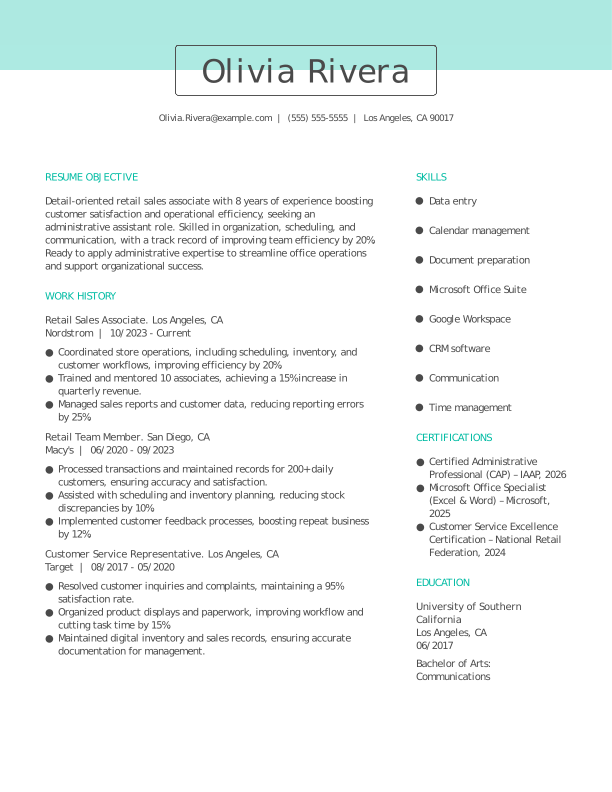
Detail-oriented operations leader with 6+ years of retail management experience overseeing teams, scheduling, and daily operations in high-volume environments. Known for improving workflows, maintaining organized records, and delivering strong customer experiences while supporting business goals. Bringing established administrative, communication, and coordination skills to an office administration role.
Resume Objective
A resume objective is a brief statement that explains your career goals and what you’re aiming to do next. It’s best for candidates early in a career transition or entering a new field with limited direct experience.
Example:
Marketing coordinator transitioning into data analytics after completing recent coursework in Excel, SQL, and data visualization. Seeking an entry-level data analyst role where strong analytical thinking, reporting experience, and newly developed technical skills can support data-driven decision-making and continued professional growth.
- Step 3:
Highlight Your Skills Strategically (Transferable First)
When changing careers, it’s important to effectively represent soft skills vs hard skills and transferable skills to help employers see both your technical abilities and the strengths that carry into a new field.
In your skills section, start with transferable skills, then add relevant hard and soft skills that support your new direction.
Transferable Skills
Transferable skills are abilities that carry from one job or industry to another. Lead with transferable skills to help hiring managers quickly see how your experience connects to the role you want.
Examples:
- Communication and presentation
- Project coordination and organization
- Leadership or team support
- Problem-solving and decision-making
- Time management and prioritization
Hard Skills
Hard skills are measurable, job-specific abilities. Include any new certifications, coursework, or training that show you’re building the technical skills required for your target role.
Examples:
- Microsoft Office or Google Workspace
- Data analysis or reporting tools
- CRM or database management systems
- Bookkeeping, payroll, or scheduling software
- Industry certifications or technical training
Soft Skills
Soft skills are personal and interpersonal strengths that shape how you work with others and approach tasks. Integrate these into your professional summary and bullet points to show how you solve problems, lead teams, or manage projects in any environment.
Examples:
- Adaptability
- Collaboration and teamwork
- Attention to detail
- Initiative and accountability
- Critical thinking
Before & After Transferable Skills Examples
To make your skills feel relevant, mirror the language used in your target field. Show how responsibilities from your previous role connect directly to what employers need now.
The examples below illustrate how to mirror your experience for common career change scenarios.
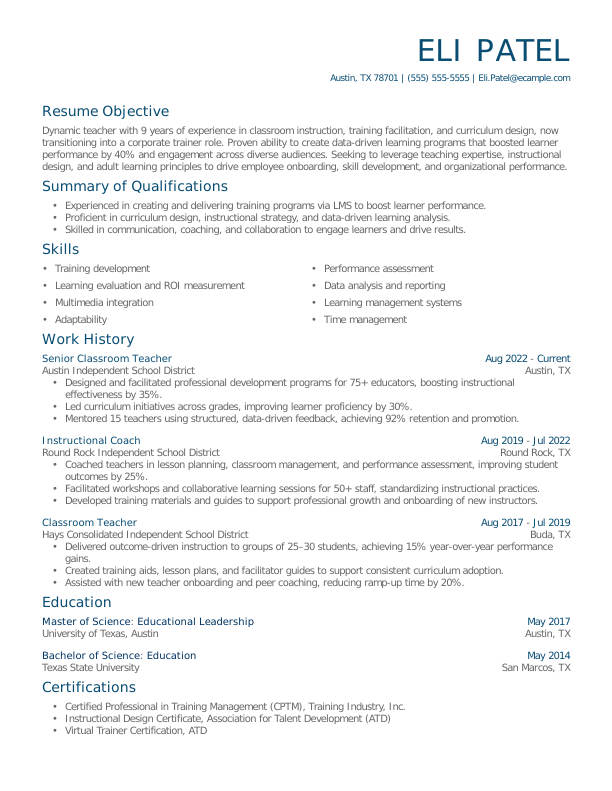
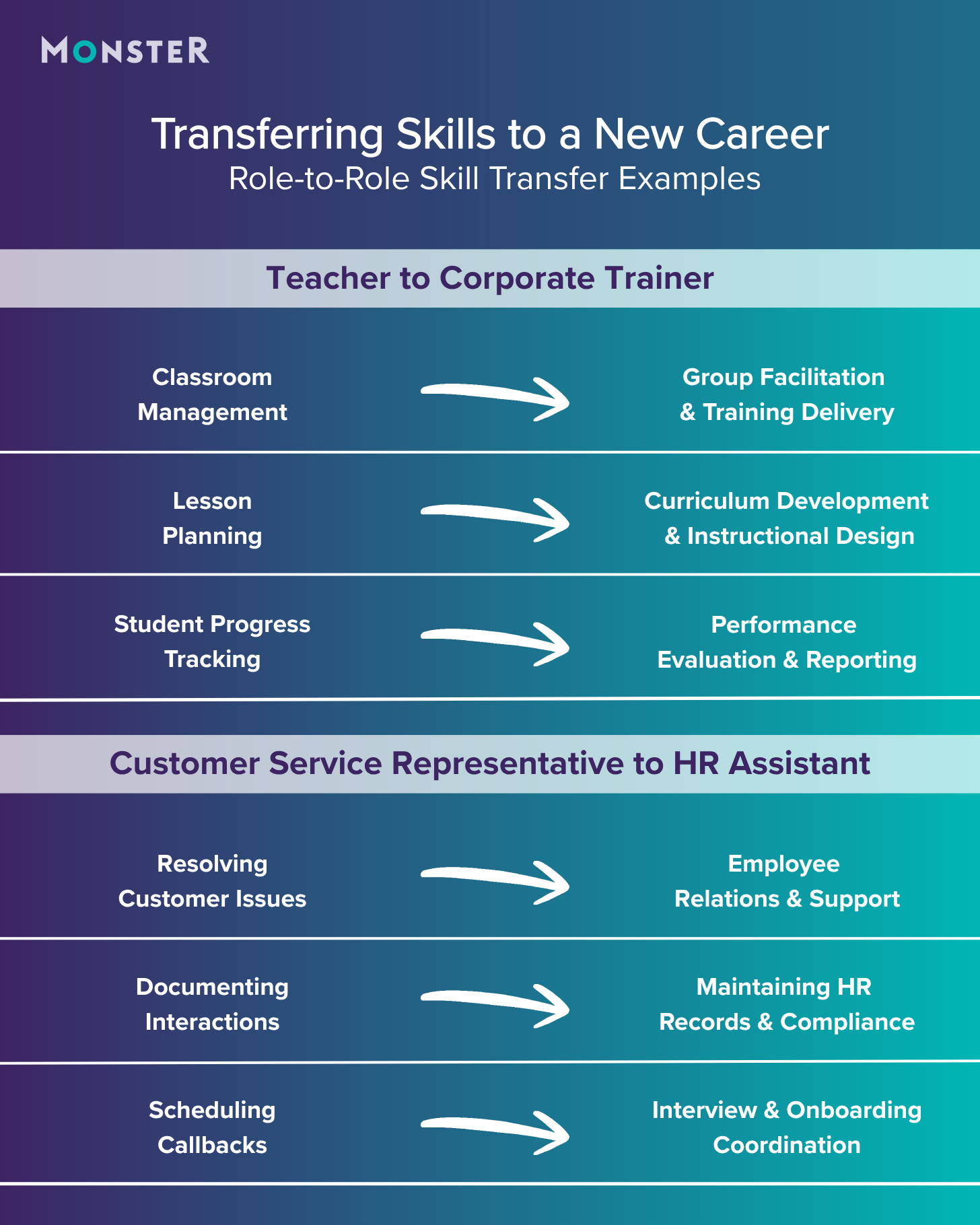 Teacher to Corporate Trainer
- Classroom management → Group facilitation and training delivery
- Lesson planning → Curriculum development and instructional design
- Student progress tracking → Performance evaluation and reporting
Customer Service Representative to HR Assistant- Resolving customer issues → Employee relations and support
- Documenting interactions → Maintaining HR records and compliance
- Scheduling callbacks → Interview and onboarding coordination
- Step 4:
Write Work Experience That Supports Your New Direction
Your work experience section should reinforce your career change by focusing on responsibilities and achievements that connect to your target role.
Instead of listing every past duty, highlight transferable skills, relevant projects, and measurable results that show how your experience applies to your new field.
Even if your previous roles were in a different field, framing your experience strategically helps employers see how your background supports your next move.
Example: Career Changer Work Experience Section
Below is an example of the work experience section for someone moving from a corporate role (software sales) into a more technical role (software development).
Work ExperienceTechnical Projects and Freelance Development
Self-Employed, Independent Work, Boulder, CO | 2024–Present- Completed coursework in Python, JavaScript, SQL, and front-end development through online training programs.
- Built responsive web applications and small automation tools to strengthen programming and problem-solving skills.
- Developed scripts to automate data cleanup and reporting processes, improving efficiency and accuracy.
- Maintained a GitHub portfolio showcasing coding projects, documentation, and version control experience.
Senior Software Sales Representative
Cloud Systems LLC, Boulder, CO | 2020–2024- Exceeded annual sales targets by 115%–130% by consulting with clients to understand technical needs and recommend SaaS solutions.
- Led product demos and technical walkthroughs explaining software functionality, integrations, and system architecture.
- Partnered with product and engineering teams to communicate customer feedback and support feature improvements.
- Built CRM dashboards and reports to analyze pipeline performance and customer trends.
- Supported implementation teams during onboarding and troubleshooting to ensure successful product adoption.
Software Sales Representative
Software Building Co., Boulder, CO | 2017–2020- Managed full sales cycle for cloud-based software solutions from prospecting through implementation.
- Translated complex technical product features into clear business value for clients and stakeholders.
- Collaborated with developers and product managers to address client feedback and improve user experience.
- Documented technical issues and feature requests to support product updates and internal tracking.
- Analyzed customer usage data to identify trends, improve retention, and support account growth.
- Step 5:
Add Certifications, Training, & Continuing Education
Certifications, courses, and ongoing training can help bridge experience gaps and show commitment to your new career path.
Create a dedicated section for certifications or professional development so employers can quickly see your progress. You can list completed credentials, coursework, industry workshops, or technical training that aligns with your target role.
If you’re currently completing training, list it as in progress to demonstrate momentum and initiative.
Example: Career Changer Certifications & Training Section
This is an example of a certifications and professional development section for a marketing professional transitioning to a data analyst role.
Certifications & Professional Development- Google Data Analytics Certificate, Coursera (In Progress, expected 2026)
- Advanced Excel for Business Analytics, LinkedIn Learning (Completed 2025)
- SQL Fundamentals for Data Reporting, Udemy (Completed 2025)
- Data Visualization With Tableau, Coursera (Completed 2024)
- Step 6:
Update Your Education Section for a Career Transition
Your resume education section should highlight any degrees, coursework, or academic achievements that support your new direction. If your degree isn’t directly related to your target field, include relevant coursework, projects, or certifications that connect your education to the role you want.
You can also move education higher on your resume if it strengthens your candidacy, especially when recent training or credentials are central to your career change.
Example: Career Changer Education Section
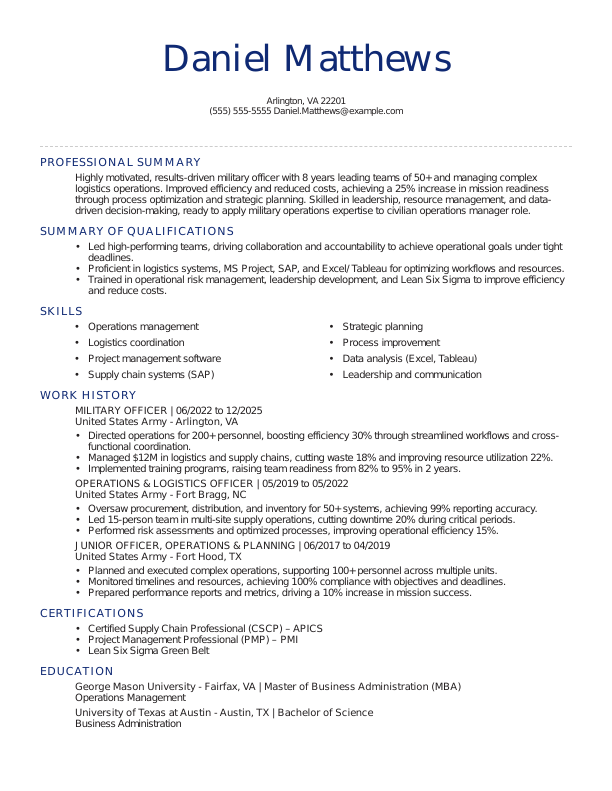
Below, you’ll find an example for an army communications specialist transitioning to a civilian IT support specialist role.
EducationAssociate of Applied Science in Information Technology, Central Texas College | 2022
- Relevant Coursework: Network Fundamentals, Cybersecurity Basics, Systems Troubleshooting, Help Desk Support
Military Training
U.S. Army Signal School: Information Technology Specialist (25B) | 2019–2021
- Training included network setup and maintenance, systems security protocols, hardware troubleshooting, and technical support for end users.
- Step 7:
Proofread
Carefully proofread your resume for spelling, formatting, and clarity to ensure it looks polished and professional before submitting. Even small errors can distract employers and take attention away from your skills and experience.
Pro Tip
For best results, proofread after a break from writing, use a free online writing assistant like Grammarly, or ask a friend or family member to review your resume for a fresh set of eyes.
Dos and Don’ts: What to Put on a Resume When Changing Careers
For a quick overview of what to include and avoid, review the career change resume dos and don’ts below to avoid common pitfalls and position your experience in a way that feels relevant, intentional, and aligned with your target role.
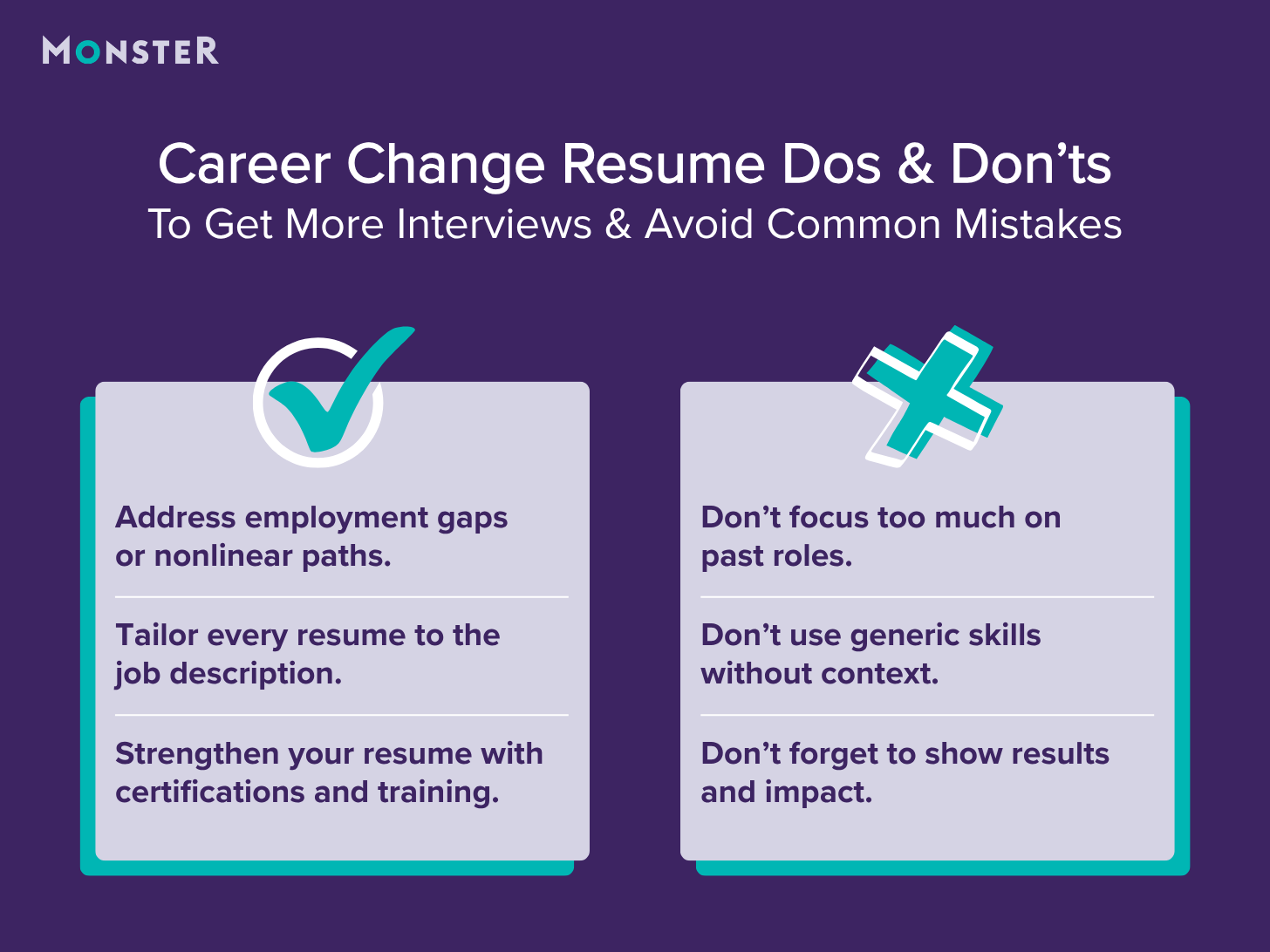

Career Change Resume Dos: 3 Ways to Get More Interviews
u003cstrongu003eAddress u003c/strongu003eu003ca href=u0022https://www.monster.com/career-advice/resume/how-to-explain-employment-gapsu0022u003eu003cstrongu003eemployment gapsu003c/strongu003eu003c/au003eu003cstrongu003e or nonlinear pathsu003c/strongu003e. Briefly explain gaps or shifts in your career while highlighting what you learned, gained, or developed during that time.
u003cstrongu003eTailor every resume to the job descriptionu003c/strongu003e. Customize each resume you submit by aligning your skills, keywords, and experience with the specific role to show clear relevance.
u003cstrongu003eStrengthen your resume with certifications and trainingu003c/strongu003e. Add recent coursework, certifications, or training that support your new direction and show commitment to skill development.

Career Change Resume Don’ts: 3 Common Mistakes to Avoid
u003cstrongu003eDon’t focus too much on past rolesu003c/strongu003e. Avoid centering your resume on unrelated responsibilities; highlight transferable skills and accomplishments that support your new path.
u003cstrongu003eDon’t use generic skills without contextu003c/strongu003e. Pair broad skills like communication or leadership with specific examples or results to demonstrate how you’ve applied them.
u003cstrongu003eDon’t forget to show results and impactu003c/strongu003e. Whenever possible, include u003ca href=u0022https://www.monster.com/career-advice/resume/how-to-write-accomplishments-on-resumeu0022u003emeasurable outcomesu003c/au003e or clear contributions so employers can see the value you’ve delivered in previous roles.
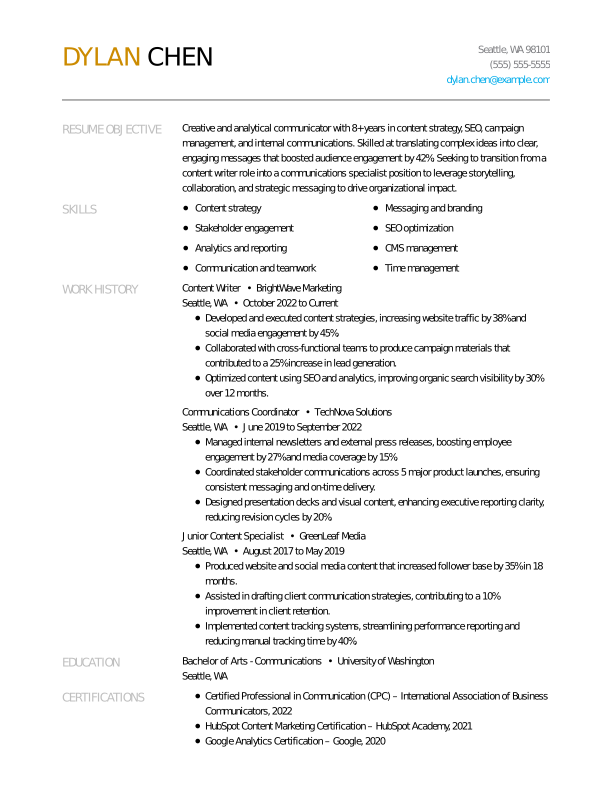
5 Career Change Resume Examples by Industry
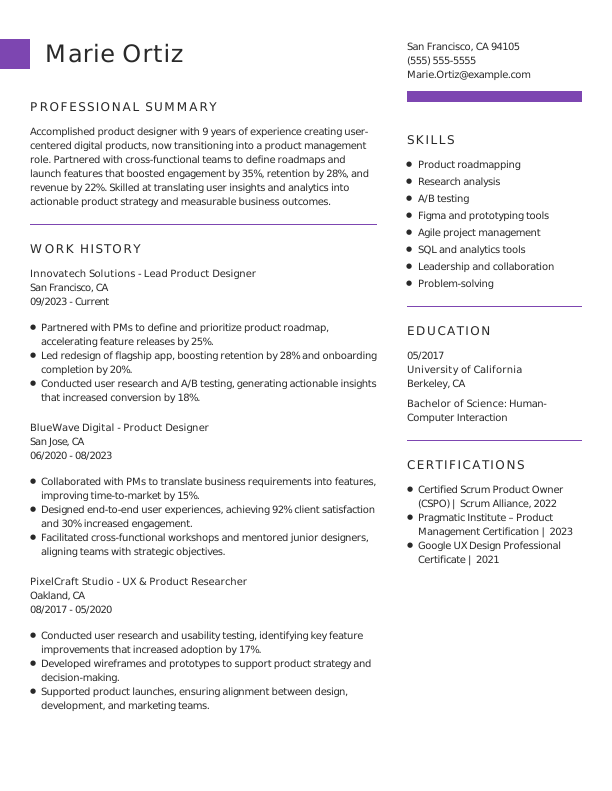
Explore examples of common career change paths and resumes that effectively show how transferable skills and experience can support a new direction.
The Next Step: Writing a Career Change Cover Letter
Knowing how to write a cover letter is especially important when changing careers because it gives you space to explain your transition and connect your experience to the role you want next.
While your resume focuses on skills and results, your cover letter is where you can briefly explain your motivation and show employers why you’re making the shift.
Start your cover letter with a short career change statement that connects your previous experience to your new direction.
Example:
After five years in retail management, I’m transitioning into office administration to apply my experience with scheduling, operations, and customer support in a more administrative-focused role.
To explain your career change professionally, keep your tone positive and focused on growth rather than dissatisfaction with your current role.
Example:
I’m excited to shift my career toward data analytics after completing recent training in Excel and SQL, and I’m eager to apply my analytical and reporting experience in a dedicated analyst role.
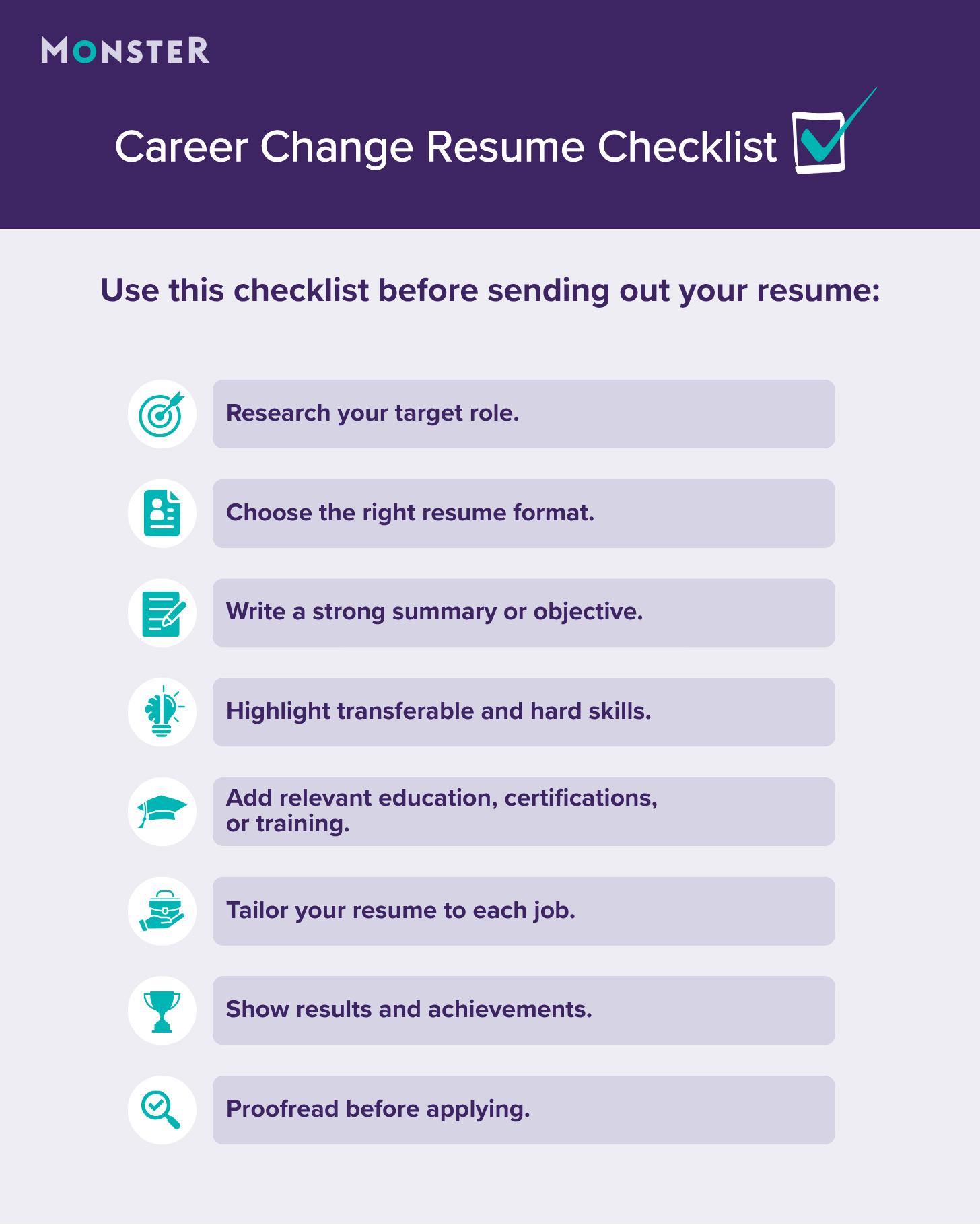
Career Change Resume Checklist
Use this quick checklist before sending out your resume:
Research your target role.
Choose the right resume format.
Write a strong summary or objective.
Highlight transferable and hard skills.
Add relevant education, certifications, or training.
Tailor your resume to each job.
Show results and achievements.
Proofread before applying.
Change Careers With Your New Resume
Changing careers can feel like a big step, but a clear, well-structured resume makes it easier for employers to see your potential. Monster’s Resume Builder helps job seekers organize their experience, highlight transferable skills, and create tailored resumes for new roles or industries.
Stay consistent, keep refining your materials, and trust the process as you look for a new job.

Kirsten Chorpenning is a career advice writer who empowers job seekers to take control of their career paths using Monster’s comprehensive job search and resume tools. She specializes in helping job seekers find rewarding jobs in today’s dynamic work environment.
See More From Kirsten ChorpenningExplore Related Career Advice

Overqualified Hiring Stats: 57% Would Cut Resume Experience to Get Hired

Updated:
Sep 28, 2026
|
9 min read

20 First Job Interview Questions & Sample Answers: Tips to Land Your First Job
Updated:
Sep 24, 2026
|
20 min read

“Do You Have Any Questions for Me?” How to Answer in an Interview (30 Examples)
Updated:
Sep 18, 2026
|
14 min read



20 Companies That Pay 100% Health Insurance & Other Top Benefits
Updated:
Sep 10, 2026
|
14 min read


How Long of a Commute Is Too Long? 49% Have Turned Down a Job Due to the Commute
Updated:
Sep 8, 2026
|
11 min read

Manage Your Career Like an Expert
Take control of your professional journey with Monster’s expert resources. Explore advice, research, and tips to make informed decisions and advance your career with confidence.

Job Search
Discover strategies to get noticed, network effectively, and streamline your job search process.

Resumes
Get practical tips to create a resume or CV that stands out to employers and wins interviews.

Cover Letters
Learn how to craft a compelling cover letter that highlights your experience and fit for the role.

Career Paths
Explore career paths, industry trends, and growth opportunities to plan your next move.

Interviewing
Prepare for interviews with tips on answering common questions and following up effectively.

Career Development
Develop key skills and knowledge to grow in your current role or pivot to new opportunities.

Leaving a Job
Navigate job changes and career transitions with practical advice and planning resources.