
How to List Publications on Resumes or CVs: Templates & Examples

Explore citation formats, placement options, examples, and templates to present your publications and impress hiring managers.
Updated:
|

13 min read
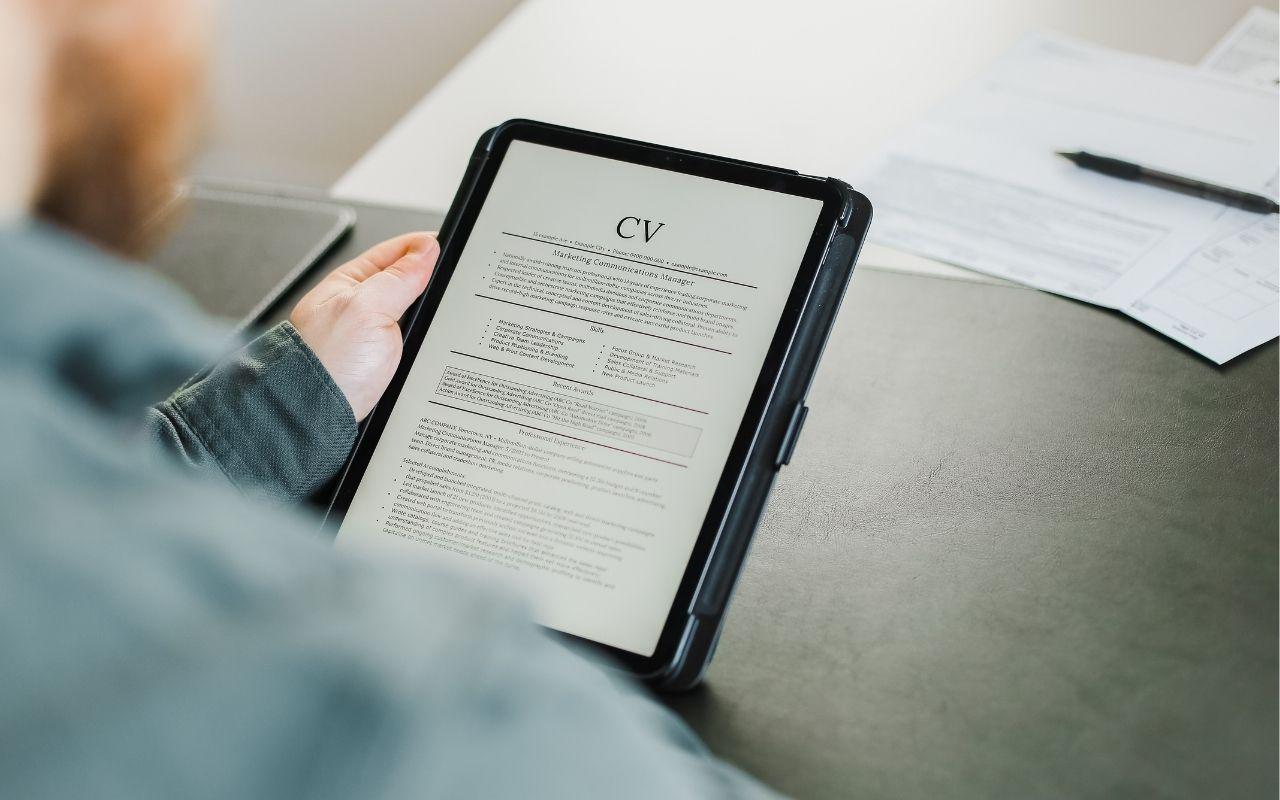
Table of Contents


To list publications effectively, use consistent formatting, clear citations, and a careful selection of relevant works to strengthen your resume instead of cluttering it.
This guide will cover:
- When to include publications on a resume or CV, which ones to list, how many to include, and where to place them
- How to list publications on resumes and choose a citation style with templates and examples
- Tips for handling special cases, such as multiple authors, works in progress, and presentations
- 20+ examples of publications sections across different fields
When to Include Publications on a Resume or CV
You should include a publications section on your resume or CV when your published work demonstrates your expertise, research contributions, or professional credibility.
Include publications on a resume if:

You’re applying for academic, research, or scientific positions.
The role involves writing, publishing, or thought leadership.
Conference papers and proceedings
Your publications show expert knowledge in a field relevant to the job.
The work was published in reputable journals, books, conference proceedings, or industry publications.
Which Publications to Include on a Resume or CV
Publications can take many forms depending on your field. The most appropriate types to include are those that demonstrate expertise, research contributions, or industry influence, including:
Peer-reviewed journal articles
Books and book chapters
Conference papers and proceedings
Trade publications
Industry articles
Scholarly articles
Research reports
 Pro Tip
When relevant, you can also include a digital object identifier (DOI), portfolio link, or URL to an online version of the publication, especially on a CV or resume. When linking to online versions, you can either include a hyperlink on the publication title (recommended for digital resumes) or add the full URL at the end of the citation. Ensure links are active and direct the reader to the correct publication page.
How Many Publications to Include
The number of publications you include depends on the type of document you’re creating.
- On a resume: Include three to five of your most relevant publications. If you have a long publication history, you can also use a “Selected Publications” section on your resume and provide a full list elsewhere, such as a CV or professional website.
- On a CV: List all publications, especially if you’re a researcher, professor, or graduate student building an academic track record.
Pro Tip
For digital resumes, consider hyperlinking your publication titles to the online version when possible. On a one-page resume, include only three to five of your most relevant publications; less critical works can go on a CV, personal website, or LinkedIn profile.
What Not to Include
To keep your publications section focused and credible, avoid including items that don’t clearly demonstrate expertise or professional contribution, such as:

Unpublished school assignments or class papers
Personal blog posts or informal writing that aren’t relevant to the role
Work published on low-credibility platforms without editorial review
Outdated publications that no longer reflect your current expertise
Where to Put Publications on Resumes or CVs
Publications are typically listed in their own section titled “Publications,” which usually appears after your work experience and education sections. Placement can vary depending on how important the publications are to your qualifications.
Publications can appear on both resumes and CVs, but the number included and where they appear often depend on the type of document.
Here’s how to list publications on CVs vs resumes:
| Type | Placement |
| Resume | Usually listed in a “Publications” section after work experience and education. Highly relevant publications may also appear in the professional summary. If you only have one or two, they can be included in the resume education section or a “Projects” section. |
| CV | Often placed much higher on the document, sometimes directly after the education section, to emphasize research contributions, scholarly impact, and the scope of your academic or professional publishing record. |
Example of fewer than three publications in the education section:
MS Environmental Science, University of Washington, 2022
Selected Publications:
- Smith, J. “Urban Climate Adaptation Strategies.” Journal of Environmental Policy, 2022.
- Chen, L. “Sustainable Infrastructure Trends.” Urban Development Review, 2021.
Example of compact, one-line entry in the education section:
BA English Literature, Duke University, 2020. Selected Publication: Smith, J. “Narratives of Urban Development in Modern Literature,” Journal of Cultural Studies, 2020.
How to List Publications on Resumes & CVs: Templates & Examples
Publications should be listed in reverse-chronological order and follow a clear, consistent format so readers can quickly identify the author, title, source, and year. The exact structure may vary by field, and the format you use often depends on where you’re applying.
Pro Tip
The most important rule is consistency. Once you choose a citation style or simplified format, use the same structure for every publication listed on your resume.
Professional Citation Styles
If you’re applying for academic, research, or scholarly positions, it’s best to use the formal citation style commonly used in your discipline. Hiring committees often expect publications to appear in the same format used in academic journals.
Common citation styles include the American Psychological Association (APA), Modern Language Association (MLA), Chicago Manual of Style, and Institute of Electrical and Electronics Engineers (IEEE).
This chart shows how to cite publications on resumes and CVs professionally:
| Citation Style | Often Used In | Template | Example |
| APA | Social sciences, psychology, education | [Last Name, First Initial]. ([Year]). [Title of Article]. [Journal or Publication Name]. | Smith, J. (2023). Advances in Climate Modeling. Journal of Environmental Science. |
| MLA | Humanities and literature | [Last Name, First Name]. “[Title of Article].” [Journal or Publication Name, Year]. | Smith, John. “Advances in Climate Modeling.” Journal of Environmental Science, 2023. |
| Chicago | History, publishing, journalism | [Last Name, First Name]. [Year]. “[Title of Article].” [Journal or Publication Name]. | Smith, John. 2023. “Advances in Climate Modeling.” Journal of Environmental Science. |
| IEEE | Engineering and technical fields | [First Initial]. [Last Name], “[Title of Article],” [Journal or Publication Name, Year]. | J. Smith, “Advances in Climate Modeling,” Journal of Environmental Science, 2023. |
Simple Citation Format
Outside of academia, you can use a simplified citation format that still includes the key publication details. This keeps the resume easy to read while showing where your work appeared.
A common simplified format includes the author name, publication title, source, and year.
Patel, R. “AI Applications in Healthcare.” Health Technology Review, 2022.
Special Circumstances for Listing Publications on Resumes
The sections below explain how to handle special cases, such as multiple authors, publications in progress, and presentations, so you can clearly and accurately highlight your work when you create a resume or write a CV.
How to List Publications With Multiple Authors
Always list multiple authors in the same order as the original publication and help the reader quickly identify your contribution. This maintains credibility and clarity, especially for collaborative research. You can bold your name for emphasis or use “et al.” for long author lists.
Multiple authors example:
Chen, L., Smith, J., & Patel, R. “Machine Learning Applications in Medical Diagnostics.” Journal of Data Science, 2023.
Long list of authors example:
Smith, J., Chen, L., Patel, R., et al. “Collaborative Climate Modeling Approaches.” Environmental Research Journal, 2021.
How to List Publications in Progress
In some situations, like if you want to list forthcoming book publications on CVs, it can make sense to include work that has not yet been published. This is most common in academic, research, or graduate-level roles, where hiring committees often expect to see ongoing research activity.
You may consider listing unpublished work if:
- The manuscript has been accepted for publication.
- The work is currently under peer review.
- The publication is highly relevant to the role or research area.
Avoid listing early drafts, class projects, or unfinished work that has not been submitted or formally reviewed.
When listing unpublished work, include a status at the end of the citation, such as:
- Under review
- Accepted for publication
- In press
- Forthcoming
Many candidates italicize these status notes to distinguish unpublished work from fully published entries.
Example 1:
Smith, J. “Urban Climate Adaptation Strategies.” Manuscript under review.
Example 2:
Patel, R. “Advances in AI Applications.”Accepted for publication.
Example 3:
Nguyen, T. “Smart City Innovations.” Forthcoming.
How to List Presentations vs Publications
Presentations and publications are closely related but represent different types of professional contributions.
- Publications refer to written work formally published in journals, books, conference proceedings, or professional outlets. These works typically undergo editorial review or peer evaluation before publication.
- Presentations refer to talks or research findings delivered at conferences, seminars, or professional events.
If you have both, it’s usually best to list them in separate sections, such as “Publications” and “Presentations.”
Example:
- Smith, J. “Climate Policy and Urban Planning.” Journal of Environmental Policy, 2023.
- Chen, L. “Sustainable Infrastructure Trends.” Urban Development Review, 2022.
Presentations
- “Green Infrastructure Planning,” American Planning Association Annual Meeting, 2022.
- “Urban Climate Adaptation Strategies,” International Environmental Conference, 2023.
20+ Publications on Resume Examples by Field
How to list publications on resumes will often depend on your industry and the types of work typically published in that field. The examples below show how publications sections might appear across different disciplines, including how to list research publications on resumes, along with the citation styles and formats most commonly used.
Science & Research Publications
For those wondering how to list scientific publications on resumes, including medical and research roles, it’s usually best to use a formal citation style, such as APA or IEEE. These fields commonly follow structured academic formatting.
Example 1:
Chen, L., Smith, J., & Patel, R. (2023). “Machine Learning Approaches to Medical Diagnostics.” Journal of Medical Data Science.
Example 2:
J. Smith, “Collaborative Climate Modeling Approaches,” Environmental Research Journal, 2022.
Example 3:
Patel, R., Chen, L., et al. (2021). “Urban Climate Adaptation Strategies.” International Journal of Environmental Research.
Humanities Publications
Humanities fields often use MLA or Chicago citation styles, which emphasize the author’s full name and the title of the work.
Example 1:
Smith, John. “Narratives of Urban Development in Modern Literature.” Journal of Cultural Studies, 2022.
Example 2:
Williams, Sarah. 2021. “Public Memory and Historical Identity.” American Historical Review.
Example 3:
Garcia, Elena. “Language and Identity in Contemporary Poetry.” Modern Humanities Quarterly, 2023.
Professional Writing Publications
For writing, journalism, or editorial roles, publications are often listed using a simplified citation format that highlights the article title and outlet.
Example 1:
Patel, R. “The Future of AI in Healthcare.” Health Technology Review, 2023.
Example 2:
Nguyen, T. “Sustainable Cities and Smart Infrastructure.” Urban Development Magazine, 2022.
Example 3:
Chen, L. “Why Data Literacy Matters in Modern Business.” Business Insights, 2021.
Business & Corporate Publications
In business or corporate environments, publications often include white papers, industry reports, or thought leadership articles.
Example 1:
Smith, J. “Trends in Digital Transformation.” Global Business Strategy Report, 2023.
Example 2:
Patel, R. “Customer Data Strategy in the Age of AI.” Marketing Leadership Quarterly, 2022.
Example 3:
Chen, L. “Operational Efficiency Through Automation.” Corporate Innovation Journal, 2021.
Technology & Engineering Publications
Technology and engineering roles often use IEEE-style or simplified technical citations, emphasizing technical papers and conference presentations.
Example 1:
J. Patel, “Distributed Systems Optimization for Large-Scale Platforms,” IEEE Computing Conference Proceedings, 2023.
Example 2:
Chen, L., & Smith, J. “Scalable Machine Learning Infrastructure.” International Journal of Software Engineering, 2022.
Example 3:
R. Nguyen, “Edge Computing Architectures for Real-Time Analytics,” IEEE Systems Journal, 2021.
Creative & Media Publications
Creative professionals may list articles, essays, creative works, or media publications using a simple format that highlights the publication outlet.
Example 1:
Garcia, E. “Visual Storytelling in Digital Media.” Creative Arts Review, 2023.
Example 2:
Smith, J. “Designing Narrative Experiences for Interactive Media.” Media Innovation Magazine, 2022.
Example 3:
Patel, R. “The Evolution of Documentary Storytelling.” Independent Film Journal, 2021.
Show Off Your Hard Work
Listing publications on a resume is really about three things: Choosing the most relevant work, placing it where it supports your experience, and formatting it clearly. Stick with the citation style used in your field and keep your formatting consistent so hiring managers can quickly see the impact of your published work.
If you want extra help pulling everything together, Monster’s Resume Builder is a resume tool that helps job seekers create polished, professional resumes with clean formatting and ATS-friendly resume templates.
With the right setup, your publications can strengthen your credibility, highlight your expertise, and help your application stand out.

Kirsten Chorpenning is a career advice writer who empowers job seekers to take control of their career paths using Monster’s comprehensive job search and resume tools. She specializes in helping job seekers find rewarding jobs in today’s dynamic work environment.
See More From Kirsten ChorpenningExplore Related Career Advice

“Do You Have Any Questions for Me?” How to Answer in an Interview (30 Examples)
Updated:
Sep 18, 2026
|
14 min read



20 Companies That Pay 100% Health Insurance & Other Top Benefits
Updated:
Sep 10, 2026
|
14 min read


How Long of a Commute Is Too Long? 49% Have Turned Down a Job Due to the Commute
Updated:
Sep 8, 2026
|
11 min read


Beauty Bias at Work Statistics: 88% Say Attractive People Have an Advantage
Updated:
Aug 31, 2026
|
8 min read

Manage Your Career Like an Expert
Take control of your professional journey with Monster’s expert resources. Explore advice, research, and tips to make informed decisions and advance your career with confidence.

Job Search
Discover strategies to get noticed, network effectively, and streamline your job search process.

Resumes
Get practical tips to create a resume or CV that stands out to employers and wins interviews.

Cover Letters
Learn how to craft a compelling cover letter that highlights your experience and fit for the role.

Career Paths
Explore career paths, industry trends, and growth opportunities to plan your next move.

Interviewing
Prepare for interviews with tips on answering common questions and following up effectively.

Career Development
Develop key skills and knowledge to grow in your current role or pivot to new opportunities.

Leaving a Job
Navigate job changes and career transitions with practical advice and planning resources.