
CV vs Resume: What’s the Difference?

Discover the key differences between CVs and resumes and learn how to choose the right document for your career goals.
Updated:
|

18 min read

Table of Contents


Most American job seekers can tell you what a resume is—after all, it’s the golden ticket to capturing the attention of hiring managers—but fewer are familiar with the curriculum vitae (CV).
In the U.S., a CV is a comprehensive record primarily used for academic, research, and medical positions, while a resume is a concise, targeted summary designed for most professional jobs. Internationally, the terms and expectations can differ, adding another layer to consider.
We’ll break down the key differences between CVs and resumes, offering expert tips to help you choose the right document and present your experience clearly and effectively.
Key Differences at a Glance
Explore the key distinctions between CVs and resumes for a quick overview of how each document is structured and used across industries and locations.
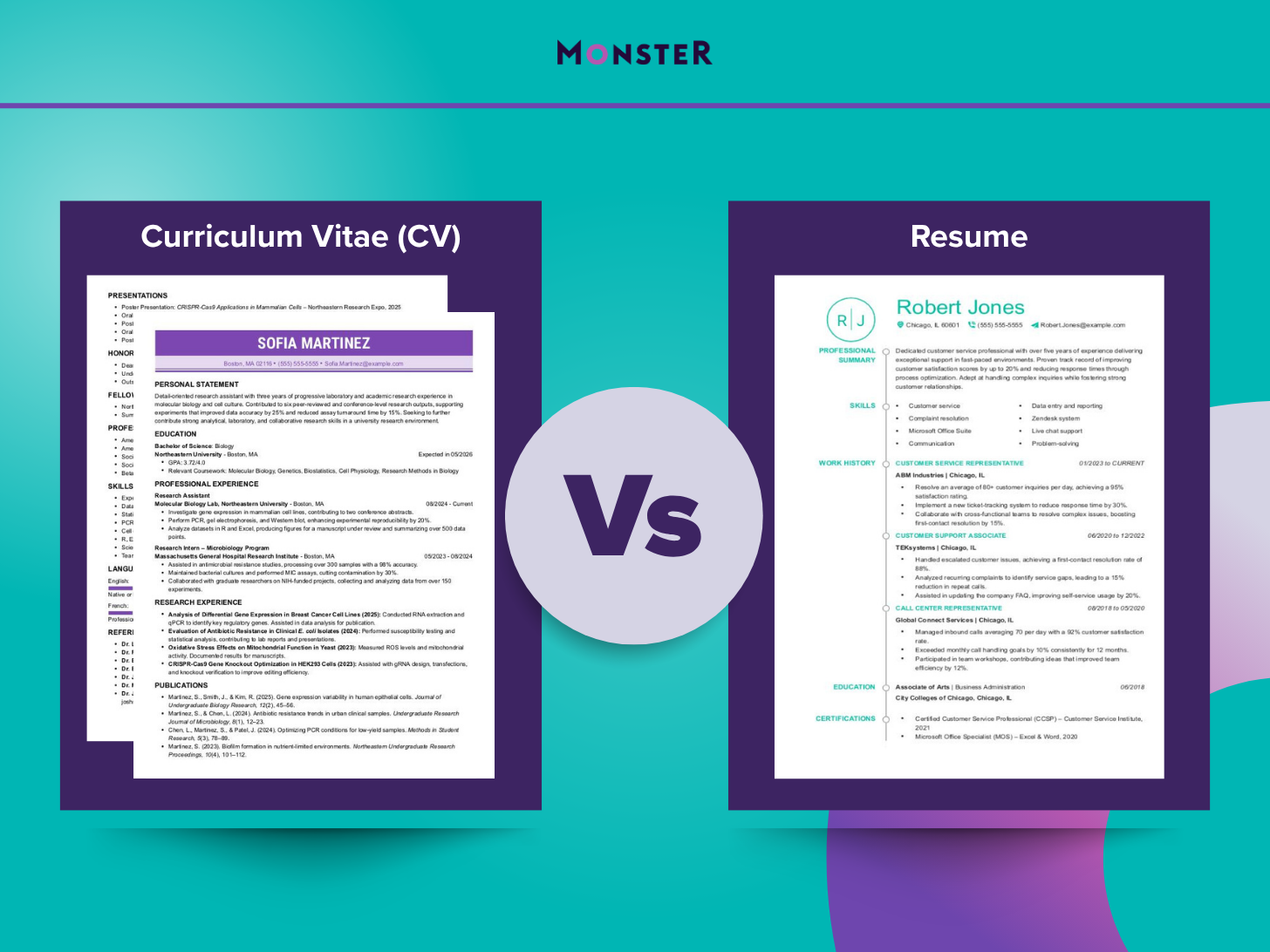
Detail
- CV: Comprehensive record of academic and professional achievements
- Resume: Concise summary of skills and experience tailored to the job
Length
- CV: Often two or more pages, with no strict page limitations
- Resume: Typically one to two pages, depending on experience
Focus
- CV: Academic accomplishments, publications, and professional contributions
- Resume: Relevant skills, measurable achievements, and job-specific experience
Purpose
- CV: Academic, scientific, medical, and research positions (U.S. and Canada)
- Resume: Professional and industry positions (U.S. and Canada)
Location
- CV: Widely used internationally in place of a resume
- Resume: Standard format for most roles in the U.S. and Canada
CV vs Resume Meaning: Geographic Variations
In different geographic locations, the words “resume” and “CV” have distinct meanings and expectations. Explore how these terms are defined and used in key regions to choose the right document and tailor your application accordingly.
In the U.S. & Canada
In the U.S. and Canada, a CV is a detailed, multi-page document primarily used for academic, research, medical, or faculty positions. It includes comprehensive information on education, research experience, publications, grants, professional service, and references.
A resume, on the other hand, is a concise, one- to two-page document tailored to a specific professional or corporate role, highlighting relevant skills, achievements, and experience.
In the UK, Europe, & New Zealand
In the UK, much of Europe, and New Zealand, a CV is the standard job application document, and the term “resume” isn’t used at all. In these regions, the term “CV” can refer to both a concise, targeted document (similar to a one- or two-page U.S. resume) and a longer, more comprehensive document for roles that require one.
Formatting expectations also differ from North American standards. In many parts of continental Europe, it is still common for CVs to include personal details, such as date of birth, nationality, marital status, or even a professional photo, although this practice is slowly declining.
In contrast, UK and New Zealand employers generally discourage applicants from including photos or personal data, aligning more closely with U.S. norms that focus on highlighting skills, experience, and qualifications rather than personal identifiers.
In Australia, South Africa, & India
In Australia, South Africa, and India, the terms “CV” and “resume” are often used interchangeably, though “resume” is a more common term for general roles in Australia.
Australian resumes are longer than U.S. resumes, often spanning two to five pages and providing detailed work history, measurable accomplishments, education, and skills.
In South Africa and India, “CV” is the more commonly used term for most job applications, whether professional or academic. These documents are generally more detailed than U.S. resumes and often include an expanded work history, certifications, and education.
What Is a CV?
A CV is a detailed document that provides a comprehensive overview of your academic background, research experience, accomplishments, and professional contributions.
While specific conventions and formatting expectations vary geographically, the core purpose when writing a CV remains the same: To showcase your qualifications and land the job.
What to Include in a CV
A CV should clearly present your qualifications and achievements while reflecting the expectations of your field and region. Explore the key components of a CV below.
Essential CV Sections
The following sections are essential for nearly all CVs, regardless of your career stage, industry, or the job you’re applying for:
- Contact information: Add your full name, phone number, email address, location (city and state), and your professional website or profile, if you have one.
- Personal statement: Write a brief paragraph at the top of your CV highlighting your expertise, career goals, and the unique skills you bring to the role.
- Work experience: List positions held, organizations, dates, and key achievements. For academic CVs, include research, lab, or teaching experience.
- Skills: Incorporate technical skills (software, lab techniques, languages) and soft skills (communication, leadership) tailored to the role.
- Education: List degrees earned, institutions, honors, and academic awards. For academic CVs, you can also include relevant coursework, thesis, or dissertation titles.
Additional CV Sections
CVs include additional sections to provide a comprehensive overview of your career history. Only add relevant sections that strengthen your application, such as:
- Publications and presentations: List peer-reviewed articles, conference papers, or other professional presentations, including your role and any notable impact.
- Grants and scholarships: Mention funding, fellowships, or scholarships awarded for academic or professional merit, highlighting the purpose and significance of each.
- Awards and honors: Highlight academic, professional, or industry-specific awards that demonstrate achievement, excellence, or recognition in your field.
- Research projects: Describe significant research experience or projects, including your role, objectives, methods, and measurable outcomes or findings.
- Volunteer work: Include community service or volunteer roles that demonstrate transferable skills, leadership, or professional engagement relevant to your career.
- Licenses and certifications: List professional licenses, technical certifications, or industry-specific credentials, noting issuing organizations and dates where relevant.
- Professional associations: Highlight memberships in professional organizations, committees, or boards, emphasizing roles, responsibilities, and contributions.
- Languages: List languages you speak and your proficiency level, especially if relevant to the role or international positions.
- References: Provide professional or academic contacts who can attest to your experience and qualifications, but only if requested by the employer.
CV Template
What Is a Resume?
A resume is a concise, one- to two-page job application document that summarizes your relevant skills, work history, and educational background.
Unlike a CV, which is lengthy and comprehensive, a resume is tailored to a specific role, focusing on the experience and achievements that make you the strongest candidate.
What to Include in a Resume
A well-crafted resume highlights your qualifications in a way that is easy for hiring managers to scan. Explore what to include in a resume to stand out to recruiters and hiring managers.
Essential Resume Sections
Here are the essential elements of a resume that provide employers with a concise, targeted overview of your skills and qualifications:
- Contact information: In your resume header, include your full name, phone number, email address, location (city and state), and professional website or profile link.
- Summary or objective statement: Write a brief, two- to four-sentence resume summary or objective highlighting your key skills and qualifications.
- Work history: List relevant positions, including your title, the company names, dates of employment, and measurable results and achievements that demonstrate your value.
- Skills: Showcase technical and soft skills directly related to the job you’re applying for, using the exact phrasing from the job description when possible.
- Education: List degrees earned and the names of the institutions. You can also include honors or coursework that are directly related to the role.
Additional Resume Sections
You can add optional sections to your resume to support your core qualifications. The information in these sections should directly relate to the role. Here are a few examples:
- Volunteer experience: Add a section for community service or volunteer roles that demonstrate transferable skills or leadership.
- Languages: List languages spoken and proficiency levels if relevant to the role in a dedicated section of your resume.
- Certifications and licenses: Include professional licenses or industry-specific certifications that are relevant to the position.
- Awards and honors: Feature industry or professional recognition that directly supports your candidacy for the position you’re applying for.
- Projects and presentations: Showcase key projects or presentations that showcase your skills or accomplishments, tailored to the job requirements.
Resume Template
Resume vs CV Examples
Explore these resume and CV examples to understand the differences in CV vs resume format and see how professionals across industries showcase their skills and experience.
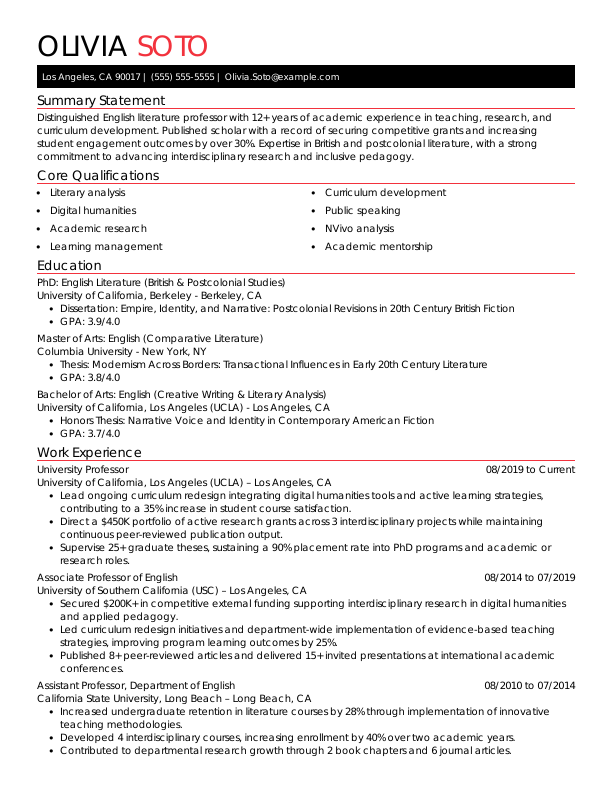
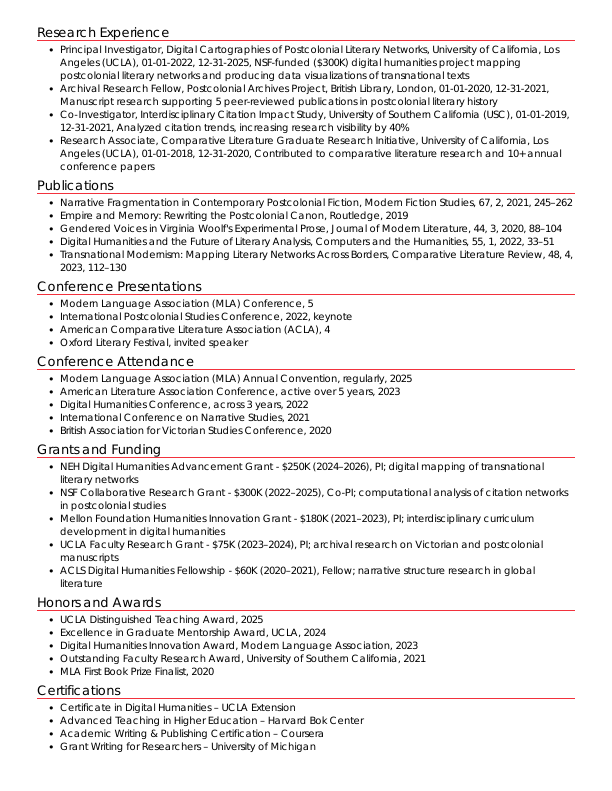
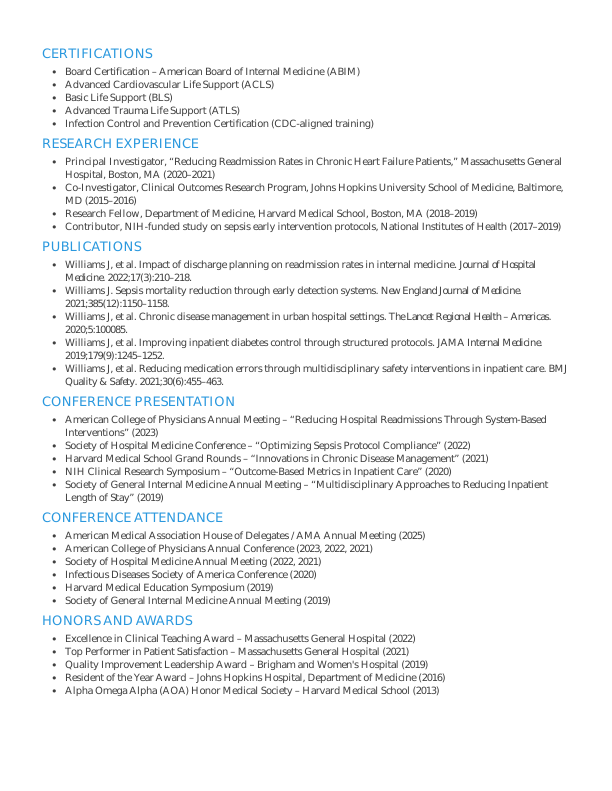
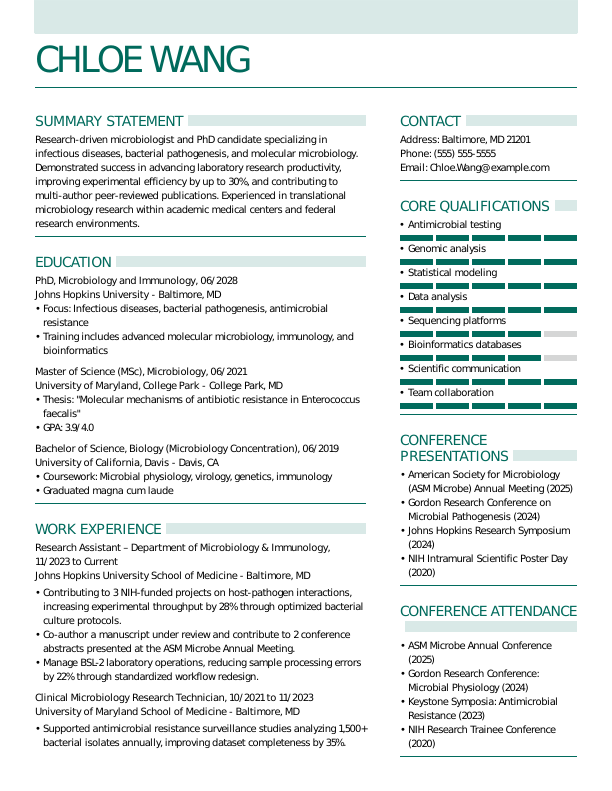
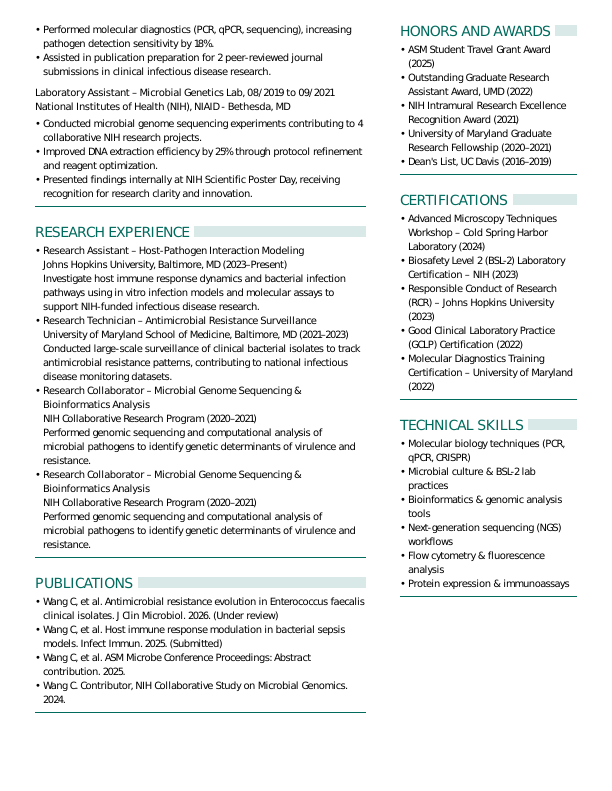
CV Examples
These CV examples illustrate how to present your academic background, professional experience, research, publications, and other achievements in a comprehensive format.
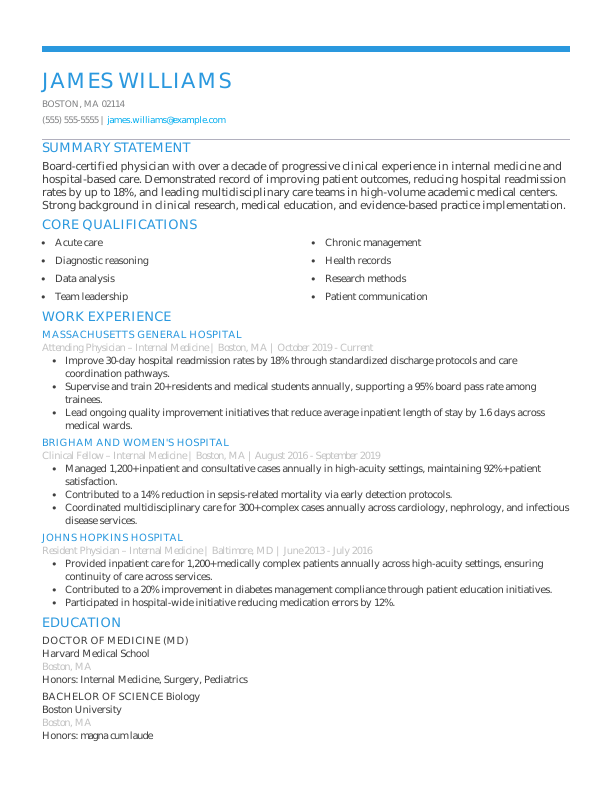
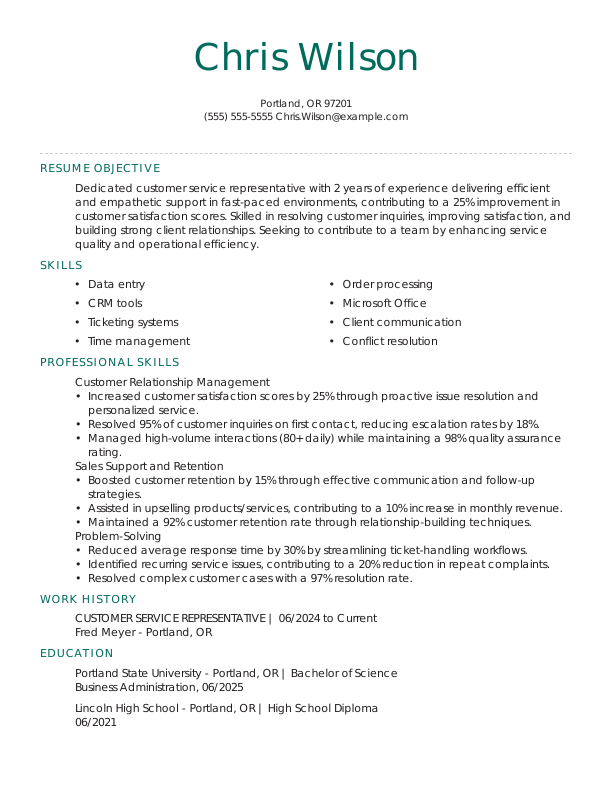
Resume Examples
The resume examples below highlight best practices for structuring content, tailoring applications to specific roles, and creating a polished document that stands out to employers.
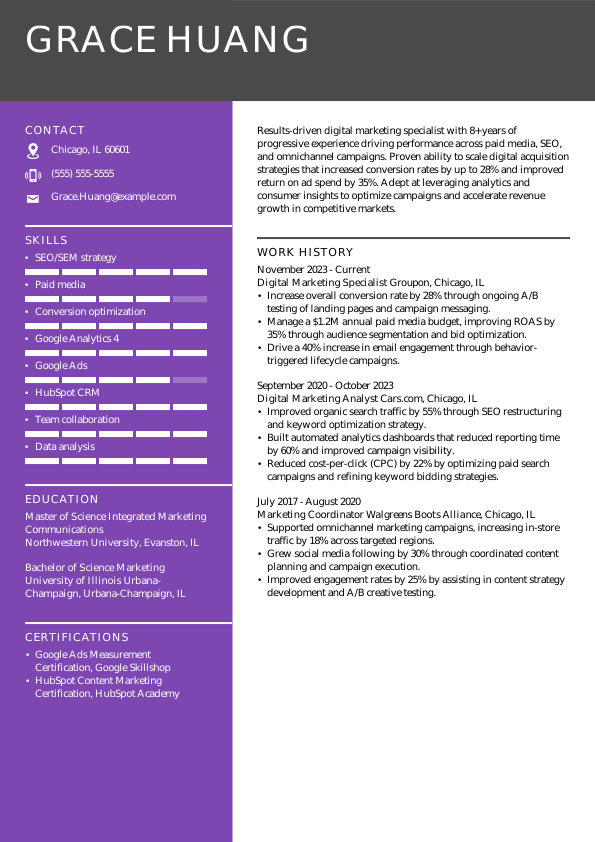
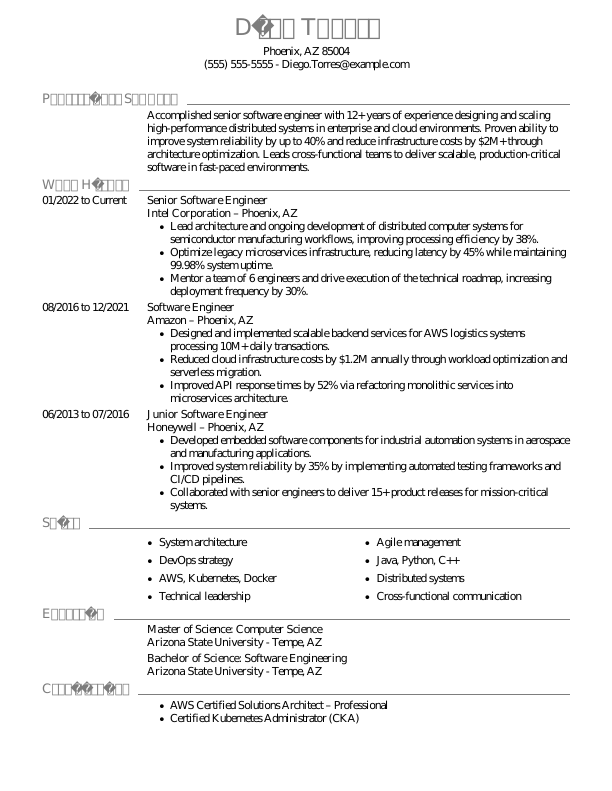
Differences Between CVs & Resumes
Although U.S. resumes and CVs both summarize your key qualifications, they serve distinct purposes and are intended for different professional contexts.
Level of Detail
CVs provide a comprehensive overview of your career, including academic achievements, research projects, publications, presentations, conferences, grants, and fellowships.
Resumes, by contrast, present a concise snapshot of your most relevant skills, accomplishments, and work experience that’s immediately applicable to the position.
For example, when writing a resume, you might highlight a single award or key project rather than an exhaustive list of all your awards, projects, and related activities.
Document Length
CVs have no strict page limit and can extend to dozens of pages, particularly for seasoned academics, researchers, or medical professionals with extensive publications and experience.
Depending on your experience level, the typical resume length is one to two pages to ensure hiring managers can quickly review your most relevant skills and achievements.
Content Focus
CVs emphasize education credentials, research, publications, and specialized knowledge or experience, as these are key areas in academia and scientific fields.
Resumes emphasize job-specific skills and relevant professional experience. For example, a marketing resume might highlight successful campaigns and client outcomes.
Customization
Resumes are highly tailored to each job, emphasizing keywords, achievements, and experiences most relevant to the specific role. For instance, the same professional might create different resumes for a project management role vs a leadership role, highlighting the skills and results that align with each position.
In contrast, CVs provide an overview of your career and are less customized for each application. While you might reorder sections or emphasize certain projects depending on the role, the majority of the content remains consistent.
Purpose
In the U.S., CVs are primarily used for scientific, academic, research, medical, and faculty positions, where detailed documentation of accomplishments is critical for evaluation.
Resumes are used for most industry, corporate, and professional roles, where the goal is to quickly and concisely demonstrate your suitability for a specific job.
Formatting
Resumes generally follow one of three standard formats (chronological, functional, or combination) designed for clarity, scannability, and impact. Bullet points, headings, and concise language make it easy for recruiters to assess your fit.
CVs are more flexible in format, allowing you to organize sections such as work experience, research, publications, and professional service in a way that best showcases your career. While the structure is adaptable, most CVs use reverse-chronological order for work and academic history to display career progression and accomplishments.
Deciding Between a Resume & a CV
Choosing between a resume and a CV depends on your career goals and the type of role you’re applying for. Follow the tips below to determine which document is right for you.
When to Use a CV
- Academic roles, such as faculty positions, lectureships, or postdoctoral appointments.
- Research positions in universities, laboratories, or scientific institutions.
- Medical roles, including residency, fellowship, or clinical research applications.
- Grant, fellowship, or funding opportunities that require a history of scholarly work.
- International positions in regions where CVs are the standard document (e.g., most of Europe, New Zealand, and parts of Asia and Africa).
When to Use a Resume
- Private-sector roles that value brevity and tailored resume content.
- Positions where employers prioritize skills, accomplishments, and relevant experience over academic history.
- Most professional, corporate, and industry jobs in the U.S. and Canada, including roles in business, marketing, finance, tech, HR, and more.
 Pro Tip
If you’re unsure which document is expected, check the job posting, employer instructions, or regional conventions. When in doubt, a well-crafted resume is typically safer for industry roles, while a CV is ideal for academic and research positions.
Crafting a Standout CV or Resume
Whether you’re preparing a CV for an academic role or a resume for a professional position, understanding the difference between CVs and resumes is key to presenting your qualifications.
Knowing these distinctions, including the key components of each document and how to choose the right one for you, is essential for creating a compelling application for any position.
You can use Monster’s professional resume templates to simplify the process of crafting a polished CV or resume that showcases your strengths and helps you secure more interviews.
Frequently Asked Questions
What’s the main purpose of a CV?
The main purpose of a CV is to provide a complete, detailed overview of your academic background, research experience, publications, and scholarly achievements.
Unlike a resume, which is concise and tailored to a specific job, a CV is comprehensive and often used for academic, research, medical, or scientific positions where evaluators need an in-depth look at your career trajectory.
Do employers want a CV or a resume?
For most industry jobs in the U.S., a concise resume is the expected application document. A CV is usually required only for positions in academic, scientific, medical, or research settings where a full record of your industry-relevant credentials and accomplishments is key.
Outside of the U.S., some employers use the term “CV” to describe what Americans call a resume, so it’s important to review the job posting closely. If the employer doesn’t specifically request a CV for an industry role, you should assume they want a resume.
How can I convert my CV into a resume?
If you currently have a CV but need a resume for non-academic job applications, you can refine and reorganize your document instead of starting from scratch.
Converting a CV to a resume involves condensing your comprehensive career history into a concise, targeted document that highlights only the most relevant skills and experience.
Start by reviewing your CV and identifying the experiences that directly align with the position you’re applying for. Focus on measurable achievements, key responsibilities, and skills rather than listing every publication, grant, or research project.
You can use Monster’s Resume Builder to organize the information into clear sections, such as contact information, professional summary, work experience, skills, and education. Resume builders are also an excellent tool for creating a new resume if you decide to start fresh.
Should my CV include a photo?
In most cases, a CV should not include a photo when applying for positions in the U.S. or Canada, as including personal images is a common resume mistake that can introduce bias.
However, in some international contexts, such as certain countries in Europe, Asia, or the Middle East, adding a professional headshot may be customary or even expected. If you’re applying internationally, research local standards before including a photo.
When in doubt, prioritize a clean, professional layout and focus on your qualifications, experience, and accomplishments rather than visual elements.

Elizabeth Muenzen is a Certified Professional Resume Writer (CPRW) and member of the Professional Association of Resume Writers & Career Coaches who empowers job seekers to take control of their career paths using Monster’s comprehensive job search and resume tools.
See More From Elizabeth MuenzenExplore Related Career Advice

Overqualified Hiring Stats: 57% Would Cut Resume Experience to Get Hired

Updated:
Sep 28, 2026
|
9 min read

20 First Job Interview Questions & Sample Answers: Tips to Land Your First Job

Updated:
Sep 24, 2026
|
20 min read

“Do You Have Any Questions for Me?” How to Answer in an Interview (30 Examples)
Updated:
Sep 18, 2026
|
14 min read



20 Companies That Pay 100% Health Insurance & Other Top Benefits
Updated:
Sep 10, 2026
|
14 min read


How Long of a Commute Is Too Long? 49% Have Turned Down a Job Due to the Commute
Updated:
Sep 8, 2026
|
11 min read

Manage Your Career Like an Expert
Take control of your professional journey with Monster’s expert resources. Explore advice, research, and tips to make informed decisions and advance your career with confidence.

Job Search
Discover strategies to get noticed, network effectively, and streamline your job search process.

Resumes
Get practical tips to create a resume or CV that stands out to employers and wins interviews.

Cover Letters
Learn how to craft a compelling cover letter that highlights your experience and fit for the role.

Career Paths
Explore career paths, industry trends, and growth opportunities to plan your next move.

Interviewing
Prepare for interviews with tips on answering common questions and following up effectively.

Career Development
Develop key skills and knowledge to grow in your current role or pivot to new opportunities.

Leaving a Job
Navigate job changes and career transitions with practical advice and planning resources.