
What Is the Best Color for Resumes? When & How to Use Resume Color Theory

Bubblegum pink and lime green are a cute combo, but they won’t get you the job. Learn which colors to use on your resume to get noticed and hired.
Updated:
|

12 min read

Table of Contents


The best color for a resume is black, dark gray, or navy blue, with optional accents like muted teal or soft purple (if used sparingly in creative fields). These colors are professional, easy to read, and widely accepted across industries.
Color can help your resume stand out—when used with purpose—but it should always support readability, not replace it. It organizes information, guides the reader’s eye, and adds a polished, modern feel. But overusing color or choosing overly bright shades can distract from your experience and hurt readability.
In this guide, you’ll learn which colors work best on resumes, how to choose the right one for your industry, and exactly how to use color in a way that looks polished, professional, and easy to scan.
Should Resumes Have Colors on Them?
Yes, resumes can include color, as long as it’s used sparingly and strategically. Subtle color choices can improve readability, highlight key sections, and make your resume easier to scan.
That said, too much color or overly bright tones can distract from your qualifications and make your resume harder to read. For most roles, sticking to neutral base colors with minimal accents is the safest and most effective approach.
Furthermore, whether or not you should use color depends largely on your industry. Here’s how expectations typically vary:
- Creative fields like marketing, design, media, or tech: Color is more accepted and often expected, especially as modern resume trends lean toward cleaner layouts with subtle visual accents. Strategic use of color, like a muted teal resume header or a subtle accent line, can show attention to detail and a sense of style without overwhelming the content.
- Traditional or formal industries like law, finance, accounting, or medicine: It’s best to keep things conservative. Black and white resumes or those with very subtle accents are the safest choice. These industries prioritize clarity, professionalism, and readability over visual design.
If you’re unsure, default to minimal color or none at all. A clean, well-structured resume will always make a stronger impression than one that relies on color to stand out.
How to Choose the Best Color for Your Resume
Choosing the best color for your resume comes down to:
- What the color communicates to employers
- What your industry expects
- How readable your resume is
Use these factors as your guide to choose the color(s) you put on your resume.
- 1.
Consider Color Psychology
The best resume colors are those that signal professionalism first (like blue, gray, or black), then subtly reflect your industry or personality. Most job seekers should prioritize neutral, easy-to-read tones over bold or expressive colors.
Color psychology refers to how different colors influence perception and how others interpret them. On a resume, color can shape how professional, trustworthy, or creative you appear at a glance.
Here’s how resume color psychology plays out across common colors and industries:
Color Family What This Color Communicates to Employers Best Industries & Roles for This Resume Color Black Professionalism, authority, formality Law, finance, accounting, government, executive roles Gray Balance, neutrality, maturity Corporate roles, operations, project management White Clarity, simplicity, organization All industries (as background and white space for readability) Red Energy, confidence, urgency Sales, leadership, fitness, performance-driven roles Orange Enthusiasm, friendliness, approachability Customer-facing roles, marketing, event planning, startups Yellow Optimism, creativity Writing, design, entrepreneurship Green Growth, stability, problem-solving Healthcare, environmental roles, nonprofits, finance Blue Trust, reliability, stability Business, tech, healthcare, education Purple Creativity, empathy, thoughtfulness Healthcare, social services, education, creative roles So, what color is most likely to get you hired? In most cases, darker, neutral tones like black, navy, and gray are the most effective because they signal professionalism and are easy to read.
- 2.
Choose Based on the Type of Industry You’re In
Figuring out what color your resume should be depends largely on your industry, since expectations around color can vary widely across different fields.
Creative Industries
In creative industries, the best resume colors are muted, modern tones that add personality without distracting from your experience. In fields like marketing, design, media, or tech, a completely black-and-white resume can feel flat, but overly bright or saturated colors can be distracting.
Instead of bright or saturated colors, use darker or muted, readable tones, such as:
- Teal or blue-green tones for a modern, clean look that works especially well in tech and digital roles
- Soft or lighter blues for a professional but more approachable feel than navy
- Muted purple tones to show creativity while still keeping your resume refined
- Burnt or toned-down orange to add energy and personality without looking too bold
- Dark or earthy greens to signal growth and innovation in a grounded, professional way
Professional Industries
In traditional industries, the best resume colors are black, white, and subtle accents like navy or dark gray. In fields like law, finance, accounting, or medicine, these colors are standard and are the most likely to be well-received.
Safe, widely accepted options include:
- Black and white if you want the safest, most widely accepted format, especially for traditional or formal roles
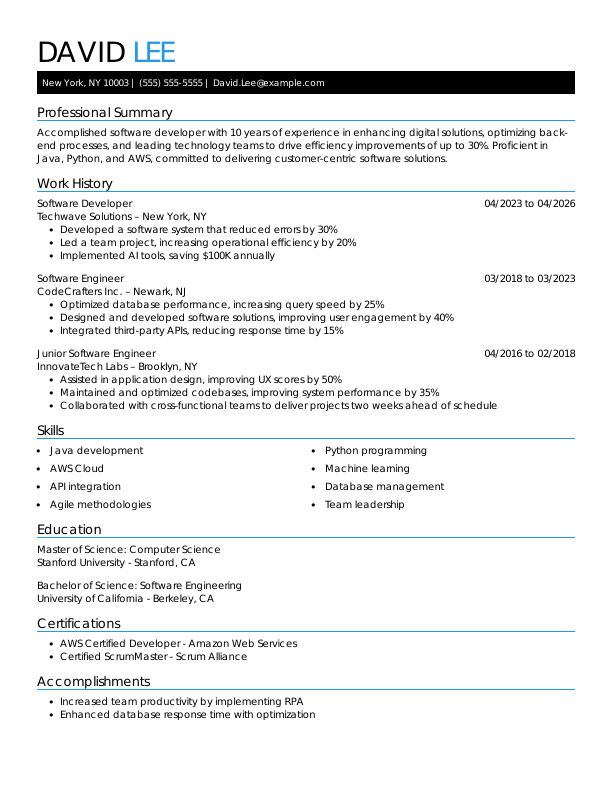
- Navy blue accents if you want a slightly more polished, modern look while remaining professional
- Dark gray or charcoal if you want a subtle variation without moving away from a neutral, conservative tone
If you’re unsure where your industry falls, it’s always safer to lean conservative and go with black and white.
- 3.
Create a Cohesive Resume Color Palette
Rather than picking colors at random, build a small, intentional palette that keeps your resume consistent and easy to scan.
To determine the best resume color scheme for you, the easiest approach is to use one main color, a lighter or darker variation of that same color, and black or dark gray for your main text.
For example, you might use teal for dividers, a darker teal for your resume headline and section headers, and charcoal for your main text.
If you want a simple starting point, here are a few proven resume color combinations based on industry:
Corporate, Finance, or Law Jobs
- Black (body text)
- Dark gray (secondary text)
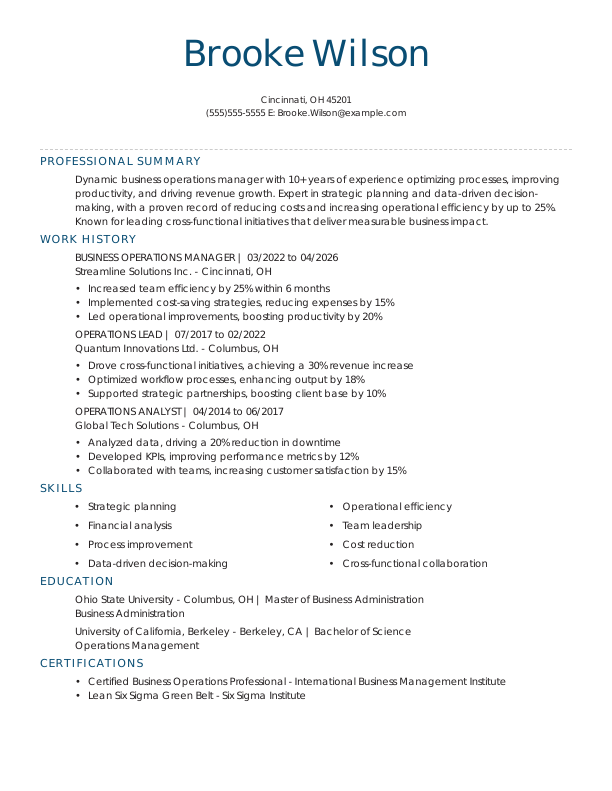
- Navy blue (headers)
Tech, Marketing, or Creative Jobs
- Charcoal (body text)
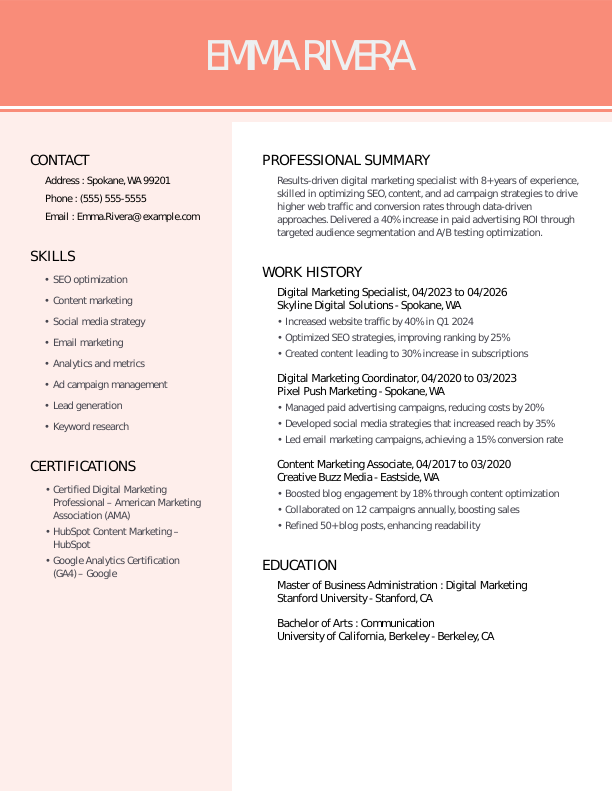
- Teal (headers and dividers)
- Light gray (secondary details)
Healthcare or Nonprofit Jobs
- Dark gray (body text)
- Forest green (headers)
- Soft gray (secondary text)
These combinations keep your resume cohesive, readable, and aligned with industry expectations.
Another simple option is to use one color for headers, gray for secondary details, and black or dark gray for your main content.
What you want to avoid is mixing multiple unrelated colors. Using teal dividers, purple headings, gray subtext, and black body text can start to feel busy and distracting. Keeping your palette tight will always look more polished and professional.
- 4.
Optimize for ATS
Color itself doesn’t affect how an applicant tracking system (ATS) parses your resume. You won’t be rejected just for using blue instead of black.
What can cause issues is how color is used. Complex elements like graphics, icons, text boxes, or low-contrast text can make your resume harder for ATS to read and for recruiters to scan.
Always focus on clear formatting, strong contrast, and simple structure first.
How to Use Color on Your Resume
Once you’ve chosen your colors, use the guidelines below to apply them in a way that stays clean, professional, and easy to scan.

Establish a Clear Visual Hierarchy
Color should never be used for “decoration.” Instead, use it to create structure. By applying a distinct color to specific elements, you help a busy hiring manager scan your document in seconds.
- Your name: Using a bold or darker color for your name makes it memorable.
- Section headers: Use color for titles like “Professional Experience” or “Technical Skills.” This creates “anchor points” that separate different phases of your career.
- Accents and dividers: Subtle colored horizontal lines can cleanly break up dense blocks of text without taking up valuable white space.
 Pro Tip
Avoid using color for your body text or bullet points. Standard black or a very dark charcoal is the gold standard for readability.

Prioritize High Contrast & Readability
If a recruiter has to squint to find your phone number or job titles, they’ll likely move on to the next candidate. To ensure your resume is legible for every reader, follow these three rules:
- Pass the contrast test. Always use dark text on a light background. Light-colored resume fonts (like yellow, mint, or pale gray) are common resume mistakes; they often “wash out” on bright monitors or disappear entirely when printed. If there isn’t a sharp contrast between the text and the page, your information gets lost.
- Perform a grayscale check. Many hiring managers still print resumes in black and white. Before submitting, preview your document in grayscale mode. If your vibrant teal headers turn into a blurry, illegible light gray, you need to switch to a darker, more saturated shade to maintain clarity.
- Avoid “vibrating” colors. High-saturation neons, such as electric blue or hot pink, can actually cause eye strain on digital screens. This “vibration” makes text harder to focus on. To stay professional and easy on the eyes, stick to muted tones, earthy shades, or jewel tones (like navy, burgundy, or forest green).

Keep Your Application Materials Consistent
Your resume is just one part of your professional “package.” For a truly high-end feel, your color choices should be consistent across all your job search materials.
For example, if you use a specific shade of slate blue for your resume headers, use that same color for your cover letter header and even your LinkedIn banner.
Taking the time to create a cohesive look signals to employers that you’re creative, meticulous, and understand the importance of branding—traits valued in design, marketing, tech, and leadership roles.
Pro Tip
If you’re unsure how to apply color effectively, tools like Monster’s Resume Builder can help. They combine professionally designed resume templates with formatting guidance so you can adjust colors while keeping your layout clean and professional.
Examples of Resumes That Use Color Well
Key Takeaways
- Choose colors that are professional, easy to read, and appropriate for your industry.
- Use color sparingly and stick to one main color, its shades, and neutral tones like black, gray, and white.
- Use color strategically on elements like your name and u003ca href=u0022https://www.monster.com/career-advice/resume/resume-headeru0022u003eresume headersu003c/au003e to create structure.
- Prioritize readability with strong contrast and clean formatting.
- u003ca href=u0022https://www.monster.com/career-advice/resume/resume-mistakes-to-avoidu0022u003eAvoid mistakesu003c/au003e like clashing colors or tones that are too bright or too light.
- Resume templates and u003ca href=u0022https://www.monster.com/resume/u0022u003eresume buildersu003c/au003e can help you apply color well and keep your layout ATS-friendly.
- When in doubt, use less color and stick to simple, professional colors for resumes like black, gray, or navy.
A Splash of Color, a Dash of a New Job
Whether you’re building your resume in Microsoft Word, using a resume builder, or creating it from scratch, the same principles apply. Thoughtful color choices, clean structure, and strong readability will always matter more than design alone.
If your current resume feels outdated or flat, this is a good opportunity to update it. Small updates to color, formatting, and layout can make a noticeable difference in how your experience is presented and perceived.
Keep it simple, stay consistent, and focus on clarity, and you’ll end up with a resume that looks modern, professional, and ready to get results.

Kirsten Chorpenning is a career advice writer who empowers job seekers to take control of their career paths using Monster’s comprehensive job search and resume tools. She specializes in helping job seekers find rewarding jobs in today’s dynamic work environment.
See More From Kirsten ChorpenningExplore Related Career Advice

Overqualified Hiring Stats: 57% Would Cut Resume Experience to Get Hired

Updated:
Sep 28, 2026
|
9 min read

20 First Job Interview Questions & Sample Answers: Tips to Land Your First Job
Updated:
Sep 24, 2026
|
20 min read

“Do You Have Any Questions for Me?” How to Answer in an Interview (30 Examples)
Updated:
Sep 18, 2026
|
14 min read



20 Companies That Pay 100% Health Insurance & Other Top Benefits
Updated:
Sep 10, 2026
|
14 min read


How Long of a Commute Is Too Long? 49% Have Turned Down a Job Due to the Commute
Updated:
Sep 8, 2026
|
11 min read

Manage Your Career Like an Expert
Take control of your professional journey with Monster’s expert resources. Explore advice, research, and tips to make informed decisions and advance your career with confidence.

Job Search
Discover strategies to get noticed, network effectively, and streamline your job search process.

Resumes
Get practical tips to create a resume or CV that stands out to employers and wins interviews.

Cover Letters
Learn how to craft a compelling cover letter that highlights your experience and fit for the role.

Career Paths
Explore career paths, industry trends, and growth opportunities to plan your next move.

Interviewing
Prepare for interviews with tips on answering common questions and following up effectively.

Career Development
Develop key skills and knowledge to grow in your current role or pivot to new opportunities.

Leaving a Job
Navigate job changes and career transitions with practical advice and planning resources.