
How to Write a Functional Resume (Formatting Tips, Template, & Examples)

Functional resumes can be effective for certain career transitions and unique situations, but they’re not the best choice for every job seeker.
Updated:
|

17 min read

Table of Contents


What You’ll Learn
- A functional resume emphasizes grouped skills and accomplishments over detailed work history, making it a specialized format that can be effective for significant career changes, extended employment gaps, and candidates whose job titles don’t reflect their qualifications.
- A combination resume is the better choice for most job seekers because it balances relevant skills with a clear, chronological work history.
- An effective functional resume includes a tailored summary, two to four professional skill categories with measurable accomplishments, additional skills, and concise work history and education sections.
- Simple formatting, standard section headings, job-specific keywords, and a clear work history can help make a functional resume more ATS-friendly.
Functional resumes are a debated format among recruiters because of their unconventional structure and how they may (or may not) be parsed by applicant tracking systems (ATS).
In this guide, you’ll learn what a functional resume is, when it makes sense to use one, when to choose another format, how to write a functional resume step by step, and more tips for these skills-based resumes. You’ll also find a customizable resume template and four examples of functional resumes.
What Is a Functional Resume?
A functional resume is a resume format that organizes your qualifications around skills rather than your work history. Also called a skills-based resume, it emphasizes transferable skills, accomplishments, and relevant experience before listing employers and job titles.
Unlike a chronological resume, which highlights career progression, a functional resume draws attention to what you can do rather than where or when you developed your skills.
It’s a specialized format that can be effective in specific situations, such as making a career change when your transferable skills are stronger than your directly related experience, returning to the workforce after an extended absence, presenting freelance or portfolio-based experience, or having job titles that don’t accurately reflect your qualifications.
For many job seekers, however, a combination (hybrid) resume is the better choice because it highlights both your skills and your work history. A functional resume is best reserved for situations where emphasizing your skills over your career timeline provides a clear advantage.
What to Include in a Functional Resume
A functional resume contains many of the same sections as a traditional resume but presents them in a different order to emphasize your skills.
Most functional resumes include:
- Contact information: Your name, phone number, professional email address, location, and optional links to your LinkedIn profile or portfolio
- Resume summary or summary of qualifications: A brief introduction that highlights your most relevant qualifications, transferable skills, and career goals
- Professional skills: Your strongest, job-relevant skills grouped into two to four categories (e.g., “Project Management,” “Customer Service,” or “Leadership”), each supported by measurable accomplishments or examples
- Additional skills: A shorter bulleted or comma-separated list of other relevant hard and soft skills that aren’t featured in your main professional skills section
- Work history: A concise list of employers, job titles, and employment dates without extensive bullet points
- Education: Degrees, schools, certifications, licenses, or relevant training
- Optional sections: Awards, volunteer experience, projects, languages, technical skills, or professional affiliations when they strengthen your application
Drawbacks of a Functional Resume
Functional resumes can work in specific situations, but their skills-first format can make it harder for recruiters and some ATS to understand your experience.
Consider these drawbacks before choosing this format:
- Recruiters may have a harder time understanding your experience. Because a functional resume minimizes employment dates and job titles, recruiters may need to spend more time piecing together your work history and understanding how your experience has developed over time.
- Accomplishments lose valuable context. Even strong achievements can carry less weight when they aren’t connected to a specific role, employer, or timeline.
- Some ATS may have difficulty parsing the format. While ATS software has improved, unconventional resume layouts and heavily skills-focused formats can still create parsing issues.
- It’s not what most employers expect. Most recruiters are accustomed to reviewing chronological resumes first, so a functional resume may require them to spend more time understanding your background.
 Pro Tip
If you like the skills-first approach but want to avoid many of these drawbacks, a combination (hybrid) resume is generally the better alternative. It highlights your key skills while still providing the detailed work history that recruiters and ATS typically expect.
Functional Resume vs Chronological vs Combination (Hybrid)
Functional vs chronological resumes differ in how they organize information, while combination resumes take a middle-ground approach. All three include the same core information, but chronological resumes emphasize work history, functional resumes emphasize skills, and combination resumes highlight both.
| Resume Format | Pros | Cons | Best For |
| Functional | Highlights transferable skills while placing less emphasis on chronological work history | May raise recruiter concerns, provides less career context, can create ATS parsing challenges | Specific career changes where transferable skills outweigh directly related experience, extended returns to work, portfolio careers, and professionals whose job titles don’t reflect their qualifications |
| Chronological | Familiar to recruiters, ATS-friendly, clearly shows career progression and achievements | Draws attention to employment gaps or unrelated work history | Most job seekers with a consistent employment history |
| Combination (Hybrid) | Balances skills with detailed work history, ATS-friendly, provides context for accomplishments | Can be longer than other formats and requires careful organization | Most career changers, professionals with transferable skills, and experienced candidates who want to highlight both skills and work history |
When to Use a Functional Resume & When to Avoid It
A functional resume works best in specific situations where emphasizing your skills provides a clearer picture of your qualifications than a traditional work history. For many job seekers, including most career changers, a combination resume is the better choice because it highlights both your skills and your career progression.
Use the points below to decide whether or not to use a functional resume format:

Consider a functional resume when:
You’re making a significant career change, and your transferable skills are stronger than your directly related work experience.
You’re returning to the workforce after an extended absence and want to emphasize your current qualifications.
You have freelance, contract, consulting, or portfolio-based experience that’s difficult to present in a traditional chronological format.
Your previous job titles don’t accurately reflect your level of responsibility or the qualifications most relevant to your target role.

Don't use a functional resume if:
You’re making a typical career change where a combination resume can showcase both your transferable skills and relevant work history.
You have a steady work history with clear career progression.
You have recent, relevant experience that directly matches the position.
You want to highlight promotions, increasing responsibilities, or well-known employers.
You aren’t addressing a specific challenge that makes a skills-first format more effective.
While functional resumes can be effective in specific situations, Monster career expert Toni Frana recommends a combination (hybrid) resume for most job seekers:
Pro Tip
“Previously, those with a nontraditional or unique job history gravitated toward a functional resume format. But with most companies using ATS to assist in the hiring process, a hybrid resume format provides a more effective way to showcase your accomplishments, results, and impact while helping employers see your value. It also allows you to highlight relevant results while presenting your work history in the widely accepted reverse-chronological format.”
How to Write a Functional Resume in 5 Steps
To write a functional resume, start with a strong professional summary, organize your qualifications into three job-relevant skill categories supported by accomplishments, include a concise skills section, add brief work history and education sections, and make sure your resume is ATS-friendly before submitting it.
If you’ve determined that a functional resume is the right fit for your situation, follow these steps to create one:
- Step 1:
Create a Strong Professional Summary or Summary of Qualifications
Begin your functional resume with either a professional summary or a summary of qualifications. Both introduce your strongest qualifications, but a professional summary is written as a short paragraph, while a summary of qualifications presents your top credentials in a scannable bullet list. Tailor either option to the job description and focus on the skills and accomplishments most relevant to the role.
Professional summary example:
Professional SummaryResults-driven customer service professional with six years of experience resolving complex customer issues, training new team members, and improving support processes. Recognized for maintaining a 98% customer satisfaction rating while consistently exceeding performance goals. Eager to bring strong communication and problem-solving skills to a client success role.
Summary of qualifications example:
Summary of Qualifications- Six years of experience delivering customer support in high-volume environments.
- Maintained a 98% customer satisfaction rating while resolving complex client issues.
- Reduced average response times by 20% through process improvements.
- Trained and mentored eight new team members on CRM systems and service best practices.
- Proficient in Salesforce, Zendesk, and conflict resolution, with strong written and verbal communication skills.
- Step 2:
Highlight & Quantify Job-Relevant Skills
The main section of a functional resume should feature three primary skill categories that closely match the job description. Under each heading, include between three and five accomplishment-focused bullet points with measurable results whenever possible.
Example:
Professional SkillsProject Management
- Coordinated cross-functional projects involving more than 20 stakeholders while consistently meeting deadlines.
- Reduced project turnaround time by 18% by improving documentation and communication workflows.
- Managed competing priorities across multiple projects while maintaining a 100% on-time delivery rate.
Customer Service
- Maintained a 98% customer satisfaction rating while resolving complex customer issues.
- Trained six new team members, reducing onboarding time by two weeks.
- Handled an average of 60 customer inquiries per day while consistently exceeding service goals.
Data Analysis
- Analyzed sales trends to identify opportunities that increased quarterly revenue by 12%.
- Built reporting dashboards that reduced manual reporting time by five hours per week.
- Created monthly performance reports that helped leadership make data-driven business decisions.
- Step 3:
Include a Separate Skills Section
Even though your primary qualifications appear in the professional skills section, you should still include a traditional skills section. This gives recruiters and ATS an easy way to identify additional hard and soft skills that don’t need their own accomplishment section.
Example:
SkillsMicrosoft Excel • Salesforce • Google Workspace • Project Management • CRM Software • Data Analysis • Customer Service • Written Communication • Time Management • Team Collaboration
- Step 4:
Create Brief Work History & Education Sections
Unlike a chronological resume, your work history should be concise. List each employer, job title, and employment dates without adding detailed responsibility bullets. Since your accomplishments are already highlighted in the skills section, detailed bullets usually aren’t necessary.
Work experience example:
Professional ExperienceAdministrative Assistant
Keystone Business Solutions | Philadelphia, PA | 2022–2025Office Coordinator
Pinnacle Healthcare Group | Allentown, PA | 2019–2022Customer Service Representative
Liberty Financial Services | Bethlehem, PA | 2017–2019Education example:
EducationBachelor of Science in Business Administration
Temple University - Step 5:
Carefully Check Your Resume for ATS Compatibility
Before submitting your resume, make sure it can be easily read by ATS software. While some platforms may have more difficulty parsing functional resumes than chronological or combination formats, using standard section headings, a simple one-column layout, and keywords from the job description can improve compatibility.
It’s also a good idea to run your resume through an ATS resume checker before applying. These tools can identify formatting issues, missing keywords, and other potential problems that could make your resume harder for an ATS to parse or evaluate consistently.
Simple Functional Resume Template (Copy & Paste)
If you’re ready to build your own functional resume, use the functional resume template for Word documents below as a starting point. Simply copy and paste it into Microsoft Word, Google Docs, or another word processor, then customize it for your job search.
Pro Tip
Want to skip the formatting? Use one of our professionally designed resume templates or create your resume with Monster’s Resume Builder.
Functional Resume Examples for Different Scenarios
A functional resume isn’t a one-size-fits-all format. The examples below show how this format can be adapted for different career situations, from changing industries to returning to work after a break. Notice how each resume emphasizes relevant skills and accomplishments while keeping the work history brief.
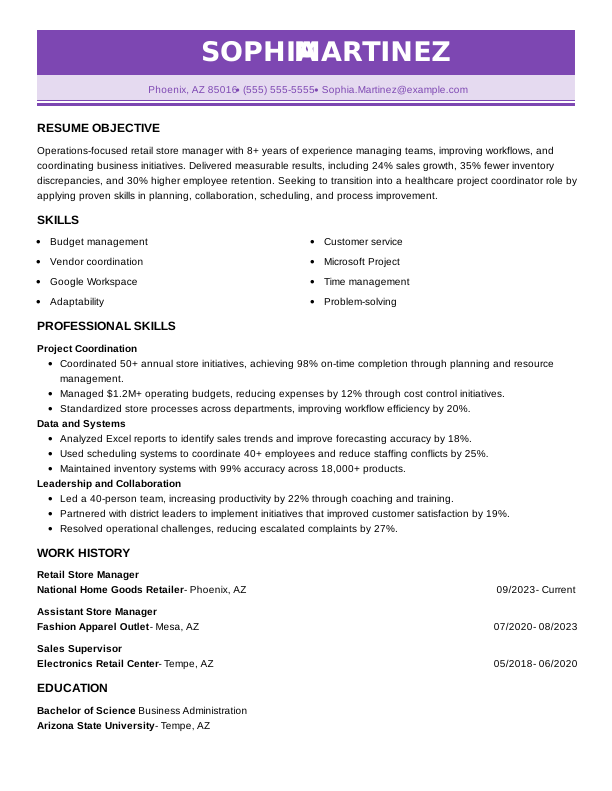
Career Changer
This functional resume example shows how a professional making a significant career change can emphasize transferable skills when they have limited directly related experience. Notice how it groups accomplishments into key skill categories while keeping the work history concise.
Entry-Level or New Grad
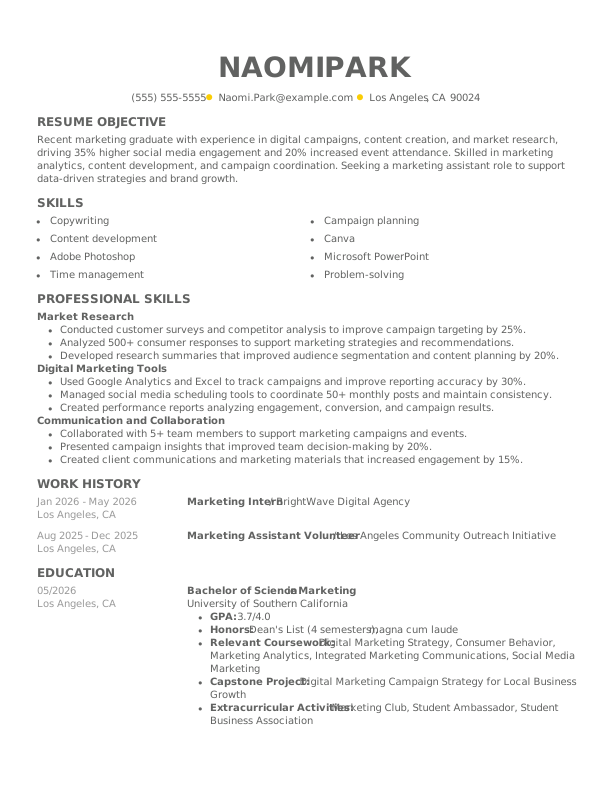
This functional resume example shows how students, entry-level professionals, and new grads can emphasize coursework, internships, and projects when these experiences demonstrate stronger qualifications than paid work experience. While many recent graduates may be better served by a combination resume, a functional format can work in this specific situation.
Experience More Relevant Than Current & Previous Job Titles
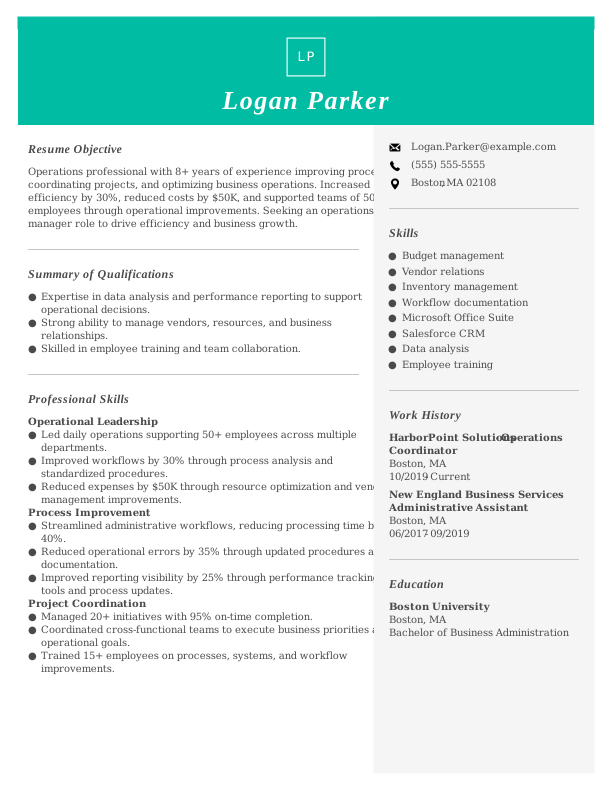
This functional resume example shows how professionals with modest or unrelated job titles can emphasize higher-level responsibilities and transferable accomplishments. It highlights the skills and results most relevant to the candidate’s target role.
Returning to Work
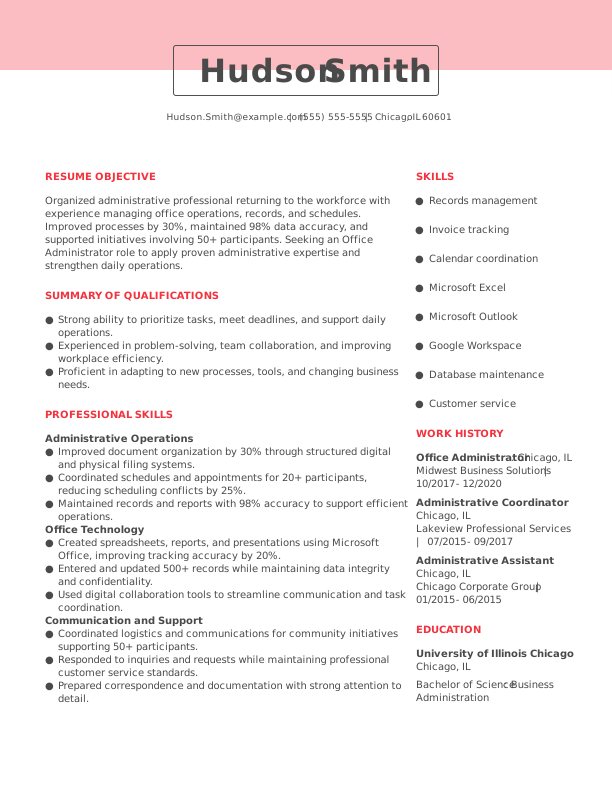
This functional resume example shows how someone returning to the workforce can emphasize relevant skills and accomplishments after a significant employment gap. It also shows how a brief work history can provide context without becoming the primary focus.
7 Key Tips for Creating a Functional Resume
To create an effective functional resume, keep the design simple, organize your skills strategically, optimize for ATS, quantify your accomplishments, provide enough employment context, and review everything carefully before applying.
- 1.
Make clean and simple design choices. Use an ATS-friendly layout with readable fonts, consistent formatting, and plenty of white space to make your resume easy to scan.
- 2.
Group skills into targeted themes. Organize your strongest qualifications into two to four skill categories that closely match the job description and support each with measurable accomplishments.
- 3.
Use standard headings ATS will recognize. Stick with familiar section titles, such as “Summary,” “Professional Skills,” “Work Experience,” and “Education,” instead of creative alternatives that ATS may not recognize.
- 4.
Incorporate keywords from the job description. Include relevant skills, qualifications, and industry terms naturally throughout your resume to improve ATS compatibility and demonstrate you’re a strong match for the role.
- 5.
Quantify your accomplishments. Include numbers, percentages, dollar amounts, or other measurable results to demonstrate the impact of your work whenever possible.
- 6.
Don’t omit dates and titles entirely. Even on a functional resume, include a concise work history with employers, job titles, and employment dates to provide context and reduce recruiter skepticism.
- 7.
Have it reviewed before applying. Proofread your resume carefully, and use an ATS resume checker or ask a trusted colleague, mentor, or career professional to review it for errors, formatting issues, and missing keywords.
Ready to Try a Functional Resume?
A functional resume can be a valuable tool when emphasizing your skills gives employers a clearer picture of your qualifications than your work history alone. It’s best suited for specific situations, such as significant career changes, extended returns to the workforce, or when your job titles don’t accurately reflect your experience.
For many job seekers, however, a combination resume is the better choice because it highlights both your skills and your career progression.
If a functional resume fits your situation, use the examples and template in this guide to create a resume that showcases your strongest qualifications. Otherwise, consider whether a chronological or combination resume would better present your experience.
Frequently Asked Questions
Do employers like functional resumes?
Some employers and recruiters appreciate functional resumes when they’re used in the right situations, but most prefer chronological or combination resumes because they make it easier to understand a candidate’s work history and career progression.
Functional resumes are generally best reserved for specific scenarios, such as significant career changes, extended returns to the workforce, or when job titles don’t accurately reflect a candidate’s qualifications.
When should you not use a functional resume?
You shouldn’t use a functional resume if you have a steady work history, recent relevant experience, or promotions that strengthen your candidacy. It’s also not the best choice if a combination resume can effectively showcase both your transferable skills and your career progression.
While some applicant tracking systems (ATS) may have more difficulty parsing functional resumes, the bigger concern is that recruiters usually prefer a clear view of your work history and career progression.
What are the four types of resumes?
Four common types of resumes are chronological, functional (skills-based), combination (hybrid), and targeted. Chronological resumes emphasize work history, functional resumes focus on skills, combination resumes highlight both, and targeted resumes are customized for a specific job posting.
Is a functional resume the same as a skills-based resume?
Yes, a functional resume and a skills-based resume are the same format. Both organize your qualifications around grouped skills and accomplishments rather than detailed work history, making them best suited for specific situations where a skills-first approach offers a clearer picture of your qualifications than a combination or chronological resume format.

Kirsten Chorpenning is a career advice writer who empowers job seekers to take control of their career paths using Monster’s comprehensive job search and resume tools. She specializes in helping job seekers find rewarding jobs in today’s dynamic work environment.
See More From Kirsten ChorpenningExplore Related Career Advice

Overqualified Hiring Stats: 57% Would Cut Resume Experience to Get Hired

Updated:
Sep 28, 2026
|
9 min read

20 First Job Interview Questions & Sample Answers: Tips to Land Your First Job
Updated:
Sep 24, 2026
|
20 min read

“Do You Have Any Questions for Me?” How to Answer in an Interview (30 Examples)
Updated:
Sep 18, 2026
|
14 min read



20 Companies That Pay 100% Health Insurance & Other Top Benefits
Updated:
Sep 10, 2026
|
14 min read


How Long of a Commute Is Too Long? 49% Have Turned Down a Job Due to the Commute
Updated:
Sep 8, 2026
|
11 min read

Manage Your Career Like an Expert
Take control of your professional journey with Monster’s expert resources. Explore advice, research, and tips to make informed decisions and advance your career with confidence.

Job Search
Discover strategies to get noticed, network effectively, and streamline your job search process.

Resumes
Get practical tips to create a resume or CV that stands out to employers and wins interviews.

Cover Letters
Learn how to craft a compelling cover letter that highlights your experience and fit for the role.

Career Paths
Explore career paths, industry trends, and growth opportunities to plan your next move.

Interviewing
Prepare for interviews with tips on answering common questions and following up effectively.

Career Development
Develop key skills and knowledge to grow in your current role or pivot to new opportunities.

Leaving a Job
Navigate job changes and career transitions with practical advice and planning resources.