
Cover Letter vs Resume: What’s the Difference & Do You Need Both?

Your resume shows your qualifications, and your cover letter explains how they make you a strong fit. Together, they help you stand out to employers.
Updated:
|

18 min read

Table of Contents


If you’re unclear about the differences between a cover letter and a resume, you’re not alone. While both are essential parts of the job application process, they serve distinct purposes and follow different formats.
In this guide, we’ll break down the key differences between a cover letter vs resumes, explain when you need one or both, and show how they work together. You’ll also find formatting and submission tips, plus real-world examples to put our advice into action.
What Is a Cover Letter?
A cover letter is a one-page formal document submitted alongside your resume that introduces you to the hiring manager and explains why you’re a strong fit for a specific role.
While a resume lists the facts of your career, a cover letter provides the narrative. It connects your most relevant achievements to the employer’s needs, explains your interest in the role, and adds context that numbers and bullet points alone can’t convey.
What Is a Resume?
A resume is a structured, scannable document that summarizes your professional qualifications, including your work history, skills, and education.
Its purpose is efficiency. By presenting your background clearly and concisely, a resume allows recruiters and hiring managers to quickly determine whether you meet the baseline requirements for a role.
What Is a Cover Letter vs Resume?
The main cover letter vs resume differences relate to function. A cover letter builds a personal connection and tells your story, while a resume proves your qualifications through concise, factual evidence.
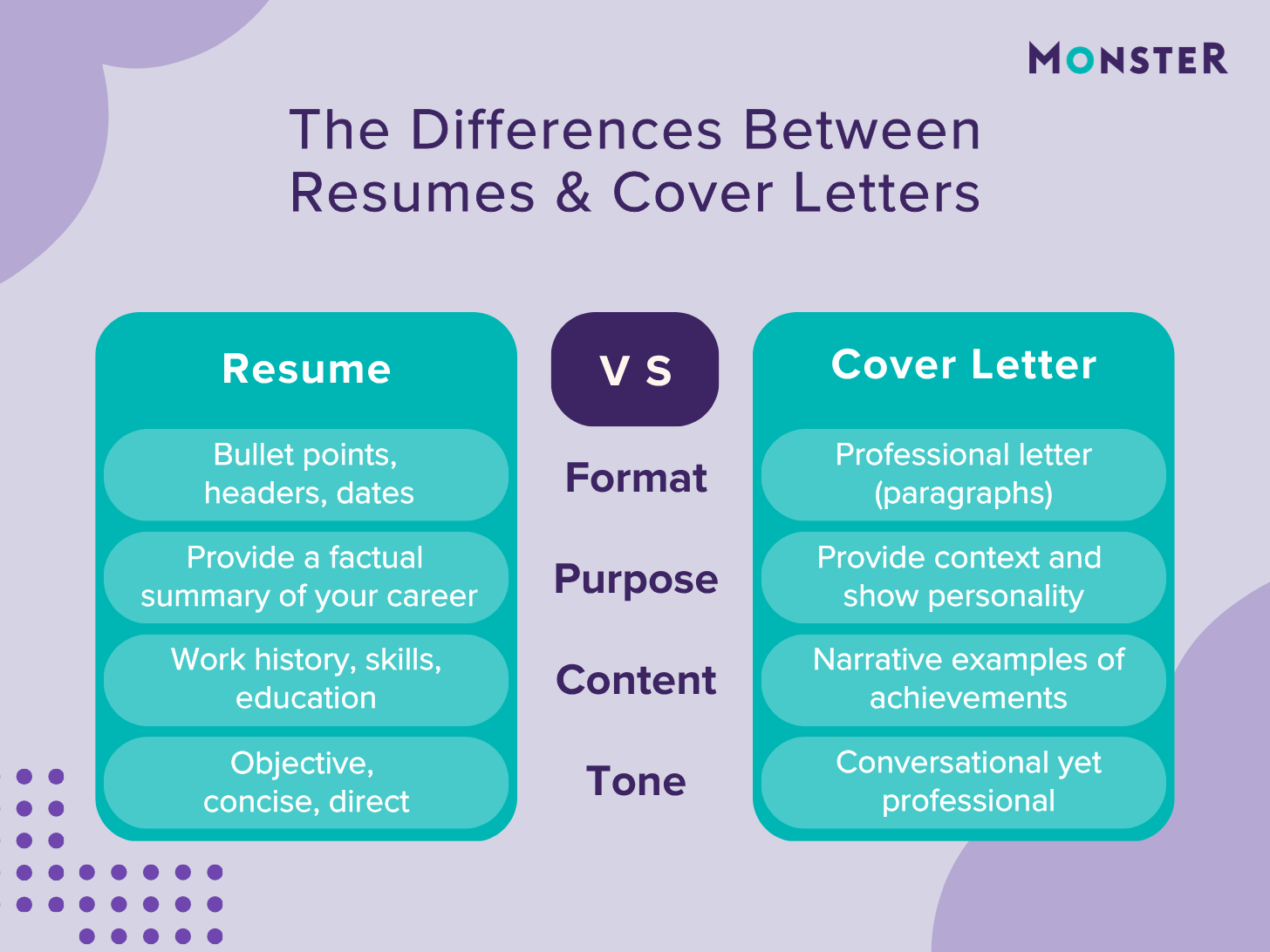
To understand how they differ in practice, compare their format, purpose, content, and tone:
| Feature | Resume | Cover Letter |
| Format | Bullet points, headers, dates | Professional letter (paragraphs) |
| Purpose | A factual summary of your career | Add context and show personality |
| Content | Work history, skills, education | Examples of achievements and impact |
| Tone | Objective, concise, direct | Conversational yet professional |
How to Format & Submit Resumes & Cover Letters
Proper formatting improves readability for both applicant tracking systems (ATS) and human reviewers while creating a cohesive, professional application.
To give your documents the best chance of being parsed correctly and reviewed efficiently, follow these formatting and submission best practices.
How to Format a Cover Letter
Your cover letter should be easy to scan, ATS-friendly, and visually aligned with your resume. Here’s how to achieve that:
- Mirror your resume’s branding. Use the same font family, font sizes, header style, and color accents. This signals organization and a consistent personal brand.
- Standardize alignment and spacing. Left-align text, use 1–1.5 line spacing, and stick to 1-inch margins to keep the page readable and uncluttered.
- Keep it concise. Most applicants should aim for one page. Senior-level professionals may occasionally extend to 1.5 pages if the added context clearly strengthens the application.
How to Format a Resume
A resume must highlight your most important qualifications at a glance. Use these formatting guidelines when writing your resume to ensure recruiters and ATS systems can quickly identify your strengths:
- Length: Aim for one page if you’re early to mid-career. Concise resumes keep attention focused on your most relevant experience.
- Section headings: Use clear, bold headers followed by short bullet points to guide the reader’s eye.
- Font: Stick to 10–12 point text (14–16 for headers) in standard sans-serif fonts like Arial or Calibri to avoid ATS parsing issues.
- Margins: Use 1-inch margins and single-line spacing to ensure clean rendering across platforms.
- Color: Choose dark, readable text on a white background. Match your color scheme to your cover letter for visual consistency.
- Design: Avoid graphics, tables, columns, and icons. These elements can confuse ATS software and reduce readability.
Submitting Your Documents for ATS Success
Always follow the submission instructions in the job posting. Ignoring them can result in automatic disqualification.
- File formats: Submit PDFs unless a Word document is specifically requested. PDFs preserve formatting across devices and ATS platforms.
- Naming conventions: Use clear file names (e.g., First_Last_resume.pdf) so recruiters can easily identify your documents.
- Single vs multiple files: Some systems require combined uploads, while others separate resume and cover letter fields. When unclear, submit separate, clearly labeled files.
 Pro Tip
Even if a cover letter isn’t required initially, prepare one in advance. Some employers request additional materials, such as cover letters or reference sheets, later in the hiring process.
What to Include in a Cover Letter
An effective cover letter follows a clear structure that introduces you, highlights relevant achievements, and closes with confidence.
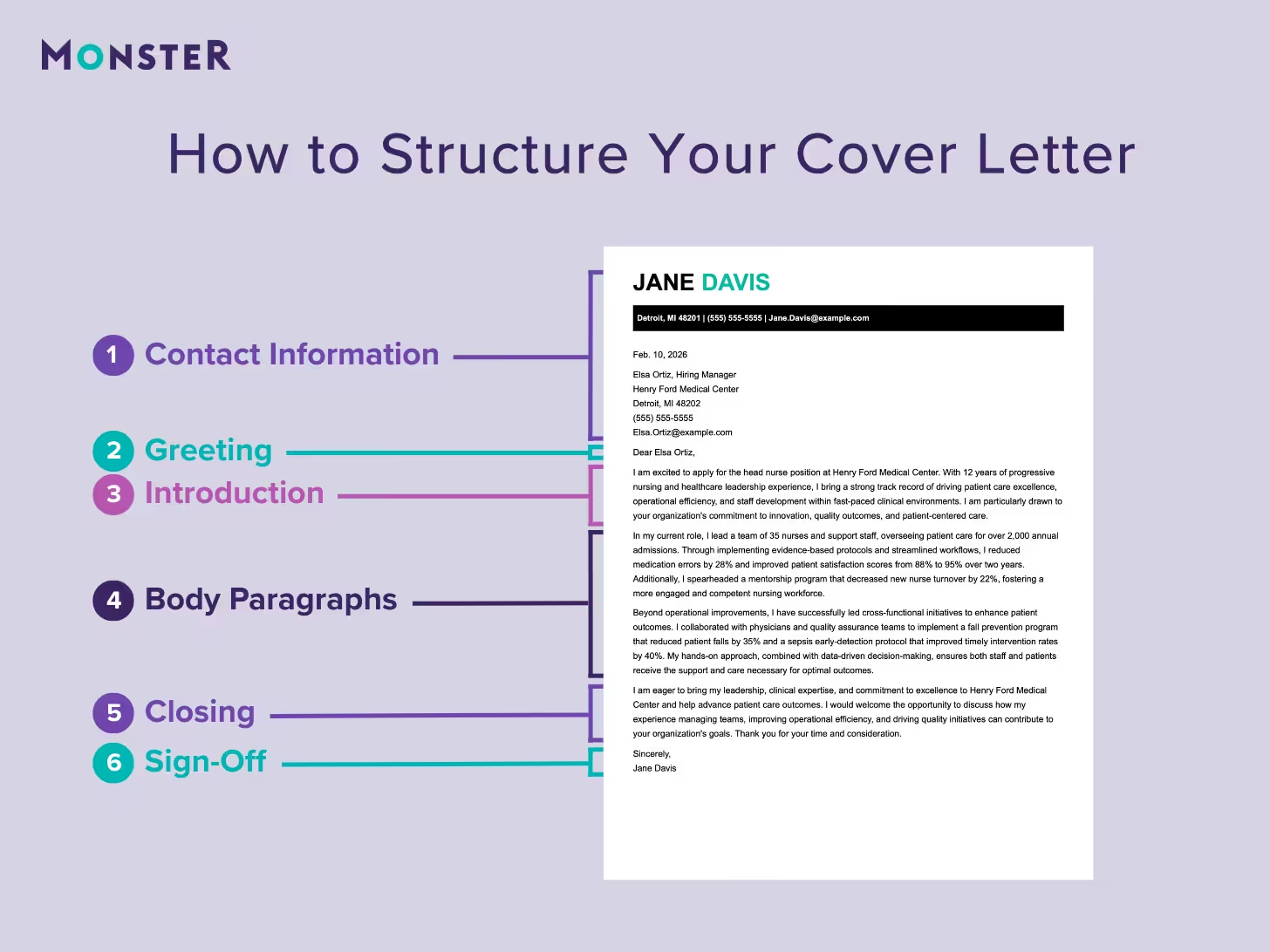
Header With Contact Info
Place your name, phone number, professional email, and LinkedIn URL at the top so recruiters can easily reach you.
Example header:
Ogden, NC | 111-111-1111
susan.clark@email.com | linkedin.com/in/susanclark
Greeting
Use a professional greeting, such as “Dear [Hiring Manager’s Name]” or “Dear Hiring Manager.” Avoid outdated phrases like “To Whom It May Concern.”
Introduction
State the role you’re applying for and why you’re interested in the company in two to three sentences.
Example introduction:
I am writing to express my enthusiastic interest in the Graphic Designer position at DesignCo, as listed on your website. As a visual storyteller, I was immediately drawn to DesignCo’s history of design-driven narrative and superb reputation. With a background in translating brand strategy into compelling visual assets, I am eager to bring my technical precision and creative flair to your team.
Body Paragraphs
Use one to two paragraphs to respond directly to the job description. Highlight key achievements and explain how you achieved those results rather than repeating resume bullets.
For example, instead of saying:
I oversaw a team of 12 people while working at SoftwareCo. We delivered our product on time.
Use wording like this:
At SoftwareCo, I led a team of 12, incorporating SCRUM planning that resulted in a 20% increase in productivity. This strategy led to our project hitting essential deadlines.
Pro Tip
The body of your cover letter is the ideal place to explain unique circumstances in your work history, such as career changes or employment gaps.
Closing
Reiterate your interest and include a confident call to action that invites further conversation.
Example closing:
Thank you for your time and consideration. I am confident that my background in digital marketing would allow me to make an immediate contribution to the MarTek team. I look forward to the possibility of discussing how my experience aligns with your team’s goals. Please feel free to contact me at your earliest convenience.
Sign-Off
End with a professional sign-off, such as “Sincerely,” “Best regards,” or “With appreciation.” Avoid casual or overly aggressive closings.
What to Put on a Resume: Essential Sections for ATS Success
To pass ATS screenings and impress hiring managers, your resume must include five core sections: contact information, a professional summary or objective, skills, work history, and education.
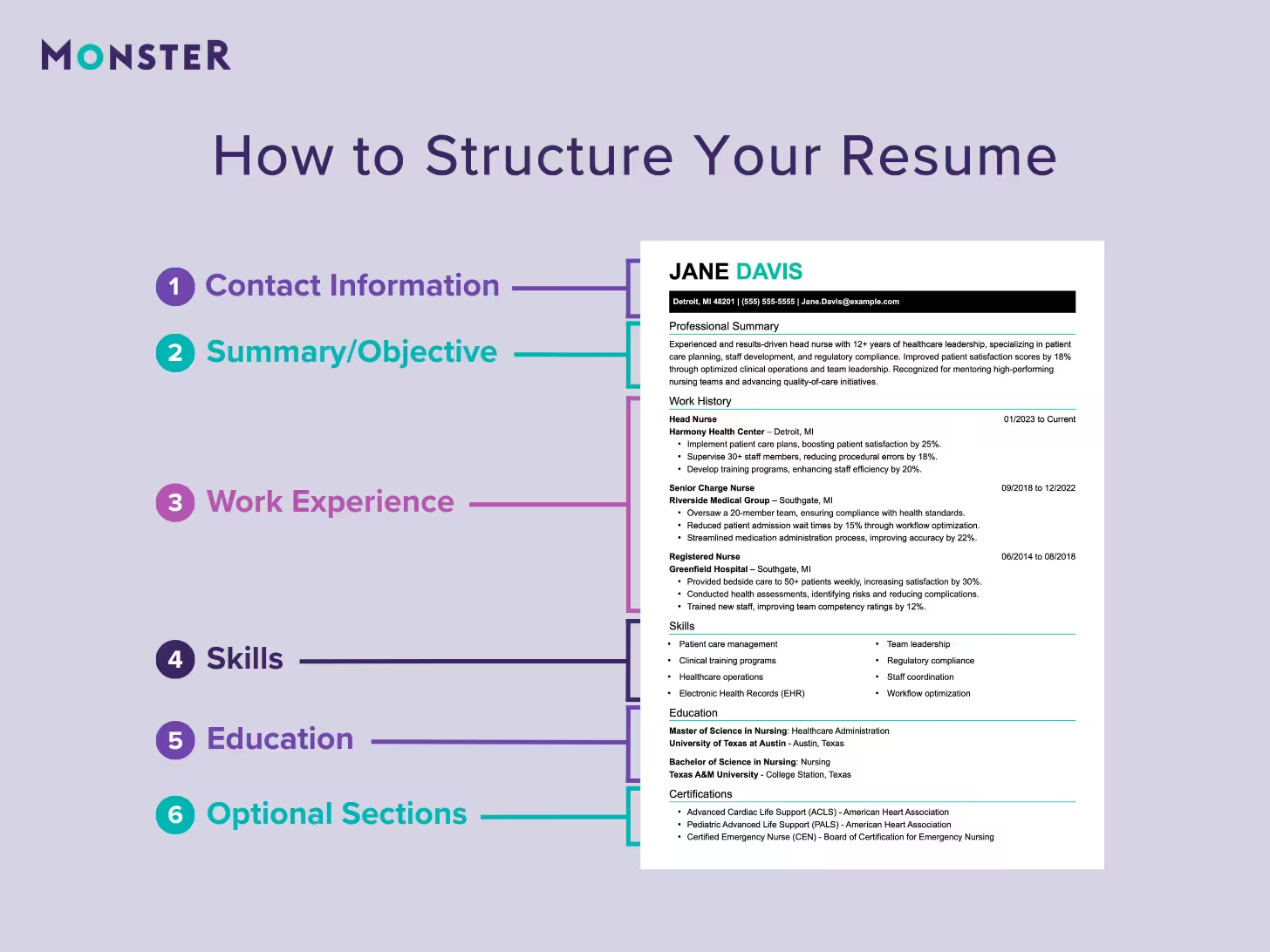
Below is a breakdown of what to include in each section and why it matters.
Contact Information
Include your name, phone number, professional email address, and LinkedIn URL. Place this section at the top so recruiters can immediately identify and contact you.
Use a simple email format with your first and last name (e.g., jane.smith@email.com). Professional email addresses prevent bias and help your application avoid being flagged as spam. Double-check your spelling thoroughly, as minor errors can make a poor first impression.
Summary/Objective
Use an objective if you’re an entry-level applicant and need to highlight goals and education. Use a summary if you’re experienced and want to showcase top achievements.
Objectives work best for new professionals because they clarify direction and motivation. Summaries work best for experienced candidates because they immediately demonstrate value.
Example resume objective:
Licensed Doctor of Physical Therapy (DPT) graduate with a strong foundation in orthopedic rehabilitation and manual therapy techniques. Eager to join the Central Clinic team to deliver evidence-based patient care and develop individualized treatment plans that restore function and mobility. Committed to achieving high patient satisfaction scores through compassionate communication and efficient caseload management.
Example resume summary:
Dedicated customer service representative with 5+ years of experience in high-volume call center environments. Proven track record of maintaining a 98% customer satisfaction rating (CSAT) by utilizing active listening and efficient problem-solving skills. Expert in conflict resolution, capable of handling 50+ inbound calls daily while identifying opportunities to upsell products and retain at-risk clients.
Skills
List a mix of hard and soft skills relevant to the role. This section helps your resume get past ATS filters while showing recruiters your core competencies.
Hard skills are teachable skill sets required to do the job, such as industry-specific programs or technical knowledge. Soft skills are broader and apply to any field, like communication, leadership, and team-building.
Work Experience
List roles in reverse chronological order, typically covering the past 10–15 years. Prioritize relevance over length and focus on measurable results.
For each position, include the job title, company, location, and dates. When deciding which jobs to include, prioritize relevance over tenure, and consider the following:
- Target the role. Focus on experience that directly aligns with the job you’re applying for.
- Include relevant temp work. Always list short-term, contract, or freelance roles if they highlight applicable skills or major achievements.
- Consolidate short stints. If you have multiple brief jobs, only list the most relevant ones or group them under a single heading (e.g., “Independent Contractor”).
Template for work experience:
Example work experience:
RetailMart, Robinson, PA, 05/2020–02/2025
- Surpassed monthly sales goals by 15% on average by actively promoting the store loyalty program and identifying upselling opportunities at checkout.
- Resolved complex customer inquiries and complaints for 50+ daily inquiries, maintaining a 98% positive feedback rating for service excellence.
- Managed inventory and visual merchandising for a 10,000 sq. ft. sales floor, ensuring 100% stock accuracy and reducing shrinkage by 10% year over year.
Education
List degrees in reverse chronological order. Recent graduates can include coursework, honors, and GPA if relevant, while experienced professionals should keep this section concise.
Example education:
University of Texas, Fort Worth, Texas | May 2024
- GPA: 3.9/4.0
- Honors: summa cum laude
- Awards: Dean’s List (2022–2024)
- Relevant Coursework: Telling a Story Through Visual Design, The Art of the Advertisement, and Advanced Color Theory
Pro Tip
Include graduation years only if relevant or recent. Unless required, omit the year for degrees obtained more than 10 years ago.
Optional Resume Sections (If Applicable)
Optional sections add context and strengthen your resume when they support your candidacy:
- Volunteer work: Demonstrates involvement and can help explain employment gaps or limited experience.
- Certifications: Shows specialized knowledge and commitment to professional development.
- Publications: Establishes subject-matter expertise and credibility.
- Projects: Highlights hands-on experience, especially for technical or creative roles.
- Languages: Signals communication flexibility and cultural awareness.
These sections offer additional context or qualifications to bolster your resume. For example, adding a volunteer work section can help soften gaps in work history for those with limited experience.
Resume vs Cover Letter: Do You Need Both for Every Application?
In most cases, yes. A resume and cover letter together provide a complete picture of your qualifications.
- Submit both for most professional roles.
- Skip the cover letter only when a posting explicitly says not to include one or provides no upload option.
- When unsure, include a cover letter. It shows effort and can differentiate you from similar candidates.
How to Match Your Cover Letter & Resume for a Cohesive Application
A cover letter tells your story; a resume proves you meet the requirements. Together, they form a unified application.
Your resume presents the facts—titles, metrics, skills—while your cover letter explains the strategy, motivation, and impact behind those facts. Alignment between the two ensures your application feels intentional rather than redundant.
To see how they complement each other without being redundant, imagine you’re a sales associate applying for a new position. Your resume will quickly summarize your top metrics at your previous job at CarDealers like this:
CarDealers, Louisville, KY | March 2020–January 2024
- Exceeded annual sales targets by 22%, consistently moving 15–18 units per month in a high-volume environment.
- Maintained a 98% customer satisfaction index (CSI) score, ranking in the top 5% of the regional dealership network for service excellence and post-sale follow-up.
- Orchestrated a “referral gold” program that increased repeat and referral business by 30% within the first 12 months.
Your cover letter is where you explain the specific strategy you used to achieve these numbers. For this example, a cover letter body paragraph related to this work history segment might look like this:
My approach to automotive sales is built on the philosophy that high-volume production and elite customer satisfaction are not mutually exclusive. During my tenure at CarDealers, I translated this into results by exceeding annual sales targets by 22% while maintaining a 98% CSI score, ranking me in the top 5% of the regional network. I don’t just focus on the single close; I focus on the lifetime value of the customer.
Cover Letter vs Resume Examples: A Powerful Pairing for Success
These examples show how resumes and cover letters work together to reinforce the same strengths.
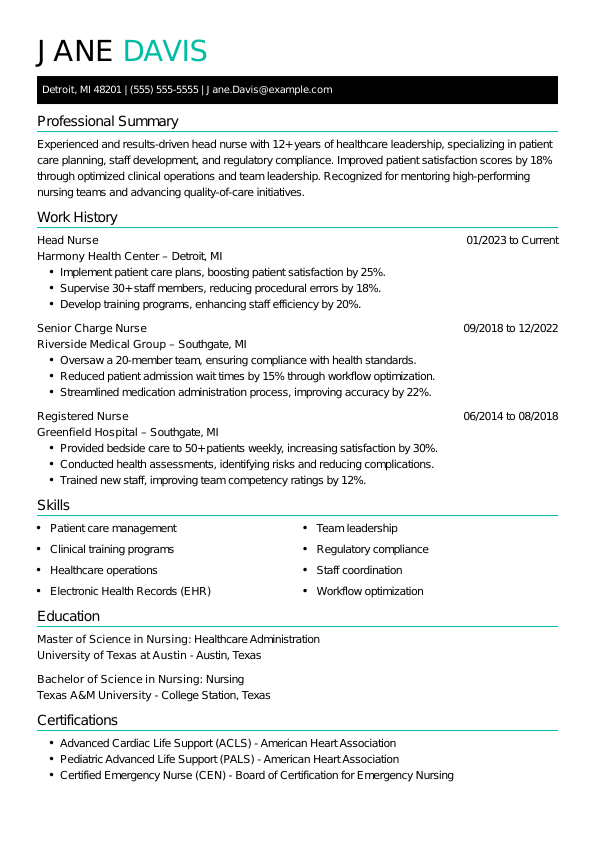
The resume highlights achievements in scannable bullet points. The cover letter selects one key accomplishment and expands it into a narrative that demonstrates leadership, judgment, and fit for the organization.
Head Nurse Resume Example
Head Nurse Cover Letter Example
Jane Davis
Detroit, MI | 555-555-5555 | Jane.Davis@example.com
Feb. 10, 2026
Elsa Ortiz, Hiring Manager
Henry Ford Medical Center
Detroit, MI 48202
555-555-5555
Elsa.Ortiz@example.com
Dear Elsa Ortiz,
I am excited to apply for the head nurse position at Henry Ford Medical Center. With 12 years of progressive nursing and healthcare leadership experience, I bring a strong track record of driving patient care excellence, operational efficiency, and staff development within fast-paced clinical environments. I am particularly drawn to your organization’s commitment to innovation, quality outcomes, and patient-centered care.
In my current role, I lead a team of 35 nurses and support staff, overseeing patient care for over 2,000 annual admissions. Through implementing evidence-based protocols and streamlined workflows, I reduced medication errors by 28% and improved patient satisfaction scores from 88% to 95% over two years. Additionally, I spearheaded a mentorship program that decreased new nurse turnover by 22%, fostering a more engaged and competent nursing workforce.
Beyond operational improvements, I have successfully led cross-functional initiatives to enhance patient outcomes. I collaborated with physicians and quality assurance teams to implement a fall prevention program that reduced patient falls by 35% and a sepsis early-detection protocol that improved timely intervention rates by 40%. My hands-on approach, combined with data-driven decision-making, ensures both staff and patients receive the support and care necessary for optimal outcomes.
I am eager to bring my leadership, clinical expertise, and commitment to excellence to Henry Ford Medical Center and help advance patient care outcomes. I would welcome the opportunity to discuss how my experience managing teams, improving operational efficiency, and driving quality initiatives can contribute to your organization’s goals. Thank you for your time and consideration.
Sincerely,
Jane Davis
Cover Letters & Resumes: An Application for Success
Use your resume and cover letter together to present a complete, compelling application. Your resume lays out your qualifications, while your cover letter brings them to life, showing the story behind the numbers.
Make sure both documents are tailored to the role you’re applying for. Highlight your most relevant achievements, mirror your branding across both, and clearly connect your experience to the employer’s needs. When used together, these documents position you as a standout candidate ready for an interview.
Now that you know how to make your resume and cover letter work together, you can put that knowledge into action. A well-crafted, aligned application increases your chances of passing ATS screenings and impressing hiring managers. Start building your own today with Monster’s Resume Builder and create a standout application in minutes.
Frequently Asked Questions
Is a cover letter better than a resume?
No, a cover letter is not better than a resume. A resume explains your technical qualifications for a position. A cover letter explains the details of those qualifications, weaving a narrative for the employer. They work together to explain to employers how and why you’re a fit for the role.
Can I use a resume as a cover letter?
No, you cannot use a resume as a cover letter. Doing this may confuse ATS software or hiring managers, which can lower your chances of getting an interview. Instead, create a cover letter and a resume that complement each other, then submit both.
Do I really need both a resume and a cover letter?
Yes, you’ll need both a resume and a cover letter for most job applications. If a posting explicitly says “no cover letters,” however, follow that instruction. In all other cases, even when optional, submitting a cover letter is beneficial to show enthusiasm and tell your story.
Is a CV the same as a resume?
No, a curriculum vitae (CV) is not the same as a resume. A resume is a document used for standard job applications and functions like a highlight reel of your work history. CVs are more comprehensive, outlining work experience, publications, speaking engagements, academic achievements, roles, and related works.
What if I’m told not to include a cover letter?
If you’re told not to include a cover letter, don’t include one. In some high-volume hiring environments, recruiters only want resumes to speed up the screening process. Keep in mind, however, that you may be required to submit a cover letter later, even if it’s not initially required.
Do employers actually read cover letters?
While some recruiters focus solely on the resume, many hiring managers use cover letters as a tie-breaker between two equally qualified candidates. When trying to land an interview for a new job, a well-written letter can be the factor that tips the scales in your favor.

Elizabeth Muenzen is a Certified Professional Resume Writer (CPRW) and member of the Professional Association of Resume Writers & Career Coaches who empowers job seekers to take control of their career paths using Monster’s comprehensive job search and resume tools.
See More From Elizabeth MuenzenExplore Related Career Advice


How Long of a Commute Is Too Long? 49% Have Turned Down a Job Due to the Commute

Updated:
Sep 8, 2026
|
11 min read

Job Hugging 2025, Volume 1: Comfort & Security Take Priority for 48% of Workers
Updated:
Sep 2, 2026
|
6 min read

Beauty Bias at Work Statistics: 88% Say Attractive People Have an Advantage
Updated:
Aug 31, 2026
|
8 min read


How to Put Transferable Skills on Your Resume: 120 Skills, Examples, & Tips

Updated:
Aug 27, 2026
|
16 min read

Resume Exaggeration Statistics: 45% Say Employers & Job Seekers Exaggerate Equally
Updated:
Aug 24, 2026
|
9 min read

Manage Your Career Like an Expert
Take control of your professional journey with Monster’s expert resources. Explore advice, research, and tips to make informed decisions and advance your career with confidence.

Job Search
Discover strategies to get noticed, network effectively, and streamline your job search process.

Resumes
Get practical tips to create a resume or CV that stands out to employers and wins interviews.

Cover Letters
Learn how to craft a compelling cover letter that highlights your experience and fit for the role.

Career Paths
Explore career paths, industry trends, and growth opportunities to plan your next move.

Interviewing
Prepare for interviews with tips on answering common questions and following up effectively.

Career Development
Develop key skills and knowledge to grow in your current role or pivot to new opportunities.

Leaving a Job
Navigate job changes and career transitions with practical advice and planning resources.