
Worker Financial Security Statistics: Only 50% Can Last 3 Months Without Income

Workers feel increasingly prepared for the future, but declining financial security is making it harder to capitalize on new opportunities.
Updated:
|

8 min read
Table of Contents


Ask today’s workers if they’re ready for the future, and they’ll say yes. Ask if they can afford to jump for a new opportunity, and the story changes.
According to the latest data from the Monster Livelihood Index (MLI), the overall measure of worker readiness and resilience held steady for the second consecutive quarter. Beneath this stable headline score, however, lies a clear divide across the four core dimensions it tracks: financial security, career adaptability, labor market confidence, and AI readiness.
While they feel confident in their skills and AI preparedness, declining worker financial security statistics are keeping them from making their next move.
Key Findings
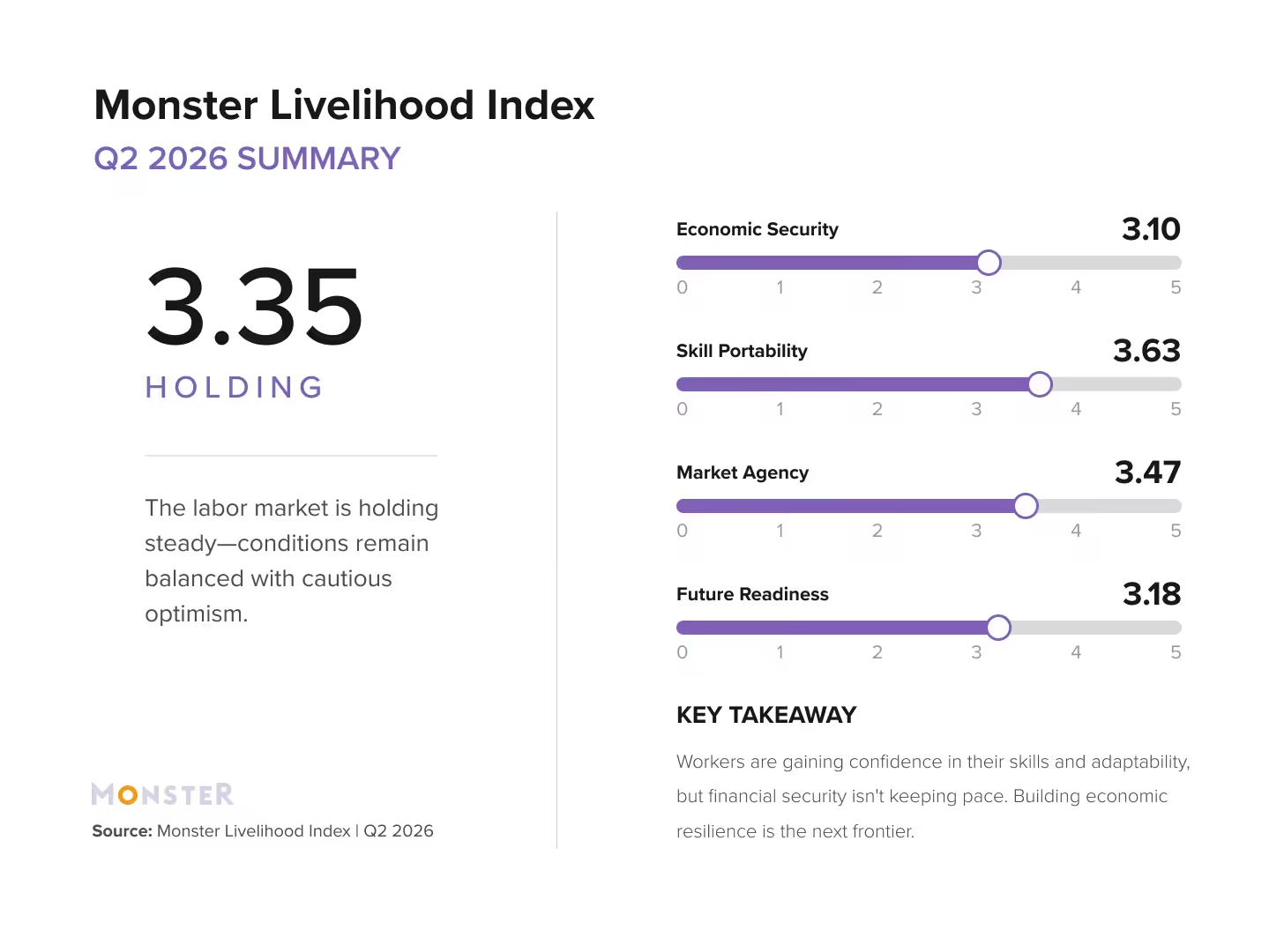
- The MLI remained stable at 3.35, placing the workforce in the “Holding” category. Although the overall score held steady, the underlying components moved independently, reflecting meaningful changes in worker readiness and resilience.
- Financial security recorded the largest shift this quarter. Only 50% of workers say they could maintain their standard of living for at least three months without income, down from 57% in Q1.
- Confidence in transferable skills continued to grow. 75% of workers say their core skills remain in demand, while 79% believe they could transition into a different role using the skills they already possess.
- Career mobility signals softened. Fewer workers report increasing their visibility to employers, maintaining professional networks, or clearly understanding the steps needed to find a new job.
- AI readiness continued to improve. Half of workers say they know how they would pivot if portions of their role became automated, and 45% report using AI tools to improve the quality or speed of their work.
Don’t Mistake Index Stability for Stagnation
At first glance, the overall score of 3.35 suggests that little changed from the first quarter MLI results to the second. But looking beneath the headline number tells a different story.
The four dimensions increasingly moved in opposite directions. Improvements in workers’ confidence and future readiness offset declines in financial security, resulting in an overall score that remained stable despite meaningful changes in how workers are experiencing today’s labor market.
Rather than signaling a stagnant workforce, the Q2 results reveal a workforce becoming more capable of adapting to change while facing greater financial constraints.
Financial Security Is Becoming a Bigger Constraint
The most significant movement this quarter was the measure of how many workers have three months of savings. Only half of workers say they could maintain their standard of living if their current income stopped, down 7 percentage points from Q1.
Meanwhile, 67% say they’ve taken steps to improve their financial resilience during the past three months, down 3 points from the last report. And nearly two-thirds (63%) say financial concerns make it harder to consider changing jobs.
Together, these findings suggest workers have less financial flexibility to absorb unexpected disruptions or pursue new career opportunities.
Workers Feel More Confident in Their Skills
Even as financial security weakened, confidence in career adaptability continued to improve.
Three-quarters of workers say their core skills remain in demand, up 4 percentage points from Q1. Nearly 8 in 10 believe they could transition into a different role using the skills they already have, and 72% say they can clearly explain how their skills transfer across roles or industries.
The findings suggest workers increasingly believe they have the capabilities needed to succeed in a changing labor market.
Confidence Isn’t Translating Into Career Activity
Despite growing confidence, workers appear less active in preparing for future opportunities.
Compared with the previous quarter, fewer workers reported increasing their visibility to potential employers, maintaining professional networks, or having a clear understanding of the steps needed to find a new job.
This growing disconnect may reflect the reality of financial stress and job mobility. Even when workers believe they have the skills to succeed elsewhere, declining financial flexibility may make them less willing to take the risks that often accompany a career move.
AI Readiness Statistics Show Improvement
Workers continue to build confidence in navigating technological change.
Half of workers say they know how they would pivot if AI replaced parts of their job, up 4 percentage points from Q1. Additionally, 45% report using AI tools during the past three months to improve the quality or speed of their work.
Employer support has not kept pace, however. Just 37% of workers say they’ve received enough employer training or support to use AI tools effectively, unchanged from the previous quarter.
Financial Security vs Career Mobility
The second-quarter Monster Livelihood Index highlights an important shift in today’s workforce. Workers increasingly believe they have the skills to adapt, embrace new technologies, and navigate a changing labor market. Yet financial uncertainty may limit their ability to act on that confidence.
As workers become more prepared for change but less financially positioned to pursue it, financial flexibility may become one of the defining factors shaping career mobility in the months ahead.
The MLI will continue tracking whether workers regain the financial resilience needed to capitalize on their growing confidence or whether economic pressures will constrain opportunity.
For press inquiries, please contact Shanna Briggs at shanna.briggs@bold.com.
About the Monster Livelihood Index
The Monster Livelihood Index (MLI) is Monster’s quarterly measure of worker readiness and resilience. Based on a survey of approximately 1,000 employed U.S. workers each quarter, the index measures four dimensions of worker livelihood:
- Economic Security: Can workers withstand financial disruption?
- Skill Portability: Can workers apply their value across roles and industries?
- Market Agency: Can workers successfully navigate job opportunities?
- Future Readiness: Are workers prepared for technological change?
Together, these dimensions provide an ongoing benchmark of how prepared workers feel to navigate today’s labor market. Scores range from 1 to 5, with higher scores indicating stronger financial resilience, career adaptability, and readiness for change. An overall score between 2.5 and 3.49 is classified as Holding, indicating a workforce that is generally stable but remains vulnerable to disruption.
Methodology
The Q2 2026 Monster Livelihood Index is based on a national survey of 1,002 currently employed U.S. workers conducted by Pollfish June 24–25, 2026. The index is constructed from 28 statements across four dimensions—Economic Security, Skill Portability, Market Agency, and Future Readiness. Respondents rate each statement on a 5-point scale, with responses averaged into dimension scores and an overall composite. Quarter-over-quarter comparisons are based on Q1 2026 data collected March 24–25, 2026 (n=1,000). Consistent methodology is maintained each quarter to support reliable trend analysis over time.
About Monster
Monster is a global leader in online job searching, resume building, and employment solutions. For over 30 years, the company has been a trusted authority for both job seekers and companies. Beyond the job search, Monster provides an intuitive Resume Builder and hundreds of resume templates to help candidates stand out against the competition, while offering employers a comprehensive resume database to source top talent. As a G2 category leader, Monster has been featured in Forbes, CNBC, CNN, and USA Today, sharing the career advice needed to bridge the gap between job seekers and hiring managers. Follow Monster on LinkedIn, Facebook, Instagram, and TikTok for the latest employment trends.

Vicki Salemi is a nationally recognized career expert who helps professionals navigate the hiring landscape and find the right fit on Monster. With over 15 years of experience in corporate recruiting and HR, she offers expert guidance on job search strategies, interview preparation, and career development to help candidates land their next role.
See More From Vicki SalemiExplore Related Career Advice


93% of Workers Say Wages Aren’t Keeping Up With the Cost of Living
Updated:
Jul 20, 2026
|
9 min read





How to Explain Employment Gaps: Examples for Resumes, Interviews, & More

Updated:
Jul 17, 2026
|
20 min read





Manage Your Career Like an Expert
Take control of your professional journey with Monster’s expert resources. Explore advice, research, and tips to make informed decisions and advance your career with confidence.

Job Search
Discover strategies to get noticed, network effectively, and streamline your job search process.

Resumes
Get practical tips to create a resume or CV that stands out to employers and wins interviews.

Cover Letters
Learn how to craft a compelling cover letter that highlights your experience and fit for the role.

Career Paths
Explore career paths, industry trends, and growth opportunities to plan your next move.

Interviewing
Prepare for interviews with tips on answering common questions and following up effectively.

Career Development
Develop key skills and knowledge to grow in your current role or pivot to new opportunities.

Leaving a Job
Navigate job changes and career transitions with practical advice and planning resources.