
93% of Workers Say Wages Aren’t Keeping Up With the Cost of Living

Workers are cutting back, dipping into savings, and looking for higher pay as financial pressure continues.
Updated:
|

9 min read

Table of Contents


For the third year in a row, a significant majority of workers say their wages are not keeping up with the cost of living.
New research from Monster shows that the financial pressure many workers have been feeling isn’t easing. In 2026, 93% of workers say their pay is falling behind rising costs—a figure nearly unchanged from 2024 and 2025.
At the same time, fewer workers say their employers are responding with inflation-related pay increases, leading them to dip into savings or look for higher-paying jobs. But while many workers are searching for better pay, few say they have successfully found and accepted a higher-paying role.
Monster’s 2026 Cost of Living Report looks at how rising costs are affecting workers’ finances, job searches, and career decisions.
Key Findings
- Wages continue to lag for the third straight year. More than 9 in 10 workers say their pay isn’t keeping up with inflation.
- Employer response continues to decline year over year. Just 7% report receiving an inflation-related pay increase, down from 9% in 2025 and 11% in 2024.
- Savings depletion is increasing. 85% have dipped into savings (up from 82% in 2024 and 75% in 2025).
- Raises remain consistently low. 71% say their most recent salary increase was below 3%, reinforcing a multiyear pattern of minimal wage growth.
- Job search urgency is rising. 74% are looking for a higher-paying role, up from 62% in 2024 and 56% in 2025.
- Workers report a constrained job market. 58% say it’s harder to find a job as companies cut costs, while 41% worry about job security.
Wages Continue to Fall Behind Rising Costs
For many workers, paychecks aren’t stretching far enough to keep up with the rising cost of living.
Monster’s data highlights a stubborn plateau: Over the last three years, the share of workers falling behind has consistently hovered between 93% and 95%.
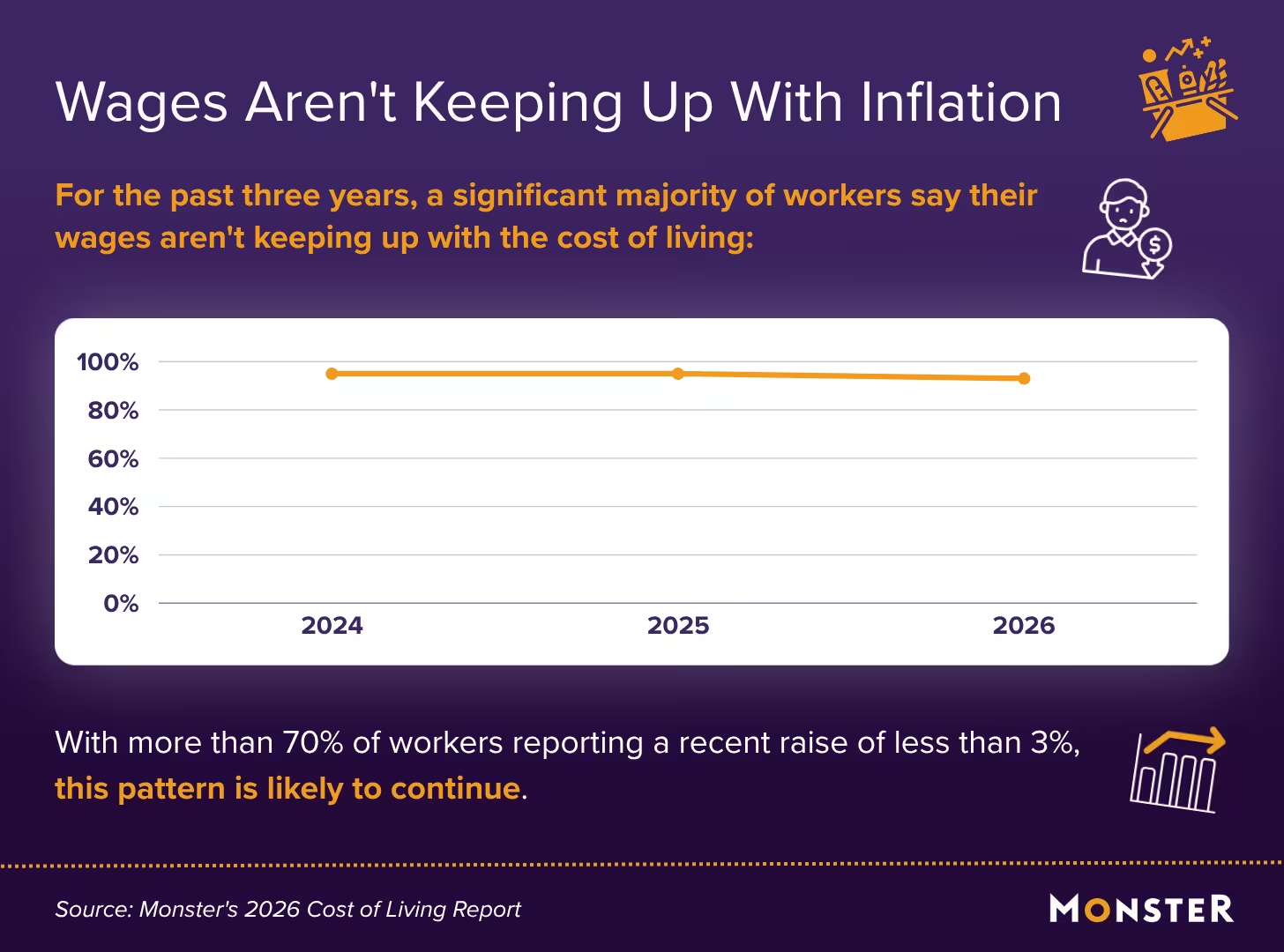
While the number has shifted slightly, the overall picture is largely unchanged: Most workers continue to feel that their income doesn’t align with the reality of their expenses.
Raises aren’t closing the gap for many workers either. More than 7 in 10 say their most recent salary increase was less than 3%, reinforcing the feeling that even when pay increases, it may not be enough to offset rising costs.
Employer Response Is Declining
As workers continue to feel squeezed, fewer say their employers are responding directly to inflation.
The reality of 2026—where only 7% of workers received an inflation-related bump—marks the low point of a steady downward slide from 9% in 2025 and 11% in 2024.
When asked how employers should respond, workers were clear: Direct wage increases matter most. Two-thirds of workers say pay increases are the most important action employers can take, far outweighing bonuses, flexibility, or expanded benefits.
That doesn’t mean benefits and flexibility aren’t valuable. But when workers are struggling with day-to-day costs, direct compensation may feel like the most immediate and meaningful form of support.
Workers Are Using Savings to Stay Afloat
The cost-of-living squeeze is showing up in how workers manage their finances.
According to Monster’s cost-of-living survey, an overwhelming 85% of workers have been forced to tap into their savings to stay afloat, including 42% who say they have used a significant portion of their savings. That suggests many workers aren’t just budgeting more carefully, but relying on money they had set aside for emergencies, future plans, or long-term goals.
Workers are also making other financial adjustments, including:
- Cutting nonessential spending: 61%
- Relying more on credit or loans: 38%
- Reducing retirement savings: 34%
These trade-offs can add stress beyond the immediate financial impact. Cutting back on everyday spending may help in the short term, but reducing retirement contributions or relying on credit can affect long-term financial stability.
More Workers Are Looking for Higher Pay
As costs rise and raises fall short, more workers are looking for ways to increase their income.
Nearly three-quarters (74%) of workers are actively seeking higher-paying roles—a big jump from 62% in 2024 and 56% in 2025.
But finding higher pay isn’t easy. Only 3% of those looking have successfully secured and accepted a higher-paying position.
Workers are also navigating a job market that feels more difficult. More than half say it’s harder to find a job as companies cut costs, and 41% are worried about job security. Some are considering other ways to earn more, with 42% saying they’re thinking about taking on an additional job.
The result is a tough combination: Workers feel pressure to earn more, but they may not feel confident that the job market will deliver.
What to Do If Your Salary Isn’t Keeping Up With Inflation
If you’re struggling with the cost of living vs wages over time, you’re not alone. Fortunately, there are steps you can take to understand your options and make more informed career decisions.

Know Your Current Market Value
Before asking for a raise or applying for a new role, research what similar positions are paying in your field, location, and experience level. Use salary tools, job postings, and industry data to get a realistic range.
This can help you decide whether your current pay is below market, whether it’s time to negotiate, or whether you may need to look at roles in a higher-paying industry, function, or location.

Track Your Accomplishments Before You Negotiate
If you plan to ask for a raise, prepare specific examples of your impact. Focus on measurable results, added responsibilities, efficiency improvements, customer outcomes, revenue impact, or ways you helped your team meet goals.
Tying your conversation to value, not just rising costs, can help you negotiate a higher salary more successfully.

Consider Your Full Compensation Package
Pay matters, especially when costs are rising. But it’s also worth looking at your full compensation package, including health benefits, retirement contributions, bonuses, flexibility, paid time off, and commuting costs.
A higher salary may not always mean a better financial outcome if the role comes with higher expenses, fewer benefits, or less stability.

Keep Your Resume Ready
Even if you’re not ready to make a move, keeping your resume up to date can help you act quickly when the right opportunity appears. Add recent wins, new skills, certifications, promotions, and measurable achievements while they’re fresh.
This is especially important in a competitive job market, where being prepared can help you respond faster to better-paying opportunities.

Be Strategic in Your Job Search
If you’re searching for higher pay, focus on roles that clearly align with your goals. Look for salary ranges, growth potential, benefits, and signs of stability. Applying broadly may feel productive, but a targeted job search can help you spend your time on opportunities that are more likely to improve your financial situation.
What’s Your Next Move?
If your paycheck isn’t stretching as far as it used to, you don’t have to wait for the market to correct itself. Take control of your career path today by assessing your market value, updating your resume, and applying for the roles that support your financial and career goals.
For press inquiries, please contact Shanna Briggs at shanna.briggs@monster.com.
Methodology
The findings presented in this report are based on a survey conducted by Pollfish on May 17, 2026, among more than 1,000 currently employed U.S. workers. Respondents answered a series of multiple-choice questions about wages, inflation, cost-of-living pressure, savings, job security, and how rising expenses are influencing career decisions.
Demographic Breakdown
The sample included representation across generations: 17% Gen Z, 25% millennials, 28% Gen X, and 28% baby boomers. Respondents identified their gender as 54% female, 45% male, and 1% nonbinary.
About Monster
Monster is a global leader in online job searching, resume building, and employment solutions. For over 30 years, the company has been a trusted authority for both job seekers and companies. Beyond the job search, Monster provides an intuitive Resume Builder and hundreds of resume templates to help candidates stand out against the competition, while offering employers a comprehensive resume database to source top talent. As a G2 category leader, Monster has been featured in Forbes, CNBC, CNN, and USA Today, sharing the career advice needed to bridge the gap between job seekers and hiring managers. Follow Monster on LinkedIn, Facebook, Instagram, and TikTok for the latest employment trends.

Vicki Salemi is a nationally recognized career expert who helps professionals navigate the hiring landscape and find the right fit on Monster. With over 15 years of experience in corporate recruiting and HR, she offers expert guidance on job search strategies, interview preparation, and career development to help candidates land their next role.
See More From Vicki SalemiExplore Related Career Advice
Cashier Career Paths: Monster Workforce Mobility Report (Volume 2)
Updated:
Oct 19, 2026
|
9 min read

Highest Paying Medical Jobs: 35 Top Healthcare Careers by Salary

Updated:
Oct 16, 2026
|
18 min read

How to Ask for a Raise at Work: Steps, Scripts, & Email Templates
Updated:
Oct 15, 2026
|
20 min read
Job Hugging Statistics: Nearly 9 in 10 Workers Have “Hugged” a Job
Updated:
Oct 13, 2026
|
9 min read

Nearly 3 in 10 LinkedIn Users Have Updated a Past Job After Leaving It
Updated:
Oct 7, 2026
|
7 min read

Employee Loyalty Statistics: 90% Say Companies Expect More Than They Give
Updated:
Oct 5, 2026
|
7 min read


Overqualified Hiring Stats: 57% Would Cut Resume Experience to Get Hired
Updated:
Sep 28, 2026
|
9 min read

20 First Job Interview Questions & Sample Answers: Tips to Land Your First Job
Updated:
Sep 24, 2026
|
20 min read
Manage Your Career Like an Expert
Take control of your professional journey with Monster’s expert resources. Explore advice, research, and tips to make informed decisions and advance your career with confidence.

Job Search
Discover strategies to get noticed, network effectively, and streamline your job search process.

Resumes
Get practical tips to create a resume or CV that stands out to employers and wins interviews.

Cover Letters
Learn how to craft a compelling cover letter that highlights your experience and fit for the role.

Career Paths
Explore career paths, industry trends, and growth opportunities to plan your next move.

Interviewing
Prepare for interviews with tips on answering common questions and following up effectively.

Career Development
Develop key skills and knowledge to grow in your current role or pivot to new opportunities.

Leaving a Job
Navigate job changes and career transitions with practical advice and planning resources.