
How to Write a Combination Resume: Examples, Template, & Tips

A combination resume blends chronological and functional formatting for a skills-first resume that’s ATS-friendly and familiar to hiring managers.
Updated:
|

16 min read

Table of Contents


To write a combination resume, blend a skills-first approach with a traditional reverse-chronological work history. This format highlights your most relevant skills near the top of the page and gives recruiters and applicant tracking systems (ATS) the employment timeline they expect.
Why stray from the traditional chronological format? Not every career fits neatly into a linear timeline. Career changers, people with employment gaps, and job seekers whose skills outshine their job titles may benefit from a format that leads with strengths rather than work experience alone.
In this guide, you’ll learn what a combination resume is, how it compares with chronological and functional formats, when it’s the right choice, and how to write one step by step. You’ll also find a template and examples to help you create your own combination resume.
What Is a Combination Resume?
A combination resume, also known as a hybrid resume, is a resume format that combines the strengths of a functional resume with the familiarity and readability of a chronological resume.
Its defining feature is that it places your key qualifications before your work history while keeping the rest of the resume in a familiar, recruiter-friendly format. Some combination resumes also include a summary of qualifications in place of a traditional professional summary.
Combination vs Chronological vs Functional Resumes
The main difference between combination, chronological, and functional resumes is the section that appears first: Combination resumes lead with skills, chronological resumes lead with work history, and functional resumes focus primarily on abilities.
Here’s how the three formats compare:
| Resume Format | Leads With | Best For | Limitations |
| Combination (Hybrid) | Relevant skills and qualifications, followed by reverse-chronological work history | Career changers, entry-level professionals with relevant skills, people reentering the workforce | Can be longer and requires careful organization |
| Chronological | Reverse-chronological work history, followed by education and skills | Job seekers with a steady career path and relevant experience | May highlight employment gaps and bury relevant skills |
| Functional | Relevant skills and abilities as the primary focus, with limited work history | Candidates with significant employment gaps or highly unconventional career paths | Can make it harder for recruiters and ATS to connect skills with specific roles |
A combination resume offers the best of both formats by showcasing your strongest qualifications while preserving the clear, chronological work history employers expect to see.
When to Use a Combination Resume (& When to Skip It)
Use a combination resume when your skills deserve equal or greater attention than your professional experience. If your career timeline doesn’t fully reflect your qualifications, leading with your strengths can help employers quickly see what you bring to the role.
Here’s when a combination resume is a good choice and when a traditional chronological resume is likely the better fit:

Use a combination resume if…
You’re changing careers and want to draw attention to transferable skills.
You’re reentering the workforce after time away.
You want to draw attention away from employment gaps or frequent job changes without hiding them.
You have substantial experience and want to emphasize both your skills and career progression.
You’re applying for roles that value technical or transferable skills as much as work experience.

Skip a combination resume if…
You have a straightforward, linear work history with no significant gaps, making a chronological resume the better choice.
Your most relevant experience is your recent work history, and it should take center stage.
You have very little work experience or few relevant skills to showcase, making a simple chronological resume more effective.
You don’t have enough relevant skills or accomplishments to justify a dedicated skills section.
The employer specifically requests or strongly prefers a traditional chronological resume.
What to Include in a Combination Resume
A combination resume includes the same core sections as most resume formats—rearranged. One of its biggest advantages is flexibility, allowing you to organize sections based on what best supports your qualifications.
Include these sections in your combination resume:
- Contact information: Add your name, phone number, professional email address, city and state, and optional links to your LinkedIn profile or online portfolio.
- Professional summary or summary of qualifications: Introduce yourself with a brief overview of your experience, key strengths, or career goals. Some combination resumes replace a traditional professional summary with a summary of qualifications.
- Skills section: Showcase relevant hard and soft skills, grouped into categories when appropriate. This is the defining feature of a combination resume and should appear before your experience section.
- Work experience section: List your work history in reverse-chronological order. Focus on measurable accomplishments and responsibilities that reinforce the skills highlighted above.
- Education section: Include your degree, school, and graduation date (if applicable). Students and recent graduates can place this section above work experience to emphasize their academic background.
- Additional sections (optional): Add relevant certifications, licenses, projects, volunteer experience, coursework, languages, awards, or professional affiliations if they strengthen your application.
Unlike a chronological resume, a combination resume gives you more flexibility to adjust the order of sections based on your experience. Just keep the layout logical and easy to scan so recruiters can quickly find the information that matters most.
How to Write a Combination Resume Step by Step
To write an effective combination resume, lead with your strongest qualifications, connect them to the role, and support them with your employment history. Keep the format of your resume easy for recruiters and ATS to scan, keyword-match each section to the job posting, and quantify your results whenever possible.
- Step 1:
Lead With a Strong Summary
Open with a brief professional summary that introduces your background, emphasizes your role-relevant strengths, and shows how you fit the role. Keep it to two to four sentences and focus on the qualifications most likely to matter to the employer.
Use language from the job description naturally, but avoid copying full phrases or overloading the section with keywords.
Example of a professional summary:
Professional SummaryDetail-oriented project coordinator with 6+ years of experience managing cross-functional projects, improving team workflows, and delivering results on tight deadlines. Recognized for strong communication, organization, and problem-solving skills. Seeking to leverage transferable experience in an operations management role.
Example of a summary of qualifications:
Summary of Qualifications- 6+ years of experience coordinating cross-functional projects and managing competing priorities.
- Proven ability to improve operational efficiency, reducing project turnaround times by 18%.
- Skilled in project management, process improvement, stakeholder communication, and team collaboration.
- Proficient in Microsoft Excel, Asana, Salesforce, and Google Workspace.
- Step 2:
Build a Targeted Skills Section
Place your best skills near the top of the page. You can take it a step further by grouping them into distinct categories, such as project management, technical skills, client relations, or leadership.
Tailoring your resume to each job posting is one of the most effective ways to improve relevance. Nearly half of job seekers (48%) say tailoring their resume for each application is the most difficult part of resume writing, so focusing your skills section on the employer’s needs can make the process more manageable.
Prioritize skills that appear in the job description and reflect your actual experience. To make the section more persuasive, add brief examples or accomplishments that show how you’ve applied those skills instead of listing keywords alone.
Example:
Skills- Project Management: Project planning, scheduling, stakeholder communication, risk management
- Operations: Process improvement, workflow optimization, documentation, quality assurance
- Technical Skills: Microsoft Excel, Asana, Salesforce, Google Workspace
- Leadership: Team collaboration, employee training, cross-functional coordination
- Step 3:
Add a Quantified Work Experience Section
List your professional experience in reverse-chronological order, starting with your most recent role. Include your job title, employer, location, and dates of employment, followed by concise bullet points.
Focus on accomplishments rather than routine duties. Use numbers, percentages, time frames, or other measurable results when possible, and reinforce the skills you emphasized earlier in the resume.
Example:
SkillsProject Coordinator
Willow & Company, Philadelphia, PA | March 2021–Present- Coordinated 40+ cross-functional projects annually, improving on-time delivery by 18%.
- Streamlined reporting processes, reducing administrative workload by 10 hours per month.
- Trained and onboarded new team members, improving onboarding completion rates by 25%.
- Step 4:
Round Out Your Resume With Education & Supporting Sections
Add your education, including your degree or credential, school, and graduation date when relevant. Students and recent graduates may place education above work experience if it better supports their qualifications.
You can also include certifications, relevant coursework, projects, volunteer work, languages, or other sections that strengthen your candidacy. Keep only the information that supports the target role, and use standard headings so an ATS can identify each section.
Example of a certifications section:
CertificationsCertified Associate in Project Management (CAPM)
Project Management Institute (PMI) | 2024Google Project Management Certificate
Google Career Certificates | 2023Example of a languages section:
Languages- English (Native)
- Spanish (Professional Working Proficiency)
- French (Conversational)
Combination Resume Template
Use this standard combination resume template as a starting point to create your own resume. Customize each section to match your experience, place your top skills near the top, and tailor your content to the job you’re applying for.
Combination Resume Examples by Career Scenario
Combination resumes work best when your skills tell a stronger story than your job titles alone. The examples below show how different candidates can use this format to highlight relevant qualifications.
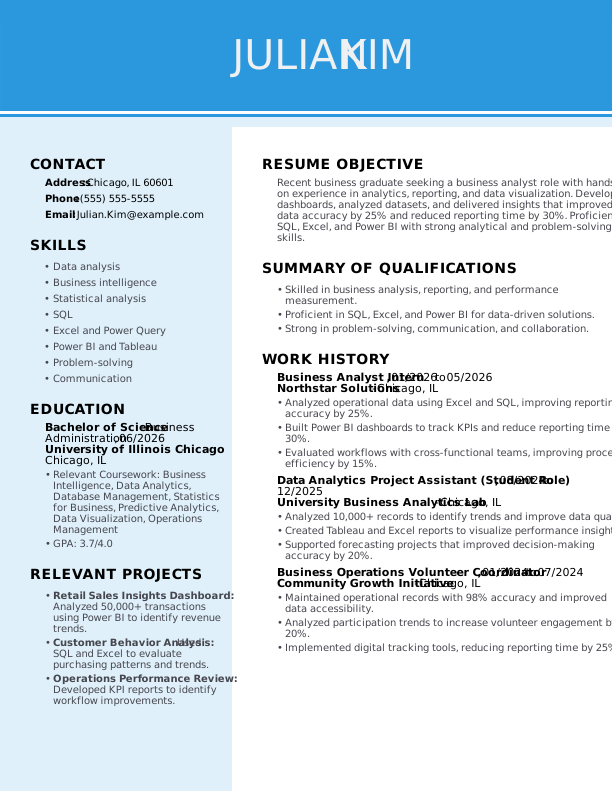
Recent Graduate or Entry-Level Professional
This example of a combination resume shows how a recent graduate can highlight technical skills, academic projects, internships, and relevant coursework while using a resume objective to demonstrate career goals and job-ready qualifications.
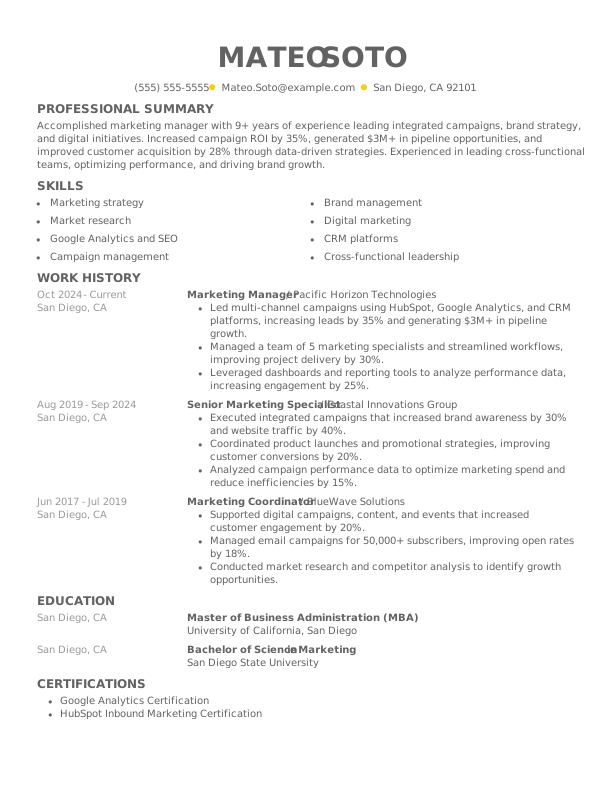
Experienced Professional
Designed for experienced professionals, this combination resume emphasizes marketing strategy, campaign management, and brand leadership through a results-focused professional summary and a targeted skills section.
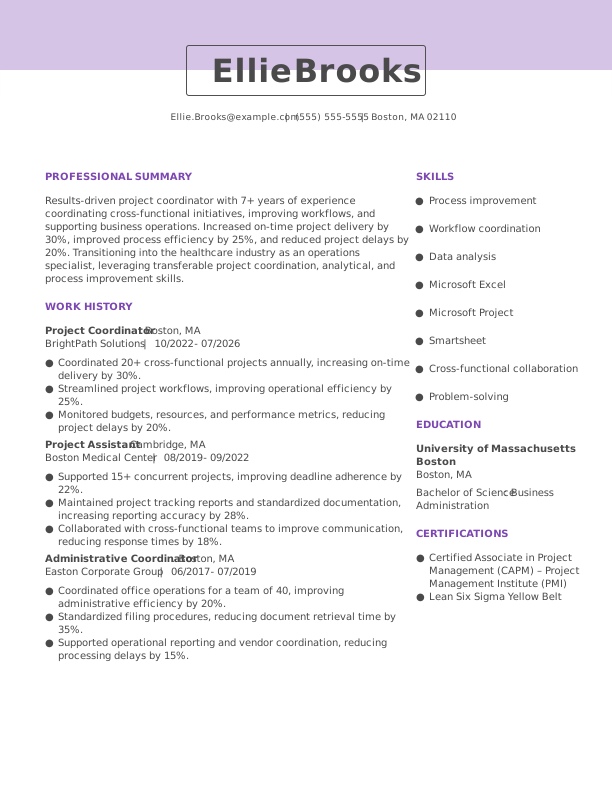
Career Changer
This combination resume example shows how a career changer can highlight transferable skills, relevant certifications, and measurable accomplishments while using a professional summary to explain a transition into the healthcare industry.
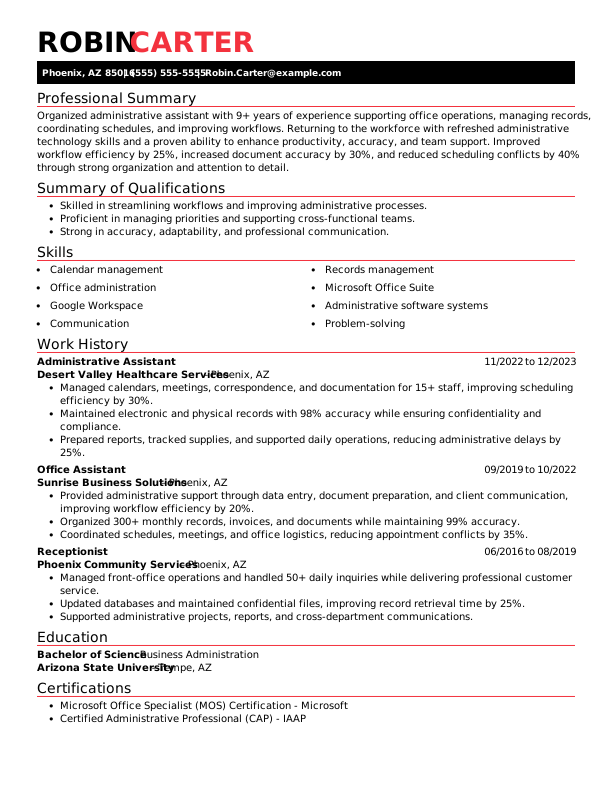
Professional Reentering the Workforce
This combination resume example shows how a professional returning to the workforce can highlight transferable administrative skills, refreshed qualifications, and measurable accomplishments, using a professional summary and targeted skills section to showcase expertise in office administration, records management, communication, and problem-solving.
Combination Resume Formatting Tips (ATS & Recruiter-Friendly)
To format a combination resume, use a clean layout, standard section headings, concise bullet points, and ATS-friendly formatting. Follow these best practices:
Use a professional font. Choose a readable resume font, such as Calibri, Arial, or Georgia, in a 10 to 12-point size.
Keep margins and spacing consistent. Use 0.5- to 1-inch margins and consistent spacing throughout your resume.
Use standard section headings. Stick with resume sections like “Professional Summary,” “Skills,” “Professional Experience,” and “Education,” so recruiters and ATS can easily identify each section.
Choose the right resume length. Keep your resume to one page if you have fewer than five years of experience and no more than two pages in most cases.
Use bullet points and bolding intentionally. Break up dense text with concise bullet points, especially under work experience. Use bold formatting sparingly to draw attention to key information, such as job titles and educational institutions.
Quantify your achievements. Whenever possible, include numbers, percentages, or dollar amounts to bring credibility and weight to your duties and accomplishments.
Tailor your resume to the job. Incorporate relevant keywords from the job description naturally throughout your summary, skills, and experience sections to align your resume with the role.
Export your resume as a PDF. Save your resume as a PDF unless the employer specifically requests a different file format, such as DOCX.
Common Combination Resume Mistakes to Avoid
Common combination resume mistakes include overloading the skills section, repeating information, and using a layout that’s difficult to scan. Avoid these pitfalls:
Listing too many skills. Prioritize your qualifications that are the most relevant to the job instead of including every skill you possess.
Repeating the same information. Use your skills section to summarize strengths and your employment history section to provide evidence through accomplishments.
Writing vague accomplishment statements. Replace generic duties with measurable achievements whenever possible.
Neglecting your professional experience. Even though skills come first, recruiters still expect a complete and credible employment timeline.
Using an overly complex layout. Avoid graphics, tables, icons, text boxes, and multiple columns that can make your resume harder for ATS to parse.
Submitting the same resume for every application. Customize your summary, skills, and accomplishments to align with each job description.
The Best of Both Resume Formats
By combining a skills-first introduction with a traditional work history, a combination resume helps job seekers highlight their strengths while giving employers the context they need.
As with any resume, keep the formatting clean, tailor your content to each position, and use measurable accomplishments to strengthen your application. Done well, a combination resume gives employers a compelling reason to keep reading and move your application to the next stage of the hiring process.
Frequently Asked Questions
Is a combination resume the same as a hybrid resume?
Yes, a combination resume and a hybrid resume are two names for the same resume format. Both lead with your strongest qualifications, followed by a reverse-chronological work history.
How is a combination resume different from a functional resume?
A combination resume is different from a functional resume because it includes both a skills-first section and a reverse-chronological work history. A functional resume organizes nearly all of its content around skills, with much less emphasis on professional experience.
Because it preserves a traditional employment timeline, a combination resume is generally more familiar to recruiters and more compatible with applicant tracking systems (ATS).
Is a combination resume good for career changers?
Yes, a combination resume is one of the best resume formats for career changers because it highlights transferable skills before your work history. This lets employers focus on the qualifications you bring to a new field while still providing the career timeline they expect.
How long should a combination resume be?
A combination resume should usually be one page for early-career professionals and up to two pages for experienced candidates. Focus on including only the skills, accomplishments, and experience most relevant to the role.

Kirsten Chorpenning is a career advice writer who empowers job seekers to take control of their career paths using Monster’s comprehensive job search and resume tools. She specializes in helping job seekers find rewarding jobs in today’s dynamic work environment.
See More From Kirsten ChorpenningExplore Related Career Advice

Overqualified Hiring Stats: 57% Would Cut Resume Experience to Get Hired

Updated:
Sep 28, 2026
|
9 min read

20 First Job Interview Questions & Sample Answers: Tips to Land Your First Job
Updated:
Sep 24, 2026
|
20 min read

“Do You Have Any Questions for Me?” How to Answer in an Interview (30 Examples)
Updated:
Sep 18, 2026
|
14 min read



20 Companies That Pay 100% Health Insurance & Other Top Benefits
Updated:
Sep 10, 2026
|
14 min read


How Long of a Commute Is Too Long? 49% Have Turned Down a Job Due to the Commute
Updated:
Sep 8, 2026
|
11 min read

Manage Your Career Like an Expert
Take control of your professional journey with Monster’s expert resources. Explore advice, research, and tips to make informed decisions and advance your career with confidence.

Job Search
Discover strategies to get noticed, network effectively, and streamline your job search process.

Resumes
Get practical tips to create a resume or CV that stands out to employers and wins interviews.

Cover Letters
Learn how to craft a compelling cover letter that highlights your experience and fit for the role.

Career Paths
Explore career paths, industry trends, and growth opportunities to plan your next move.

Interviewing
Prepare for interviews with tips on answering common questions and following up effectively.

Career Development
Develop key skills and knowledge to grow in your current role or pivot to new opportunities.

Leaving a Job
Navigate job changes and career transitions with practical advice and planning resources.