
Dangerous Jobs That Pay Well: 30 Risky Careers Ranked by Salary

Some careers pair serious occupational danger with impressive income. From skilled trades to engineering roles, high risk can come with high reward.
Updated:
|

20 min read
Table of Contents


What You’ll Learn
- The highest-paying dangerous jobs include aircraft pilots and flight engineers, ship engineers, and elevator and escalator installers and repairers, all of which earn over $100,000 annually.
- The three jobs with the highest fatality rates all earn under $60,000, including logging workers, fishing and hunting workers, and roofers, showing that the deadliest jobs aren’t necessarily the highest-paying.
- Some dangerous, high-paying jobs require no college degree or formal credential, and entry-level opportunities may be available with little or no prior experience.
- To get dangerous jobs that pay well, research entry requirements, complete necessary training, earn required credentials, gain hands-on experience, and prepare for the job search and interview process.
High risk can come with high pay, but the relationship between danger and salary isn’t as straightforward as you might expect. Not every dangerous job pays well, and the highest-paying dangerous jobs aren’t necessarily the deadliest.
Occupational risk is only one factor that can influence pay. Specialized skills, licenses, technical training, and responsibility can also contribute to higher salaries, which helps explain why some of the deadliest occupations earn less than other dangerous jobs.
Using the latest available data from the U.S. Bureau of Labor Statistics (BLS) and O*NET, we ranked 30 dangerous jobs by salary. We compare their hazards, fatal and nonfatal injury data, and entry requirements. We also explain why the deadliest jobs aren’t always the highest-paying and share practical tips for finding work in a dangerous career.
What Makes a Job Dangerous?
A dangerous job exposes workers to a greater risk of serious injury or death because of the conditions, equipment, environment, or activities involved in the work.
According to the BLS’ 2024 Census of Fatal Occupational Injuries (CFOI) Table A-1, there were 5,070 fatal work injuries in 2024 (the most recent data available). The leading causes of these fatalities show the range of risks workers can face on the job:
- Transportation incidents: 1,937 deaths
- Falls, slips, and trips: 844 deaths
- Contact incidents involving objects or equipment: 756 deaths
- Violent acts: 733 deaths
- Exposure to harmful substances or environments: 687 deaths
How We Identified “Dangerous” Jobs for This List
In this article, we identified the dangerous jobs that pay well using BLS fatal occupational injury rates and four O*NET Work Context measures related to hazardous workplace exposure. BLS fatality rates measure deaths per 100,000 workers, making it easier to compare risk across occupations, while injury counts show the total number of workers affected.
We also reviewed BLS data on the major causes of fatal work injuries, along with the latest available data on fatal and nonfatal injuries, salary information, and educational requirements for additional context. See the full methodology and sources at the end of this article.
High-Paying Dangerous Jobs at a Glance
This list includes dangerous jobs that pay over $100,000, such as aircraft pilots, ship engineers, elevator and escalator installers and repairers, and electrical and electronics repairers.
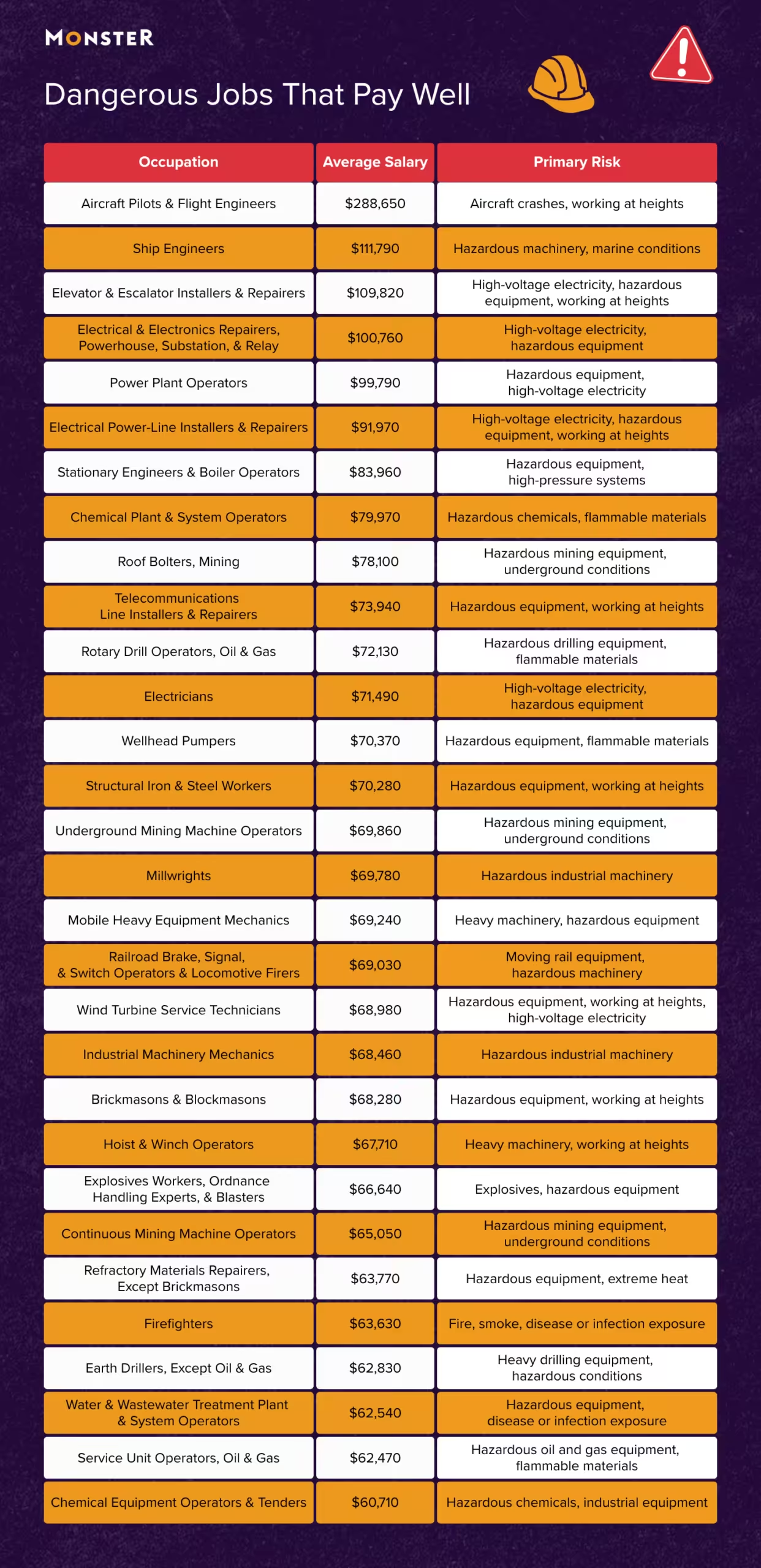
Compare 30 high-paying dangerous jobs, their average salaries, and primary occupational risks:
30 Dangerous Jobs That Pay Well, Ranked by Salary
Below, explore 30 dangerous high-paying jobs ranked from highest to lowest average salary, including their primary hazards, entry-level requirements, and the latest available BLS fatal and nonfatal injury data.
- 1.
Aircraft Pilots & Flight Engineers
Aircraft pilots and flight engineers operate and monitor aircraft during flight, a role that carries risks from aviation accidents and working at significant heights.
- Average salary: $288,650
- Primary hazards: Aircraft crashes, working at heights
- Entry-level requirements: Bachelor’s degree or certificate/postsecondary training, depending on occupation
- 2024 fatal work injuries: 73
- 2023–2024 nonfatal injuries/illnesses: 900
- 2.
Ship Engineers
Ship engineers operate, maintain, and repair a vessel’s engines and mechanical systems, exposing them to hazardous machinery and potentially dangerous marine conditions.
- Average salary: $111,790
- Primary hazards: Hazardous machinery, marine conditions
- Entry-level requirements: Certificate or other postsecondary training
- 2024 fatal work injuries: Not separately reported
- 2023–2024 nonfatal injuries/illnesses: Not published
- 3.
Elevator & Escalator Installers & Repairers
Elevator and escalator installers and repairers assemble, install, maintain, and repair lift systems. The work can involve high-voltage electricity, hazardous equipment, and significant heights.
- Average salary: $109,820
- Primary hazards: High-voltage electricity, hazardous equipment, working at heights
- Entry-level requirements: High school diploma or equivalent
- 2024 fatal work injuries: 6
- 2023–2024 nonfatal injuries/illnesses: 700
- 4.
Electrical & Electronics Repairers, Powerhouse, Substation, & Relay
Powerhouse, substation, and relay electrical and electronics repairers inspect, test, maintain, and repair equipment in powerhouses and substations, where high-voltage electricity and hazardous equipment create serious occupational risks.
- Average salary: $100,760
- Primary hazards: High-voltage electricity, hazardous equipment
- Entry-level requirements: Certificate or other postsecondary training
- 2024 fatal work injuries: Not separately reported
- 2023–2024 nonfatal injuries/illnesses: 270
- 5.
Power Plant Operators
Power plant operators control and monitor the machinery used to generate electricity, putting them near hazardous equipment and high-voltage electrical systems.
- Average salary: $99,790
- Primary hazards: Hazardous equipment, high-voltage electricity
- Entry-level requirements: High school diploma or equivalent
- 2024 fatal work injuries: Not separately reported
- 2023–2024 nonfatal injuries/illnesses: 440
- 6.
Electrical Power-Line Installers & Repairers
Electrical power-line installers and repairers install, maintain, and repair electrical power systems, often working around high-voltage electricity, hazardous equipment, and elevated power lines.
- Average salary: $91,970
- Primary hazards: High-voltage electricity, hazardous equipment, working at heights
- Entry-level requirements: High school diploma or equivalent
- 2024 fatal work injuries: 21
- 2023–2024 nonfatal injuries/illnesses: 6,040
- 7.
Stationary Engineers & Boiler Operators
Stationary engineers and boiler operators operate and maintain boilers, engines, and other mechanical equipment, exposing them to hazardous machinery and high-pressure systems.
- Average salary: $83,960
- Primary hazards: Hazardous equipment, high-pressure systems
- Entry-level requirements: High school diploma or equivalent
- 2024 fatal work injuries: Not separately reported
- 2023–2024 nonfatal injuries/illnesses: 700
- 8.
Chemical Plant & System Operators
Chemical plant and system operators control equipment and production processes used to manufacture or process chemicals, which can involve exposure to hazardous chemicals and flammable materials.
- Average salary: $79,970
- Primary hazards: Hazardous chemicals, flammable materials
- Entry-level requirements: High school diploma or equivalent
- 2024 fatal work injuries: Not separately reported
- 2023–2024 nonfatal injuries/illnesses: 940
- 9.
Roof Bolters, Mining
Roof bolters help secure underground mine roofs to prevent collapses, and they must work around hazardous mining equipment and in potentially dangerous underground conditions.
- Average salary: $78,100
- Primary hazards: Hazardous mining equipment, underground conditions
- Entry-level requirements: High school diploma or equivalent
- 2024 fatal work injuries: 1
- 2023–2024 nonfatal injuries/illnesses: 450
- 10.
Telecommunications Line Installers & Repairers
Telecommunications line installers and repairers install, maintain, and repair communications cables and equipment, often using hazardous equipment while working on poles, towers, or other elevated structures.
- Average salary: $73,940
- Primary hazards: Hazardous equipment, working at heights
- Entry-level requirements: High school diploma or equivalent
- 2024 fatal work injuries: 15
- 2023–2024 nonfatal injuries/illnesses: 7,900
- 11.
Rotary Drill Operators, Oil & Gas
Rotary drill operators control drilling equipment used to extract oil and gas, working around powerful machinery and flammable materials at drilling sites.
- Average salary: $72,130
- Primary hazards: Hazardous drilling equipment, flammable materials
- Entry-level requirements: No formal educational credential
- 2024 fatal work injuries: 7
- 2023–2024 nonfatal injuries/illnesses: 200
- 12.
Electricians
Electricians install, maintain, and repair electrical wiring and systems, work that can expose them to high-voltage electricity and hazardous equipment.
- Average salary: $71,490
- Primary hazards: High-voltage electricity, hazardous equipment
- Entry-level requirements: High school diploma or equivalent
- 2024 fatal work injuries: 53
- 2023–2024 nonfatal injuries/illnesses: 18,790
- 13.
Wellhead Pumpers
Wellhead pumpers operate and monitor equipment that controls the flow of oil and gas from wells, putting them around hazardous machinery and flammable materials.
- Average salary: $70,370
- Primary hazards: Hazardous equipment, flammable materials
- Entry-level requirements: High school diploma or equivalent
- 2024 fatal work injuries: Not separately reported
- 2023–2024 nonfatal injuries/illnesses: 70
- 14.
Structural Iron & Steel Workers
Structural iron and steel workers install and connect metal components used in buildings, bridges, and other structures, frequently working with hazardous equipment at significant heights.
- Average salary: $70,280
- Primary hazards: Hazardous equipment, working at heights
- Entry-level requirements: High school diploma or equivalent
- 2024 fatal work injuries: 14
- 2023–2024 nonfatal injuries/illnesses: 2,900
- 15.
Underground Mining Machine Operators
Underground mining machine operators run equipment used to extract and move materials below ground, where hazardous machinery and underground working conditions present substantial risks.
- Average salary: $69,860
- Primary hazards: Hazardous mining equipment, underground conditions
- Entry-level requirements: No formal educational credential
- 2024 fatal work injuries: 12
- 2023–2024 nonfatal injuries/illnesses: 780
- 16.
Millwrights
Millwrights install, dismantle, maintain, and repair heavy industrial machinery, often working around large moving equipment and other mechanical hazards.
- Average salary: $69,780
- Primary hazards: Hazardous industrial machinery
- Entry-level requirements: High school diploma or equivalent
- 2024 fatal work injuries: 5
- 2023–2024 nonfatal injuries/illnesses: 1,540
- 17.
Mobile Heavy Equipment Mechanics
Mobile heavy equipment mechanics inspect, maintain, and repair large construction, mining, and industrial vehicles and machinery, often working in close proximity to heavy and hazardous equipment.
- Average salary: $69,240
- Primary hazards: Heavy machinery, hazardous equipment
- Entry-level requirements: High school diploma or equivalent
- 2024 fatal work injuries: 25
- 2023–2024 nonfatal injuries/illnesses: 3,460
- 18.
Railroad Brake, Signal, & Switch Operators & Locomotive Firers
These railroad workers help operate brakes, signals, switches, and locomotive systems that keep trains moving safely, placing them around moving rail equipment and hazardous machinery.
- Average salary: $69,030
- Primary hazards: Moving rail equipment, hazardous machinery
- Entry-level requirements: High school diploma or equivalent
- 2024 fatal work injuries: Not separately reported
- 2023–2024 nonfatal injuries/illnesses: 400
- 19.
Wind Turbine Service Technicians
Wind turbine service technicians inspect, maintain, and repair wind turbines, often working high above the ground around electrical systems and hazardous mechanical equipment.
- Average salary: $68,980
- Primary hazards: Hazardous equipment, working at heights, high-voltage electricity
- Entry-level requirements: Certificate or other postsecondary training
- 2024 fatal work injuries: 4
- 2023–2024 nonfatal injuries/illnesses: 320
- 20.
Industrial Machinery Mechanics
Industrial machinery mechanics maintain, troubleshoot, and repair factory and production equipment, requiring hands-on work around potentially hazardous industrial machinery.
- Average salary: $68,460
- Primary hazards: Hazardous industrial machinery
- Entry-level requirements: High school diploma or equivalent
- 2024 fatal work injuries: 17
- 2023–2024 nonfatal injuries/illnesses: 7,660
- 21.
Brickmasons & Blockmasons
Brickmasons and blockmasons construct and repair walls, partitions, and other structures using brick and concrete block. The work can involve hazardous equipment and elevated work areas.
- Average salary: $68,280
- Primary hazards: Hazardous equipment, working at heights
- Entry-level requirements: High school diploma or equivalent
- 2024 fatal work injuries: 11
- 2023–2024 nonfatal injuries/illnesses: 1,560
- 22.
Hoist & Winch Operators
Hoist and winch operators control equipment used to lift and move heavy loads, creating risks from heavy machinery, suspended materials, and work performed at heights.
- Average salary: $67,710
- Primary hazards: Heavy machinery, working at heights
- Entry-level requirements: No formal educational credential
- 2024 fatal work injuries: Not separately reported
- 2023–2024 nonfatal injuries/illnesses: 220
- 23.
Explosives Workers, Ordnance Handling Experts, & Blasters
Explosives workers and blasters prepare, position, and detonate explosives for construction, mining, demolition, or other operations, making explosives and hazardous equipment central risks of the job.
- Average salary: $66,640
- Primary hazards: Explosives, hazardous equipment
- Entry-level requirements: High school diploma or equivalent
- 2024 fatal work injuries: Not separately reported
- 2023–2024 nonfatal injuries/illnesses: 480
- 24.
Continuous Mining Machine Operators
Continuous mining machine operators run specialized equipment that cuts and gathers material from underground mine faces, exposing them to hazardous mining machinery and underground conditions.
- Average salary: $65,050
- Primary hazards: Hazardous mining equipment, underground conditions
- Entry-level requirements: No formal educational credential
- 2024 fatal work injuries: Not separately reported
- 2023–2024 nonfatal injuries/illnesses: 90
- 25.
Refractory Materials Repairers, Except Brickmasons
Refractory materials repairers install and repair heat-resistant materials used in furnaces, kilns, and similar equipment, where hazardous machinery and extreme heat can make the work dangerous.
- Average salary: $63,770
- Primary hazards: Hazardous equipment, extreme heat
- Entry-level requirements: High school diploma or equivalent
- 2024 fatal work injuries: Not separately reported
- 2023–2024 nonfatal injuries/illnesses: 50
- 26.
Firefighters
Firefighters respond to fires and other emergencies to protect people and property, routinely facing hazards including fire, smoke, and exposure to disease or infection.
- Average salary: $63,630
- Primary hazards: Fire, smoke, disease or infection exposure
- Entry-level requirements: Certificate or other postsecondary training
- 2024 fatal work injuries: 26
- 2023–2024 nonfatal injuries/illnesses: 500
- 27.
Earth Drillers, Except Oil & Gas
Earth drillers operate drilling equipment to create holes for construction, mining, exploration, or related projects, exposing them to heavy machinery and hazardous working conditions.
- Average salary: $62,830
- Primary hazards: Heavy drilling equipment, hazardous conditions
- Entry-level requirements: High school diploma or equivalent
- 2024 fatal work injuries: 3
- 2023–2024 nonfatal injuries/illnesses: 740
- 28.
Water & Wastewater Treatment Plant & System Operators
Water and wastewater treatment operators run and monitor equipment that treats water and sewage, potentially exposing them to hazardous machinery and disease or infection.
- Average salary: $62,540
- Primary hazards: Hazardous equipment, disease or infection exposure
- Entry-level requirements: High school diploma or equivalent
- 2024 fatal work injuries: 11
- 2023–2024 nonfatal injuries/illnesses: 1,110
- 29.
Service Unit Operators, Oil & Gas
Service unit operators run equipment used to maintain and service oil and gas wells, exposing them to hazardous oilfield machinery and flammable materials.
- Average salary: $62,470
- Primary hazards: Hazardous oil and gas equipment, flammable materials
- Entry-level requirements: No formal educational credential
- 2024 fatal work injuries: 5
- 2023–2024 nonfatal injuries/illnesses: 140
- 30.
Chemical Equipment Operators & Tenders
Chemical equipment operators and tenders run and monitor machinery used to process or manufacture chemical products, putting them around hazardous chemicals and industrial equipment.
- Average salary: $60,710
- Primary hazards: Hazardous chemicals, industrial equipment
- Entry-level requirements: High school diploma or equivalent
- 2024 fatal work injuries: Not separately reported
- 2023–2024 nonfatal injuries/illnesses: 1,330
High-Paying Dangerous Jobs With No Experience or Degree Required
Some dangerous jobs that pay a lot require no formal educational credentials and may offer entry-level opportunities with little to no prior experience, including hands-on careers in mining, oil and gas, and heavy equipment.
These jobs include:
- Rotary Drill Operators, Oil & Gas
- Underground Mining Machine Operators
- Hoist & Winch Operators
- Continuous Mining Machine Operators
- Service Unit Operators, Oil & Gas
No formal educational credentials or prior experience requirements mean these occupations may be accessible at the entry level, but workers still need appropriate training to perform the work safely. Depending on the employer and occupation, this may include employer-provided training, safety instruction, or industry-specific certifications.
Why the Deadliest Jobs Don’t Always Pay the Most
Dangerous jobs don’t always pay the most because wages depend on factors beyond occupational risk, including education, training, specialized skills, licensing, and industry demand. Of the 10 occupations with the highest fatal work injury rates identified by BLS, only three earn more than $60,000 per year:
- Aircraft pilots and flight engineers: $288,650
- Structural iron and steel workers: $70,280
- Underground mining machine operators: $69,860
The disconnect is especially clear among the three occupations with the highest fatal work injury rates, all of which earn less than $60,000 per year:
- Logging workers: $52,910
- Fishing and hunting workers: $28,530*
- Roofers: $58,140
By comparison, some of the highest-paying dangerous jobs in our broader ranking require specialized licenses, technical training, or advanced credentials, which can contribute to higher wages.
Ultimately, danger alone doesn’t determine how much a job pays. Education, training, specialized skills, licensing requirements, industry demand, and other factors can all influence earning potential.
*The most current BLS salary data available for fishing and hunting workers is from 2017.
How to Get a Dangerous Job That Pays Well: 8 Steps
Many dangerous jobs that pay well are blue-collar careers that rely on specialized skills, practical training, safety knowledge, and industry-specific credentials rather than a traditional college degree. Finding and landing these jobs also requires a targeted job search and preparation for each stage of the hiring process.
Follow these steps to get dangerous, high-paying jobs:
- Step 1:
Research entry requirements. Check the typical education, experience, physical, and age requirements for your target occupation, along with any state or federal requirements.
- Step 2:
Consider apprenticeships and on-the-job training opportunities. Apprenticeships combine paid, supervised experience with technical instruction, while on-the-job training allows you to develop skills while working under experienced professionals. Both can provide pathways into hands-on careers without a college degree.
- Step 3:
Earn required licenses and certifications. Identify which credentials are required and which are employer preferences. Requirements can vary by occupation and location.
- Step 4:
Complete safety training. Depending on the job, you may need training in fall protection, equipment operation, electrical safety, hazardous materials, emergency procedures, or personal protective equipment (PPE).
- Step 5:
Build hands-on experience. Seek helper, trainee, or other entry-level roles that let you apply your training, work with industry equipment, and build experience relevant to your target occupation.
- Step 6:
Find and apply to jobs. Search for openings that match your skills, training, and credentials, and tailor your application to each role. You can also upload your resume to Monster to make it searchable by employers and receive relevant job matches.
- Step 7:
Target your search and application materials. Focus on jobs that match your qualifications, and tailor your resume to highlight relevant technical skills, credentials, safety training, hands-on experience, and transferable skills.
- Step 8:
Prepare for interviews. Research the role’s responsibilities and hazards, and prepare examples demonstrating your technical abilities, judgment, reliability, and commitment to workplace safety.
Balancing Risk With Reward in Your Career
Dangerous, high-paying jobs can offer impressive income and a rewarding career path, but you should weigh salary alongside the risks, training requirements, and long-term demands of the work. As this ranking shows, greater danger doesn’t automatically mean higher pay, and some of the highest salaries are tied to specialized skills, credentials, and experience.
As you search for a new job, look beyond salary alone. Research the hazards of the occupation, understand the qualifications and safety training required, and consider how the work aligns with your skills, priorities, and career goals. The right opportunity should offer a level of risk, reward, and responsibility you’re prepared to take on long-term.
Methodology
To identify dangerous jobs that pay well, we analyzed occupational risk, workplace hazards, salary, and education data from the U.S. Bureau of Labor Statistics (BLS) and O*NET.
Identifying Dangerous Jobs
We identified occupations among those with the highest fatal work injury rates per 100,000 full-time equivalent workers reported by BLS. We prioritized these occupations based on documented fatal occupational risk. For broader BLS categories, we selected a primary occupation to represent the category rather than applying its fatality rate to individual occupations.
To identify additional jobs, we analyzed four O*NET Work Context measures:
- Exposed to Hazardous Equipment
- Exposed to Hazardous Conditions
- Exposed to High Places
- Exposed to Disease or Infections
Occupations qualified through O*NET with a Context score of 75 or higher on at least one measure. We evaluated each measure independently rather than creating a combined danger score. We treated BLS and O*NET data as complementary indicators: BLS reflects documented fatal occupational risk, while O*NET reflects exposure to potentially hazardous working conditions.
Fatality, Injury, & Salary Data
For additional safety context, we used the BLS 2024 Census of Fatal Occupational Injuries (CFOI) Table A-1 for major causes of fatal injuries, 2024 CFOI occupation data for occupation-level fatalities, and 2023–2024 Survey of Occupational Injuries and Illnesses (SOII) Table R9 for nonfatal cases. When occupation-specific figures weren’t published, we didn’t estimate or substitute broader occupational data.
Salary data comes from BLS Occupational Employment and Wage Statistics (OEWS) Profiles.
Frequently Asked Questions
What is the highest-paying dangerous job?
Aircraft pilots and flight engineers are among the highest-paying dangerous jobs, with an average salary of $288,650. The occupation also had a fatal work injury rate of 36.7 deaths per 100,000 full-time equivalent workers in 2024, according to the U.S. Bureau of Labor Statistics (BLS).
What dangerous jobs pay well over $100K without a degree?
Dangerous jobs that can pay over $100,000 without typically requiring a bachelor’s degree include ship engineers, elevator and escalator installers and repairers, and electrical and electronics repairers. Depending on the occupation, workers may instead need specialized postsecondary training, an apprenticeship, professional licenses, certifications, or extensive on-the-job training.
What is the most dangerous job in the U.S.?
Logging is one of the most dangerous jobs in the U.S. based on fatal work injury rates. In 2024, logging workers had a fatal work injury rate of 110.4 deaths per 100,000 full-time equivalent workers, the highest rate among the selected occupations reported by the U.S. Bureau of Labor Statistics.
Do dangerous jobs actually pay more because of the risk?
Dangerous jobs don’t automatically pay more because they involve greater occupational risk. Pay also depends on factors such as required education, specialized skills, training, licensing, experience, industry, and labor demand. As a result, some occupations with very high fatal injury rates earn less than jobs with lower fatality rates but greater training or credential requirements.

Kirsten Chorpenning is a career advice writer who empowers job seekers to take control of their career paths using Monster’s comprehensive job search and resume tools. She specializes in helping job seekers find rewarding jobs in today’s dynamic work environment.
See More From Kirsten ChorpenningExplore Related Career Advice

Overqualified Hiring Stats: 57% Would Cut Resume Experience to Get Hired

Updated:
Sep 28, 2026
|
9 min read

20 First Job Interview Questions & Sample Answers: Tips to Land Your First Job
Updated:
Sep 24, 2026
|
20 min read

“Do You Have Any Questions for Me?” How to Answer in an Interview (30 Examples)
Updated:
Sep 18, 2026
|
14 min read



20 Companies That Pay 100% Health Insurance & Other Top Benefits
Updated:
Sep 10, 2026
|
14 min read


How Long of a Commute Is Too Long? 49% Have Turned Down a Job Due to the Commute
Updated:
Sep 8, 2026
|
11 min read

Manage Your Career Like an Expert
Take control of your professional journey with Monster’s expert resources. Explore advice, research, and tips to make informed decisions and advance your career with confidence.

Job Search
Discover strategies to get noticed, network effectively, and streamline your job search process.

Resumes
Get practical tips to create a resume or CV that stands out to employers and wins interviews.

Cover Letters
Learn how to craft a compelling cover letter that highlights your experience and fit for the role.

Career Paths
Explore career paths, industry trends, and growth opportunities to plan your next move.

Interviewing
Prepare for interviews with tips on answering common questions and following up effectively.

Career Development
Develop key skills and knowledge to grow in your current role or pivot to new opportunities.

Leaving a Job
Navigate job changes and career transitions with practical advice and planning resources.