
2026 State of the Graduate Report: 67% Would Trade Pay for Job Security

With confidence steady but caution rising, college graduates are redefining what career success looks like.
Updated:
|

7 min read

Table of Contents


As the Class of 2026 prepares to graduate, career priorities are shifting.
According to new research from Monster, today’s graduates are entering the workforce with ambition but also a growing sense of caution. In a labor market shaped by economic uncertainty and rapid advances in artificial intelligence (AI), recent grads are prioritizing job security over rapid advancement or prestige.
Monster’s 2026 State of the Graduate Report, based on a survey of more than 1,000 recent and soon-to-be graduates based in the U.S., highlights a generation balancing optimism with pragmatism in the college graduate job market.
Key Findings
- 89% worry AI could replace entry-level roles (up from 64% last year).
- 76% are concerned about the economy’s impact on their job prospects.
- 75% would accept a job they expect to leave within a year if it provides immediate income.
- 69% are more willing to compromise on their ideal role than they were a year ago.
- 68% say salary is a top factor in evaluating offers, but job security (52%) now outranks career growth (49%).
- 67% would accept a lower-paying job if it offered greater long-term security.
Why Stability Wins in the College Graduate Job Market in 2026
For years, success in the college graduate job market meant landing a “dream job” right out of school. But for the Class of 2026, that definition is evolving.
- Two-thirds (67%) of new college grads say they would trade higher pay for long-term stability.
- While compensation still matters, with 68% ranking salary as a top factor in job offers, security (52%) is now a defining factor in decision-making, coming in ahead of career growth (49%).
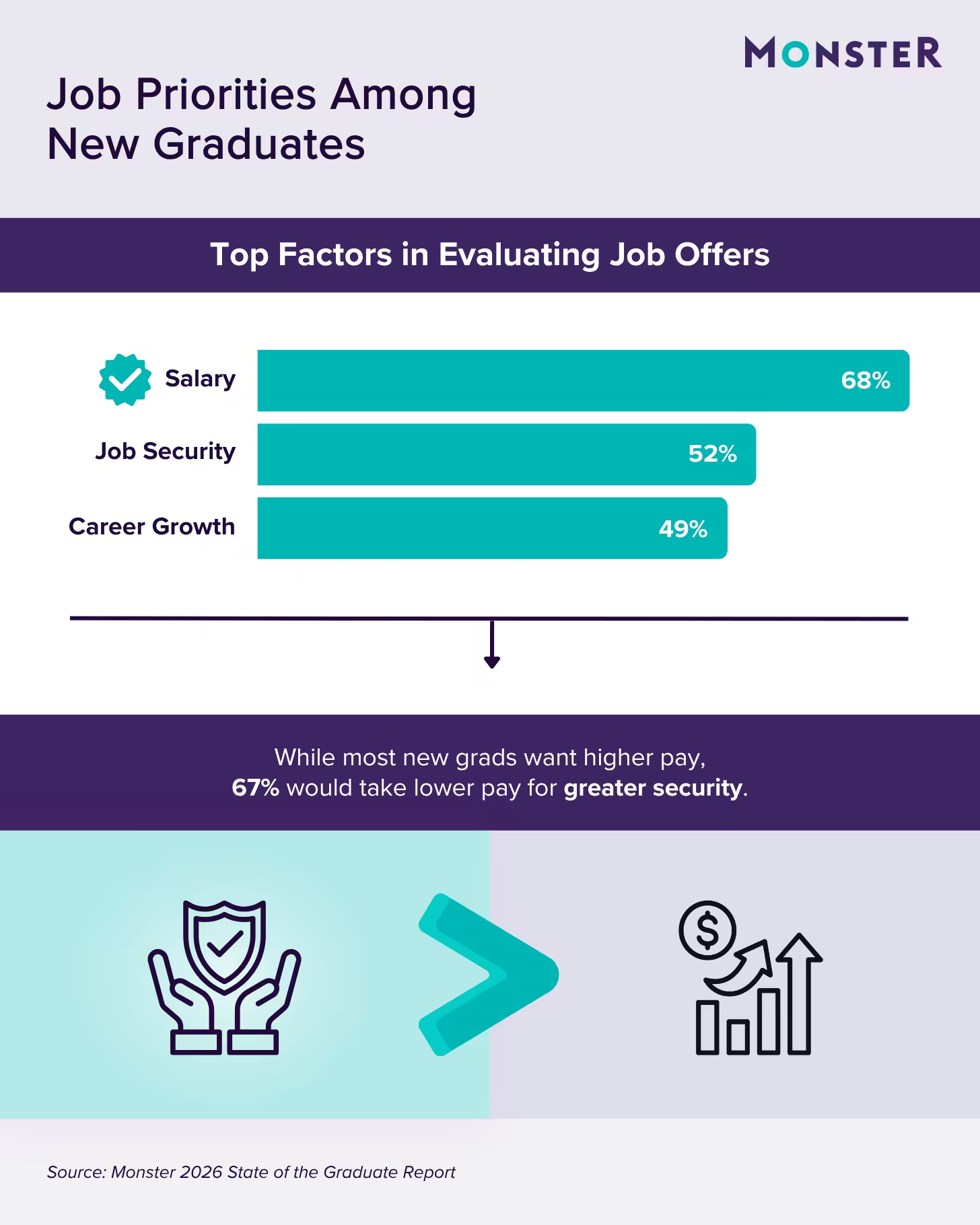
What this means for job seekers: It’s not only acceptable, it’s smart to evaluate company stability and financial health, long-term growth opportunities, and role sustainability when job searching. Asking about these factors during interviews isn’t overly cautious—it’s strategic.
New Grads Show Flexibility in Early Career Choices
Today’s graduates are showing greater adaptability than previous classes. Rather than chasing perfect alignment, many are prioritizing momentum.
- Nearly 7 in 10 (69%) say they’re more willing to compromise on their ideal role than they were a year ago.
- 75% would accept a job they expect to leave within a year if it provides immediate income.
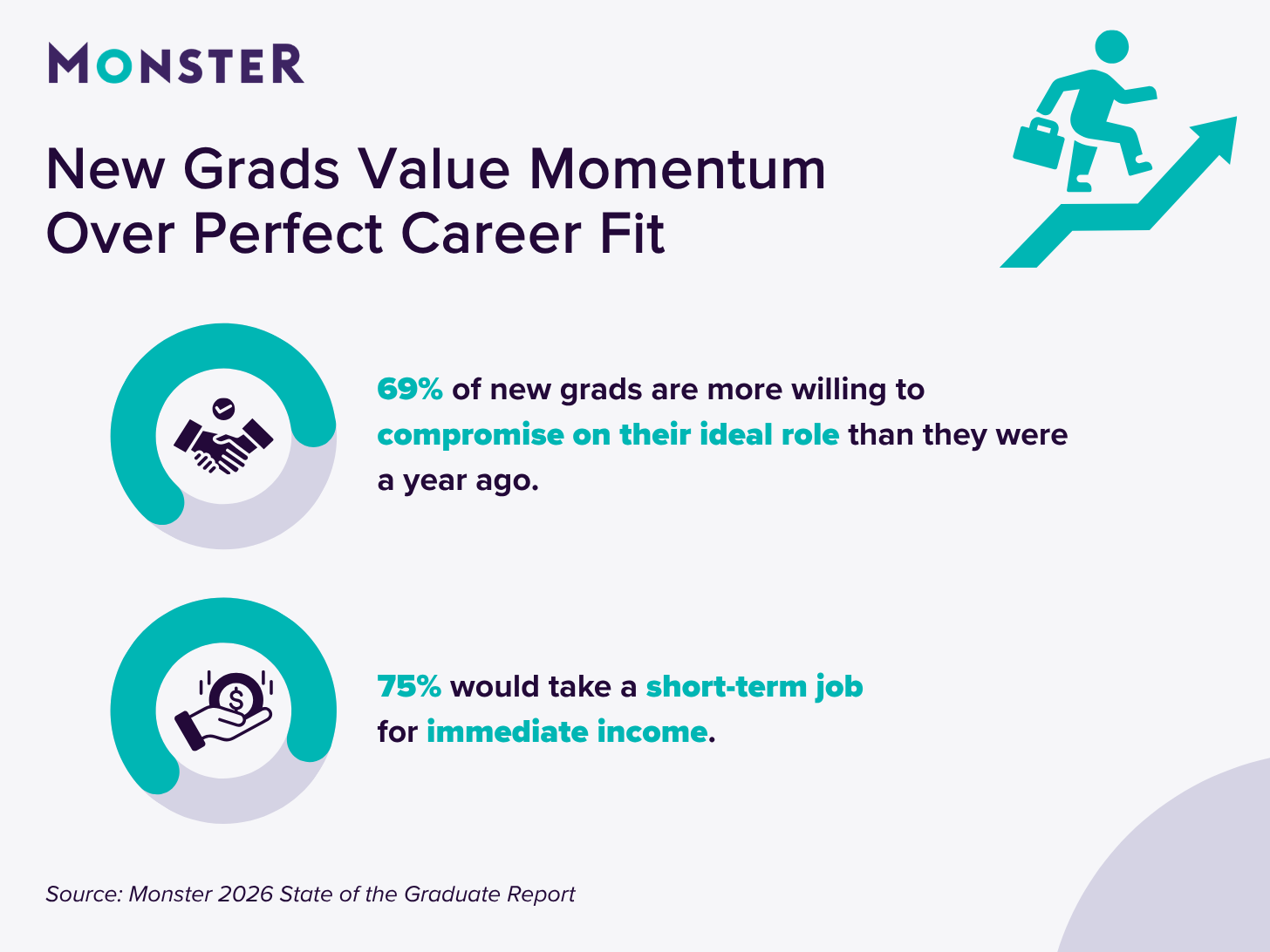
What this means for new grads: In a competitive college graduate job market, progress matters more than perfection. Your first job doesn’t have to be permanent to be valuable, and it won’t define your entire career. Short-term roles can help you build professional skills, expand your network, and create financial stability while you refine your long-term career goals.
Job Search Timelines May Be Longer Than Expected
While most graduates remain confident—79% believe they’ll land a job within three months—expectations are adjusting as longer hiring timelines become more common.
More than one-third (35%) expect their job search to take four months or longer, including 15% who anticipate it could take more than six months.
What to keep in mind: Start your job search early, apply consistently across multiple platforms, and don’t interpret a longer search as failure. Hiring cycles vary widely by industry, and persistence is still one of the strongest predictors of success.
AI Concerns Are Shaping Job Decisions for Grads
One of the most striking trends in this year’s State of the Graduate Report is the rise of AI-related concerns.
- Nearly 9 in 10 graduates (89%) worry AI could replace entry-level roles—a sharp increase from 64% in 2025.
- Meanwhile, 76% are concerned about broader economic uncertainty.
This combination of technological disruption and economic uncertainty is fundamentally reshaping how graduates evaluate risk and opportunity.
How to respond to AI anxiety: Instead of avoiding AI, embrace it. Build AI literacy and digital skills, learn how to work alongside automation tools, and highlight adaptability in your job applications. Employers increasingly value candidates who can leverage AI, not compete with it, so upskilling in these areas will make you more competitive, not more replaceable.
The Bottom Line for the Class of 2026
The Class of 2026 isn’t less ambitious—it’s more strategic.
In today’s recent graduate job market, success looks different. Graduates are entering the workforce focused on resilience, adaptability, and long-term sustainability. They’re willing to trade higher pay for stability, compromise on their ideal roles to gain experience, and adjust their expectations in response to a changing labor market and shifting economy.
In a time of uncertainty, pragmatism may be the smartest career move of all.
Methodology
This survey was conducted by Pollfish on February 17, 2026, among more than 1,000 U.S.-based recent and impending college graduates. Respondents answered a series of multiple-choice questions exploring job market outlook, job search expectations, AI readiness and concerns, and early-career priorities. The sample included graduates and students spanning the Classes of 2023 through 2027.
About Monster
Monster is a global leader in online job searching, resume building, and employment solutions. For over 30 years, the company has been a trusted authority for both job seekers and companies. Beyond the job search, Monster provides an intuitive Resume Builder and hundreds of resume templates to help candidates stand out against the competition, while offering employers a comprehensive resume database to source top talent. As a G2 category leader, Monster has been featured in Forbes, CNBC, CNN, and USA Today, sharing the career advice needed to bridge the gap between job seekers and hiring managers. Follow Monster on LinkedIn, Facebook, and Instagram for the latest employment trends.

Vicki Salemi is a nationally recognized career expert who helps professionals navigate the hiring landscape and find the right fit on Monster. With over 15 years of experience in corporate recruiting and HR, she offers expert guidance on job search strategies, interview preparation, and career development to help candidates land their next role.
See More From Vicki SalemiExplore Related Career Advice



20 Companies That Pay 100% Health Insurance & Other Top Benefits

Updated:
Sep 10, 2026
|
14 min read


How Long of a Commute Is Too Long? 49% Have Turned Down a Job Due to the Commute
Updated:
Sep 8, 2026
|
11 min read


Beauty Bias at Work Statistics: 88% Say Attractive People Have an Advantage
Updated:
Aug 31, 2026
|
8 min read


How to Put Transferable Skills on Your Resume: 120 Skills, Examples, & Tips
Updated:
Aug 27, 2026
|
16 min read
Manage Your Career Like an Expert
Take control of your professional journey with Monster’s expert resources. Explore advice, research, and tips to make informed decisions and advance your career with confidence.

Job Search
Discover strategies to get noticed, network effectively, and streamline your job search process.

Resumes
Get practical tips to create a resume or CV that stands out to employers and wins interviews.

Cover Letters
Learn how to craft a compelling cover letter that highlights your experience and fit for the role.

Career Paths
Explore career paths, industry trends, and growth opportunities to plan your next move.

Interviewing
Prepare for interviews with tips on answering common questions and following up effectively.

Career Development
Develop key skills and knowledge to grow in your current role or pivot to new opportunities.

Leaving a Job
Navigate job changes and career transitions with practical advice and planning resources.