
150 Interests & Hobbies to Put on Resumes: Guide & Examples

Learn which hobbies to include, when to leave them off, and how to list them with examples, formatting tips, and a sample resume.
Updated:
|

13 min read

Table of Contents


Wondering if you should put hobbies on your resume? Here’s a quick breakdown:
- Hobbies like volunteering, running a podcast, or coaching youth sports belong on a resume when they strengthen your qualifications, highlight transferable skills, or help employers understand what drives you.
- Whether you should include hobbies and interests depends on your experience level, industry, and how relevant they are to the role.
- The right hobbies to put on a resume can showcase leadership, communication, discipline, or creativity.
In this guide, you’ll find everything you need to decide which hobbies to include, when to leave them off, and how to list them effectively with examples.
Should You Include Hobbies & Interests on Resumes?
Yes, you should include hobbies and interests on resumes if they reinforce your skills, support your professional brand, or show qualities that aren’t obvious from your work history.
There’s an ongoing debate about whether hobbies are necessary, and there’s some nuance there. Whether they’re worth including can depend on:
- Recruiter preferences: Some recruiters want resumes focused strictly on experience and results, while others appreciate personality and cultural fit.
- Conversation starters: Well-chosen hobbies can spark interview discussions; a shared interest or unique activity can make you more memorable and help hiring managers connect with you.
- Industry expectations: Creative, nonprofit, startup, and people-focused roles often value personality and culture fit, while more traditional or technical fields prioritize credentials and results.
- Experience gaps: Hobbies can help recent graduates, those with employment gaps, career changers, or candidates with limited experience demonstrate transferable skills.
When to Include Hobbies on Your Resume
Generally, you can effectively put hobbies on resumes when:

You have limited professional experience and want to show transferable skills.
The hobby directly supports the job you’re applying for.
Company culture or personality fit is important to the employer.
Your hobbies demonstrate leadership, discipline, creativity, or initiative.
You’re a recent graduate or creating a career change resume and want to showcase strengths beyond work experience.
When Not to Include Hobbies on Your Resume
In some cases, it’s better to skip hobbies and interests. Leave them off when:

You already have extensive, highly relevant professional experience.
Resume space is tight, and you need room for stronger qualifications.
Adding hobbies would push your resume onto a second page.
The hobbies aren’t relevant or don’t add meaningful value.
They could distract from your skills, results, or core experience.
What Are Good Hobbies to Put on Resumes? 150 Examples by Category
Good hobbies to put on a resume highlight key skills across multiple areas, such as communication, creativity, leadership, teamwork, problem-solving, technical ability, discipline, cultural awareness, and professional growth.
Communication Hobbies
Hobbies that support communication skills highlight speaking, writing, and interpersonal abilities. Here are some examples:
- Blogging or personal writing
- Book club leadership
- Content creation for social media
- Copywriting as a hobby
- Debate club participation
- Event hosting or emceeing
- Freelance writing
- Interviewing or guest speaking
- Newsletter writing
- Online community moderation
- Podcast hosting or co-hosting
- Public speaking clubs
- Storytelling groups
- YouTube channel creation
- Language exchange meetups
Community & Service-Oriented Hobbies
Community-focused hobbies can show teamwork, initiative, and commitment to helping others. Here are some examples:
- Animal shelter volunteering
- Church or faith-based service work
- Community clean-up participation
- Disaster relief volunteering
- Environmental advocacy work
- Food bank volunteering
- Fundraising for causes
- Habitat for Humanity builds
- Mentoring youth or students
- Organizing charity events
- Peer tutoring
- Senior center volunteering
- Serving on community boards
- Volunteering at local nonprofits
- Youth sports coaching
Creative Hobbies
Creative hobbies show innovation, visual thinking, and originality. Here are some examples:
- Animation
- Baking or cake decorating
- Creative writing
- Digital illustration
- DIY crafts or handmade goods
- Fashion design or styling
- Graphic design
- Interior decorating
- Music production
- Painting or drawing
- Photography
- Playing an instrument
- Singing or songwriting
- Video editing
- Poetry writing
Cultural, Travel, & Language Hobbies
Cultural hobbies can demonstrate adaptability, curiosity, and global awareness. Here are some examples:
- Attending cultural festivals
- Cultural blogging
- Cultural exchange programs
- Genealogy research
- Global volunteering
- Hosting exchange students
- International cooking
- Language meetups
- Learning new languages
- Study abroad participation
- Teaching language basics
- Translating for community groups
- Travel photography
- Travel planning for groups
- Traveling internationally
Discipline & Goal-Oriented Hobbies
Goal-based hobbies reflect persistence, focus, and long-term commitment. Here are some examples:
- Chess competitions
- Competitive gaming
- Competitive running
- Cycling long distances
- Daily journaling
- Goal-tracking or habit tracking
- Learning a new language
- Martial arts
- Meditation practice
- Personal finance tracking
- Skill-building challenges
- Triathlon training
- Training for marathons
- Weightlifting
- Yoga practice
Entrepreneurial & Professional Growth Hobbies
Growth-focused hobbies highlight initiative, leadership, and business-minded thinking. Here are some examples:
- Attending industry events
- Building a personal brand
- Building a website
- Business blogging
- Career coaching or mentoring
- Consulting projects
- Creating online courses
- Freelancing on the side
- Investing or stock market research
- Networking groups
- Professional association involvement
- Real estate investing research
- Running an Etsy or online shop
- Startup or pitch competitions
- Starting a newsletter
Health, Wellness, & Personal Development Hobbies
Development hobbies demonstrate balance, self-improvement, and resilience. Here are some examples:
- Accountability groups
- Dance classes
- Fitness training
- Hiking
- Journaling
- Meal planning or healthy cooking
- Mindfulness practice
- Outdoor recreation
- Personal development reading
- Pilates or yoga
- Self-improvement courses
- Sleep and recovery tracking
- Stress management practices
- Tai chi
- Wellness blogging
Problem-Solving Hobbies
Problem-solving hobbies show analytical thinking and persistence. Here are some examples:
- Budget planning
- Building models
- Car restoration
- Chess
- Coding challenges
- Data analysis as a hobby
- DIY home improvement
- Escape rooms
- Fantasy sports analytics
- Logic games
- Puzzle-solving
- Research projects
- Robotics kits
- Strategy board games
- Sudoku
Teamwork & Leadership Hobbies
Team-related hobbies emphasize collaboration, coordination, and leadership skills. Here are some examples:
- Choir participation
- Coaching sports teams
- Debate teams
- Event planning committees
- Group fitness classes
- Group travel planning
- Hackathon participation
- Intramural sports leagues
- Leading clubs or organizations
- Networking group leadership
- Online community leadership
- Student organizations
- Team sports
- Theater productions
- Volunteer team leadership
Technical Hobbies
Hobbies that demonstrate technical skills can showcase hands-on ability, digital fluency, and comfort with tools, software, or systems. Here are some examples:
- 3D printing
- App development
- Audio editing
- Automation projects
- Building PCs
- Data visualization
- Game development
- Graphic design
- IT troubleshooting
- Learning new software tools
- Photo editing
- Programming or coding
- UX/UI design
- Video production
- Web development
Mistakes to Avoid When Putting Hobbies on Your Resume
Avoid these common resume mistakes when including interests and hobbies in your resume:
Mistakes to Avoid
u003cstrongu003eBeing too genericu003c/strongu003e: Listing vague hobbies like “sports” or “reading” doesn’t show value. Be specific, such as “captain of a local soccer team” or “reading behavioral psychology books.”
u003cstrongu003eListing risky or controversial hobbiesu003c/strongu003e: Avoid controversial, risky, overly time-consuming, or vague hobbies that could raise concerns or introduce bias; examples include political activism, extreme sports, or gambling.
u003cstrongu003eOverloading your resumeu003c/strongu003e: Adding too many hobbies can clutter your resume and take space away from stronger qualifications. Keep the list short and focused.
u003cstrongu003eIncluding irrelevant hobbiesu003c/strongu003e: Only include hobbies that reinforce transferable skills or align with the role; if they don’t add value, leave them off.
u003cstrongu003eFabricating hobbiesu003c/strongu003e: Never list hobbies you can’t genuinely discuss. Interviewers may ask about them, and authenticity matters; lying can cost your job and your reputation.
How to List Hobbies on Resumes by Section (Examples)
There’s no single “right” place to list hobbies on a resume. Where you include them depends on your experience level, resume format, and how relevant the hobby is to the role. Using structured resume templates or a resume builder can make this process easier.Here are the most effective ways to list hobbies and interests across different resume sections:
Dedicated Hobbies Section
If you have several relevant hobbies or want them to stand out, create a short, separate section near the bottom of your resume. This works well for early-career candidates, career changers, or roles where personality and culture fit matter. Keep this section brief and focused on value.
Example:
Hobbies & Interests: Organizing community wellness events, leading an online book club, practicing conversational Spanish, and participating in local networking and volunteer meetups.
Professional Summary Section
You can briefly reference a hobby in your professional summary if it strengthens your personal brand or highlights a key strength that directly connects to your role or expertise.
Example:
Detail-oriented HR coordinator with two years of experience supporting recruitment, onboarding, and employee engagement initiatives. Passionate about reading workplace psychology and leadership books, and volunteering to organize community wellness events through a local charity.
Skills Section
If a hobby builds relevant skills, you can incorporate it into your skills section alongside other abilities mentioned in the job description.
Example:
- Employee engagement and event coordination (community volunteer organizer)
- Cross-cultural communication (conversational Spanish)
- Public speaking and facilitation
- Internal communications and content creation
- Recruitment coordination and candidate communication
- Conflict resolution and active listening
- HRIS and applicant tracking systems (ATS)
- Relationship-building and stakeholder communication
Work Experience Section
You can weave hobbies into your work experience when they demonstrate leadership, initiative, or measurable impact. This can appear in two ways: as a single resume bullet within a job entry or as a standalone entry for a hobby.
Example as a work experience bullet:
HR Coordinator
HR Corp, Austin, TX | March 2024–Present
- Coordinated interview scheduling and onboarding logistics for 20+ monthly hires across multiple departments.
- Leveraged facilitation and communication skills developed through organizing local networking and volunteer events to support employee engagement initiatives.
- Assisted with new-hire orientation materials and maintained accurate records in the HRIS.
Example as a standalone work experience entry:
Community Event Volunteer
North Community Outreach, Portland, ME | June 2022–Present
- Helped plan and staff quarterly community wellness and networking events for groups of 50+ attendees.
- Collaborated with a small volunteer team to coordinate logistics, registration, and outreach.
- Supported event setup, guest communication, and post-event follow-up to improve future programming.
Education Section
Students and recent graduates can include hobbies within the education section to show involvement, leadership, or skill development.
Example:
Bachelor of Business Administration | Michigan State University
East Lansing, MI | May 2025
- Activities: Sales club member, peer mentor, and host of a student-run marketing and sales podcast.
Certifications & Projects Section(s)
If your hobbies involve structured learning, side projects, or certifications, they can fit naturally into these sections. This is ideal for technical, creative, or entrepreneurial hobbies, and ideally, the hobbies will appear alongside other direct experience projects and achievements.
Example:
Workplace Culture Blog & Newsletter | January 2023–Present
- Write and publish monthly articles on employee engagement, team dynamics, and workplace communication, growing a subscriber base of 1,000+ HR professionals and managers.
Sample Resume With Hobbies & Interests Included
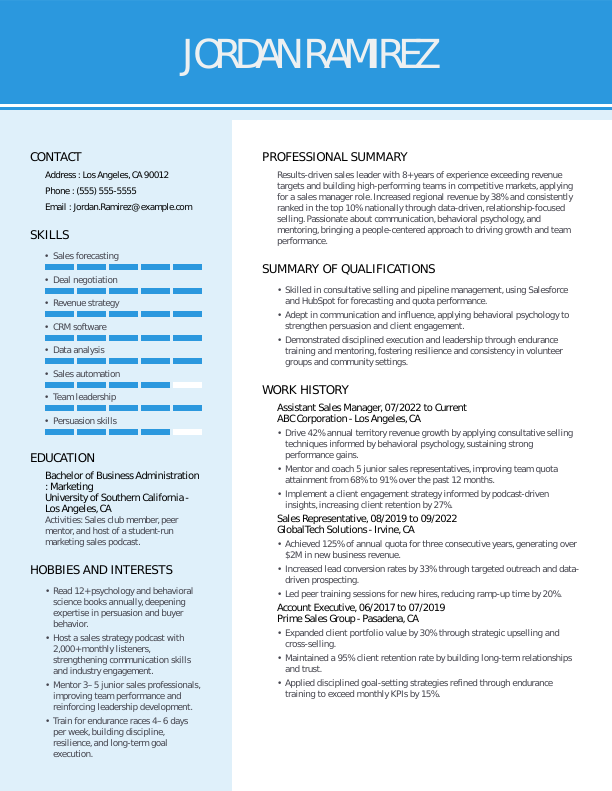
Hobbies can do more than fill space. This example highlights how an experienced sales manager weaves relevant interests into a hybrid resume to support leadership, persuasion, and communication strengths.
Show Off Your Passions
The right hobbies won’t replace strong experience, but they can strengthen it. Listing hobbies and interests on your resume with examples can highlight transferable skills, reinforce your professional brand, and help you stand out to hiring managers.
If you’re unsure where hobbies fit or how to format them, Monster’s Resume Builder can help you organize your skills, tailor your resume to each job, and present your strengths with confidence.
At the end of the day, your resume should reflect who you are and what drives you. Choose wisely, stay relevant, and let your passions support your next career move.
Frequently Asked Questions
Is it professional to put hobbies related to a job role on a resume?
Yes, it’s professional to include hobbies on a resume when they relate to the role or highlight transferable skills. Job-relevant hobbies can demonstrate leadership, communication, creativity, or discipline and help employers better understand your strengths beyond your work history.
What are good hobbies to put on a resume in 2026?
Good hobbies to put on resumes in 2026 are activities that showcase useful skills. Examples include:
- Volunteering
- Blogging or podcasting
- Learning new languages
- Mentoring or coaching
- Reading industry-specific and professional development books
What are examples of special skills and hobbies for a resume?
Examples of special skills and hobbies for a resume include coding or web development, public speaking, graphic design, photography, running a small online business, or leading a club or team. These hobbies can highlight technical abilities, creativity, leadership, or problem-solving skills.
How many hobbies should I include on my resume?
You should typically include one to five relevant hobbies on a resume. Focus on quality over quantity, and choose hobbies that support your qualifications or help show transferable skills. A short, targeted list is more effective than a long or unrelated one.
Where should hobbies go on a resume?
Hobbies can be listed in a dedicated “Hobbies & Interests” section or integrated into sections for your professional summary, skills, projects, or volunteer experience. The best placement depends on how relevant the hobby is to the job you’re applying for and how much space you have on your resume.

Kirsten Chorpenning is a career advice writer who empowers job seekers to take control of their career paths using Monster’s comprehensive job search and resume tools. She specializes in helping job seekers find rewarding jobs in today’s dynamic work environment.
See More From Kirsten ChorpenningExplore Related Career Advice

“Do You Have Any Questions for Me?” How to Answer in an Interview (30 Examples)
Updated:
Sep 18, 2026
|
14 min read



20 Companies That Pay 100% Health Insurance & Other Top Benefits
Updated:
Sep 10, 2026
|
14 min read

How Long of a Commute Is Too Long? 49% Have Turned Down a Job Due to the Commute
Updated:
Sep 8, 2026
|
11 min read


Beauty Bias at Work Statistics: 88% Say Attractive People Have an Advantage
Updated:
Aug 31, 2026
|
8 min read

Manage Your Career Like an Expert
Take control of your professional journey with Monster’s expert resources. Explore advice, research, and tips to make informed decisions and advance your career with confidence.

Job Search
Discover strategies to get noticed, network effectively, and streamline your job search process.

Resumes
Get practical tips to create a resume or CV that stands out to employers and wins interviews.

Cover Letters
Learn how to craft a compelling cover letter that highlights your experience and fit for the role.

Career Paths
Explore career paths, industry trends, and growth opportunities to plan your next move.

Interviewing
Prepare for interviews with tips on answering common questions and following up effectively.

Career Development
Develop key skills and knowledge to grow in your current role or pivot to new opportunities.

Leaving a Job
Navigate job changes and career transitions with practical advice and planning resources.