
Workplace Mental Health Statistics: 59% of Workers Say Their Job Harms Mental Health

Workplace mental health is no longer a secondary concern—it’s shaping how people experience their jobs, evaluate opportunities, and make career decisions.
Updated:
|

8 min read

Table of Contents


Data from Monster’s 2026 State of Workplace Mental Health Report shows that 59% of workers say their job negatively impacts their mental health at least monthly. Nearly half report burnout, and 70% say they feel pressure to appear “okay” at work even when they’re struggling.
These findings point to a broader shift in the workforce, where employees are increasingly focused on whether a role supports their overall well-being, not just compensation or job titles.
Key Findings
- 71% of workers report staying in a job they knew was toxic.
- 46% say they feel burnout due to work-related stress.
- 59% say their job harms their mental health at least monthly.
- 70% feel pressure to appear “okay” at work.
- 37% feel they can’t speak openly about mental health without consequences, and 35% have faced negative consequences for speaking up.
- 44% don’t believe leadership is held accountable for toxic behavior.
Workplace Mental Health Statistics for Job Seekers
Workplace mental health statistics in 2026 reflect real experiences that can shape how you evaluate roles, navigate challenges, and plan your next move. Below, we break down the data into insights job seekers can use to better understand what’s happening at work and what to look for in a healthier environment.
- 1.
Toxic Workplaces Are Common—Many Stay Longer Than They Want To
More than 7 in 10 (71%) workers say they’ve stayed in a job they knew was toxic. These toxic workplace statistics don’t necessarily reflect a lack of awareness—they reflect constraints. Financial pressure, job uncertainty, and limited alternatives can make leaving difficult, even when a role is clearly not a good fit.
 Pro Tip
If you feel stuck and find yourself saying, “My job is affecting my mental health,” you’re not alone. But it’s worth proactively thinking about your next move. Even small steps, like updating your resume or exploring new roles, can help create career options over time.
- 2.
Burnout Is Becoming a Baseline Experience
Nearly half of employees (46%) report burnout, and a significant share (59%) experience stress on a weekly or daily basis.
- 10% say their job negatively impacts their mental health daily.
- 22% say it happens a few times a week.
- 27% say it happens a few times a month.
In addition to burnout, employees report experiencing other symptoms:
- 39% experience anxiety or panic.
- 37% report trouble sleeping.
- 34% experience headaches or physical pain.
- 25% report symptoms of depression.
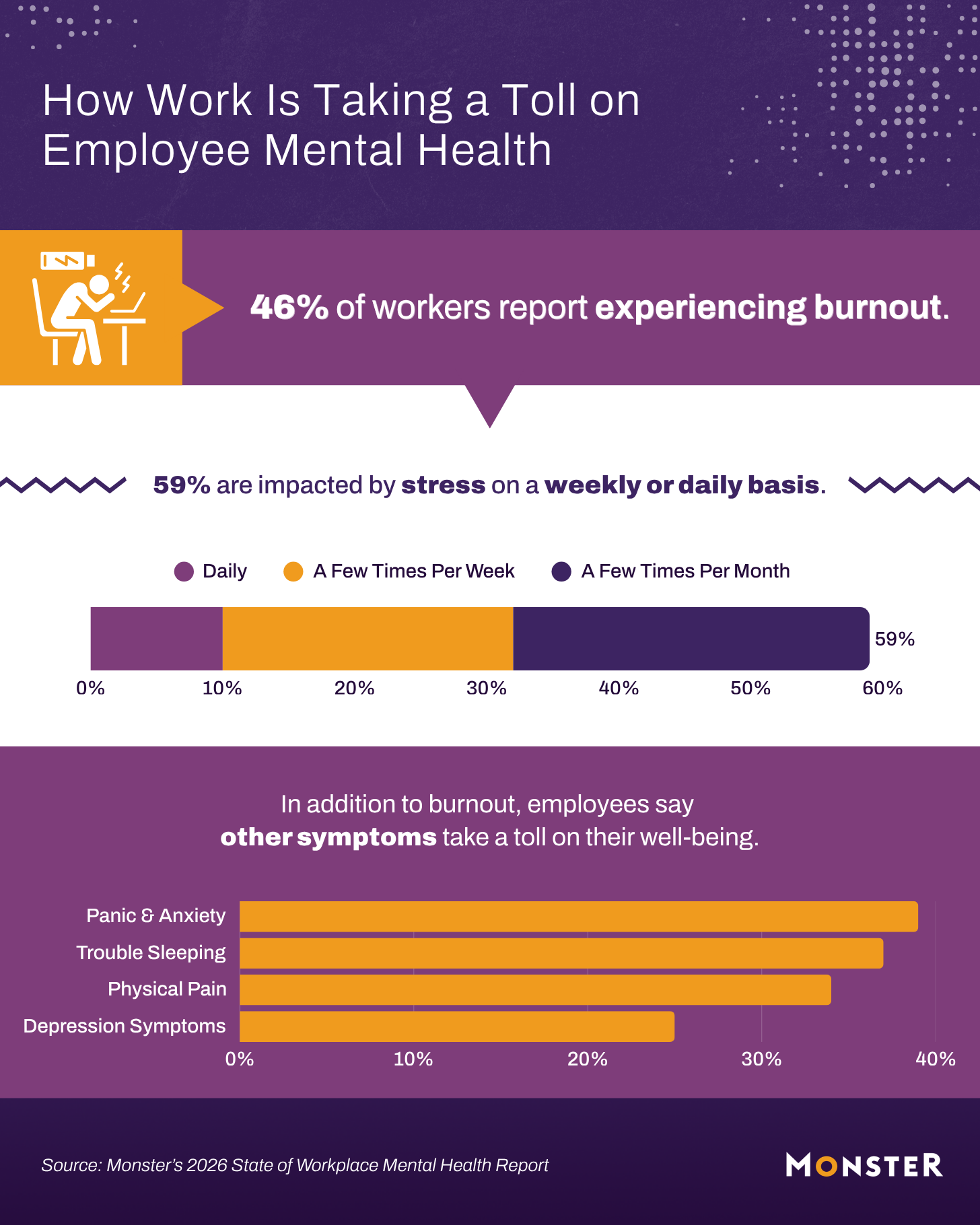
The workplace burnout statistics above, also displayed in the graphic, signal a shift: Stress and burnout are no longer tied to periodic busy periods. For many, they’re ongoing conditions tied to workload, staffing levels, and expectations.
Pro Tip
When evaluating a job, look beyond the role itself. Ask about team size, workload distribution, and how success is measured. These factors often determine whether a job feels sustainable over time.
- 3.
Management & Workload Are Key Stress Drivers
Employees point to clear structural drivers of workplace mental health challenges, including increased workload, poor management, and lack of work-life balance.
- 39% cite increased workload or understaffing.
- 33% report poor management.
- 30% struggle with work-life balance.
- 28% cite workplace conflict or drama.
- 26% report stagnant pay.
- 21% cite fear of layoffs or job insecurity.
These aren’t individual issues but organizational ones.
Pro Tip
If a role consistently creates stress due to unclear expectations or a lack of support, it may not be a reflection of your performance—it may be a reflection of the environment.
- 4.
Workplace Culture Still Discourages Honesty About Mental Health
Even as mental health awareness increases, many employees don’t feel comfortable speaking openly.
- 37% say they feel they can’t be honest about their mental health without negative consequences.
- 35% have faced negative consequences for speaking up about workplace issues.
Top concerns about speaking up include:
- Being labeled “difficult” (41%)
- Fear of retaliation (24%)
- Impact on career growth (27%)
- Losing their job (27%)
Pro Tip
Pay attention to how organizations talk about support and how they act on it. During job interviews, look for signals of psychological safety, such as transparency, consistent communication, and leadership accountability.
- 5.
There’s Still a Gap Between Awareness & Action
Mental Health Awareness Month brings attention to these issues each year. But the data suggests that many workers are still waiting to see meaningful changes in how workplaces operate, with many citing problematic behaviors from managers and leadership:
- 44% don’t believe leadership is held accountable for toxic behavior.
- 51% say they’ve seen high-performing employees avoid consequences.
Pro Tip
Awareness alone doesn’t guarantee improvement. As a job seeker or employee, it’s important to evaluate whether companies are translating awareness into real support, policies, and accountability.
The Bottom Line
Workplace mental health challenges are widespread, and they’re influencing how people think about their careers. For workers, this means placing more weight on culture, management, and long-term sustainability when evaluating opportunities. For employers, it highlights a growing expectation from job seekers.
Supporting mental health isn’t just about benefits—it’s about how work is structured, how leaders behave, and how employees are supported day to day. As the conversation around workplace mental health evolves, the next step is ensuring that change follows.
For press inquiries, please contact Lauren Adams at lauren.adams@monster.com.
Methodology
This survey was conducted by Pollfish on April 19, 2026, among 1,000 currently employed U.S. workers. Respondents answered a series of multiple-choice questions about workplace mental health, job-related stress, and organizational culture. The sample included representation across age groups: 7% ages 18–24, 19% ages 25–34, 21% ages 35–44, 19% ages 45–54, 21% ages 55–64, and 13% ages 65 and older. Respondents identified their gender as 50% male and 50% female.
About Monster
Monster is a global leader in online job searching, resume building, and employment solutions. For over 30 years, the company has been a trusted authority for both job seekers and companies. Beyond the job search, Monster provides an intuitive Resume Builder and hundreds of resume templates to help candidates stand out against the competition while offering employers a comprehensive resume database to source top talent. As a G2 category leader, Monster has been featured in Forbes, CNBC, CNN, and USA Today, sharing the career advice needed to bridge the gap between job seekers and hiring managers. Follow Monster on LinkedIn, Facebook, and Instagram for the latest employment trends.

Vicki Salemi is a nationally recognized career expert who helps professionals navigate the hiring landscape and find the right fit on Monster. With over 15 years of experience in corporate recruiting and HR, she offers expert guidance on job search strategies, interview preparation, and career development to help candidates land their next role.
See More From Vicki SalemiExplore Related Career Advice



20 Companies That Pay 100% Health Insurance & Other Top Benefits

Updated:
Sep 10, 2026
|
14 min read


How Long of a Commute Is Too Long? 49% Have Turned Down a Job Due to the Commute
Updated:
Sep 8, 2026
|
11 min read


Beauty Bias at Work Statistics: 88% Say Attractive People Have an Advantage
Updated:
Aug 31, 2026
|
8 min read


How to Put Transferable Skills on Your Resume: 120 Skills, Examples, & Tips
Updated:
Aug 27, 2026
|
16 min read
Manage Your Career Like an Expert
Take control of your professional journey with Monster’s expert resources. Explore advice, research, and tips to make informed decisions and advance your career with confidence.

Job Search
Discover strategies to get noticed, network effectively, and streamline your job search process.

Resumes
Get practical tips to create a resume or CV that stands out to employers and wins interviews.

Cover Letters
Learn how to craft a compelling cover letter that highlights your experience and fit for the role.

Career Paths
Explore career paths, industry trends, and growth opportunities to plan your next move.

Interviewing
Prepare for interviews with tips on answering common questions and following up effectively.

Career Development
Develop key skills and knowledge to grow in your current role or pivot to new opportunities.

Leaving a Job
Navigate job changes and career transitions with practical advice and planning resources.