
Canadian Resume Format Guide: How to Write a Canadian Resume (With Examples)

Looking for jobs in Canada? Make sure your resume follows the Canadian resume format to pass ATS scans and keep the attention of hiring managers.
Updated:
|

12 min read

Table of Contents


The Canadian resume format is similar to what you may already be used to, but with small differences in spelling, formatting, and content. From date formats to what information is left off entirely, Canadian resumes follow a set of standards designed to keep applications clear, comparable, and focused on qualifications.
In this guide, you’ll learn how to structure your resume for jobs in Canada, what to include (and what to leave out), and how to adapt an existing resume to meet Canadian expectations. You’ll also find a template and sample to help you put our tips into practice.
What’s Different About Canadian Resume Formatting?
Canadian resumes differ from U.S. resumes in four key ways: spelling (Canadian English), date format (YYYY-MM-DD), use of metric measurements, and strict exclusion of personal information like photos or age. These differences help standardize applications and keep the focus on qualifications rather than personal details.
Here’s how Canadian resumes compare to U.S. resumes:
| Formatting Element | Canadian Resume Format | U.S. Resume Format |
| Spelling | Canadian English (e.g., behaviour, colour, centre) | American English (e.g., behavior, color, center) |
| Date Format | YYYY-MM-DD (e.g., 2025-03-31) | Month Day, Year (e.g., March 31, 2025) |
| Measurements | Metric system (kilograms, kilometers) | Imperial system (pounds, miles) |
| Personal Information | No photo or personal details (age, gender, marital status, religion, nationality) | No photo or personal details (similar standard in the U.S., though expectations may be less strictly enforced depending on the employer) |
Note: In most cases, employers in Canada expect a resume vs a CV. The more detailed Canadian CV format is typically used only for academic, research, or medical roles. For most jobs, a concise, one- to two-page resume is the standard.
How Do You Write a Canadian Resume? Tips & Formatting Guidelines
Canada’s resume format is built around clarity, relevance, and structure. Employers expect an easy-to-scan document that highlights your experience and results without unnecessary detail or design.
Include Core Resume Sections
A standard Canadian resume includes five core sections: a header with your contact information, a summary or objective, work experience, education, and skills.
- Resume header: Include your name, phone number, professional email, and location (city and province) in your resume header. Full mailing addresses are typically left out.
- Professional summary or resume objective: Write a short introduction that highlights your experience, key skills, and the type of role you’re targeting.
- Work experience section: List your experience in reverse-chronological order, focusing on impact. Bullet points should show what you did, how you did it, and the results you achieved.
- Education section: Add your degrees, diplomas, or certifications, along with the institution and completion date.
- Skills section: Highlight a targeted list of 6–10 role-relevant skills, either as a bulleted list or a comma-separated one.
- Additional optional sections:
Follow Standard Formatting Expectations
Canadian resumes should be clean, simple, and easy to scan, with standard formatting that works well for both recruiters and applicant tracking systems (ATS).
- Length: Typically 1–2 pages
- Margins: Around 1 inch
- Font: Professional fonts, such as Arial, Calibri, or Times New Roman
- Font size: 10–12 points for body text, 12–14 points for headings
- Layout: Simple and traditional, without graphics, photos, or heavy design elements
- Consistency: Uniform formatting for dates, job titles, and bullet points throughout
You can build your resume using Monster’s Resume Builder, which walks you through each section with guided prompts and helps ensure your formatting aligns with Canadian employer expectations. Pairing a builder with professionally designed resume templates can also help you maintain a clean, consistent layout so your resume is easy to scan and ATS-friendly.
If you prefer to create your resume on your own, tools like Microsoft Word or Google Docs can still work well as long as you stick to a simple format and avoid heavy design elements.
Choose the Right Resume Format
The reverse-chronological format is the standard Canadian resume format and is preferred by most employers, but functional and combination formats can be used in specific situations.
- Reverse-chronological formatting puts your work history at the forefront of the resume. It’s the most widely used format and works best for candidates with consistent experience and clear career progression.
- Functional formatting highlights skills over work history. It can help showcase transferable abilities for career changes, employment gaps, or limited experience, though it’s less commonly preferred and not always ATS-friendly.
- Combination (hybrid) formatting leads with a strong skills section while still including a reverse-chronological work history. This works well when you have relevant experience supported by transferable skills.
Most employers expect a reverse-chronological format unless there’s a clear reason to use an alternative.
Note Considerations for Bilingual Jobs in Quebec
If you’re applying for jobs in Quebec or bilingual roles, your resume must clearly demonstrate your language proficiency and may need to be submitted in French.
- Highlight bilingual skills prominently. If both languages are important for the role, place them near the top of your resume or include them in your summary.
- List language proficiency clearly. Use a simple, standardized format (e.g., English: Fluent | French: Advanced) so employers can quickly assess your level.
- Be prepared to submit a French resume. Many Quebec employers expect or require a fully translated version, not just a mention of bilingual ability.
- Use Canadian French conventions. French-language resumes should reflect Canadian French spelling and terminology rather than European French.
How to Adapt U.S. Resumes for Jobs in Canada
To adapt a U.S. resume for Canada, update spelling, formatting, and content to match Canadian standards.
Adjust Spelling & Terminology
Update American English to Canadian English (e.g., color → colour; organize → organise). Job titles, certifications, and workplace terminology can also vary slightly, so align your wording with the job posting to improve clarity and ATS matching.
Use Canadian Date Formatting
Shift to the YYYY-MM-DD format for consistency and readability. Make sure dates are formatted the same way across all sections, including work experience and education.
Since resumes typically list only month and year, this would usually appear as “2023-01–2025-03.”
Convert Measurements to Metric
If your resume includes measurements, quotas, or physical data, convert them to metric units (kilometers, kilograms, etc.) to match Canadian standards and avoid confusion.
Update Location Details
Use a simplified location format with just your city and state or province. If you’re applying from the U.S., listing “City, State, USA” is sufficient (e.g., Philadelphia, PA, USA).
You can also note relocation plans in your resume summary or objective if it’s relevant to the role or requested in the job description.
Example:
Customer service professional with 5+ years of experience in high-volume support environments, relocating to Toronto, ON. Known for improving customer satisfaction scores and resolving issues efficiently across phone, email, and chat channels.
Remove Unnecessary Personal Details
Ensure your resume excludes photos and personal information, such as age, gender, marital status, religion, or nationality.
While U.S. resumes typically follow similar guidelines, some templates may still include optional details like full mailing addresses or profile photos, which should be removed for Canadian applications to keep the focus on your qualifications and maintain a more neutral, standardized format.
Validate Your Credentials if Needed
For certain roles, especially regulated professions, you may need to confirm how your education or certifications compare in Canada. Resources like the Canadian Information Centre for International Credentials (CICIC) can help you understand how your qualifications are recognized.
What Should You Not Include in a Canadian Resume?
Canadian resumes should not include personal or non-job-related information to ensure fairness and avoid bias in hiring.
Avoid including:

Photos and headshots
Age, date of birth, or gender
Marital or family status
Religion or cultural background
Social Insurance Number (SIN)
Full mailing address
Immigration or citizenship details (unless requested)
Graphics, icons, or overly designed elements
Unprofessional email addresses or personal links
U.S. standard spellings, measurements, and date formats
Canada Resume Template
Use this basic template to structure your resume according to the standard Canada resume format. Replace the placeholders with your own information and tailor each section to the job.
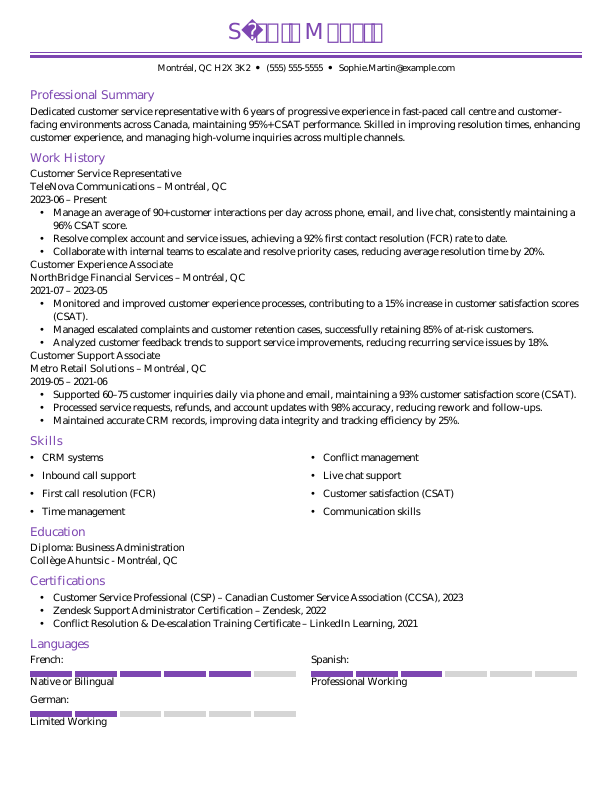
Canadian Resume Format Sample
The Canadian resume format example below shows how a complete, ATS-friendly resume should look when applying for jobs in Canada.
Adapting Your Resume for Canada
All in all, adapting your resume to the Canadian resume format takes a few simple steps. Make sure spellings and dates all line up with Canadian norms, remove personal information, and ensure your resume is well-organized and easy to scan. Once those pieces are in place, your resume will feel familiar to employers and stand out against competition for the role.
Frequently Asked Questions
What do Canada’s resumes look like?
Canadian resumes look like a one- to two-page document that follows a reverse-chronological format, focuses on skills and results, and avoids personal details like photos, age, or marital status. The layout is simple and professional, with sections for a resume summary or objective, experience, education, and skills.
Does Canada use a CV or resume?
In most industries, Canada uses resumes. A CV is generally reserved for academic, research, or medical roles and is longer and more detailed. For most jobs, employers expect a concise resume tailored to the position.
What’s the difference between American and Canadian resumes?
Canadian and American resumes are very similar, but Canadian resumes use Canadian English spelling, may follow a YYYY-MM-DD date format, and align with metric measurements when relevant. Canadian resumes also strictly avoid personal details and tend to follow slightly more standardized formatting expectations.
What’s a functional Canadian resume format?
A functional resume format focuses on skills rather than work history. It groups experience by skill area instead of listing roles chronologically. While it can be useful for career changes or employment gaps, it’s less commonly used and not always preferred by employers.
Is the Canadian resume format ATS-friendly?
Yes, the standard Canadian resume format is ATS-friendly when it uses a simple layout, standard section headings, consistent formatting, and relevant keywords from the job description. Avoiding graphics and complex design elements also helps ensure your resume is parsed correctly.

Kirsten Chorpenning is a career advice writer who empowers job seekers to take control of their career paths using Monster’s comprehensive job search and resume tools. She specializes in helping job seekers find rewarding jobs in today’s dynamic work environment.
See More From Kirsten ChorpenningExplore Related Career Advice

Overqualified Hiring Stats: 57% Would Cut Resume Experience to Get Hired

Updated:
Sep 28, 2026
|
9 min read

20 First Job Interview Questions & Sample Answers: Tips to Land Your First Job
Updated:
Sep 24, 2026
|
20 min read

“Do You Have Any Questions for Me?” How to Answer in an Interview (30 Examples)
Updated:
Sep 18, 2026
|
14 min read



20 Companies That Pay 100% Health Insurance & Other Top Benefits
Updated:
Sep 10, 2026
|
14 min read


How Long of a Commute Is Too Long? 49% Have Turned Down a Job Due to the Commute
Updated:
Sep 8, 2026
|
11 min read

Manage Your Career Like an Expert
Take control of your professional journey with Monster’s expert resources. Explore advice, research, and tips to make informed decisions and advance your career with confidence.

Job Search
Discover strategies to get noticed, network effectively, and streamline your job search process.

Resumes
Get practical tips to create a resume or CV that stands out to employers and wins interviews.

Cover Letters
Learn how to craft a compelling cover letter that highlights your experience and fit for the role.

Career Paths
Explore career paths, industry trends, and growth opportunities to plan your next move.

Interviewing
Prepare for interviews with tips on answering common questions and following up effectively.

Career Development
Develop key skills and knowledge to grow in your current role or pivot to new opportunities.

Leaving a Job
Navigate job changes and career transitions with practical advice and planning resources.