
Can a Resume Be Two Pages? When & When Not to Use a Second Page

Learn when a two-page resume works (and when it doesn’t), why length matters, and how to format it to make every page count.
Updated:
|

14 min read

Table of Contents


Can a resume be two pages long? The short answer is yes. If you have a decade of achievements, a second page allows you to present your experience without excluding key accomplishments.
While the one-page rule was once standard for resumes, modern hiring has evolved. Today, two-page resumes are not only acceptable but often necessary to showcase your qualifications if you’re an experienced professional.
This guide explains when a two-page resume works, how length varies by experience, and offers formatting tips, strategies to condense your resume, and answers to common questions.
When Should I Use a Two-Page Resume?
Expanding to a second page isn’t just appropriate; sometimes, it’s the best strategy for landing an interview. Use a two-page resume if:
- You have 5–10 years of relevant experience. Trying to fit a decade of work experience on one page often means cutting out the very achievements that make you a top candidate.
- You’re in a technical or scientific field. These roles often require specific certifications, technical proficiencies, and complex projects.
- You’re applying for leadership or management roles. Demonstrating a track record of company contributions and team growth takes space.
- You’re applying to a role with an extensive job description. If the “required skills” list is a mile long, you may need more room to prove you check every box.
- You’re a freelancer or contractor. If your career consists of multiple short-term projects or clients, a single page often isn’t enough to list your portfolio. A second page allows you to list specific project outcomes and client names.
- You’re applying internationally. Resume norms vary by region. In countries like the UK or Australia, a two-to-three-page curriculum vitae (CV) is standard, even for non-executive roles.
When Should I Stick to a One-Page Resume?
While it’s often okay to have a two-page resume, there are times when brevity is best. Stick to a single page if:
- You’re a current student or recent graduate. If you’re a recent graduate or have no work history, a one-page resume is expected.
- You’re a career changer. If your previous 10 years of work in retail don’t apply to your new career path, keep the irrelevant history brief.
- You can say it all on one page. If you can fit your “greatest hits” comfortably on one page, or your second page is mostly empty, cut filler and stick to one page.
- You’re including outdated or irrelevant jobs. If you’re applying for a marketing job, outlining your high school babysitting gig won’t add value to your resume.
- You’re attending a networking event. Networking events, like job fairs, are fast-paced and can be hectic—avoid two resumes since they’re more prone to falling apart.
Gauging if a resume should be extended to a second page can be tricky. Monster’s Resume Builder can help you create one-page and two-page resumes that highlight your experience effectively. Try it to see which format best showcases your qualifications.
Resume Length Guidelines by Career Stage
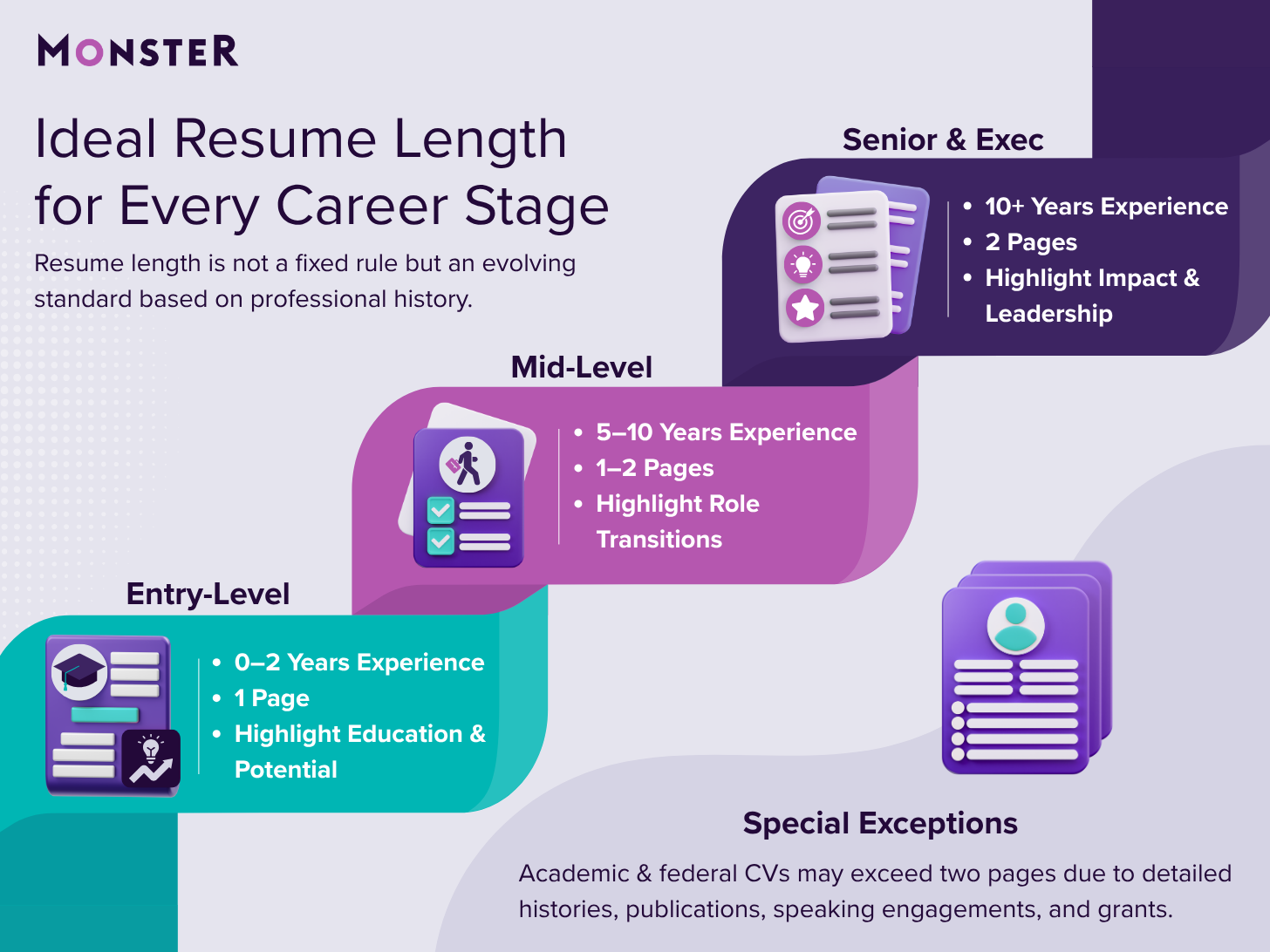
Professional expectations evolve as you progress through your career. When writing a resume, the “right” resume length is less about a specific rule and more about your professional history.
Here’s a quick guide to resume length by experience level, followed by more details:
| Experience Level | Ideal Resume Length |
| Entry-Level (0–2 years) | 1 page |
| Mid-Level (5–10 years) | 1-2 pages |
| Senior/Executive (10+ years) | 2 pages |
| Academic or Federal Roles | 2+ pages (CV) |

Entry-Level (0–2 Years’ Experience)
A one-page resume is ideal for early-career professionals. With limited work experience, relying more on education to prove credentials, entry-level resumes require only a single page. Focus on your education, internships, volunteer work, and core skills. Recruiters want to see your potential and foundational knowledge, which rarely requires a second page.
Mid-Level Professionals (5–10 Years’ Experience)
This is the “transition zone.” Depending on your industry and the depth of your achievements, you might find yourself wondering, “Is it okay to have a two-page resume?” For mid-level roles, one or two pages is perfectly acceptable. If you’ve moved through three or four roles with increasing responsibility, a second page allows you to detail those transitions effectively.
Senior & Executive Roles (10+ Years’ Experience)
For executives, two pages is standard. At this level, your focus shifts from “what you did” to “the impact you had.” You need space to highlight leadership, strategic initiatives, and the long-term return on investment (ROI) you’ve provided to previous employers.
Bonus: Academic & Federal CVs
“Can a resume be more than two pages?” has a different answer if you’re applying to academia or government work. Instead of resumes, these sectors often use CVs, a detailed document that outlines your academic history and professional career. CVs include publications, grants, speaking engagements, and exhaustive work histories.
 Pro Tip
While often used interchangeably, a CV has more detail than a resume. If you’re applying for academic or international jobs, you’ll most likely need to submit a multi-page CV instead of a resume.
The “One-Page” Debate: What Do Hiring Managers Actually Think?
If you browse career discussions on Reddit or online job boards, you’ll find strong opinions on both sides of the page-length debate. Some recruiters often treat the one-page limit as a strict rule, arguing that anything longer suggests a lack of editing skills. Modern hiring managers, however, generally agree that relevance matters more than page count.
So, what’s the consensus from the “hiring side” of the table? If the content on page two helps with hiring decisions, employers want to read it. If it’s fluff or outdated, they don’t. When in doubt, focus on the quality of the content rather than the physical length of the document.
One vs Two Pages: Writing Your Resume for ATS & Recruiters
In today’s job market, a two-page resume can be a strategic advantage.
Applicant tracking systems (ATS) scan your resume’s main sections for keywords. Having two pages gives you more “real estate” to naturally incorporate the skills and keywords found in the job description without keyword stuffing.
For recruiters, a two-page resume is fine as long as the first page grabs their attention. If page one proves you’re qualified, they’ll gladly flip to page two to see the details.
How Do I Format a Two-Page Resume?
If you decide a second page is necessary, follow these rules to create a resume that catches the eye of employers:
- Remember that consistency is key. Both pages of the resume should look cohesive.
- Use your layout to leave an impression. Keep it simple and clean with scannable headings and bullet points.
- Use smart spacing and margins. Keep spacing consistent; use 1-inch margins, single line spacing, and double-space between sections.
- Keep it simple with fonts. Use professional fonts (Calibri, Helvetica, Times New Roman) sized 10–12 points.
- Only use colors for a subtle touch. Stick to a consistent color scheme with soft tones and darker text on a white background.
- Double-check your spelling. Small typos or grammatical errors leave a bad impression. Review your resume multiple times, and if possible, have someone else check it for errors you might have missed.
- Use “breadcrumb” headers. Include your name and contact information at the top of both pages to ensure recruiters can identify you if the pages get separated.
- Apply logical breaks. Avoid “widows and orphans.” Don’t leave a single bullet point or a job title dangling at the bottom of a page. Move the entire section if necessary.
- Prioritize the first page. Put your most impressive, relevant information on page one. Education can usually go on page two unless it’s a recent degree or highly relevant.
- Don’t split job entries across pages. Move entire job entries to the second page rather than breaking them across pages.
Even with strong formatting, balance still matters. According to Toni Frana, a career expert at Monster:
“Your complete resume, whether it is one page or two, should have a good balance of text and white space, making it easy to read for a hiring team. If your resume only needs a few lines on the second page, you can consider making some edits to fit everything on one page, as so few lines on the second page is a bit too much white space.”
Monster’s resume templates provide ready-made, correctly formatted layouts to help job seekers build professional resumes quickly and confidently. Use them as a starting point to customize your resume, test different formats, and see which layout best showcases your experience.
How Do I Condense My Resume to Fit One Page?
If your resume extends onto the second page but doesn’t make it halfway down, try to trim it to one page. A second page with only a few lines can appear unfocused, which may give the impression that you don’t have enough work history to fill two pages or can’t edit existing material to a single page.
Follow these steps to cut non-essential content and tighten your resume:
- Focus on achievements, not duties. Highlight measurable results instead of listing every responsibility (e.g., “Increased sales by 20%” vs “Responsible for sales”).
- Follow the 10–15-year rule. Experience older than 10–15 years can be removed or summarized in a short “Prior Experience” section without bullet points. Briefly list job titles, company names, and roles only.
- Adjust your formatting carefully. Set your margins to 0.5 inches and your body text to 10–10.5 points, but only if your resume remains readable.
- Cut the objective statement. Replace vague objective statements with a concise professional summary. Resume objectives are good for early-career professionals looking to explain what they’re looking for, but a strong summary tells the employer why they should hire you.
Example of a vague resume objective:
Results-oriented IT professional with a passion for innovation seeking a challenging position in a fast-paced environment. Looking to leverage my technical expertise and problem-solving skills to contribute to organizational success and drive digital transformation. I am dedicated to fostering a culture of continuous improvement by implementing streamlined technical processes that support both immediate user needs and overarching corporate milestones.
Example of a clear resume summary:
Dynamic IT Specialist with 8 years of experience managing complex infrastructures. Proven track record of reducing downtime by 23% and streamlining workflows. Expert at bridging technical requirements and business goals.
One vs Two-Page Resume Examples
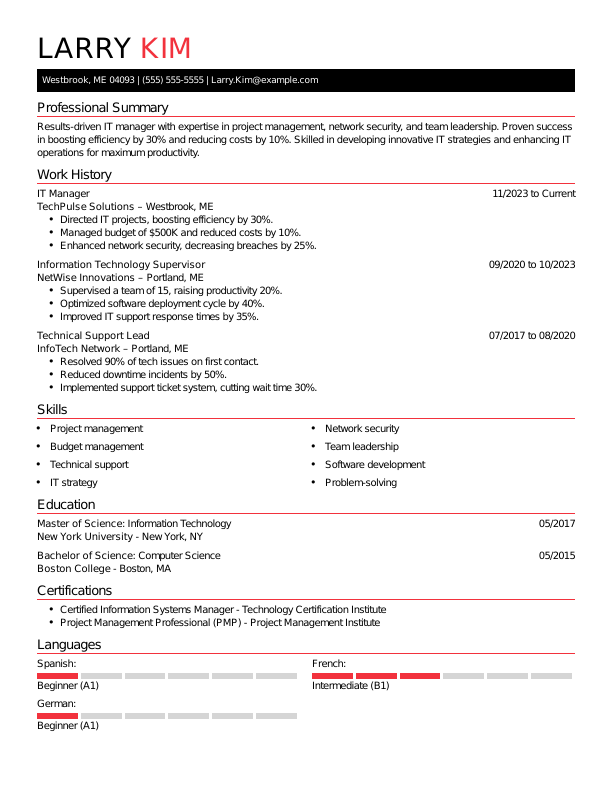
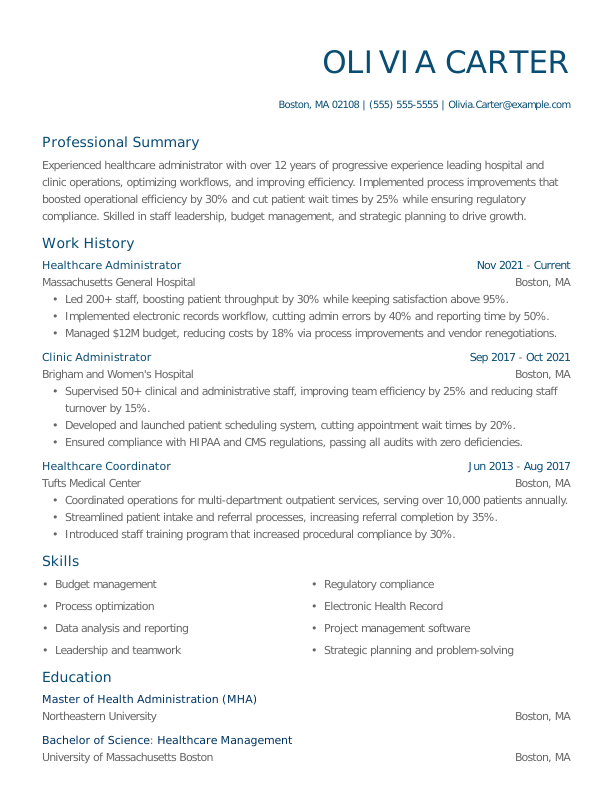
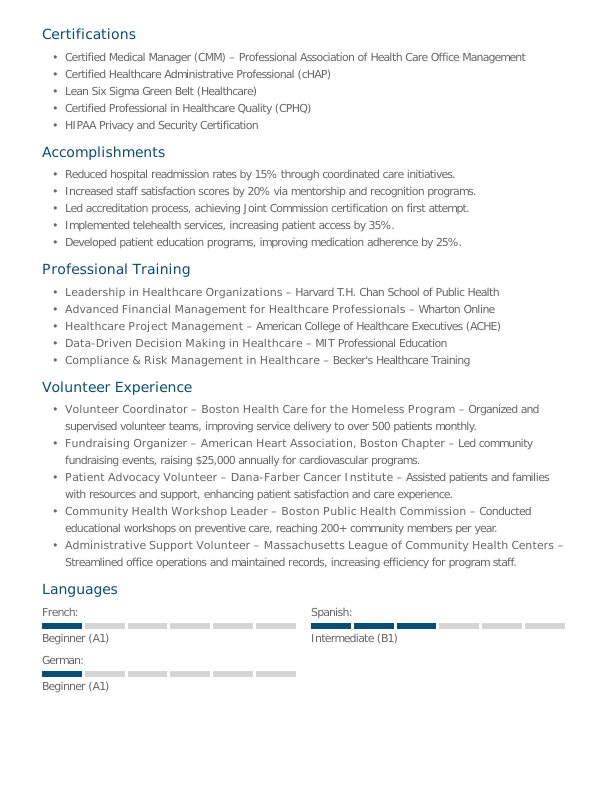
Here is what a properly formatted one-page and two-page resume looks like.
One-Page Resume Example
Two-Page Resume Example
Page 1
Page 2
Choose the Right Resume Length to Land an Interview
The debate over whether a two-page resume is okay comes down to one principle: Content. If the second page of your resume provides concrete evidence of your ability to excel in the role, keep it. If the second page is filled with fluff, outdated roles, or irrelevant hobbies, cut it.
Your resume is an expression of your professional career, education, and skills. It should sell you to an employer, which means presenting your most valuable assets right away.
Frequently Asked Questions
How many pages is too much for a resume?
How many pages is too much for a resume will depend on your level of experience. Generally, early-career professionals should stick to one page, while more experienced applicants will expand to two pages, but no resume should be longer than three pages. CVs, on the other hand, may be longer in specific industries, like academia or medicine.
Should a two-page printed resume be double-sided?
No, a two-page printed resume shouldn’t be double-sided. Double-sided resumes may be eco-friendly, but they look unprofessional and can be awkward to read for employers. Instead, opt for a business card with a QR code that links to a two-page resume.
How far back should my work history go?
Your work history on a resume should go back 10 to 15 years. Anything older loses relevance to your current career goals. Career changers or candidates applying to senior roles, however, may list longer work histories.
Will ATS systems read both pages of my resume?
Yes, an ATS system will read both pages of a resume if it’s properly formatted. Adding complex elements, such as columns, images, or text boxes, can cause an ATS to improperly read a resume. Avoid them and instead use simple bullet points, clear headers, and short paragraphs.
Are there exceptions to the two-page rule?
Yes, there are exceptions to the two-page rule for resumes, such as when an employer asks for a complete work history or a CV instead. But these cases are rare and typically reserved for executive positions. For most roles, you won’t exceed two pages. If you do need a longer document, the job posting will usually say so.
Is a half-page second page okay?
No, a half-empty second page may appear poorly edited or padded. It should be substantial. If it’s mostly empty, it’s better to condense your resume to one page.
Do resume norms differ internationally?
Yes, resume norms differ in countries like the UK, Australia, and parts of Europe, where two- or three-page resumes or CVs are standard. Before applying to international jobs, check local norms.

Kirsten Chorpenning is a career advice writer who empowers job seekers to take control of their career paths using Monster’s comprehensive job search and resume tools. She specializes in helping job seekers find rewarding jobs in today’s dynamic work environment.
See More From Kirsten ChorpenningExplore Related Career Advice
Job Hugging Statistics: Nearly 9 in 10 Workers Have “Hugged” a Job

Updated:
Oct 13, 2026
|
9 min read

Nearly 3 in 10 LinkedIn Users Have Updated a Past Job After Leaving It
Updated:
Oct 7, 2026
|
7 min read

Employee Loyalty Statistics: 90% Say Companies Expect More Than They Give
Updated:
Oct 5, 2026
|
7 min read


Overqualified Hiring Stats: 57% Would Cut Resume Experience to Get Hired
Updated:
Sep 28, 2026
|
9 min read

20 First Job Interview Questions & Sample Answers: Tips to Land Your First Job
Updated:
Sep 24, 2026
|
20 min read

“Do You Have Any Questions for Me?” How to Answer in an Interview (30 Examples)
Updated:
Sep 18, 2026
|
14 min read


Manage Your Career Like an Expert
Take control of your professional journey with Monster’s expert resources. Explore advice, research, and tips to make informed decisions and advance your career with confidence.

Job Search
Discover strategies to get noticed, network effectively, and streamline your job search process.

Resumes
Get practical tips to create a resume or CV that stands out to employers and wins interviews.

Cover Letters
Learn how to craft a compelling cover letter that highlights your experience and fit for the role.

Career Paths
Explore career paths, industry trends, and growth opportunities to plan your next move.

Interviewing
Prepare for interviews with tips on answering common questions and following up effectively.

Career Development
Develop key skills and knowledge to grow in your current role or pivot to new opportunities.

Leaving a Job
Navigate job changes and career transitions with practical advice and planning resources.