
How to Make a Resume With No Experience: Guide & Examples

Learn how to write a resume with no experience so you can get the attention of employers, even without a traditional work history.
Updated:
|

17 min read

Table of Contents


Understanding how to make a resume with no experience is essential for students, recent grads, and career changers. A polished, concise resume can highlight your skills, education, and accomplishments to capture the attention of potential employers.
Everyone starts their career with little or no experience, but your background, including education, volunteer work, and internships, provides valuable skills you can showcase. In this guide, we’ll show you how to turn those experiences into a resume that demonstrates your ability to succeed in the role you want.
This video summarizes the key steps before we dive deeper.
Before You Start Writing Your Resume
Before you learn how to make a resume with no experience, establish what you’ll include to make the process faster and easier. Research jobs you’re interested in, clarify your skills, and identify the best resume format to use.
Identify the Skills & Experience You Already Have
People often think “no experience” means “nothing to put on a resume,” but that isn’t the case. You’ve most likely developed valuable skills through other activities or interests, and employers understand that early-career applicants don’t have long work histories. What matters most is demonstrating your initiative, reliability, and ability to learn.
To begin, create an inventory of your life experiences. Think about everything you’ve done where you had a responsibility or learned a skill, such as:
- Academic achievements: Group assignments, capstone projects, coursework
- Extracurricular activities: Team sports, clubs, student organizations
- Informal or personal jobs: Working for family or friends, dog walking, babysitting
- Hobbies: Photography, writing, chess, gardening, book clubs
- Early-career positions: Internships, mentorships, apprenticeships, gig work
At this stage, you’re simply brainstorming information that will help you build your resume.
Research the Job You Want Before You Apply
With a better idea of what you bring to the table, it’s time to understand how your abilities align with what employers want.
Carefully read job postings for roles you’re interested in to identify relevant keywords. Entry-level descriptions often focus less on years of experience and more on these pillars:
- Core competencies: Repeated traits like attention to detail, organization, or problem-solving
- Technical proficiency: Ability to use specific software (Canva, Excel), productivity tools (Notion, Trello), and other platforms (Adobe, Google Analytics, WordPress)
- Cultural values: Phrases like “fast-paced environment,” “self-starter,” or “collaborative”
After you spot these keywords, connect the dots between job listing requirements and your background to tailor your resume for the role. Customizing your resume is key to getting noticed by hiring managers and applicant tracking systems (ATS), which many employers use to filter submissions for specific keywords related to the job opening.
Here are a few examples of how to connect your skills to the role’s requirements:
| What Employers Want | How to Demonstrate Your Skills |
| Strong Communication | Class presentations, debate team participation, tutoring, or writing for a school or personal blog |
| Project Management | Planning a fundraiser, managing a research project timeline, or coordinating a group capstone project with milestones and deadlines |
| Teamwork and Collaboration | Participation in a sports team, performing in an ensemble, or working a shift-based role requiring coordination with others |
| Problem-Solving and Initiative | A personal project, self-directed learning (such as teaching yourself a coding language), or improving a process or workflow |
Pick the Right Resume Format
The last step before you begin writing your resume is choosing the appropriate format to highlight your strengths. Not all formats work equally well with limited or no work experience.
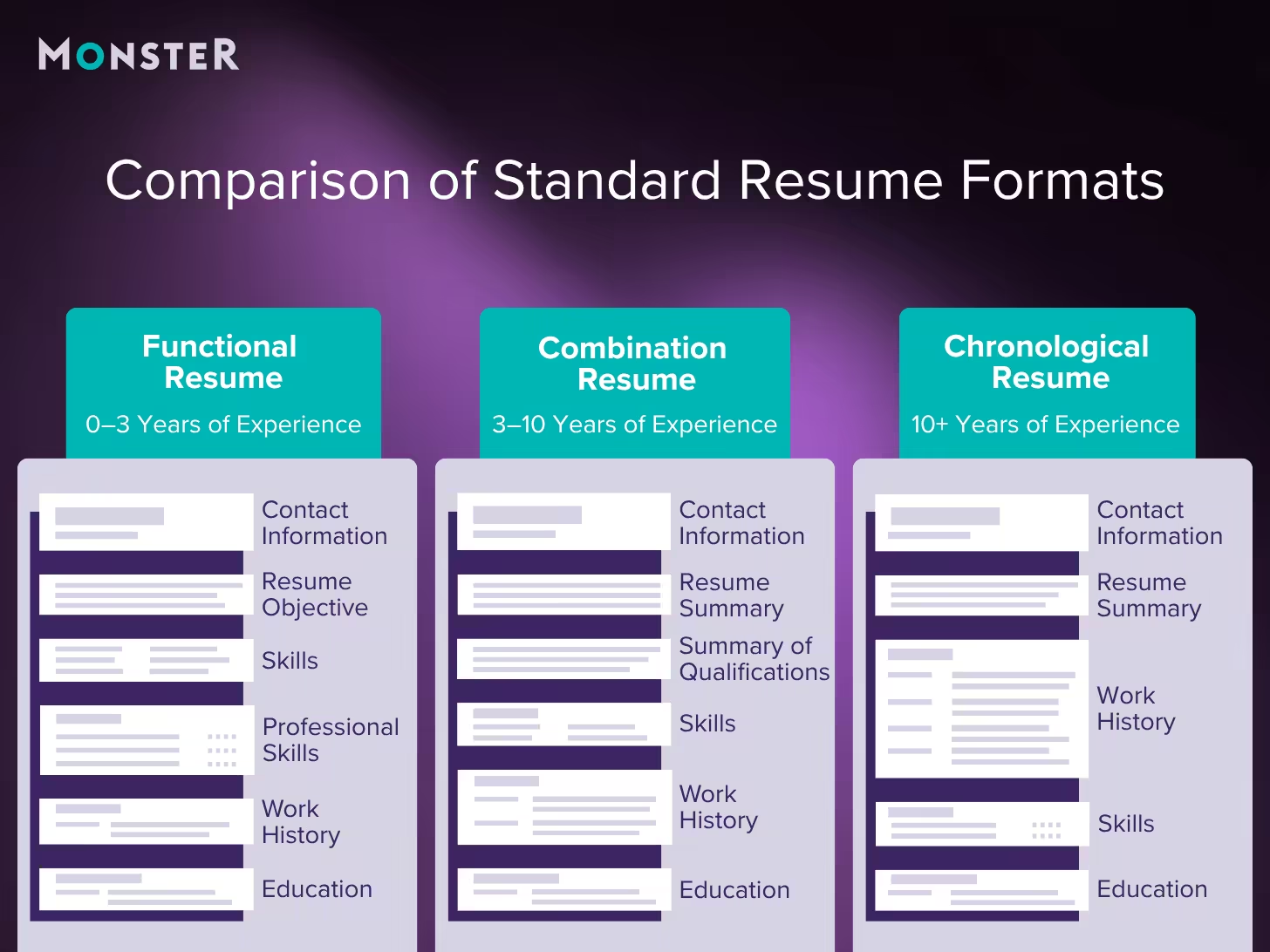
There are three standard resume formats to consider:
- Chronological resume: Also called a reverse-chronological resume, this format lists your most recent, relevant experience first. It’s ideal if you have a steady work history.
- Functional resume: Sometimes called a skills-based resume, this format emphasizes your skills over job history or titles. It’s a good choice if you have limited professional experience.
- Combination resume: This format blends chronological and functional elements, showcasing your skills first, then highlighting relevant experience, such as volunteer work, internships, or projects. It’s the safest choice for first-time job seekers because it balances skills emphasis with ATS compatibility.
 Pro Tip
Functional resumes aren’t always ATS-friendly. If you’re concerned about automated screening systems, use a combination resume to highlight your skills and ensure your resume gets seen.
Step-by-Step Guide to Writing a Resume With No Experience
Once you’ve completed your prep work, you can begin drafting each section of your resume. A no-experience resume includes the following sections, prioritizing education and skills to demonstrate workforce readiness:
- Contact information
- Resume summary or objective
- Education
- Skills
- Transferable experience
- Optional sections
In the following steps, we’ll walk through how to write each of these sections to create a resume that impresses potential employers.
- Step 1:
Include Your Contact Information
The first thing you should add to your resume is your contact information. Position it at the top in a clean, easy-to-read format so employers can easily reach you.
Your contact information should include:
- Full name: List your first and last name, and avoid unprofessional nicknames.
- City and state: There’s no need to include your complete address, but since many ATSs screen for location criteria, list your city and state.
- Phone number: Provide a reliable phone number where employers can reach you. Verify that your voicemail is professional and personally identifiable.
- Email address: Use a professional email address that includes your name. Avoid slang, numbers, nicknames, and offensive or unprofessional language.
- LinkedIn profile, portfolio, or personal website: This information is optional but can give employers a more comprehensive view of your qualifications. Some fields, like art and design, may require an up-to-date portfolio. If you include LinkedIn, personalize your URL with your name.
Example resume contact information:
Susan Smith | Schenectady, NY | (555) 555-5555 | susan.smith@email.com | linkedin.com/in/susansmith
- Step 2:
Craft Your Resume Summary or Objective
A resume summary or objective is a brief statement at the top of your resume that explains who you are as a job seeker.
- A resume summary concisely explains your past work experiences and the most relevant skills or achievements that align with the job requirements.
- A resume objective, sometimes referred to as a summary of qualifications, explains why you’re applying and what transferable skills and experiences you have to offer.
A resume objective is often the best choice when writing a resume with no experience.
To create a compelling resume objective:
- Be concise. Keep it to two or three sentences to grab the reader’s attention.
- Focus on skills and goals. Highlight your key skills and career objectives.
- Tailor it to the job. Use keywords from the job description to align your objective with the role.
Example resume objectives:
Motivated marketing graduate eager to apply academic knowledge and internship experience to a marketing coordinator role. Brings strong communication skills and innovative ideas to support team success.
Detail-oriented early professional seeking a customer service position, bringing enthusiasm, teamwork, and the ability to learn quickly in a fast-paced environment.
College graduate with strong written and verbal communication skills seeking an entry-level data entry role to apply technical experience and support team performance. Focused on achieving results and learning new skills.
- Step 3:
Highlight Your Education
When you’re new to the workforce, your education—college, trade school, or high school if you don’t have a higher degree—can be a major asset. Placing it near the top of your resume shows employers your background and readiness to join the workforce.
List your education in reverse-chronological order, starting with your most recent degree or diploma. Each entry should include:
- Type of degree or diploma
- School name and location
- Graduation date or “Currently enrolled” (optional)
- Relevant coursework, projects, awards, or honors (optional)
- GPA (optional, if 3.5 or higher)
Pro Tip
If you have a college or trade degree, you don’t need to list your high school diploma.
Example resume education section:
Bachelor of Science in Marketing
The Ohio State University, Columbus, OH
Expected graduation: 2029
GPA: 3.7 - Step 4:
Demonstrate Your Relevant Skills
Without work experience, your skills section plays a crucial role in explaining what you’re capable of. Employers like to see a mix of hard and soft skills to understand how you’ll contribute to their organization.
- Hard skills: Also called technical skills, these are teachable and industry-specific abilities, such as coding, accounting, or data analysis.
- Soft skills: General abilities, such as communication, leadership, and critical thinking, demonstrate how you interact with others and transfer across most fields.
Review the skills you brainstormed earlier and choose six to 10 skills that match the job description. Add them to your resume in a clear, easy-to-read format.
Example resume skills section:
Hard Skills
- Experienced in Microsoft Office, Adobe, and Google Suite
- Proficient in C++, HTML, and WordPress
- Skilled in Copywriting, Copyediting, and Technical Writing
Soft Skills
- Communication: Email, text, phone, Slack, Microsoft Teams
- Customer service: Direct assistance and conflict resolution
- Time management: Scheduling and calendar management
- Flexibility: Adapts to changing plans during projects
- Step 5:
Showcase Your Transferable Experience
Transferable experience includes any activities that demonstrate the skills the job requires, such as academic projects, volunteer work, leadership roles in clubs or sports, and other relevant experiences that can compensate for limited paid work history.
For each entry, include:
- Your role or title
- Name of the experience
- Organization name and location (if applicable)
- Start and end dates
- Bulleted list of accomplishments
- Major achievements, awards, or notable contributions
Pro Tip
Use clear, action-focused statements. A helpful formula is action verb + what you did + why it mattered. This frames your contributions and shows their impact.
Example resume volunteer experience section:
Volunteer
Northern Columbus Lions Club | December 2023–Present- Campaigned to request eyeglass donations for the visually impaired
- Sorted, cleaned, and distributed 600+ pairs of eyeglasses to the local community
- Collaborated with local optometry centers to ensure usable, quality eyeglasses
- Received the Most Glasses Donated Award in the Northwest Region from the National Lions Club
Example resume extracurricular activities section:
Director and Production Lead
Student Film: Observation of Nature in the Ohio River | The Ohio State University, Columbus, OH | 2020–2021- Led a team of 5 students to produce a short film featured on indie film sites and YouTube
- Oversaw a dozen shoots of natural environments around the Ohio River valley
- Coordinated with filmographer, editor, sound designer, and actors to meet deadlines
- Won Best Nature Documentary at the 2021 Student Film Awards
Example resume club activities section:
Treasurer
The Ohio State Board Game Society | The Ohio State University, Columbus, OH | 2020–2021- Managed all board game purchases and ensured compliance with school funding policies
- Collaborated on planning and executing the year’s events and activities
- Oversaw 24+ organized play events for 700+ participants
- Earned the Biggest Turnout Award from the Student Leadership Council
- Step 6:
Incorporate Optional Sections
Include any additional information relevant to the job, such as certifications, awards, languages, or club memberships, in dedicated sections on your resume.
When you’re new to the workforce, these sections can emphasize the skills and qualities you bring. For example, a Google UX Design Certificate can help compensate for limited work experience when applying for a web design role.
In a dedicated certifications section, list certifications in reverse-chronological order. Include the title, issuing organization, date earned, and expiration date, if applicable. Keep certifications current to show dedication and that your skills are up to date.
Example resume certifications section:
Certifications- Google UX Design Professional Certificate (Coursera)
- Adobe Certified Professional: Web Design (Adobe) | Expires: 2027
You can also highlight academic achievements that reinforce your work ethic, skills, and qualities employers value in entry-level applicants. As with your certifications section, be specific: Include the award name, issuing organization, and date.
Example resume awards section:
Awards- Best Student Leader, The Ohio State University Student Leadership Committee, 2023
- President’s List, The Ohio State University, 2020–2024
Resume With No Experience Examples
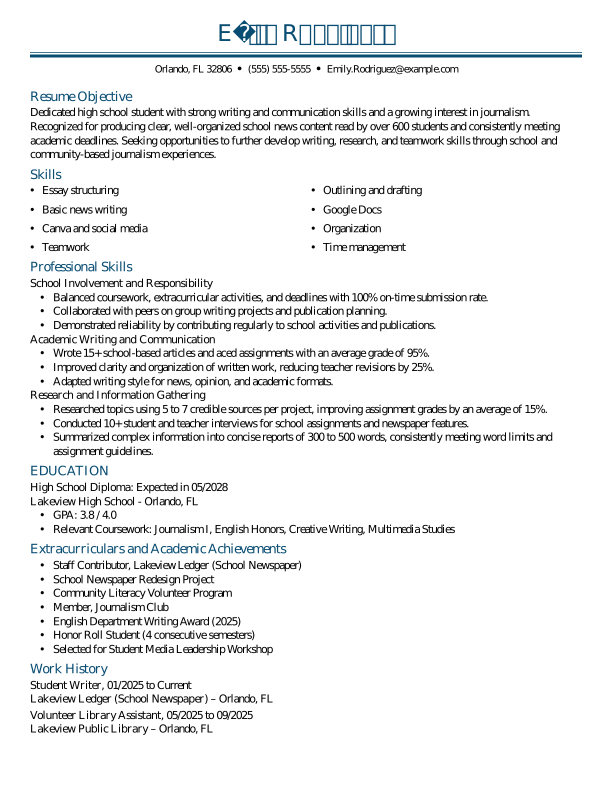
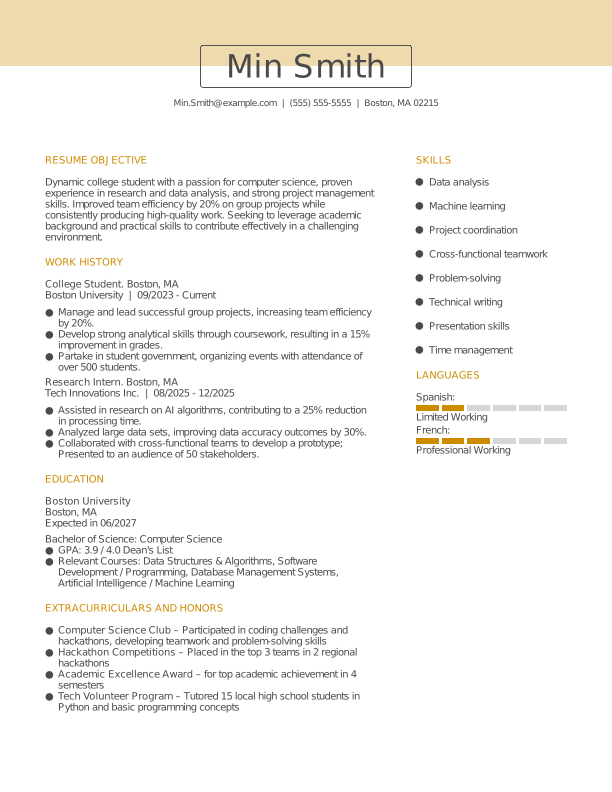
Use these first-job resume samples as a starting point. Choose the one that best fits your situation and the job you’re applying for, then customize it to make it your own.
High School Student Example
College Student Example
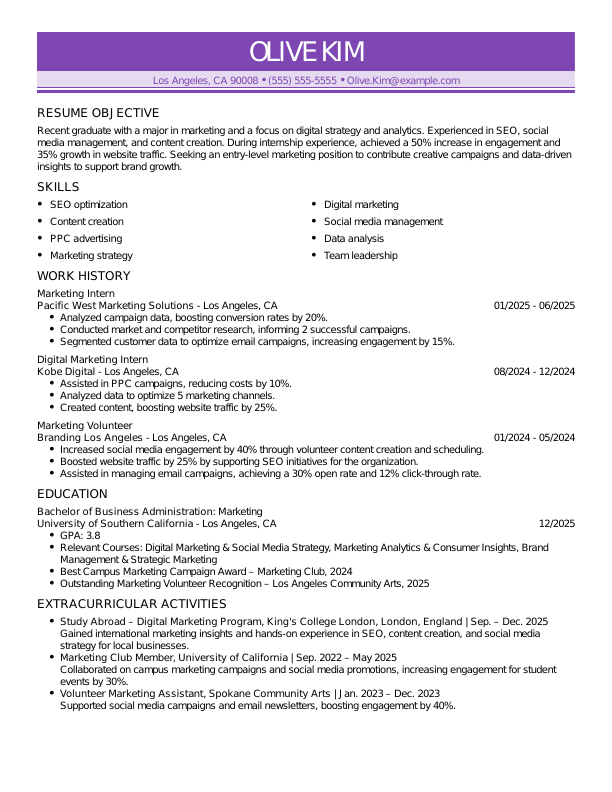
Recent Graduate Example
4 Tips for Writing a Resume Without a Work History
Crafting a strong resume is about more than listing skills and interests. Even without work experience, you can write a resume that stands out and grabs an employer’s attention.
Consider these tips as you write:
- 1.
Focus on Positions You Qualify For
When job hunting without traditional work experience, look for entry-level roles or paid internships, which are designed for newcomers.
Read job descriptions carefully, and pay attention to required qualifications. Remember that many companies use an ATS to filter resumes that don’t match their criteria.
- 2.
Use Action Verbs
Action verbs like “implemented,” “initiated,” and “achieved” bring your resume to life. Start your bullet points with them to call attention to your contributions.
Example resume bullet points:
- Coordinated with teammates to meet deadlines
- Managed off-field activities, including planning meetings and community outreach
- Developed outline simplification strategies that improved content protection by 15%
- Initiated SCRUM planning and sprint practices to increase team efficiency
- Achieved goals ahead of schedule
Action verbs are important because they demonstrate the impact of your work. Without them, your accomplishments can get overlooked.
Pro Tip
Avoid repeating the same verbs, which can make your resume feel repetitive.
- 3.
Keep It Short
Recruiters and hiring managers typically spend less than seven seconds reviewing a resume, so focus on your most important points to keep your resume concise but impactful.
For entry-level positions, a one-page resume is best.
- 4.
Review, Edit, & Proofread
Once the bulk of your resume is complete, it’s time to review, edit, and proofread it. A clean, error-free resume shows attention to detail and professionalism, so check the following:
- Layout: Use a simple, professional design with clear headings and bullet points.
- Spacing and margins: Keep spacing consistent; use one-inch margins, single line spacing, and double-space between sections.
- Font: Stick to professional fonts (Calibri, Helvetica, Times New Roman) sized at 10–12 points. Be careful when using colors, but if you do, stick to a consistent color scheme.
- Contact details: Double-check your email address and phone number to avoid missed opportunities for follow-ups and interview requests.
- Spelling and grammar: Even small typos can leave a bad impression. Review your resume multiple times, take a break, and then review it again with fresh eyes.
Pro Tip
A resume builder can help you catch spelling, formatting, and spacing errors, and you can use popular resume templates as a guidepost when drafting and making revisions.
3 Common Mistakes in Resumes With No Experience
Mistakes can cause your resume to be overlooked by employers or filtered out by an ATS. Fortunately, the following resume mistakes are common and easy to avoid.
Burying Your Most Valuable Qualifications
Always lead with your most relevant information. When key skills or achievements are hidden in long paragraphs or lower sections, employers may miss what makes you a strong candidate.
Falsifying Your Experience
It can be tempting to exaggerate when you don’t have experience, but employers are skilled at spotting inconsistencies. If they suspect you’re lying on your resume, they may discount your real strengths. Always be direct and honest about your qualifications.
Overdesigning & Cluttering
Effective resumes are clean and concise. Too many design elements or dense paragraphs distract from what matters most: your skills and qualifications. Aim for a simple layout that highlights your strengths in an easy-to-read format.
Your First Step Into a New Career
Everyone starts somewhere, and every career begins with a resume that highlights potential instead of experience. What matters most is how you present the skills you already have, along with your enthusiasm, adaptability, and readiness to learn.
By focusing on your education, projects, and transferable skills, you can create a resume that showcases your strengths and positions you for your next opportunity.
If you want assistance as you get started, use Monster’s Resume Builder to create a polished, professional resume in minutes.
Frequently Asked Questions
How long should a resume with no experience be?
A resume with no experience should be one page. Keeping it to a single page helps employers quickly find relevant information without being overwhelmed by unnecessary details.
Can I include personal projects on my resume?
Yes, personal projects are a great addition, as long as the skills involved are relevant to the role you’re applying for. They show initiative, practical skills, and genuine interest.
Describe what you did, the skills you used, and the results or outcomes of the project.
How do I address a lack of work experience in my resume summary?
Don’t apologize for what you lack; focus on what you offer. Use your summary or objective to connect academic projects, volunteer work, or side hustles directly to the job requirements.
Lead with your strongest transferable skill, such as technical proficiency or leadership experience, and explain how you can add value. Instead of saying you’re “willing to learn,” show that you already are by highlighting relevant certifications, coursework, or a strong GPA.
What are transferable skills?
Transferable skills are soft, hard, or technical abilities you can apply across different roles and industries. They show what you can do regardless of job title.
Common transferable skills include:
- Soft skills: Adaptability, communication, leadership, networking, time management
- Hard or technical skills: Coding languages, copywriting, network security, search engine optimization (SEO), and proficiency with tools like Adobe, Google, or Microsoft
Can I include volunteer work on my resume?
Yes, and you should. Volunteer experience is especially valuable when you don’t have a formal work history. It demonstrates skills like initiative, teamwork, and responsibility, while also showing a willingness to contribute.
When listing volunteer work, describe your role, responsibilities, and any measurable impact or achievements. Volunteer roles can also provide professional references, since you won’t have any from a previous employer.

Elizabeth Muenzen is a Certified Professional Resume Writer (CPRW) and member of the Professional Association of Resume Writers & Career Coaches who empowers job seekers to take control of their career paths using Monster’s comprehensive job search and resume tools.
See More From Elizabeth MuenzenExplore Related Career Advice



20 Companies That Pay 100% Health Insurance & Other Top Benefits

Updated:
Sep 10, 2026
|
14 min read


How Long of a Commute Is Too Long? 49% Have Turned Down a Job Due to the Commute

Updated:
Sep 8, 2026
|
11 min read


Beauty Bias at Work Statistics: 88% Say Attractive People Have an Advantage
Updated:
Aug 31, 2026
|
8 min read


How to Put Transferable Skills on Your Resume: 120 Skills, Examples, & Tips
Updated:
Aug 27, 2026
|
16 min read
Manage Your Career Like an Expert
Take control of your professional journey with Monster’s expert resources. Explore advice, research, and tips to make informed decisions and advance your career with confidence.

Job Search
Discover strategies to get noticed, network effectively, and streamline your job search process.

Resumes
Get practical tips to create a resume or CV that stands out to employers and wins interviews.

Cover Letters
Learn how to craft a compelling cover letter that highlights your experience and fit for the role.

Career Paths
Explore career paths, industry trends, and growth opportunities to plan your next move.

Interviewing
Prepare for interviews with tips on answering common questions and following up effectively.

Career Development
Develop key skills and knowledge to grow in your current role or pivot to new opportunities.

Leaving a Job
Navigate job changes and career transitions with practical advice and planning resources.