
Job Search Statistics Reveal Growing Strain: 1 in 4 Job Seekers Spend Over a Year Searching

As job searches stretch longer, candidates are expanding their search, making trade-offs, and feeling increased pressure to get hired.
Updated:
|

7 min read

Table of Contents


For many workers, finding a job is no longer a short-term process—it’s becoming a prolonged and increasingly competitive effort.
According to new job search statistics from the Monster Research Institute, 1 in 4 job seekers say they’ve been searching for more than a year. At the same time, about 45% report searching for at least three months, highlighting how extended job hunts are becoming more common in today’s labor market.
As searches stretch on, the experience is becoming more intense. Nearly 4 in 10 job seekers (39%) say they feel more pressure to get hired than in previous searches, and 46% say they’re applying more broadly than before.
Key Findings
- 25% of job seekers have been searching for more than a year.
- 45% have been searching for at least three months.
- 39% say they feel more pressure to get hired than in previous searches.
- 46% are applying to a broader range of roles.
- 64% have applied to jobs outside their industry or typical role.
- 32% would accept a pay cut to secure a job.
- 73% would give up at least one major job benefit.
How Long Does It Take to Find a Job?
While some candidates find roles quickly, many others are navigating months-long or even year-long searches. With the average length of job searching taking over a year for 25% of job seekers and another large share searching for months, long job searches are no longer the exception—they’re part of the norm.
The data points to a job market where persistence is more important than ever, but longer timelines can make it harder to stay focused, especially when responses from employers are limited or delayed.
 Pro Tip
Using trusted job search tools can help speed things up and make your search more targeted. On Monster, uploading your resume can connect you with roles that align with your experience and goals, so you can spend less time searching and more time applying to the right opportunities.
Candidates Are Expanding Their Search
In response to a competitive environment and job search strain, many job seekers are widening their approach.
Nearly half (46%) say they’re applying to a broader range of roles than they have in the past. At the same time, 64% report applying to jobs outside their industry or typical role.
Among those expanding beyond their field:
- 20% say they’re actively trying to change industries or roles.
- 44% say they’ve applied to a few roles outside their usual field.
This shift reflects a more flexible approach to job searching, as candidates prioritize landing a role, even if it’s not a perfect match.
Job Seekers Are Making Trade-Offs
As searches continue, many candidates are becoming more open to compromise. Overall, 73% say they’d give up at least one major job benefit to secure a role.
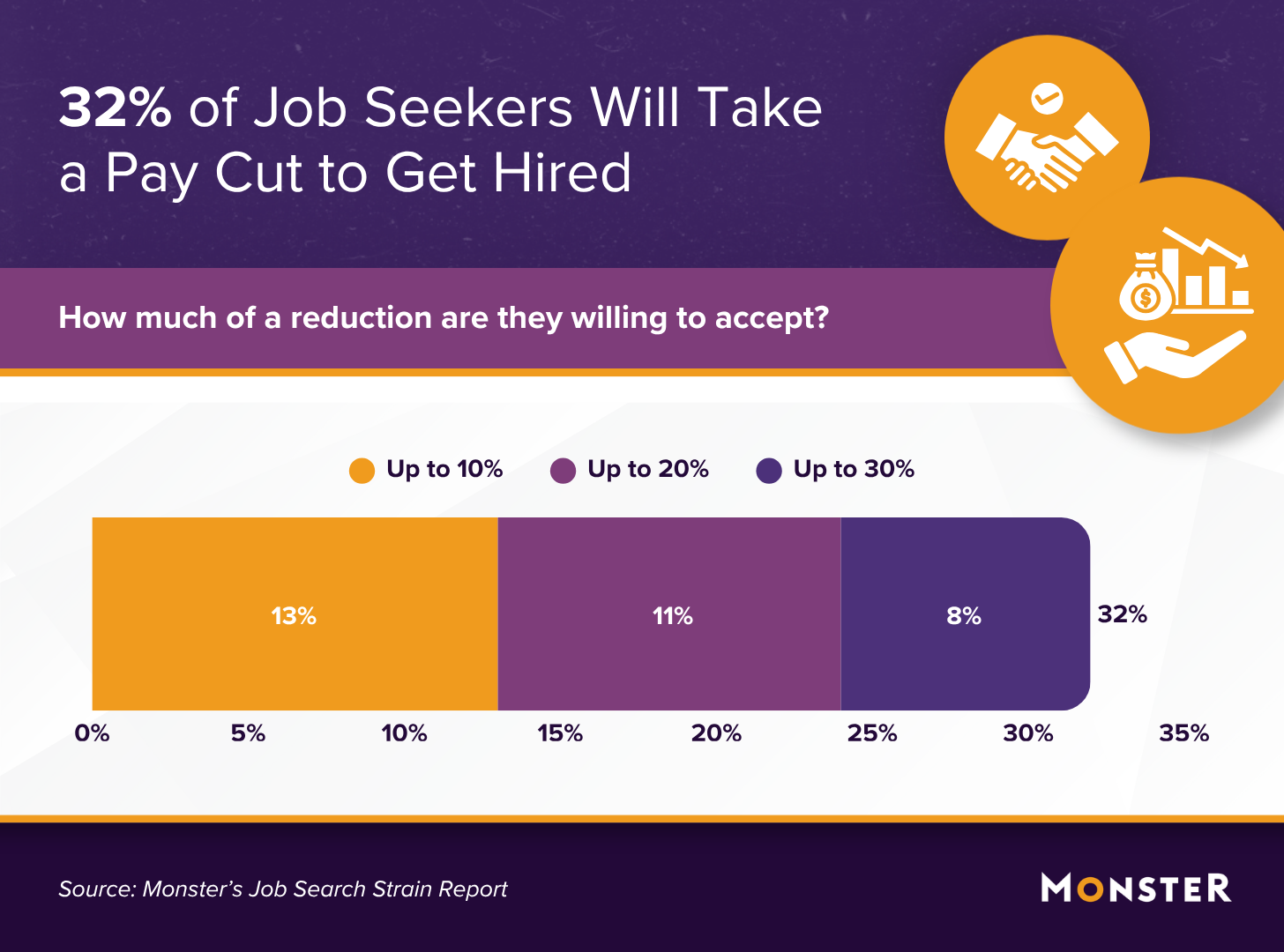
As shown in the graphic below, nearly one-third (32%) say they would accept a pay cut to get hired:
- 13% would accept up to a 10% reduction.
- 11% would accept up to 20%.
- 8% would accept up to 30%.
Beyond pay, many are willing to adjust other expectations:
- 23% would give up full-time hours.
- 22% would consider leaving their preferred industry.
- 18% would give up title or seniority.
- 15% would give up remote work options.
Pressure Is Rising
Job search difficulty and longer searches are impacting strategy and affecting how job seekers feel. Nearly 4 in 10 (39%) say they feel more pressure to get hired compared to previous searches, while 30% say their level of urgency is about the same. Only 25% say they feel less pressure.
This growing sense of urgency can influence decision-making, from applying to more roles to considering opportunities that may not have been a first choice in the past.
What’s Driving the Shift?
For many job seekers, expanding their search is a practical decision. Among those considering roles outside their usual field, the top motivations include:
- Better pay (33%)
- Job stability (29%)
- Work-life balance (23%)
- Remote flexibility (20%)
- Fewer opportunities in their industry (17%)
- Burnout (16%)
These factors highlight how both economic conditions and personal priorities are shaping job search trends in 2026.
What Does This Mean for Job Seekers?
A longer job search doesn’t mean a stalled career—it means adapting your strategy.
If your search is taking longer than expected:

Focus on roles that align closely with your skills and experience.
Stay open to adjacent opportunities that can build new skills.
Continue networking to uncover opportunities beyond job boards.
Be strategic about where and how often you apply.
The job market may feel more competitive, but persistence, flexibility, and a targeted approach can make a difference.
The Bottom Line
Today’s job search is becoming longer, broader, and more complex for many candidates. As a result, job seekers are expanding their strategies, exploring new industries, and reconsidering what they’re willing to accept in their next role.
While the process may take more time and create job search struggles, those who stay adaptable and focused are better positioned to navigate today’s evolving job market.
For press inquiries, please contact Lauren Adams at lauren.adams@monster.com.
Methodology
This survey was conducted by Monster on March 17, 2026, among 1,003 U.S. job seekers using the Pollfish platform. Respondents answered a mix of single-selection and multiple-choice questions about their job search experience and how it compares to previous searches.
About Monster
Monster is a global leader in online job searching, resume building, and employment solutions. For over 30 years, the company has been a trusted authority for both job seekers and companies. Beyond the job search, Monster provides an intuitive Resume Builder and hundreds of resume templates to help candidates stand out against the competition, while offering employers a comprehensive resume database to source top talent. As a G2 category leader, Monster has been featured in Forbes, CNBC, CNN, and USA Today, sharing the career advice needed to bridge the gap between job seekers and hiring managers. Follow Monster on LinkedIn, Facebook, Instagram, and TikTok for the latest employment trends.

Vicki Salemi is a nationally recognized career expert who helps professionals navigate the hiring landscape and find the right fit on Monster. With over 15 years of experience in corporate recruiting and HR, she offers expert guidance on job search strategies, interview preparation, and career development to help candidates land their next role.
See More From Vicki SalemiExplore Related Career Advice

Overqualified Hiring Stats: 57% Would Cut Resume Experience to Get Hired
Updated:
Sep 28, 2026
|
9 min read

20 First Job Interview Questions & Sample Answers: Tips to Land Your First Job

Updated:
Sep 24, 2026
|
20 min read

“Do You Have Any Questions for Me?” How to Answer in an Interview (30 Examples)
Updated:
Sep 18, 2026
|
14 min read



20 Companies That Pay 100% Health Insurance & Other Top Benefits
Updated:
Sep 10, 2026
|
14 min read


How Long of a Commute Is Too Long? 49% Have Turned Down a Job Due to the Commute
Updated:
Sep 8, 2026
|
11 min read

Manage Your Career Like an Expert
Take control of your professional journey with Monster’s expert resources. Explore advice, research, and tips to make informed decisions and advance your career with confidence.

Job Search
Discover strategies to get noticed, network effectively, and streamline your job search process.

Resumes
Get practical tips to create a resume or CV that stands out to employers and wins interviews.

Cover Letters
Learn how to craft a compelling cover letter that highlights your experience and fit for the role.

Career Paths
Explore career paths, industry trends, and growth opportunities to plan your next move.

Interviewing
Prepare for interviews with tips on answering common questions and following up effectively.

Career Development
Develop key skills and knowledge to grow in your current role or pivot to new opportunities.

Leaving a Job
Navigate job changes and career transitions with practical advice and planning resources.