
Indian Resume Format Guide: How to Write an Indian Resume

Applying to jobs in India? Learn the Indian resume format, including biodata requirements, technical skills, and what employers expect.
Updated:
|

16 min read
Table of Contents


To write an Indian resume, add more detail, structure your sections clearly, and align your content with how employers in India evaluate candidates. In most cases, this means expanding your education section, placing a greater emphasis on technical skills, and determining whether biodata is required for the role.
This guide walks through how to do that, helping you understand key differences and build each section so your resume fits the roles you’re targeting in India.
What’s Different About Indian Resume Formatting?
Indian resumes follow a different set of expectations than U.S. or other Western resumes, especially in how much detail you include and how information is presented.
Indian hiring practices often place more weight on academic performance and technical qualifications, which is why the education and skills sections are more detailed. Academic scores are commonly listed as percentages or cumulative grade point average (CGPA) on a 10-point scale, rather than a 4.0 GPA.
Here are the key differences to know:
| Formatting Element | Indian Resume | U.S. Resume |
| Length | 2+ pages commonly accepted | 1 page (2 pages for experienced candidates) |
| Personal Information | May include biodata (date of birth, gender, nationality, marital status), depending on role | No personal details beyond contact info |
| Photo | Common but optional | Not recommended |
| Opening Section | Career objective (especially for freshers) or professional summary | Professional summary more common |
| Education Section | Highly detailed (GPA/CGPA, coursework, achievements, rankings) | More concise, less emphasis after early career |
| Skills Section | Dedicated technical skills section with tools, systems, certifications | Skills included, but often less detailed |
| Tone & Detail | More formal and detailed | More concise and results-focused |
What Is a Resume Called in India? (Resume vs CV)
In India, both a resume and a CV are commonly used, and the terms often overlap depending on the industry and role.
- Indian resume: Most common for corporate and private sector jobs
- Indian CV format: More commonly used for academic, research, and some senior-level roles
In many cases, the two terms are used interchangeably. The simplest approach is to follow the wording in the job posting and tailor your document to that role’s expectations.
How Does an Indian Resume Look?
An Indian resume is typically more detailed and structured than a U.S. resume. It often includes a career objective, a dedicated technical skills section, and an expanded education section with coursework, grades, and academic achievements.
In some cases, it may also include a biodata section, depending on the role. You’ll also notice:
- Greater emphasis on academic achievements and certifications
- A longer, more comprehensive resume (often two or more pages)
- Clear section headings and a formal, structured tone
How Do You Write an Indian Resume? Tips & Formatting Guidelines
To write an Indian resume, include a clear objective or summary, detailed education and technical skills, and follow the expectations common in the Indian job market.
These resume-building tips for the Indian job market will help you structure your resume in a way that aligns with employer expectations and improves your chances of getting noticed.
Include the Standard Resume Sections
An Indian resume should include all the core sections employers expect, with slightly more detail than a typical U.S. resume, because recruiters often evaluate candidates based on both academic background and technical capabilities.
- Resume header: Include your name, phone number, professional email address, and location. A photo is acceptable in India but optional. For multinational companies or modern roles, it’s usually best to leave it off unless requested.
- Professional statement: Use a summary if you have experience, or a career objective if you’re a fresher. Objective statements are still common and should clearly state your goals and target role.
- Work experience: List roles in reverse-chronological order with your job title, company name, dates, and bullet points describing responsibilities and results.
- Skills: Add a dedicated section with a strong focus on technical or hard skills, including tools, systems, programming languages, and relevant certifications.
- Education: Include your degree, institution, years attended, relevant coursework, academic achievements or honors, and GPA (4-point scale), CGPA (10-point scale), or percentage (if strong).
- Additional sections: Include certifications, projects, internships, languages, or extracurricular activities that strengthen your application.
Choose the Best Resume Format
The best resume format in India is usually chronological unless you’re a fresher or in a technical role, where a combination format can better highlight your skills and projects.
- Chronological: The most common format; best for candidates with a steady work history, as it highlights career progression and places recent roles first in a reverse-chronological order.
- Combination (hybrid): Blends skills and work experience; ideal for technical roles or candidates with strong projects and skills to showcase alongside experience.
- Functional: Focuses on skills over work history; best for freshers, career changers, or those with limited experience, though it’s less commonly preferred by employers.
Follow Indian Resume Formatting Guidelines
To format an Indian resume correctly, use a clean, structured layout with a slightly longer length (1–2+ pages), formal language, and clearly defined sections that are easy to scan.
- Length: 1–2+ pages are commonly accepted (2 pages are typical for mid-career+).
- Layout: Use a clear, single-column format with consistent spacing, 2–2.5 cm margins, and clearly defined section headings. For physical submissions, use A4 paper.
- Font: Stick to professional fonts like Arial, Calibri, or Times New Roman (10–12 points for the body, 12–14 points for headings).
- Tone: Use formal, professional language with clear, direct phrasing.
- Organization: Group similar information together and keep sections logically ordered.
 Pro Tip
Using structured resume templates can help you maintain consistent formatting and avoid common layout issues. Tools like Monster’s Resume Builder make it easier to create polished, ATS-friendly resumes by guiding your formatting, organizing your sections, and helping you present your experience clearly.
Understand Biodata Requirements
Biodata is a section sometimes included in Indian resumes that lists personal background details beyond standard contact information. This can include information such as date of birth, gender, marital status, nationality, and languages.
While biodata is part of traditional resume practices in India, it’s not required for every role and is becoming less common in modern, private-sector hiring.
Typical biodata details may include:
- Date of birth
- Gender (if required)
- Marital status
- Nationality
- Languages and proficiency levels
- Permanent or current address (in more traditional formats)
Languages may appear either in biodata or as a separate section, depending on the resume format and role requirements.
Include biodata when applying to:

Academia
Government jobs
Traditional industries
Some regional or rural employers
Skip biodata when applying to:

Tech companies and startups
Multinational or global organizations
Modern corporate roles that follow international hiring standards
If you’re unsure, check the job posting. If personal details are requested, include a brief biodata section. If not, it’s usually best to leave it off and focus on your skills and experience.
If you do choose to include a biodata section, keep it simple. You can either include it directly under your contact information or add a short section labeled “Personal Information” or “Biodata.”
Biodata section example:
- Date of Birth: 15 August 1998
- Gender: Female
- Marital Status: Single
- Nationality: Indian
- Languages: English (Fluent), Hindi (Native), Tamil (Intermediate)
Follow Education Section Expectations
In an Indian resume, the education section is often more detailed than in U.S. resumes, especially for early-career candidates. Employers expect to see not just your degree, but also supporting academic details that show your strengths.
Include:
- Degree, institution, and years attended
- GPA, CGPA, or percentage (if strong, such as 3.4+/4.0, 7.0+/10, or 65%+, depending on your grading system)
- Relevant coursework aligned to the role
- Academic achievements, such as honors, rankings, or awards
- Extracurricular activities that demonstrate leadership or skills
In India, many universities use a 10-point scale or percentages, so include your score in its original format and avoid converting unless requested.
Pro Tip
If your university uses a CGPA out of 10, list it as-is (e.g., 8.2/10). Only convert to a 4.0 GPA scale if the employer specifically requests it.
Education section example:
Bachelor of Technology in Computer Science | University of Mumbai
Mumbai, India | 2019–2023
- CGPA: 8.4/10
- Relevant Coursework: Data Structures, Database Management Systems, Machine Learning
- Academic Achievements: Dean’s List (2021, 2022)
- Extracurricular Activities: Coding Club Member, Hackathon Finalist (2022)
Write a Strong Technical Skills Section
Indian resumes place a strong emphasis on technical and hard skills, often more prominently than Western resumes. Recruiters frequently scan this section first, especially for roles in IT, engineering, finance, analytics, and operations.
Create a dedicated technical skills section, and organize it so it’s easy to read and quickly shows your capabilities. Avoid vague terms like “proficient in Microsoft Office” and focus on specific tools, technologies, and systems tied to the role.
Include:
- Programming languages or technical competencies
- Tools, platforms, and software you’ve used in real work or projects
- Frameworks or systems relevant to your field
- Certifications, listed clearly and prominently
Group related skills together and prioritize the most relevant ones based on the job description. If you’re a fresher, include tools and technologies used in past projects, coursework, or training, not just formal work experience.
Technical skills section example:
- Programming Languages: Python, Java, SQL, JavaScript
- Frameworks & Libraries: React, Node.js, Pandas, NumPy
- Tools & Platforms: Git, Docker, AWS (EC2, S3), Tableau
- Databases: MySQL, MongoDB
- Certifications: AWS Certified Solutions Architect (2024), Google Data Analytics Professional Certificate
How to Adapt a U.S. Resume for India
To adapt a U.S. resume for India, expand your content and adjust formatting to match local expectations.
Use a More Detailed Format
Indian resumes are often longer than U.S. resumes, with two or more pages being acceptable. Add more detail to your work experience, education, and skills to provide a fuller picture of your background.
Adjust Tone & Language
Use a more formal, professional tone. Indian English tends to be slightly more structured, so avoid overly casual phrasing and keep descriptions clear and direct.
Expand Your Education Section
Include your GPA, CGPA, or percentage (if strong), along with relevant coursework and academic achievements. Education carries more weight in India, especially for early-career roles.
Add a Dedicated Technical Skills Section
Create a clearly labeled technical skills section with specific tools, systems, and technologies. This is a key expectation for many roles in India.
Include a Career Objective (If Applicable)
If you’re early in your career, add a career objective at the top of your resume. This is still widely used in the Indian job market.
Include Biodata Only if Required
Add biodata only if the job posting or industry calls for it. For many modern roles, especially in tech or multinational companies, it’s not necessary.
How to Adapt Indian Resumes for Jobs in the U.S.
To adapt an Indian resume for the U.S., simplify your content and remove details that aren’t standard in U.S. hiring.
Shorten the Length
U.S. resumes are typically one page (or two pages for experienced professionals). Cut unnecessary detail and focus on the most relevant experience.
Remove Personal Details & Biodata
Delete any biodata, including date of birth, gender, marital status, and nationality. U.S. resumes should only include basic contact information.
Don’t Include a Photo
Photos are not standard in the U.S. and should always be removed to keep your resume professional.
Shift to a Professional Summary
Replace a career objective with a professional summary that highlights your experience, skills, and key achievements.
Condense the Education Section
If you have work experience, keep your education section brief. Focus on your degree and institution, and remove detailed coursework unless it’s highly relevant.
Indian Resume Template
Use this Indian resume template to structure your resume with the sections, details, and formatting employers in India expect.
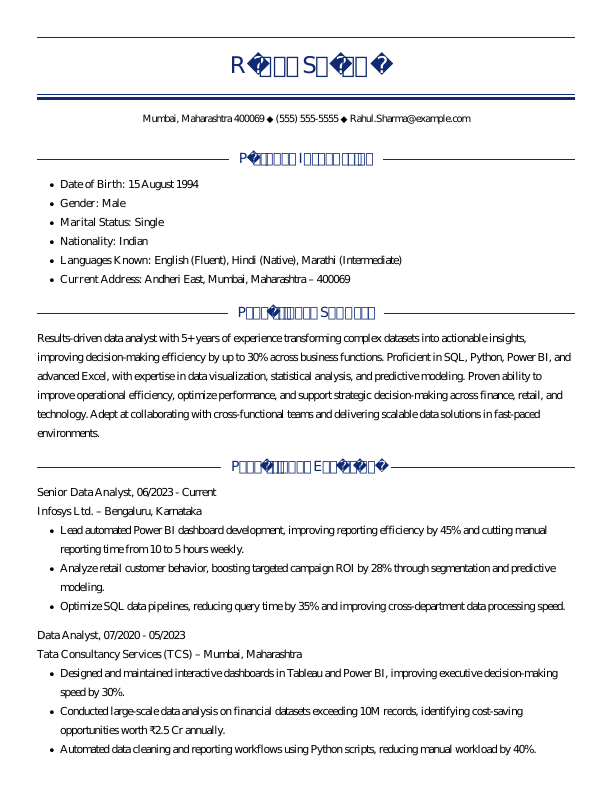
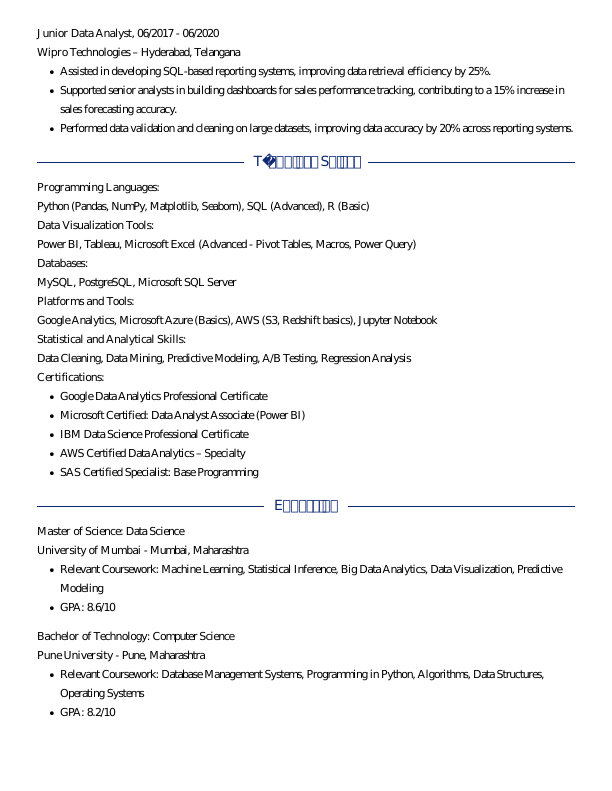
Indian Resume Example
Here’s a complete Indian resume example to show how these sections come together in a finished document.
Page 1:
Page 2:
Indian Resume Format for Freshers: Template & Tips
In the Indian job market, “freshers” refers to recent graduates or candidates with little to no formal work experience, and resumes for freshers place more emphasis on education, projects, and skills than professional history.
To build a strong Indian resume as a fresher, focus on the areas that best show your potential:
- Start with a clear career objective that defines your goals and target role.
- Make sure your education section includes relevant coursework, achievements, and academic details.
- Treat projects, internships, and training as your primary experience, placing them above work experience that may not be directly relevant to the role.
- Emphasize technical and transferable skills that align with the job.
- Include extracurricular activities that demonstrate leadership or initiative.
- Keep your resume clean, structured, and easy to scan.
Indian Resume Template for Freshers
Is Your Resume India-Ready?
To create a strong Indian resume, focus on clarity, relevant detail, and aligning each section with the expectations of your target role and industry. From structuring your education and technical skills to deciding whether to include biodata, each section should match the role and industry you’re targeting.
Once your resume is aligned with these expectations, you’ll be in a stronger position to apply with confidence. Upload your resume to Monster to get matched with relevant opportunities and connect with employers actively searching for candidates with your skills.

Kirsten Chorpenning is a career advice writer who empowers job seekers to take control of their career paths using Monster’s comprehensive job search and resume tools. She specializes in helping job seekers find rewarding jobs in today’s dynamic work environment.
See More From Kirsten ChorpenningExplore Related Career Advice

“Do You Have Any Questions for Me?” How to Answer in an Interview (30 Examples)
Updated:
Sep 18, 2026
|
14 min read



20 Companies That Pay 100% Health Insurance & Other Top Benefits
Updated:
Sep 10, 2026
|
14 min read


How Long of a Commute Is Too Long? 49% Have Turned Down a Job Due to the Commute

Updated:
Sep 8, 2026
|
11 min read


Beauty Bias at Work Statistics: 88% Say Attractive People Have an Advantage
Updated:
Aug 31, 2026
|
8 min read

Manage Your Career Like an Expert
Take control of your professional journey with Monster’s expert resources. Explore advice, research, and tips to make informed decisions and advance your career with confidence.

Job Search
Discover strategies to get noticed, network effectively, and streamline your job search process.

Resumes
Get practical tips to create a resume or CV that stands out to employers and wins interviews.

Cover Letters
Learn how to craft a compelling cover letter that highlights your experience and fit for the role.

Career Paths
Explore career paths, industry trends, and growth opportunities to plan your next move.

Interviewing
Prepare for interviews with tips on answering common questions and following up effectively.

Career Development
Develop key skills and knowledge to grow in your current role or pivot to new opportunities.

Leaving a Job
Navigate job changes and career transitions with practical advice and planning resources.