
What to Wear to a Job Fair: Outfit Ideas & Expert Insights

The right job fair outfit should look polished, feel comfortable, and help you stay confident through hours of conversations with recruiters.
Updated:
|

12 min read
Table of Contents


What You’ll Learn
- Wear business casual attire to most job fairs, with professional staples like collared shirts, blouses, sweaters, dress pants, chinos, skirts, and dresses.
- A good career fair outfit should look professional while keeping you comfortable through hours of walking, standing, and networking.
- Finance, law, and government tend to be more formal, while technology, creative fields, healthcare, and education have their own dress norms.
- Recruiters notice what candidates wear, and professional presentation can influence how they perceive you when meeting many qualified job seekers.
A job fair puts you face-to-face with multiple employers in a short amount of time, which can make choosing one outfit feel surprisingly complicated. You want to fit the setting without overdressing, stay comfortable through hours of networking, and feel like yourself while talking to recruiters.
Below, we’ll cover outfit ideas for different fashion choices, industries, seasons, and types of career fairs, plus expert insight into what recruiters actually look for.
What to Wear to a Job Fair: Quick Guide
For most job fairs, wear a polished, professional, business casual outfit that’s slightly more formal than everyday workwear and appropriate for a professional networking event. A button-down shirt, blouse, sweater, dress pants, chinos, or a professional skirt are all appropriate options, while a suit may be a better choice for more formal industries such as law or finance.
How to Dress for a Job Fair: 5 Practical Tips
To dress for a job fair, opt for business casual, wear comfortable shoes, dress in layers, keep grooming and accessories simple, and consider the weather.
These tips can help you put each of those recommendations into practice:
- 1.
Choose an outfit you can dress up or down. Start with simple professional pieces, then use a blazer, cardigan, or other layer to adjust the formality based on the employers you’re meeting.
- 2.
Wear comfortable shoes. Choose professional shoes you can comfortably stand and walk in for several hours. Loafers, flats, low heels, and other supportive dress shoes are practical options.
- 3.
Dress in layers. Wear lightweight, breathable layers so you can adjust to crowded rooms, air-conditioning, and changing temperatures throughout the day.
- 4.
Keep grooming and accessories simple. Keep grooming neat and accessories simple so they don’t distract from your conversations with recruiters. Avoid strong fragrances, oversized accessories, or anything you’ll need to adjust throughout the day.
- 5.
Plan for the weather and location. Check the forecast and consider the venue, including how much time you’ll spend walking, waiting outside, or moving between buildings. Bring appropriate outerwear and consider changing out of rain or snow boots once you’re inside, if possible.
What to Wear to a Job Fair by Fashion Choice
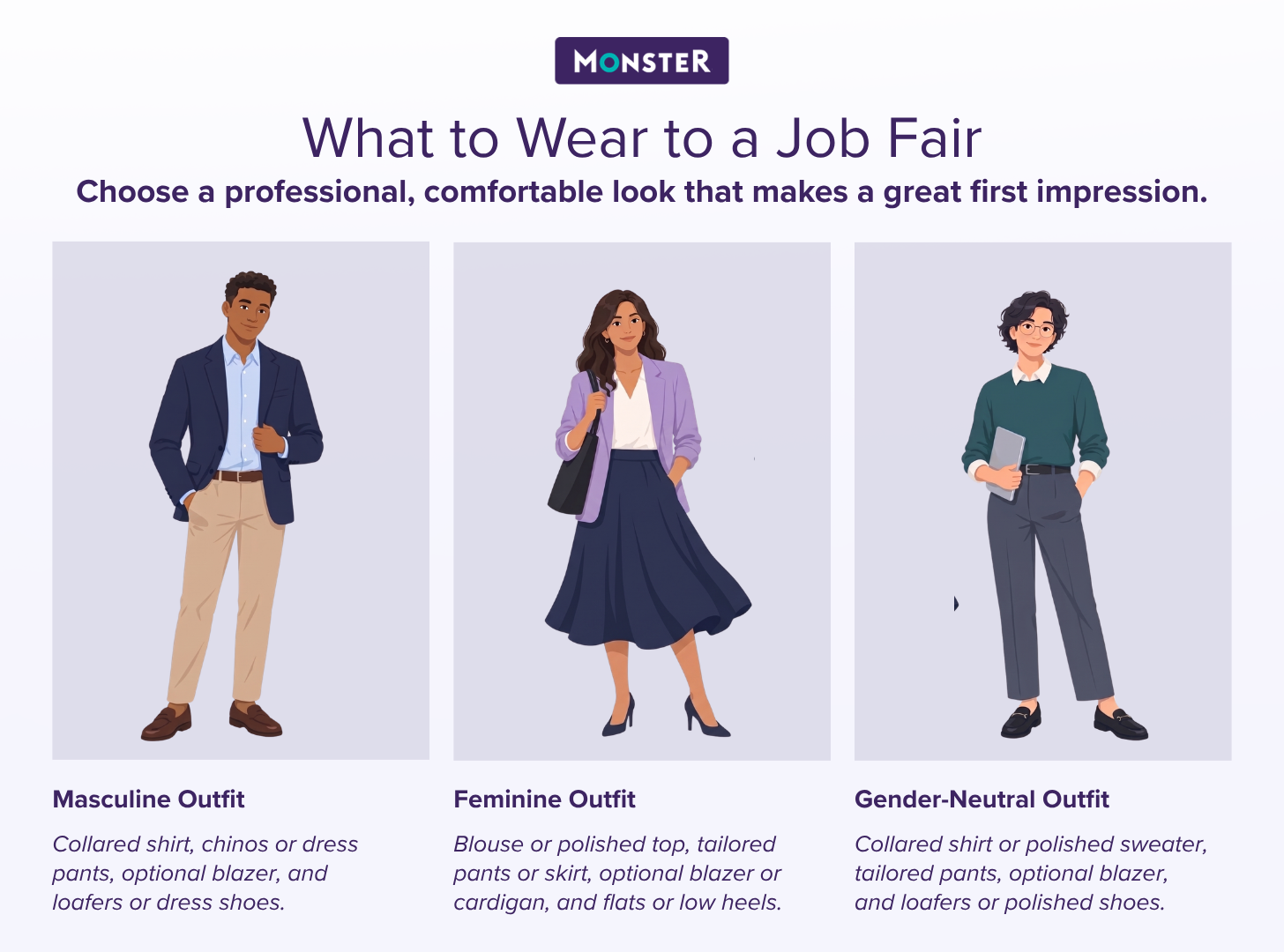
If you’re wondering what to wear to a job fair as a woman or a male attendee, business casual is appropriate for most events. Women, men, and people of any gender can choose from options like collared shirts, blouses, tailored pants, skirts, dresses, blazers, and other professional pieces that fit their personal style.
Here are some more ideas for different fashion choices:
| Fashion Choice | Job Fair Outfit Ideas | Styling Guidance |
| Men | Button-down shirt with chinos or trousers; polo with dress pants; blazer with an open-collar shirt; suit with or without a tie | Choose well-fitting pieces and coordinating colors. Match your shoes and belt when appropriate. |
| Women | Blouse with tailored pants; sweater with a professional skirt; work-appropriate dress; blazer with trousers; pantsuit or skirt suit | Select pieces that fit comfortably and are easy to move in. Keep shoes practical for walking and standing. |
| Gender-Neutral | Button-down shirt with tailored pants; sweater with chinos; blazer with trousers; matching or coordinating suit separates | Pick coordinated pieces that fit well and reflect how you prefer to present yourself professionally. |
How to Dress for a Job Fair by Industry
To dress for a job fair in your industry, consider what employees typically wear to work and aim for the more polished end of that range. Some industries expect business professional attire, while others are better suited to business casual.
- Finance, law, and government: Choose business professional attire, such as a suit, tailored separates, or a blazer with dress pants or a professional skirt.
- Business and corporate roles: Opt for polished business casual or business professional attire based on the employers attending.
- Technology and startups: Business casual is generally appropriate. Keep the outfit polished even if the company’s everyday dress code is casual.
- Creative industries: Business casual with more room for personal style can work well. Keep the overall look professional, not overly casual.
- Healthcare: Choose business casual instead of scrubs or other clinical workwear unless the event specifically requests it.
- Education and teaching: Wear polished business casual clothing similar to what you’d wear for a teaching interview, such as a blouse, collared shirt, cardigan, dress pants, skirt, or professional dress.
How to Dress for a Job Fair in Different Situations
What to wear to a job fair can depend on where and how the event takes place. College career fairs, virtual events, and winter job fairs each have practical considerations that can affect what you wear.
What to Wear to a College Career Fair
For a college career fair, business casual is appropriate unless your school or participating employers recommend more formal attire. You don’t need an expensive suit or blazer to look professional. Clean, well-fitting basics like a collared shirt, blouse, sweater, chinos, dress pants, skirt, or simple dress can work well.
If you don’t already own professional clothing, start with what you have and fill in the gaps affordably. Your college may have a career closet or clothing-lending program, and thrift or consignment stores can be good sources for professional basics. Prioritize fit, condition, and a coordinated look over brand names or expensive pieces.
What to Wear for a Virtual Career Fair
For a virtual career fair, wear a professional top that looks polished on camera and stands out clearly from your background. Avoid busy patterns, distracting accessories, and anything that may interfere with your microphone or require frequent adjustment.
And don’t neglect the rest of your outfit. You may need to stand or move unexpectedly during the event, so dress professionally from head to toe.
What to Wear to a Job Fair in Winter
Build your winter job fair outfit around removable layers so you can stay warm outside without overheating inside.
Wear a professional coat over your outfit and choose layers that are easy to carry or remove once you arrive. If snow or rain makes boots necessary, consider bringing professional shoes to change into.
Check whether the venue offers a coat check or another place to store outerwear. If not, bring only what you can comfortably carry so you can keep one hand free to shake hands, exchange materials, and speak with recruiters without juggling a coat, boots, bag, and copies of your resume.
What Shoes & Accessories to Wear to a Career Fair
For a career fair, wear comfortable, professional shoes and simple accessories that complement your outfit without becoming distracting.
- Shoes: Wear loafers, flats, dress shoes, low heels, or another polished option that’s comfortable for walking and standing.
- Jewelry: Keep necklaces, earrings, bracelets, rings, and watches simple and understated.
- Belt: Pick a simple style that complements your shoes and the rest of your outfit.
- Tie: Add one if you’re wearing a suit or dressing for a more formal industry.
- Hair accessories: Stick with simple, secure options that won’t need frequent adjusting.
What Not to Wear to a Job Fair
Avoid overly casual, distracting, or unkempt clothing at a job fair, opting for a polished, professional alternative instead.
Use these simple swaps to make sure your job fair attire makes the right impression:

Unprofessional Job Fair Attire
Ripped jeans, shorts, or sweatpants
Graphic T-shirts, hoodies, or slogan tops
Flip-flops, slippers, or overly casual shoes
Clothing that’s too tight, revealing, or difficult to move in
Distracting accessories or strong fragrances
Wrinkled, stained, torn, or noticeably worn clothing

Professional Job Fair Attire
Dress pants, chinos, a professional skirt, or a dress
A collared shirt, blouse, sweater, or other polished top
Comfortable loafers, flats, dress shoes, or low heels
Well-fitting clothing you can comfortably sit, stand, and walk in
Simple accessories and minimal fragrance
Clean, pressed clothing in good condition
Do Recruiters Actually Care What You Wear to a Job Fair? An Expert’s Response
“Yes, recruiters will notice what you wear, and they do care,” says Toni Frana, a career expert at Monster with over a decade of recruitment experience. “Recruiters meet many great candidates at a job fair. Often, just a few differentiators set you apart from the others. They will remember your presence, your professionalism. And part of that is what you are wearing.”
Like it or not, how professionally you present yourself can influence how recruiters perceive you. As Frana puts it, “Dressing for the job you want signals to a recruiter that you are serious about landing a role.”
Ultimately, your outfit is one part of how you present yourself. Arrive prepared with your resume, elevator pitch, and professional attire, then use your conversations with recruiters to show what else sets you apart.
What to Bring to a Job Fair
Bring several copies of your resume, a padfolio or slim portfolio, a pen, your phone and a portable charger, breath mints, and a professional folder or tote for materials you collect from recruiters. Keep what you carry light and organized so you can easily access your resume and keep your hands free when meeting employers.
Job fair packing checklist:
Several printed copies of your resume
Padfolio or slim portfolio
Pen and small notepad
Phone and portable charger
Breath mints
Professional folder, tote, or other compact bag for recruiter materials
 Pro Tip
Avoid carrying bulky or distracting items, such as a large backpack, oversized bag, or coffee cup, when possible.
Dress Confidently for Your Next Job Fair
With your outfit planned, you can spend less time worrying about what you’re wearing and more time making the most of the event. Review the employers attending, decide who you want to meet, and arrive ready to start conversations. Then, let your experience and personality take it from there.
Frequently Asked Questions
What is the dress code for a job fair?
The dress code for a job fair is typically business casual, although some industries and events may call for business professional attire. Choose clean, polished clothing that’s appropriate for the employers you plan to meet.
Should you wear a suit to a career fair?
You don’t need to wear a suit to most career fairs. Business casual is appropriate for many events, but a suit may be a good choice for more formal industries, such as finance, law, or government.
Can you wear jeans to a job fair?
You can wear jeans to some casual job fairs, but dress pants, chinos, a skirt, or another business casual option is usually a safer choice. If you do wear jeans, choose a clean, dark-wash pair without rips, distressing, or excessive fading.
What should I bring to a job fair?
Bring several copies of your resume, a padfolio or slim portfolio, a pen, your phone, a portable charger, and breath mints to a job fair. You may also want a professional folder or compact bag to organize materials you receive from recruiters.
What is the 3-3-3 rule for outfits?
The 3-3-3 rule for outfits is a minimalist styling method that uses three tops, three bottoms, and three pairs of shoes to create multiple outfit combinations. It isn’t a job fair dress code, but you can use the concept to build a small professional wardrobe with versatile pieces.

Kirsten Chorpenning is a career advice writer who empowers job seekers to take control of their career paths using Monster’s comprehensive job search and resume tools. She specializes in helping job seekers find rewarding jobs in today’s dynamic work environment.
See More From Kirsten ChorpenningExplore Related Career Advice

Nearly 3 in 10 LinkedIn Users Have Updated a Past Job After Leaving It

Updated:
Oct 7, 2026
|
7 min read

Employee Loyalty Statistics: 90% Say Companies Expect More Than They Give
Updated:
Oct 5, 2026
|
7 min read


Overqualified Hiring Stats: 57% Would Cut Resume Experience to Get Hired
Updated:
Sep 28, 2026
|
9 min read

20 First Job Interview Questions & Sample Answers: Tips to Land Your First Job
Updated:
Sep 24, 2026
|
20 min read

“Do You Have Any Questions for Me?” How to Answer in an Interview (30 Examples)
Updated:
Sep 18, 2026
|
14 min read


20 Companies That Pay 100% Health Insurance & Other Top Benefits
Updated:
Sep 10, 2026
|
14 min read

Manage Your Career Like an Expert
Take control of your professional journey with Monster’s expert resources. Explore advice, research, and tips to make informed decisions and advance your career with confidence.

Job Search
Discover strategies to get noticed, network effectively, and streamline your job search process.

Resumes
Get practical tips to create a resume or CV that stands out to employers and wins interviews.

Cover Letters
Learn how to craft a compelling cover letter that highlights your experience and fit for the role.

Career Paths
Explore career paths, industry trends, and growth opportunities to plan your next move.

Interviewing
Prepare for interviews with tips on answering common questions and following up effectively.

Career Development
Develop key skills and knowledge to grow in your current role or pivot to new opportunities.

Leaving a Job
Navigate job changes and career transitions with practical advice and planning resources.