
Job Scam Statistics 2026: 95% of Job Seekers Report Suspicious Offers

As job scams become more common, candidates are learning to spot red flags and protect themselves in real time.
Updated:
|

7 min read

Table of Contents


Job scams are becoming a routine part of the job search. But according to new job scam statistics from Monster, job seekers are also becoming better at recognizing fake job offers.
In Monster’s 2026 Job Scam Report, based on a survey of job seekers, nearly all respondents say they’ve encountered suspicious job offers. At the same time, most believe today’s job market is increasing their exposure to scams, as competition and urgency push candidates to move quickly.
The takeaway for job seekers is clear: Opportunities are still out there, but knowing how to identify legitimate roles and avoid fraudulent ones is now an essential job search skill.
Key Findings
- 95% of job seekers have encountered a suspicious job offer.
- 98% say today’s job market increases vulnerability to scams.
- 53% say they’ve been directly targeted by a scam attempt.
- Email (65%), text (63%), and unsolicited recruiter outreach (56%) are the most common channels.
- 48% say they’re now skeptical of most outreach they receive.
How Common Are Job Scams?
Job scams have become a nearly universal part of the job search. According to Monster’s 2026 survey, more than 9 in 10 job seekers say they’ve seen at least one questionable opportunity, though many report multiple suspicious offers during a single search.
As more hiring activity moves online, candidates are engaging with a higher volume of outreach—some legitimate, some not.
Where Are Job Scams Showing Up?
Many scams reach candidates through channels that don’t even require a job application. The most common sources include:
- Email (65%)
- Text messages (63%)
- Unsolicited recruiter outreach (56%)
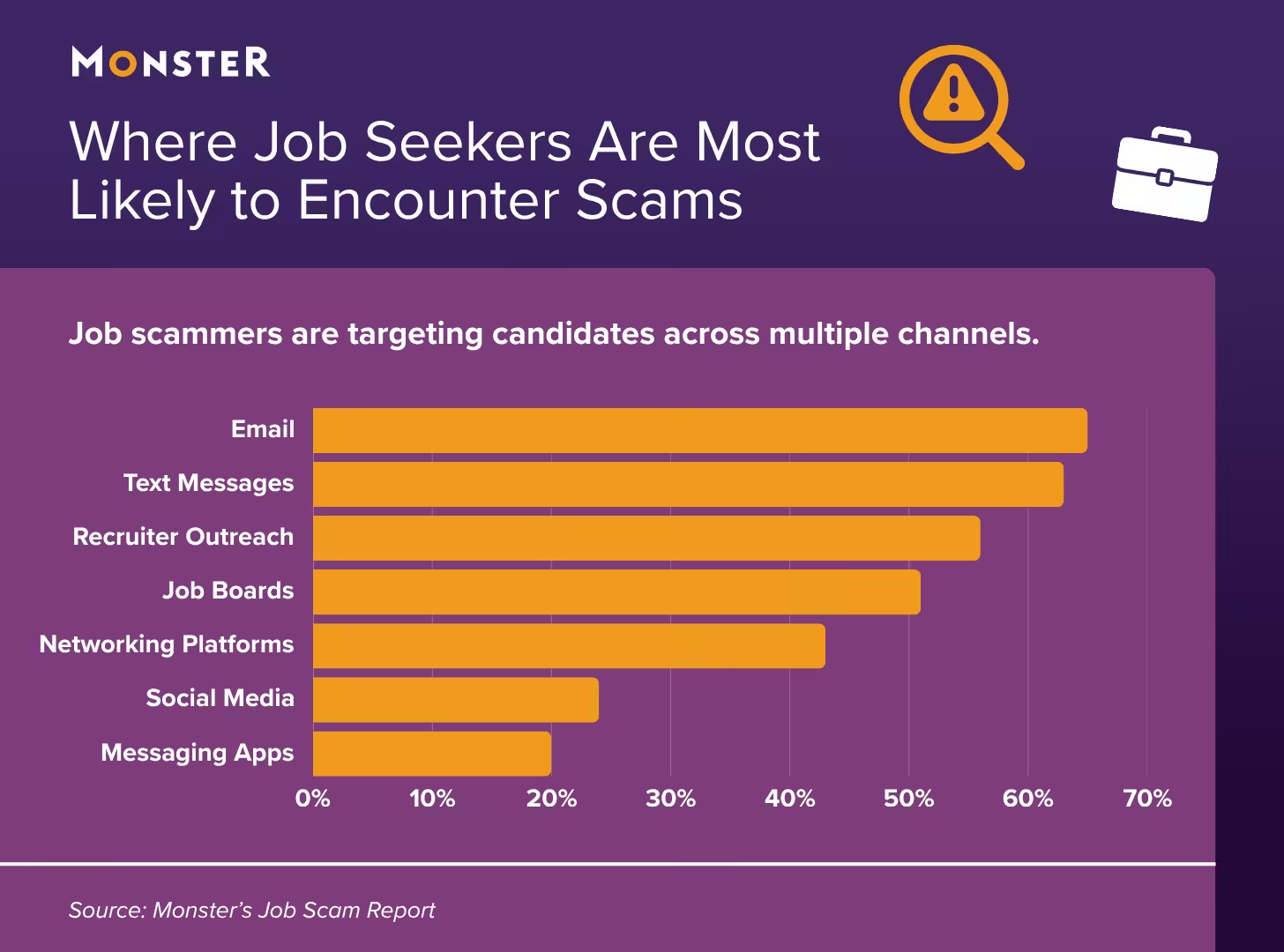
But scams aren’t limited to those channels. More than half (51%) say they’ve seen suspicious opportunities on job boards, while 43% report encountering them on professional networking platforms.
Some candidates also report scams appearing on social media (24%) and messaging apps like WhatsApp or Telegram (20%), showing how widespread these tactics have become.
The Most Common Warning Signs of Job Scams
While tactics vary, many scams follow recognizable patterns. Spotting these signals early can help candidates avoid wasting time, or worse, sharing sensitive information.
Among job seekers who encountered scams:
- 63% say communication happened only through text or chat.
- 57% were offered a job without a real interview.
- 57% saw promises of high pay for minimal work.
- 51% noticed poor grammar or suspicious email addresses.
- 43% say recruiters couldn’t clearly identify the hiring company.
The Real Impact of Job Scams: Wasted Time, Increased Stress, & Lost Trust
Even when job seekers avoid financial loss, scams still have consequences.
- 33% say they lost time applying, interviewing, or following up on fake opportunities.
- 24% report ongoing stress or anxiety.
- 23% say they shared personal information, like a phone number or address.
As a result, nearly half of job seekers say they’re now skeptical of most outreach they receive, and that shift is changing how people approach the job search. Candidates are becoming more cautious, more selective, and more focused on verifying opportunities before engaging.
Why the Job Market Plays a Role in Job Scam Prevalence
Timing matters. Nearly 8 in 10 job seekers (79%) say people are much more vulnerable to scams in today’s market, with another 19% saying they’re somewhat more vulnerable.
When the job market is competitive, candidates may:
- Apply to more roles
- Respond more quickly to outreach
- Be more open to new opportunities
At the same time, scammers are adapting by using urgency, personalization, and familiar platforms to appear legitimate. This creates an environment where awareness is critical.
How to Identify Fake Job Offers & Protect Yourself
Knowing how to identify fake job offers starts with recognizing a handful of common warning signs. Before responding to any opportunity, verify the employer, look for rushed hiring tactics, and avoid sharing personal information until you’ve confirmed the job is legitimate.
- 1.
Verify the employer. Look up the company independently and confirm the role exists on their official site.
- 2.
Be cautious with unsolicited outreach. This is especially important if it comes via text or messaging apps.
- 3.
Watch for rushed timelines. Legitimate employers rarely skip interviews or pressure job seekers to make immediate decisions.
- 4.
Protect your personal information. Never share sensitive details early in the process.
- 5.
Trust your instincts. If something feels off, it’s worth a second look.
The Best Defense Against Job Scams Is Awareness
Job scams and fake job offers may be more common, but job seekers are adapting. Candidates are asking more questions, and many are learning to balance speed with caution as they search for opportunities.
The job search is still full of possibilities, but success today depends on both finding the right role and knowing how to spot the wrong ones.
For press inquiries, please contact Shanna Briggs at shanna.briggs@monster.com.
Methodology
This survey was conducted by Monster on March 7, 2026, among 884 U.S. workers employed full-time. Participants answered a mix of yes/no, single-selection, and multiple-choice questions about their experience with job scams. The sample reflects a range of industries, age groups, and backgrounds across the U.S. workforce.
About Monster
Monster is a global leader in online job searching, resume building, and employment solutions. For over 30 years, the company has been a trusted authority for both job seekers and companies. Beyond the job search, Monster provides an intuitive Resume Builder and hundreds of resume templates to help candidates stand out against the competition, while offering employers a comprehensive resume database to source top talent. As a G2 category leader, Monster has been featured in Forbes, CNBC, CNN, and USA Today, sharing the career advice needed to bridge the gap between job seekers and hiring managers. Follow Monster on LinkedIn, Facebook, Instagram, and TikTok for the latest employment trends.

Vicki Salemi is a nationally recognized career expert who helps professionals navigate the hiring landscape and find the right fit on Monster. With over 15 years of experience in corporate recruiting and HR, she offers expert guidance on job search strategies, interview preparation, and career development to help candidates land their next role.
See More From Vicki SalemiExplore Related Career Advice

Overqualified Hiring Stats: 57% Would Cut Resume Experience to Get Hired
Updated:
Sep 28, 2026
|
9 min read

20 First Job Interview Questions & Sample Answers: Tips to Land Your First Job

Updated:
Sep 24, 2026
|
20 min read

“Do You Have Any Questions for Me?” How to Answer in an Interview (30 Examples)
Updated:
Sep 18, 2026
|
14 min read



20 Companies That Pay 100% Health Insurance & Other Top Benefits
Updated:
Sep 10, 2026
|
14 min read


How Long of a Commute Is Too Long? 49% Have Turned Down a Job Due to the Commute
Updated:
Sep 8, 2026
|
11 min read

Manage Your Career Like an Expert
Take control of your professional journey with Monster’s expert resources. Explore advice, research, and tips to make informed decisions and advance your career with confidence.

Job Search
Discover strategies to get noticed, network effectively, and streamline your job search process.

Resumes
Get practical tips to create a resume or CV that stands out to employers and wins interviews.

Cover Letters
Learn how to craft a compelling cover letter that highlights your experience and fit for the role.

Career Paths
Explore career paths, industry trends, and growth opportunities to plan your next move.

Interviewing
Prepare for interviews with tips on answering common questions and following up effectively.

Career Development
Develop key skills and knowledge to grow in your current role or pivot to new opportunities.

Leaving a Job
Navigate job changes and career transitions with practical advice and planning resources.