
Over Half (53%) of American Workers Are “Microshifting” Their Workday

In a Monster survey, the majority of workers report that microshifting improves productivity, but over half do it without their manager knowing.
Updated:
|

7 min read

Table of Contents


The traditional 9-to-5 workday may no longer reflect how work actually gets done.
New research from Monster reveals a growing pattern of “microshifting,” where employees break their workday into shorter segments rather than working a continuous eight-hour schedule. For many, that means stepping away during the day and returning to work later, often without formal approval.
Monster’s Microshifting Report explores how common microshifting has become, why workers are embracing it, and what it means for employers.
Key Findings
- Microshifting is common. 53% of workers say they currently microshift, either regularly or occasionally.
- It’s a consistent habit. 94% of microshifters do it at least weekly.
- Productivity is a major benefit. 78% say microshifting makes them more productive.
- Many keep it private. 53% of microshifters admit they’ve done it without their manager knowing.
- Flexibility is the main driver. 37% cite greater control over their day as the top reason.
- Trust remains a concern. 36% say lack of manager support is a key downside.
What Is Microshifting at Work?
Microshifting is a flexible approach to work in which employees divide their workday into multiple parts instead of working a single, uninterrupted schedule with traditional hours. This allows individuals to work during their most productive times while managing personal obligations throughout the day.
Microshifting Creates a Workday Built Around Productivity
Microshifting reflects a shift away from time-based work toward output-based work. Instead of forcing productivity into a fixed schedule, employees are adapting their work hours to match when they feel most focused and effective.
Among those who microshift:
- 51% do so a few times a week
- 29% do so every day
- 14% do so once a week
- 6% rarely do so
This means the majority of microshifters are adjusting their schedules multiple times per week, if not daily.
When asked about peak productivity times:
- 45% say early morning
- 19% say midday
- 10% say late afternoon
- 7% say evening or night
- 19% say it varies
These findings suggest that a one-size-fits-all schedule may not align with how most people actually perform at their best.
Why Are Workers Turning to Microshifting?
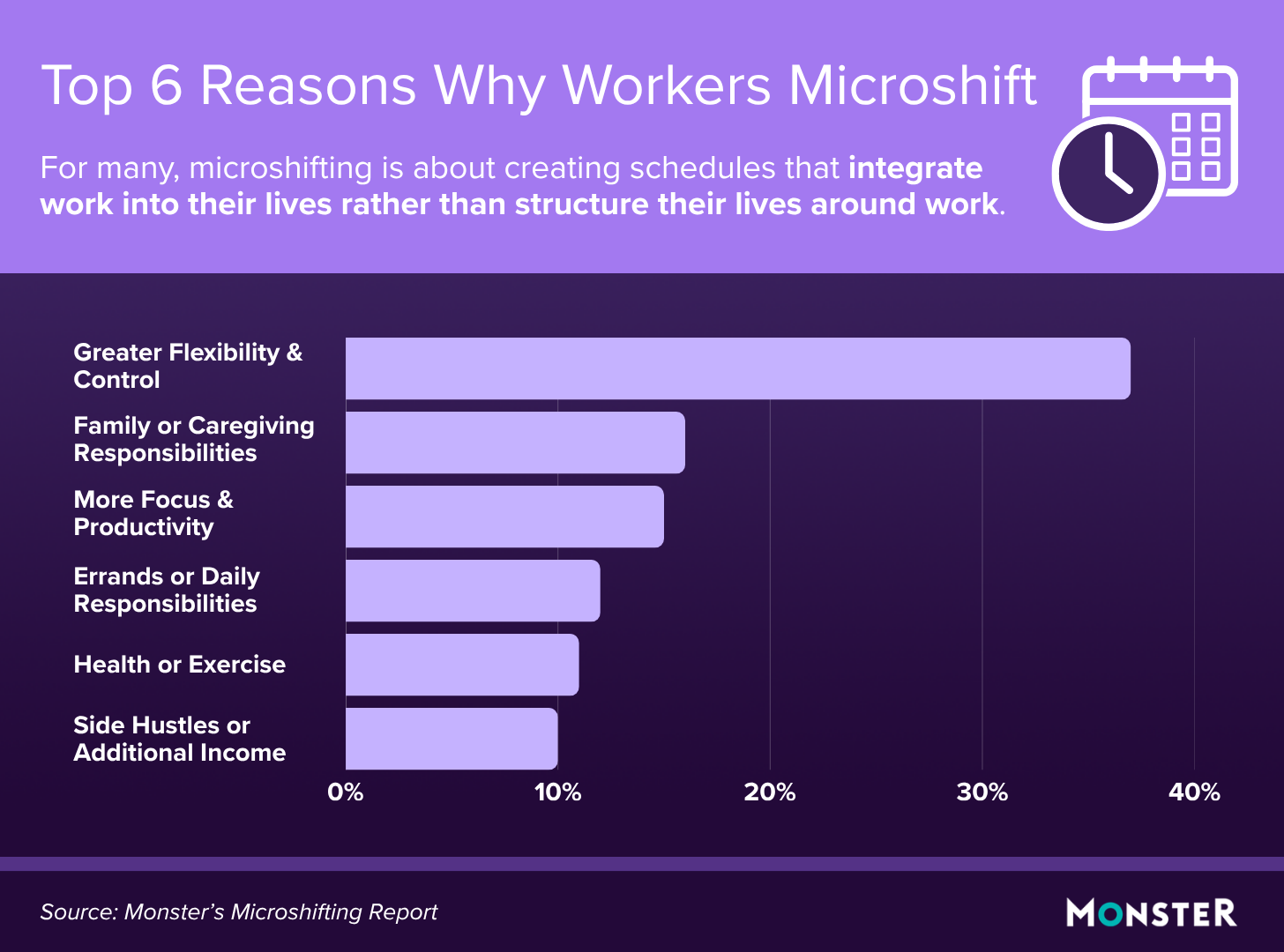
Flexibility is the primary motivator behind microshifting, but it’s far from the only one. Workers are using this approach to better integrate work into their lives rather than structuring their lives around work.
Top reasons for microshifting include:
- 37% want greater flexibility and control
- 16% cite family or caregiving responsibilities
- 15% want to improve focus and productivity
- 12% need time for errands or daily responsibilities
- 11% prioritize health or exercise
- 10% are managing side hustles or additional income
The trend highlights a broader shift in how employees view work-life balance—not as a separation, but as an integration.
The Hidden Reality of Microshifting
Despite its benefits, microshifting often happens under the radar. More than half of the workers who microshift say they’ve done so without their manager knowing.
This points to a disconnect between workplace policies and actual employee behavior. While workers are finding ways to optimize their schedules, many feel their organizations may not fully support or trust this approach.
Common concerns about microshifting include:
- 36% worry about lack of manager trust or support
- 31% experience blurred boundaries between work and personal life
- 30% feel pressure to always be “on”
- 24% say collaboration becomes more difficult
- 21% report slower communication
- 21% struggle with scheduling
- 17% worry about visibility or career growth
At the same time, 27% of workers say they see no real downside to microshifting, reinforcing its perceived value.
What Do Microshifting Work Trends Mean for Employers?
Microshifting presents both an opportunity and a challenge for employers. On one hand, employees report higher productivity and better alignment with their natural work rhythms. On the other hand, the lack of transparency can create friction within teams.
This creates a gap between how work is designed and how it actually happens:
- Employees optimize their schedules independently.
- Managers may lack visibility into workflows.
- Teams can face coordination challenges.
To bridge this gap, companies may need to rethink rigid scheduling expectations and focus more on outcomes rather than hours worked.
The Bottom Line
Microshifting is becoming an informal but widespread reality in today’s workplace. Employees are restructuring their days to better match productivity patterns, personal responsibilities, and lifestyle needs, often without formal approval.
While the benefits are clear for many workers, the disconnect between employee behavior and employer expectations signals a need for change. As flexibility becomes increasingly important, organizations that embrace new ways of working may be better positioned to support both productivity and employee satisfaction.
For press inquiries, please contact Shanna Briggs at shanna.briggs@bold.com.
Methodology
The findings presented in this report are based on a survey conducted by Monster using SurveyMonkey from April 20, 2026, through May 4, 2026. The survey collected responses from 876 U.S.-employed workers. Respondents answered a series of single-selection and multiple-choice questions about microshifting, workplace flexibility, productivity patterns, schedule preferences, employer awareness, and perceived challenges associated with nontraditional work schedules.
About Monster
Monster is a global leader in online job searching, resume building, and employment solutions. For over 30 years, the company has been a trusted authority for both job seekers and companies. Beyond the job search, Monster provides an intuitive Resume Builder and hundreds of resume templates to help candidates stand out against the competition, while offering employers a comprehensive resume database to source top talent. As a G2 category leader, Monster has been featured in Forbes, CNBC, CNN, and USA Today, sharing the career advice needed to bridge the gap between job seekers and hiring managers. Follow Monster on LinkedIn, Facebook, Instagram, and TikTok for the latest employment trends.

Vicki Salemi is a nationally recognized career expert who helps professionals navigate the hiring landscape and find the right fit on Monster. With over 15 years of experience in corporate recruiting and HR, she offers expert guidance on job search strategies, interview preparation, and career development to help candidates land their next role.
See More From Vicki SalemiExplore Related Career Advice


How Long of a Commute Is Too Long? 49% Have Turned Down a Job Due to the Commute
Updated:
Sep 8, 2026
|
11 min read

Job Hugging 2025, Volume 1: Comfort & Security Take Priority for 48% of Workers
Updated:
Sep 2, 2026
|
6 min read

Beauty Bias at Work Statistics: 88% Say Attractive People Have an Advantage
Updated:
Aug 31, 2026
|
8 min read


How to Put Transferable Skills on Your Resume: 120 Skills, Examples, & Tips

Updated:
Aug 27, 2026
|
16 min read

Resume Exaggeration Statistics: 45% Say Employers & Job Seekers Exaggerate Equally
Updated:
Aug 24, 2026
|
9 min read

Manage Your Career Like an Expert
Take control of your professional journey with Monster’s expert resources. Explore advice, research, and tips to make informed decisions and advance your career with confidence.

Job Search
Discover strategies to get noticed, network effectively, and streamline your job search process.

Resumes
Get practical tips to create a resume or CV that stands out to employers and wins interviews.

Cover Letters
Learn how to craft a compelling cover letter that highlights your experience and fit for the role.

Career Paths
Explore career paths, industry trends, and growth opportunities to plan your next move.

Interviewing
Prepare for interviews with tips on answering common questions and following up effectively.

Career Development
Develop key skills and knowledge to grow in your current role or pivot to new opportunities.

Leaving a Job
Navigate job changes and career transitions with practical advice and planning resources.