
The Highest Paying Jobs You Can Get Right Now

If you’re here, your goal is to bring in as much money as you can. From healthcare to tech, the jobs on this list make the most money in the U.S. today.
Updated:
|

16 min read

Table of Contents


The highest-paying jobs in the U.S. right now include surgeons, physicians, engineers, pilots, lawyers, senior managers, and more.
This information comes from the U.S. Bureau of Labor Statistics (BLS)’ Occupational Employment and Wage Statistics (OEWS), using May 2024 data.
Throughout this guide, we reference the OEWS to outline the top 20 and top 50 highest-paying jobs in the U.S. today. You’ll find those roles with their salaries and growth projections, along with the highest-paying industries and states. You’ll also learn what’s driving these salaries and what it takes to land one of these jobs.
What Are the Top 20 Highest-Paying Jobs? ($246K+)
Surgeons, physicians, and executives dominate the highest-paying jobs, all earning $246,000+, as shown in the graphic and list below.
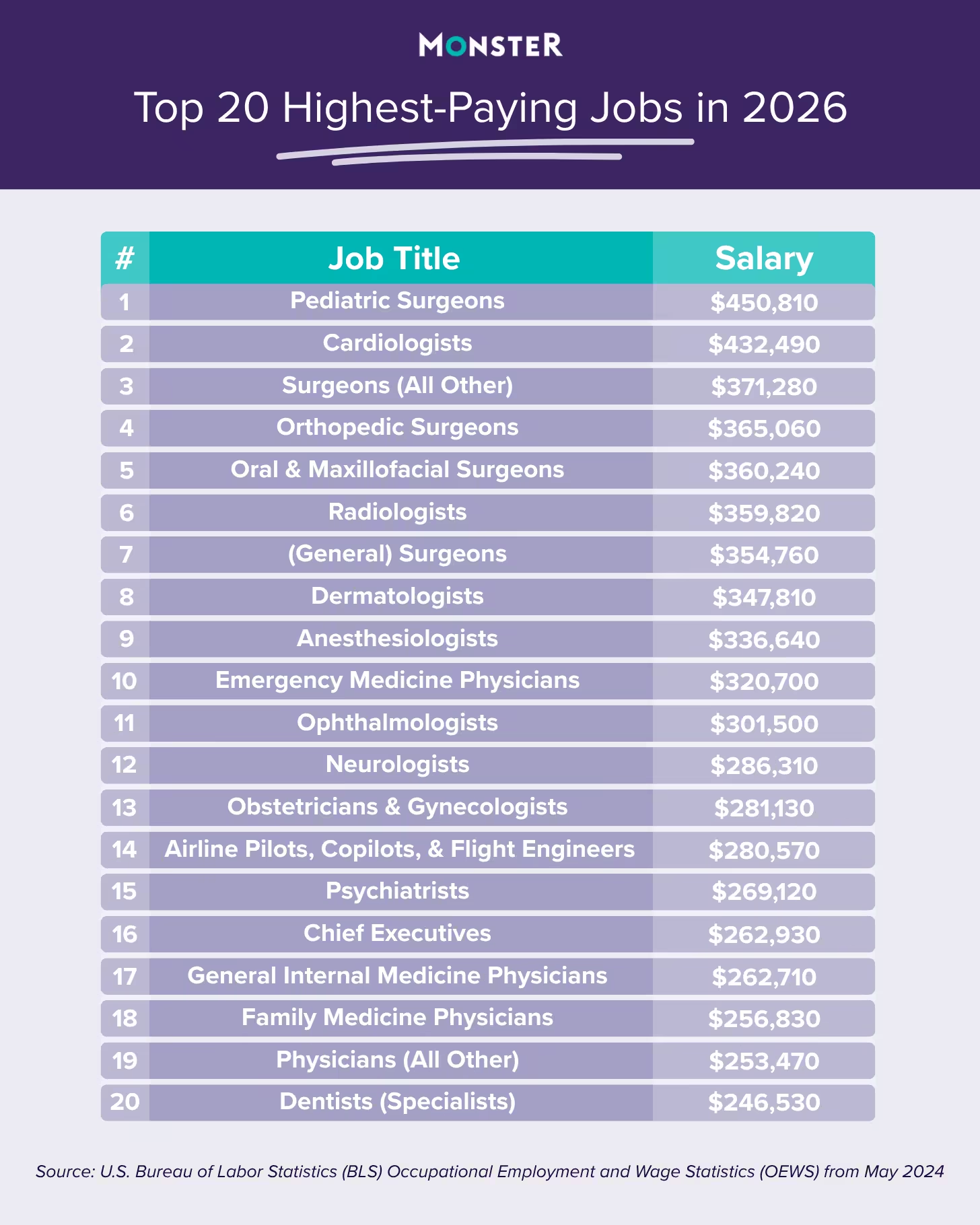
- Pediatric Surgeons: $450,810
- Cardiologists: $432,490
- Surgeons (All Other): $371,280
- Orthopedic Surgeons: $365,060
- Oral and Maxillofacial Surgeons: $360,240
- Radiologists: $359,820
- (General) Surgeons: $354,760
- Dermatologists: $347,810
- Anesthesiologists: $336,640
- Emergency Medicine Physicians: $320,700
- Ophthalmologists: $301,500
- Neurologists: $286,310
- Obstetricians and Gynecologists: $281,130
- Airline Pilots, Copilots, and Flight Engineers: $280,570
- Psychiatrists: $269,120
- Chief Executives: $262,930
- General Internal Medicine Physicians: $262,710
- Family Medicine Physicians: $256,830
- Physicians (All Other): $253,470
- Dentists (Specialists): $246,530
All 50 of the Highest-Paying Jobs in America Today (With Demand Stats)
Starting with pediatric surgeons and ending with information security analysts, these are the top 50 highest-paying jobs right now, according to BLS’ OEWS:
| Job Title | Median Salary | Growth Projection | Job Description |
| Pediatric Surgeons | $450,810 | 3% | Perform surgery on infants, children, and teens to treat injuries and diseases. |
| Cardiologists | $432,490 | 3% | Diagnose and treat heart conditions using tests, medication, and care plans. |
| Surgeons (All Other) | $371,280 | 3% | Perform surgeries to treat injuries, diseases, and deformities. |
| Orthopedic Surgeons | $365,060 | 3% | Treat bone, joint, and muscle injuries with surgery and care. |
| Oral and Maxillofacial Surgeons | $360,240 | 3% | Perform surgery on the mouth, jaw, and face. |
| Radiologists | $359,820 | 3% | Use imaging like X-rays and MRIs to diagnose conditions. |
| General Surgeons | $354,760 | 3% | Perform operations to repair injuries and treat disease. |
| Dermatologists | $347,810 | 3% | Diagnose and treat skin, hair, and nail conditions. |
| Anesthesiologists | $336,640 | 3% | Give anesthesia and monitor patients during surgery. |
| Emergency Medicine Physicians | $320,700 | 3% | Treat urgent injuries and illnesses in emergency rooms. |
| Ophthalmologists | $301,500 | 3% | Diagnose and treat eye conditions and perform surgery. |
| Neurologists | $286,310 | 3% | Treat disorders of the brain and nervous system. |
| Obstetricians and Gynecologists | $281,130 | 3% | Provide care for pregnancy and women’s health. |
| Airline Pilots, Copilots, and Flight Engineers | $280,570 | 4% | Fly aircraft and ensure safe travel for passengers and cargo. |
| Psychiatrists | $269,120 | 3% | Diagnose and treat mental health conditions. |
| Chief Executives | $262,930 | 4% | Lead organizations and make major business decisions. |
| General Internal Medicine Physicians | $262,710 | 3% | Treat adult illnesses and manage long-term health. |
| Family Medicine Physicians | $256,830 | 3% | Provide general healthcare for patients of all ages. |
| Physicians (All Other) | $253,470 | 3% | Diagnose illnesses and manage patient care. |
| Dentists (Specialists) | $246,530 | 4% | Treat complex dental issues in specialized areas. |
| Nurse Anesthetists | $231,700 | 35% | Administer anesthesia and monitor patients. |
| Pediatricians | $222,340 | 3% | Provide medical care for children and adolescents. |
| Dentists (General) | $196,100 | 4% | Treat cavities, gum disease, and other dental issues. |
| Computer & Information Systems Managers | $187,990 | 15% | Oversee IT systems and manage tech teams. |
| Lawyers | $182,760 | 4% | Advise clients and represent them in legal matters. |
| Financial Managers | $180,470 | 15% | Manage budgets, investments, and financial planning. |
| Architectural and Engineering Managers | $175,710 | 4% | Lead engineering and construction projects. |
| Natural Sciences Managers | $173,500 | 4% | Oversee scientific research teams and projects. |
| Marketing Managers | $171,520 | 6% | Plan campaigns to promote products or services. |
| Podiatrists | $163,960 | 3% | Diagnose and treat foot and ankle conditions. |
| Public Relations Managers | $163,520 | 5% | Manage a company’s public image and messaging. |
| Sales Managers | $160,930 | 5% | Lead sales teams and set revenue goals. |
| Operations Managers | $160,590 | 4% | Oversee daily operations and improve efficiency. |
| Human Resources Managers | $160,480 | 5% | Manage hiring, employee relations, and policies. |
| Computer Hardware Engineers | $156,770 | 7% | Design and develop computer systems and parts. |
| Compensation and Benefits Managers | $156,230 | 0% | Design pay and benefits programs for employees. |
| Purchasing Managers | $150,630 | 5% | Oversee buying of goods and services. |
| Advertising & Promotions Managers | $149,270 | 6% | Plan campaigns to promote products and services. |
| Software Developers | $144,570 | 15% | Build and maintain software applications. |
| Aerospace Engineers | $141,180 | 6% | Design aircraft, spacecraft, and systems. |
| Medical and Health Services Managers | $137,730 | 23% | Manage operations in healthcare facilities. |
| Pharmacists | $137,210 | 5% | Dispense medications and advise patients. |
| Physician Assistants | $136,900 | 20% | Provide medical care under a doctor’s supervision. |
| Computer Network Architects | $135,890 | 12% | Design and build communication networks. |
| Actuaries | $134,990 | 22% | Analyze financial risk using math and data. |
| Nuclear Engineers | $134,980 | -1% | Work with systems that use nuclear energy. |
| Chemical Engineers | $128,430 | 3% | Develop processes to produce chemicals and materials. |
| Information Security Analysts | $127,730 | 29% | Protect systems and data from cyber threats. |
What Industries Have the Highest-Paying Jobs in America?
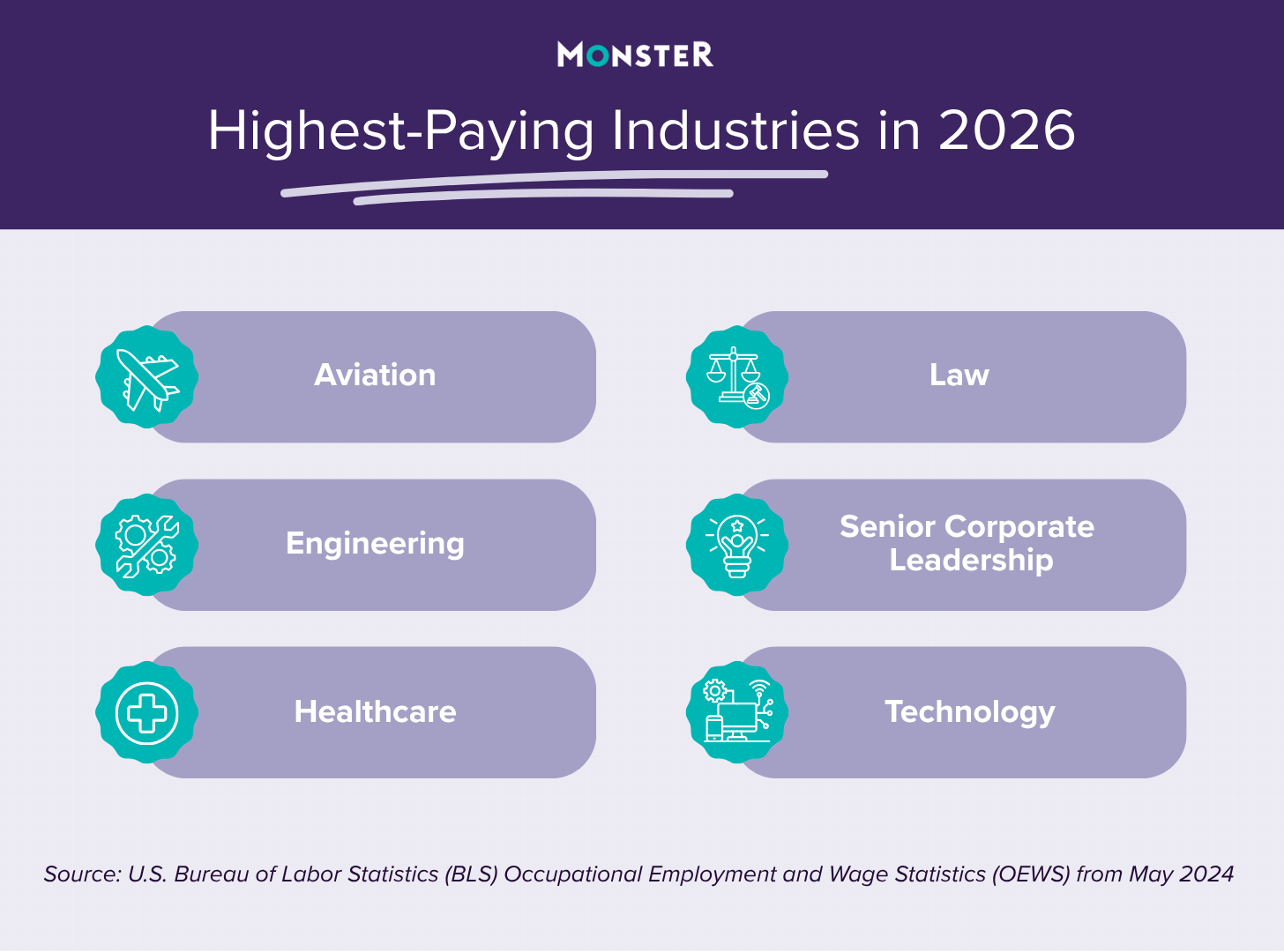
Based on the latest data from the BLS OEWS, the highest-paying industries include aviation, engineering, healthcare, law, senior corporate leadership, and technology—shown below.
Which U.S. States Pay the Most?
According to BLS May 2024 State OEWS, the five highest-paying states are:
| U.S. State | Annual Mean Wage |
| District of Colombia | $109,420 |
| Massachusetts | $83,050 |
| Washington | $81,550 |
| New York | $80,630 |
| California | $79,900 |
What Are the Factors That Influence High Pay?
Salaries are shaped by a mix of skills, demand, responsibility, and the value you bring to an organization, including:
- Education and specialized training: Roles that require advanced degrees, certifications, or technical expertise, such as in healthcare, law, or engineering, typically offer higher salaries because fewer candidates meet the qualifications.
- Industry demand: Fast-growing or talent-short industries, like tech, healthcare, and finance, often pay more to attract and retain skilled professionals.
- Experience and seniority: As you gain experience, you’re able to take on more complex work and make higher-level decisions, which increases your earning potential.
- Level of responsibility: Positions that involve managing teams, overseeing budgets, or driving strategy tend to pay more due to the higher stakes and accountability.
- Geographic location: Salaries vary by location, with higher pay often concentrated in areas with a higher cost of living or stronger job markets.
- Revenue impact and performance: Roles that directly generate revenue or contribute to business growth, such as sales or executive leadership, often offer higher compensation, especially when results are measurable.
- Negotiation and market positioning: How well you present your value, backed by data and results, can influence your salary. candidates who advocate for themselves effectively often secure higher pay.
Considerations for High-Paying Job Seekers Today
High-paying jobs often come with tradeoffs, like years of education, high stress, evolving skill demands, or limited flexibility.
Before committing to a path, it’s important to step back and evaluate how it fits into your life, priorities, and long-term goals.

How AI-Proof Is This Career Path?
As automation and artificial intelligence continue to reshape the workforce, some high-paying careers are more stable than others. Roles that rely heavily on repetitive or predictable tasks are more vulnerable to AI job displacement, even if they currently offer strong salaries.
More resilient careers tend to involve:
- Complex decision-making
- Human interaction or relationship-building
- Creativity or strategic thinking
- Specialized expertise that’s difficult to replicate
Fields like healthcare, leadership roles, and certain areas of technology often have stronger long-term outlooks because they combine technical knowledge with human judgment.

What Skills Will You Need?
High-paying jobs typically require a mix of advanced hard skills and strong human skills. While the exact requirements vary by field, most top-paying roles expect deep expertise, continuous learning, and the ability to adapt as industries evolve.
Some commonly required skill categories include:
- Technical or specialized knowledge (e.g., programming, finance, medicine)
- Analytical thinking and problem-solving
- Communication and leadership abilities
- Digital literacy and comfort with new tools
Employers are increasingly prioritizing candidates who can combine hard skills with soft skills, especially as AI handles more routine work. Building a skill set that’s both specialized and adaptable can help you stay competitive over time.

Does the Salary Justify the Cost of Education?
Many of the highest-paying careers require significant upfront investment in education, training, or certifications. Medical professionals, lawyers, and certain technical roles often need advanced degrees, which can come with high tuition costs and years out of the workforce.
Before committing, weigh:
- Total cost of education (tuition, fees, lost income)
- Time required to enter the field
- Expected starting salary vs long-term earning potential
- Job stability and demand
In some cases, high salaries offset these costs over time. In others, alternative paths, like certifications, apprenticeships, or lower-cost degrees, can lead to strong earnings without the same financial burden.

Can You Find Career Satisfaction & Happiness?
A high salary won’t automatically lead to job satisfaction. Factors like work-life balance, stress levels, personal interest, and workplace culture all play a major role in long-term career happiness.
Ask yourself:
- Do I enjoy the day-to-day work this career involves?
- Does the schedule align with my lifestyle or family needs?
- Are burnout and stress common in this field?
- Does the work feel meaningful or fulfilling to me?
The most sustainable career paths tend to balance compensation with personal satisfaction. Finding a role that suits your interests, values, and lifestyle can make a significant difference in both your professional success and overall well-being.
5 Tips to Land Competitive, High-Paying Jobs
High-paying roles are competitive, so your resume, interviews, and overall presence need to clearly show impact, alignment, and expertise.
- 1.
Focus on Quantifiable Results & Proof of Impact
Companies have to justify high salaries, especially at the six-figure level. The more clearly you can show the return on that investment, the stronger your position becomes, both in getting the offer and in negotiating compensation.
The easiest way to do this is to express and quantify accomplishments on your resume.
If you don’t have direct access to revenue metrics, you can still demonstrate value through proxy metrics. Think in terms of efficiency, quality, scale, or customer outcomes.
Examples of strong, quantified resume bullets:
- Reduced patient readmission rates by 22% by implementing a new discharge planning protocol and follow-up system.
- Performed 300+ surgical procedures annually with a 98% success rate and reduced post-op complications by 15%.
- Won 85% of cases as lead counsel, including securing a $2.3M settlement in a complex commercial litigation dispute.
- Reduced contract review turnaround time by 40% by implementing standardized templates and workflows.
- Managed a $50M investment portfolio, achieving a 12% annual return and outperforming market benchmarks by 4%.
- Identified cost-saving opportunities that reduced operating expenses by $1.2M annually.
- Led development of a new software feature that increased user retention by 18% and drove $3M in additional annual revenue.
- Directed a product launch that generated $5M in revenue within the first year and captured 10% market share.
In interviews, go deeper than the numbers. Be ready to explain how those results happened. What was the original goal? What constraints were you working within? What specific decisions did you make?
For example, instead of stating that you improved a process, explain how you identified the bottleneck, what changes you introduced, and why those changes worked.
 Pro Tip
Using professional resume templates and tools like Monster’s Resume Builder can help you present your results clearly and strengthen your work history bullets.
- 2.
Use the STAR Method
Work experience bullets and interview responses land better when they have context. The STAR method helps you make your examples more convincing.
“STAR” stands for:
- Situation: Briefly set the scene. What was happening, and why did it matter?
- Task: Explain your responsibility or the goal you were working toward.
- Action: Describe what you specifically did. This should be the most detailed part.
- Result: Share the outcome, ideally with a measurable or observable impact.
Start by briefly explaining the situation and your responsibility, then focus most of your answer on what you actually did and what the result was.
For example, if you’re asked about improving a process, you might explain that your team was missing deadlines, you were tasked with fixing inefficiencies, you implemented a new system, and as a result, turnaround time improved by 25%.
- 3.
Tailor Everything to the Job & Company
At higher salary levels, generic applications are easy to spot and quick to dismiss. You need to show that your experience directly aligns with what the company is trying to do.
- In a targeted resume, this means using the same language you see in the job description and prioritizing the most relevant experience. If a role emphasizes cross-functional leadership, make that prominent instead of burying it under less relevant work.
- In interviews, go beyond your background and connect it to their goals. For example, if the company is expanding into a new market, you could highlight a time you supported a similar initiative and the results you helped drive. This kind of alignment signals that you’re not just qualified, you understand what they need.
Once your resume is tailored and polished, you can upload it to Monster’s resume database to make it searchable to recruiters looking for candidates with your skills.
- 4.
Network & Get Referrals
A lot of high-paying jobs are filled through referrals or professional networking before they’re ever widely seen. If you’re only applying cold, you’re at a disadvantage.
Reaching out to people at your target companies on LinkedIn, attending industry events, or reconnecting with former colleagues can all open doors. You don’t need to overcomplicate it. A short, thoughtful message that mentions the role and your relevant experience is usually enough to start a conversation.
If someone is willing to refer you, it can significantly increase your chances of moving forward in the hiring process.
- 5.
Be a “Thought Leader” in Your Field
You don’t need a huge following to stand out, but showing that you actively engage with your field can make a difference, especially for higher-level roles.
- Create original industry content on LinkedIn and other social platforms that reflects how you think and work. This could include short posts sharing lessons learned, commentary on industry trends, or practical takeaways from your experience.
- Write articles or blog posts that break down real projects, decisions, or challenges you’ve handled. Focus on what you did, why you made certain choices, and what the outcome was. This shows depth, not just surface-level knowledge.
- Host or guest on podcasts where you can speak about your experience, industry trends, or lessons learned. Even smaller or niche podcasts can help establish authority and give hiring managers a clearer sense of how you communicate and think in real time.
- Join industry groups and pursue leadership roles over time, such as organizing events, leading discussions, or contributing to initiatives. Active participation signals commitment and helps you build visibility within your field.
- Participate in or launch research projects, surveys, or case studies that explore trends or challenges in your industry. Sharing original data or insights can set you apart from candidates who only consume information rather than contribute to it.
Hiring managers almost always look up candidates. When they see that you’re thoughtful, informed, and engaged beyond your day-to-day job, it reinforces your credibility and can set you apart from other applicants.
Bank It
The highest-paying jobs in the U.S. cluster in a few areas, mainly healthcare, leadership, and specialized technical fields, where the stakes are high, and the barrier to entry is even higher.
But high pay usually comes with tradeoffs. Many of these roles require years of education, long hours, or a high level of responsibility. At the same time, some lower-profile roles on this list, like tech and finance positions, offer strong salaries with faster growth and more flexibility.
If you’re aiming for a high-paying career, look at the path it takes to get there, how stable the demand is, and whether the day-to-day work is something you’ll actually want to stick with long term.
Frequently Asked Questions
What is the highest-paid job in the world?
The highest-paid job in the world is usually a specialized medical role, such as a surgeon, with top earnings exceeding $400,000 annually. Executive roles like CEOs can also reach similar or higher pay depending on bonuses and company size.
What job makes $1,000,000 a year?
Jobs that make $1,000,000 a year are usually top executive roles like CEOs, successful entrepreneurs, and high-performing professionals in finance, law, or entertainment. These earnings often include bonuses, equity, or commissions in addition to a high base salary.
What job makes $10,000 a month without a degree?
Jobs that make $10,000 a month without a degree often include skilled trades, sales roles, or self-employed work like real estate, freelancing, or business ownership. High earnings typically depend on experience, performance, building a client base, location, and/or hours worked.
What career makes the most money?
The career that makes the most money is typically in healthcare, especially surgeons and physician specialists. Other high-paying careers include executive leadership, law, and certain roles in finance and technology.
What are high-paying jobs?
High-paying jobs are roles that pay well above average. The U.S. BLS OEWS reports $67,920 as the median household income, as of May 2024.

Kirsten Chorpenning is a career advice writer who empowers job seekers to take control of their career paths using Monster’s comprehensive job search and resume tools. She specializes in helping job seekers find rewarding jobs in today’s dynamic work environment.
See More From Kirsten ChorpenningExplore Related Career Advice

Overqualified Hiring Stats: 57% Would Cut Resume Experience to Get Hired

Updated:
Sep 28, 2026
|
9 min read

20 First Job Interview Questions & Sample Answers: Tips to Land Your First Job
Updated:
Sep 24, 2026
|
20 min read

“Do You Have Any Questions for Me?” How to Answer in an Interview (30 Examples)
Updated:
Sep 18, 2026
|
14 min read



20 Companies That Pay 100% Health Insurance & Other Top Benefits
Updated:
Sep 10, 2026
|
14 min read


How Long of a Commute Is Too Long? 49% Have Turned Down a Job Due to the Commute
Updated:
Sep 8, 2026
|
11 min read

Manage Your Career Like an Expert
Take control of your professional journey with Monster’s expert resources. Explore advice, research, and tips to make informed decisions and advance your career with confidence.

Job Search
Discover strategies to get noticed, network effectively, and streamline your job search process.

Resumes
Get practical tips to create a resume or CV that stands out to employers and wins interviews.

Cover Letters
Learn how to craft a compelling cover letter that highlights your experience and fit for the role.

Career Paths
Explore career paths, industry trends, and growth opportunities to plan your next move.

Interviewing
Prepare for interviews with tips on answering common questions and following up effectively.

Career Development
Develop key skills and knowledge to grow in your current role or pivot to new opportunities.

Leaving a Job
Navigate job changes and career transitions with practical advice and planning resources.