
How to List Relevant Coursework on a Resume (With Examples)

If your degree or experience doesn’t fully showcase your qualifications, adding relevant coursework can demonstrate related skills and knowledge.
Updated:
|

17 min read

Table of Contents


What You’ll Learn
- Relevant coursework can strengthen a resume when your professional experience doesn’t yet demonstrate the skills or knowledge a job requires.
- Students, recent graduates, entry-level job seekers, interns, career changers, and people applying to academic, scientific, or research roles are most likely to benefit from including relevant coursework.
- The education section is the best and most common placement for relevant coursework, but you can also create a standalone section when coursework is a major qualification.
- Keep your relevant coursework section concise by choosing three to six courses that closely align with the job description and demonstrate relevant skills or knowledge.
- Match relevant keywords from the target role by using course names and terms from the job posting when they accurately reflect your coursework and qualifications.
Coursework may not carry the same weight as professional experience, but the right classes can still strengthen your resume. When chosen carefully, they can help bridge the gap between what you’ve studied and what you’re ready to do professionally.
Below, we’ll cover when relevant coursework belongs on a resume, where and how to list it, what to include, when to remove it, and examples across 10 career fields.
What Is Relevant Coursework on a Resume?
Relevant coursework on a resume is a selection of classes, courses, or other academic experiences that directly relate to the skills and knowledge required for the job you’re targeting.
Unlike your degree or your GPA, which summarize your broader academic background and performance, relevant coursework is an optional addition to a resume that highlights specific subjects you’ve studied to support your qualifications for a particular role.
Depending on the role and your background, relevant coursework can include:
- College or university courses
- Online courses and certificate programs
- Continuing education or professional development courses
- Academic projects, labs, or research tied to relevant coursework
 Pro Tip
Professional certifications are different from coursework and generally belong in a dedicated “Certifications” section, particularly when the credential itself is valuable to the employer.
Should You Include Relevant Coursework on Resumes? When to Include vs Skip
Include relevant coursework on your resume when it strengthens your qualifications by showing skills or knowledge that aren’t already apparent from your professional experience. It’s generally most useful in academic fields, early in your career, or when you’re moving into a new field.
Consider including relevant coursework if you’re:
- A current college student with limited professional experience
- A recent graduate or entry-level professional building experience in your field
- Applying for an internship, fellowship, or other early-career opportunity
- Changing careers and have completed coursework related to your new field
- Pursuing an academic, scientific, research, or technical role where specialized academic knowledge, training, or expertise is important or specifically requested
Consider skipping relevant coursework if:
- Your professional experience provides stronger evidence of the same skills and qualifications.
- Your courses aren’t closely related to the position you’re targeting
- Your resume already contains enough strong, relevant work experience and accomplishments
- Including coursework would take space away from more compelling evidence of your qualifications
When you’re unsure, ask yourself: Does this coursework demonstrate relevant skills or knowledge that I can’t show through my work experience? If so, it may deserve space on your resume. If not, use that space to highlight measurable accomplishments and relevant job skills instead.
Where & How to List Relevant Coursework on a Resume
In most cases, the best place for relevant coursework is in your education section, directly beneath the degree it supports. There isn’t a single rule for how to add relevant coursework to resumes, though. A standalone section may work better for academic roles, when coursework is one of your strongest qualifications, or when an employer specifically asks you to include it.
Where you place relevant coursework signals its importance. If it supplements relevant professional experience, keep it in your education section. If it demonstrates qualifications your work history doesn’t yet show, consider giving it more prominent placement.
Follow these four core guidelines to put relevant coursework on your resume:
- 1.
Select Relevant Courses
List three to six courses that most closely match the job, prioritizing advanced, specialized, and practical coursework. Use official course names when they’re clear to employers. If a title is vague, clarify it without misrepresenting the course. For example, “Special Topics II: Digital Marketing Analytics” provides more context than “Special Topics II.”
When deciding what makes the cut, consider what each course adds to your resume. A course that demonstrates a specialized skill, technical competency, or area of knowledge the employer specifically wants will be more valuable than one that simply relates broadly to your major.
- 2.
Choose Your Coursework Format & Level of Detail
Use the simplest format that clearly communicates why the coursework is relevant. The right format depends on how much space you have and how much context your course titles provide.
- Simple list: This is the most common and space-efficient approach, especially when you only have a few courses to include. List course titles on a single line to keep the section concise.
- Simple bulleted list: This format works well when you’re including several courses or have longer course titles. Giving each course its own bullet makes the section easier to scan.
- Courses with descriptions: This approach is useful when you have limited relevant work experience and your course titles need more context. Brief descriptions can highlight relevant skills, tools, projects, or accomplishments.
- 3.
Place Relevant Coursework in the Best Section
Once you’ve determined the level of detail to include, choose whether to place your relevant coursework in your education section or a standalone section.
In the Education Section
For most job seekers, the education section is the most natural place for relevant coursework. List it directly beneath the corresponding degree along with other academic details, such as your school and graduation date.
Example with a simple list:
EducationBachelor of Science in Computer Science
Drexel University, Philadelphia, PA | May 2026- Relevant Coursework: Advanced Artificial Intelligence, Computer Game Design and Development, Game AI Development, Game Engine Programming
Example with courses and descriptions:
EducationBachelor of Science in Computer Science
Drexel University, Philadelphia, PA | May 2026Relevant Coursework:
- Advanced Artificial Intelligence: Explored machine learning algorithms, neural networks, and AI problem-solving techniques through applied programming projects.
- Game AI Development: Developed AI systems for game environments, including pathfinding, decision-making, and character behavior.
- Game Engine Programming: Built and tested core game engine components using object-oriented programming and software development principles.
- Computer Game Design and Development: Applied programming, design, and development concepts to create interactive game projects.
In a Standalone Relevant Coursework Resume Section
A standalone “Relevant Coursework” section works well when coursework is one of your strongest qualifications, especially if you have limited relevant experience, are changing careers, or have specialized academic training.
Include enough context for employers to understand where and when you completed the coursework, such as the school, program, completion date, or brief course descriptions.
Pro Tip
For academic, scientific, or research roles, you may give specialized coursework more prominent placement when it directly demonstrates preparation for the role.
Example standalone section with a simple bulleted list:
Relevant Coursework- Advanced Artificial Intelligence | Drexel University | May 2026
- Computer Game Design and Development | Drexel University | December 2025
- Game AI Development | Drexel University | May 2025
- Game Engine Programming | Drexel University | December 2024
Example standalone section with courses and descriptions:
Relevant Coursework- Advanced Artificial Intelligence | Drexel University | May 2026: Explored machine learning algorithms, neural networks, and AI problem-solving techniques through applied programming projects.
- Computer Game Design and Development | Drexel University | December 2025: Applied programming, design, and development concepts to create interactive game projects.
- Game AI Development | Drexel University | May 2025: Developed AI systems for game environments, including pathfinding, decision-making, and character behavior.
- Game Engine Programming | Drexel University | December 2024: Built and tested core game engine components using object-oriented programming and software development principles.
- 4.
Tailor Your Coursework to the Job
Tailor the relevant coursework you include on your resume to each opportunity, just like your work experience and skills section. Review the job description for the skills, tools, subject areas, and knowledge the employer seeks, then prioritize coursework that demonstrates those qualifications.
Template for Adding Relevant Coursework on Your Resume
Use this resume template to list relevant coursework within your resume’s education section:
Here’s a relevant coursework resume example using that template:
Bachelor of Arts in Psychology
Harvard University, Cambridge, MA | May 2026
- Relevant Coursework: Industrial-Organizational Psychology, Research Methods, Statistics, Organizational Behavior
20 Relevant Coursework Resume Examples by Field
The best relevant coursework depends on the role you’re targeting. These 20 examples show how to choose courses that align with common career paths.
Business & Finance
Business and finance coursework can demonstrate preparation in areas such as financial analysis, accounting, and operations.
- Relevant Coursework: Financial Modeling, Corporate Finance, Investment Analysis, Financial Statement Analysis
- Relevant Coursework: Business Analytics, Operations Management, Strategic Management, Managerial Economics
Design & Creative
For creative resumes, highlight coursework that combines design principles with the technical or strategic skills your target role requires.
- Relevant Coursework: Typography, Digital Illustration, Brand Identity Design, Visual Communication
- Relevant Coursework: User Experience Design, Interaction Design, User Research, Information Architecture
Education & Training
Including education and training coursework on your resume can highlight preparation in instructional methods, learner needs, and workplace learning relevant to the role.
- Relevant Coursework: Inclusive Education, Behavior Management, Special Education Assessment, Individualized Instruction
- Relevant Coursework: Adult Learning Theory, Instructional Design, Training Needs Assessment, Learning and Development
Engineering
Choose engineering courses that demonstrate technical knowledge and problem-solving skills relevant to your discipline.
- Relevant Coursework: Circuit Analysis, Digital Systems, Control Systems, Electromagnetics
- Relevant Coursework: Structural Analysis, Geotechnical Engineering, Transportation Engineering, Construction Materials
Healthcare
For healthcare resumes, relevant coursework can highlight clinical, scientific, administrative, or public health knowledge relevant to the patients, programs, or systems you’d work with.
- Relevant Coursework: Epidemiology, Health Program Planning, Biostatistics, Community Health
- Relevant Coursework: Medical-Surgical Nursing, Pharmacology, Health Assessment, Pathophysiology
Law & Political Science
You can add legal and political science coursework on a resume to demonstrate knowledge of legal systems, government processes, policy, and research methods.
- Relevant Coursework: Legislative Process, Public Policy Analysis, Constitutional Law, American Government
- Relevant Coursework: Legal Research & Writing, Civil Procedure, Contract Law, Legal Ethics
Marketing & Communications
For marketing and communications resumes, relevant coursework can show employers that you’ve studied the channels, audiences, and strategies central to your target position.
- Relevant Coursework: Digital Marketing, Consumer Behavior, Marketing Analytics, Search Engine Marketing
- Relevant Coursework: Public Relations Writing, Media Relations, Strategic Communication, Crisis Communication
Psychology & Social Sciences
Highlighting relevant courses in psychology and social sciences can help connect your academic background to the people, behaviors, or analytical skills required for your target role.
- Relevant Coursework: Industrial-Organizational Psychology, Organizational Behavior, Social Psychology, Research Methods
- Relevant Coursework: Social Problems, Sociology of the Family, Social Inequality, Community Research Methods
Science & Research
You may include science and research coursework on your resume to demonstrate your knowledge of specific disciplines and to highlight laboratory, research, and analytical preparation relevant to the scientific methods, subject areas, or technical work required by the position.
- Relevant Coursework: Molecular Biology, Genetics, Cell Biology, Laboratory Research Methods
- Relevant Coursework: Analytical Chemistry, Organic Chemistry, Instrumental Analysis, Quantitative Chemical Analysis
Tech
Adding technology coursework to a resume can highlight programming, systems, networks, data, or cybersecurity skills relevant to your target role.
- Relevant Coursework: Data Structures & Algorithms, Software Engineering, Database Systems, Object-Oriented Programming
- Relevant Coursework: Computer Networking, Operating Systems, Information Security, Systems Administration
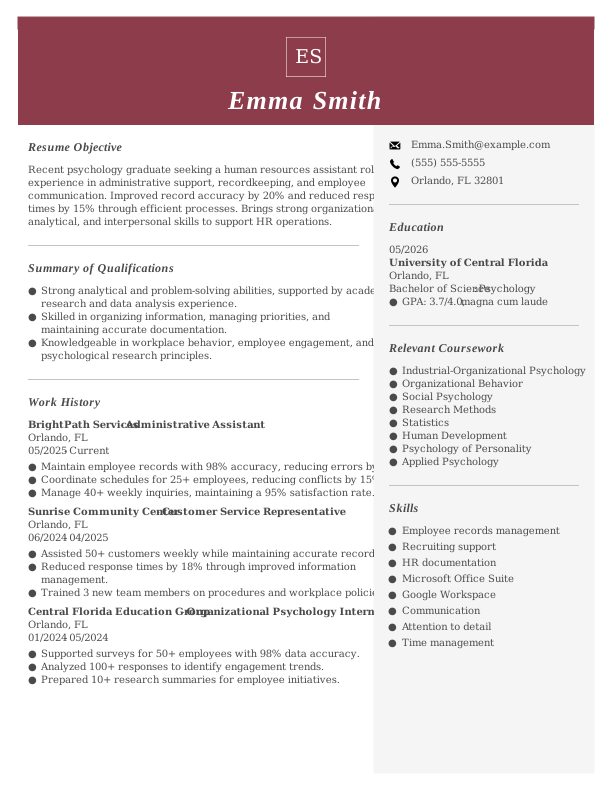
Complete Resume Example Showcasing Relevant Coursework
The resume example below shows what a complete resume for an entry-level professional with relevant coursework may look like.
Tips & Mistakes to Avoid When Putting Relevant Coursework on Resumes
Relevant coursework should strengthen your resume, not simply take up space. Follow these best practices and avoid the common mistakes below to make sure the courses you include support your qualifications.

Best Practices for Including Relevant Coursework
Tailor coursework to the skills and keywords in the job description.
Prioritize advanced, specialized, and practical courses.
Choose three to six of your most relevant courses.
Use clear, recognizable course names, clarifying vague official titles when needed.
Highlight notable projects, research papers, or awards associated with relevant courses.
Quantify coursework accomplishments when possible, such as leading a four-person capstone project.
Reinforce the same competencies elsewhere in your resume, such as your skills section.
Highlight coursework that adds information your work experience doesn’t already show.

Mistakes to Avoid With Relevant Coursework
Using the same coursework for every application without considering the job description.
Listing basic or general education courses when more specialized coursework is available.
Including too many courses or your entire course history.
Using course codes or vague titles that employers may not understand.
Listing courses without highlighting notable projects, research, or achievements that strengthen your qualifications.
Describing academic accomplishments vaguely when you could demonstrate their scope or impact with numbers.
Listing coursework that doesn’t align with or reinforce the skills highlighted elsewhere on your resume.
Repeating skills and qualifications your professional experience already demonstrates more effectively.
When Should You Remove Relevant Coursework From Your Resume?
You should remove relevant coursework from your resume once your professional experience provides stronger evidence of the same skills and qualifications.
For many job seekers, this happens after about two years of relevant experience, but there’s no strict timeline. Coursework may still be valuable if it demonstrates qualifications your work experience doesn’t.
Consider removing relevant coursework when:
- You have substantial professional experience directly related to your target role.
- Your work accomplishments demonstrate the same skills or knowledge more effectively.
- The coursework is outdated or no longer relevant to your career goals.
- You need the space for more recent work accomplishments or professional certifications.
- Including coursework pushes your resume onto an additional page without adding meaningful value.
- Including coursework makes your resume feel overly focused on your education rather than your professional experience.
Make Your Coursework Count on Your Resume
Relevant coursework can give your academic experience more weight when it’s thoughtfully selected and positioned. Focus on courses that add something meaningful to your resume rather than simply filling space.
As your career progresses, keep reevaluating what earns that space on your resume. Tailor coursework to each opportunity while it’s relevant, then replace it with professional accomplishments, certifications, and continued development as those become stronger evidence of your qualifications.
Your resume should grow and change with your experience, always leading with the most compelling reasons to hire you.
Frequently Asked Questions
What does relevant coursework mean on a resume?
Relevant coursework on a resume means classes, courses, or academic training that directly relate to the skills and knowledge required for the job you’re targeting. Including relevant coursework can help demonstrate qualifications that may not yet be evident from your professional experience.
How many relevant courses should I list on my resume?
You should generally list three to six relevant courses on your resume. Prioritize advanced, specialized, or practical courses that closely align with the job description rather than listing your entire course history. If coursework takes space away from stronger qualifications or pushes your resume onto an unnecessary additional page, include fewer courses or leave them off.
Should I include online courses or certifications as relevant coursework on my resume?
You can include relevant online courses or certificate programs on your resume when they’re credible and directly related to the position. Professional certifications generally belong in a dedicated “Certifications” section, particularly when the credential itself is valuable to the employer.
Can I list coursework from an unfinished degree on my resume?
You can list relevant coursework from an unfinished degree on your resume if you completed the courses and they’re relevant to the job. Clearly indicate that the degree wasn’t completed rather than listing it in a way that suggests you earned the credential. Focus on coursework that demonstrates useful skills or knowledge for your target role.
Where should relevant coursework go on my resume?
Relevant coursework should typically go in your resume’s education section, directly beneath the corresponding degree. You can create a standalone “Relevant Coursework” section when the courses are among your strongest qualifications, are particularly important in your field, or an employer specifically requests them.

Kirsten Chorpenning is a career advice writer who empowers job seekers to take control of their career paths using Monster’s comprehensive job search and resume tools. She specializes in helping job seekers find rewarding jobs in today’s dynamic work environment.
See More From Kirsten ChorpenningExplore Related Career Advice

Nearly 3 in 10 LinkedIn Users Have Updated a Past Job After Leaving It

Updated:
Oct 7, 2026
|
7 min read

Employee Loyalty Statistics: 90% Say Companies Expect More Than They Give
Updated:
Oct 5, 2026
|
7 min read


Overqualified Hiring Stats: 57% Would Cut Resume Experience to Get Hired
Updated:
Sep 28, 2026
|
9 min read

20 First Job Interview Questions & Sample Answers: Tips to Land Your First Job
Updated:
Sep 24, 2026
|
20 min read

“Do You Have Any Questions for Me?” How to Answer in an Interview (30 Examples)
Updated:
Sep 18, 2026
|
14 min read



20 Companies That Pay 100% Health Insurance & Other Top Benefits
Updated:
Sep 10, 2026
|
14 min read
Manage Your Career Like an Expert
Take control of your professional journey with Monster’s expert resources. Explore advice, research, and tips to make informed decisions and advance your career with confidence.

Job Search
Discover strategies to get noticed, network effectively, and streamline your job search process.

Resumes
Get practical tips to create a resume or CV that stands out to employers and wins interviews.

Cover Letters
Learn how to craft a compelling cover letter that highlights your experience and fit for the role.

Career Paths
Explore career paths, industry trends, and growth opportunities to plan your next move.

Interviewing
Prepare for interviews with tips on answering common questions and following up effectively.

Career Development
Develop key skills and knowledge to grow in your current role or pivot to new opportunities.

Leaving a Job
Navigate job changes and career transitions with practical advice and planning resources.