
How to List Volunteer Work on Resumes (Examples & Expert Tips)

Learn how to showcase volunteer experience effectively to boost your resume and stand out to potential employers.
Updated:
|

16 min read

Table of Contents


Including volunteer work on your resume can be a game-changer, especially if you’re just starting out, switching careers, or highlighting skills that traditional jobs don’t capture.
In this guide, we’ll help you showcase your volunteer experience in a way that grabs attention and demonstrates your value. You’ll learn how to list volunteer work on resumes, including when to include or omit it, where to place it, and how to describe your contributions.
Whether you’ve volunteered once or for many years, you’ll walk away with actionable tips to turn your unpaid experiences into professional wins that strengthen your job applications.
Why Volunteer Work Matters on a Resume
Volunteering is a clear display of your desire to give back to the community. It’s also a powerful way to demonstrate your skills, commitment, and character to potential employers.
Additionally, volunteer experience can fill employment gaps on your resume, showcase leadership, and signal your ability to contribute to team and community efforts. Including your community involvement on a resume shows initiative, highlights transferable skills, and sets you apart from other candidates with similar professional backgrounds.
In fact, a study from the Corporation for National and Community Service (CNCS) found that volunteering increases the chances of finding employment by 27% for someone out of work, likely due to networking opportunities and the development of soft and hard skills.
Should You Put Volunteer Experience on a Resume?
You should only include volunteer work on your resume if it adds value to your application or highlights relevant skills. It can be especially helpful if you’re entering a new field, have limited professional experience, or want to demonstrate leadership or community involvement.
Volunteer experience can strengthen your resume in several key situations:
- New grads with limited paid experience: Highlighting volunteer roles can help you showcase skills and initiative when your work history is minimal.
- Career changers developing new skills: For a career change resume, volunteer work demonstrates relevant skills in a new field before paid experience accumulates.
- Workers reentering the workforce: Including community involvement on a resume shows that you’ve stayed active and engaged while away from traditional employment.
- Filling employment gaps: Volunteer roles can cover periods without paid work and show productivity and relevant skill development.
- Demonstrating cultural fit: Volunteering reflects values, teamwork, and community involvement that align with an organization’s mission.
Toni Frana, a career expert at Monster, explains:
“Volunteer experience that’s relevant to the role you’re applying for can absolutely be added to your resume. Employers are looking for impact, results, and accomplishments from relevant experience, whether it’s a former job or a volunteer role.”
When Not to Include Volunteer Work on a Resume
Volunteer work can strengthen your resume, but it isn’t always necessary. If your resume is already filled with strong, relevant work experience, adding unrelated volunteer roles may distract from your professional achievements. In these cases, it’s better to keep your resume focused on the experience that most clearly supports your qualifications.
Here’s a closer look at when to forego volunteer experience:
- When it’s unrelated to the job: If the volunteer work doesn’t demonstrate transferable skills or relevant experience, it may not add value to your application.
- When your resume is already full: If you have extensive, relevant work history, prioritize professional accomplishments to keep your resume concise.
- When the experience is outdated: Volunteer roles from many years ago may not reflect your current skills or career direction.
- When the role was extremely brief: Short, one-time activities may not provide enough substance to strengthen your resume.
- When the organization could be controversial: Listing volunteer experience with political or polarizing affiliations may distract hiring managers or create bias.
 Pro Tip
Only include religious or political volunteer roles if they’re directly relevant to the job or demonstrate transferable skills like leadership or project management. Otherwise, it’s best to leave them off or summarize broadly without highlighting specific affiliations.
Frana adds:
“If your volunteer experience is not at all relevant, you don’t necessarily need to include it on your resume, particularly if space is an issue. If adding volunteer experience adds just a few lines to a new page on your resume, I’d likely opt not to include it, especially if it’s unrelated to the job you want.”
Where to Put Volunteer Work on Resumes
Volunteer work can appear in different sections of your resume depending on its relevance and impact. The right placement ensures hiring managers quickly recognize how your volunteer experience strengthens your candidacy for the role.
In a Dedicated Volunteer Experience Section
A dedicated “Volunteer Experience” or “Community Involvement” section works best if you’ve participated in several volunteer roles or regularly contribute to community organizations.
This placement keeps your resume organized while giving these experiences enough space to highlight leadership, teamwork, and skills that support your overall qualifications.
Here’s an example of a separate volunteer experience section on a resume:
Event Coordinator – Local Food Bank | Seattle, WA | Jan 2022–Present
- Organize and manage monthly food drives serving over 500 community members
- Develop social media campaigns that have increased volunteer participation by 30%
- Recruited and trained 20+ volunteers for events and logistics support
Mentor – Big Brothers Big Sisters | Seattle, WA | Sep 2021–Dec 2022
- Provided weekly mentorship and guidance to at-risk youth, improving academic engagement
- Coordinated group activities and skill-building workshops for mentees
In Your Professional Experience Section
Include volunteer work in your professional experience section when it’s highly relevant to the job you’re applying for or when you have limited paid work history.
When you’re writing a resume without experience, listing volunteer roles alongside paid positions fills out your professional experience section and shows hiring managers that your contributions provide meaningful, job-related experience that supports your candidacy.
Here’s an example of a professional experience section with paid and volunteer work:
Marketing Assistant
GreenTech Solutions | Portland, OR | June 2022–Present
- Create social media campaigns that have increased engagement by 25%
- Coordinate email marketing initiatives targeting 10,000+ subscribers
Volunteer Social Media Coordinator
Local Animal Shelter | Portland, OR | Jan 2022–May 2022
- Developed content calendars and social posts that boosted online adoption inquiries by 30%
- Collaborated with volunteers to manage campaigns and track analytics
Pro Tip
Make it immediately clear which roles were volunteer and which were paid by including “Volunteer” in the title of volunteer positions. This prevents confusion and ensures hiring managers understand the context of your experience.
In an Additional Information Section
Established professionals with extensive work history can include highly relevant volunteer work briefly in an “Additional Information,” “Skills and Interests,” or similar section at the bottom, after essential resume sections and any additional information that’s more relevant to the role.
This placement keeps the focus on paid experience while still highlighting community involvement, leadership, or personal interests that reflect your values and well-rounded background. Make it clear that they’re volunteer roles to avoid confusion.
Here’s an example of an additional information section that includes community involvement:
- Volunteer, City Library Literacy Program, Denver, CO | 2022–Present
- Committee Member, Neighborhood Greenways Initiative, Denver, CO | 2021–2022
How Do You Put Volunteer Work on Resumes?
To effectively include volunteer experience on your resume, clearly list the organization, your title, dates, location, and key responsibilities or accomplishments when space permits. Explore further details about how to put volunteer work on resumes below.
Add Your Role or Title
Start each volunteer entry by clearly stating your role or title. This immediately communicates your level of responsibility and the type of work you performed.
Use a title that reflects your actual contributions. If no formal title exists, create a descriptive, accurate one like “Event Coordinator” or “Volunteer Mentor” to show leadership and initiative.
Here’s an example where “Community Outreach Volunteer” is the name of the position:
Community Outreach Volunteer
River Cleanup Project, Chicago, IL | June 2023–Dec 2023
Include the Organization Name & Location
Always list the full name of the organization and its city and state to give context to your volunteer experience. This shows professionalism and makes it easier for hiring managers to recognize reputable organizations or understand the scope of your involvement.
Here’s the same example from above with the organization name and location bolded:
Community Outreach Volunteer
River Cleanup Project, Chicago, IL | June 2023–Dec 2023
List the Date Range
Include the month and year (or at least the year) for each volunteer role to show the length and recency of your experience. This helps hiring managers understand your commitment and provides context for your skills development.
Even if a role was short-term or seasonal, including dates demonstrates reliability and adds credibility to your volunteer experience.
For example, the community outreach volunteer role lasted seven months:
Community Outreach Volunteer
River Cleanup Project, Chicago, IL | June 2023–Dec 2023
Highlight Measurable Accomplishments
Whenever possible, include specific results in your volunteer entries to highlight skills or accomplishments that are directly relevant to the job you’re applying for.
This works best if you place volunteer work in a dedicated section or integrate it into your professional experience, where there’s space to describe responsibilities and outcomes. It strengthens your candidacy by showing how your contributions translate to the workplace.
Treat these entries like work history entries, and start each bullet with a strong action verb—like “coordinated,” “developed,” or “trained”—to make your contributions clear and impactful. Highlight your impact with specific numbers and metrics when applicable.
Here’s an example building on the same role, with measurable accomplishments added:
Community Outreach Volunteer
River Cleanup Project, Chicago, IL | June 2023–Dec 2023
- Coordinated 15 volunteers for monthly cleanup events, removing over 2,000 pounds of litter
- Developed and implemented social media campaigns, increasing community participation by 25%
- Trained new volunteers on safety procedures and project protocols, improving efficiency and engagement
When drafting your resume, you can use Monster’s Resume Builder to add volunteer experience, format it with pre-designed templates, and tailor content to your target role.
Examples of How to Include Volunteer Work on Resumes by Experience Level
Below are examples for different career stages that show what a resume should look like with relevant volunteer experience incorporated.
Recent Graduate
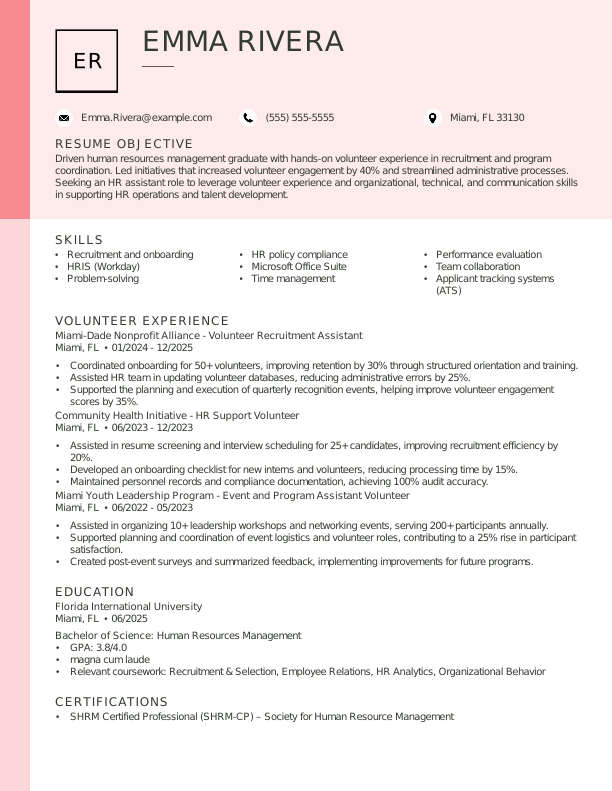
If you’re a recent graduate with little or no paid work experience, creating a dedicated volunteer experience section in place of a traditional work history section allows you to showcase transferable skills and demonstrate your contributions even without formal experience.
In this format, each entry should include your role or title, the organization name, location, dates, and key achievements, just like you would for a paid position.
Here’s an example resume with volunteer experience for a recent graduate:
Career Changer
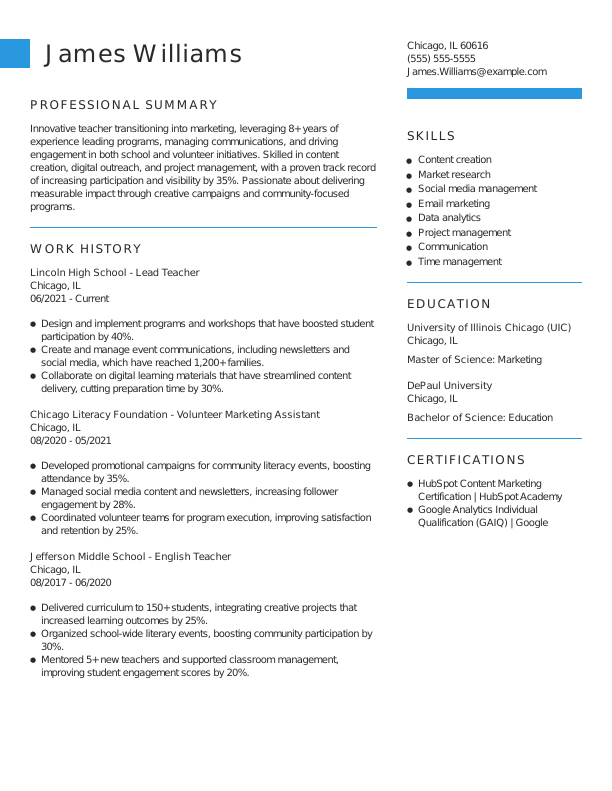
For professionals switching careers, such as moving from teaching to marketing, volunteer experience can be a bridge to demonstrate relevant skills.
Placing both paid and volunteer roles in a single “Professional Experience” section allows you to highlight transferable abilities—like project management, communication, or content creation—without separating them from professional experience.
Here’s an example resume for a career changer transitioning from teaching to marketing:
Frana notes that volunteer experience is especially valuable for career changers with employment gaps:
“Including volunteer experience on your resume can be especially helpful if you have a career gap in your work experience. When an employer sees you were contributing to an organization and gaining important, relevant skills and experience for the role you’re applying for, that shows them you’re willing to take initiative—a skill employers like.”
Experienced Professional
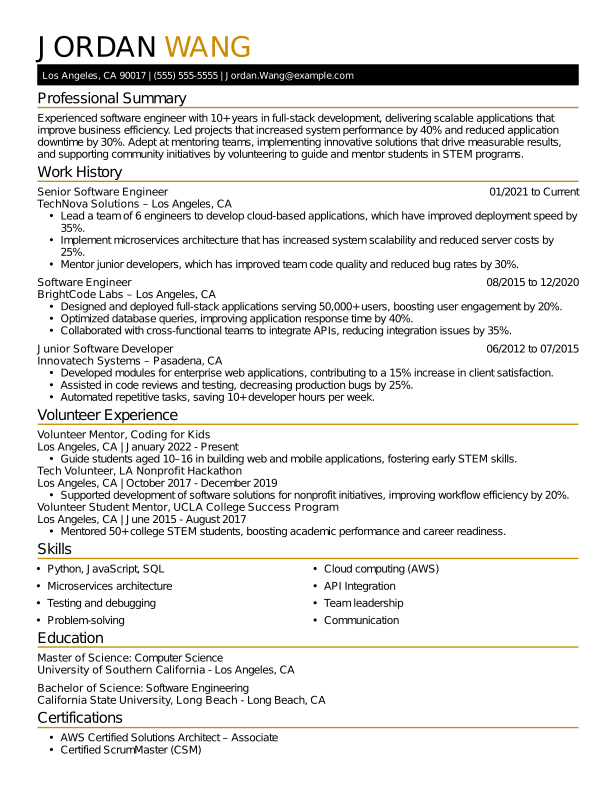
For seasoned professionals with extensive paid experience, volunteer work is best included in a separate, brief section after your work history, and only when it’s highly relevant to the role.
This placement keeps the focus on your career achievements while still highlighting community involvement, leadership, and personal interests that reflect your values.
Entries in this section should be concise, typically listing role or title, organization, location, and dates. Because space is limited, detailed accomplishments aren’t required—just enough information to show engagement and transferable skills.
Here’s an example with volunteer experience noted briefly at the end:
Tips for Describing Your Volunteer Experience Effectively
Effectively describing your volunteer experience requires highlighting skills, achievements, and relevance to the roles you’re applying for. Use language and examples that demonstrate impact, connect to the job, and show alignment with the employer’s values.
Here are a few key resume tips for featuring volunteer experience:

Tailor to the employer. Highlight volunteer work that aligns with the company’s mission, values, or philanthropic focus.
Include measurable accomplishments. Whenever possible, quantify results, such as the number of people served, events managed, or funds raised.
Focus on transferable skills. Emphasize leadership, teamwork, communication skills, project management, or problem-solving demonstrated in your volunteer roles.
Use action verbs. Start each bullet with a strong verb like “coordinated,” “organized,” or “developed” to show initiative and impact.
Be concise but clear. Provide enough detail to demonstrate value without overwhelming the reader; focus on relevance to the job.
Include relevant keywords. Incorporate keywords from the job description to increase visibility with applicant tracking systems (ATS) and show alignment with the role.
Distinguish volunteer work from paid work. Clearly label roles as “Volunteer” when listed alongside professional experience to avoid confusion.
Making Your Volunteer Experience Count
Effectively presenting volunteer work on your resume can set you apart, whether you’re a recent graduate, changing careers, or an experienced professional. By highlighting relevant skills, measurable achievements, and alignment with the employer’s values, you show hiring managers your full potential.
Use what you’ve learned here to structure and showcase your experiences, and explore additional resources like Monster’s resume templates to make the process even easier.
Frequently Asked Questions
What volunteering experience looks best on a resume?
The best volunteering experience to include on a resume is work that highlights skills, measurable accomplishments, and relevance to the job you’re applying for.
Roles where you’ve taken leadership, managed projects, improved processes, or contributed to community initiatives stand out. Even unpaid positions can strengthen your candidacy if they show initiative, teamwork, communication, or other skills employers value in the workplace.
What can count as volunteer experience?
Volunteer experience includes any unpaid work where you contribute time or skills to help an organization, cause, or community. This can range from nonprofit or charitable work, mentoring, event coordination, and fundraising to pro bono professional services.
Short-term or project-based contributions count, too, as long as they demonstrate valuable skills, responsibility, or impact relevant to the job you’re applying for.
How do you list volunteer work with no title?
If your volunteer role didn’t have an official title, create a descriptive, accurate title that reflects your responsibilities, such as “Event Coordinator” or “Volunteer Mentor.”
When you write your resume, list this title first, followed by the organization, location, dates, and key achievements. This approach clearly communicates your contributions and makes your experience appear professional and relevant to hiring managers, even without a formal position.
Is it okay to put volunteer work in the experience section?
Yes, it’s okay to include volunteer work in your professional experience section when it’s highly relevant to the job or if you have limited paid work history.
Treat it like a regular job entry, listing your role, organization, dates, and accomplishments. This highlights job-specific skills and achievements, showing hiring managers that your volunteer contributions provide meaningful, industry-related experience.

Elizabeth Muenzen is a Certified Professional Resume Writer (CPRW) and member of the Professional Association of Resume Writers & Career Coaches who empowers job seekers to take control of their career paths using Monster’s comprehensive job search and resume tools.
See More From Elizabeth MuenzenExplore Related Career Advice



20 Companies That Pay 100% Health Insurance & Other Top Benefits

Updated:
Sep 10, 2026
|
14 min read


How Long of a Commute Is Too Long? 49% Have Turned Down a Job Due to the Commute

Updated:
Sep 8, 2026
|
11 min read


Beauty Bias at Work Statistics: 88% Say Attractive People Have an Advantage
Updated:
Aug 31, 2026
|
8 min read


How to Put Transferable Skills on Your Resume: 120 Skills, Examples, & Tips
Updated:
Aug 27, 2026
|
16 min read
Manage Your Career Like an Expert
Take control of your professional journey with Monster’s expert resources. Explore advice, research, and tips to make informed decisions and advance your career with confidence.

Job Search
Discover strategies to get noticed, network effectively, and streamline your job search process.

Resumes
Get practical tips to create a resume or CV that stands out to employers and wins interviews.

Cover Letters
Learn how to craft a compelling cover letter that highlights your experience and fit for the role.

Career Paths
Explore career paths, industry trends, and growth opportunities to plan your next move.

Interviewing
Prepare for interviews with tips on answering common questions and following up effectively.

Career Development
Develop key skills and knowledge to grow in your current role or pivot to new opportunities.

Leaving a Job
Navigate job changes and career transitions with practical advice and planning resources.