
Functional vs Chronological Resume: Which Format Is Right for You?

Presentation shapes perception—your resume format affects ATS compatibility, what employers notice first, and how your experience is evaluated.
Updated:
|

16 min read
Table of Contents


A chronological resume format is usually the best choice for candidates with steady career progression, while a functional resume can be a better fit for career changers, job seekers with employment gaps, and other professionals who want to draw attention to their skills more than their work experience. A combination (hybrid) resume offers a balanced approach by showcasing both skills and work history.
Your resume format shapes how hiring managers perceive your candidacy before they read a single bullet point. It influences what they notice first, how applicant tracking systems (ATS) interpret your resume, and how your experience is evaluated.
This guide compares functional vs chronological resumes, explains where a combination resume fits in, and helps you choose the resume format that best presents your qualifications.
What Is a Chronological Resume?
A chronological resume is a traditional resume format that makes your work history the primary section, presenting your experience in reverse-chronological order with your most recent position first. It’s the most common resume format because it clearly showcases your career progression in a way that’s familiar to recruiters and easy for ATS to interpret.
A chronological resume:
- Typically includes: Contact information, a professional summary, work experience in reverse-chronological order, education, and skills
- Is best for: Candidates with a steady employment history, recent relevant experience, or a consistent career path within the same industry, especially in traditional or regulated fields
- Pros: Clearly showcases your career progression, promotions, and relevant experience in a format recruiters prefer, and ATS can easily parse
- Cons: Makes employment gaps, job-hopping, and unrelated experience more noticeable because your work history is the primary focus
What Is a Functional Resume?
A functional resume is a resume format that organizes your experience by skills rather than work history. Instead of emphasizing when and where you worked, it highlights the abilities and accomplishments that qualify you for the job while still including basic employment details for context.
A functional resume:
- Typically includes: Contact information, a professional summary, skills sections with achievement-focused bullet points, an abbreviated work history, and education
- Is best for: Career changers, job seekers with significant employment gaps, candidates reentering the workforce, and professionals with diverse freelance, contract, or project-based experience
- Pros: Highlights transferable skills before your employment history, helping employers focus on the qualifications most relevant to the role
- Cons: May raise questions about your work history and can be less ATS-friendly than a chronological resume, particularly when work history details are limited or formatted unusually
Key Differences Between Functional vs Chronological Resumes
Chronological resumes emphasize career progression, while functional resumes emphasize transferable skills. The table below highlights the biggest differences between the two formats.
| Feature | Chronological Resume | Functional Resume |
| Structure | Lists work experience first in reverse-chronological order | Groups experience into skill categories before a brief work history |
| Primary Focus | Career progression, job titles, and employment history | Transferable skills, qualifications, and accomplishments |
| Employment Gaps | Makes gaps clearly visible | Allows candidates to lead with relevant skills while providing context for gaps in a separate work history section |
| ATS Compatibility | Highly compatible with nearly all ATS | Some ATS may have difficulty interpreting skills-first layouts, particularly when work history is limited or formatted unusually |
| Recruiter Preference | Preferred by most recruiters and hiring managers | Less common and may prompt questions about work history |
| Best For | Steady career progression, same-industry applicants, traditional career paths | Career changers, reentering the workforce, candidates with significant employment gaps |
How the Primary Sections Differ in Functional vs Chronological Resumes
The biggest difference between chronological and functional resumes is what they prioritize: Chronological resumes highlight career progression, while functional resumes highlight transferable skills.
Example of the primary section in a chronological resume:
Marketing Manager
Philadelphia Market Impact Co., Philadelphia, PA | January 2023–Present
- Increased qualified lead generation by 28% through targeted digital marketing campaigns.
- Managed a team of five marketing specialists and coordinated cross-functional product launches.
- Analyzed campaign performance data to improve conversion rates by 18%.
Marketing Specialist
Philly Media Consulting Group, Philadelphia, PA | June 2020–December 2022
- Developed email marketing campaigns that increased click-through rates by 35%.
- Collaborated with sales and design teams to execute integrated marketing initiatives.
- Created monthly performance reports and presented recommendations to leadership.
Marketing Coordinator
Media Collective Pennsylvania, Conshohocken, PA | August 2018–May 2020
- Coordinated marketing calendars, events, and promotional campaigns.
- Developed and maintained content for a website and four social media channels.
- Tracked campaign metrics and prepared monthly reports for senior management.
Example of the primary section in a functional resume:
Project Coordination
- Managed cross-functional marketing, sales, and operations projects from planning through execution.
- Improved project completion rates by streamlining workflows and communication processes.
- Coordinated project timelines, resources, and stakeholder updates.
Digital Marketing
- Developed multichannel marketing campaigns that increased qualified leads by 28%.
- Optimized email marketing strategies, improving click-through rates by 35%.
- Managed content calendars and collaborated with creative teams on campaign assets.
Data Analysis & Reporting
- Analyzed campaign performance using Google Analytics and CRM reporting tools.
- Tracked KPIs and presented actionable insights to leadership.
- Identified optimization opportunities that improved conversion rates and marketing ROI.
How to Decide When to Use Functional vs Chronological Resume Formatting
Choose a chronological resume if your recent work history is your strongest qualification for a job. Choose a functional or hybrid resume if your skills are more relevant than your employment timeline.
Use this guide to determine which format best fits your situation:
| Career Situation | Recommended Resume Format | Why It Works |
| Steady career growth in one field | Chronological | Highlights career progression and recent, relevant experience |
| Working in a traditional field (law, finance, healthcare, education, government) | Chronological | Matches recruiter expectations and provides a clear, verifiable employment history in fields where a traditional resume is often preferred |
| Career change or industry pivot | Functional or hybrid | Highlights your qualifications before your employment timeline, though a hybrid resume is generally more recruiter-friendly |
| Employment gaps | Functional or hybrid | Draws attention to qualifications before your employment timeline, though a hybrid resume is generally more recruiter-friendly |
| Reentering the workforce | Functional | Focuses on transferable skills and accomplishments gained through previous work, education, volunteer roles, or other relevant experience |
| Mix of relevant and unrelated experience | Hybrid | Highlights the experience most relevant to your target role while providing a clear work history |
Chronological resumes are the standard choice because they clearly show career progression, align with recruiter expectations, and are easy for ATS to interpret. But they aren’t the best fit for every candidate. If your recent experience is your strongest qualification, a chronological resume is usually the safest choice. If your skills better demonstrate your fit, a functional or hybrid resume may be better.
Before submitting your resume, review the job posting for any formatting requirements and consider industry expectations. Some employers explicitly request a chronological resume, while others simply expect a standard ATS-friendly layout.
A Third Option: What Is a Combination (Hybrid) Resume?
A combination (AKA hybrid) resume is a resume format that blends the best features of chronological and functional resumes. It opens with a skills-focused section that highlights your most relevant qualifications, then follows with a reverse-chronological work history that provides context for your experience.
A combination resume:
- Typically includes: Contact information, a professional summary, a core skills or qualifications section with achievement-focused bullet points, reverse-chronological work experience, education, and optional skills or certifications
- Is best for: Job seekers with relevant transferable skills who also want to showcase a solid employment history, including career changers, professionals with experience across multiple industries, and candidates reentering the workforce
- Pros: Balances a skills-focused introduction with a clear employment timeline, making it easier for recruiters to quickly identify your qualifications while remaining more ATS-friendly than a purely functional resume
- Cons: Requires careful organization and can become longer than other resume formats. It also isn’t designed to hide employment gaps, as employers still expect to see a clear and accurate work history
Chronological vs Functional vs Hybrid Resume Examples
If you’re deciding between resume templates, the real-life examples below show how chronological, functional, and hybrid resume formats differ, what each emphasizes, and when each one works best.
Chronological
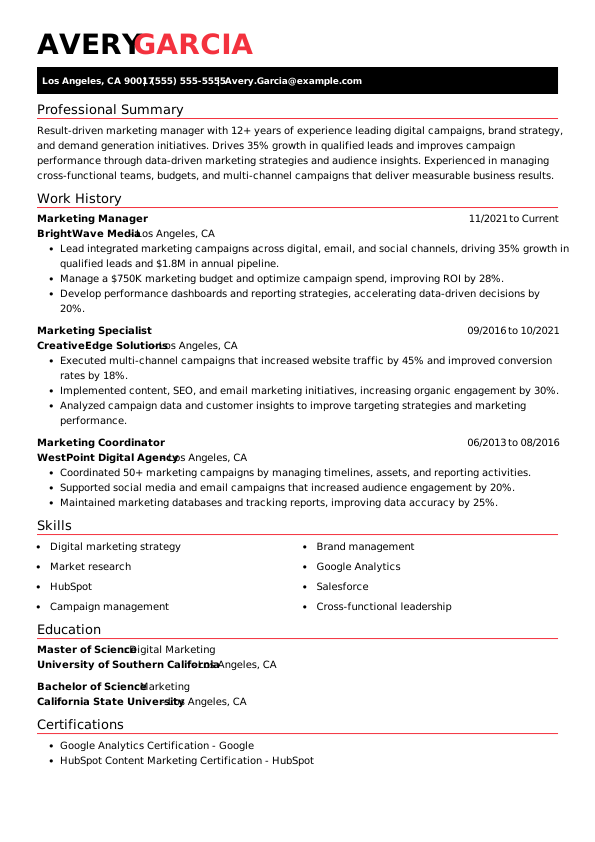
- What this accomplishes: Highlights a clear career progression by placing your most recent and relevant experience front and center. Hiring managers can quickly see your work history, promotions, accomplishments, and increasing responsibilities, making this the strongest resume format for professionals with steady career growth in the same field.
- What this sacrifices: Places less emphasis on transferable skills or specialized qualifications because the focus is on employment history. It can also make employment gaps, career changes, or unrelated experience more noticeable than a functional or combination resume.
Functional
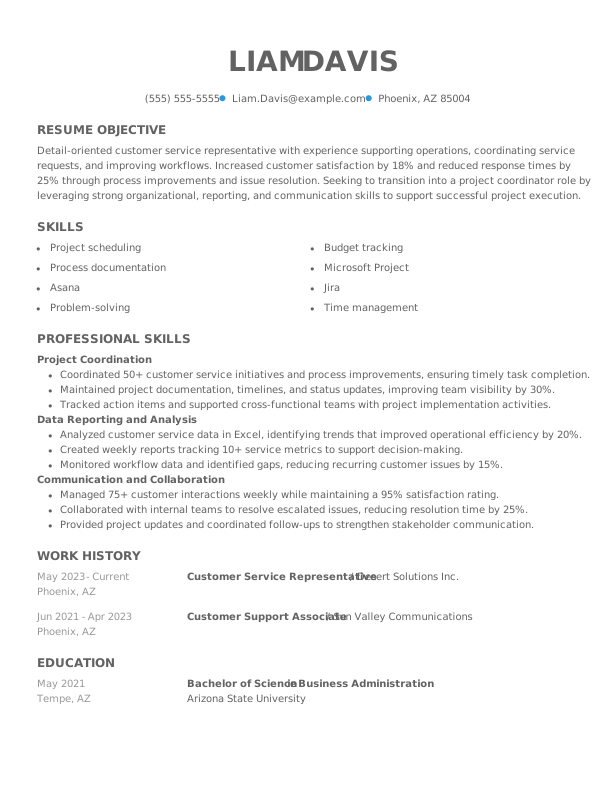
- What this accomplishes: Shifts the focus from when and where you worked to the skills and qualifications that make you a strong candidate. This format is especially useful for career changers, professionals returning to the workforce, and candidates with limited experience who want to emphasize transferable abilities over a traditional work history.
- What this sacrifices: Provides less detail about your employment timeline, which some hiring managers prefer to see. It can also negatively impact ATS scanning and make it harder to showcase career progression. This format may also raise questions if your work history isn’t supported by relevant experience or accomplishments.
Hybrid
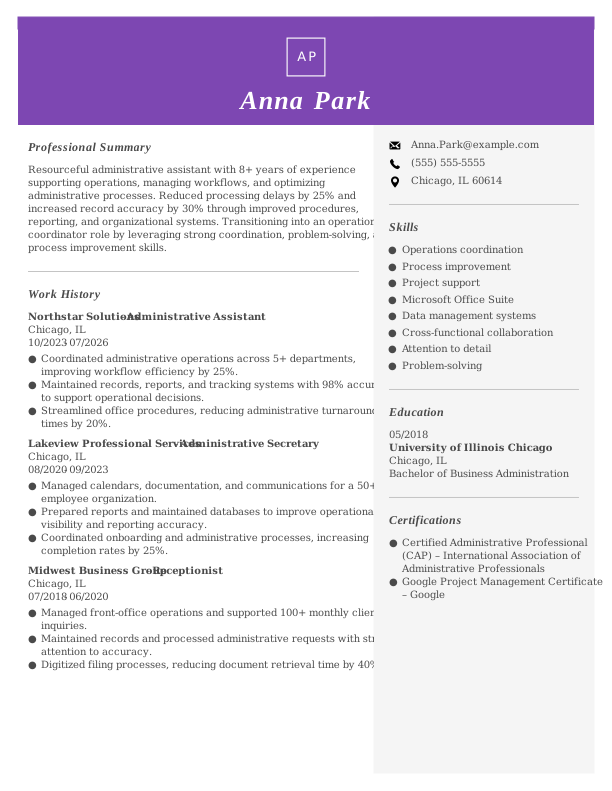
- What this accomplishes: Requires more space than other resume formats and can become repetitive if your skills and work history cover the same accomplishments. Because it balances two priorities, it may not emphasize either your career progression or specialized skills as strongly as a chronological or functional resume.
- What this sacrifices: Can require more space than other resume formats and can become repetitive if your skills and work history cover the same accomplishments. Because it balances two priorities, it may not emphasize either your career progression or specialized skills as strongly as a chronological or functional resume.
Tips for Any Resume Format
Regardless of the resume format you choose, your resume should include a strong professional summary, highlight measurable achievements, be tailored to the job description, maintain a clear and concise layout, and be optimized for ATS. The best practices below will help you create a resume that’s easier for recruiters to read and more likely to make it through ATS screening.

Lead With a Strong Professional Summary
Your professional summary sets the tone for the rest of your resume. This brief introduction (two to three sentences) should immediately communicate who you are, what skills you bring to the role, and the value you can offer the employer.
Focus on your years of experience, areas of expertise, key skills, and one or two notable (ideally quantifiable) accomplishments.
Lastly, be sure to tailor your summary to each position so recruiters can quickly see why you’re a strong match.
Here’s an example:
Professional SummaryResults-driven marketing specialist with 6+ years of experience developing digital marketing campaigns, managing cross-functional projects, and analyzing performance metrics. Increased qualified lead generation by 28%, improved email engagement by 35%, and consistently delivered campaigns that exceeded performance goals through data-driven decision-making.

Quantify Your Achievements With Metrics
Strong resumes focus on results over basic job duties. Whenever possible, include numbers that demonstrate the impact of your work. Metrics make your accomplishments more specific, credible, and memorable. And even if your role isn’t numbers-driven, you can still quantify projects, timelines, productivity, customer outcomes, budgets, or team size.
Examples include:
- Increased sales by 18% over one year.
- Reduced onboarding time by 30% through process improvements.
- Managed a team of 12 employees across three locations.
- Maintained a 98% customer satisfaction rating.

Tailor Your Resume to the Job Description
Customize your resume for each application by emphasizing the experience, skills, and accomplishments that are most relevant to the position. Mirroring the employer’s language helps demonstrate that you’re a strong fit while improving ATS compatibility.
Review the job description carefully, and incorporate important keywords naturally throughout your professional summary, skills section, and work experience.

Focus Your Resume on Current, Relevant Information
Your resume should include enough information to showcase your qualifications without overwhelming the reader. A one- to two-page resume is the standard for most job seekers, with 40% submitting resumes longer than one page but still within the typical two-page limit.
As a general guideline:
- One page is ideal for students, recent graduates, and professionals with less than five years of relevant experience.
- Two pages are appropriate for experienced professionals with substantial accomplishments, certifications, leadership experience, or specialized technical skills.
Regardless of your resume’s length, prioritize recent and relevant experience. Remove outdated positions, repetitive information, and accomplishments that don’t support your current career goals.

Test ATS Compatibility Before You Submit
Many employers use ATS to organize and screen resumes before a recruiter reviews them. Choosing an ATS-friendly format helps ensure your information can be read accurately.
Before submitting your resume:
- Use standard section headings, such as “Professional Summary,” “Work Experience,” “Education,” and “Skills.”
- Avoid tables, graphics, icons, text boxes, and complex multicolumn layouts.
- Use a simple, professional font with consistent formatting.
- Save your resume in the file format requested by the employer, typically PDF or DOCX.
- Consider using an ATS resume checker to pre-screen your resume and identify formatting issues, missing keywords, or other problems that could prevent it from passing an initial ATS scan.
Format Your Resume With Confidence
At the end of the day, each resume format has its own strengths, depending on your background and experience:
- Chronological resumes are ideal for candidates with steady career progression and are the format most recruiters prefer. If you’re unsure which format to use, this is usually the safest choice.
- Functional resumes emphasize transferable skills, making them a good fit for career changers, reentering professionals, and candidates with significant employment gaps.
- Hybrid resumes combine a skills-focused section with a chronological work history, offering a balanced approach for many job seekers.
Once you’ve chosen the right format, tailor your resume to the job, quantify your achievements, and keep your formatting ATS-friendly to make the strongest impression.
Frequently Asked Questions
What is the difference between a functional resume and a chronological resume?
The difference between a functional resume and a chronological resume is what each format emphasizes. A chronological resume focuses on your work history in reverse-chronological order, while a functional resume organizes your qualifications by skills and places less emphasis on your employment timeline.
Which resume format do recruiters prefer?
Most recruiters prefer chronological resumes because they’re easy to scan, clearly show career progression, and are highly compatible with applicant tracking systems (ATS). Unless your career situation calls for a different approach, a chronological resume is typically the safest choice.
Do employers and ATS accept functional resumes?
Yes, employers and ATS accept functional resumes, but they aren’t always the preferred format. While ATS can generally parse functional resumes, skills-first layouts may pose challenges when work history details are limited or formatted unusually. Recruiters may also prefer chronological resumes because they make it easier to review a candidate’s career progression.
What are the disadvantages of a functional resume, and can it hurt your chances of getting a job?
The biggest disadvantages of a functional resume are that it can raise questions about your employment history and may be less ATS-friendly than a chronological resume. While it won’t automatically hurt your chances, some recruiters are skeptical of functional resumes because they make career progression harder to evaluate.
Who should not use a chronological resume?
A chronological resume may not be the best choice for career changers, job seekers with significant employment gaps, people reentering the workforce, or candidates whose most relevant qualifications aren’t reflected in their recent work history. In these situations, a functional or hybrid resume may better showcase your strengths.
When should I use a hybrid resume?
Use a hybrid resume when you want to highlight both your transferable skills and your work history. This format is often ideal for career changers, professionals with experience across multiple industries, or anyone with relevant skills that deserve more emphasis than job titles alone.

Kirsten Chorpenning is a career advice writer who empowers job seekers to take control of their career paths using Monster’s comprehensive job search and resume tools. She specializes in helping job seekers find rewarding jobs in today’s dynamic work environment.
See More From Kirsten ChorpenningExplore Related Career Advice

Overqualified Hiring Stats: 57% Would Cut Resume Experience to Get Hired

Updated:
Sep 28, 2026
|
9 min read

20 First Job Interview Questions & Sample Answers: Tips to Land Your First Job
Updated:
Sep 24, 2026
|
20 min read

“Do You Have Any Questions for Me?” How to Answer in an Interview (30 Examples)
Updated:
Sep 18, 2026
|
14 min read



20 Companies That Pay 100% Health Insurance & Other Top Benefits
Updated:
Sep 10, 2026
|
14 min read


How Long of a Commute Is Too Long? 49% Have Turned Down a Job Due to the Commute
Updated:
Sep 8, 2026
|
11 min read

Manage Your Career Like an Expert
Take control of your professional journey with Monster’s expert resources. Explore advice, research, and tips to make informed decisions and advance your career with confidence.

Job Search
Discover strategies to get noticed, network effectively, and streamline your job search process.

Resumes
Get practical tips to create a resume or CV that stands out to employers and wins interviews.

Cover Letters
Learn how to craft a compelling cover letter that highlights your experience and fit for the role.

Career Paths
Explore career paths, industry trends, and growth opportunities to plan your next move.

Interviewing
Prepare for interviews with tips on answering common questions and following up effectively.

Career Development
Develop key skills and knowledge to grow in your current role or pivot to new opportunities.

Leaving a Job
Navigate job changes and career transitions with practical advice and planning resources.