

Free Sports Resume Templates & Examples
Land more interviews with expertly crafted sports resume templates that showcase your skills. Using free resume templates along with writing advice will help you create a standout resume or CV that captures the attention of hiring managers.
Real-World Resumes That Get Results
 Free
Free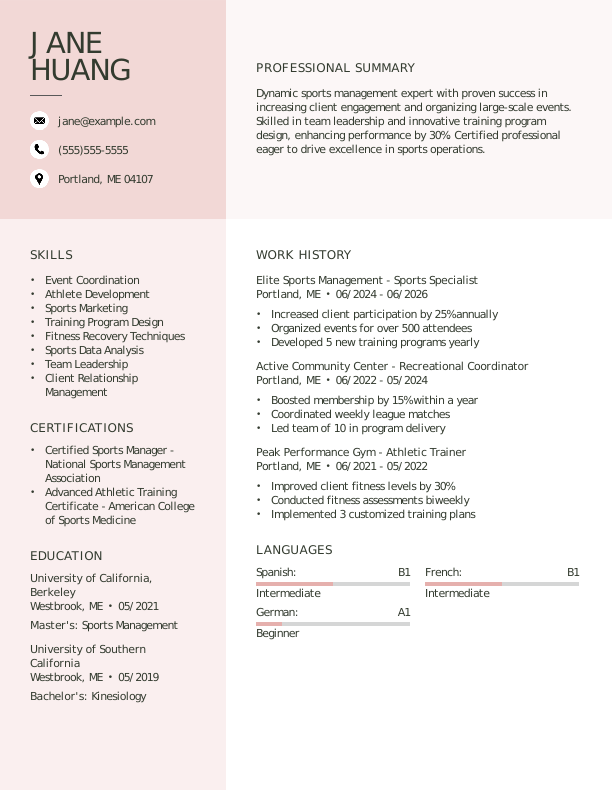
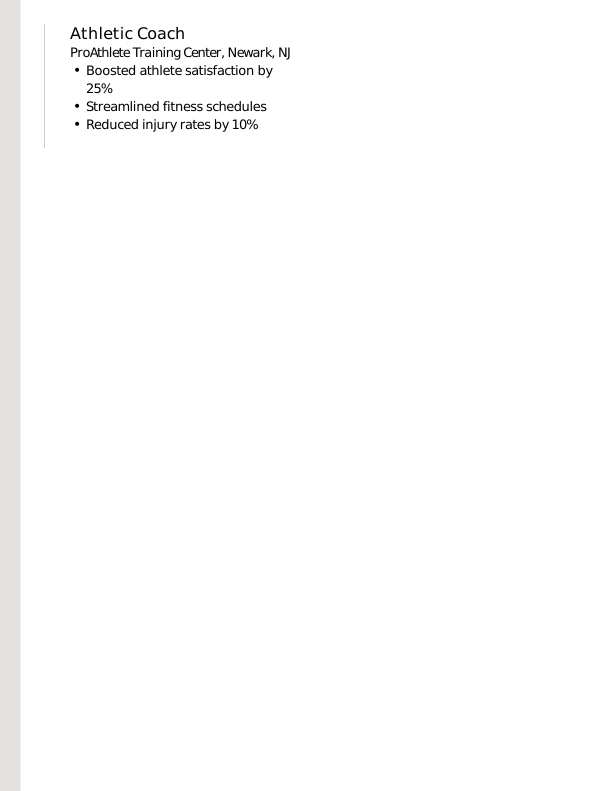
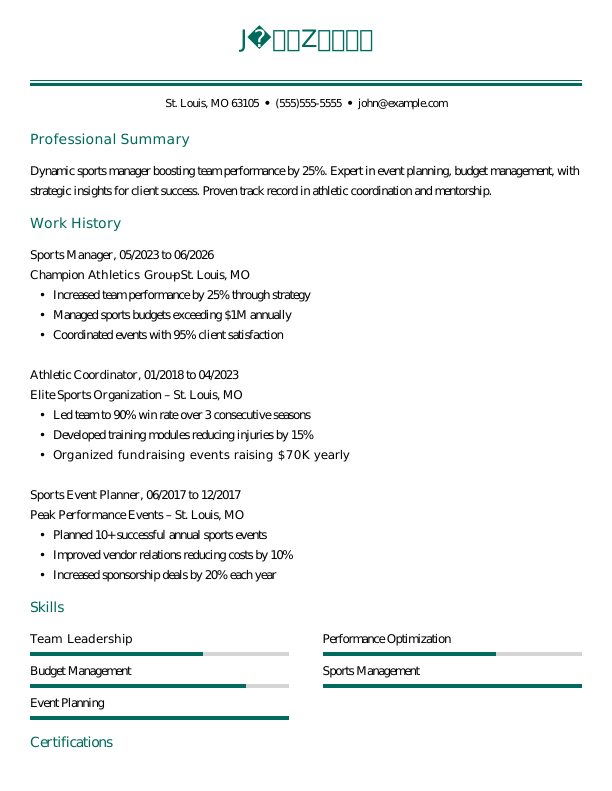

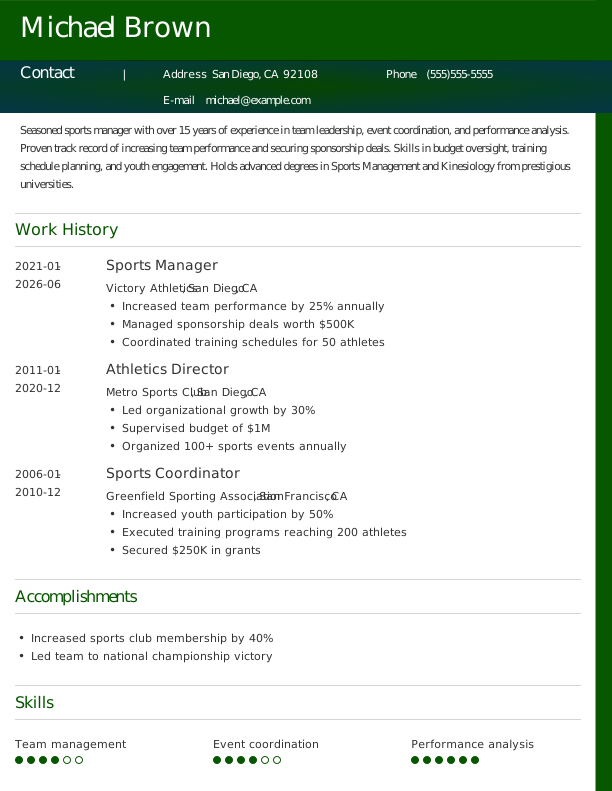

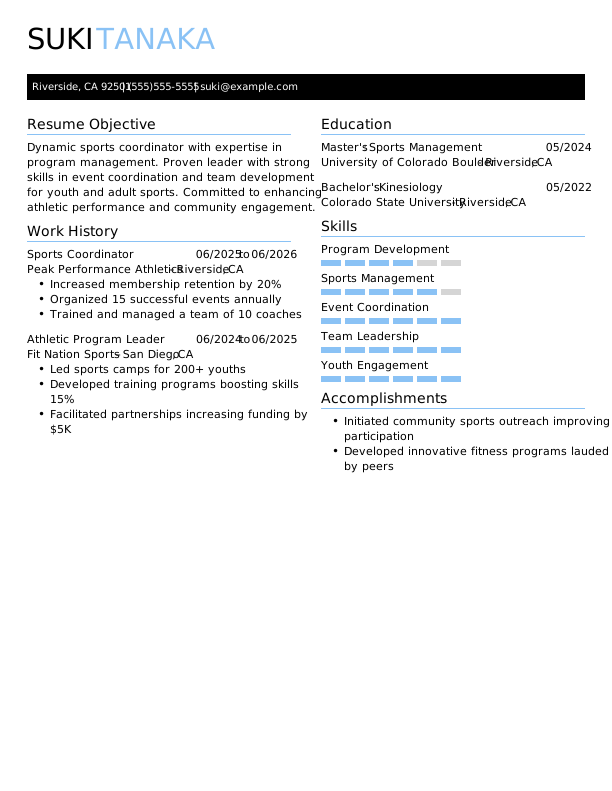

Browse Free Resume Templates
- Accounts Payable
- Adjunct Professor
- Artist
- Auto Mechanic
- Baker
- Business Development Manager
- Business
- Certified Nursing Assistant
- Classic & Traditional
- Cleaner
- College Student
- Concierge
- Construction Worker
- Corporate
- Creative & Unique
- Custodian
- Customer Service
- Dental Assistant
- Direct Support Professional
- Entry-Level
- Flight Attendant
- Hospitality & Food Service
- Front Desk Receptionist
- Healthcare
- High School
- Housekeeping
- Hvac Technician
- Hybrid
- Inventory Manager
- Logistics
- Maintenance
- Management
- Modern
- Mortgage Loan Processor
- Pet Sitter
- Phlebotomist
- Production
- Rbt
- Sales
- Security Services
- Restaurant Server
- Simple & Basic
- Social Work
- Teacher
- Technology
Resume Examples for Sports Professionals
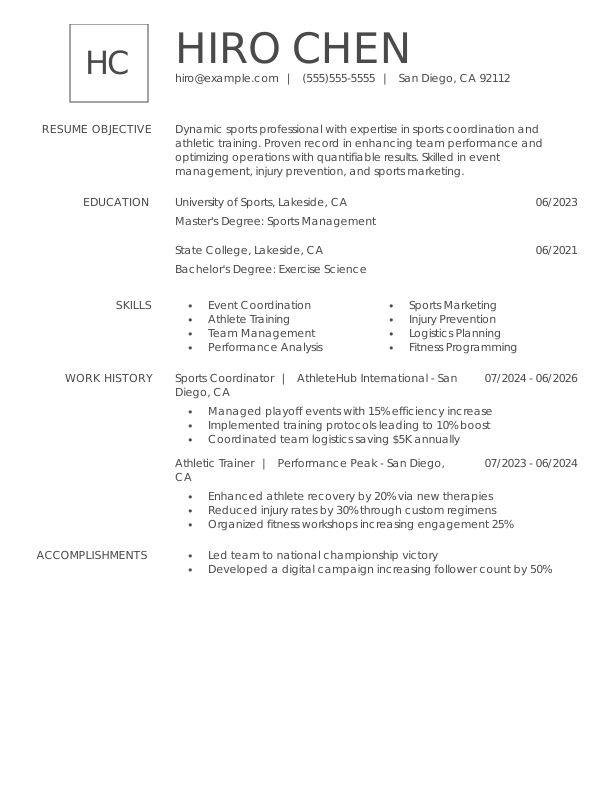
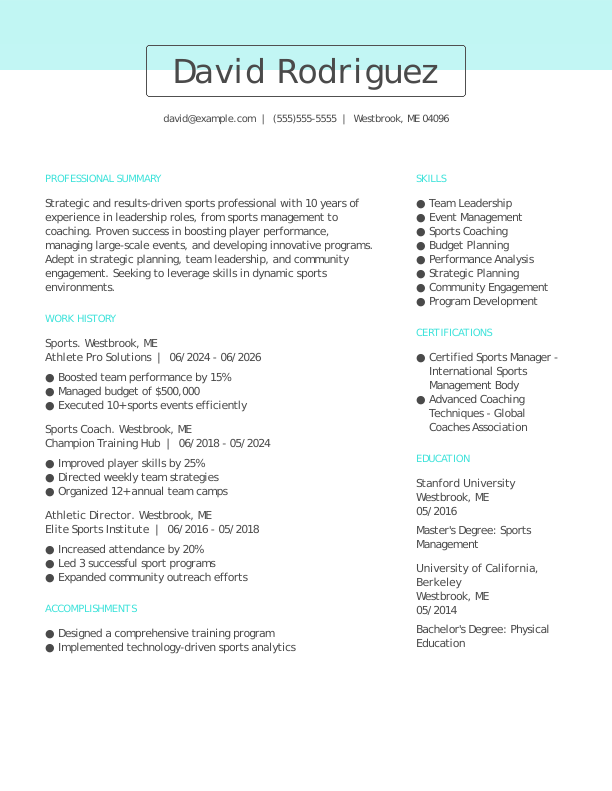
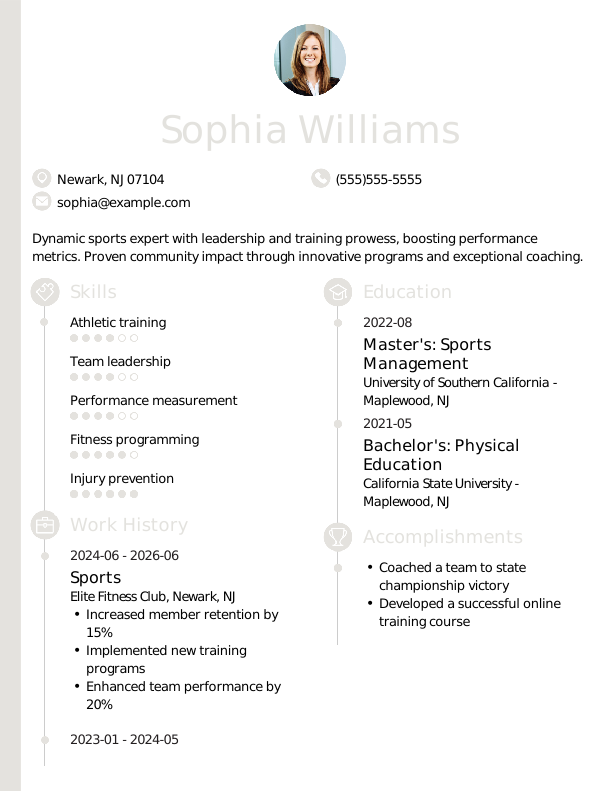
Resumes and CVs in the sports industry vary significantly based on your specialization and career stage. Below, you can explore templates tailored for entry-level, mid-career, and experienced professionals across the field of sports, and use our dedicated tool to build your own resume.
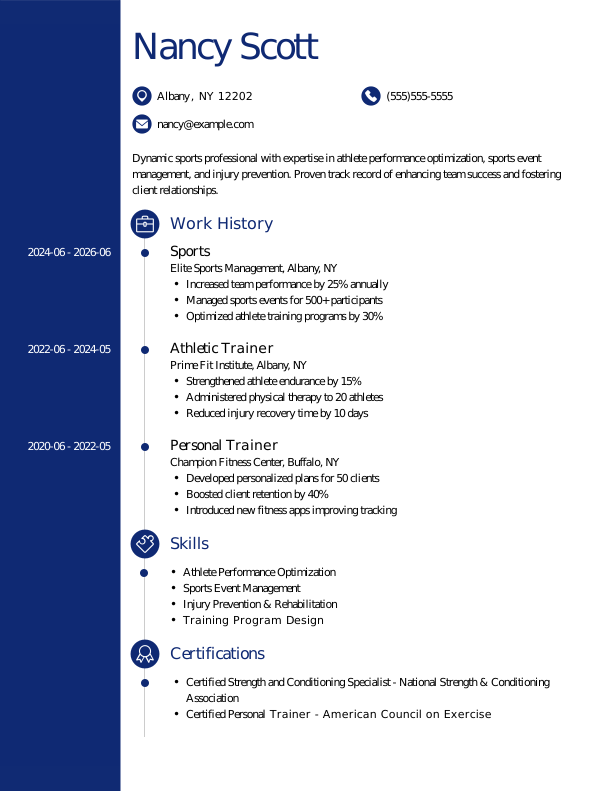
Athletic Trainer Resume
Ideal for recent graduates who need help creating a resume with no work experience, this template showcases clinical training, rehabilitation skills, and sports-related experience.

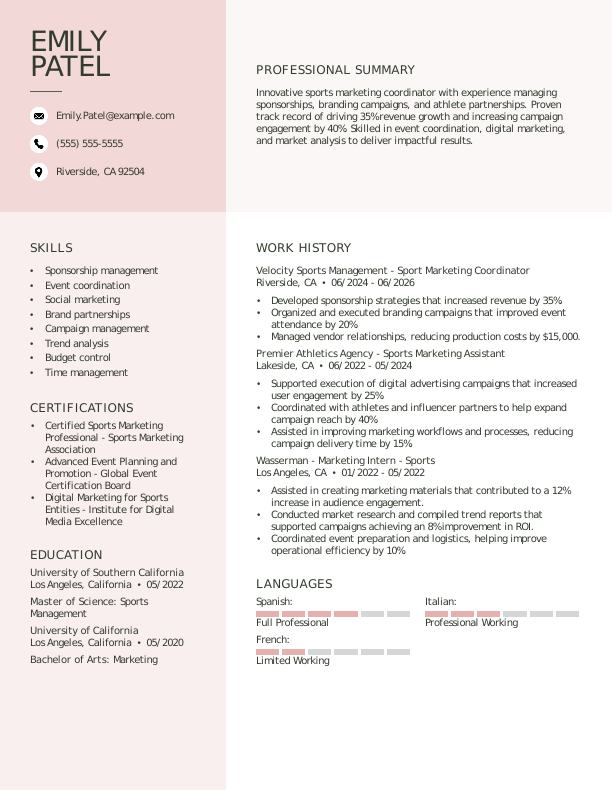
Sports Marketing Coordinator Resume
A strong fit for sports marketing professionals, this resume highlights sponsorship management, event promotion, brand partnerships, and campaign performance metrics that support growth in the sports industry.
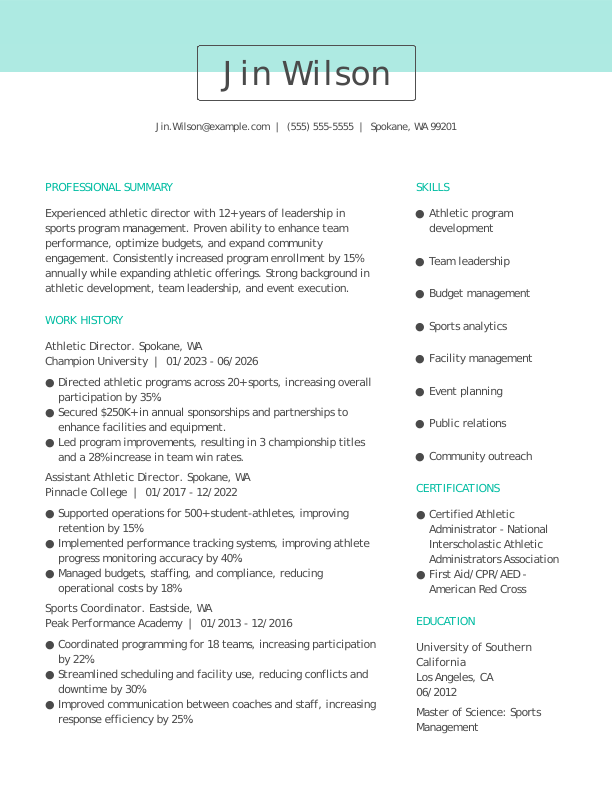
Athletic Director Resume
Well suited for experienced athletic directors, this resume highlights leadership, program management, budgeting, and community engagement achievements that support oversight of successful athletic programs.
Sports Resume Template (Text)
Use this customizable text format of a sports resume to copy, paste, and modify directly in your document for the best possible presentation—or check out our library of professional templates for more examples.
Sophia Singh
Miami, FL 33101
(555)555-5555
Sophia.Singh@example.com
Professional Summary
Dynamic sports professional with 8 years in sports management, marketing excellence, and strategic event planning. Proven record in boosting engagement by 35% and managing budgets over $500K. Bilingual with team leadership and innovative marketing skills.
Work Experience
Sports Manager
Elite Championship Events – Miami, FL
February 2024 – June 2026
- Increased event attendance by 35%
- Managed budgets exceeding $500K
- Developed sponsorships with 20 brands
Athletic Director
Golden State University – Tampa, FL
January 2020 – January 2024
- Boosted team performance by 40%
- Cut operational costs by 20%
- Established athletic scholarships
Sports Marketing Coordinator
Pro Sports Connect – Riverview, FL
June 2018 – December 2019
- Launched campaigns reaching 500K fans
- Enhanced brand visibility by 50%
- Organized nationwide promotional events
Education
Master of Science in Sports Management
University of Southern California, Los Angeles, CA
May 2017
Bachelor of Arts in Business Administration
University of California, Berkeley, Berkeley, CA
May 2015
Certifications
- Certified Sports Manager – National Sports Management Association
- Advanced Sports Marketing – Sports Marketing Society
Skills
- Event Management
- Strategic Planning
- Budget Oversight
- Team Leadership
- Sponsorship Negotiation
- Marketing Strategy
- Data Analysis
- Public Relations
How to Write a Sports Resume
As a sports professional, understanding how to write a resume means mixing your athletic achievements and relevant experience with a format that showcases your qualifications. Use the guidance below to emphasize your strengths and tailor your resume for the positions you’re aiming for.
1. Contact Info
Your contact information should be clear, professional, and easy to find at the top of your resume.
Make sure to include:
- Full name
- Phone number
- Professional email address
- City and state (ZIP code is optional)
- LinkedIn profile or personal portfolio (if relevant)
 PRO TIP
Skip adding personal information like Social Security numbers, age, or religious beliefs to your resume unless the employer specifically asks for them.
2. Resume Profile
A resume profile is a brief section, typically two to four sentences long, that highlights your key qualifications and sets the stage for your candidacy. It serves as a pitch to hiring managers, aiming to capture their interest and motivate them to explore your resume further.
This profile is positioned at the top of your resume and can take the form of either a summary or an objective, each serving distinct purposes.
Understanding these differences can improve your presentation:
- A resume summary highlights your most relevant experiences, skills, and achievements, showcasing how you can contribute to the sports industry. This format is especially helpful for individuals with prior experience or transferable skills who aim to illustrate their impact in a competitive field like sports.
- A resume objective highlights your future aspirations and what you aim to achieve in your career. It’s particularly useful for recent graduates, individuals shifting fields, or those with limited experience, such as coding bootcamp graduates or professionals moving into sports management.
Let’s take a look at an example of each to see how a resume summary and a resume objective differ:
Sports resume summary example:
Dedicated sports management professional with over 6 years of experience in event coordination and athlete development. Proficient in marketing strategies, stakeholder engagement, and performance analysis. Acknowledged for improving team dynamics and contributing to successful sporting events through innovative programming and community outreach.
Sports resume objective example:
Recent graduate with a degree in sports management, eager to launch a career in the dynamic sports industry. Committed to teamwork and athlete development, ready to contribute strong organizational skills and a passion for promoting healthy lifestyles within sports organizations or community programs.
3. Work Experience
The work experience on your resume is an important asset. Employers assess your job history to determine not only where you’ve been but also the impact you’ve made in your roles.
Your experiences in sports management or athletic training illustrate how you’re well-prepared for the position you seek.
The work experience section should contain:
- Job title
- Employer name and location
- Dates of employment (month/year)
- 3–5 bullet points describing your relevant responsibilities and achievements
Tailor your content to reflect the specific sports role you’re targeting. Start each bullet point with an action verb (like “Coached,” “Trained,” “Organized”) to improve your statements and highlight your contributions.
Incorporate quantifiable metrics whenever possible. Specific achievements and numbers, such as win percentages or athlete improvements, provide clear evidence of your impact and help distinguish you from other job seekers.
In general, consider following the format of:
[action verb] + [responsibility] = [result/achievement]
For example:
Coached a youth soccer team to a 75% win rate over two seasons, developing training programs that improved player skills and teamwork.
Note that you can also flip the result/achievement with the responsibility:
Achieved a 50% increase in team performance metrics by implementing rigorous practice schedules and personalized coaching strategies.
With these techniques in mind, your resume bullets may look something like:
- Organized and executed training sessions for 50+ youth athletes, improving their performance metrics by 20%.
- Coached high school basketball team to a regional championship, improving team cohesion and skill development.
- Developed fitness programs tailored for individuals, resulting in a 15% increase in client retention rates.
- Collaborated with sports nutritionists to create balanced meal plans for athletes, ensuring optimal performance.
- Mentored junior coaches on effective communication strategies, fostering a supportive coaching environment.
4. Skills
The skills section provides a concise overview of abilities specific to the sports industry. This helps recruiters and hiring managers assess qualifications quickly.
Skills can be categorized into three distinct groups:
- Soft skills are personal qualities that influence how well individuals collaborate and connect with others in the sports industry.
- Hard skills are specific, measurable abilities acquired through education, training, or experience.
- Technical skills are the specific competencies needed to perform tasks in various fields.
5 Soft Skills for Your Resume or CV
- Team leadership
- Effective communication
- Strategic thinking
- Conflict resolution
- Motivational skills
5 Hard Skills for Your Resume or CV
- Athletic training techniques
- Sports nutrition planning
- Injury prevention strategies
- Performance analytics (Catapult, Hudl)
- Biomechanics analysis
In general, aim to showcase a diverse array of relevant skills that align with the job requirements to demonstrate your full potential in the sports field.
PRO TIP
If you’re a newer sports professional, place your skills section higher on the resume, right after your summary. For those with more experience, position this section lower and incorporate most of your skills within your work history to demonstrate their practical application.
5. Education
Understanding how to list education on your resume is important for showcasing your qualifications. Begin with your most recent or relevant degree, clearly stating the degree type and institution.
If you’re a recent graduate, feel free to include additional details such as your graduation year, GPA (if it’s 3.5 or higher), any honors received, and relevant coursework that highlights your expertise.
Sports resume education section example:
Bachelor of Science in Sports Management
University of Florida, Gainesville, FL
Graduated: 2024 | Magna Cum Laude
PRO TIP
If you’re progressing from an Associate Degree in Sports Management to a Bachelor of Science in Sports Studies, or have earned another relevant degree, list both in reverse-chronological order.
6. Certifications
Including certifications on resumes can improve your competitiveness in the field, especially when you’re starting out and have limited experience.
Note that this section might not be required for all resumes, but it can hold value for many professionals in specialized sports roles, such as strength coaches or athletic trainers.
Be sure to include only the certifications that are relevant and bolster your candidacy. You should also keep these credentials up to date and presented clearly to make a strong impression.
Sports certification examples:
- Certified Strength and Conditioning Specialist (CSCS) | National Strength and Conditioning Association | Expires: 04/2028
- First Aid/CPR/AED Certification | American Red Cross | Expires: 07/2027
- Sports Nutrition Certification | International Society of Sports Nutrition | Expires: 10/2028
- Youth Sports Coaching Certification | National Alliance for Youth Sports | Expires: 09/2027
Start Building Your Job-Winning Resume
Use Your Existing Resume
Import your current resume to transfer your information to one of our professional templates.
Create a New Resume
Start fresh with a template that catches your eye and follow the prompts to add your details.
Tailor Your Work History to Beat the ATS
To improve your work history, tailor it to the specific sports role you’re pursuing by incorporating relevant keywords and language.
Begin by thoroughly analyzing the job description. Identify recurring skills, coaching methods, or athlete demographics mentioned so that you can reflect those elements in your experience descriptions as much as possible.
By taking the extra step to customize your sports resume, you’ll create an ATS-friendly document that applicant tracking systems (ATS) can scan.
What’s a Fair Sports Salary?
Understanding salary information for sports professionals helps you evaluate job offers, negotiate compensation, and make informed career choices. The data comes from the U.S. Bureau of Labor Statistics (BLS) and reflects the most recent nationwide averages for various roles in the sports industry.
Factors such as geographic location, years of experience, certifications, and specific athletic roles can significantly influence actual earnings. For instance, professional athletes in major leagues often earn substantially more than those competing in minor leagues or coaching at high school levels.
Additionally, specialized roles like sports management or analytics tend to offer higher salaries compared to general positions within the field.
| Alabama | $93,090 |
| Alaska | $58,880 |
| Arizona | $80,770 |
| Arkansas | $52,200 |
| California | $99,800 |
| Connecticut | $108,700 |
| Delaware | $63,160 |
| District of Columbia | $113,330 |
| Florida | $65,020 |
| Georgia | $229,340 |
| Hawaii | $99,520 |
| Idaho | $53,910 |
| Illinois | $70,050 |
| Indiana | $130,900 |
| Iowa | $118,540 |
| Kansas | $53,420 |
| Kentucky | $64,590 |
| Louisiana | $75,490 |
| Maine | $74,250 |
| Maryland | $75,490 |
| Massachusetts | $81,680 |
| Michigan | $61,240 |
| Minnesota | $66,770 |
| Mississippi | $53,080 |
| Missouri | $500,220 |
| Montana | $54,560 |
| Nebraska | $56,590 |
| Nevada | $71,080 |
| New Hampshire | $65,530 |
| New Jersey | $211,960 |
| New Mexico | $64,670 |
| New York | $166,360 |
| North Carolina | $70,560 |
| North Dakota | $53,870 |
| Ohio | $59,890 |
| Oklahoma | $56,130 |
| Oregon | $76,770 |
| Pennsylvania | $74,940 |
| Rhode Island | $72,960 |
| South Carolina | $57,840 |
| South Dakota | $47,750 |
| Tennessee | $63,250 |
| Texas | $321,640 |
| Utah | $244,150 |
| Vermont | $65,000 |
| Virginia | $70,290 |
| Washington | $82,070 |
| West Virginia | $53,400 |
| Wisconsin | $94,790 |
| Wyoming | $57,800 |
| Guam | $43,570 |
| Puerto Rico | $43,600 |
| Virgin Islands | $46,610 |
Key Takeaways
- Tailor your resume to the specific sport or role. Use terminology and keywords that are relevant to the position—it aids both ATS and human eyes.
- Highlight measurable achievements. Go beyond roles, quantify accomplishments (e.g., win-loss records, awards, leadership roles) to make an impression.
- Select a format that aligns with your experience level. Newcomers might prefer a functional layout, while seasoned athletes often opt for reverse-chronological resumes.
More Resume & CV Examples
- Athlete
- Athletic Director
- Athletic Trainer
- Athletic Training
- Basketball Coach
- Coach
- Fitness Instructor
- Fitness
- Football Coach
- Personal Trainer
- Pilates Instructor
- Soccer Coach
- Sports Management
- Yoga Instructor
Cover Letters for Your Resume
Browse our library of cover letter examples to complete your application. A resume will have a better chance of getting noticed.
Frequently Asked Questions
Last Update:
What resume format should I use for my sports resume?
When preparing your resume for a sports position, it’s important to know there are three main formats available. Your choice should reflect your experience level and the specific skills or achievements you wish to highlight:
- Chronological: The most widely used format, a chronological resume highlights your work experience by detailing responsibilities and achievements in order. This is particularly effective for job seekers with a consistent job history in sports, as it reinforces their qualifications and showcases their growth in the industry.
- Functional: Also known as a skills-based resume, the functional resume focuses on qualifications and an expanded skills section to showcase your relevant abilities. This format minimizes emphasis on work history, which is beneficial for applicants without relevant experience in the field or those with gaps in their employment history.
- Combination: A combination resume integrates chronological and functional elements, offering a balanced view of skills and experience. Sports professionals benefit from this format by showcasing their athletic abilities alongside career progression, making it suitable for those advancing or transitioning into new roles within the industry.
Should I include a cover letter with my resume?
Yes, you should include a cover letter when applying for a sports-related position. A well-crafted cover letter improves your resume by allowing you to showcase your passion for the sport and highlight any unique experiences or skills that may not be apparent from your resume alone. It demonstrates to employers that you’ve made an effort to tailor your application, setting you apart from those who skip this step.
If you’re feeling uncertain about writing a cover letter, there are many resources available to guide you through the process. You can find helpful articles on how to write a cover letter, along with examples tailored specifically for the sports industry. Additionally, exploring different formats can help you choose one that aligns with your style and experience level.
For added convenience, consider using a cover letter generator to simplify the creation process. This tool can provide structured suggestions based on your job application in the sports field.
How long should a sports resume be?
For professionals with less than 10 years of experience, a resume should ideally be one page. This allows you to highlight relevant skills, education, and experiences without overwhelming the reader. Focus on showcasing your most relevant achievements and qualifications to make a strong impression.
In contrast, applicants in senior or specialized positions may extend their resumes to two pages if the content remains targeted and relevant. This is an opportunity to detail advanced roles, certifications, and significant contributions that demonstrate expertise in your field while keeping clarity as a priority.
Should I include coaching or volunteer sports experience on my resume for sports jobs?
Yes, especially if you’re new to the field. Listing coaching and volunteer roles demonstrates your commitment to sports and ability to develop talent, making you more appealing when formal experience is limited.

Kirsten Chorpenning is a career advice writer who empowers job seekers to take control of their career paths using Monster’s comprehensive job search and resume tools. She specializes in helping job seekers find rewarding jobs in today’s dynamic work environment.
See More From Kirsten Chorpenning