
Free HVAC Technician Resume Templates & Examples
Hiring managers in HVAC want to see your technical certifications, system expertise, and troubleshooting skills at a glance. Pick a template that makes that information easy to spot.
Real-World Resumes That Get Results
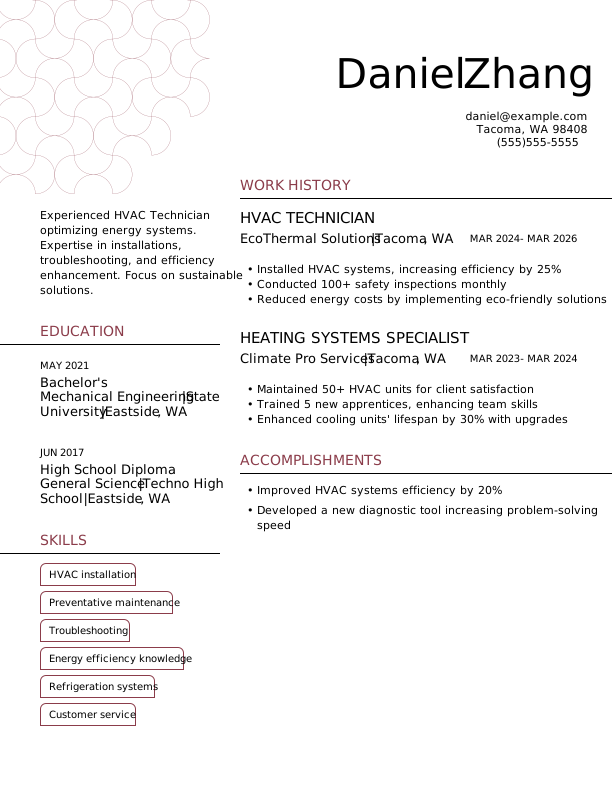
 Free
FreeHVAC Technician Entry-Level Resume
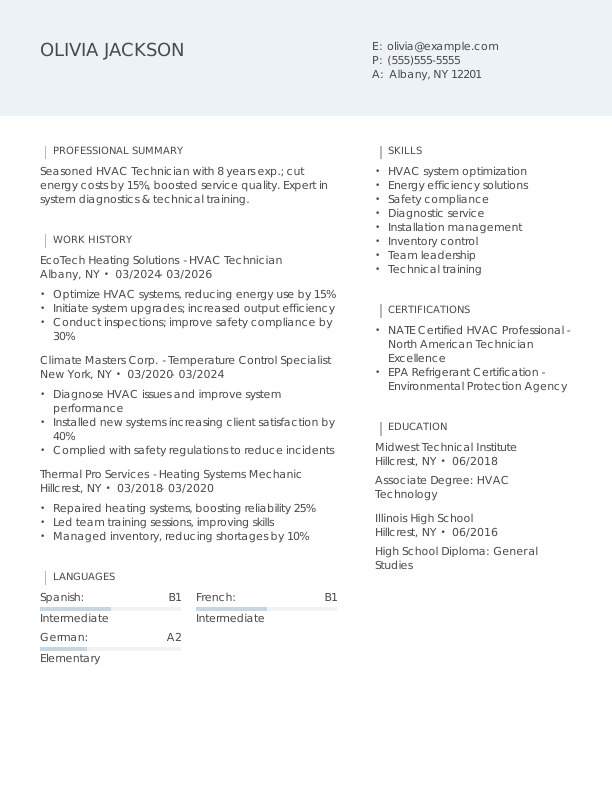
HVAC Technician Mid-Level Resume
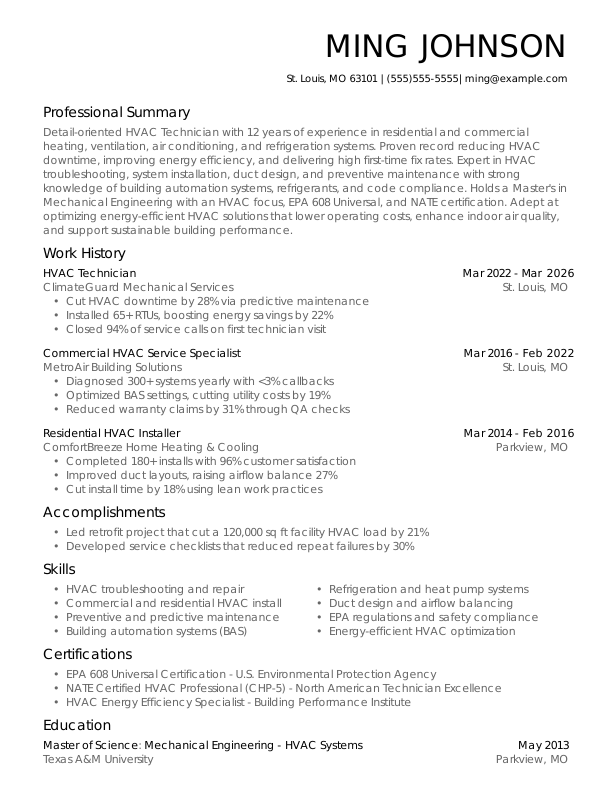
HVAC Technician Experienced Resume
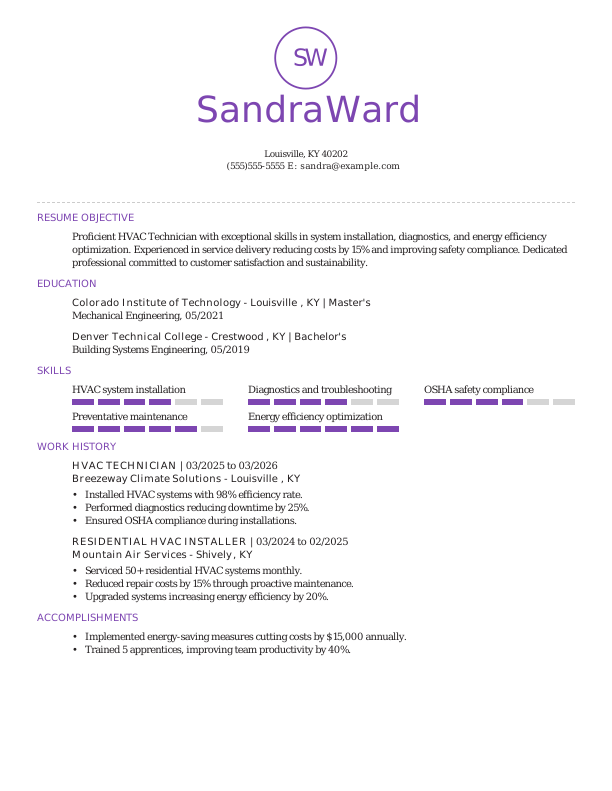
HVAC Technician Entry-Level Resume 1
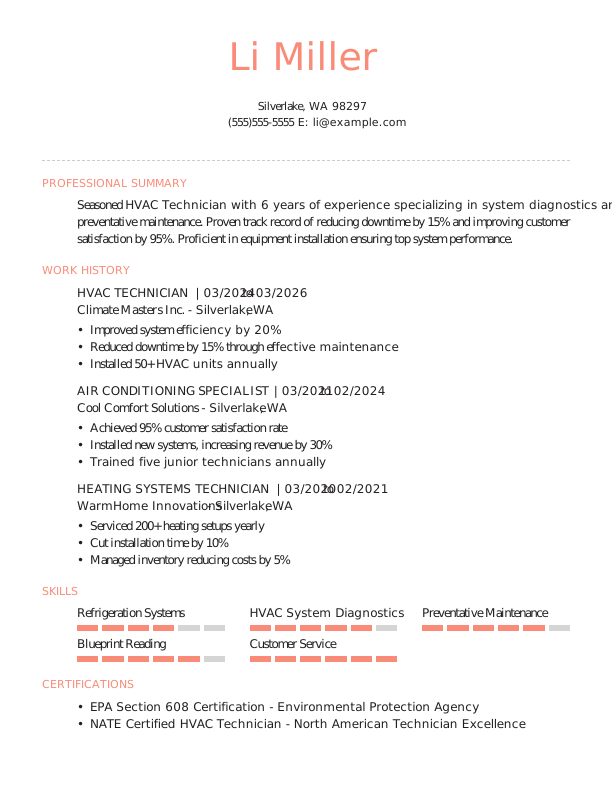
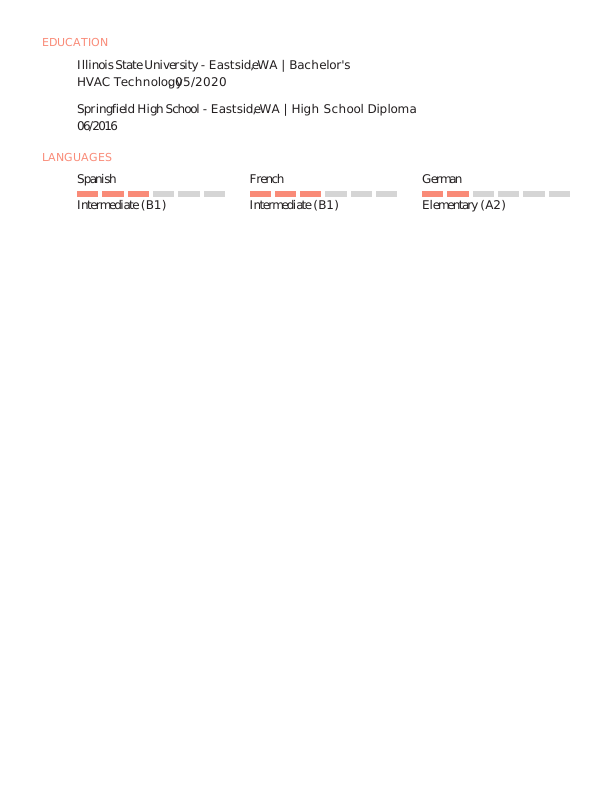
HVAC Technician Mid-Level Resume 1
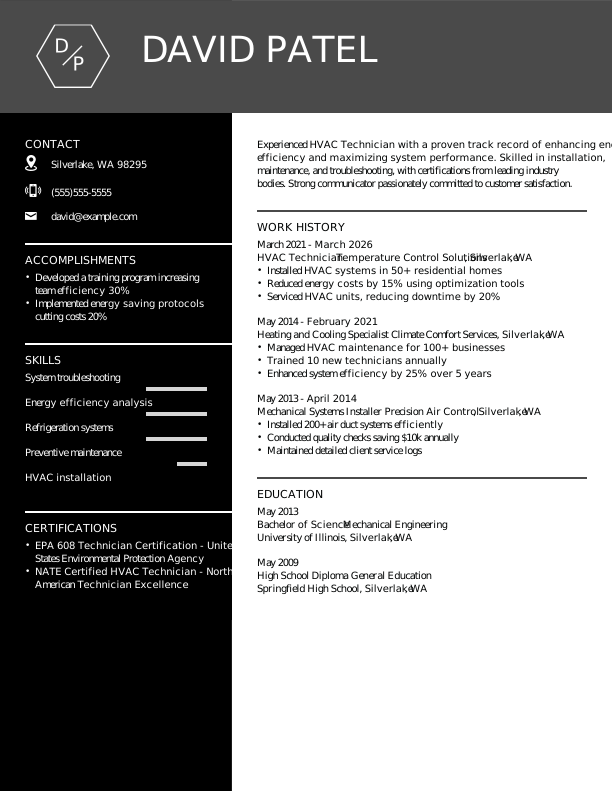
HVAC Technician Experienced Resume 1
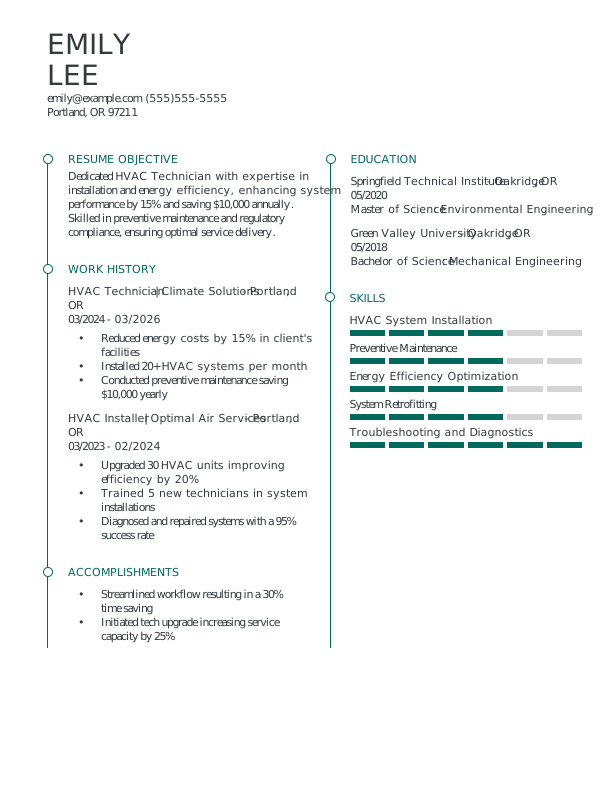
HVAC Technician Entry-Level Resume 2
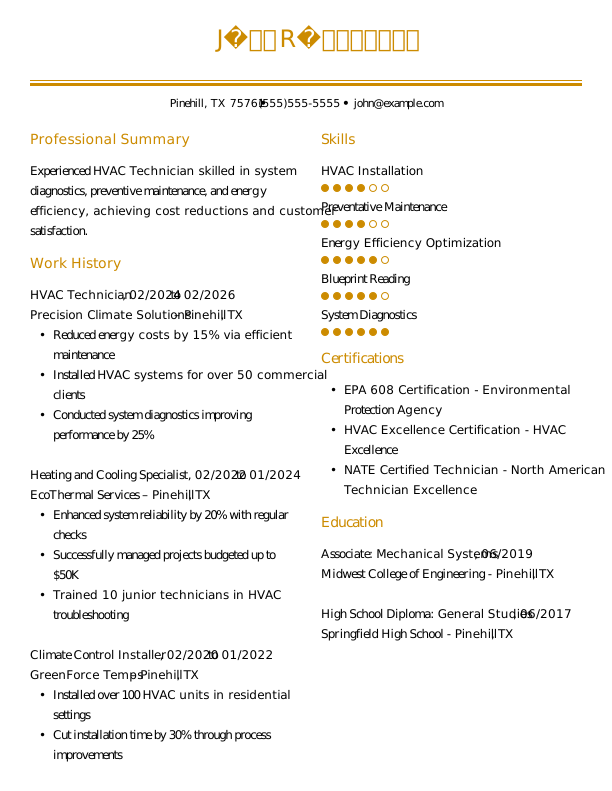
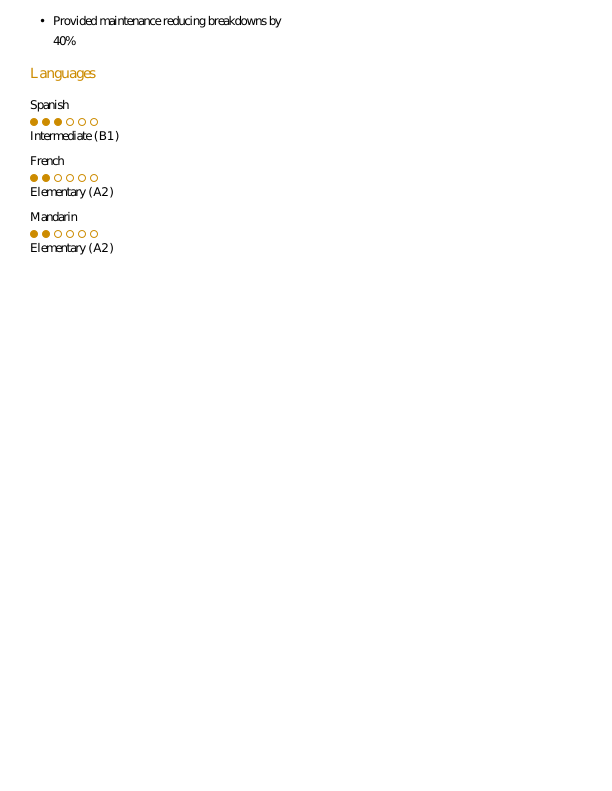
HVAC Technician Mid-Level Resume 2
Browse Free Resume Templates
- Accounts Payable
- Adjunct Professor
- Artist
- Auto Mechanic
- Baker
- Business Development Manager
- Business
- Certified Nursing Assistant
- Classic & Traditional
- Cleaner
- College Student
- Concierge
- Construction Worker
- Corporate
- Creative & Unique
- Custodian
- Customer Service
- Dental Assistant
- Direct Support Professional
- Entry-Level
- Flight Attendant
- Hospitality & Food Service
- Front Desk Receptionist
- Healthcare
- High School
- Housekeeping
- Hybrid
- Inventory Manager
- Logistics
- Maintenance
- Management
- Modern
- Mortgage Loan Processor
- Pet Sitter
- Phlebotomist
- Production
- Rbt
- Sales
- Security Services
- Restaurant Server
- Simple & Basic
- Social Work
- Teacher
- Technology
Resume Examples for HVAC Technicians
HVAC technician resumes should account for different specializations and experience levels, from apprentice to lead tech. Explore our templates for each level, or use our Resume Builder to put yours together from scratch.
Entry-Level HVAC Technician Resume
This template is designed for those entering HVAC through a trade program or apprenticeship. It helps you create an HVAC technician resume with no professional experience by leading with your coursework, certifications in progress, and hands-on lab training.

Mid-Career HVAC Technician Resume
A smart choice for HVAC professionals with experience, this template effectively showcases recent achievements and positions them for advanced roles in the industry.

Experienced HVAC Technician Resume
A perfect fit for HVAC professionals with over 10 years of experience, this template supports applicants aiming for senior roles in advanced heating, ventilation, and air conditioning systems.

HVAC Technician Resume Template (Text)
The text resume below gives you a ready-made starting point for an HVAC technician application. Copy it into your document and swap in your own certifications, specializations, and project history.
John Liu
Brookfield, WI 53014
Professional Summary
Experienced HVAC Technician with expertise in system creation and maintenance. Proven track record in reducing service times and enhancing efficiency. Skilled in customer service and energy-efficient solutions.
Work Experience
March 2023 – March 2026
Efficient Climate Solutions – Brookfield, WI
HVAC Technician
- Reduced service call time by 25%.
- Implemented new HVAC tech improving efficiency 30%.
- Managed installations generating $150K revenue.
March 2018 – February 2023
Climate Control Experts – Brookfield, WI
HVAC Installer
- Installed 100+ HVAC systems annually.
- Enhanced energy efficiency by 15%.
- Trained junior staff, reducing errors by 20%.
March 2015 – February 2018
Desert Cooling Solutions – Brookfield, WI
Air Conditioning Technician
- Completed repairs with 98% satisfaction.
- Serviced 150+ units each year.
- Decreased maintenance costs by 12%.
Education
June 2013
Technical University of Phoenix Brookfield, WI
Master of Mechanical Engineering HVAC Systems Design
June 2011
State University of Arizona Brookfield, WI
Bachelor of Science Mechanical Engineering
Certifications
- Certified HVAC Technician – North American Technician Excellence (NATE)
- EPA 608 Certification – US Environmental Protection Agency
Skills
- HVAC system installation
- Preventive maintenance
- Troubleshooting
- Customer service
- Energy-efficient upgrades
- System diagnostics
- Technical documentation
- Safety compliance
How to Write a HVAC Technician Resume
As an HVAC technician, knowing how to write a resume involves combining your technical skills and experience with a format that showcases why you’re the ideal job seeker for the role. Use the guidance below to highlight your strengths and tailor your resume to fit the job you’re aiming for.
1. Contact Info
Your contact information should be clear, professional, and easy to find at the top of your resume.
Include the following essential information:
- Full name and relevant certifications
- Phone number
- Professional email address
- City and state (ZIP code is optional)
- LinkedIn profile or personal portfolio (if relevant)
 PRO TIP
Avoid including personal information like your Social Security number, age, or religion on your resume unless specifically requested by the employer.
2. Resume Profile
A resume profile is a brief introductory section, typically consisting of 2 to 4 sentences, that highlights your key qualifications and skills. It serves as an engaging pitch to hiring managers, aiming to capture their interest and prompt them to explore your resume further.
This profile is usually positioned at the top of your resume and can take the form of either a summary or an objective. Each has its own specific focus and intent:
- A resume summary showcases essential skills, relevant experience, and key accomplishments in the HVAC industry. This format is particularly beneficial for those with prior work history or transferable skills, allowing them to highlight their contributions as a skilled HVAC technician.
- A resume objective outlines your career goals and highlights what you aim to accomplish in your role. It’s ideal for recent graduates, career changers, or entry-level HVAC technicians looking to establish their path in the industry.
Let’s examine the differences between a resume summary and a resume objective with the following examples:
HVAC technician resume summary example:
Dedicated HVAC technician with 6+ years of experience in residential and commercial settings, specializing in installation, maintenance, and repair of HVAC systems. Proficient in troubleshooting complex issues, ensuring energy efficiency, and delivering exceptional customer service. Recognized for improving system performance and achieving high levels of client satisfaction.
HVAC technician resume objective example:
Certified HVAC technician eager to launch a career in residential and commercial HVAC services. Committed to energy efficiency and safety, bringing strong problem-solving skills and attention to detail to forward-thinking contractors or maintenance teams.
3. Work Experience
The work experience on your resume serves as a critical foundation for showcasing your qualifications. Employers examine your history to gauge not just the roles you’ve held, but also the contributions you’ve made in those positions.
This highlights how your practical skills and achievements in HVAC can set you apart as a strong job seeker for future opportunities.
The work experience section should contain:
- Job title
- Employer name and location
- Dates of employment (month/year)
- 3–5 bullet points describing your HVAC responsibilities and system installation achievements
Tailor your work experience bullet points to reflect the specific HVAC technician role you seek. Begin with strong action verbs such as “Installed,” “Serviced,” or “Maintained” to improve your statements.
Incorporate quantifiable metrics whenever possible. Highlighting specific numbers or achievements not only illustrates your contributions but also sets you apart from other job seekers by showcasing measurable success.
In general, consider following the format of:
[action verb] + [responsibility] = [result/achievement]
For example:
Conduct routine maintenance and repairs on HVAC systems across 30 commercial properties, ensuring optimal performance with a 95% client satisfaction rate.
Note that you can also flip the result/achievement with the responsibility:
Achieved a 20% increase in energy efficiency for clients by implementing advanced HVAC control systems and regular preventive maintenance.
With these techniques in mind, your resume bullets may look something like:
- Installed and serviced HVAC systems for over 150 residential and commercial clients, achieving a 98% customer satisfaction rate.
- Diagnosed and repaired HVAC issues in a timely manner, reducing service call response time by 20%.
- Collaborated with team members to optimize system performance, resulting in a 15% increase in energy efficiency.
- Trained junior technicians on best practices and safety protocols, improving team competency and safety compliance.
- Used industry-standard tools to perform maintenance checks, ensuring compliance with local regulations.
4. Skills
The skills section provides a concise overview of your HVAC expertise, showcasing specific abilities relevant to the industry through an ATS-friendly resume layout that lets hiring managers quickly assess your qualifications and fit for the role.
Skills can be categorized into three key areas:
- Soft skills are personal qualities that influence how well HVAC technicians interact with clients and colleagues.
- Hard skills are specific, quantifiable abilities gained through education, training, or experience.
- Technical skills refer to the practical abilities required to operate specialized tools and technologies.
5 Soft Skills for Your Resume or CV
- Attention to detail
- Effective communication
- Teamwork and collaboration
- Customer service orientation
- Time management skills
5 Hard Skills for Your Resume or CV
- HVAC system installation
- Refrigerant handling (EPA certified)
- Thermostat programming
- Ductwork fabrication and installation
- Preventative maintenance procedures
In general, aim to showcase a balanced mix of relevant skills that closely match the job requirements.
PRO TIP
If you’re a newer HVAC technician, consider placing your skills section higher on your resume right after your summary. For those with more experience, it’s better to position this section lower and weave most skills into your work history for a stronger impact.
5. Education
Understanding how to list education on your resume is important for showcasing your qualifications. Begin with your most recent or relevant HVAC certification, including the type and the school or institution where you obtained it. If you’re a new graduate, feel free to include your graduation year, GPA (if it’s 3.5 or above), any honors received, and relevant coursework related to HVAC technology.
HVAC technician resume education section example:
Diploma in HVAC Technology
Central Community College, Hastings, NE
Graduated: 2023 | Graduated with Distinction
PRO TIP
When listing your educational qualifications on a resume, ensure you present them in reverse-chronological order, starting with the highest degree first, such as Bachelor of Science in HVAC or Associate Degree in HVAC Technology.
6. Certifications
Certifications highlight your skills and ensure you remain knowledgeable in the HVAC industry. While this section may not fit into a standard resume format, it holds significant value for technicians, particularly since employers often seek specific credentials for specialized roles like refrigeration or commercial systems. Keeping up with these qualifications can set you apart in a competitive job market.
Be sure to showcase any relevant certifications that bolster your application. Keep them current and presented clearly to make a strong impression on potential employers.
HVAC technician certification examples:
- HVAC Technician Certification | North American Technician Excellence (NATE) | Expires: 05/2028
- EPA Section 608 Certification | Environmental Protection Agency | Expires: 11/2027
- R410A Safety Certification | HVAC Excellence | Expires: 02/2028
- Refrigeration Service Engineer Society (RSES) Certification | RSES | Expires: 09/2027
Start Building Your Job-Winning Resume
Use Your Existing Resume
Import your current resume to transfer your information to one of our professional templates.
Create a New Resume
Start fresh with a template that catches your eye and follow the prompts to add your details.
Tailor Your Work History to Beat the ATS
Crafting your work experience section goes beyond simply listing previous roles. It’s an opportunity to highlight the tangible impact you’ve made in your field, showcasing specific accomplishments that resonate with potential employers. By doing this effectively, you also create a resume that is friendly for applicant tracking systems (ATS), ensuring it can be easily scanned during the hiring process.
To optimize your work history for the job you’re targeting, focus on incorporating relevant keywords and phrases found in the job description. Begin by carefully analyzing what the employer is looking for and identify any skills or qualifications that appear frequently. Reflect those key elements in your experience descriptions to make a strong impression on recruiters.
Key Takeaways
- Tailor your resume to the job description. Use specific terminology from the posting to resonate with both ATS and hiring managers.
- Highlight measurable achievements to demonstrate your impact. Quantify your work (e.g., efficiency ratings, project completions, customer satisfaction scores) to differentiate yourself.
- Select a resume format based on your experience level. New technicians might consider a functional layout, while seasoned professionals typically use reverse-chronological formats.
More Resume & CV Examples
- Air Sealing Technician
- Aircraft Mechanic
- Automotive Technician
- Barber
- Blue Collar
- Boilermaker
- Budtender
- Cable Technician
- Carpenter
- Carpentry
- Cosmetologist
- Crane Operator
- Diesel Mechanic
- Diesel Technician
- Electrician
- Glazier
- Hair Stylist
- Handyman
- Hvac Installer
- Industrial Electrician
- Ironworker
- Journeyman Electrician
- Landscaper
- Lineman
- Machinist
- Millwright
- Painter
- Pipe Fitter
- Plumber
- Roofer
- Solar Installer
- Structural Welder
- Welder
Cover Letters for Your Resume
Browse our library of cover letter examples to complete your application. A resume will have a better chance of getting noticed.
Frequently Asked Questions
Last Update:
What resume format should I use for my HVAC technician resume?
When applying for an HVAC technician position, there are three primary resume formats to choose from. Your selection should align with your experience level and the aspects of your skills you wish to highlight:
- Chronological: The chronological resume is the most widely used format, emphasizing your work history by showcasing your responsibilities and achievements. This approach is particularly beneficial for job seekers with a consistent job background that reinforces their qualifications and adds credibility to their application while clearly outlining career progression for potential employers.
- Functional: The functional resume, often called a skills-based resume, emphasizes your qualifications and detailed skills rather than focusing on work history. This format is particularly beneficial for job seekers who lack direct experience in the HVAC field or have gaps in their employment history.
- Combination: A combination resume merges chronological and functional formats, showcasing both skills and work history. This structure benefits professionals by emphasizing their abilities while also illustrating career growth. It allows applicants to present a well-rounded picture of their qualifications and experiences.
Should I include a cover letter with my resume?
Yes, you should include a cover letter with your HVAC technician job application. A well-crafted cover letter improves your resume by allowing you to express your enthusiasm for the position and highlight specific skills or experiences that may not be evident from your resume alone. By personalizing your application, you demonstrate to employers that you’re serious about the role, giving you an advantage over those who skip this extra step.
Don’t let uncertainty about how to write a cover letter stop you from including one. Numerous resources can assist you, such as guides and examples tailored specifically for HVAC technician positions. Exploring various formats can also help you find one that best showcases your qualifications.
To make writing easier, consider using a cover letter generator, which provides templates and suggestions tailored to HVAC job applications.
How long should a HVAC technician resume be?
For HVAC technicians with less than 10 years of experience, a one-page resume is typically sufficient to showcase relevant skills and certifications. Highlight essential competencies such as system installation and maintenance, along with any licenses or training that demonstrate your qualifications in the field.
Conversely, technicians in senior or specialized roles may extend their resumes to two pages if the information remains focused and relevant. Emphasize expertise in advanced systems and project management while ensuring clarity and conciseness throughout the document.
What keywords should I include to pass applicant tracking systems (ATS)?
To ensure your resume passes ATS screening, focus on incorporating keywords directly from the job posting for HVAC technician roles. Use terms like HVAC systems, refrigeration, and installation to demonstrate your expertise. Highlight relevant certifications such as EPA 608 and NATE, which showcase your qualifications.
Additionally, mention technical tools you’re familiar with, such as digital multimeters or refrigerant recovery machines. This specificity not only helps you stand out but also aligns your experience with what employers are seeking. Tailoring your resume in this way increases the likelihood of catching the attention of hiring managers.
Should I include maintenance projects or volunteer work on my resume?
Yes, especially if you’re starting your HVAC career. Highlighting maintenance projects demonstrates practical skills and shows your initiative, which can help you stand out to employers even if you have limited formal experience.

Elizabeth Muenzen is a Certified Professional Resume Writer (CPRW) and member of the Professional Association of Resume Writers & Career Coaches who empowers job seekers to take control of their career paths using Monster’s comprehensive job search and resume tools.
See More From Elizabeth MuenzenExplore Related Career Advice


How to Put Transferable Skills on Your Resume: 120 Skills, Examples, & Tips

Updated:
Aug 27, 2026
|

16 min read


How to Write a Functional Resume (Formatting Tips, Template, & Examples)
Updated:
Aug 7, 2026
|
17 min read


Functional vs Chronological Resume: Which Format Is Right for You?
Updated:
Aug 3, 2026
|
16 min read

100+ Resume Adjectives to Help You Write a Stronger Resume in 2026 (With Examples)
Updated:
Jul 30, 2026
|
12 min read