
Free Inventory Manager Resume Templates & Examples
Inventory management resumes should demonstrate your ability to optimize stock levels, reduce waste, and work with warehouse management systems. Choose an example below that highlights your operational impact.
Real-World Resumes That Get Results
 Free
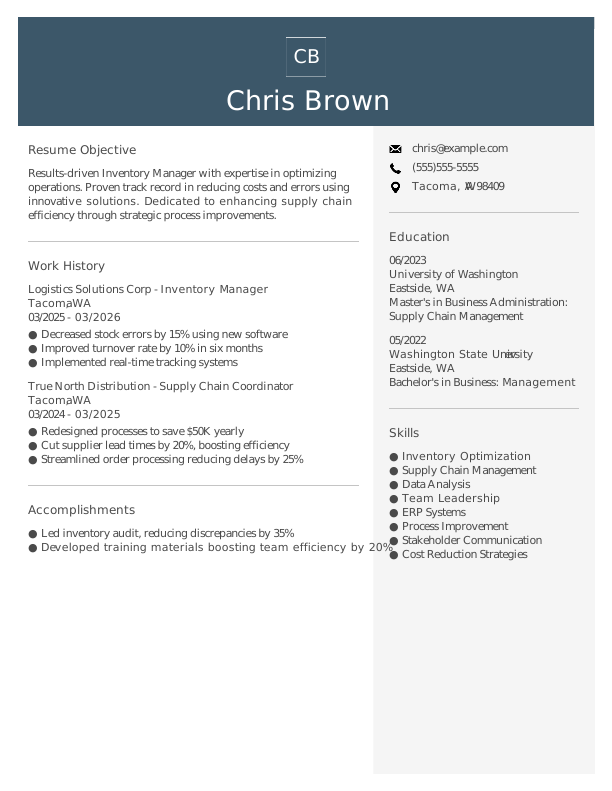
FreeInventory Manager Entry-Level Resume
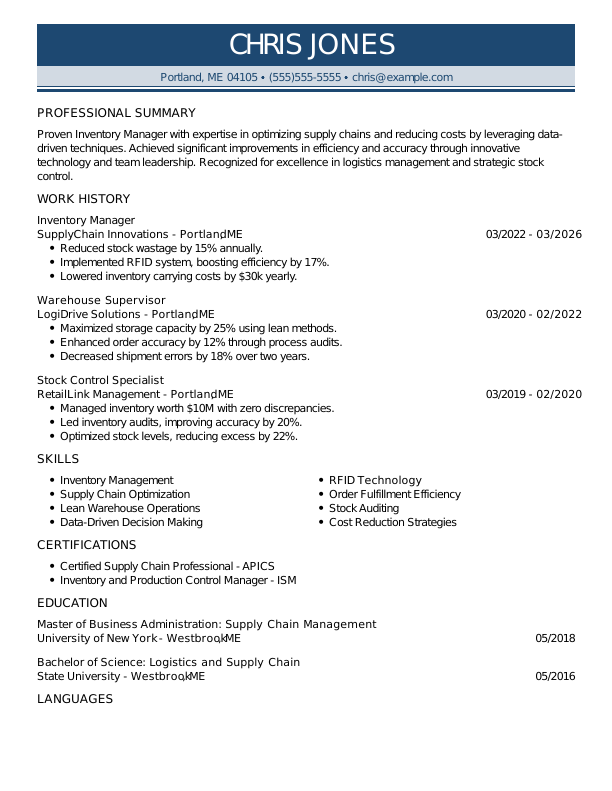
Inventory Manager Mid-Level Resume
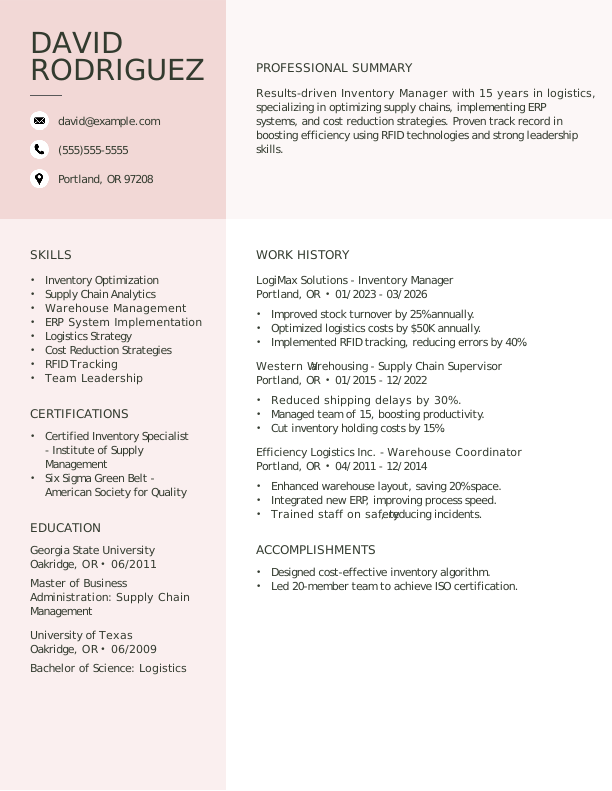
Inventory Manager Experienced Resume
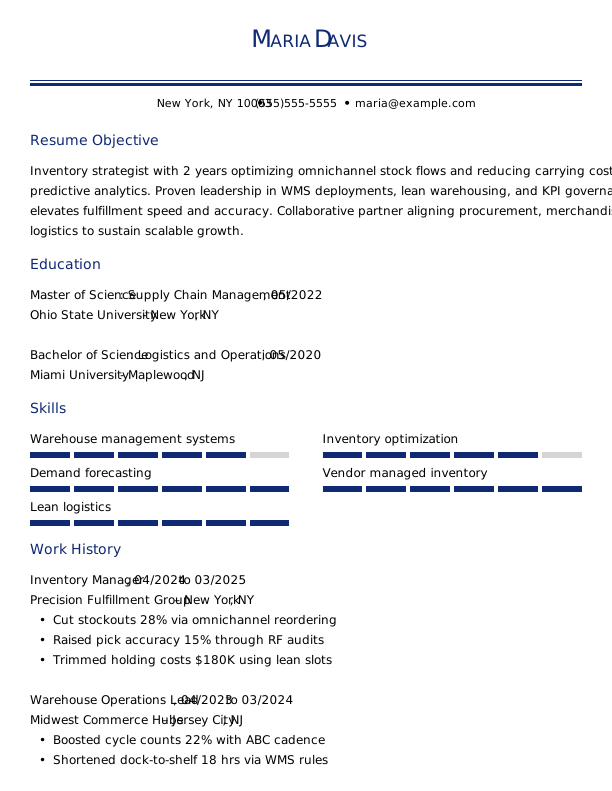

Inventory Manager Entry-Level Resume 1
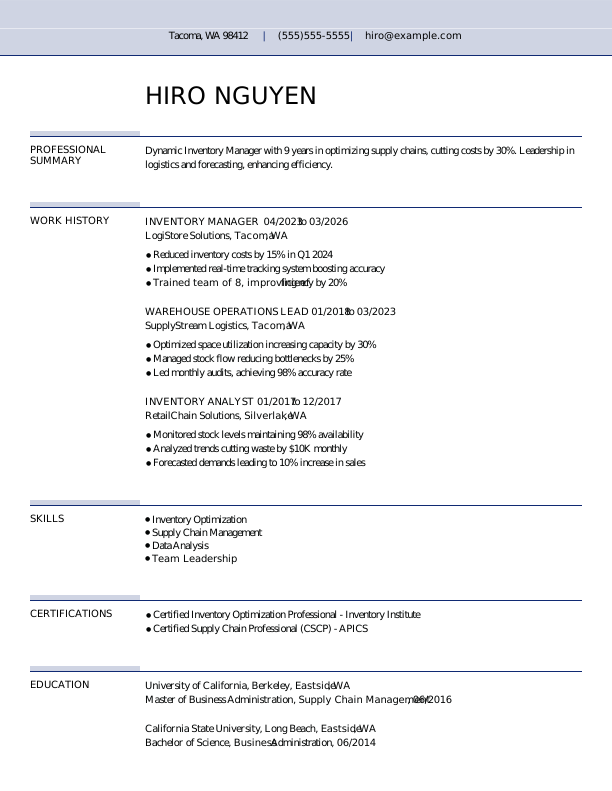

Inventory Manager Mid-Level Resume 1
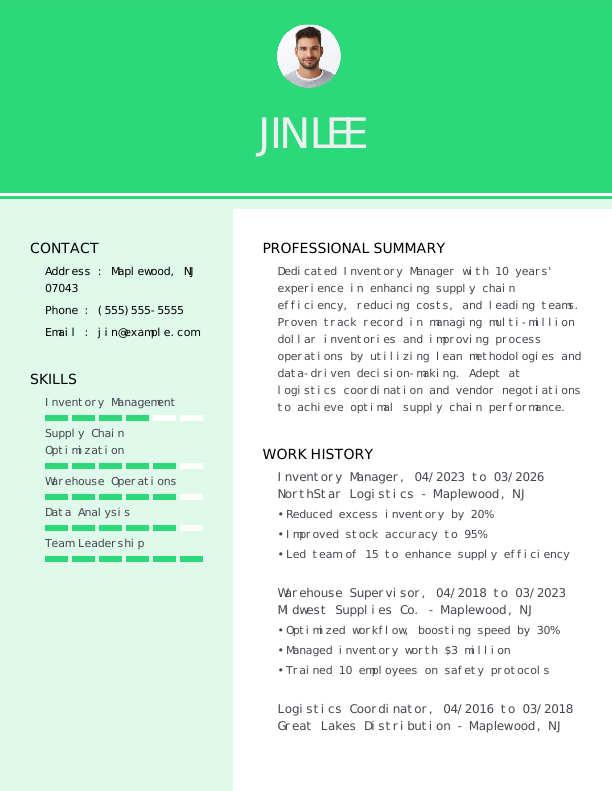
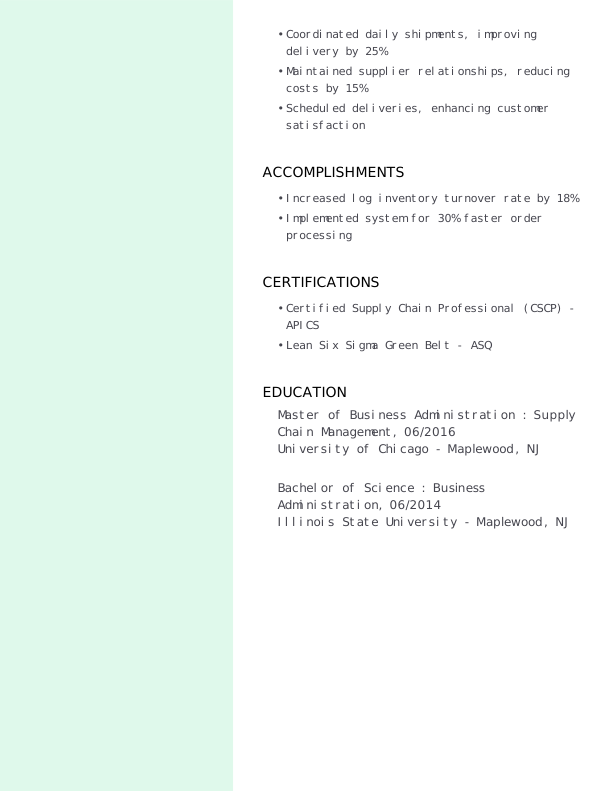
Inventory Manager Experienced Resume 1
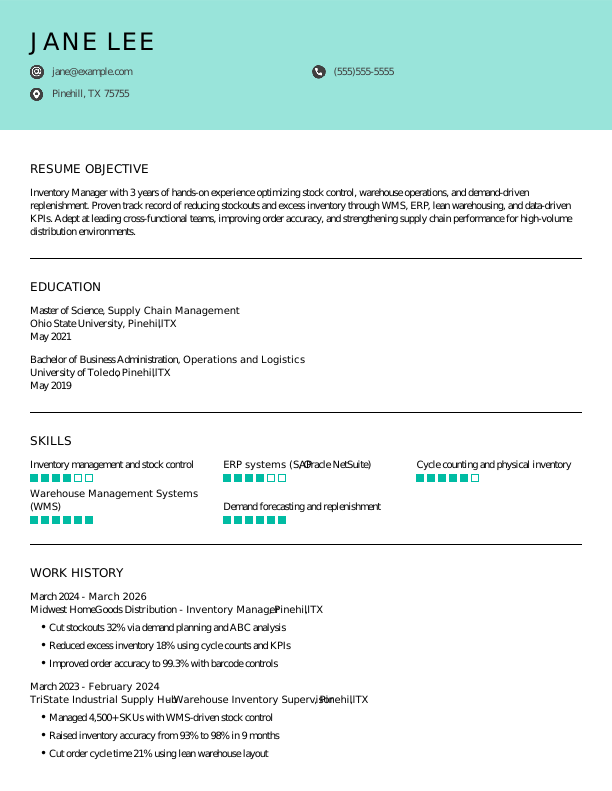
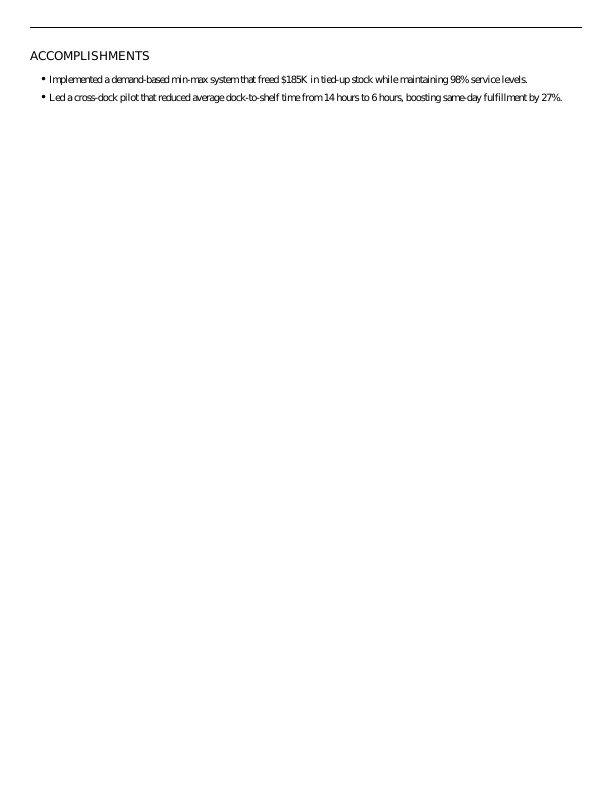
Inventory Manager Entry-Level Resume 2
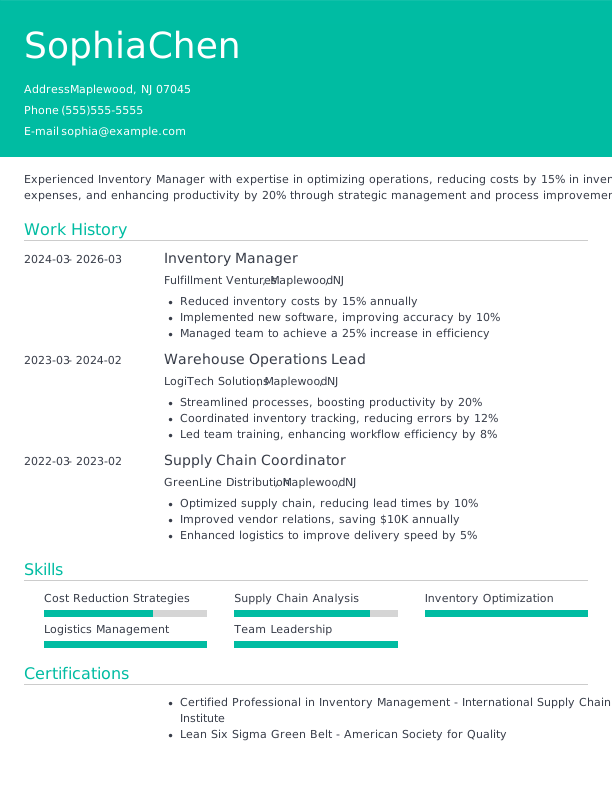
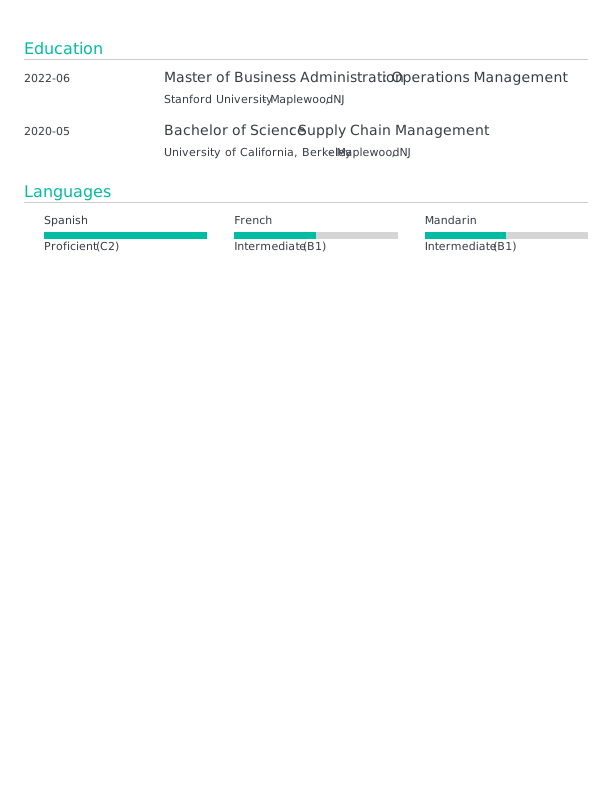
Inventory Manager Mid-Level Resume 2
Browse Free Resume Templates
- Accounts Payable
- Adjunct Professor
- Artist
- Auto Mechanic
- Baker
- Business Development Manager
- Business
- Certified Nursing Assistant
- Classic & Traditional
- Cleaner
- College Student
- Concierge
- Construction Worker
- Corporate
- Creative & Unique
- Custodian
- Customer Service
- Dental Assistant
- Direct Support Professional
- Entry-Level
- Flight Attendant
- Hospitality & Food Service
- Front Desk Receptionist
- Healthcare
- High School
- Housekeeping
- Hvac Technician
- Hybrid
- Logistics
- Maintenance
- Management
- Modern
- Mortgage Loan Processor
- Pet Sitter
- Phlebotomist
- Production
- Rbt
- Sales
- Security Services
- Restaurant Server
- Simple & Basic
- Social Work
- Teacher
- Technology
Resume Examples for Inventory Managers
Inventory manager resumes should showcase your ability to handle different warehouse scales and systems. Explore our templates, or build a resume organized around your operational impact.
Entry-Level Inventory Manager Resume
This template works well if you are moving into inventory management from a different role. It helps you create an inventory manager resume without direct experience by emphasizing transferable skills like data accuracy, systems proficiency, and process improvement.

Mid-Career Inventory Manager Resume
A smart choice for inventory professionals looking to advance their careers, this template showcases recent achievements and positions them for specialized roles in supply chain management.
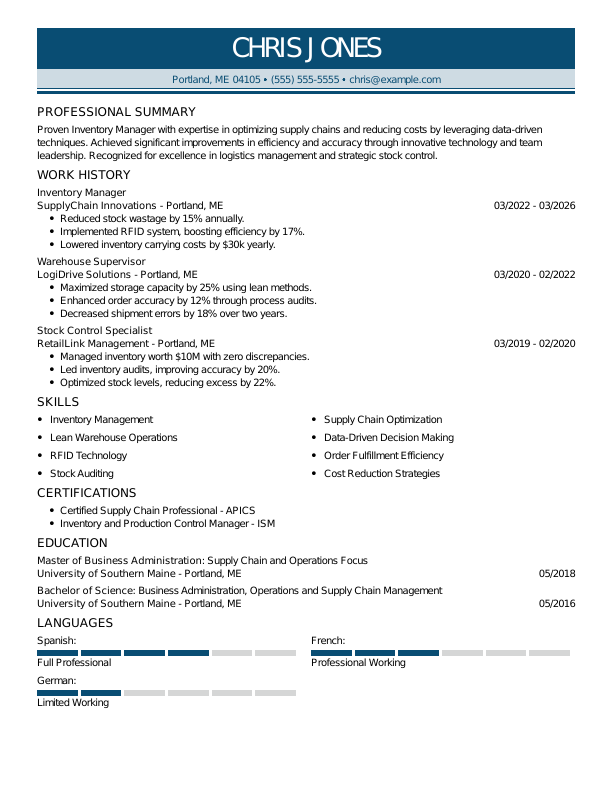
Experienced Inventory Manager Resume
An ideal choice for inventory management professionals with over 10 years of experience, this template supports job seekers targeting senior-level leadership roles in logistics and supply chain optimization.

Inventory Manager Resume Template (Text)
Here is a text-based inventory manager resume you can copy and personalize. It is structured to highlight your systems proficiency, stock optimization results, and warehouse management scope.
Christina Richardson
Greenfield, IN 46143
Professional Summary
Dynamic Inventory Manager with 6 years of experience optimizing stock levels, enhancing operational efficiency, and leading teams with proven track records in cost reduction and regulatory compliance.
Work Experience
March 2024 – March 2026
LogiSecure Solutions – Greenfield, IN
Inventory Manager
- Reduced inventory costs by 15% via optimized processes
- Implemented software to track stock, increasing efficiency
- Trained a team of five, improving accuracy by 10%
March 2022 – February 2024
EfficientFlows Inc. – Greenfield, IN
Supply Chain Coordinator
- Coordinated logistics reducing lead times by 20%
- Managed budgets, saving the company $50K annually
- Ensured compliance with regulations, improved audits
March 2020 – February 2022
Prime Storage Solutions – Indianapolis, IN
Warehouse Supervisor
- Supervised daily operations for a 30,000 sqft facility
- Increased productivity by 25% through process changes
- Reduced error rate by 35%, enhancing order accuracy
Education
May 2020
University of Pennsylvania Greenfield, IN
Master of Science Supply Chain Management
May 2018
Rutgers University Greenfield, IN
Bachelor of Business Administration Operations Management
Certifications
- Certified Inventory Manager – National Inventory Association
- Supply Chain Professional – Institute of Supply Management
Skills
- Inventory Optimization
- Supply Chain Management
- Budget Management
- Team Leadership
- Process Improvement
- Logistics Coordination
- Regulatory Compliance
- Warehouse Management
How to Write an Inventory Manager Resume
As an inventory manager, mastering how to write a resume involves showcasing your organizational skills and relevant experience using a clear format that highlights your qualifications. Use the guidance below to emphasize your strengths and tailor your resume for the specific roles you’re aiming for.
1. Contact Info
Your contact information should be prominently displayed at the top of your resume to ensure clarity and professionalism.
Include the following essential information:
- Full name
- Phone number
- Professional email address
- City and state (ZIP code is optional)
- LinkedIn profile or personal portfolio (if relevant)
 PRO TIP
Avoid listing personal data such as age, religion, or Social Security numbers on your resume unless the employer specifically requests them.
2. Resume Profile
A resume profile is a brief introductory section, typically spanning two to four sentences, designed to highlight your key qualifications and professional identity. It serves as an engaging pitch to hiring managers, prompting them to delve deeper into your resume and understand your value.
This profile is positioned at the top of your resume and can take the form of either a summary or an objective, each serving distinct functions. Understanding these differences will help you choose the best option for showcasing your strengths:
- A resume summary showcases essential qualifications, inventory management skills, and significant achievements relevant to supply chain operations. This format is particularly beneficial for job seekers with a solid work history or transferable experience who aim to highlight their contributions as effective inventory managers.
- A resume objective highlights your career goals and what you aim to accomplish in the field of inventory management. It’s ideal for recent graduates, professionals shifting careers, or those with limited experience, such as supply chain newcomers or warehouse associates moving into management roles.
Below are examples illustrating the difference between a resume summary and a resume objective:
Inventory manager resume summary example:
Detail-oriented inventory manager with over 6 years of experience in optimizing supply chains and managing stock levels in retail and warehouse environments. Proficient in inventory software, data analysis, and team collaboration. Acknowledged for improving operational efficiency and reducing costs through strategic inventory practices.
Inventory manager resume objective example:
Recent business graduate excited to start an inventory management career in a dynamic retail environment. Dedicated to efficient supply chain operations and eager to bring strong organizational skills and attention to detail to a thriving e-commerce or logistics company.
3. Work Experience
The work experience on your resume serves as an important foundation for showcasing your suitability for the role. Employers assess not only job titles but also how you’ve positively influenced your previous workplaces. This portion of your resume illustrates that your unique skills and achievements align perfectly with the demands of the inventory manager position.
The work experience section should contain:
- Job title
- Employer name and location
- Dates of employment (month/year)
- 3–5 bullet points highlighting inventory management responsibilities and achievements
Most inventory manager job descriptions center on the same core duties: setting reorder points and par levels, running cycle counts, reconciling receipts against purchase orders, investigating shrink and variance, and maintaining stock records in a WMS or ERP system. Echo that language in your bullets so hiring managers see an immediate match.
Incorporate quantifiable metrics into your statements. Specific numbers and achievements not only showcase your contributions but also help set you apart from other applicants in a competitive job market.
In general, consider following the format of:
[action verb] + [responsibility] = [result/achievement]
For example:
Managed inventory for a high-volume retail store, maintaining stock levels for over 1,000 SKUs and achieving a 95% inventory accuracy rate through diligent tracking and reporting.
Note that you can also flip the result/achievement with the responsibility:
Reduced excess inventory by 20% within six months by implementing a new demand forecasting system.
Discover more work experience examples for inventory managers further down the page.
With these techniques in mind, your resume bullets may look something like:
- Managed inventory for a warehouse with over 5,000 SKUs, achieving a 20% reduction in stock discrepancies through improved tracking systems.
- Implemented a new inventory management software that increased order processing speed by 30%, improving overall efficiency.
- Trained and mentored a team of 10 staff members on best practices in inventory control, fostering a collaborative work environment.
- Analyzed stock levels and sales trends to optimize purchasing decisions, resulting in 15% cost savings over three months.
- Coordinated with suppliers to negotiate better terms, improving delivery times by an average of 2 days.
4. Skills
The skills section provides a concise overview of your inventory management expertise, formatted as an ATS-friendly resume. This ensures that hiring managers can quickly evaluate your qualifications.
Inventory management skills can be grouped into three categories:
- Soft skills are interpersonal abilities that influence how inventory managers coordinate with their teams.
- Hard skills are specific, measurable abilities gained through education, training, or direct experience.
- Technical skills refer to the specific abilities required to operate tools and software relevant to a job.
5 Soft Skills for Your Resume or CV
- Analytical thinking
- Effective communication
- Team leadership
- Process optimization
- Inventory forecasting
5 Hard Skills for Your Resume or CV
- Inventory control systems (SAP, Oracle)
- Stock replenishment strategies
- Data analysis and forecasting
- Supplier relationship management
- Warehouse management software (WMS)
In general, include a balanced mix of relevant skills that align with the inventory manager job requirements to showcase your qualifications.
PRO TIP
If you’re a new inventory manager, consider placing your skills section higher on your resume, right after the summary. For those with more experience, it’s advisable to position this section lower and weave your skills into your work history for a more integrated presentation.
5. Education
If you’re wondering how to list education on your resume, begin with your most recent or relevant degree, including the degree type and the institution’s name. For recent graduates, consider adding your graduation year, GPA (if it’s 3.5 or above), any honors received, and relevant coursework to further strengthen your profile.
Inventory manager resume education section example:
Bachelor of Science in Business Administration (BSBA)
University of Florida, Gainesville, FL
Graduated: 2023 | Summa Cum Laude
PRO TIP
When listing multiple degrees on your resume, always present them in reverse-chronological order, starting with the most recent degree first, such as Bachelor of Science in Business Administration (BSBA), followed by Associate Degree in Business Management (ADBM).
6. Certifications
Certifications highlight your expertise and ensure you stay informed about industry standards. While not a conventional part of every resume, this section can be important for many professionals in inventory management. Employers often seek specific certifications, especially when dealing with specialized inventory systems or compliance requirements.
Be sure to feature relevant certifications that bolster your application. Keeping these credentials current and clearly presented will improve your professional profile and demonstrate commitment to the field.
Inventory manager certification examples:
- Certified Inventory Manager (CIM) | Institute of Supply Management | Expires: 03/2028
- Lean Six Sigma Green Belt | ASQ | Expires: 11/2027
- APICS Certified in Planning and Inventory Management (CPIM) | APICS | Expires: 02/2028
- Warehouse Management Certification | International Warehouse Logistics Association | Expires: 09/2027
Start Building Your Job-Winning Resume
Use Your Existing Resume
Import your current resume to transfer your information to one of our professional templates.
Create a New Resume
Start fresh with a template that catches your eye and follow the prompts to add your details.
Tailor Your Work History to Beat the ATS
Your work experience goes beyond job titles. It’s an opportunity to demonstrate the tangible contributions you’ve made in your role, showcasing specific examples that highlight your effectiveness. This method not only illustrates your achievements but also helps create an ATS-friendly resume that can be easily scanned by applicant tracking systems (ATS).
To maximize impact, tailor your work history to the position you’re targeting by incorporating relevant keywords. Begin by carefully analyzing the job description for key skills and qualifications. Identify frequently mentioned requirements and ensure they are reflected in your experience descriptions to align with employer expectations.
Key Takeaways
- Tailor your resume to the job description. Incorporate the employer’s terminology when detailing your experience and skills to improve alignment with ATS and hiring managers.
- Highlight quantifiable achievements to demonstrate impact. Use specific examples (e.g., inventory turnover rates, cost savings, process improvements) to differentiate yourself.
- Select a resume format that suits your experience level. Newcomers might find a functional or hybrid layout beneficial, while seasoned professionals typically prefer reverse-chronological resumes.
More Resume & CV Examples
- Buyer
- Demand Planner
- Freight Broker
- Package Handler
- Procurement Manager
- Procurement
- Procurement Specialist
- Purchasing Manager
- Purchasing
- Supply Chain Analyst
- Supply Chain Manager
- Supply Chain
Cover Letters for Your Resume
Browse our library of cover letter examples to complete your application. A resume will have a better chance of getting noticed.
- Academic
- Account Manager
- Accountant
- Accounts Payable
- Administrative Assistant
- Admissions Counselor
- Architecture
- Artist
- Assistant Principal
- Babysitter
- Barista
- Bartender
- Bookkeeper
- Brand Ambassador
- Business Analyst
- Business
- Caregiver
- Chef
- Civil Engineering
- Computer Science
- Construction
- Consulting
- Cosmetology
- Custodian
- Customer Service
- Data Analyst
- Dental Assistant
- Dental Hygienist
- Electrical Engineering
- Emt
- Engineering
- Esthetician
- Event Coordinator
- Executive Assistant
- Finance
- Financial Analyst
- Firefighter
- Flight Attendant
- Graphic Designer
- Hair Stylist
- Healthcare
- Hr Generalist
- Investment Banking
- It
- Janitor
- Journalism
- Lab Technician
- Law Clerk
- Lawyer
- Librarian
- Logistics
- Makeup Artist
- Manager
- Marketing
- Marketing Manager
- Massage Therapist
- Mechanic
- Mechanical Engineer
- Medical Assistant
- Non Profit
- Nursing
- Occupational Therapy
- Office Manager
- Paralegal
- Personal Trainer
- Pharmacist
- Pharmacy Technician
- Photographer
- Physician Assistant
- Pilot
- Police Officer
- Project Manager
- Property Manager
- Psychology
- Receptionist
- Research Assistant
- Restaurant Manager
- Retail
- Sales
- Sales Manager
- School Counselor
- Security Officer
- Social Work
- Software Engineer
- Substitute Teacher
- Teacher
- Teaching Assistant
- Truck Driver
- Vet Tech
- Veterinary Assistant
- Web Developer
- Welder
Frequently Asked Questions
Last Update:
What resume format should I use for my inventory manager resume?
There are three main resume formats to consider when applying for an inventory manager position. The choice depends on your level of experience and the aspects of your background you want to highlight:
- Chronological: The chronological resume is widely regarded as the most effective format for job seekers. By emphasizing your work history, it highlights specific responsibilities and achievements throughout your career. This structure is particularly beneficial for those whose relevant experience reinforces their qualifications and establishes credibility in their field.
- Functional: The functional resume, often called a skills-based resume, prioritizes a summary of qualifications and an expanded skills section over work history. This format is ideal for job seekers who lack direct experience in the field or have significant gaps in employment, as it allows them to showcase their relevant competencies.
- Combination: The combination resume format mixes chronological and functional styles, showcasing both skills and work experience. This approach is beneficial for professionals aiming to highlight their talents and career advancement, making it ideal for those moving into new fields or seeking to showcase diverse abilities.
Should I include a cover letter with my resume?
Yes, you should include a cover letter with your application for an inventory manager position. A well-crafted cover letter allows you to explain your enthusiasm for the role and the company while highlighting specific experiences that showcase your skills in inventory management, logistics, and efficiency. It adds a personal touch to your resume and signals to employers that you’re genuinely invested in the opportunity, helping you stand out from other job seekers who may omit this important element.
If you’re hesitant about writing a cover letter, there are numerous resources available to assist you. You can find guides on how to write a cover letter specifically tailored for inventory management positions, along with examples that illustrate various styles and formats. These resources can help demystify the process and provide clarity on how best to present your qualifications.
To streamline your writing efforts, consider using a cover letter generator, which offers pre-designed templates and prompts tailored to your job application to help you quickly create an effective document.
How long should an inventory manager’s resume be?
For inventory managers with less than 10 years of experience, a one-page resume is recommended to effectively highlight relevant skills, accomplishments, and certifications. Focus on showcasing your expertise in inventory control, data analysis, and supply chain management to demonstrate your qualifications succinctly.
Conversely, those in senior or specialized roles may extend their resumes to two pages if the information remains targeted. Include details about leadership experiences and complex projects, ensuring clarity and relevance without unnecessary filler.
What keywords should I include to pass applicant tracking systems (ATS)?
To ensure your resume passes ATS screening, focus on incorporating keywords directly from the job posting. Look for terms related to inventory management such as “supply chain,” “stock control,” and “demand forecasting.” Including these specific phrases will demonstrate your familiarity with the role and increase your chances of being noticed.
Don’t forget to highlight relevant certifications, such as Certified Supply Chain Professional or Certified in Production and Inventory Management. Mention any technical tools you’re skilled in, such as SAP or Oracle Inventory Management, to further showcase your qualifications. By tailoring your resume this way, you’re positioning yourself as a strong applicant for the inventory manager role.
Should I include internships or part-time roles in inventory management?
Yes, especially if you’re new to the field. Listing internships demonstrates your practical experience in inventory control and logistics, making your resume more appealing even if you lack full-time positions.

Megan Dawkins is a career industry editor who empowers job seekers to take control of their career paths using Monster’s comprehensive job search and resume tools. She specializes in helping job seekers navigate the flexible job market.
See More From Megan DawkinsExplore Related Career Advice


How to Put Transferable Skills on Your Resume: 120 Skills, Examples, & Tips

Updated:
Aug 27, 2026
|

16 min read


How to Write a Functional Resume (Formatting Tips, Template, & Examples)
Updated:
Aug 7, 2026
|
17 min read


Functional vs Chronological Resume: Which Format Is Right for You?
Updated:
Aug 3, 2026
|
16 min read
100+ Resume Adjectives to Help You Write a Stronger Resume in 2026 (With Examples)
Updated:
Jul 30, 2026
|
12 min read