Free Baker Resume Templates & Examples
A baker resume should showcase your knowledge of recipes, food safety standards, and production efficiency. Choose a template below that presents your skills in a clean, professional way.
Real-World Resumes That Get Results
 Free
Free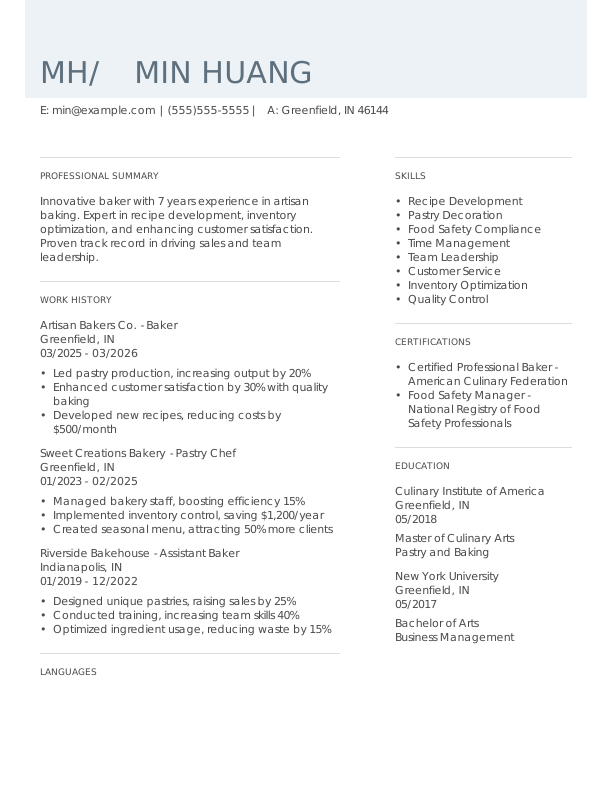


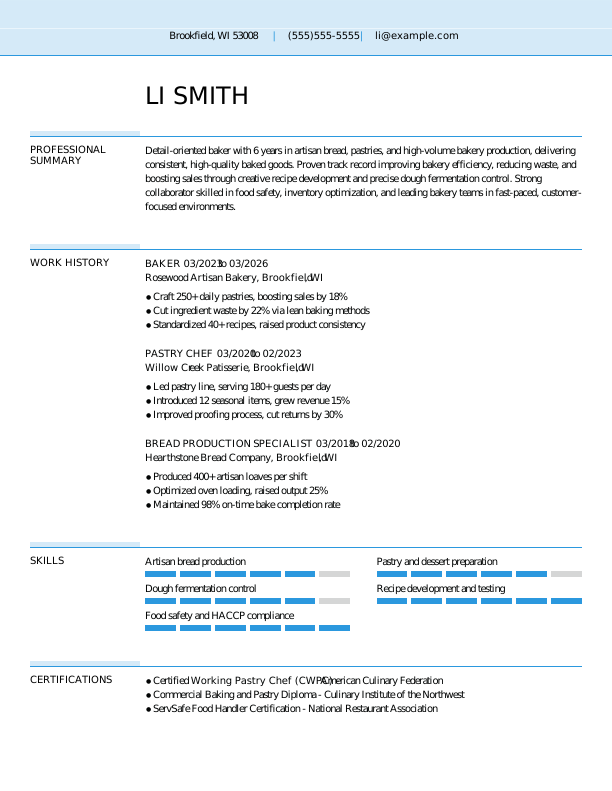

Browse Free Resume Templates
- Accounts Payable
- Adjunct Professor
- Artist
- Auto Mechanic
- Business Development Manager
- Business
- Certified Nursing Assistant
- Classic & Traditional
- Cleaner
- College Student
- Concierge
- Construction Worker
- Corporate
- Creative & Unique
- Custodian
- Customer Service
- Dental Assistant
- Direct Support Professional
- Entry-Level
- Flight Attendant
- Hospitality & Food Service
- Front Desk Receptionist
- Healthcare
- High School
- Housekeeping
- Hvac Technician
- Hybrid
- Inventory Manager
- Logistics
- Maintenance
- Management
- Modern
- Mortgage Loan Processor
- Pet Sitter
- Phlebotomist
- Production
- Rbt
- Sales
- Security Services
- Restaurant Server
- Simple & Basic
- Social Work
- Teacher
- Technology
Resume Examples for Bakers
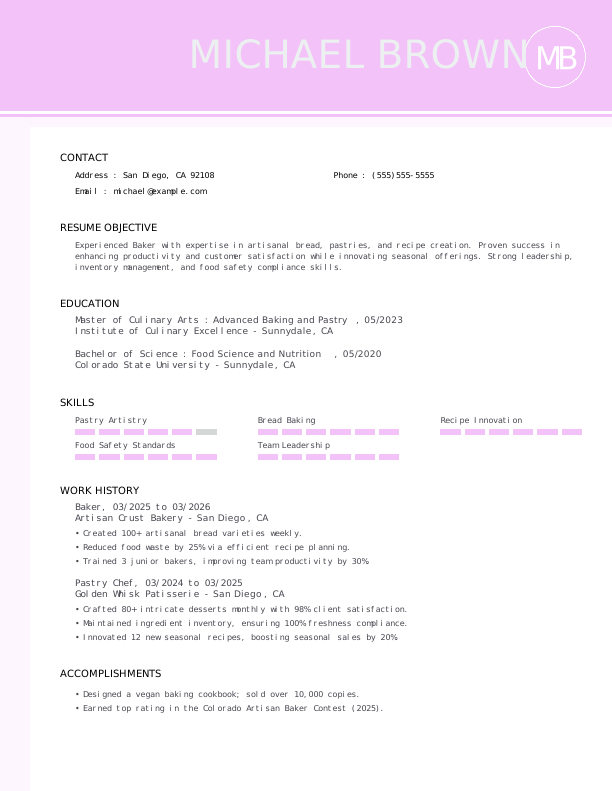
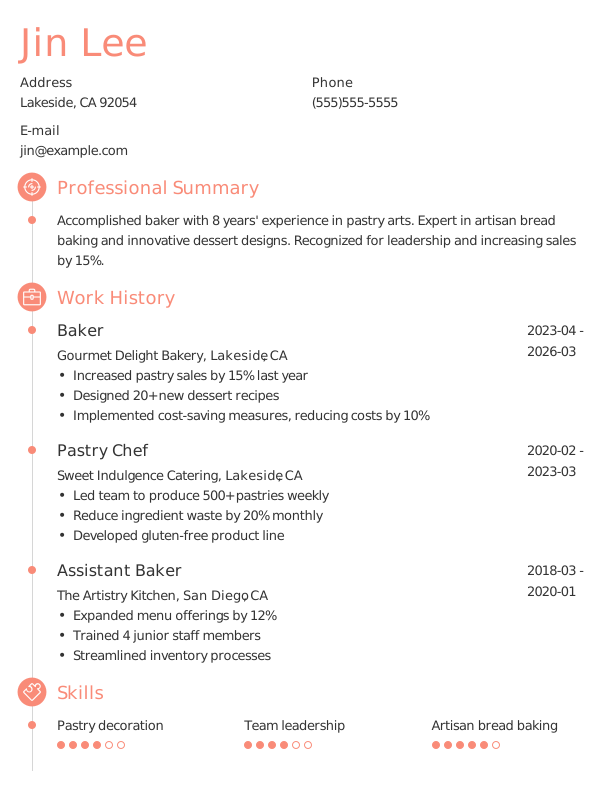
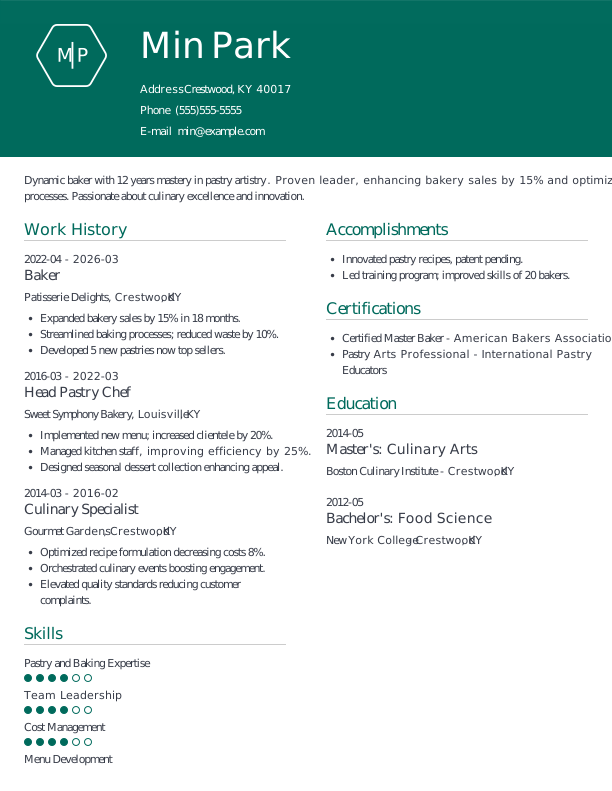
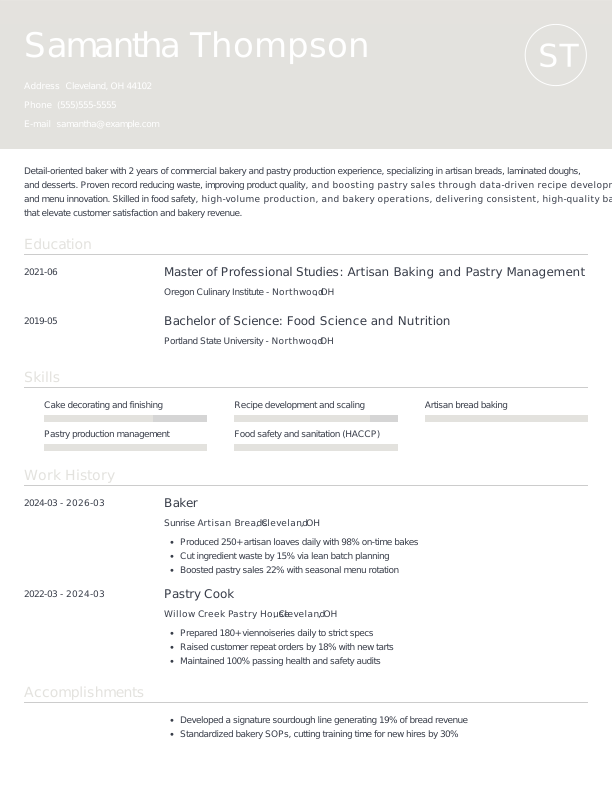
Baker resumes should adapt to your specialization, whether that is artisan bread, pastry production, or high-volume commercial baking. Browse our templates for a format that works.
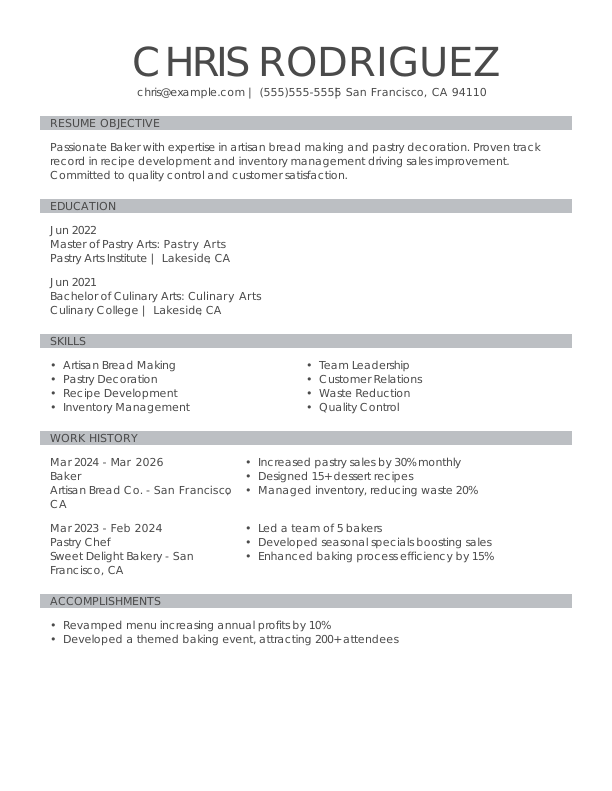
Entry-Level Baker Resume
This template works well for those entering baking professionally. It helps you write a baker resume by highlighting your food safety certification, any culinary coursework, and your knowledge of production baking techniques.

Mid-Career Baker Resume
An excellent choice for experienced bakers seeking to elevate their careers, this template exhibits recent accomplishments and prepares professionals for specialized roles in the culinary field.

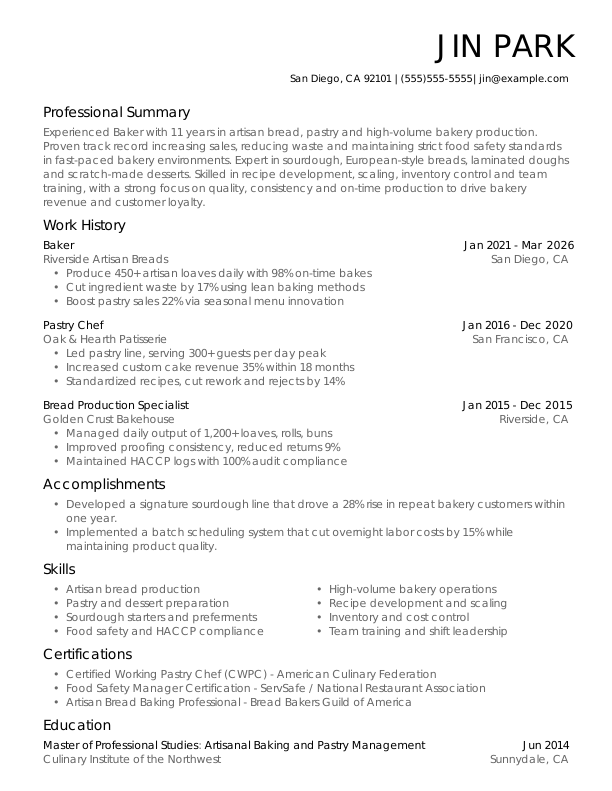
Experienced Baker Resume
An ideal choice for bakers with over 10 years of experience, this template supports professionals aiming for leadership roles in high-volume and artisan bakery environments.

Baker Resume Template (Text)
Below is a baker resume in plain text format that you can paste into your document and adjust. The layout emphasizes your production skills, recipe knowledge, and food safety credentials.
Alexis Cook
Seattle, WA 98104
Professional Summary
Dedicated Baker with expertise in artisanal bread and pastries. Proven track record in innovative menu development, quality control, and team leadership. Consistently improving sales and customer satisfaction through creative solutions.
Work Experience
March 2025 – March 2026
Sunrise Bakery – Seattle, WA
Baker
- Managed daily bread production, cut waste by 15%
- Innovated pastry menu, boosting sales by 25%
- Maintained quality control, reduced errors by 10%
January 2023 – February 2025
Sweet Creations – Seattle, WA
Pastry Chef
- Led cake design team, increasing output by 20%
- Optimized ingredient use, saving $300/month
- Developed seasonal menus, improved customer retention
January 2022 – December 2022
The Breadsmith – Tacoma, WA
Artisan Bread Maker
- Introduced new sourdough recipe, upsold by 30%
- Trained apprentices, reducing turnover by 12%
- Enhanced baking processes, increased efficiency
Education
June 2021
Boston Culinary Institute Silverlake, WA
Master of Culinary Arts Baking and Pastry Arts
June 2018
University of Massachusetts Silverlake, WA
Bachelor of Science Food Science
Certifications
- Advanced Artisan Baking – American Culinary Federation
- Food Safety Manager – National Restaurant Association
Skills
- Bread making expertise
- Pastry innovation
- Menu development
- Quality control
- Efficient ingredient use
- Team leadership
- Seasonal food trends
- Customer engagement
How to Write a Baker Resume
As a baker, knowing how to write a resume means showcasing your culinary skills and experience while using a format that stands out to potential employers. Use the guidance below to emphasize your strengths and tailor your resume for the positions you’re applying for.
1. Contact Info
Your contact information should be presented at the top of your resume to ensure it’s easily accessible.
Be sure to include:
- Full name
- Phone number
- Professional email address
- City and state (ZIP code is optional)
- LinkedIn profile or relevant portfolio (if applicable)
 PRO TIP
Avoid including sensitive personal information such as your Social Security number, age, or religion on your resume unless the employer specifically requests it.
2. Resume Profile
A resume profile is a brief introductory section, typically 2 to 4 sentences long, that highlights your key qualifications and skills. It serves as an engaging pitch that captures hiring managers’ interest and prompts them to explore your resume further.
This profile is usually positioned at the top of your resume and can take the form of either a summary or an objective, each serving different purposes. Understanding these distinctions will help you tailor your approach:
- A resume summary focuses on relevant skills, baking techniques, and key achievements in the culinary arts. This approach works well for individuals with prior experience or transferable skills who are looking to emphasize their contributions as skilled bakers.
- A resume objective explains your career aspirations and what you aim to accomplish in your next role. This approach is particularly beneficial for recent culinary graduates, individuals transitioning from other industries, or those with minimal baking experience who want to underscore their passion for the craft.
Let’s examine examples of a resume summary and a resume objective to understand their distinctions:
Baker resume summary example:
Dedicated baker with over 6 years of experience in high-volume bakery production and artisanal baking. Proficient in recipe development, flavor pairing, and team collaboration. Recognized for consistently delivering exceptional products that improve customer satisfaction and drive repeat business.
Baker resume objective example:
Recent culinary arts graduate eager to start a career as a baker in a dynamic bakery environment. Committed to creating high-quality baked goods and fostering a warm customer experience while contributing creativity and attention to detail to local artisan shops or cafes.
3. Work Experience
The work experience on your resume serves as an important foundation for your application. Employers assess not only the roles you’ve held but also the contributions you’ve made.
This section illustrates how your background in baking equips you with the skills and knowledge necessary to excel in the culinary industry.
The work experience section should contain:
- Job title
- Employer name and location
- Dates of employment (month/year)
- 3–5 bullet points detailing baking responsibilities and achievements
Customize your work experience bullet points to reflect the job you’re targeting by using specific baking-related terminology. Begin each statement with a strong action verb, such as “Baked,” “Created,” or “Decorated,” to capture attention immediately.
Incorporate quantifiable data where possible to highlight your accomplishments. Using precise metrics and examples of your success can clearly illustrate the value you bring and help set you apart from other applicants.
In general, consider following the format of:
[action verb] + [responsibility] = [result/achievement]
For example:
Bake and decorate over 200 custom cakes monthly, ensuring all meet high-quality standards and customer specifications, which contributed to a 15% increase in repeat business.
Note that you can also flip the result/achievement with the responsibility:
Achieved a 25% boost in sales by introducing seasonal dessert specials that leveraged local ingredients and improved menu variety.
With these techniques in mind, your resume bullets may look something like:
- Baked and decorated over 500 custom cakes per month, increasing customer satisfaction ratings by 20%.
- Implemented a new inventory tracking system that reduced ingredient waste by 15%, significantly saving costs.
- Collaborated with a team of 5 bakers to develop seasonal menu items, improving sales during peak periods.
- Mentored junior bakers in pastry techniques, improving overall team efficiency and skill levels.
- Used state-of-the-art baking equipment to streamline production processes, reducing bake time by 10%.
4. Skills
The skills section provides a concise overview of your baking abilities, and the ATS-friendly resume format highlights your expertise in areas such as pastry creation and breadmaking, enabling hiring managers to evaluate your qualifications and fit for the role.
Skills can be categorized into three key areas:
- Soft skills are personal qualities that influence collaboration in a bakery setting.
- Hard skills are specific, measurable abilities acquired through education, training, or experience.
- Technical skills are the specific abilities required to operate tools and equipment in a profession.
5 Soft Skills for Your Resume or CV
- Attention to detail
- Teamwork and collaboration
- Time management skills
- Customer service orientation
- Flexibility in techniques
5 Hard Skills for Your Resume or CV
- Dough preparation and mixing
- Oven operation (deck, convection)
- Pastry techniques (lamination, folding)
- Cake decoration (fondant, buttercream)
- Sanitation practices (food safety regulations)
In general, aim to include a well-rounded selection of skills that match the job requirements to showcase your strengths.
PRO TIP
If you’re a newer baker, consider placing your skills section near the top of your resume, right after your summary. If you have more experience, position it following your work history.
5. Education
Understanding how to list your education on your resume will help showcase your qualifications. Begin with your most recent or relevant degree, clearly stating the degree type and the institution’s name. If you’re a recent graduate, consider including details such as your graduation year, GPA (if it’s 3.5 or higher), any honors received, or relevant coursework to strengthen your application.
Baker resume education section example:
Diploma in Baking and Pastry Arts
Culinary Institute of America, Hyde Park, NY
Graduated: 2023 | Graduated with Distinction
PRO TIP
Present degrees on your resume in reverse-chronological order, starting with the highest qualification first, such as Bachelor of Arts in Baking and Pastry, followed by Associate Degree in Baking.
6. Certifications
Certifications solidify your professional credentials. While not always included in a traditional resume, this section can be important for bakers looking to stand out in a competitive market. Many bakeries and restaurants expect specific credentials, especially for roles involving pastry or artisan bread.
Make sure to display relevant certifications that improve your qualifications. Keep them up to date and clearly formatted to catch the employer’s eye.
Baker certification examples:
- Certified Baker | American Culinary Federation | Expires: 03/2028
- Food Handler Certification | National Restaurant Association | Expires: 01/2028
- Pastry Arts Certification | Culinary Institute of America | Expires: 09/2027
- Allergen Awareness Training | ServSafe | Expires: 05/2028
Create a FREE Resume
Get access to our job-winning builders and job search tools
Features
Free Access
Resume Builder
Create and edit unlimited resumes with step-by-step prompts and ready-made content.
Learn More


Resume Upload
Add one resume to the Monster database to get found by recruiters and hiring managers.
Learn More
Resume Check
Get personalized resume feedback and actionable suggestions for improvement.
Learn More
Monster Job Listings
Access millions of job listings and sort by industry, company, and title to find your perfect fit.
Learn More
QuickApply Jobs
Apply directly through Monster in just a few clicks with QuickApply, saving you time and effort.
Learn More
Tailor Your Work History to Beat the ATS
Your work experience should reflect more than just job titles. It’s an opportunity to highlight the tangible contributions you’ve made, using profession-specific examples that demonstrate your skills. This method not only improves your resume but also ensures it’s optimized for applicant tracking systems (ATS), which can easily scan for relevant information.
To create a compelling work history, tailor your descriptions to the specific role you’re pursuing by incorporating suitable keywords from the job listing. Begin by thoroughly analyzing the job description to pinpoint essential skills and qualifications. Look for common terms or requirements and weave those into your experience narratives for a targeted approach.
What’s a Fair Baker Salary?
Researching salary data is essential for evaluating job offers, negotiating compensation, and making informed career decisions. The salary insights provided come from the U.S. Bureau of Labor Statistics (BLS) and represent the latest nationwide averages for bakers.
Actual salaries can vary based on factors such as location, experience, certifications, and specialization. Bakers in high-end restaurants or boutique pastry shops typically earn more than those in standard bakery settings or supermarkets.
| Alabama | $32,300 |
| Alaska | $38,070 |
| Arizona | $38,750 |
| Arkansas | $31,270 |
| California | $42,560 |
| Connecticut | $39,650 |
| Delaware | $39,300 |
| District of Columbia | $44,300 |
| Florida | $36,570 |
| Georgia | $32,280 |
| Hawaii | $44,330 |
| Idaho | $35,800 |
| Illinois | $37,840 |
| Indiana | $36,310 |
| Iowa | $35,790 |
| Kansas | $34,090 |
| Kentucky | $33,980 |
| Louisiana | $30,230 |
| Maine | $38,530 |
| Maryland | $38,340 |
| Massachusetts | $42,380 |
| Michigan | $37,260 |
| Minnesota | $39,630 |
| Mississippi | $31,110 |
| Missouri | $34,820 |
| Montana | $36,550 |
| Nebraska | $35,670 |
| Nevada | $39,700 |
| New Hampshire | $39,160 |
| New Jersey | $39,430 |
| New Mexico | $34,330 |
| New York | $43,330 |
| North Carolina | $34,460 |
| North Dakota | $39,520 |
| Ohio | $33,390 |
| Oklahoma | $30,580 |
| Oregon | $39,860 |
| Pennsylvania | $34,460 |
| Rhode Island | $38,530 |
| South Carolina | $34,160 |
| South Dakota | $37,560 |
| Tennessee | $34,530 |
| Texas | $32,760 |
| Utah | $35,320 |
| Vermont | $42,630 |
| Virginia | $34,410 |
| Washington | $43,580 |
| West Virginia | $31,420 |
| Wisconsin | $37,590 |
| Wyoming | $36,210 |
| Puerto Rico | $22,350 |
Key Takeaways
- Tailor your resume to the job description. Use terminology from the posting when detailing your skills and experience for both ATS and human review.
- Highlight quantifiable results to demonstrate your impact. Include specific metrics (e.g., production output, customer satisfaction scores, sales increases) that reflect your contributions.
- Select the appropriate format based on your experience level. Entry-level bakers might prefer a functional layout, while seasoned professionals often use reverse-chronological resumes.
More Resume & CV Examples
- Agriculture
- Banquet Server
- Bar Manager
- Barback
- Barista
- Bartender
- Busser
- Cake Decorator
- Catering
- Chef
- Cook
- Dietary Aide
- Dishwasher
- Executive Chef
- Fast Food
- Fine Dining Server
- Food And Beverage Director
- Food And Beverage Manager
- Food Runner
- Hostess
- Kitchen Manager
- Line Cook
- McDonald's
- Meat Cutter
- Pastry Chef
- Prep Cook
- Private Chef
- Restaurant General Manager
- Restaurant Manager
- Restaurant
- Shift Leader
- Sommelier
- Sous Chef
- Starbucks
- Waiter
- Waitress
Cover Letters for Your Resume
Browse our library of cover letter examples to complete your application. A resume will have a better chance of getting noticed.
Frequently Asked Questions
Last Update:
What resume format should I use for my baker resume?
There are three primary resume formats to consider when applying for a baker position. Your choice will depend on your experience level and the skills you wish to highlight:
- Chronological: The chronological resume format is the most widely used type, emphasizing your work history by outlining your responsibilities and achievements in a clear timeline. This approach is particularly effective for applicants whose relevant experience reinforces their qualifications, showcasing a consistent career path that adds credibility to their application.
- Functional: The functional resume, also known as a skills-based resume, emphasizes qualifications and skills over work history. This format benefits individuals with limited relevant experience or those experiencing employment gaps. It allows job seekers to prominently display their abilities, making it a valuable option for entering the baking industry.
- Combination: A combination resume merges the chronological and functional formats, highlighting both skills and work history. This approach benefits professionals by allowing them to clarify their competencies while detailing their career journey. It’s particularly useful for those transitioning into new fields or focusing on growth.
Should I include a cover letter with my resume?
Yes, you should include a cover letter when applying for a baking position. A well-crafted cover letter improves your resume by allowing you to express your passion for baking and detail experiences that demonstrate your skills in a way that may not be evident from your resume alone. It shows potential employers that you have personalized your application, giving you an advantage over applicants who do not submit one.
If you’re hesitant about writing a cover letter, there are many resources available to assist you. Look for guides on how to write a cover letter and explore examples specifically geared toward the baking industry. Additionally, reviewing various formats can help you choose one that best leverages your qualifications and experience while keeping it relevant.
To streamline the process, consider using a cover letter generator to quickly create a polished document with suggested structures and content tailored to baking job applications.
How long should a baker resume be?
For bakers with less than 10 years of experience, a one-page resume is typically ideal for showcasing relevant skills and accomplishments. Highlight your baking techniques, certifications (e.g., food safety), and any notable achievements that reflect your capabilities in the kitchen.
Those in senior or specialized baking roles may extend their resumes to two pages if they can maintain focus on relevant information. Emphasize leadership experience, advanced baking methods, and unique contributions to past employers, ensuring clarity without unnecessary filler phrases.
What keywords should I include to pass applicant tracking systems (ATS)?
To improve your resume’s chances of passing ATS, incorporate keywords and phrases directly from the job posting. For a baker position, this could include terms like “artisan bread,” “pastry techniques,” or “food safety regulations.” Tailoring your resume with these specific terms can significantly improve visibility.
Additionally, don’t forget to list relevant certifications, such as ServSafe or any baking qualifications you hold. Mentioning technical skills, such as proficiency with dough-mixing equipment or experience with commercial ovens, can further demonstrate your suitability for the role. These elements show that you meet the qualifications employers are looking for.
Should I include my baking competitions or volunteer experiences?
Yes, especially if you’re early in your baking career. Highlighting baking competitions demonstrates your skills and passion, while volunteer work shows your commitment to the craft. This non-traditional experience can make your resume stand out when formal job roles are limited.

Kirsten Chorpenning is a career advice writer who empowers job seekers to take control of their career paths using Monster’s comprehensive job search and resume tools. She specializes in helping job seekers find rewarding jobs in today’s dynamic work environment.
See More From Kirsten ChorpenningExplore Related Career Advice


How to Put Transferable Skills on Your Resume: 120 Skills, Examples, & Tips
Updated:
Aug 27, 2026
|

16 min read


How to Write a Functional Resume (Formatting Tips, Template, & Examples)
Updated:
Aug 7, 2026
|
17 min read

Functional vs Chronological Resume: Which Format Is Right for You?
Updated:
Aug 3, 2026
|
16 min read
100+ Resume Adjectives to Help You Write a Stronger Resume in 2026 (With Examples)
Updated:
Jul 30, 2026
|
12 min read