
Free Aviation Resume Templates & Examples
Take your career to new altitudes with free aviation resume and CV examples designed for roles across the industry. These templates help you present your certifications and experience with professional clarity.
Real-World Resumes That Get Results
 Free
Free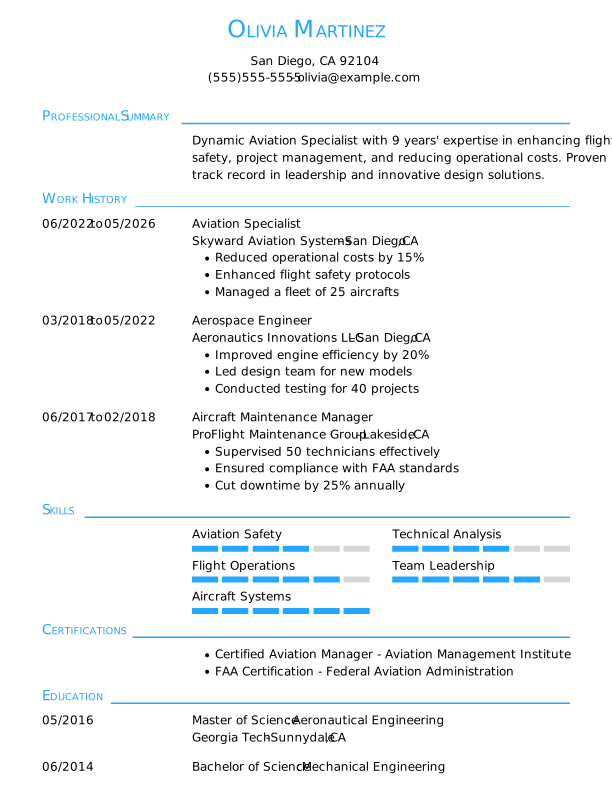
 Popular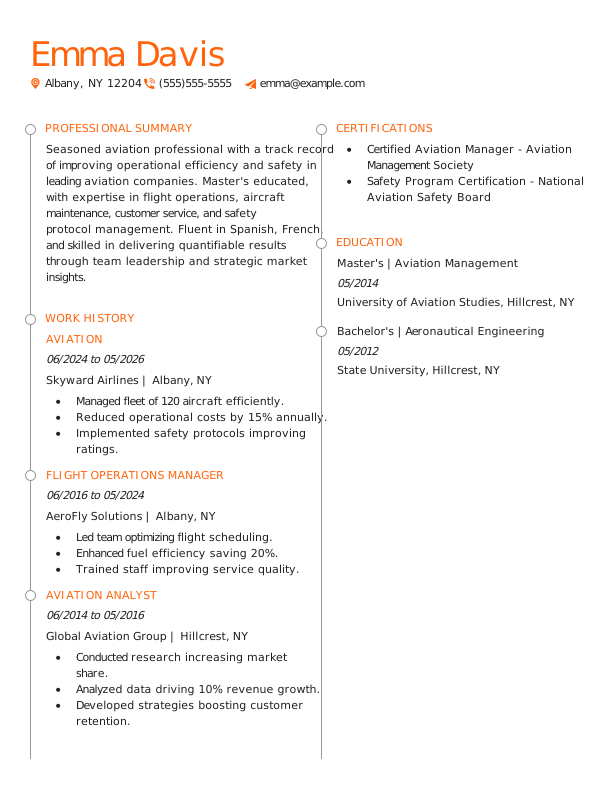
Browse Free Resume Templates
- Accounts Payable
- Adjunct Professor
- Artist
- Auto Mechanic
- Baker
- Business Development Manager
- Business
- Certified Nursing Assistant
- Classic & Traditional
- Cleaner
- College Student
- Concierge
- Construction Worker
- Corporate
- Creative & Unique
- Custodian
- Customer Service
- Dental Assistant
- Direct Support Professional
- Entry-Level
- Flight Attendant
- Hospitality & Food Service
- Front Desk Receptionist
- Healthcare
- High School
- Housekeeping
- Hvac Technician
- Hybrid
- Inventory Manager
- Logistics
- Maintenance
- Management
- Modern
- Mortgage Loan Processor
- Pet Sitter
- Phlebotomist
- Production
- Rbt
- Sales
- Security Services
- Restaurant Server
- Simple & Basic
- Social Work
- Teacher
- Technology
Resume Examples for Aviation
Resumes and CVs in aviation differ greatly depending on your career stage, whether you’re applying for entry-level positions or experienced roles. Discover what to include at each level and use our Resume Builder to create a tailored document that stands out.
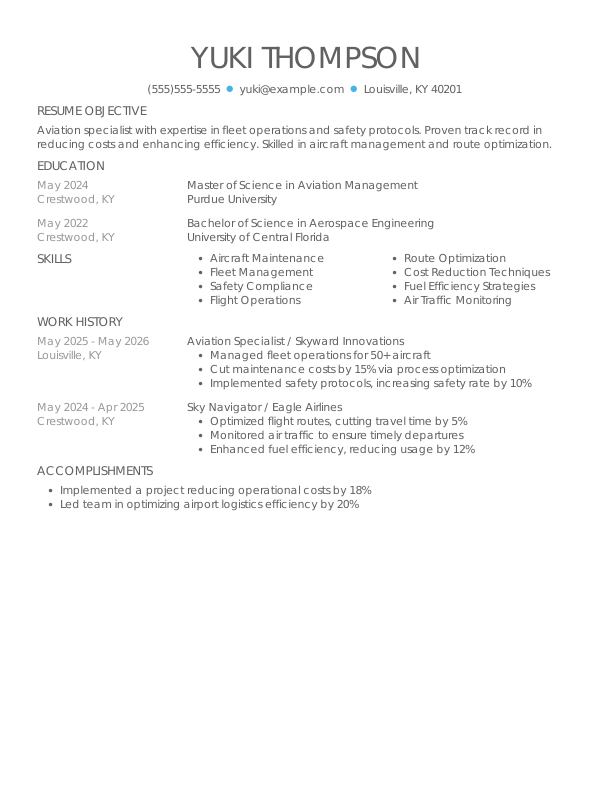
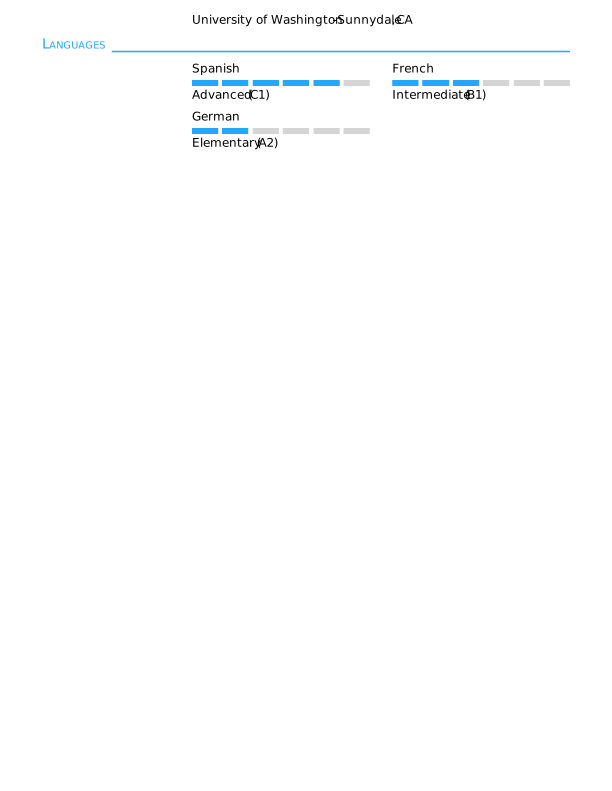
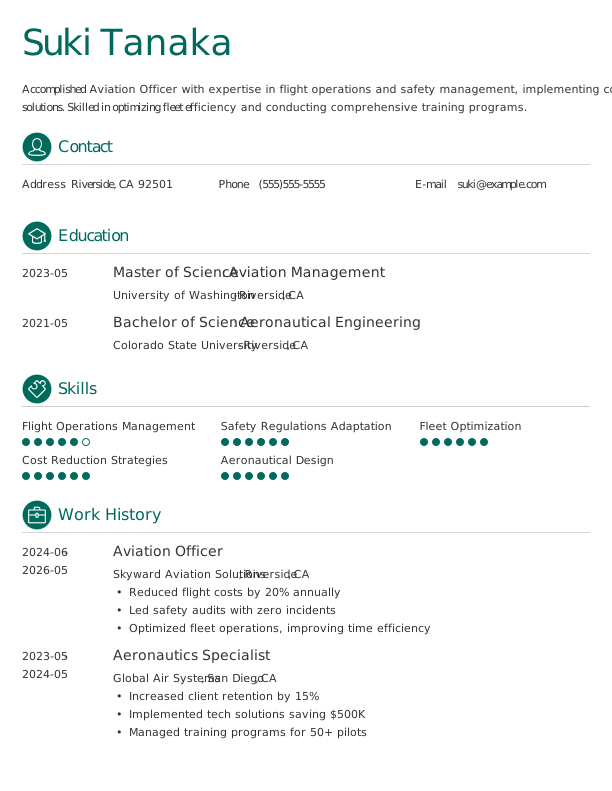
Entry-Level Aviation Resume
Perfect for recent graduates who need help writing a resume with no experience, this template is also ideal for those transitioning into aviation from related fields.

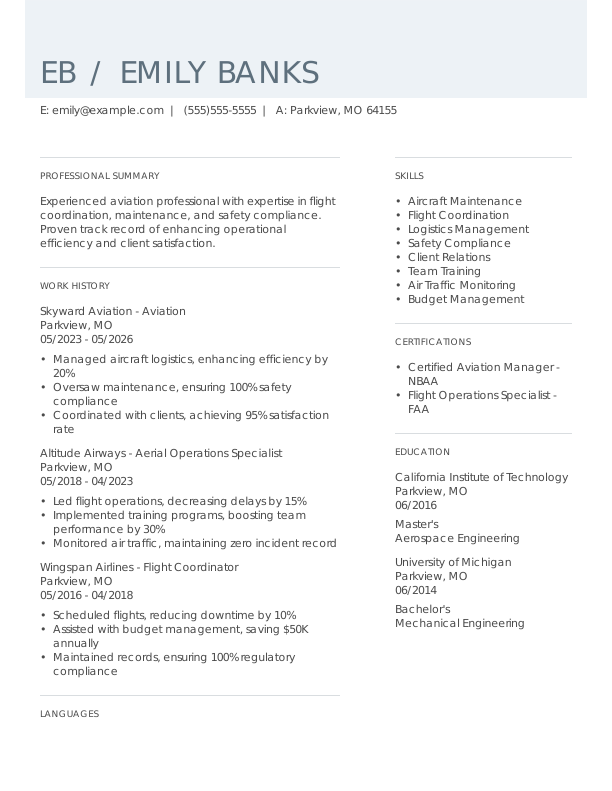
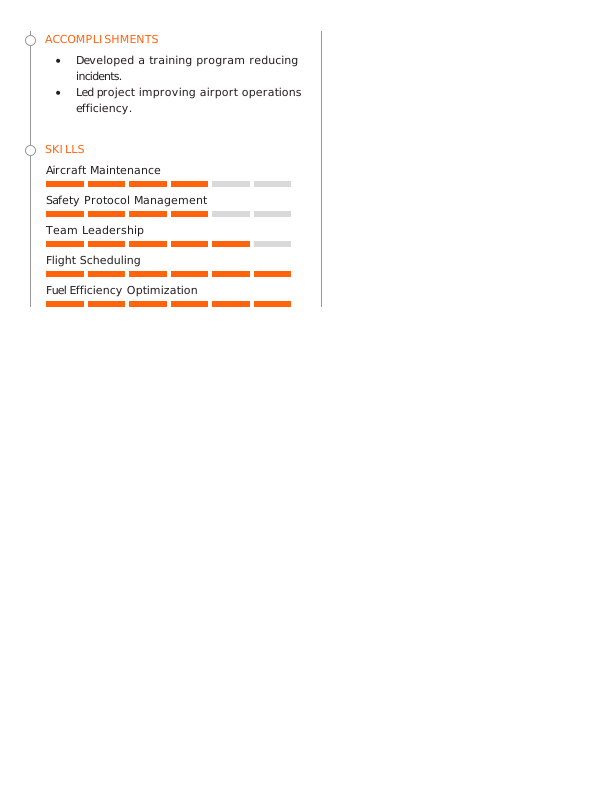
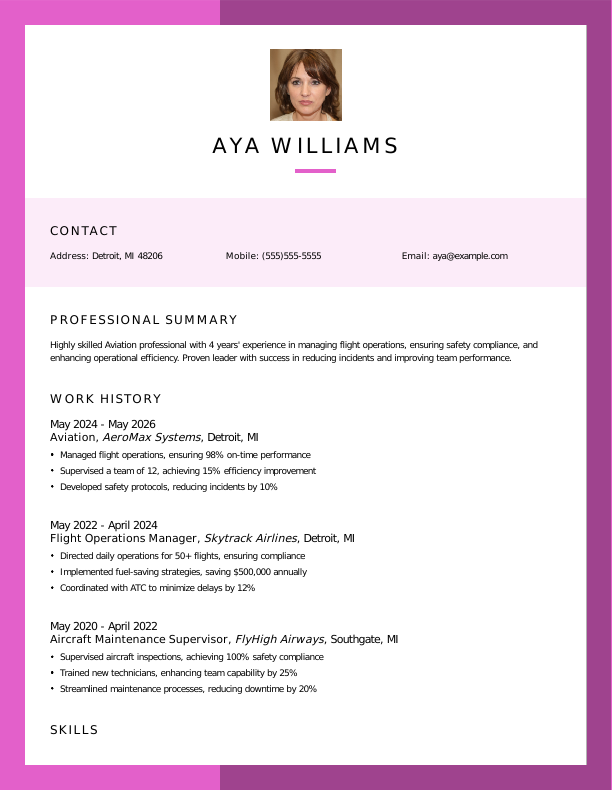
Mid-Career Aviation Resume
A good fit for aviation professionals with several years of experience, this template highlights recent accomplishments and facilitates career advancement into specialized or leadership roles.
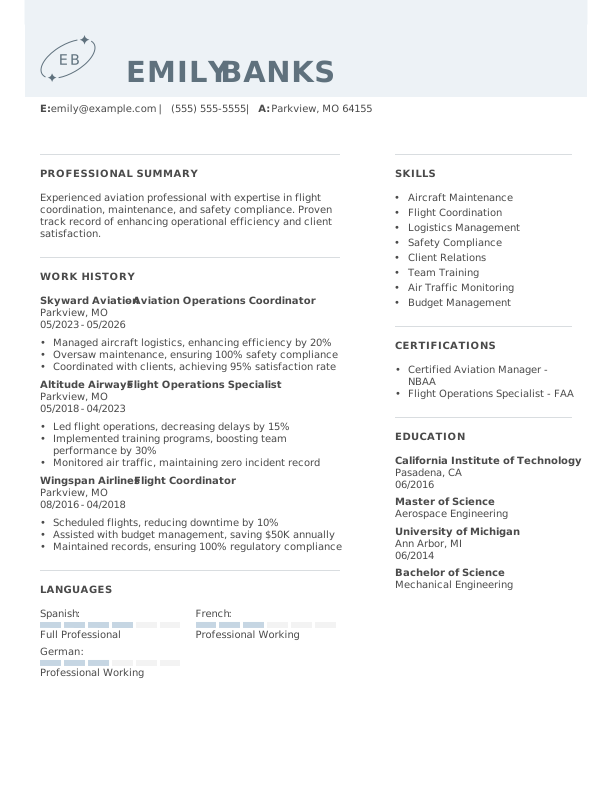
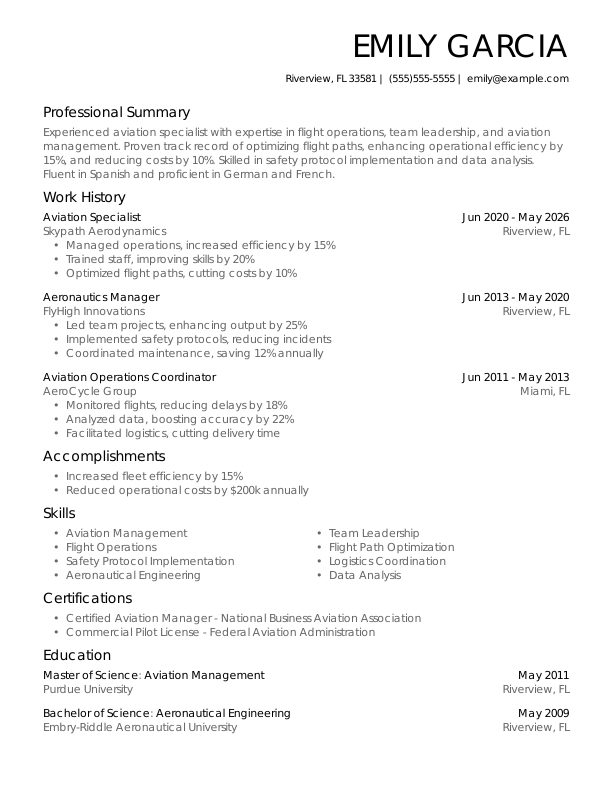
Experienced Aviation Resume
An ideal choice for aviation professionals with over 10 years of experience, this template supports job seekers pursuing senior-level positions in management, operations, or aeronautics.

Aviation Resume Template (Text)
Take this customizable text format of an aviation resume to easily copy, edit, and personalize it directly in your document.
Emma Nguyen
Minneapolis, MN 55406
Professional Summary
Accomplished Aviation Specialist with 7+ years of expertise in flight operations, crew management, and regulatory compliance. Proven record of reducing delays by 25%, optimizing costs, and achieving 98% on-time performance. Highly skilled in safety protocols, logistics planning, and team leadership, ensuring operational excellence in dynamic aviation environments.
Work Experience
May 2018 – May 2026
Skyline Aeronautics Corp – Minneapolis, MN
Aviation Specialist
- Managed flight schedules, reducing delays by 25%
- Optimized crew operations, cutting costs by $50k annually
- Implemented safety protocols, boosting compliance rates by 30%
April 2015 – April 2018
Pinnacle Air Services – Minneapolis, MN
Flight Operations Coordinator
- Streamlined cargo logistics, saving 15% in fuel costs
- Supervised team of 10, enhancing efficiency by 20%
- Ensured 100% FAA compliance with operational standards
April 2013 – March 2015
Eagle Flight Systems – Cedar Valley, MN
Aviation Logistics Associate
- Coordinated equipment inventory for 50+ flights monthly
- Analyzed fleet performance, improving turnaround time by 10%
- Facilitated maintenance schedules, reducing repair time by 3 hours
Education
May 2013
Embry-Riddle Aeronautical University Daytona Beach, FL
Master’s Aviation Management
May 2011
Texas A&M University College Station, TX
Bachelor’s Aeronautical Engineering
Certifications
- Certified Aviation Manager (CAM) – National Business Aviation Association (NBAA)
- Aircraft Dispatcher Certificate – FAA
Skills
- Flight Operations Management
- Aviation Safety Compliance
- Team Leadership
- Project Coordination
- Aircraft Maintenance Scheduling
- Fuel Efficiency Optimization
- Logistics Planning
- Regulatory Compliance
How to Write an Aviation Resume
As an aviation professional, knowing how to write a resume means showcasing your technical skills and relevant experience in a clear format that stands out. Use the guidance below to emphasize your strengths and tailor your resume for the specific roles you’re aiming for.
1. Contact Info
Your contact information should be clear, professional, and easy to find at the top of your resume.
Make sure to include:
- Full name
- Phone number
- Professional email address
- City and state (ZIP code is optional)
- LinkedIn profile or personal portfolio (if relevant)
 PRO TIP
Skip including personal details such as your Social Security number, date of birth, or headshot on your resume unless the employer specifically requests them.
2. Resume Profile
A resume profile is a brief introductory section, typically consisting of two to four sentences, that highlights your qualifications and skills. It serves as a compelling pitch for hiring managers, capturing their interest and prompting them to explore your resume further.
This profile is positioned at the top of your resume and can be formatted as either a summary or an objective, each serving distinct roles in presenting your career aspirations or key experiences. Understanding these differences is important for effective job applications:
- A resume summary highlights your key experience, skills, and achievements, showcasing your suitability for the aviation industry. This format is particularly helpful for individuals with previous roles or transferable expertise who want to demonstrate their value in a competitive job market.
- A resume objective highlights your future aspirations and emphasizes the career goals you wish to pursue. It’s particularly beneficial for recent aviation graduates, professionals transitioning into aviation roles, or those with limited industry experience seeking to make their mark in this field.
Let’s take a look at an example of each to see how a resume summary and a resume objective differ:
Aviation resume summary example:
Dedicated aviation professional with over 6 years of experience in flight operations and safety management. Proficient in risk assessment, regulatory compliance, and team leadership. Acknowledged for improving operational efficiency and ensuring the highest safety standards within dynamic aviation environments.
Aviation resume objective example:
Recent aviation management graduate eager to launch a career in the airline industry. Committed to safety and efficiency, ready to contribute strong organizational skills and a detail-oriented mindset to an airport or air transport company.
3. Work Experience
The work experience on your resume is an important selling point in the aviation industry. Employers examine your job history to gauge not only where you’ve worked but also the impact you’ve made through your contributions.
Your background in aviation demonstrates how your flight operations and safety management experience qualify you for the role.
The work experience section should contain:
- Job title
- Employer name and location
- Dates of employment (month/year)
- 3–5 bullet points describing your relevant responsibilities and achievements
Tailor your content to reflect the specific aviation role you’re targeting. Start each bullet point with an action verb (like “Piloted,” “Coordinated,” “Inspected”) to strengthen your statements and showcase your responsibilities.
Incorporate quantifiable metrics whenever possible. Providing specific numbers, such as flight hours or safety improvements, demonstrates your value and helps distinguish you from other job seekers in the aviation field.
In general, consider following the format of:
[action verb] + [responsibility] = [result/achievement]
For example:
Conducted pre-flight checks and safety inspections for 15 aircraft daily, ensuring compliance with FAA regulations and maintaining a 100% safety record.
Note that you can also flip the result/achievement with the responsibility:
Achieved a 25% reduction in turnaround time by implementing streamlined maintenance procedures.
With these techniques in mind, your resume bullets may look something like:
- Conducted flight operations for over 1,500 hours, ensuring compliance with safety regulations and reducing incident rates by 20%.
- Collaborated with maintenance teams to perform pre-flight checks on aircraft, improving operational readiness by 15%.
- Mentored junior pilots during training sessions, improving their skill and confidence in flight maneuvers.
- Used flight simulation software to analyze performance metrics and refine operational strategies.
- Led post-flight debriefings with crew members to review mission outcomes and identify areas for improvement.
4. Skills
The skills section provides a concise overview of professional abilities relevant to the aviation sector. This summary aids hiring managers in quickly assessing qualifications for potential job seekers.
Skills can be categorized into three distinct groups:
- Soft skills are personal qualities that shape how aviation professionals collaborate and communicate in their roles.
- Hard skills are specific, quantifiable abilities gained through education, training, or experience.
- Technical skills are the specific competencies required to operate tools and technologies in a field.
5 Soft Skills for Your Resume or CV
- Effective communication
- Team leadership skills
- Attention to detail
- Stress management techniques
- Critical thinking abilities
5 Hard Skills for Your Resume or CV
- Aircraft maintenance procedures
- Flight planning and navigation software (ForeFlight, SkyVector)
- Air traffic control communication
- Aviation safety management systems (SMS)
- Regulatory compliance (FAA, EASA)
In general, aim to include a diverse array of relevant skills that align with the job requirements to showcase your full professional capabilities.
PRO TIP
If you’re a newer aviation professional, consider placing your skills section near the top of your resume, right after your summary. For those with more experience, it’s better to position this section lower and weave your skills into your work history for a cohesive presentation.
5. Education
Understanding how to list education on your resume is important for showcasing your qualifications clearly. Begin with the most recent or relevant degree, including the degree type and institution name.
If you’re a recent graduate, you might add your graduation year, GPA (if it’s 3.5 or higher), any honors received, and coursework related to the position you’re applying for.
Aviation resume education section example:
Bachelor of Science in Aviation (BSA)
Embry-Riddle Aeronautical University, Daytona Beach, FL
Graduated: 2024 | Summa Cum Laude
PRO TIP
If you’re advancing from an Associate of Applied Science in Aviation to a Bachelor of Science in Aviation, or have earned another relevant degree, list both in reverse-chronological order.
6. Certifications
Listing certifications on your resume highlights your qualifications and helps address any gaps in practical experience. While this section isn’t always standard, it’s essential for many aviation professionals aiming for roles in this competitive field. Employers frequently seek specific credentials, particularly for positions like airline pilots or air traffic controllers, where safety and compliance with regulations are critical.
Include only the certifications that directly strengthen your application and match the job requirements. Presenting these credentials in a clear format and keeping them up to date makes it easier for hiring managers to quickly evaluate your suitability.
Aviation certification examples:
- Commercial Pilot License (CPL) | Federal Aviation Administration | Expires: 03/2028
- Airline Transport Pilot (ATP) Certificate | Federal Aviation Administration | Expires: 09/2027
- Certified Flight Instructor (CFI) | Federal Aviation Administration | Expires: 06/2028
- Instrument Rating Certificate | Federal Aviation Administration | Expires: 12/2027
Start Building Your Job-Winning Resume
Use Your Existing Resume
Import your current resume to transfer your information to one of our professional templates.
Create a New Resume
Start fresh with a template that catches your eye and follow the prompts to add your details.
Tailor Your Work History to Beat the ATS
Your work experience goes beyond listing job titles and serves as an opportunity to highlight the measurable impact you’ve made in aviation, showcasing achievements tied to safety, efficiency, and operational excellence. Adopting this approach aids in crafting an ATS-friendly resume that applicant tracking systems can easily process.
To build a compelling work history, customize it to the aviation role you’re aiming for by using relevant keywords and terminology. Start with a detailed analysis of the job description provided. Pinpoint frequently mentioned skills, certifications, or industry-specific requirements, and aim to feature those elements in your experience descriptions wherever applicable.
Key Takeaways
- Tailor your resume to the job description. Use relevant terminology that aligns with both ATS and hiring managers for better visibility.
- Highlight quantifiable achievements to demonstrate impact. Include metrics like flight hours, safety records, or successful project completions (e.g., reduced delays by 20%).
- Select a resume format that suits your experience level. New pilots may prefer a functional layout, while seasoned aviators often use reverse-chronological resumes.
More Resume & CV Examples
- Aerospace Engineer
- Agricultural Engineer
- Ai Engineer
- Automation Engineer
- Automotive
- Bim Engineer
- Biomedical Engineering
- Bus Driver
- Cdl Driver
- Chemical Engineering
- Civil Engineer
- Company Driver
- Controls Engineer
- Courier
- Delivery Driver
- Design Engineer
- Driver
- Drone Pilot
- Dump Truck Driver
- Electrical Engineer
- Embedded Systems Engineer
- Engineering Manager
- Engineering Project Manager
- Engineering
- Enterprise Architect
- Environmental Engineer
- Field Engineer
- Food Delivery Driver
- Industrial Engineer
- Mechanic
- Mechanical Engineer
- Owner Operator
- Personal Driver
- Petroleum Engineer
- Pilot
- Ramp Agent
- Robotics Engineer
- School Bus Driver
- System Engineer
- Taxi Driver
- Test Engineer
- Transportation
- Truck Driver
- Uber Driver
Cover Letters for Your Resume
Browse our library of cover letter examples to complete your application. A resume will have a better chance of getting noticed.
Frequently Asked Questions
Last Update:
What resume format should I use for my aviation resume?
There are three primary resume formats to choose from when applying for aviation positions. Your selection should reflect your experience level and highlight the skills or achievements you want to present:
- Chronological: The most popular format, a chronological resume highlights your work experience in aviation by detailing responsibilities and achievements. This approach is ideal for applicants with a consistent job history that reinforces their qualifications and demonstrates their growth in the field.
- Functional: Also known as a skills-based resume, the functional resume focuses on a summary of qualifications and an expanded skills section to highlight your aviation-related abilities. This format minimizes emphasis on work history, which is beneficial for job seekers with limited relevant experience or those transitioning into the aviation industry.
- Combination: A combination resume integrates elements from both chronological and functional formats, showcasing skills alongside work experience. This approach benefits aviation professionals by allowing them to emphasize their technical competencies while demonstrating career progression and relevant achievements in the industry.
Should I include a cover letter with my resume?
Yes, you should include a cover letter with your aviation job application. A compelling cover letter improves your resume by allowing you to express your passion for the aviation industry and showcase experiences that may not be highlighted in your resume. It demonstrates to employers that you’ve invested time in tailoring your application, which can set you apart from other applicants who choose to skip this step.
If you’re feeling unsure about writing a cover letter, don’t let that hold you back. There are many helpful resources available, including guides on how to write a cover letter, examples tailored specifically for aviation positions, and various formats that could suit your unique experience and style.
To make the process easier, consider using tools like a cover letter generator that can assist in crafting a professional cover letter quickly by offering templates and suggestions specific to aviation roles.
How long should an aviation resume be?
Most aviation professionals with less than 10 years of experience should aim for a one-page resume. This concise format allows you to highlight relevant skills, training, and any certifications without overwhelming the reader. Focus on your most significant accomplishments and qualifications.
For those in senior roles or specialized positions, a two-page resume is acceptable, provided the content remains relevant and targeted. Make sure to clearly present your leadership experiences, advanced certifications, and any unique contributions you’ve made within the aviation industry.
Should I include flight training or simulator experience?
Yes, especially if you’re starting your aviation career. Listing flight training and simulator experience demonstrates practical skills and a commitment to safety, which are important in aviation. This can improve your resume when you have limited formal flying hours or job roles.

Megan Dawkins is a career industry editor who empowers job seekers to take control of their career paths using Monster’s comprehensive job search and resume tools. She specializes in helping job seekers navigate the flexible job market.
See More From Megan DawkinsExplore Related Career Advice


How to Put Transferable Skills on Your Resume: 120 Skills, Examples, & Tips

Updated:
Aug 27, 2026
|
16 min read


How to Write a Functional Resume (Formatting Tips, Template, & Examples)
Updated:
Aug 7, 2026
|
17 min read


Functional vs Chronological Resume: Which Format Is Right for You?
Updated:
Aug 3, 2026
|
16 min read

100+ Resume Adjectives to Help You Write a Stronger Resume in 2026 (With Examples)
Updated:
Jul 30, 2026
|
12 min read