
Free Contractor Resume Templates & Examples
A contractor resume should reflect the scope of your projects, trade skills, and ability to manage timelines and budgets. Pick a template below that organizes your independent work experience clearly.
Real-World Resumes That Get Results
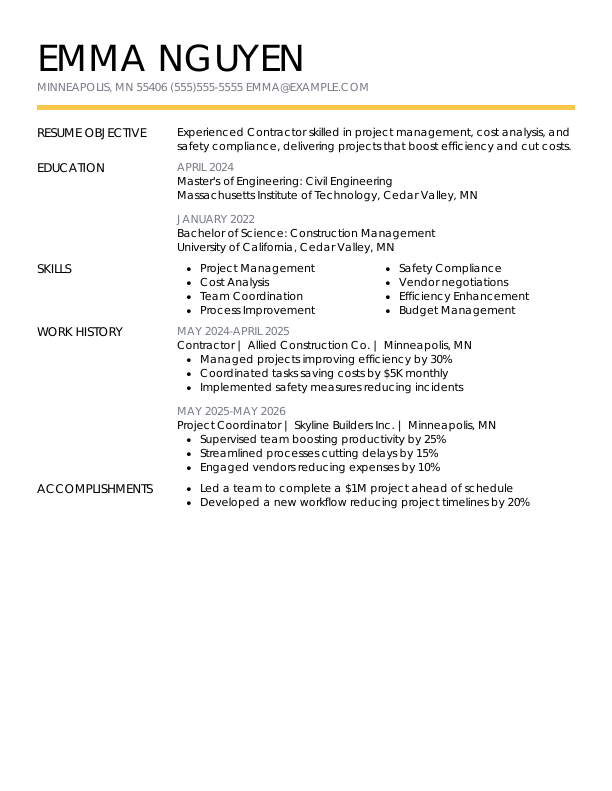
 Free
FreeActor Entry-Level Resume
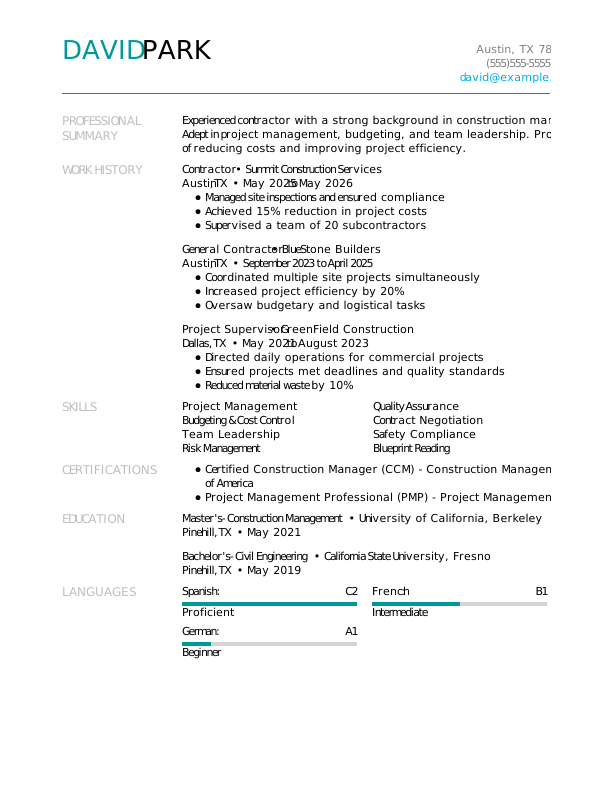
Actor Mid-Level Resume
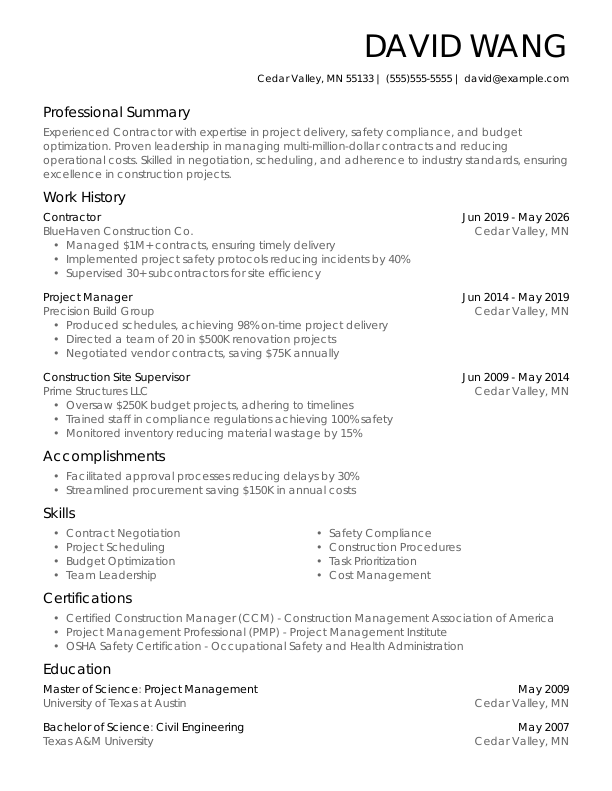
Contractor Experienced Resume
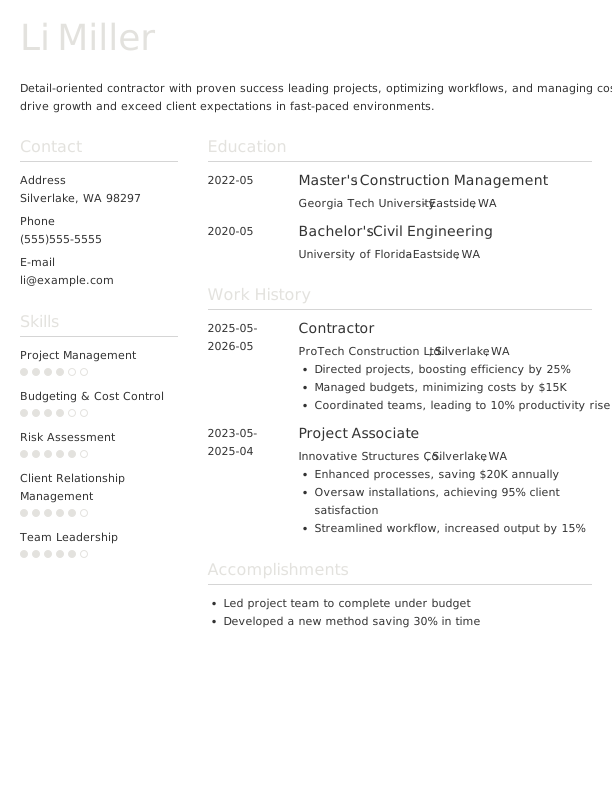
Contractor Entry-Level Resume 1
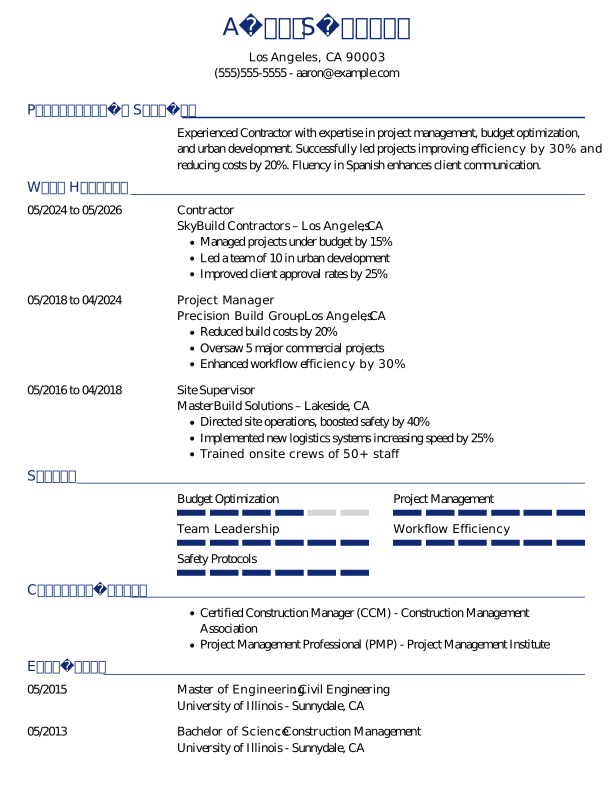

 Popular
Contractor Mid-Level Resume 1
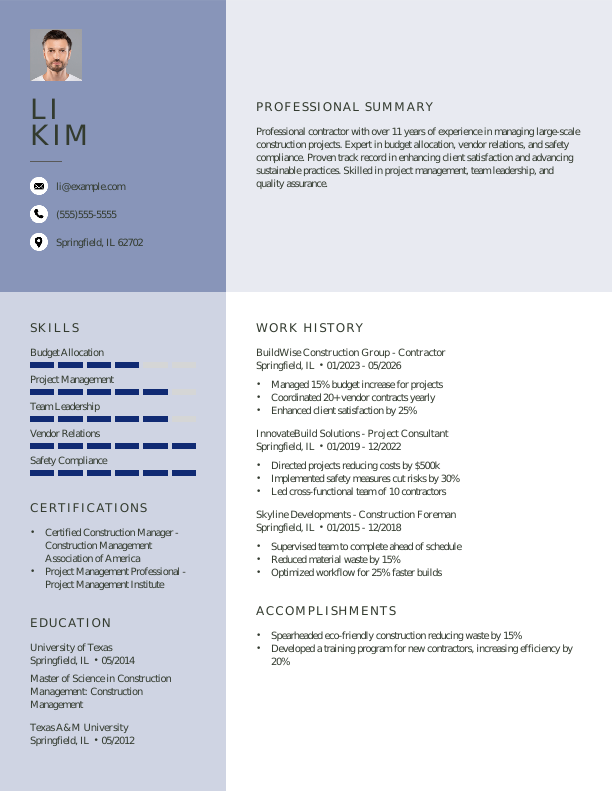

Contractor Experienced Resume 1
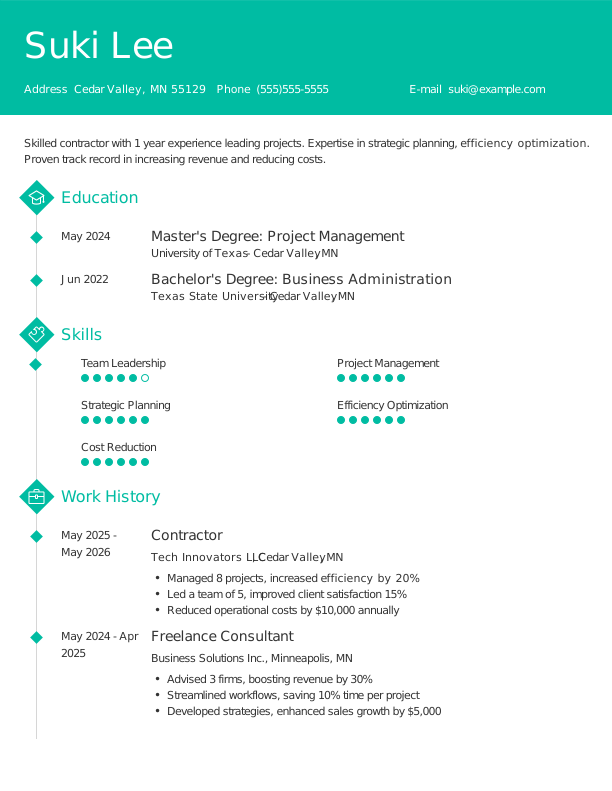

Contractor Entry-Level Resume 2
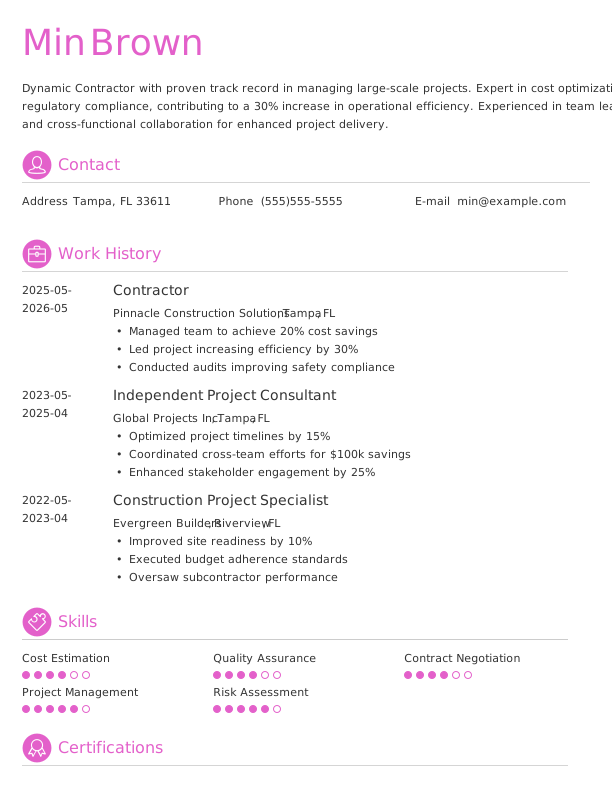

Contractor Mid-Level Resume 2
Browse Free Resume Templates
- Accounts Payable
- Adjunct Professor
- Artist
- Auto Mechanic
- Baker
- Business Development Manager
- Business
- Certified Nursing Assistant
- Classic & Traditional
- Cleaner
- College Student
- Concierge
- Construction Worker
- Corporate
- Creative & Unique
- Custodian
- Customer Service
- Dental Assistant
- Direct Support Professional
- Entry-Level
- Flight Attendant
- Hospitality & Food Service
- Front Desk Receptionist
- Healthcare
- High School
- Housekeeping
- Hvac Technician
- Hybrid
- Inventory Manager
- Logistics
- Maintenance
- Management
- Modern
- Mortgage Loan Processor
- Pet Sitter
- Phlebotomist
- Production
- Rbt
- Sales
- Security Services
- Restaurant Server
- Simple & Basic
- Social Work
- Teacher
- Technology
Resume Examples for Contractors
Contractor resumes should reflect the scope of your projects and your trade specialties. Browse our templates to find one that organizes independent work experience clearly.
Entry-Level Contractor Resume
If you are entering contracting after working as an employee in a trade, this template helps you put together a contractor resume by translating your hands-on skills and job history into an independent professional format.

Mid-Career Contractor Resume
A smart choice for mid-level contractors seeking advancement, this template showcases relevant experience and achievements to facilitate progression into specialized roles or leadership positions.

Experienced Contractor Resume
An ideal choice for seasoned contractors with over 10 years of experience, this template supports professionals seeking advanced roles in project management or construction leadership.

Contractor Resume Template (Text)
Below is a contractor resume in plain text that you can copy and personalize. For more trades and construction formats, explore our library of resume templates.
John Peterson
Springfield, IL 62705
Professional Summary
Accomplished contractor with 7 years in project leadership. Proven track record improving efficiency by 30%, reducing costs by 15%. Expertise in safety management and client relations.
Work Experience
May 2024 – May 2026
ProBuild Solutions – Springfield, IL
Contractor
- Project cost reduced by 15% through strategic planning
- Led team of 20, enhancing efficiency by 30%
- Ensured 100% compliance with safety regulations
May 2021 – April 2024
BuildRight Enterprises – Springfield, IL
Construction Specialist
- Managed budgets exceeding $5M annually
- Oversaw completion of 10+ projects per year
- Reduced waste by 20% via sustainable practices
May 2019 – April 2021
Quality Constructors Inc. – Springfield, IL
Site Supervisor
- Supervised crew of 15 across multiple sites
- Improved site safety record by 25%
- Facilitated client meetings to ensure satisfaction
Education
June 2018
University of Texas at Austin Austin, TX
Master’s Construction Management
June 2016
Texas A&M University College Station, TX
Bachelor’s Civil Engineering
Certifications
- Certified Construction Manager (CCM) – Construction Management Association of America
- LEED AP BD+C – U.S. Green Building Council
Skills
- Project Management
- Building Codes Compliance
- Cost Estimation
- Safety Management
- Team Leadership
- Risk Assessment
- Sustainable Building Practices
- Client Relations
How to Write a Contractor Resume
As a contractor, knowing how to write a resume involves mixing your project experience and technical skills with a clear format that highlights why you’re the right fit for the job. Use the guidance below to emphasize your strengths and tailor your resume to align with specific opportunities.
1. Contact Info
Your contact information should be prominently displayed at the top of your resume, ensuring clarity and professionalism.
Be sure to include:
- Full name
- Phone number
- Professional email address
- City and state (ZIP code is optional)
- LinkedIn profile or relevant portfolio (if applicable)
 PRO TIP
Skip including sensitive personal details such as your Social Security number, age, or religious affiliation on your resume unless explicitly requested by the employer.
2. Resume Profile
A resume profile is a concise introduction (two to four sentences) that highlights your key skills and experiences. This brief overview serves as an engaging pitch aimed at hiring managers, enticing them to delve deeper into your qualifications and achievements.
Typically located at the top of your resume, this section can take the form of either a summary or an objective, each serving unique functions. Understanding these differences will help you choose the best format for your needs:
- A resume summary highlights essential skills, relevant experiences, and significant achievements linked to project management and execution. This format is ideal for individuals with a background in contract work or transferable abilities aiming to spotlight their impact as successful contractors.
- A resume objective highlights your future aspirations and emphasizes what you aim to accomplish in your career. It’s particularly useful for recent graduates, professionals shifting careers, or those with limited experience.
Let’s examine examples of a resume summary and a resume objective to understand their distinctions:
Contractor resume summary example:
Dedicated contractor with over 6 years of experience in residential and commercial projects, specializing in project management, cost estimation, and client relations. Known for delivering projects on time and within budget while maintaining high standards of quality. Recognized for building strong client relationships and improving overall satisfaction.
Contractor resume objective example:
Recent graduate with a degree in construction management excited to launch a career in the contracting industry. Committed to sustainable building practices and eager to contribute strong problem-solving skills and attention to detail within a dynamic construction firm or project management team.
3. Work Experience
The work experience on your resume is an important foundation for your candidacy. Employers examine not just job titles and responsibilities but also the tangible impact you’ve made in previous roles. This background showcases how your unique experiences align with the requirements of the position, illustrating your readiness to contribute in this new role.
The work experience section should contain:
- Job title
- Employer name and location
- Dates of employment (month/year)
- 3–5 bullet points detailing project responsibilities and successful outcomes
Tailor your resume bullet points to the contractor role by using industry-specific terms. Begin each statement with an action verb for impact, such as “Managed,” “Constructed,” or “Negotiated.”
Incorporate quantifiable data to improve your work experience descriptions. Specific metrics and achievements, like projects completed under budget or deadlines met ahead of schedule, highlight your value and set you apart from other job seekers.
In general, consider following the format of:
[action verb] + [responsibility] = [result/achievement]
For example:
Manage construction projects with budgets exceeding $500,000, ensuring timely completion and adherence to safety regulations, resulting in a 95% client satisfaction rate.
Note that you can also flip the result/achievement with the responsibility:
Delivered projects 15% under budget through efficient resource allocation and proactive risk management.
With these techniques in mind, your resume bullets may look something like:
- Managed project timelines and budgets for 15+ contracts, completing 90% within scope and reducing costs by 20%.
- Collaborated with cross-functional teams to streamline processes, increasing overall efficiency by 30%.
- Conducted thorough risk assessments on projects, identifying and mitigating potential delays that improved delivery times by 25%.
- Used project management software to track progress and communicate updates effectively.
- Mentored junior contractors, improving their skill sets and boosting team performance through knowledge sharing.
4. Skills
The ATS-friendly resume skills section offers a concise overview of your professional abilities as a contractor. This approach allows hiring managers to quickly assess qualifications while ensuring compatibility with applicant tracking systems.
These skills can be categorized into three key areas:
- Soft skills are personal qualities that influence how contractors interact with clients and team members.
- Hard skills are specific, measurable abilities gained through education, training, or direct experience.
- Technical skills are the specific competencies required to use tools and technologies in a given field.
5 Soft Skills for Your Resume or CV
- Effective communication
- Time management skills
- Negotiation expertise
- Team leadership abilities
- Conflict resolution strategies
5 Hard Skills for Your Resume or CV
- Project management tools (Asana, Trello)
- Contract negotiation expertise
- Cost estimation and budgeting
- Regulatory compliance knowledge
- Quality assurance methodologies
In general, aim to include a well-rounded selection of skills that directly match the job requirements to showcase your qualifications.
PRO TIP
If you’re a newer contractor, consider placing your skills section near the top of your resume right after your summary. For those with more experience, it’s better to position this section lower and weave your skills into the descriptions of your work history.
5. Education
Understanding how to list education on your resume is important for showcasing your qualifications. Start with your most recent or relevant degree, including the type of degree and the name of the institution.
If you’re a recent graduate, consider adding your graduation year, GPA (if it’s 3.5 or above), honors received, or relevant coursework to further highlight your academic achievements.
Contractor resume education section example:
Associate of Science in Building Construction Technology
Miami Dade College, Miami, FL
Graduated: 2023 | Graduated with Honors (GPA 3.8)
PRO TIP
When listing multiple degrees on your resume, ensure you present them in reverse-chronological order, starting with the highest degree first, such as Bachelor of Science in Construction Management (BSCM), followed by Associate Degree in Building Technology (ADBT).
6. Certifications
Certifications highlight your expertise and ensure you’re knowledgeable about the latest industry standards. While not a mandatory section on every resume, including it can be important for many professionals. Employers often seek specific credentials for specialized positions, such as project management in construction or safety certifications in contracting.
List certifications on your resume, along with licenses, that strengthen your application. Keep them updated and organized to improve clarity and impact.
Contractor certification examples:
- Contractor License #12345, New York | New York State | Expires: 01/2028
- OSHA 10-Hour Construction Safety Certification | Occupational Safety and Health Administration | Expires: 11/2027
- Lead Renovator Certification | Environmental Protection Agency | Expires: 03/2028
- First Aid/CPR/AED Certification | American Red Cross | Expires: 06/2028
Start Building Your Job-Winning Resume
Use Your Existing Resume
Import your current resume to transfer your information to one of our professional templates.
Create a New Resume
Start fresh with a template that catches your eye and follow the prompts to add your details.
Tailor Your Work History to Beat the ATS
Your work experience is not just a series of job titles. It’s an opportunity to highlight the tangible results you’ve achieved in your role, demonstrating your value to potential clients and projects. This approach not only showcases your contributions but also improves the ATS-friendliness of your resume, making it easier for applicant tracking systems (ATS) to recognize your qualifications.
To craft a compelling work history, tailor it specifically for the position you’re interested in by incorporating relevant keywords. Begin by analyzing the job description in detail to uncover essential skills and qualifications. Look for frequently mentioned requirements and ensure that these elements are reflected clearly in your experience descriptions.
What’s a Fair Contractor Salary?
Researching salary information is essential for contractors who want to evaluate job offers, negotiate fair pay, and make informed career choices. The data presented comes from the U.S. Bureau of Labor Statistics (BLS) and outlines the latest nationwide averages for contractors.
Various factors can significantly impact actual earnings, including location, years of experience, certifications, and the nature of the projects undertaken. For example, contractors specializing in high-demand areas like electrical work or plumbing often earn more than those engaged in general contracting tasks or residential projects.
| California | $73,020 |
| Minnesota | $49,550 |
Key Takeaways
- Tailor your resume to the job description. Use specific terminology from the employer’s listing when detailing your projects and skills—it aids both ATS and human reviewers.
- Highlight quantifiable achievements to demonstrate impact. Move beyond listed duties, quantify your work (e.g., project timelines, budget adherence, client satisfaction scores) for distinction.
- Select an appropriate format based on experience level. New contractors might opt for a functional or hybrid layout, while seasoned professionals usually prefer reverse-chronological resumes.
More Resume & CV Examples
- Architecture
- Construction Assistant
- Construction Management
- Construction Manager
- Construction Project Manager
- Construction
- Construction Superintendent
- Foreman
- General Labor
- Heavy Equipment Operator
- Laborer
- Superintendent
Cover Letters for Your Resume
Browse our library of cover letter examples to complete your application. A resume will have a better chance of getting noticed.
Frequently Asked Questions
Last Update:
What resume format should I use for my contractor resume?
There are three main resume formats to choose from when applying for a contractor position. Your selection should reflect your experience level and the aspects of your work that you wish to highlight:
- Chronological: The chronological resume is the most widely used format, emphasizing your professional history by outlining your roles and achievements over time. This approach is particularly beneficial for applicants with a strong and relevant work background because it reinforces their qualifications and builds credibility in the eyes of potential employers.
- Functional: The functional resume, also known as a skills-based resume, highlights your qualifications and skills rather than focusing on work history. This format is particularly beneficial for applicants who lack direct experience in the field or have gaps in their employment history, allowing you to showcase your relevant abilities prominently.
- Combination: The combination resume format merges the strengths of chronological and functional styles. It features sections for skills and work history, allowing professionals to showcase their expertise alongside career advancements. This balance benefits those looking to emphasize both abilities and their professional journey.
Should I include a cover letter with my resume?
Yes, you should include a cover letter with your contractor job application. A well-crafted cover letter improves your resume by allowing you to express your enthusiasm for the project and highlight relevant skills that may not be immediately evident from your resume. It provides an opportunity to personalize your application and show potential clients that you’ve invested time into understanding their needs, which can set you apart from other job seekers who opt out of this important step.
If you’re hesitant about writing a cover letter, there are numerous resources available to guide you through the process. You can find helpful articles on how to write a cover letter, as well as examples specifically tailored for contractors. Additionally, exploring various formats can assist you in finding one that highlights your expertise and aligns with the expectations of potential clients.
To make the writing process easier, using a cover letter generator can help streamline your efforts by offering structured templates and suggestions tailored to contractor positions.
How long should a contractor resume be?
For contractors with less than 10 years of experience, a one-page resume is generally adequate to highlight relevant skills and project accomplishments. Focus on showcasing key projects, technical competencies, and certifications that align with the job requirements, ensuring clarity in your presentation.
Conversely, those in senior or specialized contracting roles may extend their resumes to two pages if they maintain relevance and focus. Include significant achievements and leadership experiences while avoiding any filler language that does not improve the overall narrative.
What keywords should I include to pass applicant tracking systems (ATS)?
To maximize your chances of getting noticed by ATS, carefully read the job posting and incorporate relevant keywords into your resume. Use specific phrases related to your industry, such as “project management,” “budget analysis,” or “quality assurance.” This not only highlights your qualifications but also aligns your experience with the role.
Don’t forget to include any important certifications like PMP, Six Sigma, or OSHA training that demonstrate your expertise. Additionally, mentioning software tools you’re familiar with, such as Microsoft Project or AutoCAD, can further showcase your suitability for the position.
Should I highlight freelance projects or personal initiatives on my resume?
Yes, particularly if you’re starting out. Showcasing freelance projects demonstrates your ability to manage tasks and meet client needs, which can make your application more appealing when you lack extensive formal experience.

Toni Frana is a Certified Professional Resume Writer (CPRW), member of the Professional Association of Resume Writers & Career Coaches, and career expert who empowers job seekers to take control of their career paths using Monster’s comprehensive job search and resume tools.
See More From Toni FranaExplore Related Career Advice


How to Put Transferable Skills on Your Resume: 120 Skills, Examples, & Tips

Updated:
Aug 27, 2026
|

16 min read


How to Write a Functional Resume (Formatting Tips, Template, & Examples)
Updated:
Aug 7, 2026
|
17 min read


Functional vs Chronological Resume: Which Format Is Right for You?
Updated:
Aug 3, 2026
|
16 min read

100+ Resume Adjectives to Help You Write a Stronger Resume in 2026 (With Examples)
Updated:
Jul 30, 2026
|
12 min read