
Free Construction Resume Templates & Examples
From foundations to finish work, construction careers are built on hard skills and reliability. These free construction resume and CV examples help you communicate your trade certifications and project experience.
Real-World Resumes That Get Results
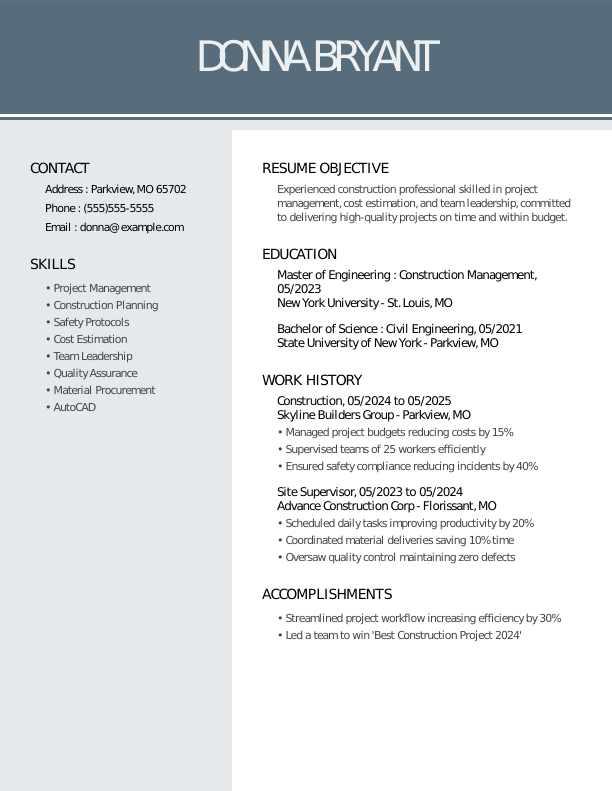
Construction Entry-Level Resume
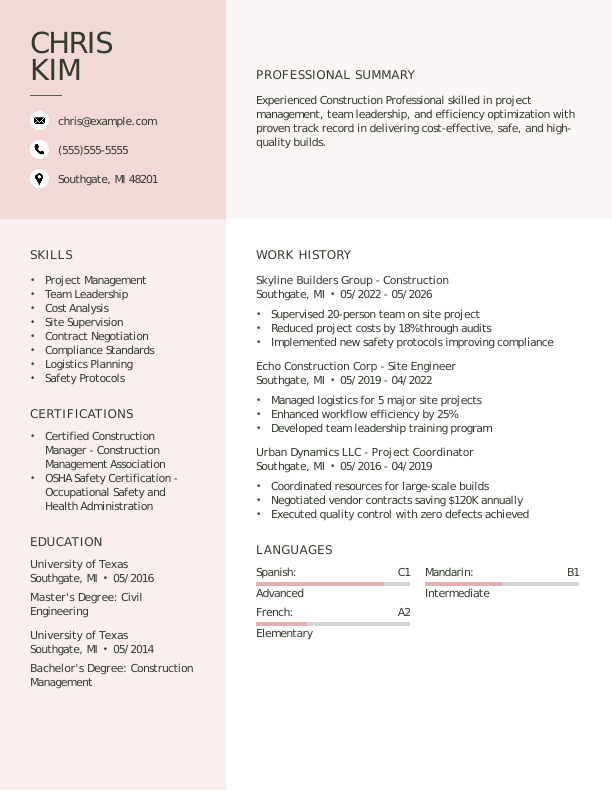
Construction Mid-Level Resume
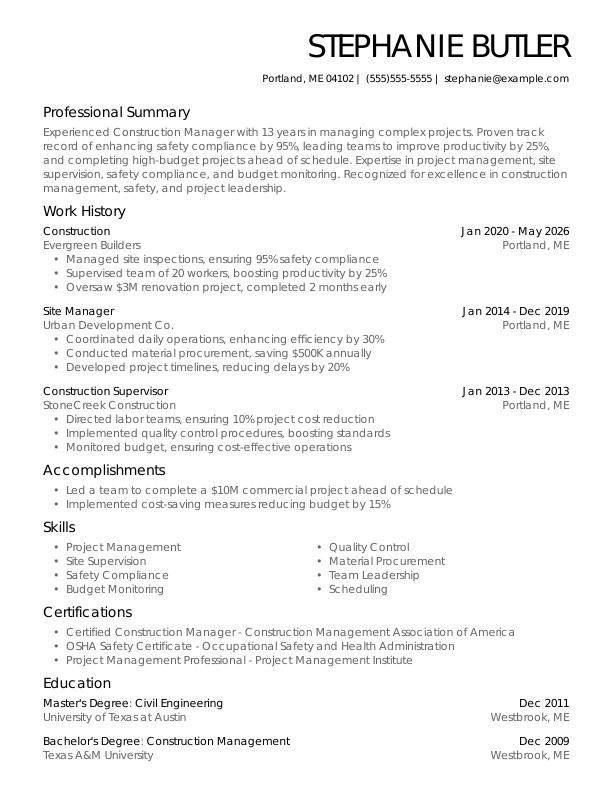
Construction Experienced Resume
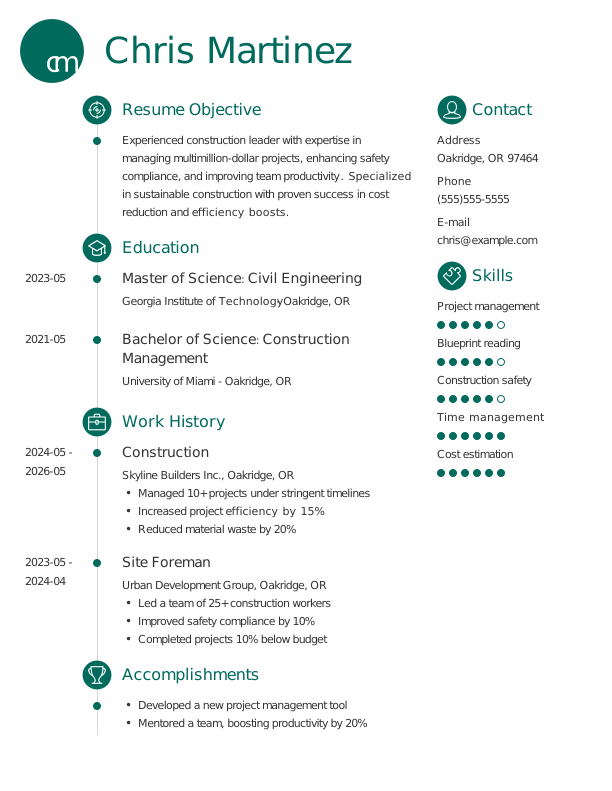
 Free
FreeConstruction Modern Resume
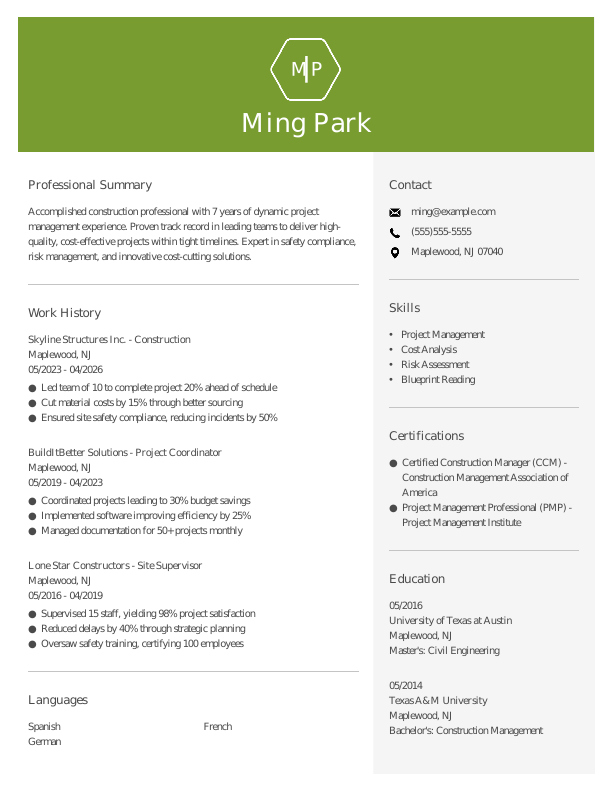
Construction Creative Resume
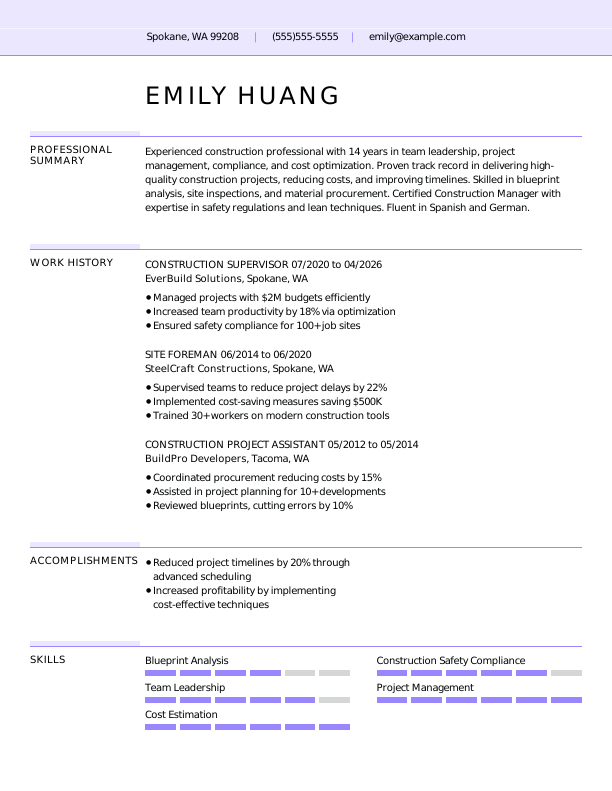
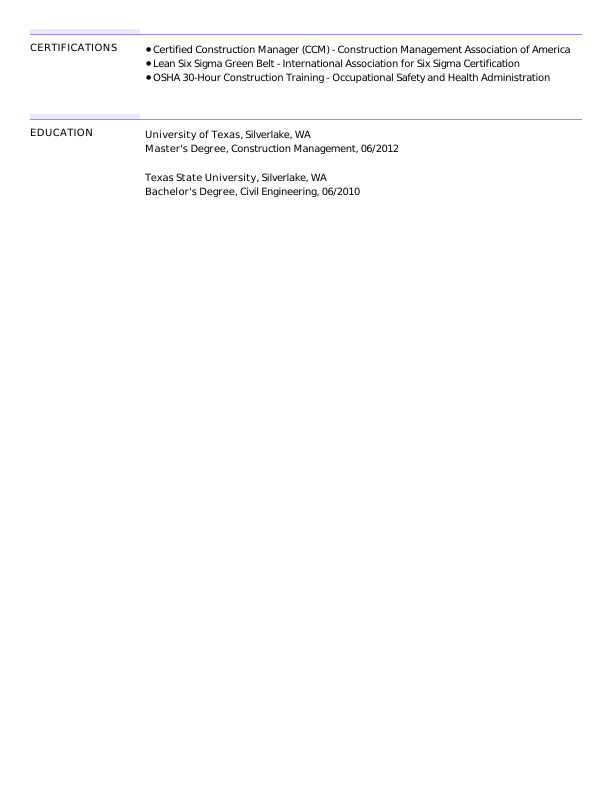
Construction Traditional Resume
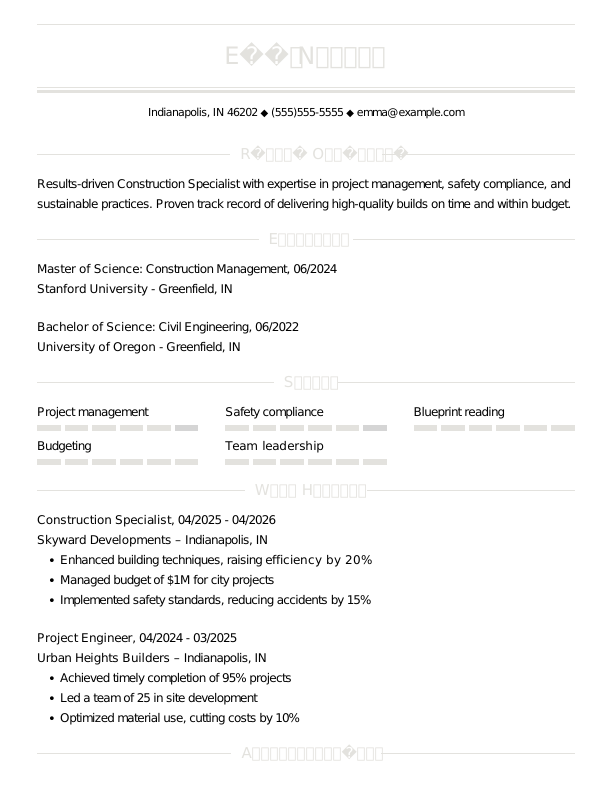
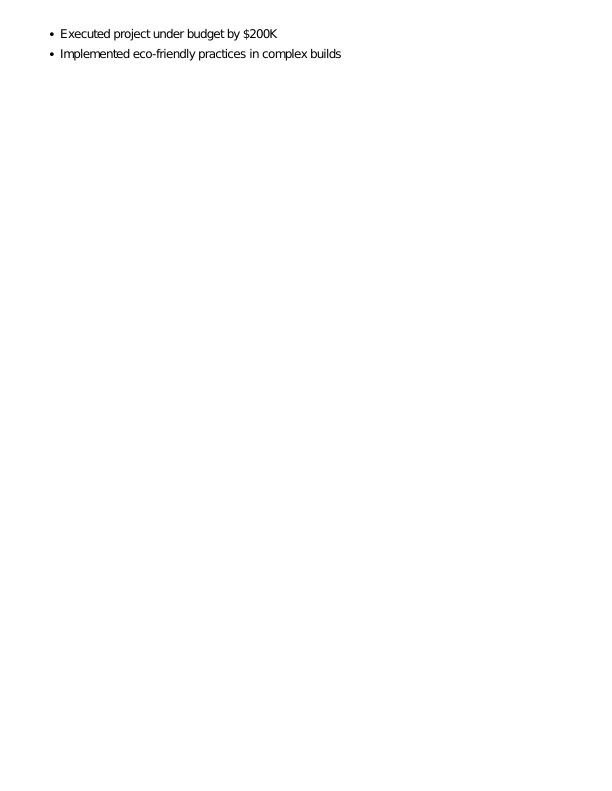
Construction Simple CV Example
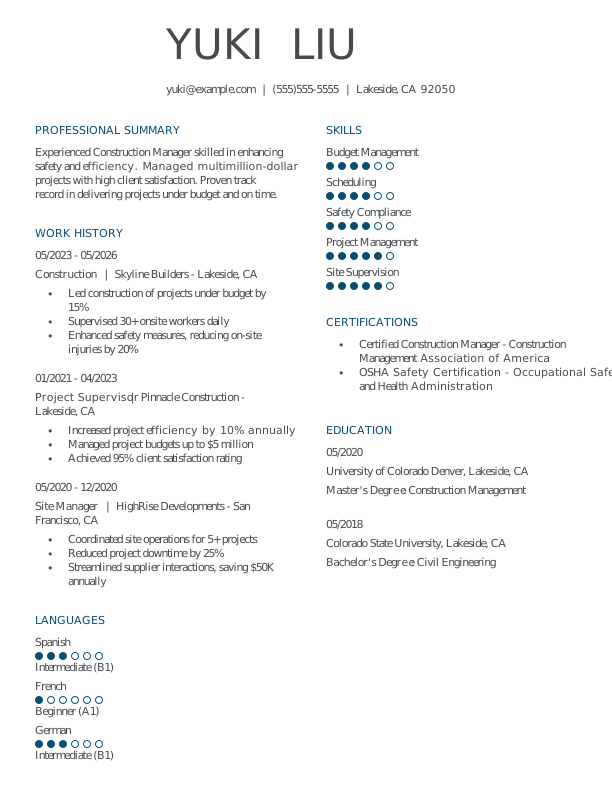
Construction CV Format
Browse Free Resume Templates
- Accounts Payable
- Adjunct Professor
- Artist
- Auto Mechanic
- Baker
- Business Development Manager
- Business
- Certified Nursing Assistant
- Classic & Traditional
- Cleaner
- College Student
- Concierge
- Construction Worker
- Corporate
- Creative & Unique
- Custodian
- Customer Service
- Dental Assistant
- Direct Support Professional
- Entry-Level
- Flight Attendant
- Hospitality & Food Service
- Front Desk Receptionist
- Healthcare
- High School
- Housekeeping
- Hvac Technician
- Hybrid
- Inventory Manager
- Logistics
- Maintenance
- Management
- Modern
- Mortgage Loan Processor
- Pet Sitter
- Phlebotomist
- Production
- Rbt
- Sales
- Security Services
- Restaurant Server
- Simple & Basic
- Social Work
- Teacher
- Technology
Resume Examples for Construction
Resumes and CVs for construction professionals vary significantly depending on experience level, from entry-level positions to seasoned experts. Check out our templates designed for each stage, and take advantage of our Resume Builder to craft your ideal document.
Entry-Level Construction Resume
Ideal for recent graduates and career changers entering the construction field, this template provides a solid foundation for crafting a resume with no experience while showcasing relevant skills and education.

Mid-Career Construction Resume
A great fit for mid-level construction professionals aiming for advancement, this template effectively showcases recent achievements and prepares applicants for specialized or leadership roles.

Experienced Construction Resume
An ideal choice for seasoned professionals with over 10 years in the construction industry, this template supports job seekers pursuing senior management or leadership roles in their field.

Construction Resume Template (Text)
Take this customizable text format of a construction resume to copy, edit, and personalize directly in your document for a standout application.
Olivia Miller
Milwaukee, WI 53213
Professional Summary
Experienced construction manager adept at project coordination, budget management, and safety compliance with a proven track record of reducing costs and enhancing productivity.
Work Experience
May 2024 – May 2026
Prime Builders Inc. – Milwaukee, WI
Construction
- Managed construction site with 20+ workers.
- Reduced project costs by 15%.
- Ensured safety compliance, zero accidents.
May 2022 – May 2023
NextGen Construction – Milwaukee, WI
Site Supervisor
- Oversaw daily operations of site.
- Boosted team productivity by 25%.
- Coordinated timely delivery of materials.
May 2021 – May 2022
BuildTech Solutions – Milwaukee, WI
Project Coordinator
- Streamlined project schedules.
- Managed budget, saved $50K.
- Enhanced client satisfaction by 20%.
Education
May 2021
University of California Oakland, CA
Master’s Construction Management
May 2019
University of California Oakland, CA
Bachelor’s Civil Engineering
Certifications
- Project Management Professional (PMP) – Project Management Institute
- Certified Construction Manager (CCM) – Construction Management Association of America
Skills
- Project Management
- Budgeting
- Team Leadership
- Safety Compliance
- Scheduling
- Cost Management
- Client Relations
- Material Coordination
How to Write a Construction Resume
For construction professionals, knowing how to write a resume means showcasing your skills and hands-on experience in a clear format that highlights your qualifications. Apply the recommendations that follow to emphasize your strengths and tailor your resume for the specific positions you’re targeting.
1. Contact Info
Your contact information should be prominently displayed at the top of your resume, ensuring clarity and professionalism.
Be sure to include:
- Full name
- Phone number
- Professional email address
- City and state (ZIP code is optional)
- LinkedIn profile or relevant portfolio (if applicable)
 PRO TIP
Avoid including irrelevant personal details such as your age, religion, or a photo unless specifically requested by the employer.
2. Resume Profile
A resume profile is a brief introduction of two to four sentences that highlights your qualifications and sets the stage for hiring managers. It serves as a compelling pitch that grabs their attention and motivates them to delve deeper into your resume.
Typically placed at the top of your resume, this section can be formatted as either a summary or an objective. Each option has its distinct purpose, allowing you to tailor your message. Here’s a closer look at how they differ:
- A resume summary showcases essential experience, skills, and accomplishments relevant to the construction industry. This format is particularly beneficial for individuals with prior work history or transferable abilities who want to highlight their contributions as skilled construction professionals.
- A resume objective highlights your aspirations and outlines the career goals you aim to achieve. It’s particularly beneficial for recent grads, construction trainees, or professionals pivoting into new roles within the building industry who may lack extensive experience.
Let’s explore examples of a resume summary and a resume objective to understand their distinct purposes:
Construction resume summary example:
Dedicated construction manager with over 6 years of experience overseeing large-scale commercial projects. Proficient in project scheduling, budget management, and team leadership. Acknowledged for consistently delivering projects on time and within budget while maintaining high safety standards and quality workmanship.
Construction resume objective example:
Recent graduate with a degree in construction management, eager to launch a career within a dynamic construction firm. Committed to safety and quality craftsmanship, ready to bring strong project management skills and attention to detail to residential or commercial development projects.
3. Work Experience
The work experience on your resume serves as a foundation for showcasing your qualifications. Employers evaluate not only job titles and responsibilities but also how you’ve contributed to previous projects and teams.
This section of your resume illustrates how your hands-on experience in construction aligns with the skills needed for the role you’re pursuing.
The work experience section should contain:
- Job title
- Employer name and location
- Dates of employment (month/year)
- 3–5 bullet points detailing your construction responsibilities and project achievements
To tailor your work experience bullet points, use construction-specific language that reflects the role you’re applying for. Begin with action verbs such as “Constructed,” “Supervised,” or “Estimated” to create powerful statements.
Incorporate quantifiable information where possible. Demonstrating achievements with specific numbers (like “increased project efficiency by 30%”) highlights your value and sets you apart from other applicants.
In general, consider following the format of:
[action verb] + [responsibility] = [result/achievement]
For example:
Managed construction projects valued at over $1 million, ensuring on-time delivery and adherence to safety regulations, resulting in a 95% client satisfaction rate.
Note that you can also flip the result/achievement with the responsibility:
Achieved a 15% reduction in project costs through efficient resource allocation and strategic vendor negotiations.
With these techniques in mind, your resume bullets may look something like:
- Executed project timelines for 15+ construction projects, ensuring on-time delivery and reducing delays by 20%.
- Coordinated teams of up to 10 workers, improving collaboration and efficiency during site operations.
- Implemented safety protocols that resulted in a 30% decrease in workplace accidents over one year.
- Used AutoCAD software to draft site plans, improving design accuracy and client satisfaction.
- Mentored junior crew members, fostering skill development and promoting a culture of teamwork.
4. Skills
The skills section provides a concise overview of your construction abilities, showcasing your expertise in areas such as project management and safety compliance. This section helps to ensure an ATS-friendly resume, enabling hiring managers to quickly assess your qualifications.
Skills can be categorized into three key areas:
- Soft skills are personal qualities that influence how individuals cooperate in the construction industry.
- Hard skills are specific, quantifiable abilities gained through education, training, or hands-on experience.
- Technical skills encompass the practical abilities necessary to operate specific tools and technologies within a field.
5 Soft Skills for Your Resume or CV
- Effective communication
- Team leadership skills
- Time management skill
- Conflict resolution abilities
- Attention to detail
5 Hard Skills for Your Resume or CV
- Blueprint reading and interpretation
- Heavy machinery operation (excavators, cranes)
- Concrete mixing and pouring techniques
- Building codes compliance (OSHA regulations)
- Project management software (Procore, PlanGrid)
In general, aim to include a well-rounded selection of skills that directly match the job requirements.
PRO TIP
If you’re a newer construction worker, consider placing your skills section higher on the resume, right after your summary. For those with more experience, it’s better to position this section lower and weave your skills into your work history for a stronger impact.
5. Education
Understanding how to list education on your resume can significantly impact your job prospects in construction. Start by listing your most recent or relevant degree, clearly noting the type of degree and the institution where you studied.
For those who have recently graduated, consider including details like your graduation year, GPA if it’s 3.5 or above, any honors received, or relevant coursework that highlights skills in the field.
Construction resume education section example:
Associate Degree in Construction Management
Florida State College at Jacksonville, Jacksonville, FL
Graduated: 2023 | Graduated with Honors (GPA 3.8)
PRO TIP
When listing multiple degrees on your resume, always start with the highest qualification first in reverse-chronological order, such as Bachelor of Science in Construction Management, followed by Associate Degree in Construction Technology.
6. Certifications
Certifications illustrate your qualifications and ensure you stay updated on the skills required in construction. While not a staple of every resume, this section is particularly beneficial for professionals in the industry. Employers often look for specific certifications for specialized roles, such as OSHA safety training or project management credentials.
Highlight relevant certifications that bolster your application and improve your expertise. Always keep them current and present them in a clear format to make them easily recognizable.
Construction certification examples:
- General Contractor License, California | California State Licensing Board | Expires: 04/2028
- OSHA 10-Hour Construction Safety | Occupational Safety and Health Administration | Expires: 11/2027
- First Aid/CPR Certification | American Red Cross | Expires: 01/2028
- Forklift Operator Certification | National Safety Council | Expires: 09/2027
Start Building Your Job-Winning Resume
Use Your Existing Resume
Import your current resume to transfer your information to one of our professional templates.
Create a New Resume
Start fresh with a template that catches your eye and follow the prompts to add your details.
Tailor Your Work History to Beat the ATS
Your work experience is much more than just job titles. It serves as a platform to demonstrate the tangible contributions you’ve made in construction projects, showcasing your skills and results. This method not only highlights your achievements but also improves the likelihood of creating an ATS-friendly resume that applicant tracking systems (ATS) can scan.
To optimize your work history for a specific position, be sure to align it with the desired qualifications outlined in the job description. Start by examining the listing closely for key phrases or competencies that appear frequently. Incorporating these elements into your descriptions will make your experience more relevant and appealing to potential employers.
What’s a Fair Construction Salary?
Researching salary information is important for evaluating job offers, negotiating better pay, and making informed career decisions in the construction field. According to the U.S. Bureau of Labor Statistics (BLS), the data below reflects the most recent nationwide averages for construction workers.
Several factors can impact actual earnings, including location, years of experience, certifications, and specialization. For instance, skilled tradespeople like electricians or plumbers often earn more than general laborers, particularly when working on large commercial projects or in high-demand areas.
| Alabama | $101,320 |
| Alaska | $148,270 |
| Arizona | $116,840 |
| Arkansas | $91,040 |
| California | $137,430 |
| Connecticut | $126,600 |
| Delaware | $142,480 |
| District of Columbia | $141,920 |
| Florida | $115,550 |
| Georgia | $111,140 |
| Hawaii | $116,730 |
| Idaho | $107,880 |
| Illinois | $115,250 |
| Indiana | $107,450 |
| Iowa | $99,990 |
| Kansas | $107,290 |
| Kentucky | $112,290 |
| Louisiana | $118,360 |
| Maine | $112,220 |
| Maryland | $135,390 |
| Massachusetts | $156,510 |
| Michigan | $110,520 |
| Minnesota | $125,930 |
| Mississippi | $103,850 |
| Missouri | $115,900 |
| Montana | $116,870 |
| Nebraska | $102,380 |
| Nevada | $115,480 |
| New Hampshire | $85,500 |
| New Jersey | $140,070 |
| New Mexico | $106,550 |
| New York | $155,760 |
| North Carolina | $117,320 |
| North Dakota | $111,780 |
| Ohio | $101,070 |
| Oklahoma | $110,750 |
| Oregon | $134,020 |
| Pennsylvania | $116,770 |
| Rhode Island | $115,460 |
| South Carolina | $119,180 |
| South Dakota | $121,860 |
| Tennessee | $110,480 |
| Texas | $109,570 |
| Utah | $107,830 |
| Vermont | $106,540 |
| Virginia | $122,480 |
| Washington | $144,960 |
| West Virginia | $86,860 |
| Wisconsin | $120,310 |
| Wyoming | $99,780 |
| Guam | $93,030 |
| Puerto Rico | $72,840 |
| Virgin Islands | $89,280 |
Key Takeaways
- Tailor your resume to the job description. Use specific terms from the listing to align with both ATS and hiring managers.
- Highlight quantifiable achievements to demonstrate value. Include metrics that matter (e.g., project completion times, budget adherence, safety records) for a stronger impact.
- Select the right format based on your experience level. Entry-level applicants may prefer a functional style, while seasoned professionals often opt for a reverse-chronological format.
More Resume & CV Examples
- Architecture
- Construction Assistant
- Construction Management
- Construction Manager
- Construction Project Manager
- Construction Superintendent
- Contractor
- Foreman
- General Labor
- Heavy Equipment Operator
- Laborer
- Superintendent
Cover Letters for Your Resume
Browse our library of cover letter examples to complete your application. A resume will have a better chance of getting noticed.
Frequently Asked Questions
Last Update:
What resume format should I use for my construction resume?
There are three main resume formats to consider when applying for a construction position. Your choice will depend on your level of experience and the aspects of your career you wish to highlight:
- Chronological: The chronological resume is the most widely used format, emphasizing your work history by showcasing your responsibilities and achievements. This type of resume is particularly helpful for those with a consistent job background that adds credibility to their qualifications and demonstrates a clear career progression.
- Functional: The functional resume, also known as a skills-based resume, highlights your qualifications and skills over work history. This format is particularly beneficial for applicants who lack relevant experience or have gaps in employment. By emphasizing what you can bring to the table, this format lets you showcase your abilities more prominently.
- Combination: The combination resume format merges the strengths of chronological and functional styles, showcasing both skills and work history. This approach is ideal for professionals aiming to highlight their abilities alongside career growth, making it a powerful tool for those transitioning to new roles or industries.
Should I include a cover letter with my resume?
Yes, you should include a cover letter with your construction job application. A well-crafted cover letter improves your resume by allowing you to explain your interest in the role and highlight relevant skills and experiences that might not be immediately apparent from your resume alone. It shows potential employers that you’ve taken the time to customize your application rather than submitting a generic one, giving you an advantage over job seekers who skip this step.
If you’re unsure about how to write a cover letter, don’t let that deter you from including one. There are many resources available to assist you, such as guides on writing cover letters, examples specific to the construction industry, and various formats that can help frame your qualifications.
To make the writing process easier, consider using a cover letter generator, which can create a professional document by providing templates and suggestions tailored for construction positions.
How long should a construction resume be?
For construction professionals with less than 10 years of experience, a one-page resume is generally recommended to effectively showcase relevant skills and projects. Highlight specific trades, certifications (e.g., OSHA safety training), and notable accomplishments that illustrate your capabilities in the field.
Conversely, those in senior or specialized roles may extend their resumes to two pages if they maintain focus on relevant information. Ensure every detail aligns with the job requirements, emphasizing leadership experience and advanced certifications while eliminating any superfluous content for clarity.
What keywords should I include to pass applicant tracking systems (ATS)?
To successfully navigate ATS, focus on incorporating keywords and phrases directly from the job posting. Look for terms related to construction such as “blueprint reading,” “safety compliance,” or “project management.” These specific words not only demonstrate your understanding of the role but also increase your chances of passing through initial screenings.
Additionally, highlight any relevant certifications like OSHA 10, LEED accreditation, or First Aid training, along with technical tools you’re skilled in, such as AutoCAD or Revit. This tailored approach shows you meet the qualifications for the position and understand industry standards.
Is it helpful to include volunteer work or internships in construction on my resume?
Yes, including volunteer work or internships is beneficial, particularly for those new to the field. These experiences demonstrate practical skills and a commitment to the industry, making your resume more appealing even if you lack extensive formal employment.

Vicki Salemi is a nationally recognized career expert who helps professionals navigate the hiring landscape and find the right fit on Monster. With over 15 years of experience in corporate recruiting and HR, she offers expert guidance on job search strategies, interview preparation, and career development to help candidates land their next role.
See More From Vicki SalemiExplore Related Career Advice


How to Put Transferable Skills on Your Resume: 120 Skills, Examples, & Tips

Updated:
Aug 27, 2026
|
16 min read


How to Write a Functional Resume (Formatting Tips, Template, & Examples)
Updated:
Aug 7, 2026
|
17 min read


Functional vs Chronological Resume: Which Format Is Right for You?
Updated:
Aug 3, 2026
|
16 min read

100+ Resume Adjectives to Help You Write a Stronger Resume in 2026 (With Examples)
Updated:
Jul 30, 2026
|
12 min read