
Free Financial Advisor Resume Templates & Examples
Helping clients navigate major financial decisions takes both technical knowledge and personal trust. These free financial advisor resume and CV examples help you convey your portfolio management approach and client retention record.
Real-World Resumes That Get Results
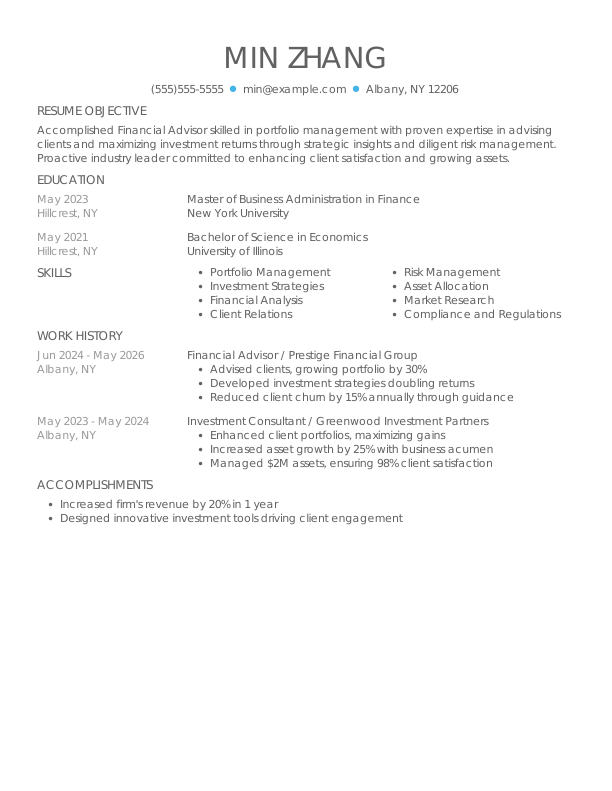
Financial Advisor Entry-Level Resume
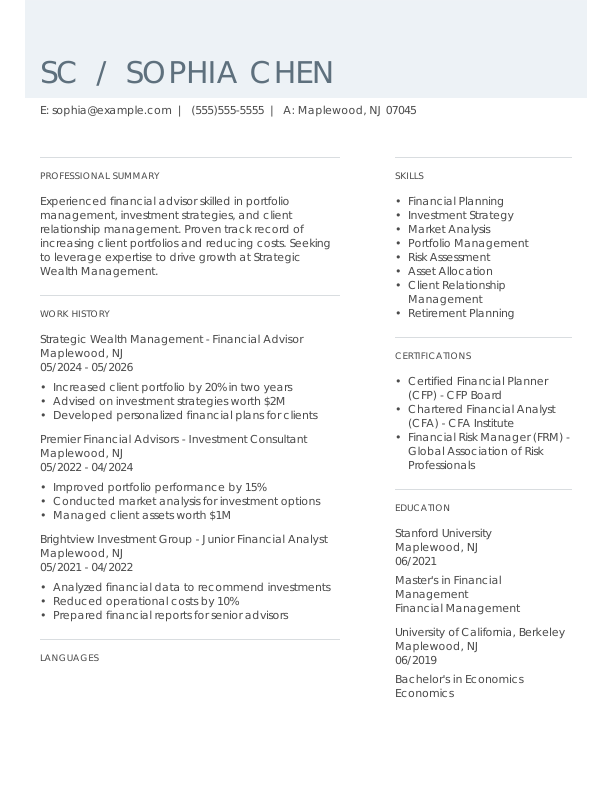
Financial Advisor Mid-Level Resume
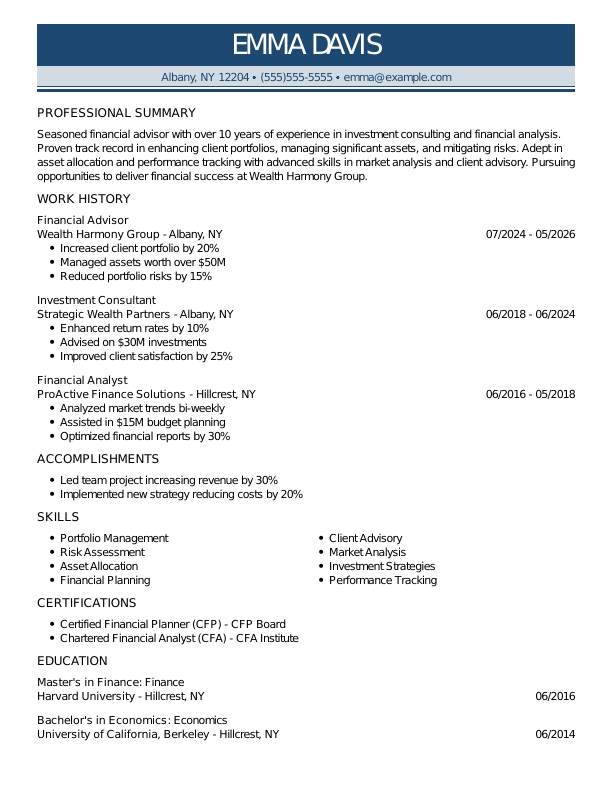
Financial Advisor Experienced Resume
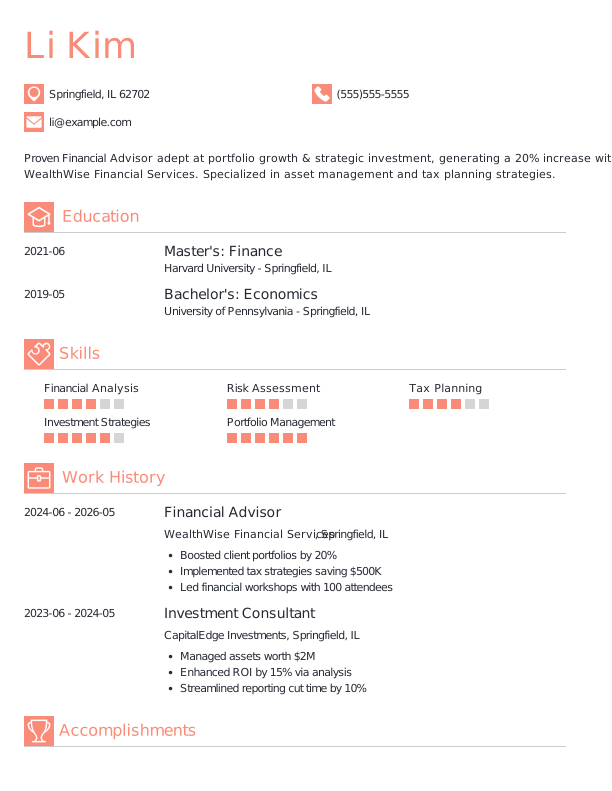

 Free
FreeFinancial Advisor Modern Resume
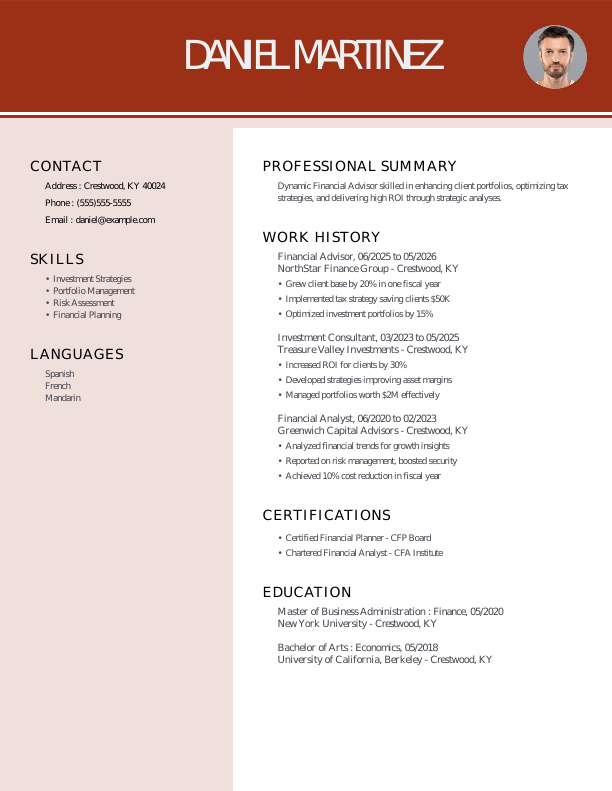
Financial Advisor Creative Resume
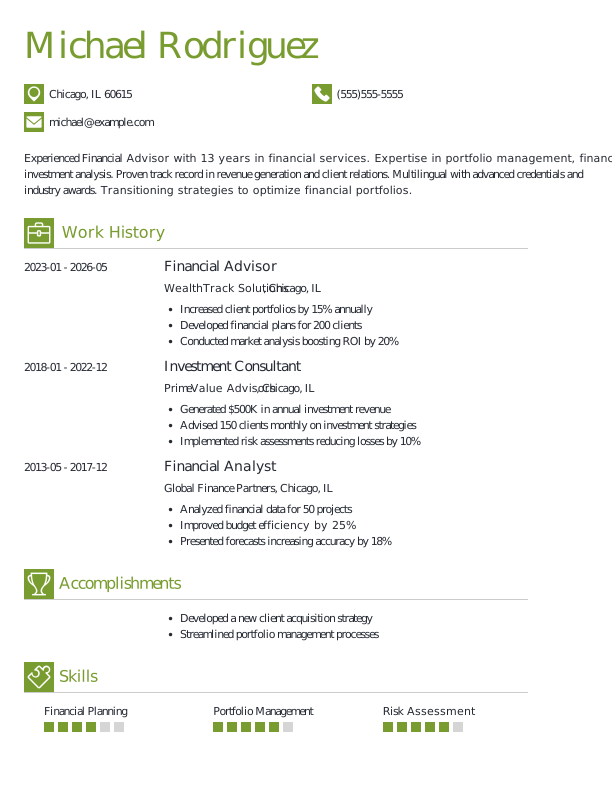
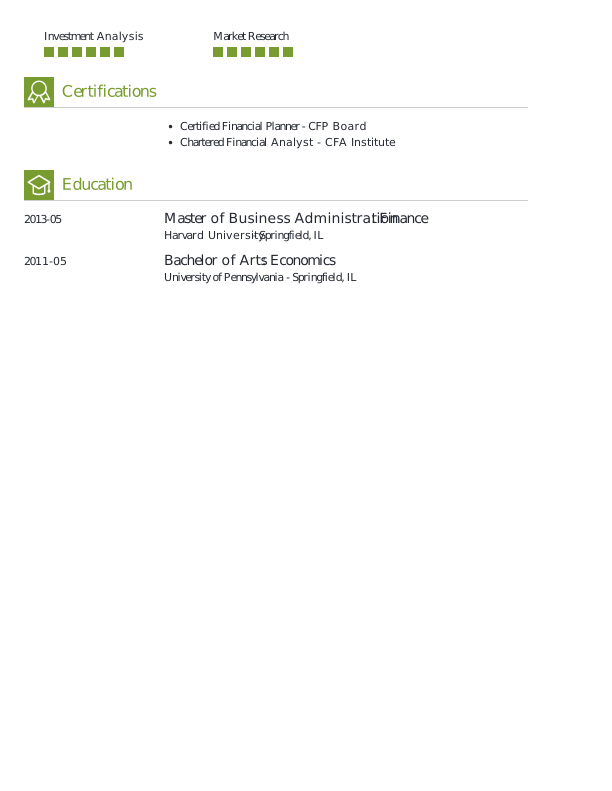
Financial Advisor Traditional Resume
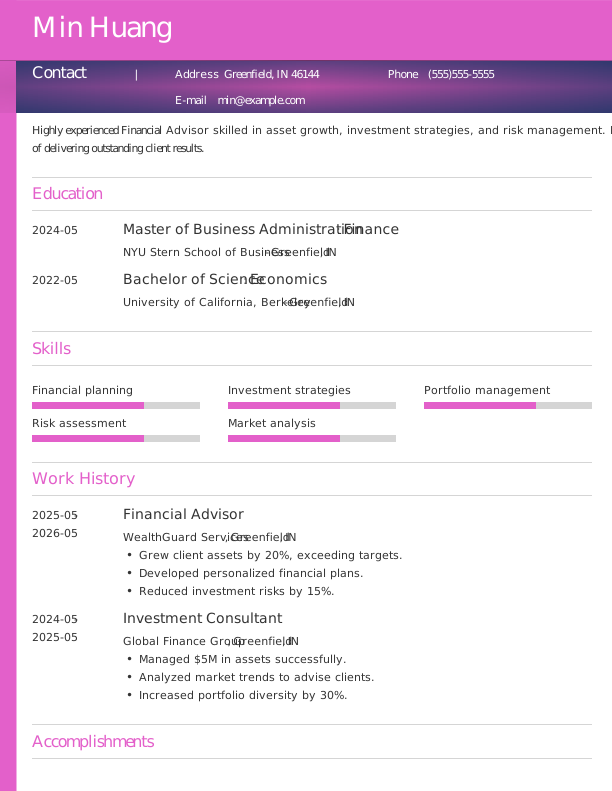

Financial Advisor Simple CV Example
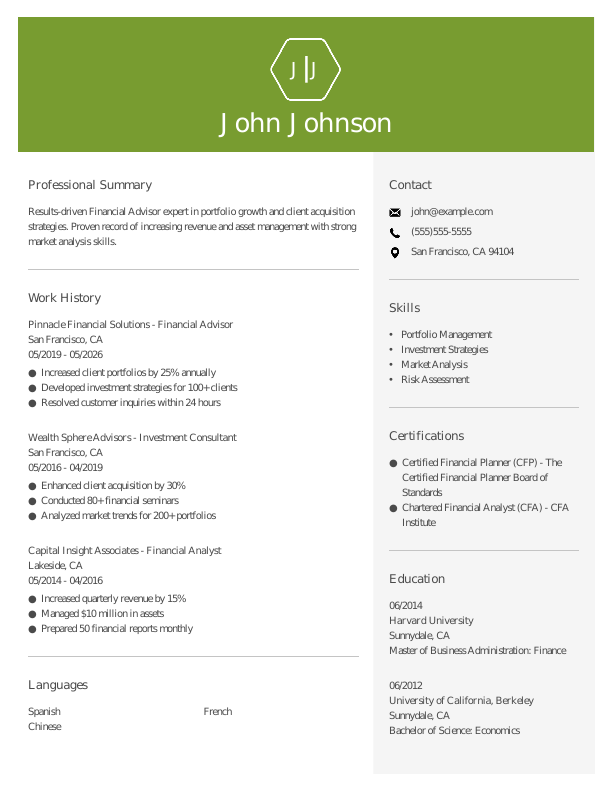
Financial Advisor CV Format
Browse Free Resume Templates
- Accounts Payable
- Adjunct Professor
- Artist
- Auto Mechanic
- Baker
- Business Development Manager
- Business
- Certified Nursing Assistant
- Classic & Traditional
- Cleaner
- College Student
- Concierge
- Construction Worker
- Corporate
- Creative & Unique
- Custodian
- Customer Service
- Dental Assistant
- Direct Support Professional
- Entry-Level
- Flight Attendant
- Hospitality & Food Service
- Front Desk Receptionist
- Healthcare
- High School
- Housekeeping
- Hvac Technician
- Hybrid
- Inventory Manager
- Logistics
- Maintenance
- Management
- Modern
- Mortgage Loan Processor
- Pet Sitter
- Phlebotomist
- Production
- Rbt
- Sales
- Security Services
- Restaurant Server
- Simple & Basic
- Social Work
- Teacher
- Technology
Resume Examples for Financial Advisors
A financial advisor resume or CV varies significantly based on experience level. Explore the key elements for each stage and build your resume to create a personalized document that fits your career journey.
Entry-Level Financial Advisor Resume
Ideal for recent graduates and career changers moving into financial advising from different fields, this resume with no experience template is perfect.

Mid-Career Financial Advisor Resume
A good fit for financial advisors with several years of experience, this template highlights recent achievements and supports advancement into senior or specialized roles.
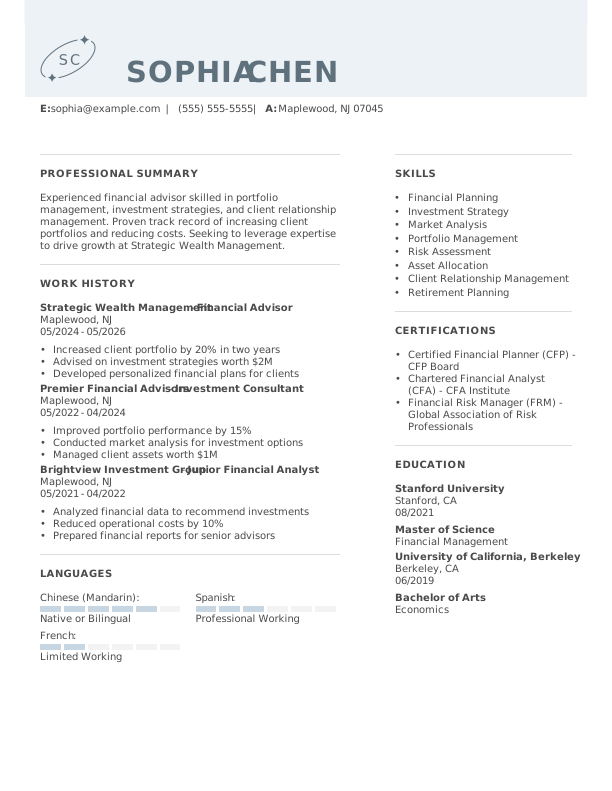
Experienced Financial Advisor Resume
An ideal choice for financial professionals with over 10 years of experience, this template supports applicants aiming for senior-level advisory roles or leadership positions in finance.

Financial Advisor Resume Template (Text)
Use this customizable text format for a financial advisor resume to copy, edit, and personalize directly in your document. You can also check out our resume templates page for more styles.
Hiro Chen
San Diego, CA 92112
Professional Summary
Dynamic financial advisor specializing in asset growth, market strategies, and client relationship building, backed by quantified successes and certifications that drive high-impact results.
Work Experience
February 2024 – May 2026
Nexus Financial Group – San Diego, CA
Financial Advisor
- Increased client portfolio by 35% annually
- Managed assets over $10M with strategic planning
- Developed personalized investment strategies
January 2020 – December 2023
Capital Dynamics – San Diego, CA
Investment Consultant
- Boosted client satisfaction by 40% via advisement
- Streamlined asset allocation, improving ROI by 25%
- Conducted market research, increasing insights accuracy
January 2018 – December 2019
Wealth Bridge Advisors – San Diego, CA
Financial Analyst
- Analyzed market trends, saving $2M in losses
- Enhanced forecasting accuracy by 20% through models
- Implemented reporting system boosted data clarity
Education
June 2017
University of Chicago Chicago, IL
MBA in Finance
June 2015
University of Pennsylvania Philadelphia, PA
Bachelor of Science in Economics
Certifications
- Certified Financial Planner – Certified Financial Planner Board
- Chartered Financial Analyst – CFA Institute
Skills
- Portfolio Management
- Investment Strategies
- Financial Planning
- Market Analysis
- Client Relations
- Asset Allocation
- Risk Assessment
- Forecasting
How to Write a Financial Advisor Resume
As a financial advisor, knowing how to write a resume means showcasing your analytical skills and client management experience with a format that positions you as the ideal applicant for financial roles. Apply the recommendations that follow to emphasize your strengths and tailor your resume for the specific positions you’re targeting.
1. Contact Info
Your contact information should be clear, professional, and easy to find at the top of your resume.
Make sure to include:
- Full name
- Phone number
- Professional email address
- City and state (ZIP code is optional)
- LinkedIn profile or personal portfolio (if relevant)
- Relevant certifications or licenses (if applicable)
 PRO TIP
Avoid including personal details such as your age, religion, or social media links on your resume unless explicitly requested by the employer.
2. Resume Profile
A resume profile is a concise section that highlights your key skills and qualifications in two to four sentences. It serves as a powerful pitch to hiring managers, drawing them in and prompting them to explore your resume further.
This profile is typically positioned at the top of your resume and can take the form of either a summary or an objective, each serving distinct purposes. Understanding these differences will help you craft a more tailored approach:
- A resume summary highlights your key financial expertise, analytical skills, and notable achievements in wealth management. This approach works well for individuals with a strong track record of contributions who aim to show their value as a financial advisor.
- A resume objective is a forward-looking statement highlighting your career aspirations and what you aim to achieve in your next role. This type of statement is especially helpful for recent graduates, individuals changing careers, or those with limited experience, including entry-level finance professionals.
Let’s take a look at an example of each to see how a resume summary and a resume objective differ:
Financial advisor resume summary example:
Dedicated financial advisor with over 6 years of experience in wealth management and investment strategies. Proficient in portfolio analysis, risk assessment, and client relationship building. Acknowledged for delivering personalized financial solutions that improve clients’ financial well-being and drive long-term investment success.
Financial advisor resume objective example:
Recent finance graduate and certified financial planner enthusiastic about launching a career in wealth management. Committed to fostering client trust and delivering personalized financial strategies while contributing analytical skills and a proactive approach to a dynamic advisory firm or financial services company.
3. Work Experience
The work experience on your resume is an important foundation for your candidacy. Employers evaluate your job history to understand not only where you’ve been but also how you’ve positively influenced clients and financial outcomes.
Your background illustrates how your expertise in investment strategies and client relationship management qualifies you for the financial advisor role.
The work experience section should contain:
- Job title
- Employer name and location
- Dates of employment (month/year)
- 3–5 bullet points describing your relevant responsibilities and achievements
Tailor your achievements and responsibilities to align with the financial advisor role you seek. Start each bullet point with an action verb (like “Advised,” “Analyzed,” “Developed”) to improve the impact of your statements.
Incorporate quantifiable metrics whenever possible. Specific numbers, such as portfolio growth percentages or client acquisition rates, clearly illustrate your value and help distinguish you from other applicants in a competitive market.
In general, consider following the format of:
[action verb] + [responsibility] = [result/achievement]
For example:
Managed investment portfolios for 50+ clients, achieving an average annual return of 12% while maintaining a risk-adjusted performance above industry benchmarks.
Note that you can also flip the result/achievement with the responsibility:
Increased client assets under management by 30% through tailored financial planning and proactive investment strategies.
With these techniques in mind, your resume bullets may look something like:
- Developed personalized financial plans for 50+ clients, increasing client investment returns by an average of 15%.
- Conducted comprehensive market analysis to identify investment opportunities, resulting in a 20% growth in client portfolios.
- Mentored junior advisors on client relationship management techniques, improving overall team productivity and success rates.
- Used financial planning software to streamline portfolio management and reporting processes.
- Collaborated with tax professionals and estate planners to provide holistic advice, ensuring clients’ long-term financial security.
4. Skills
The skills section provides a concise overview of the essential abilities required for a financial advisor. This summary allows recruiters and hiring managers to quickly evaluate qualifications and align them with their needs.
Skills can be categorized into three groups:
- Soft skills are personal attributes that shape how well financial advisors interact with clients and colleagues.
- Hard skills are specific, measurable abilities gained through education, training, or experience.
- Technical skills are the specialized competencies required to perform specific tasks.
5 Soft Skills for Your Resume or CV
- Client-focused approach
- Financial forecasting skills
- Trust-building strategies
- Effective communication
- Risk assessment abilities
5 Hard Skills for Your Resume or CV
- Financial planning and analysis
- Investment portfolio management (Morningstar, Bloomberg)
- Risk assessment strategies
- Retirement planning solutions
- Tax optimization techniques
In general, aim to showcase a diverse range of relevant skills that align with the job requirements to demonstrate your comprehensive value.
PRO TIP
If you’re a newer financial advisor, place your skills section higher on the resume right after your summary. For those with more experience, it’s best to position this section lower, weaving your skills into your work history to showcase practical application.
5. Education
Understanding how to list education on your resume is important for showcasing your qualifications. Begin by listing your most recent or relevant degree, including the type of degree and the institution’s name.
If you’re a recent graduate, consider adding your graduation year, GPA (if it’s 3.5 or higher), any honors received, and relevant coursework to improve your profile.
Financial advisor resume education section example:
Bachelor of Business Administration (BBA)
University of Florida, Gainesville, FL
Graduated: 2024 | Summa Cum Laude
PRO TIP
If you’re advancing from an Associate of Science in Finance to a Bachelor of Science in Financial Planning, or have acquired another relevant degree, list both in reverse-chronological order.
6. Certifications
Listing certifications on your resume showcases your qualifications and can help compensate for any gaps in practical experience. While not always included in a standard resume, this section is particularly beneficial for many professionals in the financial sector.
Employers frequently seek specific licenses or designations, such as Certified Financial Planner (CFP) or Chartered Financial Analyst (CFA), for specialized roles.
Be sure to include only those certifications that directly improve your application and align with the job you’re pursuing. Remember to keep these credentials up to date and present them clearly to make a strong impression.
Financial advisor certification examples:
- Certified Financial Planner (CFP) | Certified Financial Planner Board of Standards | Expires: 12/2028
- Chartered Financial Analyst (CFA) | CFA Institute | Expires: 06/2027
- Financial Risk Manager (FRM) | Global Association of Risk Professionals | Expires: 03/2028
- Series 7 License | Financial Industry Regulatory Authority (FINRA) | Expires: 09/2027
Start Building Your Job-Winning Resume
Use Your Existing Resume
Import your current resume to transfer your information to one of our professional templates.
Create a New Resume
Start fresh with a template that catches your eye and follow the prompts to add your details.
Tailor Your Work History to Beat the ATS
Your work experience is more than a list of job titles; it’s a chance to show the measurable impact you’ve had on clients, investments, and financial outcomes. Including this information can also lead to a more ATS-friendly resume that can be easily scanned by applicant tracking systems (ATS)
A strong work history should be tailored to the financial advisor position you’re applying for, using relevant keywords and phrases that align with the employer’s expectations. Start by carefully analyzing the job description. Look for repeated skills, certifications, or client types mentioned, and then reflect those elements in your experience descriptions whenever possible
What’s a Fair Financial Advisor Salary?
Understanding financial advisor salaries nationwide can help you evaluate job offers, negotiate better pay, and make informed career decisions. The data below comes from the most recent nationwide averages for financial advisors as reported by the U.S. Bureau of Labor Statistics (BLS).
Keep in mind that factors like location, years of experience, certifications, and areas of expertise can all influence your actual salary. Financial advisors working in metropolitan areas or specializing in wealth management often earn significantly more than those in smaller markets or general advisory roles.
| Alabama | $129,240 |
| Arizona | $104,330 |
| Arkansas | $116,990 |
| California | $170,480 |
| Connecticut | $144,310 |
| Delaware | $133,620 |
| District of Columbia | $137,650 |
| Florida | $157,670 |
| Georgia | $150,650 |
| Hawaii | $124,640 |
| Idaho | $143,410 |
| Illinois | $153,440 |
| Indiana | $158,560 |
| Iowa | $129,680 |
| Kansas | $164,480 |
| Kentucky | $162,520 |
| Louisiana | $166,400 |
| Maryland | $173,120 |
| Massachusetts | $147,450 |
| Michigan | $144,370 |
| Minnesota | $134,100 |
| Mississippi | $154,090 |
| Missouri | $127,820 |
| Montana | $145,440 |
| Nebraska | $127,430 |
| Nevada | $142,290 |
| New Hampshire | $104,340 |
| New Jersey | $170,950 |
| New Mexico | $135,110 |
| New York | $225,930 |
| North Dakota | $114,900 |
| Ohio | $120,980 |
| Oklahoma | $118,980 |
| Oregon | $121,410 |
| Pennsylvania | $164,140 |
| Rhode Island | $118,310 |
| South Carolina | $140,490 |
| South Dakota | $174,340 |
| Tennessee | $143,910 |
| Texas | $126,020 |
| Utah | $130,030 |
| Vermont | $114,990 |
| Virginia | $155,160 |
| Washington | $156,310 |
| West Virginia | $132,360 |
| Wisconsin | $158,660 |
| Puerto Rico | $52,200 |
Key Takeaways
- Tailor your resume to the specific job listing. Use the language from the description when highlighting your skills and experiences for ATS and hiring managers.
- Incorporate quantifiable results to demonstrate your impact. Focus on achievements like portfolio growth percentages or client retention rates (e.g., increased assets under management by 20%).
- Select a resume format that suits your experience level. New professionals might opt for a functional layout, while seasoned advisors usually prefer reverse-chronological resumes.
More Resume & CV Examples
- Aml Analyst
- Bank Teller
- Banking Branch Manager
- Banking
- Budget Analyst
- CFO
- Credit Analyst
- Finance Manager
- Finance
- Financial Analyst
- Financial Planner
- Fundraising
- Insurance Agent
- Investment Banker
- Loan Officer
- Mortgage Closer
- Mortgage Loan Officer
- Mortgage Underwriter
- Portfolio Manager
- Private Equity
Cover Letters for Your Resume
Browse our library of cover letter examples to complete your application. A resume will have a better chance of getting noticed.
Frequently Asked Questions
Last Update:
What resume format should I use for my financial advisor resume?
There are three main resume formats to consider when applying for a financial advisor role. The format you select should reflect your experience level and highlight the skills or achievements you want to emphasize:
- Chronological: The most popular format, a chronological resume focuses on your work experience, detailing your responsibilities and achievements. This makes it an excellent choice for applicants with a consistent and relevant job history that reinforces their qualifications and demonstrates their growth in the financial advisory field.
- Functional: Also known as a skills-based resume, the functional resume emphasizes a qualifications summary and an expanded skills section to highlight your financial expertise. This approach minimizes focus on work history, benefiting applicants without relevant experience or those with gaps in employment.
- Combination: A combination resume integrates chronological and functional formats, showcasing both skills and work experience. This format benefits financial advisors by allowing them to emphasize their expertise in financial planning while also detailing their career growth, making it suitable for those advancing or transitioning in their careers.
Should I include a cover letter with my resume?
Yes, you should include a cover letter with your financial advisor job application for many reasons. A well-crafted cover letter complements your resume by allowing you to express your enthusiasm for the position and showcase relevant experiences that may not be highlighted in your resume. It demonstrates to employers that you’re committed to personalizing your application, which can set you apart from job seekers who don’t take this step.
If you’re feeling uncertain about writing a cover letter, you’re not alone. There are numerous resources available to guide you through the process, including tutorials on how to write a cover letter, examples tailored for financial positions, and various formats that cater to different styles and industries. These tools can make it easier for you to create a compelling narrative around your qualifications.
For those looking for convenience, using a cover letter generator can help streamline the creation of your document by providing structured templates and suggestions based on job-specific criteria.
How long should a financial advisor resume be?
For professionals with less than 10 years of experience, a resume should typically be one page long. This allows you to present your skills and achievements clearly without overwhelming potential employers with unnecessary details. Focus on highlighting relevant experiences, certifications, and key accomplishments.
For those in senior or specialized roles, a two-page resume is acceptable if the content remains targeted and relevant. Use this space to elaborate on advanced skills, leadership positions, and significant projects that demonstrate your expertise while maintaining clarity and organization throughout.
What keywords should I include to pass applicant tracking systems (ATS)?
To improve your resume for ATS screening as a financial advisor, focus on incorporating keywords and phrases directly from the job description. Look for terms like “investment strategies,” “client portfolio management,” or “financial analysis” that are relevant to the role. By using specific language from the posting, you increase your chances of being noticed by hiring managers.
Additionally, be sure to highlight any relevant certifications such as Certified Financial Planner or Chartered Financial Analyst. Mention technical tools you’re proficient in, like financial modeling software or CRM systems, to demonstrate your qualifications and expertise in the field.

Elizabeth Muenzen is a Certified Professional Resume Writer (CPRW) and member of the Professional Association of Resume Writers & Career Coaches who empowers job seekers to take control of their career paths using Monster’s comprehensive job search and resume tools.
See More From Elizabeth MuenzenExplore Related Career Advice


How to Put Transferable Skills on Your Resume: 120 Skills, Examples, & Tips

Updated:
Aug 27, 2026
|
16 min read


How to Write a Functional Resume (Formatting Tips, Template, & Examples)
Updated:
Aug 7, 2026
|
17 min read


Functional vs Chronological Resume: Which Format Is Right for You?
Updated:
Aug 3, 2026
|
16 min read

100+ Resume Adjectives to Help You Write a Stronger Resume in 2026 (With Examples)
Updated:
Jul 30, 2026
|
12 min read