
Free CFO Resume Templates & Examples
A CFO resume should demonstrate your financial stewardship, strategic planning ability, and experience guiding organizations through growth or transformation. Browse the examples below to find one suited to executive finance roles.
Real-World Resumes That Get Results
 Free
Free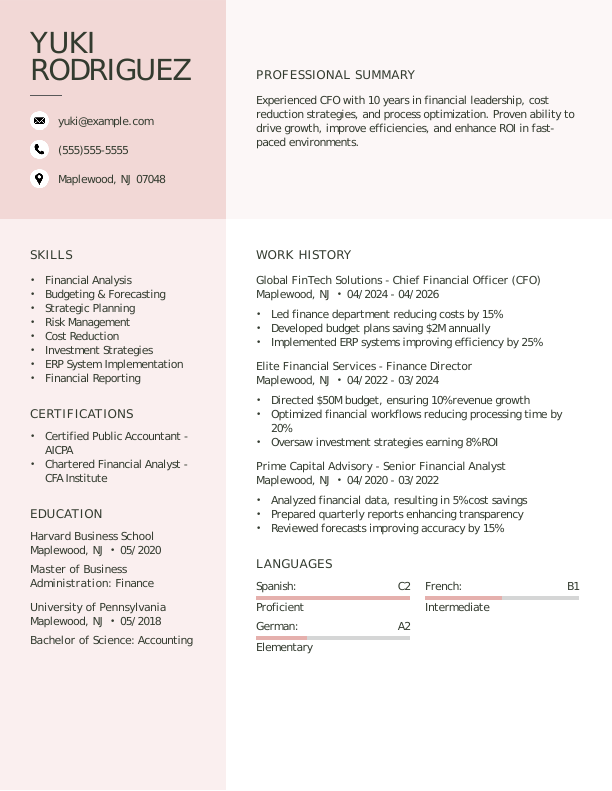

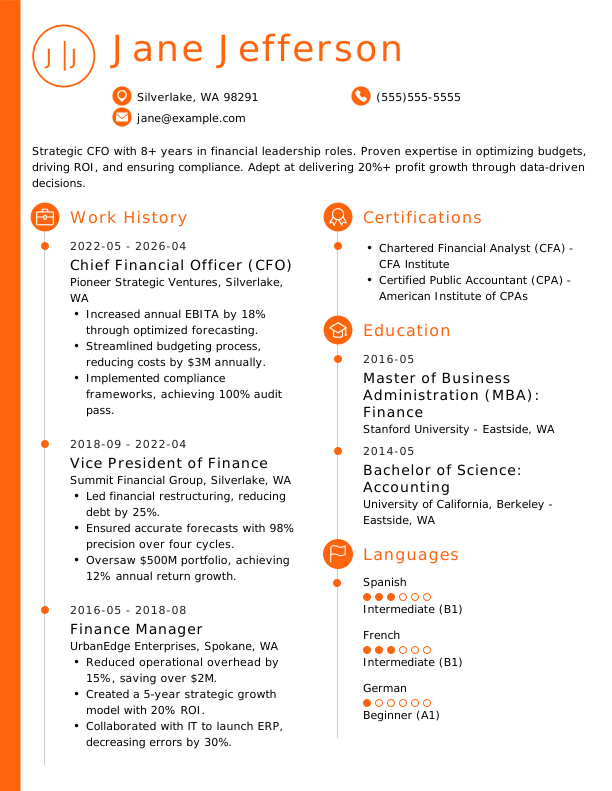
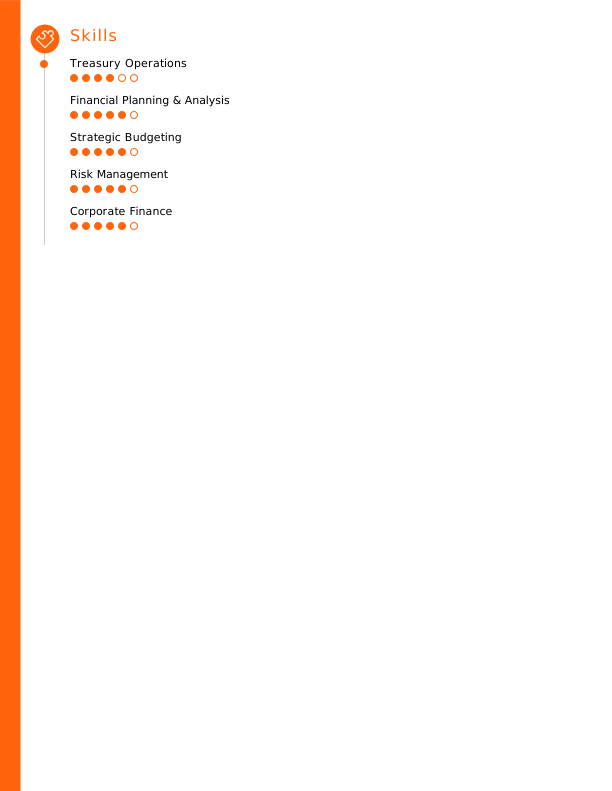
Browse Free Resume Templates
- Accounts Payable
- Adjunct Professor
- Artist
- Auto Mechanic
- Baker
- Business Development Manager
- Business
- Certified Nursing Assistant
- Classic & Traditional
- Cleaner
- College Student
- Concierge
- Construction Worker
- Corporate
- Creative & Unique
- Custodian
- Customer Service
- Dental Assistant
- Direct Support Professional
- Entry-Level
- Flight Attendant
- Hospitality & Food Service
- Front Desk Receptionist
- Healthcare
- High School
- Housekeeping
- Hvac Technician
- Hybrid
- Inventory Manager
- Logistics
- Maintenance
- Management
- Modern
- Mortgage Loan Processor
- Pet Sitter
- Phlebotomist
- Production
- Rbt
- Sales
- Security Services
- Restaurant Server
- Simple & Basic
- Social Work
- Teacher
- Technology
Resume Examples for CFOs
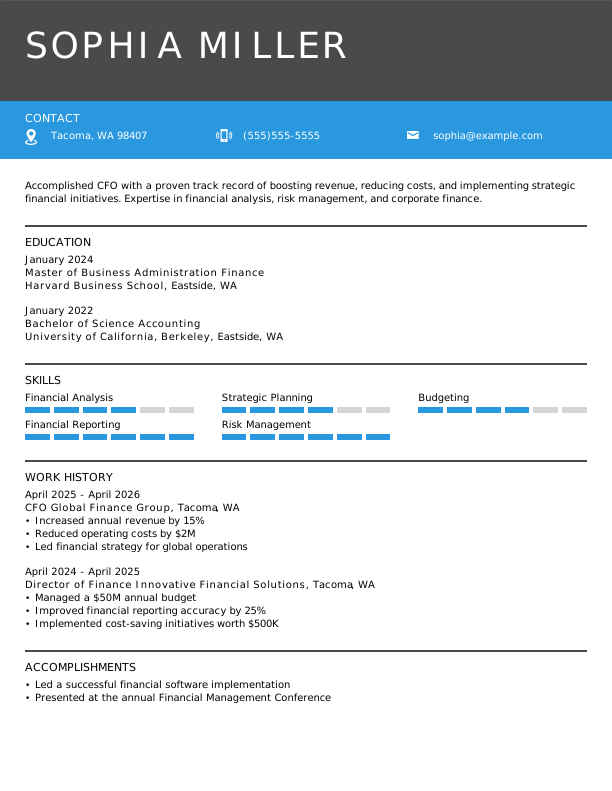
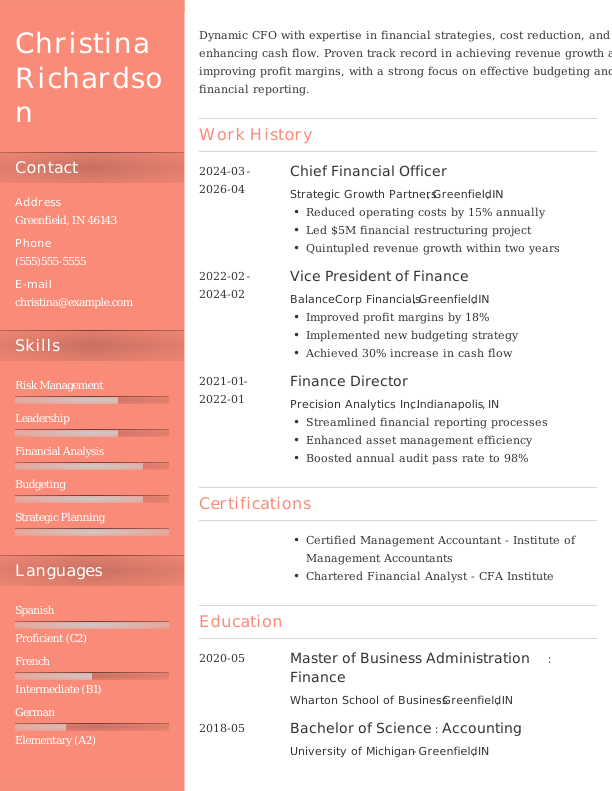
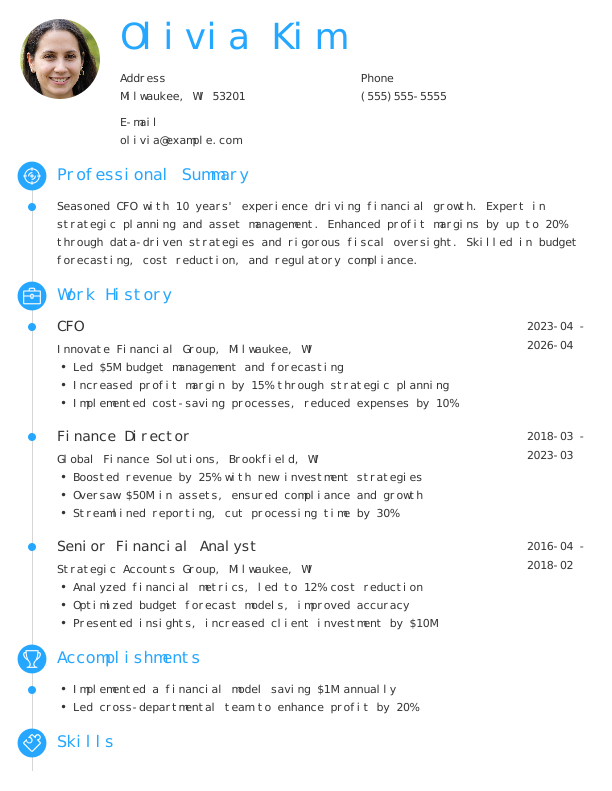
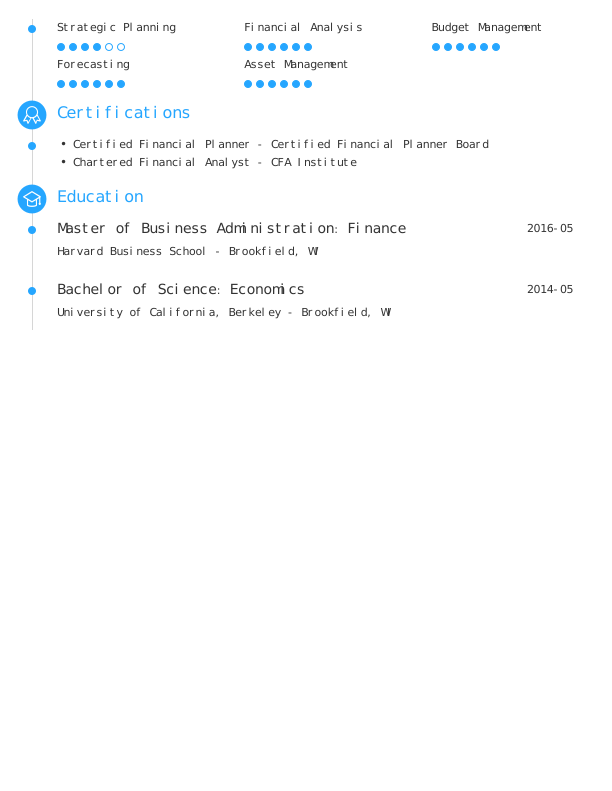
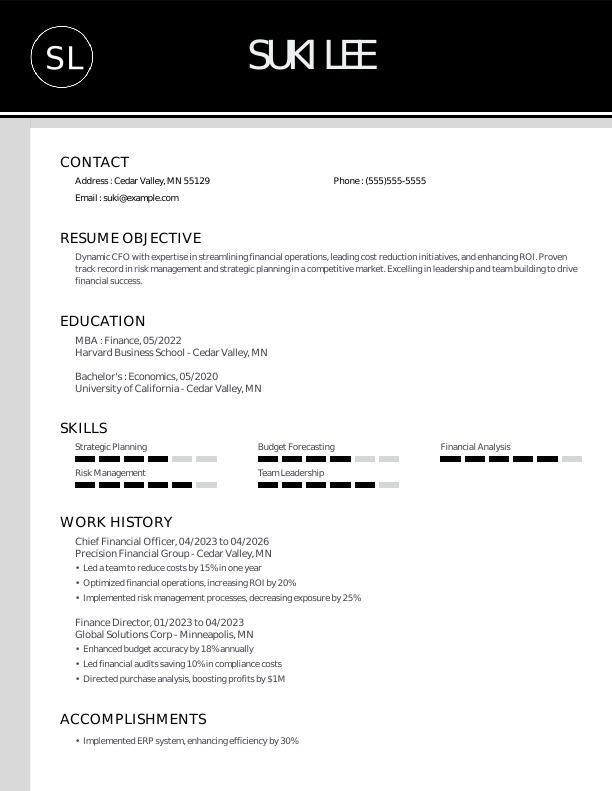
CFO resumes should reflect the scale of organizations you have led financially and the strategic initiatives you have driven. Browse our templates to find one that conveys executive-level financial leadership.
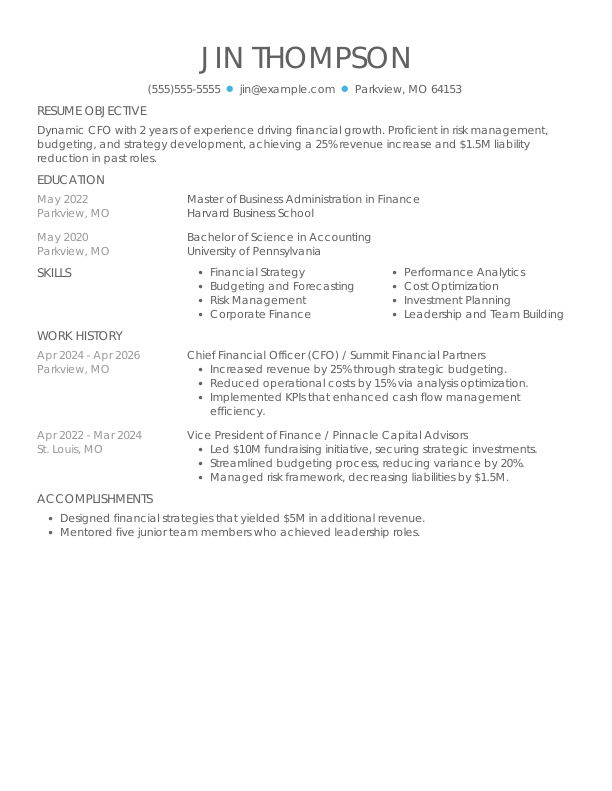
Entry-Level CFO Resume
If you are stepping into a CFO role for the first time, this template helps you build a CFO resume without prior CFO experience by emphasizing your strategic financial planning, board reporting, and any M&A involvement from a VP of Finance or controller position.

Mid-Career CFO Resume
A smart choice for mid-level finance professionals aiming for leadership roles, this template effectively showcases recent achievements and positions job seekers for advancement in competitive environments.

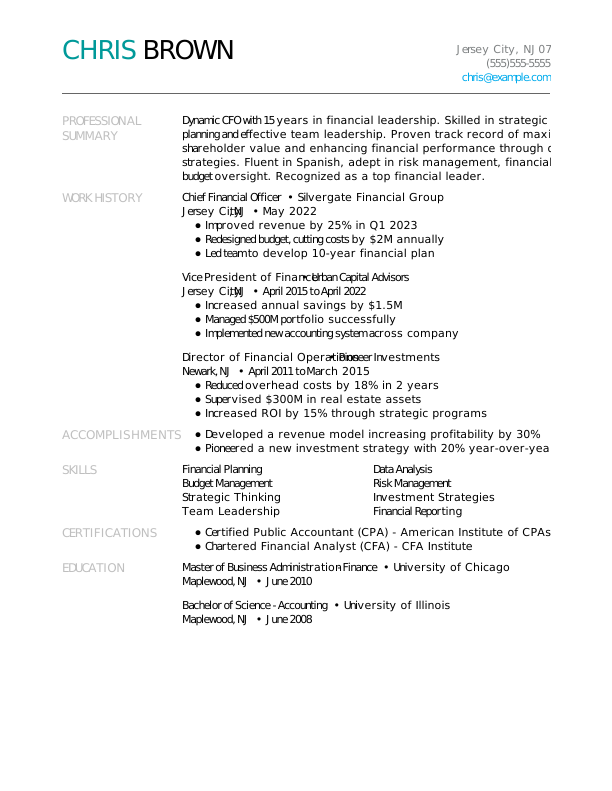
Experienced CFO Resume
An ideal choice for financial executives with over 10 years of experience, this template supports applicants pursuing senior leadership roles within the finance sector.

CFO Resume Template (Text)
Here is a text-based CFO resume, ready to copy and personalize. The format reflects executive-level financial stewardship and strategic planning experience.
Jin Wang
Lakeside, CA 92044
Professional Summary
Seasoned CFO with 7 years of experience in financial leadership. Proven track record in boosting revenue, managing budgets, and optimizing financial systems. Expertise in strategic planning, risk management, and team leadership.
Work Experience
January 2024 – April 2026
Financial Solutions Inc. – Lakeside, CA
Chief Financial Officer
- Led financial planning & strategy; increased revenue by 30%
- Managed $10M annual budget, optimizing operational costs by 15%
- Implemented risk management frameworks reducing financial risk by 20%
January 2021 – December 2023
Global Commerce Group – San Francisco, CA
Vice President of Finance
- Oversaw financial operations, boosting EBITDA by 25%
- Directed M&A strategies; successfully managed 5 acquisitions
- Enhanced cash flow management, reducing A/R by 12 days
January 2019 – December 2020
Innovative Tech Corp. – San Francisco, CA
Finance Director
- Streamlined financial reporting; improved accuracy by 20%
- Led a finance team of 20; promoted 4 team members
- Negotiated vendor contracts; reduced costs by $500k annually
Education
May 2019
Harvard Business School Sunnydale, CA
MBA Finance
May 2017
University of California, Berkeley Sunnydale, CA
Bachelor’s Degree Accounting
Certifications
- Certified Public Accountant (CPA) – American Institute of CPAs
- Certified Management Accountant (CMA) – Institute of Management Accountants
Skills
- Financial Analysis
- Strategic Planning
- Budget Management
- Risk Management
- Mergers & Acquisitions
- Cash Flow Management
- Leadership
- Cost Reduction
How to Write a CFO Resume
As a CFO, knowing how to write a resume involves showcasing your financial expertise, leadership abilities, and strategic experience in a clear format that emphasizes your suitability for the role. Use the guidance below to highlight your strengths and customize your resume for the specific positions you’re targeting.
1. Contact Info
Your contact details should be clearly presented at the top of your resume for immediate visibility and professionalism.
Be sure to include:
- Full name
- Phone number
- Professional email address
- City and state (ZIP code is optional)
- LinkedIn profile or relevant portfolio (if applicable)
 PRO TIP
Avoid including personal details such as your social security number, age, or photos on your resume unless requested by the employer.
2. Resume Profile
A resume profile is a concise section, typically 2–4 sentences long, designed to summarize your professional identity and key qualifications. It serves as a compelling introduction that captures the attention of hiring managers, motivating them to delve deeper into your resume.
Positioned at the top of your resume, this profile can take the form of either a summary or an objective, each serving unique functions in showcasing your career goals and strengths. Understanding these distinctions is essential for crafting an effective resume:
- A resume summary highlights critical financial expertise, strategic management skills, and notable achievements within the finance sector. This approach works well for professionals with a solid work history or transferable skills looking to emphasize their significant contributions as a chief financial officer.
- A resume objective is a forward-looking statement that highlights your career aspirations and the goals you aim to achieve. It’s particularly useful for recent graduates, professionals shifting careers, or those with minimal experience, like “coding bootcamp graduates” or “individuals entering finance.”
Let’s examine the distinctions between a resume summary and a resume objective through the following examples:
CFO resume summary example:
Dynamic CFO with over 6 years of experience in corporate finance within multinational organizations. Proficient in strategic financial planning, risk management, and financial reporting. Acknowledged for improving profitability through innovative cost-saving measures and fostering a culture of financial accountability.
CFO resume objective example:
Detail-oriented finance professional with a recent MBA, eager to launch a career as a CFO in a dynamic corporate environment. Committed to strategic financial planning and fostering team collaboration, aiming to leverage analytical prowess and leadership skills within a forward-thinking organization.
3. Work Experience
The work experience on your resume serves as an important foundation for your job application. Employers analyze not only your roles but also the contributions you’ve made to understand your true impact.
This part of your resume demonstrates how your professional journey aligns with the qualifications needed for the CFO position, highlighting relevant financial expertise and leadership achievements.
The work experience section should contain:
- Job title
- Employer name and location
- Dates of employment (month/year)
- 3–5 bullet points detailing financial strategies and leadership achievements
When crafting your work experience bullet points, ensure you tailor your content using relevant language specific to the CFO role. Start each point with strong action verbs such as “Oversaw,” “Optimized,” or “Analyzed” to create a compelling narrative.
Incorporate quantifiable metrics where possible to illustrate your impact. Providing specific achievements, like “increased revenue by 20%” or “managed a $10 million budget,” showcases your value and sets you apart from other job seekers.
In general, consider following the format of:
[action verb] + [responsibility] = [result/achievement]
For example:
Oversaw financial operations for a portfolio generating $150M annually, implementing cost-saving strategies that increased net profit margins by 15%.
Note that you can also flip the result/achievement with the responsibility:
Realized a 20% increase in revenue through strategic mergers and acquisitions, leveraging financial analytics to identify market opportunities.
With these techniques in mind, your resume bullets may look something like:
- Developed annual budgets for 5 departments, achieving a 12% reduction in overall operating costs.
- Implemented a financial forecasting model that increased accuracy by 25%, improving strategic planning efforts.
- Collaborated with cross-functional teams to streamline reporting processes, reducing turnaround time by 30%.
- Mentored junior finance staff, fostering skills development and improving team productivity.
- Used advanced financial software to analyze data trends, enabling informed decision-making across the organization.
4. Skills
The skills section provides a concise overview of your financial expertise as a CFO, highlighting essential abilities important for leadership roles. Using an ATS-friendly resume format allows recruiters to quickly assess your qualifications and fit for the position. Skills can be grouped into three categories:
- Soft skills are personal qualities that influence how well individuals collaborate in the finance sector.
- Hard skills are specific, measurable abilities gained through education, training, or experience.
- Technical skills are the practical abilities required to use specific financial tools and software.
5 Soft Skills for Your Resume or CV
- Financial acumen
- Team leadership
- Strategic planning
- Risk management
- Performance analysis
5 Hard Skills for Your Resume or CV
- Financial forecasting and modeling
- Budget management (Anaplan, Adaptive Insights)
- Regulatory compliance (SOX, IFRS)
- Cash flow analysis
- Risk assessment and mitigation strategies
In general, including a diverse range of relevant skills that meet the job expectations can highlight your capabilities.
PRO TIP
If you’re a newer CFO, consider placing your skills section higher on the resume, just after your summary. If you have significant experience, it’s better to position this section lower and weave relevant skills throughout your work history for a more cohesive presentation.
5. Education
Understanding how to list education on your resume is essential for showcasing your qualifications. Begin by listing your most recent or relevant degree, including the type of degree and the name of the institution. If you have recently graduated, consider adding your graduation year, GPA (if it’s 3.5 or higher), any honors received, and relevant coursework to strengthen your application.
CFO resume education section example:
Master of Business Administration (MBA)
Harvard University, Cambridge, MA
Graduated: 2023 | Graduated with Distinction
PRO TIP
When listing multiple degrees on your resume, always arrange them in reverse-chronological order, beginning with the most advanced degree like Master of Business Administration (MBA) followed by Bachelor of Science in Accounting (BSA).
6. Certifications
Certifications highlight your qualifications and demonstrate your commitment to staying current in your field. While not always included in a traditional resume, this section is essential for many professionals, especially those in specialized roles such as finance or healthcare. Employers often seek specific credentials to ensure job seekers meet the demands of their positions.
Be sure to showcase relevant certifications that bolster your application. Keeping these credentials up to date and clearly formatted will improve your candidacy and help you stand out.
CFO certification examples:
- Chief Financial Officer (CFO) Certification | Global Finance Academy | Expires: 01/2028
- Chartered Financial Analyst (CFA) | CFA Institute | Expires: 06/2028
- Certified Public Accountant (CPA) | American Institute of CPAs | Expires: 09/2027
- Financial Risk Manager (FRM) | Global Association of Risk Professionals | Expires: 03/2028
Start Building Your Job-Winning Resume
Use Your Existing Resume
Import your current resume to transfer your information to one of our professional templates.
Create a New Resume
Start fresh with a template that catches your eye and follow the prompts to add your details.
Tailor Your Work History to Beat the ATS
Your work experience goes beyond mere job titles. It’s a powerful opportunity to demonstrate the tangible impact you’ve made through financial leadership and strategic initiatives. By showcasing these achievements, you not only improve your narrative but also create an ATS-friendly resume that can be easily scanned by applicant tracking systems (ATS).
To craft an effective work history, tailor it specifically to the role you’re pursuing by using relevant industry keywords. Start by thoroughly analyzing the job description to identify key skills and qualifications. Highlight these elements in your experience descriptions to mirror what potential employers are looking for, ensuring your application stands out.
Key Takeaways
- Tailor your resume to the job description. Use specific financial terminology that resonates with both ATS and hiring managers.
- Highlight quantifiable achievements to demonstrate your impact. Include metrics relevant to finance (e.g., revenue growth percentages, cost reductions, budget management figures) to differentiate yourself.
- Select the appropriate format based on your experience level. Seasoned professionals often favor reverse-chronological resumes, while those new to the field might consider a functional approach.
More Resume & CV Examples
- Aml Analyst
- Budget Analyst
- Finance Manager
- Finance
- Financial Advisor
- Financial Analyst
- Financial Planner
- Fundraising
- Insurance Agent
- Mortgage Underwriter
- Portfolio Manager
- Private Equity
Cover Letters for Your Resume
Browse our library of cover letter examples to complete your application. A resume will have a better chance of getting noticed.
Frequently Asked Questions
Last Update:
What resume format should I use for my CFO resume?
There are three primary resume formats to consider when applying for a CFO position. Your choice should reflect your experience level and highlight the aspects of your career you wish to emphasize:
- Chronological: The chronological resume format is the most widely used and emphasizes your work experience by outlining key responsibilities and significant achievements. This format suits job seekers with a solid job history that reinforces their qualifications, providing a clear timeline of professional growth and expertise.
- Functional: The functional resume, often referred to as a skills-based resume, prioritizes an applicant’s qualifications and skill set over chronological work history. This format is particularly helpful for individuals lacking direct experience in their desired field or those with gaps in employment, allowing them to showcase their capabilities more prominently.
- Combination: The combination resume mixes chronological and functional formats, highlighting both skills and work history. This format allows professionals to showcase their competencies along with their career journey, making it ideal for those aiming to demonstrate growth or transition into new fields.
Should I include a cover letter with my resume?
Yes, you should include a cover letter when applying for a cfo position. A well-crafted cover letter allows you to articulate your strategic vision and leadership experience, complementing your resume by providing context for your accomplishments. It shows potential employers that you’re invested in the opportunity and willing to go beyond a standard application, which can differentiate you from other applicants.
If you’re hesitant about writing a cover letter, there are numerous resources available to guide you. You can find helpful articles on how to write a cover letter tailored specifically for executive roles like cfo, as well as examples that illustrate effective approaches. Exploring different formats will also help you choose one that best showcases your expertise and alignment with the company’s goals.
To make the writing process easier, consider using a cover letter generator, which offers templates and helpful suggestions to create a professional document tailored to cfo applications.
How long should a CFO resume be?
For professionals with less than 10 years of experience, a one-page resume is typically adequate to showcase relevant skills and accomplishments. Highlight key financial achievements, certifications, and core competencies that align with the CFO role to make an immediate impact.
Conversely, applicants in senior or specialized positions may extend their resumes to two pages if the content remains relevant and focused. Emphasize leadership experiences, strategic initiatives, and significant contributions without including unnecessary filler language that detracts from your qualifications.
What keywords should I include to pass applicant tracking systems (ATS)?
To improve your chances of making it through ATS, focus on incorporating keywords and phrases directly from the job posting. Use terms that are specific to the CFO role, such as financial analysis, risk management, or strategic planning. This shows you understand the requirements of the position.
Additionally, include relevant certifications like CPA, CMA, or CFA and mention any financial software tools you’re experienced with, such as QuickBooks or SAP. These elements not only highlight your qualifications but also demonstrate your suitability for the role in a clear manner.
Is it beneficial to include non-traditional finance roles on my resume?
Yes, especially if you’re early in your career. Including roles like volunteer treasurer or financial analyst internships showcases your practical skills and commitment to the finance field, making you more appealing even if you lack extensive full-time experience.

Kirsten Chorpenning is a career advice writer who empowers job seekers to take control of their career paths using Monster’s comprehensive job search and resume tools. She specializes in helping job seekers find rewarding jobs in today’s dynamic work environment.
See More From Kirsten ChorpenningExplore Related Career Advice


How to Put Transferable Skills on Your Resume: 120 Skills, Examples, & Tips
Updated:
Aug 27, 2026
|
16 min read


How to Write a Functional Resume (Formatting Tips, Template, & Examples)
Updated:
Aug 7, 2026
|
17 min read


Functional vs Chronological Resume: Which Format Is Right for You?
Updated:
Aug 3, 2026
|
16 min read

100+ Resume Adjectives to Help You Write a Stronger Resume in 2026 (With Examples)
Updated:
Jul 30, 2026
|
12 min read