
Free Travel Agent Resume Templates & Examples
Helping clients plan memorable trips requires destination knowledge and a service-first mindset. Free travel agent resume and CV examples help you feature your booking volume and ability to tailor itineraries.
Real-World Resumes That Get Results
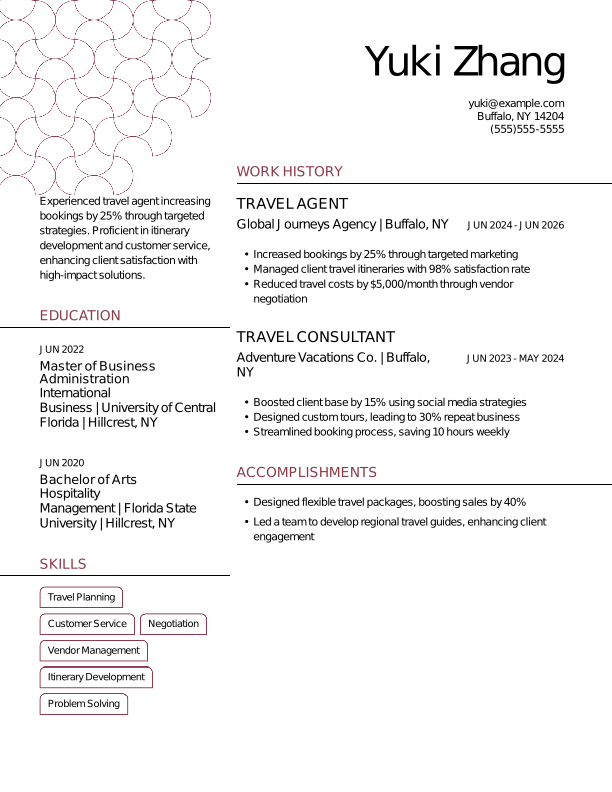
Travel Agent Entry-Level Resume
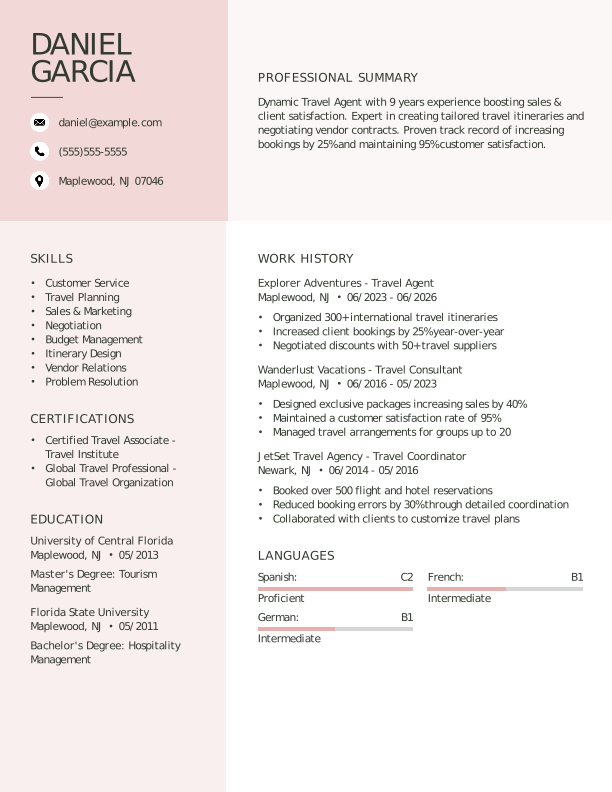
Travel Agent Mid-Level Resume
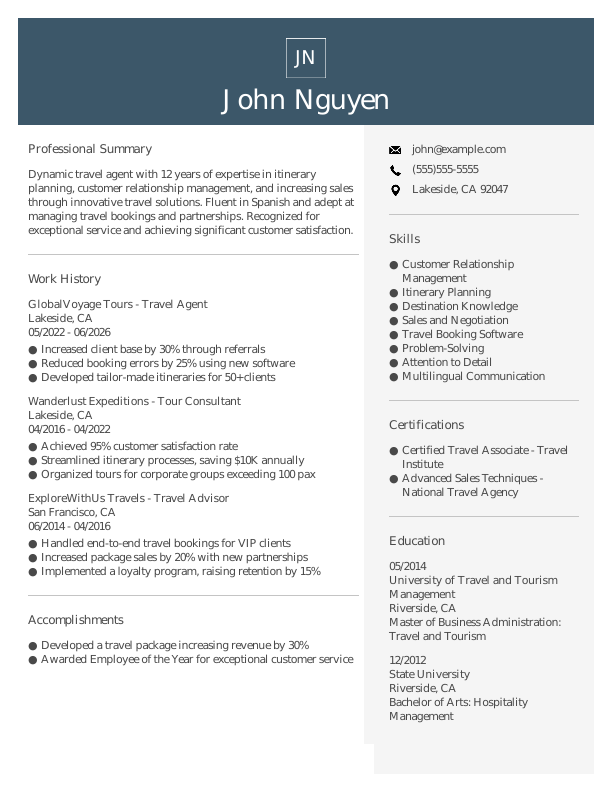
Travel Agent Experienced Resume
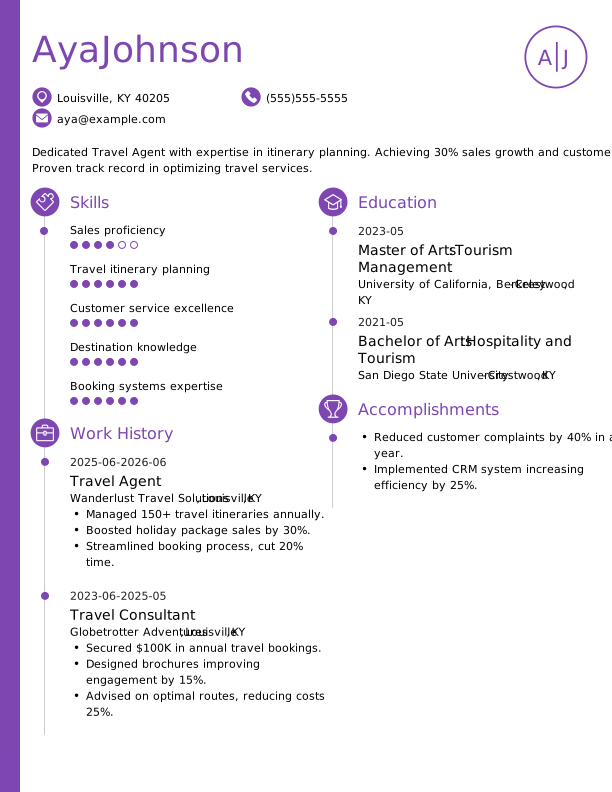
 Free
FreeTravel Agent Modern Resume
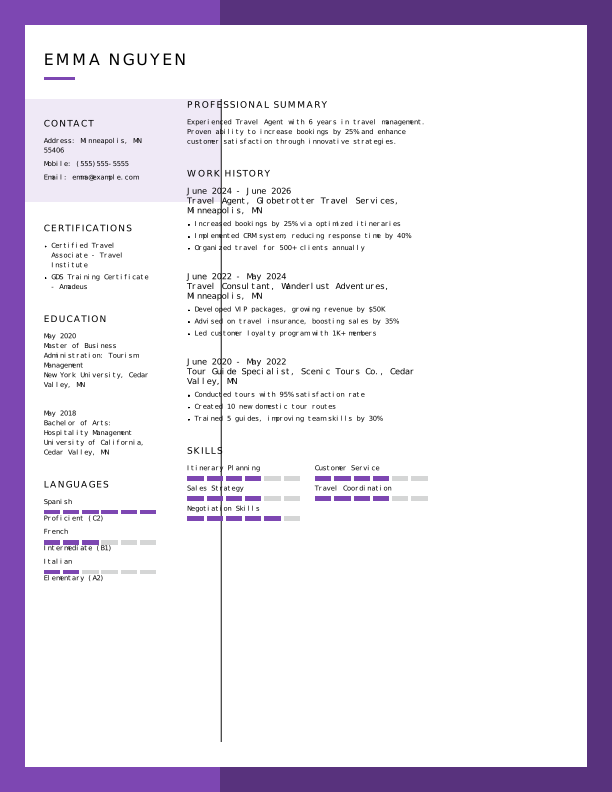
Travel Agent Creative Resume
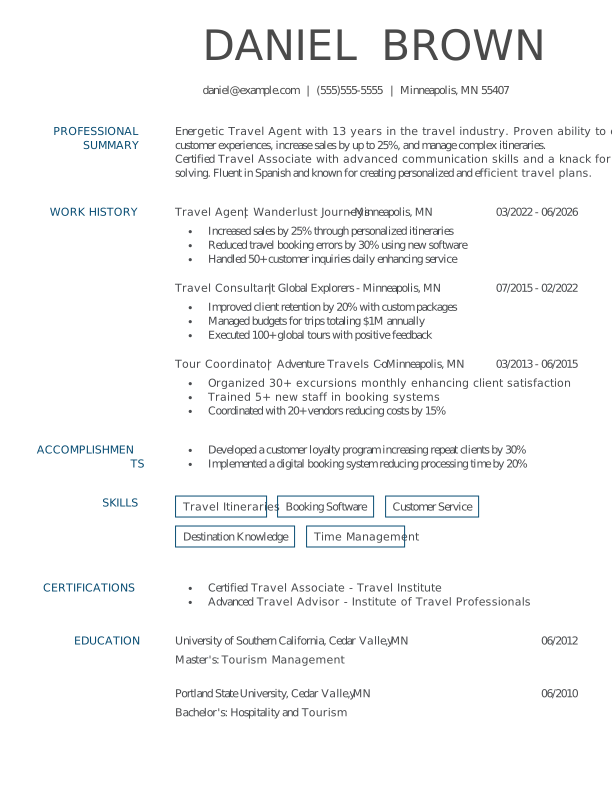
Travel Agent Traditional Resume
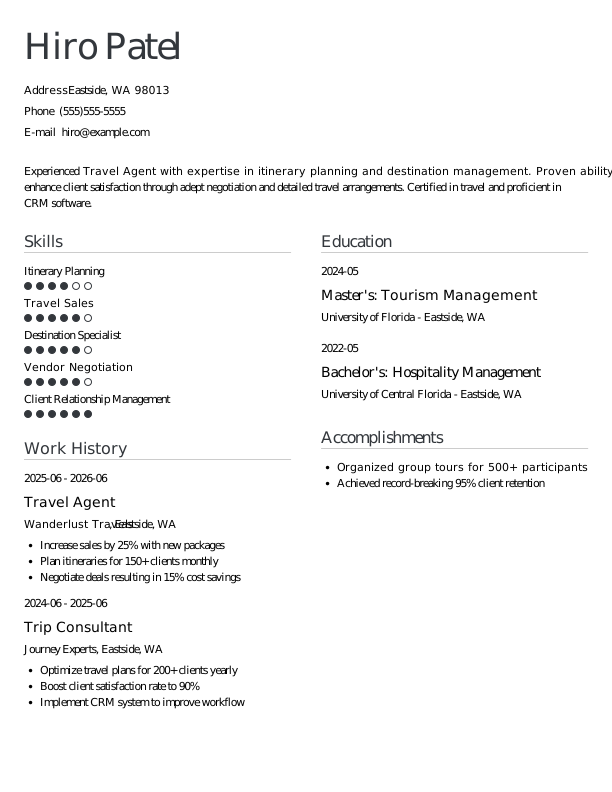
Travel Agent Simple CV Example
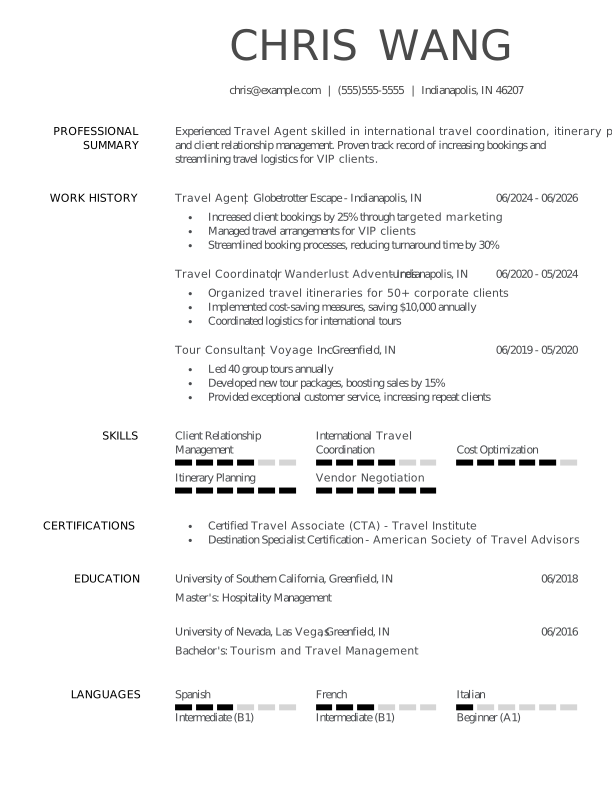
Travel Agent CV Format
Browse Free Resume Templates
- Accounts Payable
- Adjunct Professor
- Artist
- Auto Mechanic
- Baker
- Business Development Manager
- Business
- Certified Nursing Assistant
- Classic & Traditional
- Cleaner
- College Student
- Concierge
- Construction Worker
- Corporate
- Creative & Unique
- Custodian
- Customer Service
- Dental Assistant
- Direct Support Professional
- Entry-Level
- Flight Attendant
- Hospitality & Food Service
- Front Desk Receptionist
- Healthcare
- High School
- Housekeeping
- Hvac Technician
- Hybrid
- Inventory Manager
- Logistics
- Maintenance
- Management
- Modern
- Mortgage Loan Processor
- Pet Sitter
- Phlebotomist
- Production
- Rbt
- Sales
- Security Services
- Restaurant Server
- Simple & Basic
- Social Work
- Teacher
- Technology
Resume Examples for Travel Agents
A travel agent resume or CV should reflect your level of experience, whether you’re just starting out or have years in the industry. Explore templates suitable for each career stage and use our Resume Builder to create your own.
Entry-Level Travel Agent Resume
New to the industry? This example is ideal for recent graduates writing a resume with no experience and career changers entering the travel industry from other sectors.

Mid-Career Travel Agent Resume
An excellent choice for travel professionals with several years of experience, this template highlights recent achievements and supports growth into more independent or specialized roles.

Experienced Travel Agent Resume
An ideal choice for seasoned travel professionals with over 10 years of experience, this template supports applicants pursuing senior roles in travel management or consultancy.

Travel Agent Resume Template (Text)
Take this editable text version of a travel agent resume to copy, paste, and modify directly in your document.
Jane Rodriguez
Pinehill, TX 75759
Professional Summary
Accomplished Travel Agent with expertise in client relations and itinerary planning. Proven track record in achieving client satisfaction and increasing booking revenues. Seeking to leverage skills in a dynamic travel agency.
Work Experience
June 2024 – June 2026
Explore Horizons Travel – Pinehill, TX
Travel Agent
- Increased client booking by 25% in 1 year
- Negotiated 15% better rates with suppliers
- Managed VIP clients with 98% satisfaction
June 2023 – May 2024
Global Escapes Agency – Pinehill, TX
Travel Consultant
- Expanded client database by 30% in 10 months
- Secured 10+ exclusive travel packages
- Trained 4 staff in customer service
June 2022 – May 2023
Wanderlust Adventures Co. – Pinehill, TX
Travel Coordinator
- Coordinated 50+ group tours annually
- Reduced itinerary errors by 20%
- Developed partner relationships in 5 countries
Education
May 2022
University of Travel and Tourism Pinehill, TX
Master’s Tourism Management
May 2020
State University Pinehill, TX
Bachelor’s Hospitality Management
Certifications
- Certified Travel Associate – Travel Institute
- Hospitality Management Certification – American Hotel and Lodging Educational Institute
Skills
- Client Relations
- Tour Planning
- Supplier Negotiation
- Crisis Management
- Travel Itineraries
- Cultural Fluency
- Booking Software
- Customer Service
How to Write a Travel Agent Resume
As a travel agent, knowing how to write a resume means showcasing your customer service skills and travel expertise in a format that stands out to employers. Use the guidance below to emphasize your strengths and tailor your resume for the positions you’re aiming for.
1. Contact Info
Your contact information should be clear, professional, and easy to find at the top of your resume.
Make sure to include:
- Full name
- Phone number
- Professional email address
- City and state (ZIP code is optional)
- LinkedIn profile or personal portfolio (if relevant)
- Travel certification number (if applicable)
 PRO TIP
Avoid including sensitive personal information such as Social Security numbers, birthdates, or photographs unless explicitly requested by the employer.
2. Resume Profile
A resume profile is a brief introduction that captures your key qualifications in 2 to 4 sentences. This section serves as a compelling pitch to hiring managers, helping them quickly understand your value and encouraging them to explore your resume further.
Typically found at the top of your resume, the profile can be formatted as either a summary or an objective, each with distinct purposes. This placement allows for immediate visibility and sets the tone for what follows:
- A resume summary highlights your key achievements, relevant skills, and experiences that showcase your ability to succeed as a travel agent. This format is especially beneficial for those with a background in customer service or sales who want to highlight their contributions in the travel industry.
- A resume objective is a forward-looking statement that highlights your career aspirations and the value you aim to bring. It’s particularly useful for recent graduates, career changers, or those entering fields like travel planning who may not have extensive experience in the industry.
Let’s take a look at an example of each to see how a resume summary and a resume objective differ:
Travel agent resume summary example:
Dedicated travel agent with over 6 years of experience in crafting personalized travel experiences for diverse clientele. Proficient in itinerary planning, vendor negotiations, and customer service excellence. Acknowledged for improving client satisfaction and loyalty through tailored travel solutions and attention to detail.
Travel agent resume objective example:
Recent graduate with a degree in Travel and Tourism, excited to launch a career as a travel agent in a dynamic agency setting. Committed to delivering exceptional customer service and fostering memorable travel experiences while using strong organizational skills and attention to detail.
3. Work Experience
The work experience on your resume is an important selling point. Employers assess your job history to understand not only where you’ve worked but also the impact you’ve made in previous roles.
Your travel planning experience showcases how your skills in customer service and itinerary management qualify you for the position of travel agent.
The work experience section should contain:
- Job title
- Employer name and location
- Dates of employment (month/year)
- 3–5 bullet points describing your relevant responsibilities and achievements
Tailor your content to highlight experiences and skills relevant to the travel agent role you’re pursuing. Start each bullet point with an action verb (like “Arranged,” “Customized,” “Coordinated”) to create a compelling narrative about your contributions.
Incorporate quantifiable data whenever possible. Specific figures, such as trip bookings or customer satisfaction ratings, illustrate your impact and help distinguish you from other applicants in the travel industry.
In general, consider following the format of:
[action verb] + [responsibility] = [result/achievement]
For example:
Coordinated travel arrangements for 100+ clients annually, achieving a 95% satisfaction rate through personalized itineraries and timely communication.
Note that you can also flip the result/achievement with the responsibility:
Increased client retention by 30% over two years by implementing loyalty programs and targeted follow-ups.
With these techniques in mind, your resume bullets may look something like:
- Planned and booked travel itineraries for over 150 clients annually, achieving a 95% satisfaction rate.
- Negotiated rates with hotels and airlines, resulting in cost savings of up to 20% for clients.
- Coordinated group travel arrangements for events, managing logistics for up to 50 participants.
- Used booking software to streamline the reservation process and improve efficiency.
- Provided personalized travel advice and destination recommendations, improving client experiences.
4. Skills
The skills section provides a succinct overview of your abilities as a travel agent, focusing on expertise in planning and booking travel arrangements. It aids hiring managers by offering a clear snapshot of qualifications at a glance. Skills fall into three categories: customer service, itinerary planning, and industry knowledge.
- Soft skills are personal qualities that shape how well travel agents interact with clients and colleagues.
- Hard skills are specific, quantifiable abilities gained through education, training, or practical experience.
- Technical skills are the specific knowledge and expertise required to perform tasks in a particular field.
5 Soft Skills for Your Resume or CV
- Excellent communication skills
- Customer-focused service
- Negotiation and persuasion
- Attention to detail
- Cultural awareness
5 Hard Skills for Your Resume or CV
- Destination research and planning
- Booking management (Amadeus, Sabre)
- Customer relationship management
- Travel insurance expertise
- Itinerary customization
In general, aim to include a diverse array of relevant skills that align with the job requirements to showcase your professional strengths.
PRO TIP
If you’re a new travel agent, consider placing your skills section higher on your resume, right after your summary, to showcase your capabilities. For those with more experience, it’s better to place this section lower and weave your skills into your work history to create a more cohesive narrative.
5. Education
Understanding how to list education on your resume is important for making a strong impression. Focus on listing your most recent or relevant travel certifications first, including the type of certification and the institution’s name.
If you have recently completed a program, consider adding the completion date, any honors achieved, or specialized training that showcases your expertise in travel planning.
Travel agent resume education section example:
Associate Degree in Travel and Tourism
Santa Monica College, Santa Monica, CA
Graduated: 2023 | Graduated with Honors
PRO TIP
If you’re progressing from an Associate Degree in Travel and Tourism to a Bachelor of Science in Hospitality Management, or have earned another relevant degree, list both in reverse-chronological order.
6. Certifications
Listing certifications on your resume can highlight your expertise and compensate for limited experience in the travel industry. Although not a standard section in traditional resumes, it’s a valuable addition for most travel agents seeking credibility.
Employers often look for specific credentials when hiring for specialized roles, such as those involving luxury travel or group tours.
Include only the certifications that directly relate to your desired position, ensuring they are current and clearly presented. This will improve your appeal to potential employers and demonstrate ongoing professional development.
Travel agent certification examples:
- Certified Travel Associate (CTA) | The Travel Institute | Expires: 04/2028
- Travel Agent Certification | International Air Transport Association (IATA) | Expires: 11/2027
- Destination Specialist Certification | Travel Leaders Network | Expires: 01/2028
- Certified Travel Counselor (CTC) | The Travel Institute | Expires: 09/2027
Start Building Your Job-Winning Resume
Use Your Existing Resume
Import your current resume to transfer your information to one of our professional templates.
Create a New Resume
Start fresh with a template that catches your eye and follow the prompts to add your details.
Tailor Your Work History to Beat the ATS
Your work experience is more than a list of job titles. It’s an opportunity to demonstrate the measurable impact you’ve had in planning and executing travel arrangements for clients, improving their experiences with tailored itineraries and excellent service.
This approach also leads to an ATS-friendly resume that can be easily scanned by applicant tracking systems (ATS).
What’s a Fair Travel Agent Salary?
Understanding travel agent salaries nationwide helps you evaluate job offers, negotiate better pay, and make informed career decisions. The data below comes from the U.S. Bureau of Labor Statistics (BLS) and reflects the most recent nationwide averages for travel agents.
Keep in mind that factors like location, years of experience, certifications, and specialization can all influence your actual salary. Travel agents working in major metropolitan areas may earn more than those in smaller towns, while specialized roles focusing on luxury or corporate travel often command higher compensation packages.
| Alabama | $51,620 |
| Alaska | $53,960 |
| Arizona | $55,260 |
| Arkansas | $36,810 |
| California | $54,650 |
| Connecticut | $66,580 |
| District of Columbia | $63,870 |
| Florida | $49,710 |
| Georgia | $48,080 |
| Hawaii | $38,150 |
| Idaho | $55,160 |
| Illinois | $52,600 |
| Indiana | $48,480 |
| Iowa | $48,730 |
| Kansas | $51,150 |
| Kentucky | $46,070 |
| Louisiana | $47,740 |
| Maine | $45,100 |
| Maryland | $45,350 |
| Massachusetts | $58,610 |
| Michigan | $48,130 |
| Minnesota | $55,960 |
| Missouri | $46,110 |
| Montana | $54,140 |
| Nebraska | $46,440 |
| Nevada | $64,680 |
| New Hampshire | $53,990 |
| New Jersey | $60,630 |
| New Mexico | $36,930 |
| New York | $56,050 |
| North Carolina | $55,030 |
| North Dakota | $46,100 |
| Ohio | $51,980 |
| Oklahoma | $36,370 |
| Oregon | $52,920 |
| Pennsylvania | $49,010 |
| Rhode Island | $49,780 |
| South Carolina | $43,920 |
| South Dakota | $48,300 |
| Tennessee | $51,370 |
| Texas | $53,310 |
| Utah | $45,650 |
| Vermont | $59,500 |
| Virginia | $49,300 |
| Washington | $60,640 |
| West Virginia | $40,380 |
| Wisconsin | $45,290 |
| Wyoming | $52,980 |
| Guam | $33,870 |
| Puerto Rico | $28,260 |
Key Takeaways
- Tailor your resume to the job description. Use keywords from the listing to align your skills and experiences with what employers are seeking—this helps with ATS and human reviewers.
- Highlight quantifiable achievements. Showcase results (e.g., customer satisfaction ratings, number of trips organized, sales figures) to differentiate yourself.
- Select a format that suits your experience level. New agents might prefer a functional layout, while seasoned professionals often opt for a reverse-chronological format.
More Resume & CV Examples
- Call Center Representative
- Customer Experience Manager
- Customer Service Coordinator
- Customer Service Manager
- Customer Service Representative
- Customer Service Specialist
- Customer Service Supervisor
- Customer Support
- Doorman
- Guest Relations Manager
- Hospitality
- Hotel Front Desk
- Hotel Manager
- Hotel
- Housekeeping Supervisor
- Personal Shopper
- Porter
- Remote Customer Service
- Retail Customer Service
- Retail Manager
- Retail
- Retail Sales Associate
- Salon Receptionist
- Service Advisor
- Service Manager
- Spa Manager
- Store Manager
- Travel Consultant
- Work From Home
Cover Letters for Your Resume
Browse our library of cover letter examples to complete your application. A resume will have a better chance of getting noticed.
Frequently Asked Questions
Last Update:
What resume format should I use for my travel agent resume?
There are three primary resume formats to consider when applying for a travel agent position. Your choice should reflect your level of experience and the aspects of your career that you wish to highlight:
- Chronological: The most popular format, a chronological resume emphasizes your work experience by outlining responsibilities and achievements in reverse order. It’s particularly suited for applicants with a consistent job history in travel that reinforces their qualifications and showcases their ability to plan and execute successful travel arrangements.
- Functional: Also known as a skills-based resume, the functional resume emphasizes a qualifications summary and an expanded skills section to showcase your relevant abilities. This format minimizes focus on work history, making it beneficial for applicants lacking direct experience in the travel industry or those with substantial employment gaps.
- Combination: A combination resume integrates elements from both chronological and functional formats, featuring a skills section alongside relevant work experience. This format benefits travel agents by allowing them to showcase their expertise in planning and customer service while illustrating their career development within the industry.
Should I include a cover letter with my resume?
Including a cover letter with your travel agent job application is essential. A well-crafted cover letter not only complements your resume but also allows you to share your passion for travel and customer service. This gives you the chance to highlight specific experiences that demonstrate your skills in planning trips and managing client expectations, which may not be fully captured in your resume.
If you’re unsure how to write a cover letter, there are many resources available to help. Guides on writing effective cover letters, as well as examples tailored specifically for the travel industry, are available online. Exploring different formats can help you choose one that best showcases your personality and professional background.
For a quicker approach, consider using tools like a cover letter generator to streamline the process by offering templates and suggestions tailored to your job application.
How long should a travel agent resume be?
For travel agents with less than 10 years of experience, a one-page resume is ideal. This format allows you to showcase relevant skills, educational background, and any certifications, such as IATA or ASTA membership, without overwhelming potential employers.
If you have significant experience or specialized knowledge in niche markets, consider expanding your resume to two pages. Ensure every detail adds value and focuses on achievements, client relationships, and destinations you’ve mastered. Prioritize clarity and highlight what sets you apart in the travel industry.
What keywords should I include to pass applicant tracking systems (ATS)?
To optimize your resume for ATS, incorporate keywords and phrases directly from the job posting. Look for terms like “itinerary planning,” “customer service,” or “destination knowledge” that are relevant to travel agents. Using these specific words increases the likelihood that your resume will be flagged as a match by the system.
Additionally, include any relevant certifications such as Certified Travel Associate or Certified Travel Counselor, along with familiar tools like Sabre or Amadeus. This not only demonstrates your qualifications but also ensures you stand out in the competitive travel industry job market.

Kirsten Chorpenning is a career advice writer who empowers job seekers to take control of their career paths using Monster’s comprehensive job search and resume tools. She specializes in helping job seekers find rewarding jobs in today’s dynamic work environment.
See More From Kirsten ChorpenningExplore Related Career Advice


How to Put Transferable Skills on Your Resume: 120 Skills, Examples, & Tips
Updated:
Aug 27, 2026
|
16 min read


How to Write a Functional Resume (Formatting Tips, Template, & Examples)
Updated:
Aug 7, 2026
|
17 min read


Functional vs Chronological Resume: Which Format Is Right for You?
Updated:
Aug 3, 2026
|
16 min read

100+ Resume Adjectives to Help You Write a Stronger Resume in 2026 (With Examples)
Updated:
Jul 30, 2026
|
12 min read