

Free Production Resume Templates & Examples
Elevate your chances of landing interviews with our expertly designed production resume templates. These free resume templates come with valuable writing tips to help you create a standout resume or CV that showcases your skills to potential employers.
Real-World Resumes That Get Results
 Free
FreeProduction Entry-Level Resume
Production Mid-Level Resume
Production Experienced Resume
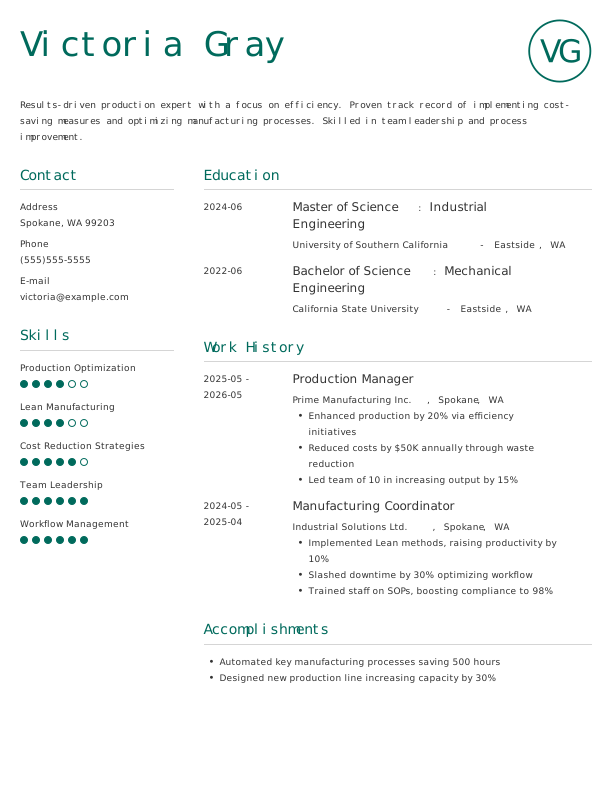
Production Entry-Level Resume 1
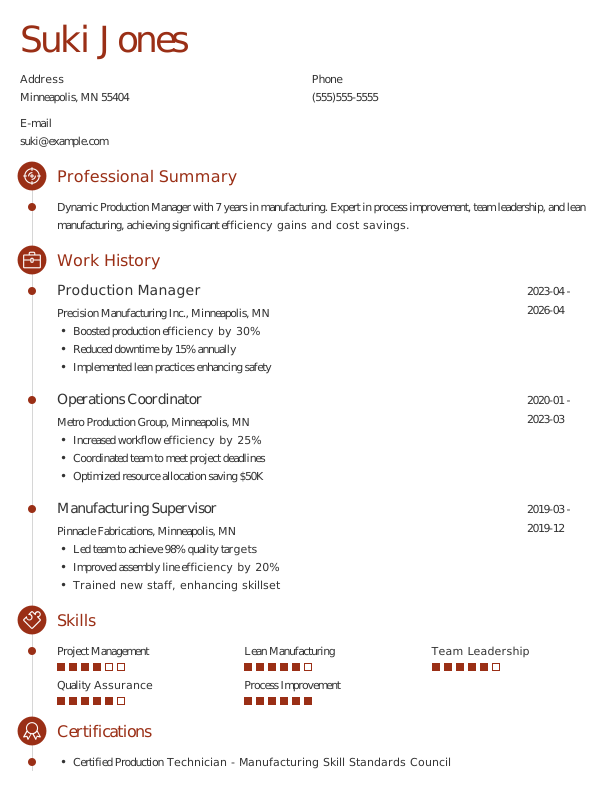

Production Mid-Level Resume 1
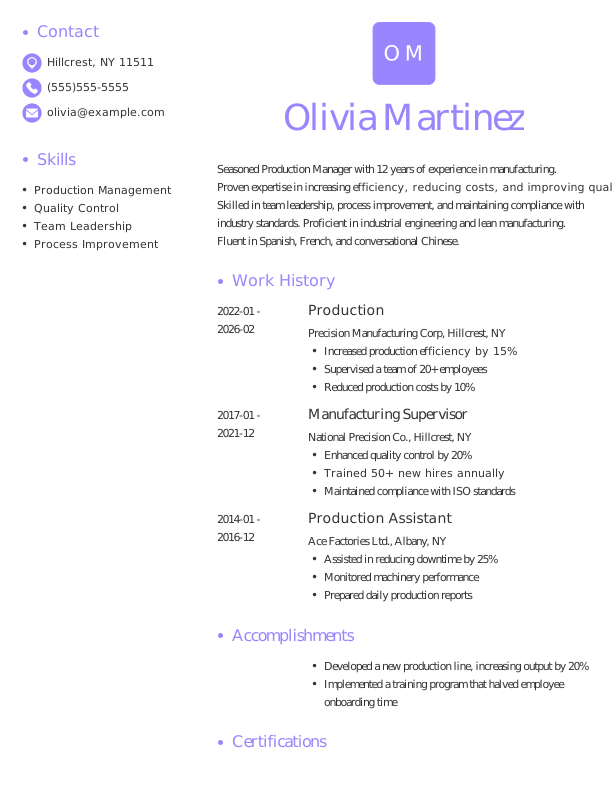

Production Experienced Resume 1
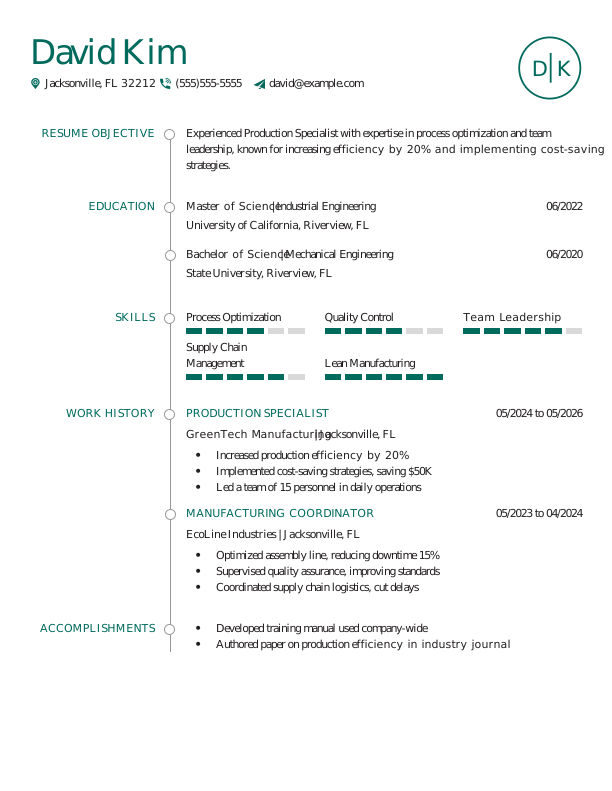
Production Entry-Level Resume 2
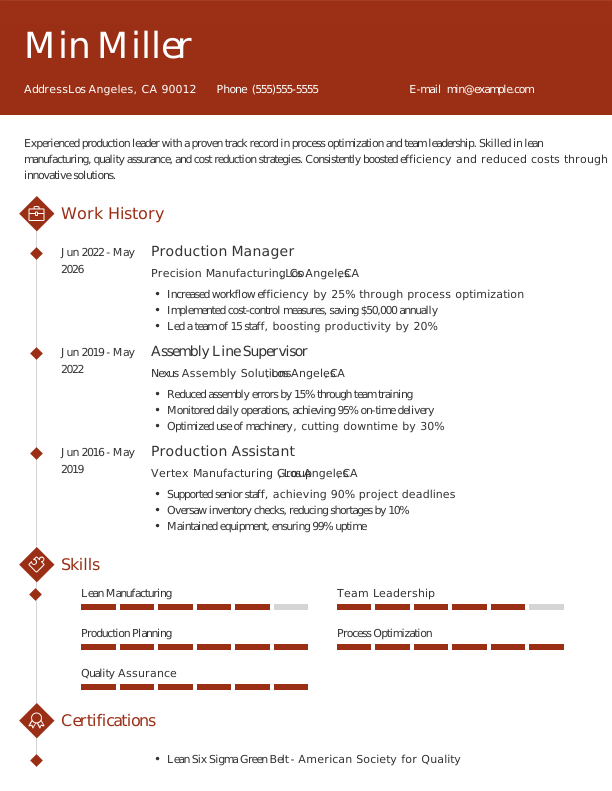

Production Mid-Level Resume 2
Browse Free Resume Templates
- Artist
- ATS-Friendly
- Business Development Manager
- Business
- Classic & Traditional
- College Student
- Construction Worker
- Corporate
- Creative & Unique
- Customer Service
- Entry-Level
- Healthcare
- Hospitality & Food Service
- Logistics
- Maintenance
- Management
- Modern
- Production
- Sales
- Security Services
- Simple & Basic
- Social Work
- Teacher
- Military
Resume Examples for Production
Resumes and CVs for production roles vary widely depending on experience level, from entry-level positions to seasoned professionals. Review our tailored templates for each stage and make use of our Resume Builder to craft your ideal application document.
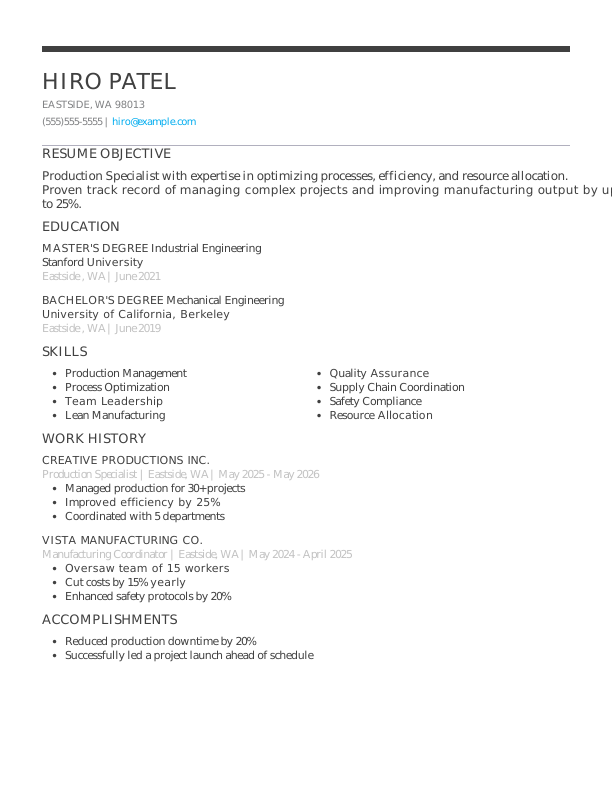
Entry-Level Production Resume
Ideal for recent graduates and those transitioning into production roles, this template is designed to help create a standout resume with no experience while showcasing relevant skills and accomplishments.
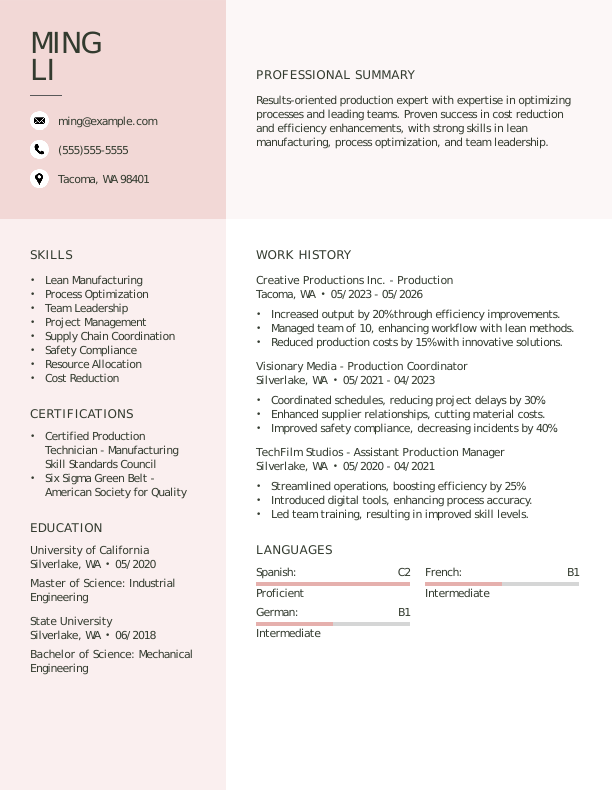
Mid-Career Production Resume
An ideal choice for production professionals seeking advancement, this template effectively showcases recent achievements and skills while positioning applicants for specialized roles in a competitive market.
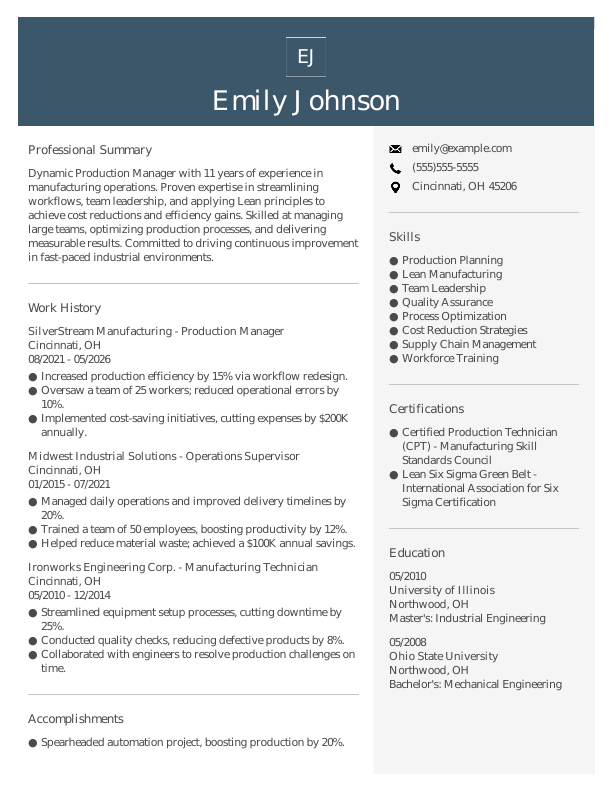
Experienced Production Resume
An ideal choice for seasoned professionals with over 10 years of experience, this template supports individuals pursuing senior leadership roles in production and operations management.
Production Resume Template (Text)
Use this customizable text format of a production resume to copy, revise, and personalize directly in your document.
Jane Smith
Eastside, WA 98007
Professional Summary
Experienced production leader with 8 years in manufacturing. Proven success in process optimization and cost reduction. Skilled in Lean Six Sigma, team leadership, and quality control.
Work Experience
January 2024 – May 2026
Quality Manufacturing Inc. – Eastside, WA
Production
- Led production team to 20% increased output.
- Implemented cost-saving procedures, saving $100K annually.
- Ensured 98% on-time delivery for all orders.
January 2019 – December 2023
Precision Parts Co. – Eastside, WA
Manufacturing Supervisor
- Supervised 50+ team members in daily operations.
- Reduced errors by 15% through quality control implementation.
- Enhanced workflow, boosting productivity by 25%.
January 2018 – December 2018
Dynamic Components Ltd. – Spokane, WA
Production Assistant
- Assisted in inventory management and stock control.
- Contributed to 10% rise in production efficiency.
- Maintained machinery, ensuring minimal downtime.
Education
December 2017
State University of New York Albany, NY
Master’s Industrial Engineering
December 2015
City University of New York New York, NY
Bachelor’s Mechanical Engineering
Certifications
- Certified Lean Six Sigma Black Belt – ASQ
- Certified Production and Inventory Management (CPIM) – APICS
- Certified Manufacturing Engineer (CMfgE) – SME
Skills
- Lean Manufacturing
- Six Sigma
- Quality Control
- Process Optimization
- Inventory Management
- Team Leadership
- Workflow Analysis
- Cost Reduction
How to Write a Production Resume
As a production worker, knowing how to write a resume means showcasing your relevant skills and experiences in a clear format that sets you apart from other applicants. Use the guidance below to emphasize your strengths and tailor your resume for the specific positions you’re interested in.
1. Contact Info
Your contact information should be prominently displayed at the top of your resume, ensuring it’s both professional and easy to read.
Be sure to include:
- Full name
- Phone number
- Professional email address
- City and state (ZIP code is optional)
- LinkedIn profile or relevant portfolio (if applicable)
 PRO TIP
Avoid including sensitive personal information such as your Social Security number, age, or photographs unless specifically requested by the employer.
2. Resume Profile
A resume profile is a brief section, typically two to four sentences, that highlights your main qualifications and professional identity. This concise introduction serves as your pitch to hiring managers, capturing their interest and motivating them to delve deeper into your resume.
Positioned at the very top of your resume, the profile can take the form of either a summary or an objective, each serving distinct roles in showcasing your career goals and experiences. Understanding these differences is important for crafting a powerful profile:
- A resume summary showcases essential skills, relevant experience, and significant accomplishments in the production industry. This format is particularly beneficial for job seekers with a background or transferable skills who aim to highlight their contributions as effective members of a production team.
- A resume objective highlights your career aspirations and what you aim to achieve in your professional journey. It’s especially beneficial for recent graduates or individuals transitioning into new fields, where experience may be limited.
Let’s explore the distinctions between a resume summary and a resume objective in the examples that follow:
Production resume summary example:
Detail-oriented production specialist with over 6 years of experience in high-volume manufacturing environments, including automotive and consumer goods sectors. Proficient in quality control, process optimization, and team leadership. Acknowledged for improving operational efficiency and maintaining exceptional safety standards throughout production processes.
Production resume objective example:
Recent graduate with a degree in production management eager to launch a career in a dynamic manufacturing environment. Committed to efficiency and quality, ready to bring strong problem-solving abilities and teamwork skills to an innovative company focused on continuous improvement.
3. Work Experience
The work experience on your resume serves as an important foundation for your candidacy. Employers assess not only job titles and responsibilities but also the tangible impact you’ve had in previous roles. This background illustrates how your skills and achievements align perfectly with the requirements of the position you seek.
The work experience section should contain:
- Job title
- Employer name and location
- Dates of employment (month/year)
- 3–5 bullet points detailing production responsibilities and process improvements
Customize your bullet points to align with the job description, using industry-specific terminology that resonates with hiring managers. Begin each point with a strong action verb (like “Implemented,” “Optimized,” “Streamlined”) to convey impact.
Incorporate measurable results or statistics where possible. By showcasing specific figures and notable achievements, you illustrate your contributions and set yourself apart from other applicants.
In general, consider following the format of:
[action verb] + [responsibility] = [result/achievement]
For example:
Streamlined production processes, increasing output by 20% per week while maintaining quality standards, resulting in a reduction of operational costs by 15%.
Note that you can also flip the result/achievement with the responsibility:
Achieved a 30% increase in product yield through the implementation of lean manufacturing techniques and staff training.
Discover more work experience examples for production professionals further down the page.
4. Skills
The skills section offers a brief overview of your production capabilities while highlighting your expertise in the industry. It’s designed to be an ATS-friendly resume feature, making it easier for hiring managers to assess your qualifications for the role.
Skills are typically grouped into three main categories:
- Soft skills are personal qualities that influence how well individuals collaborate in production environments. Key soft skills for this field include communication, problem-solving, teamwork, and adaptability.
- Hard skills are specific, quantifiable abilities gained through education, training, or experience. For production workers, examples include operating machinery, understanding quality control processes, and performing routine maintenance on equipment.
- Technical skills are the practical abilities required to operate machinery and software essential for a profession. In production, this includes expertise in computer numerical control (CNC) machines, inventory management systems, and quality control tools.
Generally, include a well-rounded selection of relevant skills that match the job requirements to showcase your value. For additional industry-specific skill examples, please explore the skill suggestions listed further down the page.
PRO TIP
If you’re a newer production professional, consider placing your skills section immediately after the summary to highlight your abilities. If you’re more experienced, it’s better to position this section lower on the resume, incorporating key skills within your work history.
5. Education
Understanding how to list education on your resume is important for showcasing your qualifications clearly. Begin with your most recent or relevant degree, including both the degree type and the name of the institution.
If you’re a recent graduate, consider adding details like your graduation year, GPA (if it’s 3.5 or higher), any honors received, or relevant coursework to further improve this section.
Production resume education section example:
Bachelor of Science in Industrial Engineering & Production Management
Georgia Institute of Technology, Atlanta, GA
Graduated: 2024 | Cum Laude
PRO TIP
When listing multiple degrees on your resume, ensure they are in reverse-chronological order, starting with the most advanced degree first, such as Bachelor of Arts in Production, followed by Associate Degree in Production Management.
6. Certifications
Certifications highlight your qualifications and keep you updated with the necessary skills for your industry. While they may not always appear on a traditional resume, including this section is important for many professionals. Employers often look for specific credentials, especially in specialized fields.
List certifications on your resume that improve your application. Keeping these credentials current and well-organized will reinforce your commitment to professional growth.
Production certification examples:
- Production Technician Certification | Manufacturing Skills Standard Council | Expires: 03/2028
- Lean Six Sigma Green Belt | American Society for Quality | Expires: 11/2027
- Forklift Operator Certification | National Safety Council | Expires: 05/2028
- OSHA 30-Hour General Industry Certification | Occupational Safety and Health Administration | Expires: 09/2028
Start Building Your Job-Winning Resume
Use Your Existing Resume
Import your current resume to transfer your information to one of our professional templates.
Create a New Resume
Start fresh with a template that catches your eye and follow the prompts to add your details.
Tailor Your Work History to Beat the ATS
Your work experience section is more than just a collection of job titles. It serves as an opportunity to demonstrate the tangible impact you’ve made within production teams, showcasing how your contributions have driven efficiency and quality outcomes. This targeted approach not only improves your narrative but also creates an ATS-friendly resume that can be easily scanned by applicant tracking systems (ATS).
To maximize this section’s effectiveness, tailor your work history to align with the specific role you’re pursuing. Begin by examining the job description for key skills and qualifications that are frequently mentioned. Then, reflect those terms in your experience descriptions to ensure alignment with what employers are looking for.
Popular Resume Bullets for Productions
These examples are pulled from our most-used entries in the resume builder—based on what hiring managers respond to most.
- Streamlined production processes, reducing waste by 20% and increasing efficiency across a manufacturing line.
- Implemented new quality control measures that improved product defect rates by 30%, ensuring superior customer satisfaction.
- Collaborated with cross-functional teams to improve workflow, resulting in a 15% reduction in production turnaround time.
- Trained and mentored junior staff on best practices, fostering a collaborative team environment without compromising productivity.
- Used Lean Manufacturing principles to identify bottlenecks and optimize resource allocation effectively.
Example of Skills for Productions
Including the right skills for your resume demonstrates to employers and ATS that you possess the necessary abilities for success in your field. Given that resumes are often scanned quickly, it’s essential to keep skills focused, relevant, and aligned with the job description.
The skills listed here reflect what is highly valued in the production industry. These competencies frequently appear in successful resumes and resonate well with hiring managers looking for qualified applicants.
5 Soft Skills for Your Resume or CV
- Effective team leadership
- Time management skills
- Conflict resolution strategies
- Strategic planning abilities
- Resource optimization
5 Hard Skills for Your Resume or CV
- Production planning and scheduling
- Lean manufacturing principles
- Quality control methodologies (Six Sigma)
- CAD software skill (AutoCAD, SolidWorks)
- Machinery operation and maintenance
What’s a Fair Production Salary?
Researching salary data is essential for evaluating job offers, negotiating better pay, and making informed career decisions. The following information comes from the U.S. Bureau of Labor Statistics (BLS) and reflects the most recent nationwide averages for production professionals.
Several factors can influence actual salaries, including location, years of experience, certifications, and specialization. For example, those in manufacturing supervisory roles or specialized positions such as quality control may earn significantly more than entry-level production workers in general assembly lines.
| Alabama | $124,580 |
| Alaska | $114,140 |
| Arizona | $142,060 |
| Arkansas | $124,380 |
| California | $141,420 |
| Connecticut | $138,130 |
| Delaware | $147,390 |
| District of Columbia | $146,010 |
| Florida | $122,930 |
| Georgia | $132,390 |
| Hawaii | $126,550 |
| Idaho | $111,750 |
| Illinois | $127,630 |
| Indiana | $118,340 |
| Iowa | $114,980 |
| Kansas | $132,850 |
| Kentucky | $114,640 |
| Louisiana | $144,000 |
| Maine | $123,460 |
| Maryland | $77,440 |
| Massachusetts | $151,550 |
| Michigan | $120,990 |
| Minnesota | $133,550 |
| Mississippi | $121,270 |
| Missouri | $118,370 |
| Montana | $128,930 |
| Nebraska | $112,320 |
| Nevada | $115,500 |
| New Hampshire | $149,960 |
| New Jersey | $154,980 |
| New Mexico | $132,080 |
| New York | $139,450 |
| North Carolina | $128,780 |
| North Dakota | $123,550 |
| Ohio | $114,850 |
| Oklahoma | $119,210 |
| Oregon | $119,110 |
| Pennsylvania | $117,270 |
| Rhode Island | $126,050 |
| South Carolina | $130,680 |
| South Dakota | $113,610 |
| Tennessee | $117,300 |
| Texas | $134,910 |
| Utah | $117,770 |
| Vermont | $118,180 |
| Virginia | $131,020 |
| Washington | $153,100 |
| West Virginia | $120,400 |
| Wisconsin | $124,900 |
| Wyoming | $155,180 |
| Guam | $64,150 |
| Puerto Rico | $125,890 |
| Virgin Islands | $60,590 |
Key Takeaways
- Customize your resume for each job posting. Use specific terms from the job description to connect with both ATS and hiring managers.
- Highlight quantifiable achievements to demonstrate value. Include metrics such as production rates, cost savings, or project completion times (e.g., reduced waste by 15%, led projects that saved $50K).
- Select a layout that suits your career stage. Entry-level applicants might consider a functional format, while seasoned professionals often prefer a chronological approach.
More Resume & CV Examples
Frequently Asked Questions
Last Update:
What resume format should I use for my production resume?
There are three main resume formats to consider when applying for a production role. Your choice will depend on your experience level and the skills or achievements you want to highlight:
- Chronological: The chronological resume is the most widely used format, showcasing your work history in a clear timeline. It emphasizes your responsibilities and achievements, making it an excellent choice for applicants with relevant experience that reinforces their qualifications. This structure highlights your career progression clearly.
- Functional: The functional resume, often called a skills-based resume, prioritizes a summary of qualifications and an extensive skills section ahead of work history. This format is especially useful for applicants who lack relevant experience in their field or face employment gaps, as it allows them to highlight their abilities more prominently.
- Combination: A combination resume merges chronological and functional formats, showcasing both skills and work experience. This structure allows professionals to emphasize their abilities while illustrating career progression. It’s particularly beneficial for those transitioning careers or highlighting diverse skill sets alongside their employment history.
Should I include a cover letter with my resume?
Yes, you should include a cover letter with your production job application. A well-crafted cover letter improves your resume by letting you express enthusiasm for the role and emphasize specific skills or experiences that might not be immediately obvious from your resume. This personal touch demonstrates to employers that you’ve spent time tailoring your application, giving you an edge over those who submit generic applications.
If you’re unsure about how to write a compelling cover letter, don’t let that stop you from including one. Many resources online offer guidance on how to write a cover letter and provide examples tailored for various production positions. Exploring different formats can also help you find the best way to present your unique qualifications.
To simplify the writing process, consider using a cover letter generator, which can help create a polished document by offering templates and suggestions suited for production roles.
How long should a production resume be?
For professionals in production with less than 10 years of experience, a one-page resume is recommended to succinctly showcase relevant skills, technical knowledge, and key accomplishments. Highlight critical experiences and certifications that align with the job requirements without unnecessary elaboration.
Conversely, individuals in senior or specialized production roles may extend their resumes to two pages, provided the content remains focused on relevant information. Prioritize clarity and ensure every detail improves your candidacy by emphasizing leadership and specialized skills while eliminating filler language.
What keywords should I include to pass applicant tracking systems (ATS)?
To improve your resume for ATS screening, incorporate keywords and phrases directly from the job posting. Focus on terms that describe essential skills and qualifications, such as “lean manufacturing,” “process optimization,” or “quality control.” This approach ensures that your resume aligns with what hiring managers are searching for.
Additionally, list any relevant certifications like Six Sigma or Lean Manufacturing. Mention technical tools you’re skilled in, such as SAP or AutoCAD. By doing this, you effectively demonstrate your suitability for the production role while increasing the likelihood of passing through ATS filters.
Is it important to include internships or volunteer work on my production resume?
Yes, particularly for those starting their careers. Highlighting internships or volunteer roles demonstrates practical skills in a production environment and showcases your commitment to the industry, which can set you apart when formal experience is limited.

Megan Dawkins is a career industry editor who empowers job seekers to take control of their career paths using Monster’s comprehensive job search and resume tools. She specializes in helping job seekers navigate the flexible job market.
See More From Megan DawkinsExplore Related Career Advice



Canadian Resume Format Guide: How to Write a Canadian Resume (With Examples)

Updated:
May 8, 2026
|

12 min read



How to List Multiple Positions at the Same Company on Resumes: 3 Methods
Updated:
May 7, 2026
|
12 min read

Extracurricular Activities for Resumes: 10+ Examples & How to Include Them
Updated:
May 7, 2026
|
14 min read


What Are Core Competencies on a Resume? Examples & How to List Them
Updated:
May 6, 2026
|
18 min read