
Free Hospitality Resume Templates & Examples
A hospitality resume should demonstrate your guest service skills, operational awareness, and ability to thrive in a fast-paced service environment. Pick a template below that works across hotel, restaurant, and event roles.
Real-World Resumes That Get Results
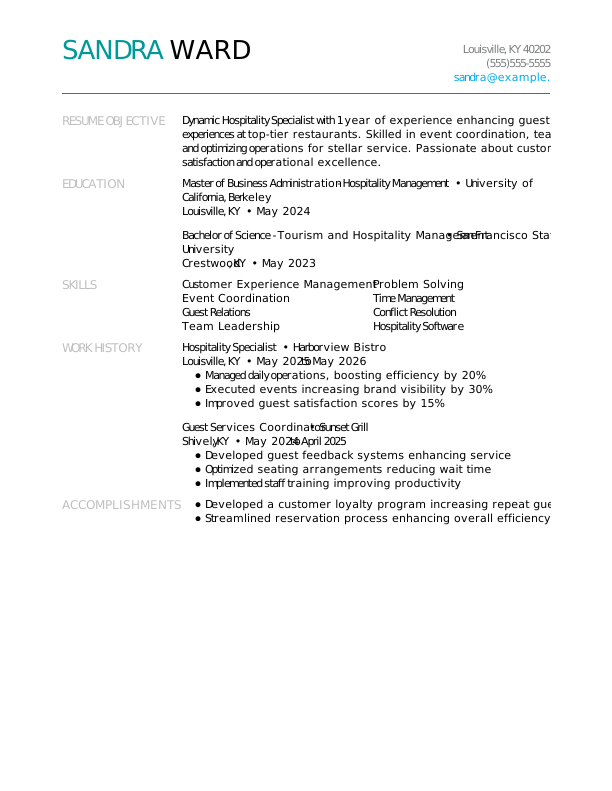
 Free
FreeHospitality Entry-Level Resume
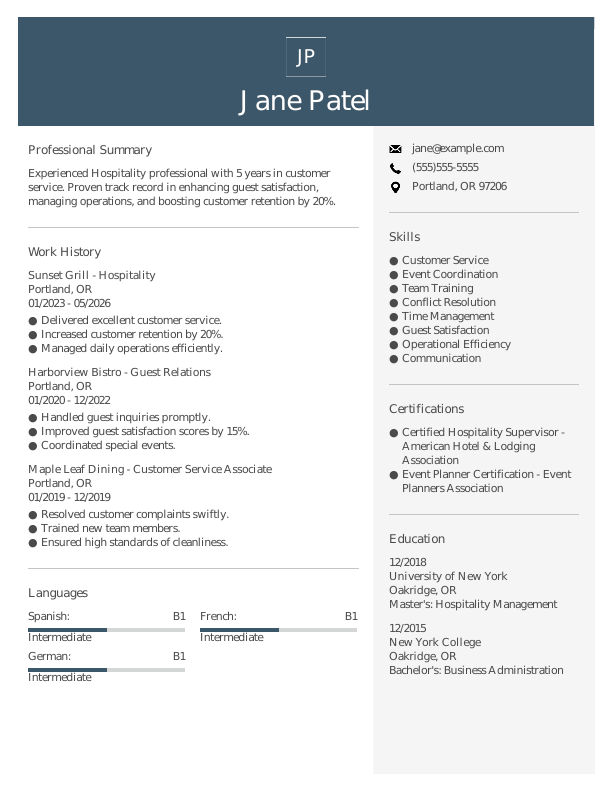
Hospitality Mid-Level Resume
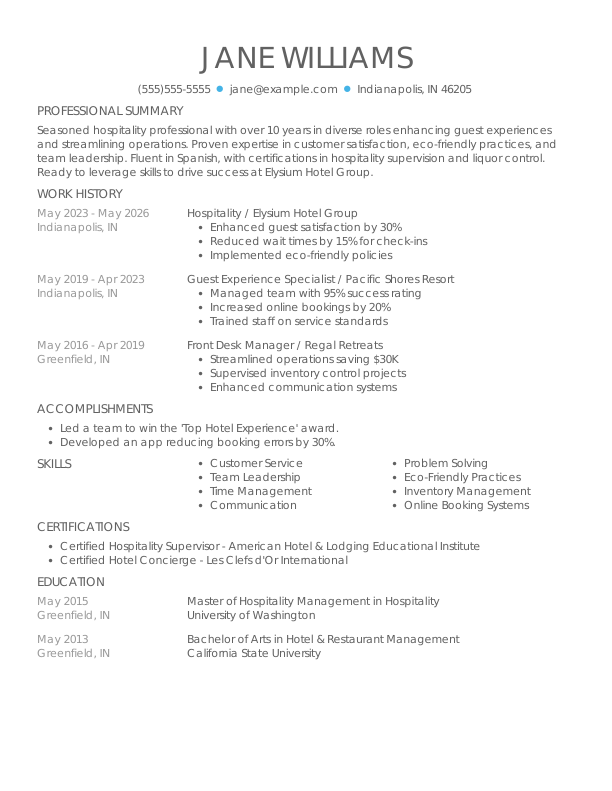
Hospitality Experienced Resume
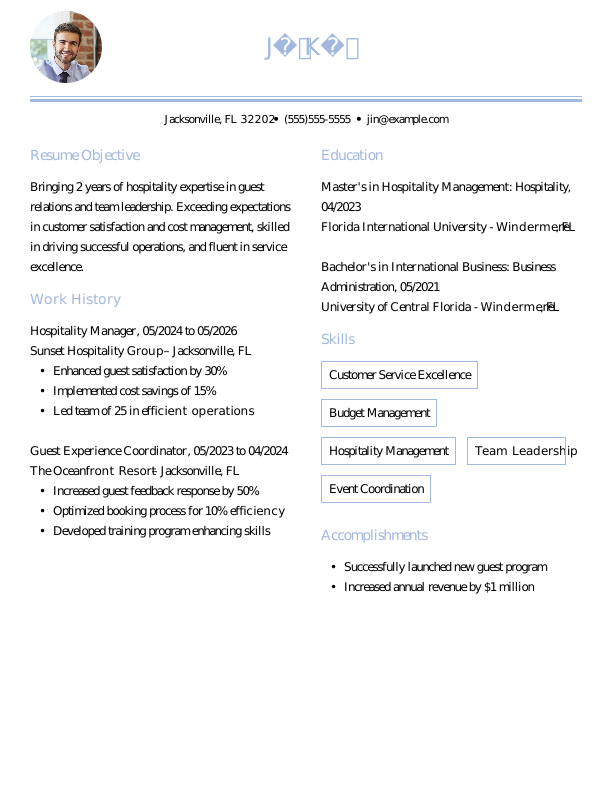
Hospitality Entry-Level Resume 1
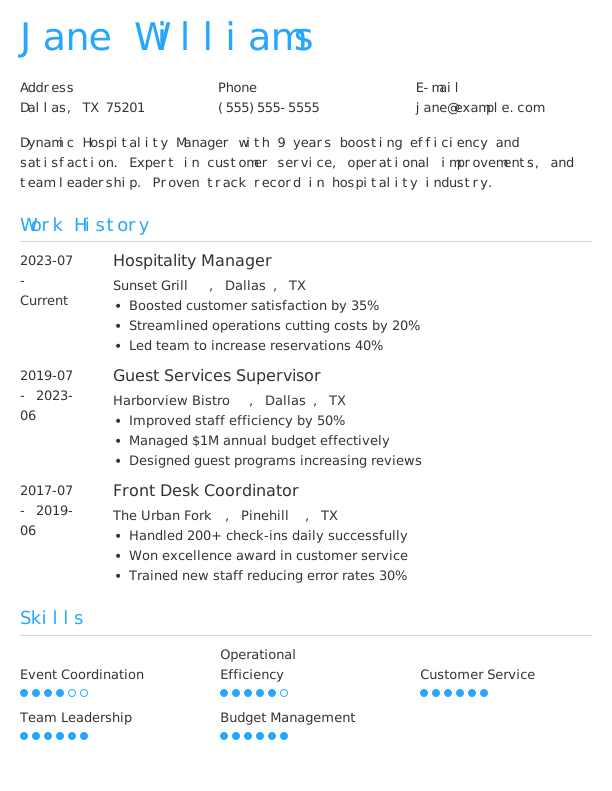

Hospitality Mid-Level Resume 1
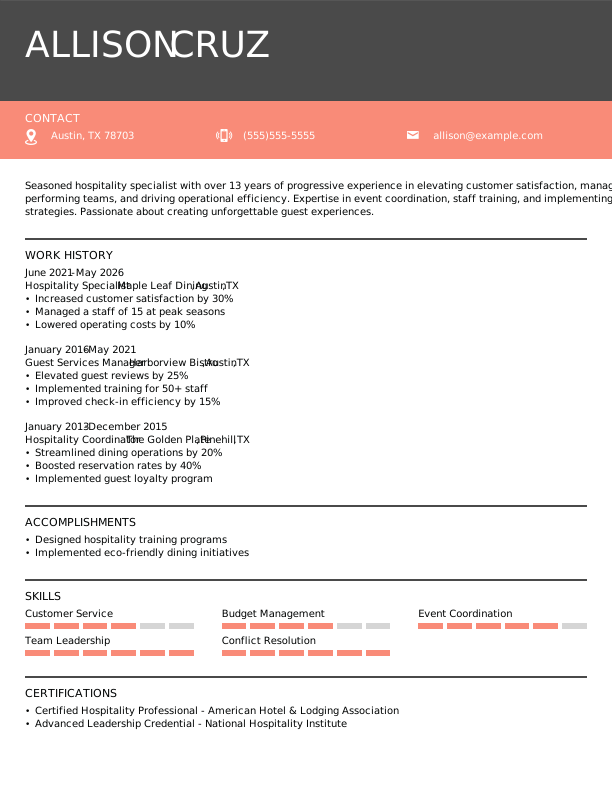

Hospitality Experienced Resume 1
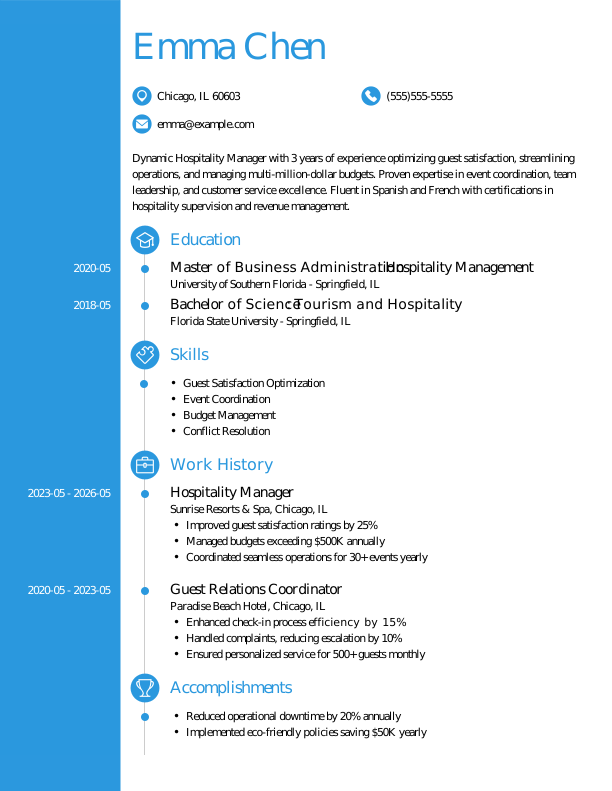
Hospitality Entry-Level Resume 2
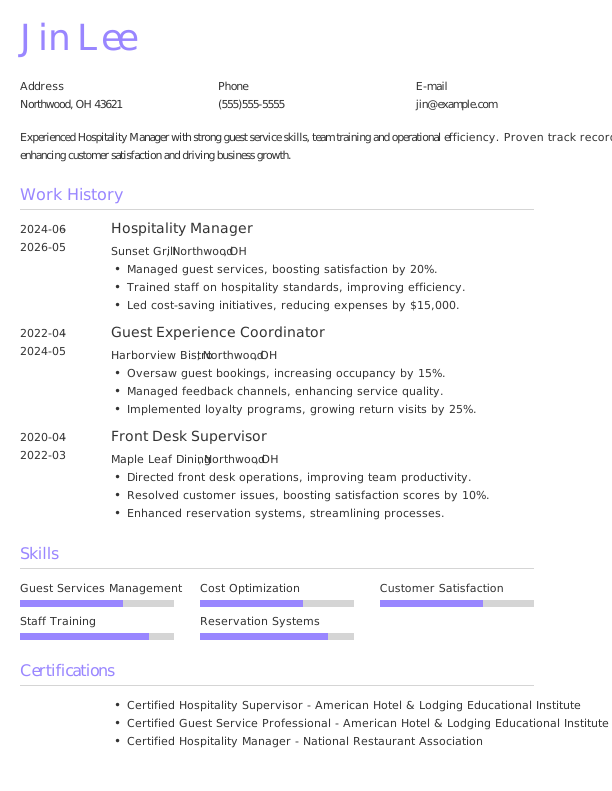

Hospitality Mid-Level Resume 2
Browse Free Resume Templates
- Accounts Payable
- Adjunct Professor
- Artist
- ATS-Friendly
- Auto Mechanic
- Baker
- Business Development Manager
- Business
- Certified Nursing Assistant
- Classic & Traditional
- Cleaner
- College Student
- Concierge
- Construction Worker
- Corporate
- Creative & Unique
- Custodian
- Customer Service
- Dental Assistant
- Direct Support Professional
- Entry-Level
- Flight Attendant
- Hospitality & Food Service
- Front Desk Receptionist
- Healthcare
- High School
- Housekeeping
- Hvac Technician
- Inventory Manager
- Logistics
- Maintenance
- Management
- Modern
- Mortgage Loan Processor
- Pet Sitter
- Phlebotomist
- Production
- RBT
- Restaurant Server
- Sales
- Security Services
- Simple & Basic
- Social Work
- Teacher
- Technology
Resume Examples for Hospitality
Hospitality resumes should reflect the type of establishment you have worked in and the guest-facing skills you bring. Browse our templates to find one that fits your service background.
Entry-Level Hospitality Resume
Great for those entering the hospitality industry, this template simplifies creating a hospitality resume by focusing on your customer service instincts, teamwork, and any food service or event experience.

Mid-Career Hospitality Resume
An ideal choice for mid-level hospitality professionals, this template emphasizes recent achievements and positions applicants for advancement in specialized roles or leadership opportunities.

Experienced Hospitality Resume
An ideal choice for seasoned hospitality professionals with over 10 years of experience, this template is designed for individuals seeking leadership and senior-level positions in the industry.

Hospitality Resume Template (Text)
The text resume below gives you a starting point for a hospitality application. Paste it into your document and update it with your guest service experience. For more service industry layouts, explore our resume template library.
Jane Kim
Houston, TX 77003
Professional Summary
Seasoned Hospitality professional with expertise in customer service, leadership, and eco-friendly initiatives. Proven track record in enhancing guest experiences and driving growth through strategic marketing.
Work Experience
August 2023 – May 2026
Top Notch Hospitality Group – Houston, TX
Hospitality
- Led team to increase customer satisfaction by 20%
- Managed budget, reducing expenses by $10k annually
- Implemented eco-friendly practices, boosting engagement
May 2020 – July 2023
Elite Resort & Care – Houston, TX
Guest Relations Manager
- Enhanced guest experience scores by 15%
- Strategized marketing leading to 30% bookings rise
- Trained staff, improving service speed by 25%
April 2019 – April 2020
Luxury Stay Suites – Pinehill, TX
Customer Service Specialist
- Resolved 90% of customer complaints swiftly
- Contributed to loyalty program growth by 40%
- Introduced new tech, enhancing check-in efficiency
Education
May 2018
University of Houston Houston, TX
Master’s Hospitality Management
May 2016
University of Nevada, Las Vegas Las Vegas, NV
Bachelor’s Hospitality Management
Certifications
- Certified Hotel Administrator – American Hotel & Lodging Educational Institute
- Sustainable Tourism Certification – Global Sustainable Tourism Council
Skills
- Customer Service Excellence
- Team Leadership
- Budget Management
- Eco-Friendly Practices
- Marketing Strategy
- Staff Training
- Technology Integration
- Complaint Resolution
How to Write a Hospitality Resume
As a hospitality professional, understanding how to write a resume involves showcasing your customer service skills and relevant experience in a clear format that appeals to employers. Use the guidance below to emphasize your strengths and tailor your resume for the specific roles you’re aiming for.
1. Contact Info
Your contact information should be clearly presented, professional, and prominently displayed at the top of your resume.
Be sure to include:
- Full name
- Phone number
- Professional email address
- City and state (ZIP code is optional)
- LinkedIn profile or relevant portfolio (if applicable)
 PRO TIP
Avoid including personal information like age, gender, or social media links on your resume unless explicitly requested by the employer.
2. Resume Profile
A resume profile is a concise paragraph of two to four sentences that introduces you and highlights your key qualifications. Acting as a pitch, it grabs the attention of hiring managers and entices them to delve deeper into your resume.
Positioned at the top, a resume profile can be either a summary or an objective. While both options are valid, they serve different roles in showcasing your professional story. Here’s how they differ:
- A resume summary showcases essential experience, skills, and achievements relevant to the hospitality industry. This format is particularly beneficial for those with prior roles or transferable abilities who aim to highlight their contributions as a committed professional in hospitality.
- A resume objective emphasizes your career aspirations and outlines what you aim to accomplish in your professional journey. It’s particularly beneficial for new graduates, individuals shifting careers, or those with limited experience seeking opportunities in hospitality or related fields.
Now, let’s examine the differences between a resume summary and a resume objective to understand their distinct purposes:
Hospitality resume summary example:
Dynamic hospitality manager with over 6 years of experience in high-volume hotels and event venues. Proficient in team leadership, customer satisfaction strategies, and operational efficiency. Awarded for improving guest experiences and driving revenue growth through innovative service initiatives.
Hospitality resume objective example:
Recent graduate with a degree in hospitality management excited to launch a career in a dynamic hotel environment. Committed to exceptional guest experiences and eager to bring strong organizational skills and a proactive attitude to a resort or boutique hotel setting.
3. Work Experience
The work experience on your resume is an important foundation for showcasing your qualifications. Employers analyze not just job titles and responsibilities but also the tangible impact you’ve made in previous roles. This important area reflects how your unique background aligns with the demands of the hospitality industry, proving you’re well-suited for the position.
The work experience section should contain:
- Job title
- Employer name and location
- Dates of employment (month/year)
- 3–5 bullet points detailing your hospitality responsibilities and guest service achievements
When crafting your work experience bullet points, customize your language to align with the hospitality role you seek. Start each point with a strong action verb like “Served,” “Coordinated,” or “Trained” to create impact.
Incorporate quantifiable achievements whenever possible. Using specific figures and accomplishments not only showcases your contributions but also sets you apart from other job seekers by illustrating measurable success.
In general, consider following the format of:
[action verb] + [responsibility] = [result/achievement]
For example:
Successfully managed front desk operations, welcoming over 200 guests daily and maintaining a 95% positive feedback score on customer service surveys.
Note that you can also flip the result/achievement with the responsibility:
Achieved a 15% increase in guest satisfaction ratings by implementing a new streamlined check-in process.
Explore more examples of work experience for hospitality professionals further down this page.
4. Skills
The skills section gives a concise overview of your hospitality abilities, showcasing critical competencies that recruiters seek. This ATS-friendly resume format allows hiring managers to quickly assess your qualifications at a glance.
Skills can be categorized into three key areas:
- Soft skills are personal qualities that influence how individuals interact in the hospitality industry. For hospitality professionals, essential soft skills include communication, empathy, problem-solving, and teamwork.
- Hard skills are specific, quantifiable abilities gained through education, training, or experience. For hospitality professionals, examples include managing reservations, providing customer service, and executing food safety practices.
- Technical skills refer to the abilities required to operate specific tools and technologies in various professions. In hospitality, this includes expertise in property management systems, point-of-sale (POS) software, and online booking platforms.
Overall, aim to showcase a well-rounded selection of skills that directly relate to the job description to demonstrate your value. For more tailored skills examples specific to hospitality roles, explore additional skill suggestions listed further down the page.
PRO TIP
If you’re a newer hospitality professional, consider placing your skills section higher on the resume right after your summary. For those with more experience, it’s better to position this section lower and weave your skills into your work history for greater impact.
5. Education
Understanding how to list education on your resume is essential for showcasing your qualifications. Start with your most recent or relevant degree, clearly stating the type of degree and the institution.
If you’ve recently graduated, you might include your graduation year, GPA (if it’s 3.5 or above), any honors received, and relevant coursework to highlight your academic achievements.
Hospitality resume education section example:
Associate Degree in Hospitality Management
Miami Dade College, Miami, FL
Graduated: 2023 | Graduated with Honors (GPA 3.8)
PRO TIP
When listing multiple degrees on your resume, ensure to arrange them in reverse-chronological order, beginning with the most advanced degree, such as Bachelor of Arts in Hospitality Management, followed by Associate Degree in Culinary Arts.
6. Certifications
Certifications are essential as they highlight your qualifications and ensure you’re knowledgeable about industry standards. While not typically a standard section on all resumes, this part is important for many professionals in hospitality. Employers often seek specific credentials for roles such as event planning or culinary positions, making certifications even more important.
Be sure to showcase any relevant certifications that reinforce your candidacy. Keeping these credentials current and formatted clearly will improve your resume’s impact.
Hospitality certification examples:
- Certified Hospitality Supervisor (CHS) | American Hotel & Lodging Educational Institute | Expires: 03/2028
- Food Safety Manager Certification | National Registry of Food Safety Professionals | Expires: 11/2027
- ServSafe Alcohol Certification | National Restaurant Association | Expires: 01/2028
- Guest Service Gold Certification | American Hotel & Lodging Educational Institute | Expires: 05/2027
Start Building Your Job-Winning Resume
Use Your Existing Resume
Import your current resume to transfer your information to one of our professional templates.
Create a New Resume
Start fresh with a template that catches your eye and follow the prompts to add your details.
Tailor Your Work History to Beat the ATS
Your work experience is more than just job titles on a page. It’s an opportunity to highlight the measurable contributions you’ve made in hospitality, showcasing your impact on guest satisfaction and team dynamics. By doing this, you can create a resume that is friendly to applicant tracking systems (ATS) and easily scanned by employers.
To make your work history stand out, tailor it to align with the specific role you’re applying for by using relevant keywords. Begin by carefully analyzing the job description provided. Identify any frequently mentioned skills or requirements and ensure these elements are reflected in your experience descriptions.
Popular Resume Bullets for Hospitality
These examples are pulled from our most-used entries in the resume builder—based on what hiring managers respond to most.
- Managed front desk operations for a high-volume hotel, increasing guest satisfaction ratings by 20% through personalized service.
- Coordinated events for up to 150 attendees, successfully improving overall event satisfaction scores by 15%.
- Trained and mentored new staff members on customer service best practices, fostering a collaborative team environment.
- Used property management software to streamline check-in processes, reducing average wait times by 30% during peak hours.
- Implemented upselling strategies that boosted revenue per available room (RevPAR) by 10% over six months.
Example of Skills for Hospitality
Including the right skills for your resume demonstrates to employers and ATS that you have the abilities necessary for success in hospitality. Since hiring managers often scan resumes quickly, ensure that your skills are focused, relevant, and aligned with the job description for maximum impact.
The skills outlined reflect what is currently valued in the hospitality industry. These competencies frequently appear in successful resumes and resonate strongly with hiring managers looking for qualified job seekers.
5 Soft Skills for Your Resume or CV
- Effective communication
- Team leadership
- Conflict resolution
- Customer service excellence
- Cultural awareness
5 Hard Skills for Your Resume or CV
- Revenue management systems (IDeaS, Duetto)
- Point of sale systems (Square, Clover)
- Inventory management software (Shopify, Lightspeed)
- Event planning and coordination
- Food safety compliance (ServSafe)
Key Takeaways
- Tailor your resume to the job description. Use specific keywords from the posting to resonate with both ATS and hiring managers.
- Highlight quantifiable achievements to demonstrate your impact. Include metrics like customer satisfaction ratings, event attendance figures, or revenue growth (e.g., increased guest satisfaction by 20%).
- Select a suitable format based on your experience level. Newcomers might opt for a functional format that emphasizes skills, while seasoned professionals should use a reverse-chronological layout to showcase their career progression.
More Resume & CV Examples
Frequently Asked Questions
Last Update:
What resume format should I use for my hospitality resume?
There are three primary resume formats to consider when applying for a position in hospitality. The format you select should reflect your experience level and the skills or achievements you wish to highlight:
- Chronological: The chronological resume is the most widely used format, emphasizing your work experience by outlining your responsibilities and accomplishments. This structure is particularly beneficial for applicants with a relevant job history, as it reinforces their qualifications and adds credibility to their candidacy.
- Functional: The functional resume, also known as a skills-based resume, emphasizes your qualifications and includes an extensive skills section rather than focusing on chronological work history. This format works well for individuals who may have employment gaps or lack direct industry experience, enabling them to highlight their strengths more prominently.
- Combination: A combination resume merges the chronological and functional formats, showcasing both skills and work history. By mixing these two structures, professionals can highlight their relevant abilities while also illustrating their career growth. This format is particularly useful for those transitioning into new roles or building upon their current experience.
Should I include a cover letter with my resume?
Yes, you should include a cover letter with your hospitality job application. A well-crafted cover letter improves your resume by allowing you to express your enthusiasm for customer service and highlight specific experiences that showcase your suitability for the role. It demonstrates to employers that you have taken the time to personalize your submission, which can make a significant difference in a competitive field.
If you’re worried about how to write a cover letter, there are plenty of resources to guide you. You can find articles specifically for hospitality positions, as well as examples showing various styles and formats. Using these resources will help you create a document that communicates your qualifications.
To streamline the writing process, consider using a cover letter generator, which offers templates and suggestions tailored to hospitality applications. This tool makes it easier for you to produce a professional-looking letter quickly.
How long should a hospitality resume be?
For hospitality professionals with less than 10 years of experience, a one-page resume is ideal for showcasing relevant skills and accomplishments. Focus on key roles, certifications, and customer service achievements that highlight your suitability for the position.
Conversely, those in senior or specialized hospitality roles may extend their resumes to two pages if the information remains relevant. Ensure every entry adds value to your application by emphasizing leadership experience, advanced training, and specific contributions to past employers. Clarity and focus should always take precedence over length.
What keywords should I include to pass applicant tracking systems (ATS)?
To improve your resume for ATS, focus on incorporating keywords and phrases directly from the job posting. This might include terms such as “customer service,” “event planning,” or “food safety” that are relevant to hospitality roles. Using these specific words helps ensure your application stands out to hiring managers.
Additionally, mention any certifications like ServSafe or CPR and highlight technical tools you’re familiar with, such as POS systems or scheduling software. By doing this, you emphasize your qualifications and readiness for the role while improving your chances of passing through ATS filters effectively.
Is it important to list volunteer work in hospitality on my resume?
Yes, especially for those starting their careers. Including volunteer experience highlights your commitment to service and showcases relevant skills, making you a more attractive applicant even if your formal experience is limited.

Kirsten Chorpenning is a career advice writer who empowers job seekers to take control of their career paths using Monster’s comprehensive job search and resume tools. She specializes in helping job seekers find rewarding jobs in today’s dynamic work environment.
See More From Kirsten ChorpenningExplore Related Career Advice


How to Explain Employment Gaps: Examples for Resumes, Interviews, & More
Updated:
Jul 17, 2026
|

20 min read





Resume Skills Section Guide: Top Skills to Include & Formatting Tips

Updated:
Jul 15, 2026
|
19 min read