
Free Math Resume Templates & Examples
Boost your interview chances with expertly crafted math resume templates. These free resume templates, along with practical writing tips, will assist you in creating a standout resume or CV that showcases your skills and captivates employers.
Real-World Resumes That Get Results
 Free
Free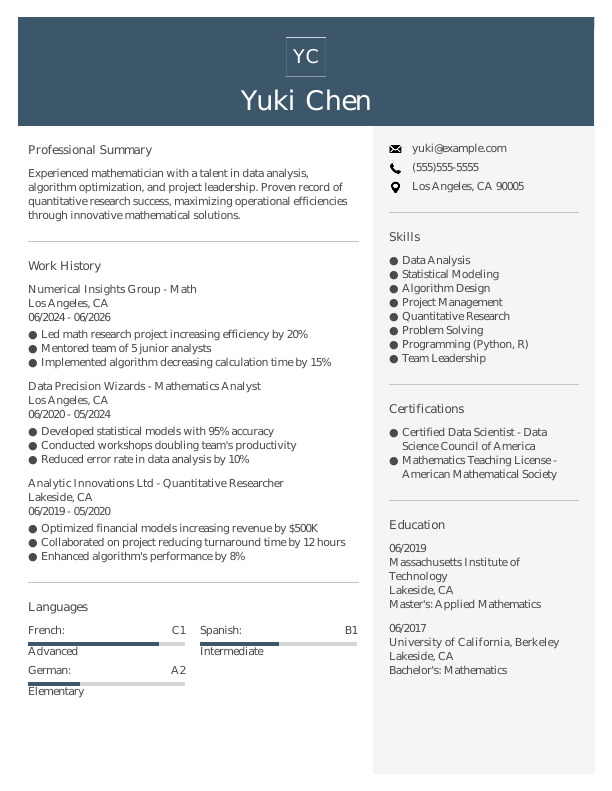
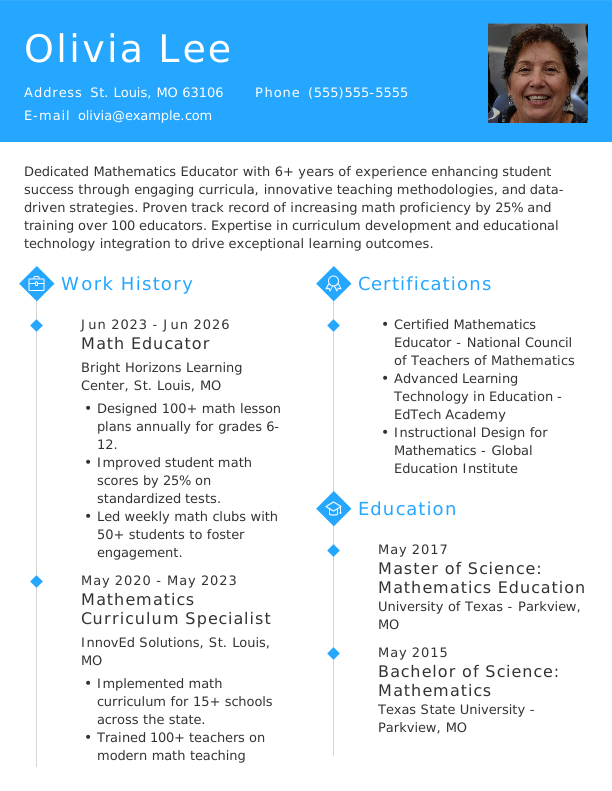
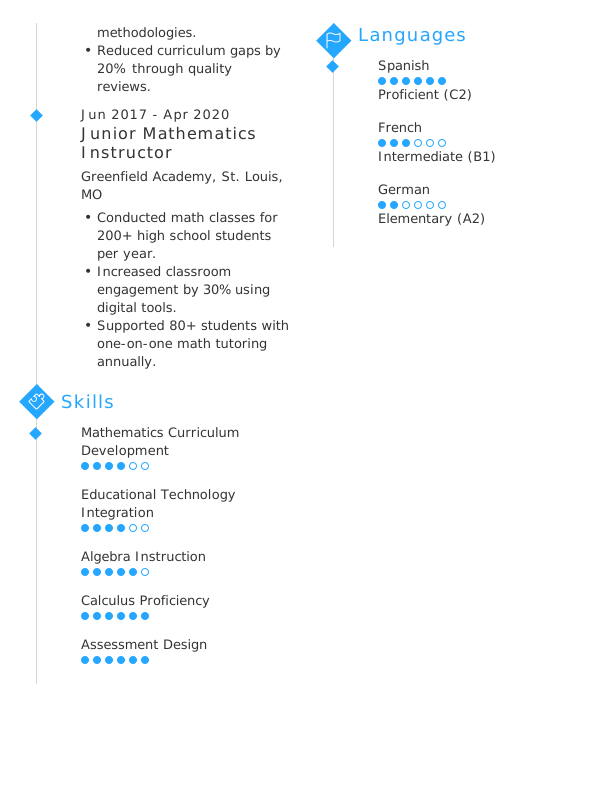
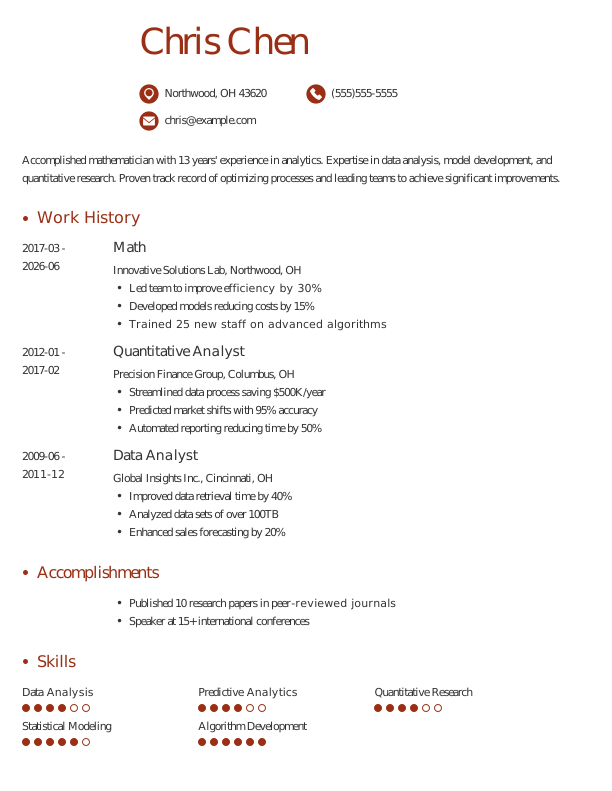
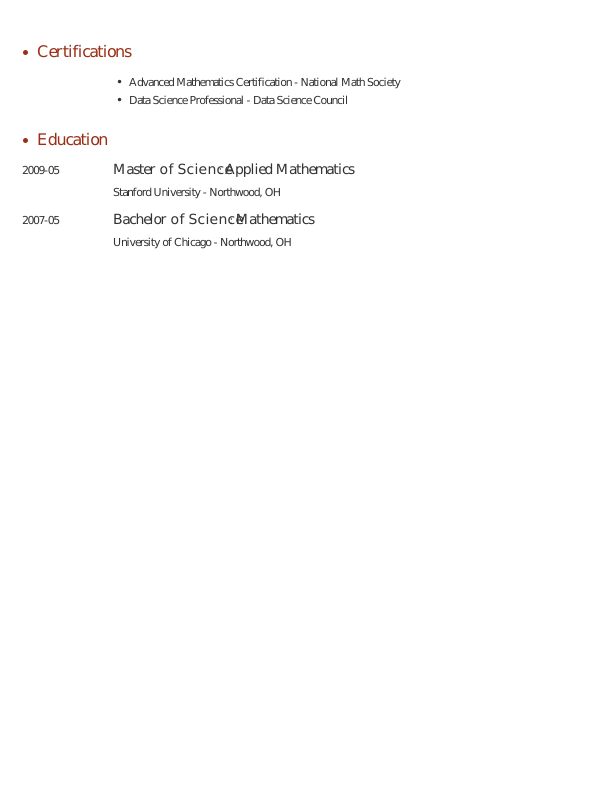
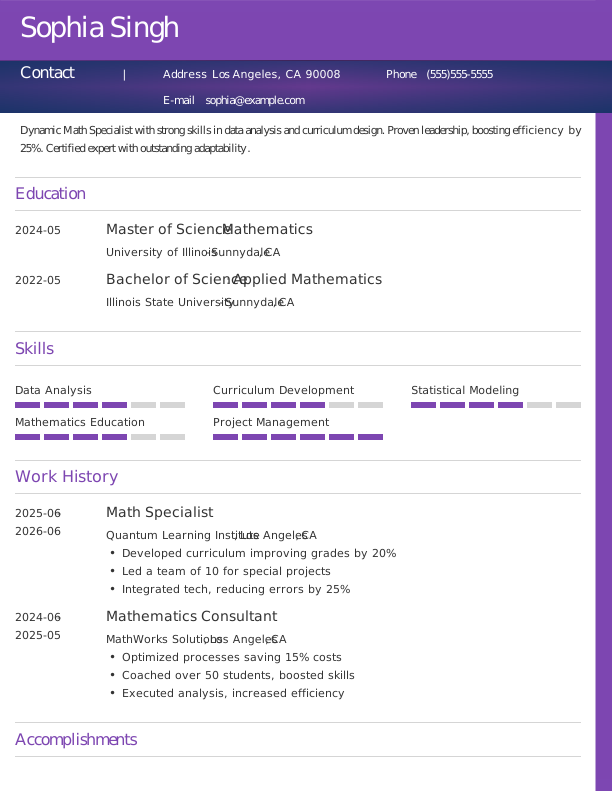

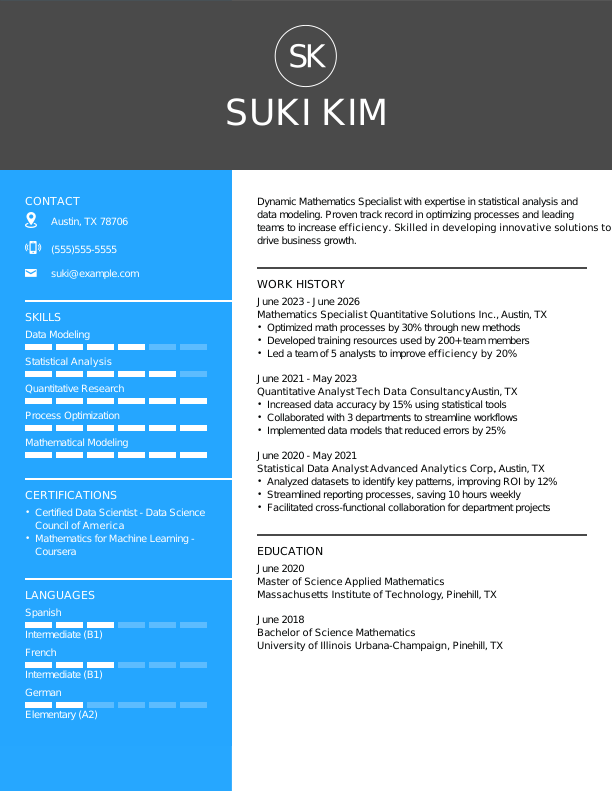
Browse Free Resume Templates
- Accounts Payable
- Adjunct Professor
- Artist
- ATS-Friendly
- Auto Mechanic
- Baker
- Business Development Manager
- Business
- Certified Nursing Assistant
- Classic & Traditional
- Cleaner
- College Student
- Concierge
- Construction Worker
- Corporate
- Creative & Unique
- Custodian
- Customer Service
- Dental Assistant
- Direct Support Professional
- Entry-Level
- Flight Attendant
- Hospitality & Food Service
- Front Desk Receptionist
- Healthcare
- High School
- Housekeeping
- Hvac Technician
- Inventory Manager
- Logistics
- Maintenance
- Management
- Modern
- Mortgage Loan Processor
- Pet Sitter
- Phlebotomist
- Production
- RBT
- Restaurant Server
- Sales
- Security Services
- Simple & Basic
- Social Work
- Teacher
- Technology
Resume Examples for Math Professionals
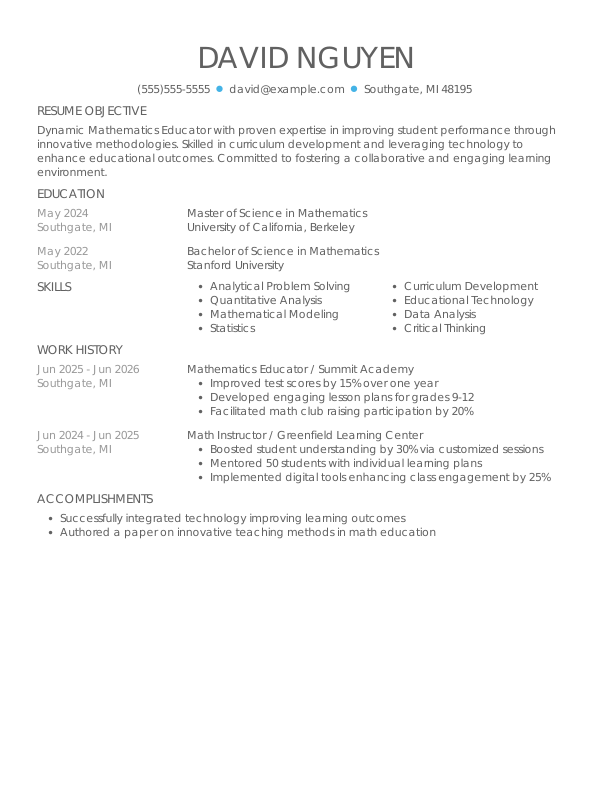
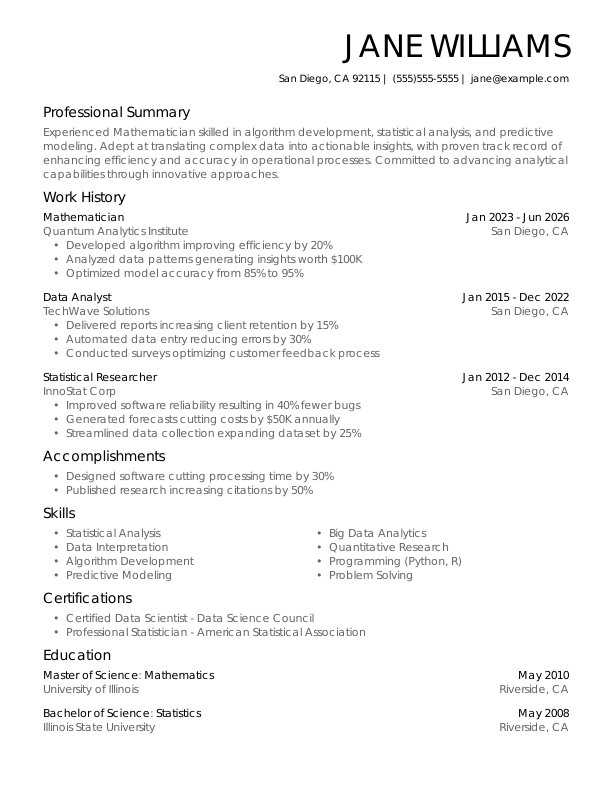
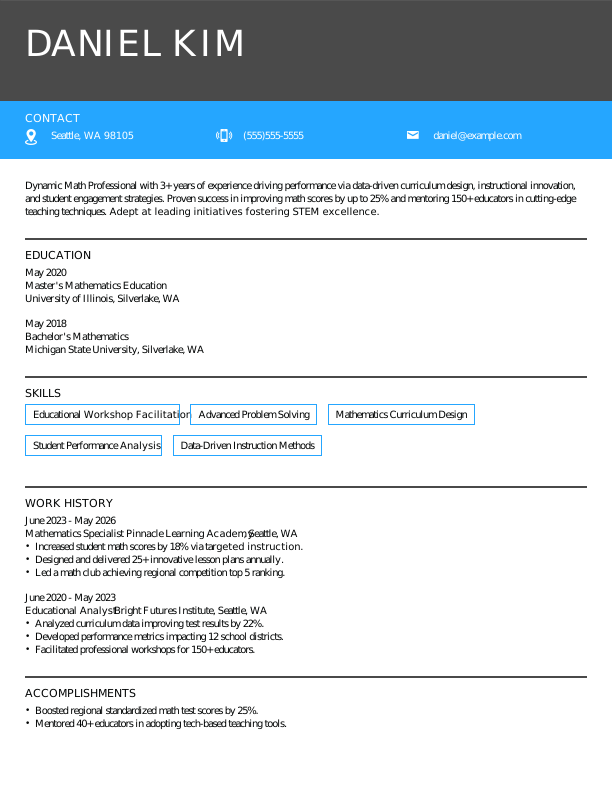
Math resumes and CVs differ significantly based on your career stage and specialization. Explore templates that cater to math professionals across the continuum of the field, spanning entry-level, mid-career, and experienced roles.
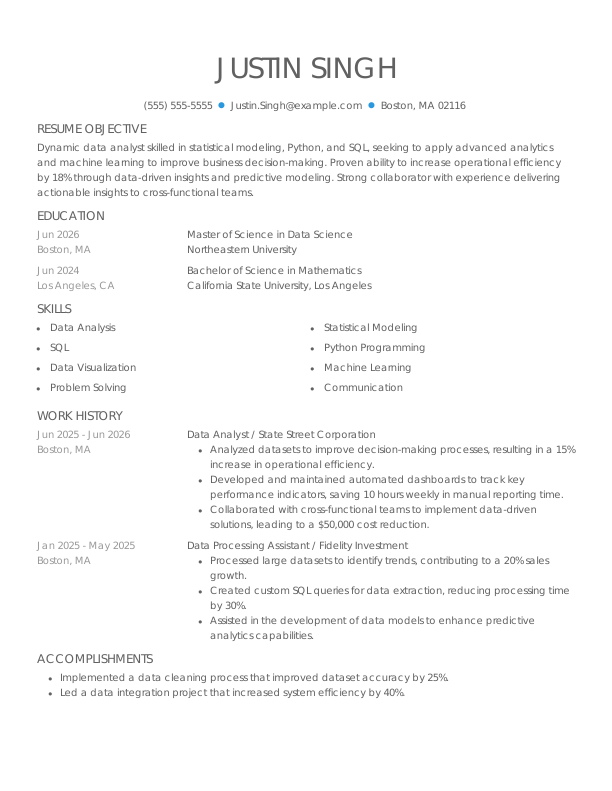
Data Analyst Resume
Ideal for recent graduates crafting a resume with no experience, this template also supports career changers pursuing data analytics roles by highlighting technical skills, projects, and measurable results.
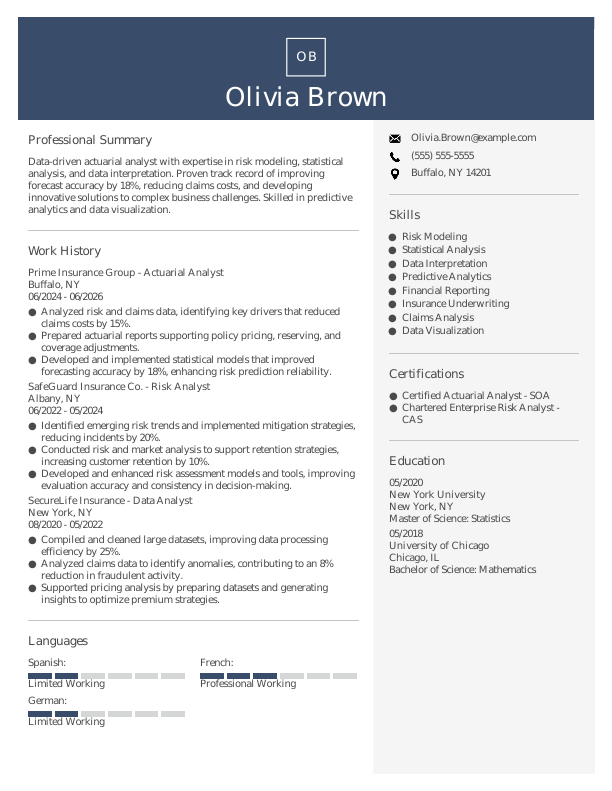
Actuarial Analyst Resume
A strong fit for actuarial professionals, this resume highlights risk modeling, predictive analytics, financial analysis, and insurance expertise while demonstrating measurable business impact.
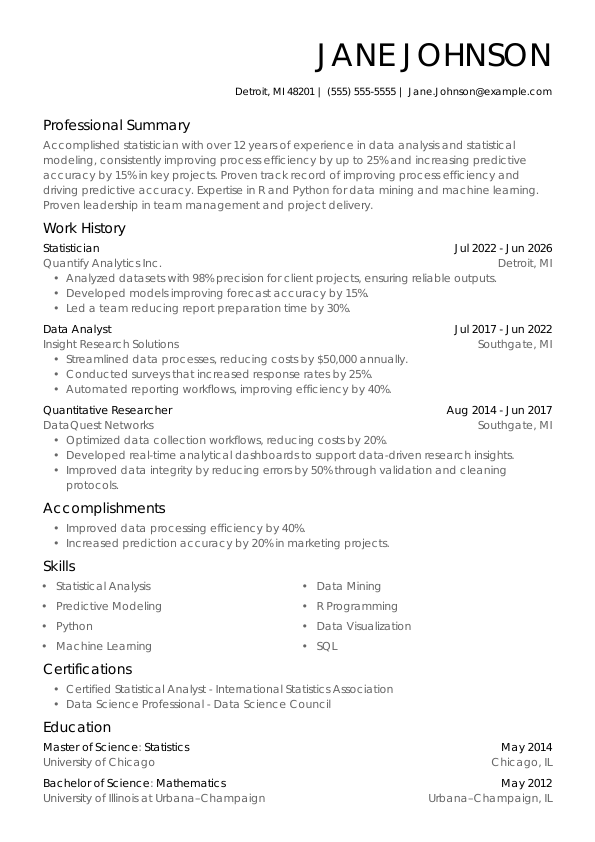
Statistician Resume
Well suited for experienced statisticians, this resume highlights statistical modeling, predictive analytics, research expertise, and data-driven accomplishments that support advancement in analytics and data science careers.
Math Resume Template (Text)
Use this customizable text format of a math resume to copy, edit, and personalize directly in your document.
David Jones
Oakridge, OR 97468
(555)555-5555
David.Jones@example.com
Professional Summary
Dedicated Math Specialist with 8 years of experience boosting math proficiency. Skilled in curriculum design, statistical analysis, and innovative strategies, driving student engagement and success.
Work Experience
Math Specialist
Bright Futures Learning Center – Oakridge, OR
January 2023 – June 2026
- Developed advanced math curricula for 200+ students.
- Increased student math proficiency by 35%.
- Mentored 15 students for STEM competitions.
Mathematics Educator
Academia Excellence High School – Oakridge, OR
January 2018 – December 2022
- Improved SAT math scores by 25% for 50+ students.
- Introduced interactive math lessons, raising engagement by 20%.
- Trained 5 new teachers on modern math teaching methods.
Mathematics Tutor
Aspire Learning Hub – Oakridge, OR
January 2016 – December 2017
- Tutored 40+ students, boosting grades by an average of 15%.
- Customized lesson plans, achieving a 90% satisfaction rate.
- Prepared students for state exams, increasing pass rates by 10%.
Education
Master of Science in Mathematics
University of California, Berkeley, Berkeley, CA
May 2016
Bachelor of Science in Mathematics
New York University, New York, NY
May 2014
Certifications
- Certified Mathematics Educator (CME) – National Mathematics Certifying Board
- Advanced STEM Teaching Certificate – STEM Learning Institute
Skills
- Advanced Mathematical Modeling
- Statistical Analysis
- Calculus and Algebra Proficiency
- Creative Problem Solving
- Data Interpretation
- Math Curriculum Development
- Exam Preparation Strategies
- Mentorship in STEM Fields
How to Write a Math Resume
As a math professional, knowing how to make strong resumes means showcasing your analytical skills and relevant experience in a clear format that stands out. Use the guidance below to highlight your strengths and tailor your resume for the positions you’re aiming for.
1. Contact Info
Your contact information should be clear, professional, and easy to find at the top of your resume.
Make sure to include:
- Full name
- Phone number
- Professional email address
- City and state (ZIP code is optional)
- LinkedIn profile or personal portfolio (if relevant)
 PRO TIP
Skip including personal details such as your Social Security number, age, or photographs unless the job posting specifically requests this information.
2. Resume Profile
A resume profile is a brief introduction (two to four sentences) that highlights your key qualifications and career goals. This section serves as an engaging pitch to hiring managers, designed to grab their attention and motivate them to explore your resume further.
Typically located at the top of your resume, the profile can be structured as either a summary or an objective, each serving distinct functions. Understanding these differences is important for crafting an effective profile:
- A resume summary showcases your most relevant qualifications, highlighting key experiences and skills that align with the demands of the math field. This format is particularly beneficial for those with relevant work experience or transferable skills who wish to demonstrate their contributions as a math professional.
- A resume objective highlights your aspirations and focuses on the career goals you wish to pursue. It’s particularly beneficial for recent graduates, individuals transitioning careers, or those with limited experience, such as coding bootcamp graduates entering tech roles or professionals moving into marketing.
Let’s take a look at an example of each to see how a resume summary and a resume objective differ:
Math resume summary example:
Analytical mathematics educator with over 6 years of experience in diverse educational environments, including high school and community college settings. Proficient in curriculum development, student assessment, and innovative teaching strategies. Acknowledged for improving student engagement and improving overall academic performance through tailored instruction.
Math resume objective example:
Recent mathematics graduate excited to launch a career in educational settings. Committed to fostering a love for learning and looking to contribute analytical thinking and problem-solving skills to a dynamic classroom environment or tutoring center.
3. Work Experience
The work experience on your resume is an important foundation for showcasing your qualifications. Employers assess your job history to understand the significance of your contributions, rather than simply noting your titles and responsibilities.
Your experiences illustrate how your analytical skills and problem-solving abilities align with the requirements of the target role.
The work experience section should contain:
- Job title
- Employer name and location
- Dates of employment (month/year)
- 3–5 bullet points describing your relevant responsibilities and achievements
Tailor your content to reflect the specific math-related role you’re targeting. Start each bullet point with an action verb (like “Calculated,” “Analyzed,” “Developed”) to create a strong statement that highlights your contributions.
Incorporate quantifiable information or metrics whenever possible. Specific numbers and achievements provide clear evidence of your capabilities and help differentiate you from other applicants in the job market.
In general, consider following the format of:
[action verb] + [responsibility] = [result/achievement]
For example:
Developed and implemented math curriculum for 150+ students, resulting in a 20% improvement in overall test scores across the grade level.
Note that you can also flip the result/achievement with the responsibility:
Achieved a 30% increase in student engagement through interactive learning modules and real-world application projects.
Explore more work experience examples for math professionals further down the page.
4. Skills
This skills section provides a concise overview of mathematical abilities relevant to various professional roles. It aids hiring managers in quickly assessing qualifications and identifying suitable applicants for the position. Skills can be categorized into three distinct groups:
- Soft skills are personal qualities that gauge how well individuals interact with their colleagues, particularly in roles like teaching or project management. Skills like communication, adaptability, problem-solving, and collaboration are essential.
- Hard skills are specific, quantifiable abilities acquired through education, training, or experience. For a mathematician, examples include solving complex equations, using statistical software, and presenting data analysis results.
- Technical skills are the specific competencies required to perform tasks in various fields. In mathematics, this includes skill in statistical software like R or SPSS, programming languages such as Python, and tools for mathematical modeling like MATLAB.
In general, aim to include a diverse range of relevant skills that align with the job requirements to showcase your comprehensive abilities. Find additional math skills examples further down the page.
PRO TIP
If you’re a newer math professional, consider placing your skills section higher on the resume right after your summary. If you have more experience, it’s better to position this section lower and weave your skills throughout your work history for a cohesive presentation.
5. Education
Understanding how to put education on a resume can significantly improve its impact. Begin with your most recent or relevant math degree, clearly stating the degree type and institution name.
If you’re a recent graduate, consider including your graduation year, GPA (if it’s 3.5 or higher), any honors received, and relevant coursework to further showcase your qualifications.
Math resume education section example:
Bachelor of Science in Mathematics (BSM)
University of California, Berkeley, Berkeley, CA
Graduated: 2024 | Summa Cum Laude
PRO TIP
If you’re advancing from an Associate Degree in Mathematics to a Bachelor of Science in Mathematics, or have earned another relevant degree, list both in reverse-chronological order.
6. Certifications
Including certifications on a resume is essential to showcase your skills, particularly when you have limited experience in the field. While this section may not be standard on all resumes, it holds significant value for many professionals.
Employers often look for specific credentials required for specialized roles, such as teaching certifications for educators or technical certifications for IT positions.
Make sure to include only those certifications and credentials that directly support your application. Keep them updated and formatted clearly to improve readability and impact.
Math certification examples:
- Certified Math Teacher License, California | California Department of Education | Expires: 12/2028
- Advanced Placement (AP) Calculus Certification | College Board | Expires: 05/2027
- Mathematics Coaching Certificate | National Council of Teachers of Mathematics | Expires: 06/2028
- Data Science and Analytics Certification | Coursera | Expires: 10/2027
Start Building Your Job-Winning Resume
Use Your Existing Resume
Import your current resume to transfer your information to one of our professional templates.
Create a New Resume
Start fresh with a template that catches your eye and follow the prompts to add your details.
Tailor Your Work History to Beat the ATS
To create an effective work history, tailor your descriptions to align with the teaching or mathematics position you’re pursuing by using relevant keywords. Doing this results in an ATS-friendly resume that applicant tracking systems (ATS) can easily scan.
To begin, analyze the job description thoroughly to identify frequently mentioned skills, methodologies, or educational standards. Then, reflect those elements in your experience descriptions when possible.
Popular Resume Bullets for Math Jobs
These examples are pulled from our most-used entries in the resume builder—based on what hiring managers respond to most.
- Developed and implemented engaging lesson plans for 25+ high school students, improving overall math scores by 20%.
- Facilitated weekly study groups that improved peer-to-peer learning, resulting in a 15% increase in student participation.
- Used various educational software tools to track progress and personalize student learning experiences.
- Mentored new teachers on effective instructional strategies, fostering a collaborative teaching environment.
- Conducted math workshops that attracted over 50 participants, significantly boosting community interest in STEM subjects.
Example of Skills for Math Professionals
Highlighting the right skills on your resume signals to employers and ATS that you can perform the role. Since resumes are usually read quickly, make sure your skills are targeted, relevant, and tailored to the job description.
The skills list below showcases what is currently sought after in the math field. These competencies frequently appear in strong resumes and resonate with hiring managers.
5 Soft Skills for Your Resume or CV
- Analytical thinking
- Effective communication
- Team leadership
- Time management
- Conflict resolution
5 Hard Skills for Your Resume or CV
- Statistical analysis (R, Python)
- Mathematical modeling
- Data visualization (Tableau, Matplotlib)
- Algorithm development
- Numerical methods
What’s a Fair Math Salary?
Understanding math salaries across the country helps you evaluate job offers, negotiate better pay, and make informed career decisions. The data below originates from the U.S. Bureau of Labor Statistics (BLS) and reflects the most recent nationwide averages for mathematics professionals.
Keep in mind that factors like location, years of experience, certifications, and specialization can all influence your actual salary.
Mathematicians working in finance or technology sectors often earn more than those in education or research positions, and advanced roles such as data scientists or quantitative analysts typically command higher compensation packages.
| Alabama | $101,140 |
| Alaska | $103,910 |
| Arizona | $107,310 |
| Arkansas | $85,370 |
| California | $157,580 |
| Connecticut | $112,520 |
| Delaware | $113,100 |
| District of Columbia | $168,390 |
| Florida | $104,610 |
| Georgia | $106,140 |
| Hawaii | $99,510 |
| Idaho | $101,690 |
| Illinois | $123,220 |
| Indiana | $88,500 |
| Iowa | $94,020 |
| Kansas | $97,180 |
| Kentucky | $88,350 |
| Louisiana | $89,090 |
| Maine | $95,120 |
| Maryland | $131,090 |
| Massachusetts | $127,930 |
| Michigan | $102,470 |
| Minnesota | $107,130 |
| Mississippi | $74,690 |
| Missouri | $90,910 |
| Montana | $89,630 |
| Nebraska | $94,770 |
| Nevada | $105,350 |
| New Hampshire | $111,940 |
| New Jersey | $122,030 |
| New Mexico | $103,880 |
| New York | $127,570 |
| North Carolina | $111,480 |
| North Dakota | $85,270 |
| Ohio | $100,760 |
| Oklahoma | $88,280 |
| Oregon | $117,770 |
| Pennsylvania | $100,280 |
| Rhode Island | $110,800 |
| South Carolina | $95,020 |
| South Dakota | $88,860 |
| Tennessee | $93,860 |
| Texas | $110,420 |
| Utah | $108,360 |
| Vermont | $103,460 |
| Virginia | $141,720 |
| Washington | $156,610 |
| West Virginia | $95,200 |
| Wisconsin | $94,410 |
| Wyoming | $87,760 |
| Guam | $55,470 |
| Puerto Rico | $66,760 |
| Virgin Islands | $85,440 |
Key Takeaways
- Tailor your resume to the job description. Use specific language from the posting to resonate with both ATS and hiring managers.
- Highlight quantifiable achievements to demonstrate effectiveness. Include metrics like student test scores or improvement percentages (e.g., raised average scores by 20%).
- Select a format that aligns with your experience level. New educators might prefer a functional layout, while seasoned teachers often use reverse-chronological resumes.
More Resume & CV Examples
- Actuary
- Analyst
- Bioinformatics
- Biology
- Biostatistician
- Business Analyst
- Business Intelligence
- Chief Data Officer
- Clinical Data Manager
- Compensation Analyst
- Data Analyst
- Data Annotator
- Data Engineer
- Data Scientist
- Environmental Science
- Healthcare Data Analyst
- Hris Analyst
- Intelligence Analyst
- Physical Science
- Quantitative Analyst
- Quantitative Researcher
- Science
- Scientist
- Social Science
- Tableau Developer
Frequently Asked Questions
Last Update:
What resume format should I use for my math resume?
There are three primary resume formats to consider when crafting your math-related resume. The format you select should reflect your experience level and highlight the skills or achievements most relevant to the positions you seek:
- Chronological: The most popular format, a chronological resume highlights your work experience by detailing responsibilities and achievements in reverse order. This structure is particularly beneficial for applicants with relevant job histories that reinforce their qualifications and demonstrate steady career progression.
- Functional: Also known as a skills-based resume, the functional resume highlights a summary of qualifications and an expanded skills section to showcase your relevant abilities. Consequently, it places less emphasis on work history, making it beneficial for job seekers lacking relevant experience or facing significant employment gaps.
- Combination: A combination resume integrates both chronological and functional elements, featuring a skills section alongside work experience. This format benefits professionals by allowing them to showcase their abilities while demonstrating career progression, making it ideal for those seeking advancement or transitioning into new roles.
Should I include a cover letter with my resume?
Yes, you should include a cover letter with your application for a math position. A well-crafted cover letter complements your resume by allowing you to express your passion for mathematics and detail specific experiences that showcase your analytical skills. This personal touch demonstrates to employers that you’re genuinely interested in the role and highlights qualities that may not be evident from your resume alone.
If you’re feeling uncertain about how to write a cover letter, don’t let that deter you. Numerous resources can guide you through the process, including how-to guides, examples tailored to various math-related roles, and different formats to choose from based on your background. These materials can provide clarity and inspiration as you craft your message.
To make the process even easier, consider using a cover letter generator that offers templates and suggestions specifically for math positions. Such tools can streamline your writing experience while ensuring professionalism in your application.
How long should a math resume be?
For professionals with less than 10 years of experience, a resume should generally remain one page. This concise format allows you to highlight relevant skills, education, and key achievements without overwhelming potential employers. Focus on clarity and organization to make your qualifications stand out.
For senior or specialized roles, it’s acceptable to extend your resume to two pages. Ensure that the content remains targeted and relevant, emphasizing leadership experiences, advanced skills, or notable projects in your field. The goal is to provide a comprehensive view while maintaining focus.
What keywords should I include to pass applicant tracking systems (ATS)?
To improve your chances of passing an ATS, tailor your resume with keywords from the job posting. Look for specific terms that describe necessary skills and experiences, such as “problem-solving,” “data analysis,” or “statistical modeling.” By including these relevant phrases, you demonstrate your fit for the role.
Don’t forget to highlight any certifications like Certified Mathematics Teacher or Technical Certification in Data Science. Additionally, mention tools you’re familiar with, such as MATLAB or R programming. This not only showcases your qualifications but also aligns your resume with what employers are seeking.

Elizabeth Muenzen is a Certified Professional Resume Writer (CPRW) and member of the Professional Association of Resume Writers & Career Coaches who empowers job seekers to take control of their career paths using Monster’s comprehensive job search and resume tools.
See More From Elizabeth MuenzenExplore Related Career Advice


How to Explain Employment Gaps: Examples for Resumes, Interviews, & More

Updated:
Jul 17, 2026
|

20 min read







Resume Skills Section Guide: Top Skills to Include & Formatting Tips
Updated:
Jul 15, 2026
|
19 min read