
Free Biology Resume Templates & Examples
Improve your chances of landing interviews with expertly designed biology resume templates. These free resume templates include writing tips to guide you in crafting a standout resume or CV, showcasing your qualifications to potential employers.
Real-World Resumes That Get Results
 Free
Free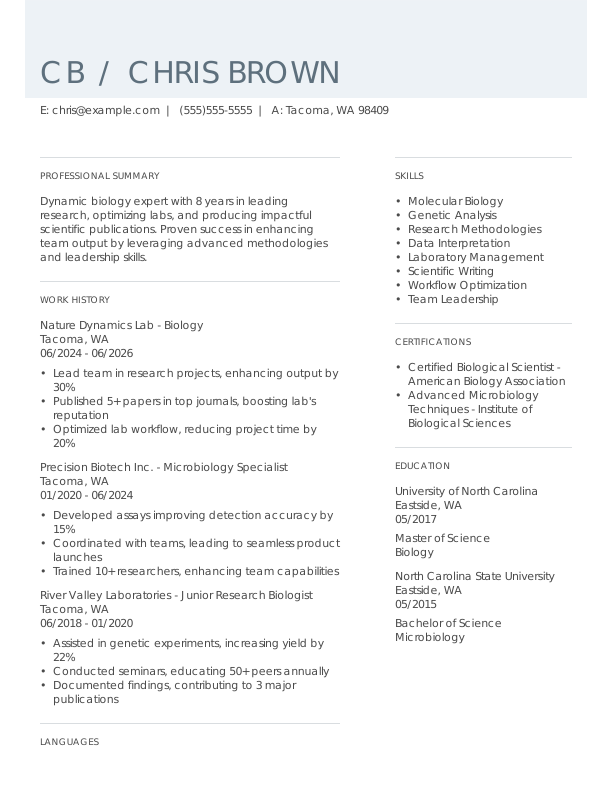
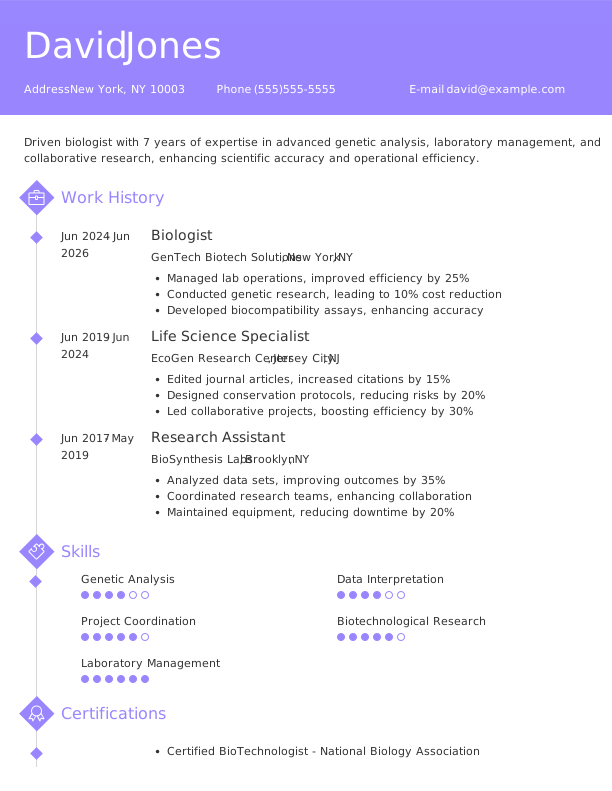
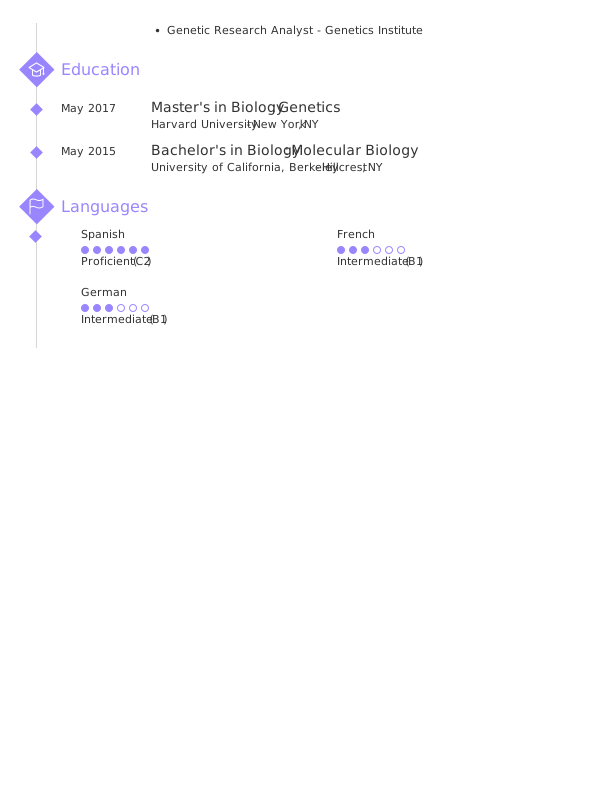
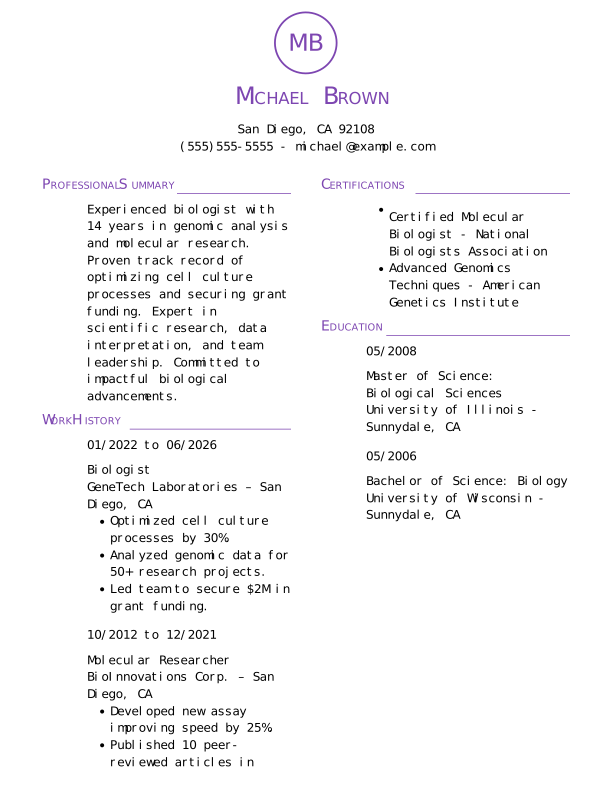
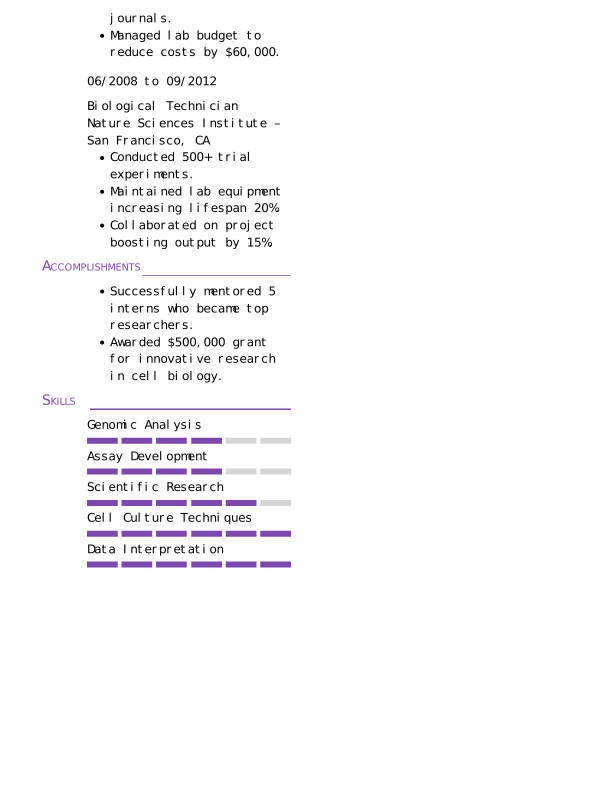
Browse Free Resume Templates
- Accounts Payable
- Adjunct Professor
- Artist
- ATS-Friendly
- Auto Mechanic
- Baker
- Business Development Manager
- Business
- Certified Nursing Assistant
- Classic & Traditional
- Cleaner
- College Student
- Concierge
- Construction Worker
- Corporate
- Creative & Unique
- Custodian
- Customer Service
- Dental Assistant
- Direct Support Professional
- Entry-Level
- Flight Attendant
- Hospitality & Food Service
- Front Desk Receptionist
- Healthcare
- High School
- Housekeeping
- Hvac Technician
- Inventory Manager
- Logistics
- Maintenance
- Management
- Modern
- Mortgage Loan Processor
- Pet Sitter
- Phlebotomist
- Production
- RBT
- Restaurant Server
- Sales
- Security Services
- Simple & Basic
- Social Work
- Teacher
- Technology
Resume Examples for Biology
A biology resume or CV varies significantly between a recent graduate and an experienced professional. Explore tailored templates for each career stage, and use our Resume Builder to create your own.
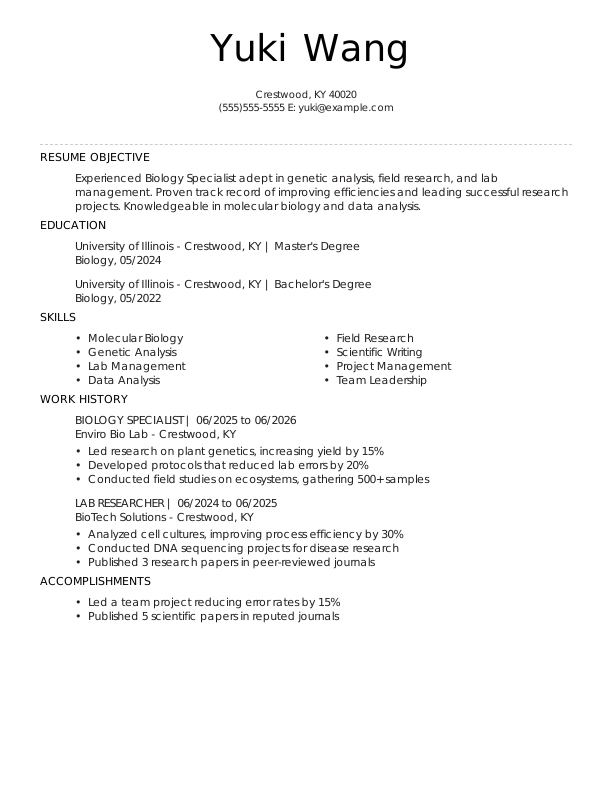
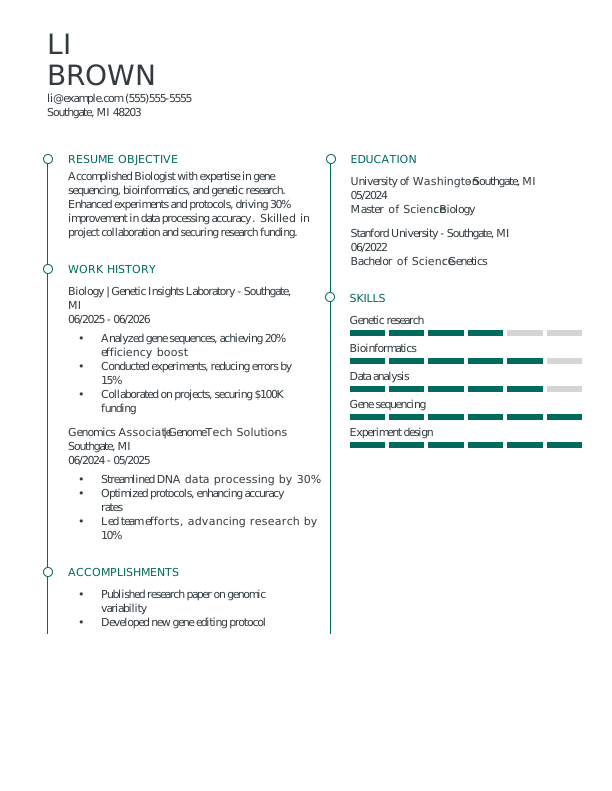
Entry-Level Biology Resume
Ideal for recent graduates who need help writing a resume with no experience, this template also suits individuals transitioning into biology from different fields.

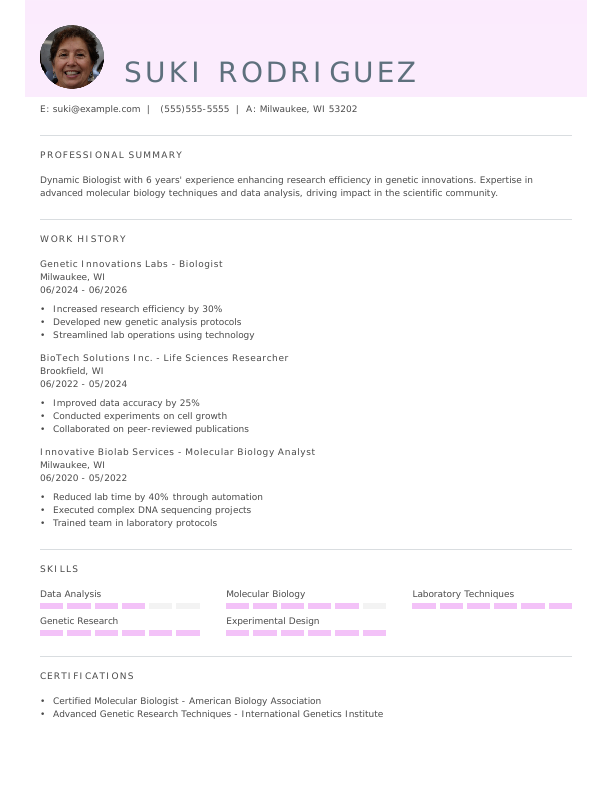
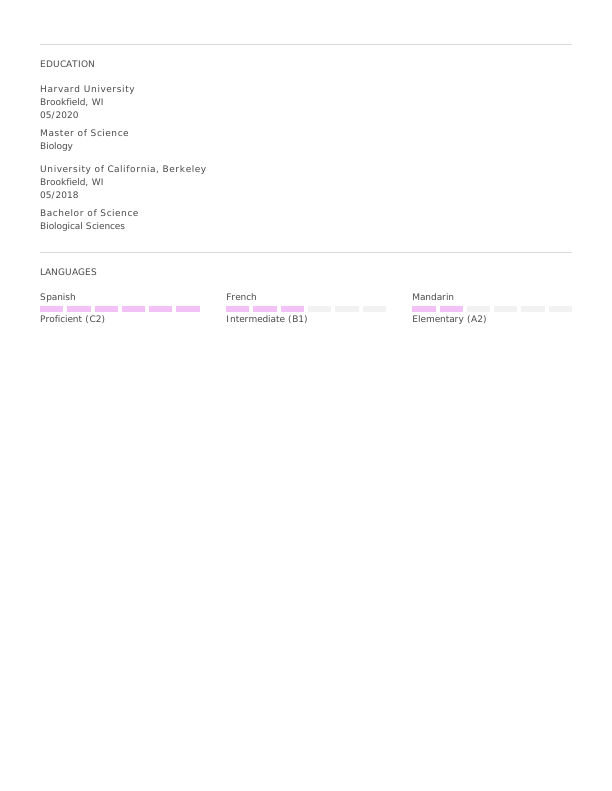
Mid-Career Biology Resume
A good fit for biology professionals with several years of experience, this template highlights recent research achievements and facilitates advancement into specialized or leadership roles.
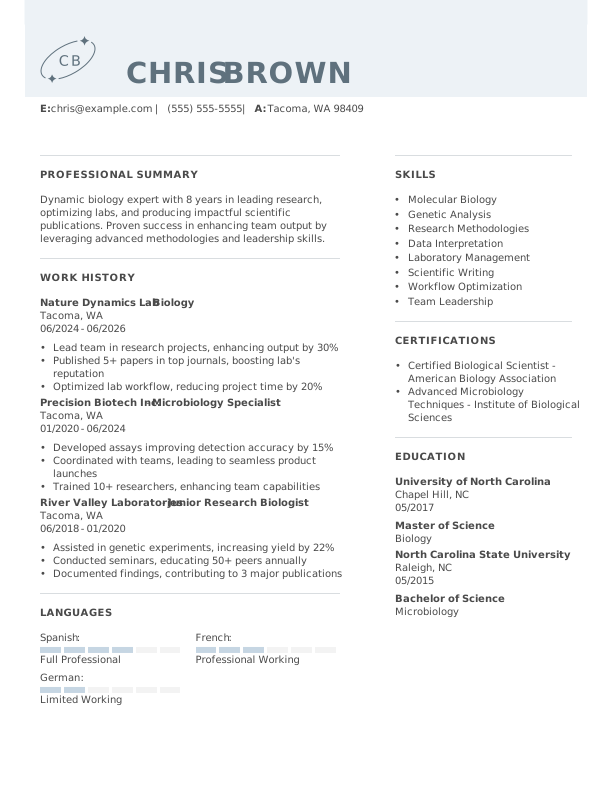
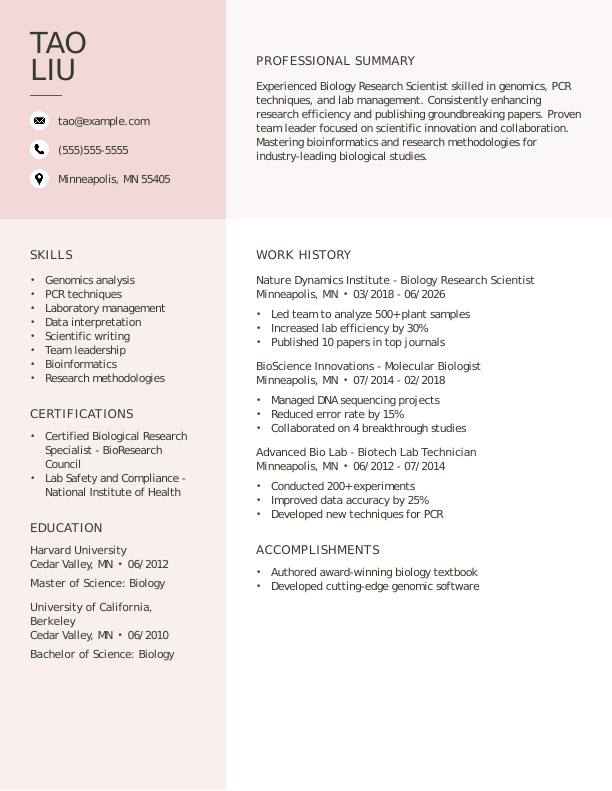
Experienced Biology Resume
An ideal choice for seasoned biology professionals with over 10 years of experience, this template supports job seekers pursuing senior-level research or leadership roles in the life sciences field.

Biology Resume Template (Text)
Use this customizable text format of a biology resume to copy, edit, and personalize directly in your document.
John Johnson
Jacksonville, FL 32206
Professional Summary
Experienced biologist with expertise in genetic studies and lab management. Skilled in enhancing research processes and securing funding. Proven leader in scientific community with multiple honors.
Work Experience
January 2022 – June 2026
GreenTech BioSolutions – Jacksonville, FL
Biologist
- Conducted biodiversity studies with 10% efficiency gain
- Led a team of 8 in genetic experiments
- Developed new lab protocols, lowering errors by 15%
March 2017 – December 2021
Precision Biosciences – Jacksonville, FL
Molecular Biologist
- Improved DNA sequencing process by 25%
- Published 4 research papers in peer-reviewed journals
- Collaborated with 5 departments to enhance procedures
June 2013 – February 2017
BioInnovate Corp – Tampa, FL
Research Scientist
- Executed 12 successful lab projects
- Reduced analysis time by 20% using new techniques
- Presented at 3 international biotech conferences
Education
June 2013
Yale University New Haven, CT
Master of Science Biology
June 2011
University of Connecticut Storrs, CT
Bachelor of Science Biology
Certifications
- Certified Professional Biologist – American Institute of Biological Sciences
- Advanced Genetics Certification – Genetic Alliance
Skills
- Biological Research
- Genetic Analysis
- Lab Management
- Data Interpretation
- Scientific Writing
- Team Leadership
- Protocol Development
- Collaborative Research
How to Write a Biology Resume
As a professional in biology, understanding how to write a resume involves showcasing your scientific skills, relevant experience, and a clear format that highlights your qualifications. Use the guidance below to emphasize your strengths and tailor your resume for positions you’re targeting in the field.
1. Contact Info
Your contact information should be clear, professional, and easy to find at the top of your resume.
Make sure to include:
- Full name
- Phone number
- Professional email address
- City and state (ZIP code is optional)
- LinkedIn profile or personal portfolio (if relevant)
 PRO TIP
Avoid including sensitive personal details such as your Social Security number, religious affiliation, or age on your resume unless the employer specifically requests them.
2. Resume Profile
A resume profile is a brief introductory section, typically two to four sentences long, designed to summarize your identity and key qualifications. This segment serves as an engaging pitch for hiring managers, sparking their interest and motivating them to explore your resume further.
Positioned at the top of your resume, the profile can be formatted as either a summary or an objective, each catering to different intents. Understanding these distinctions can help you choose the right approach for your career goals:
- A resume summary emphasizes your key experiences, skills, and achievements relevant to biological sciences. This format is particularly beneficial for those with prior work experience or transferable skills who wish to highlight their contributions in the field of biology.
- A resume objective highlights your future aspirations and outlines the goals you aim to achieve in your career. It’s particularly useful for recent graduates, individuals shifting careers, or those with limited experience.
Let’s take a look at an example of each to see how a resume summary and a resume objective differ:
Biology resume summary example:
Passionate biologist with 6+ years of experience in dynamic research and academic settings, including laboratories and field studies. Expertise in molecular biology techniques, data analysis, and environmental conservation. Commended for advancing scientific knowledge through careful research and contributing to sustainable ecological solutions.
Biology resume objective example:
Recent biology graduate excited to launch a career in research-focused environments. Committed to scientific integrity and eager to apply strong analytical skills and attention to detail in academic institutions or biotechnology firms.
3. Work Experience
The work experience on your resume serves as an important foundation for your career in biology. Employers evaluate your job history to understand not only where you’ve worked but also the impact you’ve made through research and practical applications.
Your laboratory experience and fieldwork offer compelling evidence of your qualifications for advanced roles in biological sciences.
The work experience section should contain:
- Job title
- Employer name and location
- Dates of employment (month/year)
- 3–5 bullet points describing your relevant responsibilities and achievements
Tailor your content to reflect the specific biology role you’re targeting. Start each bullet point with an action verb (like “Conducted,” “Analyzed,” “Presented”) to create a strong impression of your contributions.
Incorporate quantifiable information and metrics whenever possible. Specific numbers, such as sample sizes or research outcomes, provide evidence of your impact and help differentiate you from other job seekers in the field.
In general, consider following the format of:
[action verb] + [responsibility] = [result/achievement]
For example:
Conducted experiments on 50+ plant species to analyze growth patterns under varying environmental conditions, contributing to a 30% increase in yield.
Note that you can also flip the result/achievement with the responsibility:
Improved understanding of genetic variations leading to a 25% increase in successful cross-breeding outcomes through targeted research.
Explore additional work experience examples for biologists further down the page.
4. Skills
The skills section provides a concise overview of professional abilities relevant to the field of biology. This allows hiring managers to quickly gauge qualifications and suitability for the role.
Skills can be categorized into three distinct groups:
- Soft skills are personal qualities that influence how well individuals collaborate in a team setting, especially in biology-related fields. Attributes such as communication, problem-solving, adaptability, and collaboration are essential for fostering teamwork and advancing research initiatives.
- Hard skills are specific, measurable abilities obtained through education, training, or experience. For a biologist, examples include conducting experiments, analyzing data using statistical software, and preparing scientific reports.
- Technical skills are the specialized capabilities required to perform specific tasks in a profession. In biology, this includes skill with laboratory instruments, data analysis software, and techniques such as PCR and gel electrophoresis.
In general, aim to present a diverse array of relevant skills that align with the job requirements to showcase your full potential in the field of biology. Find additional biology skills examples further down the page.
PRO TIP
If you’re a newer biology professional, consider placing your skills section higher on the resume right after your summary. For those with more experience, it’s better to position this section lower, weaving your skills into the descriptions of your work history for a cohesive presentation.
5. Education
Understanding how to list education on your resume is important for showcasing your qualifications. Start with your most recent or relevant biology degree, clearly stating the degree type and institution.
If you have recently graduated, include your graduation year, GPA (if 3.5 or above), any honors received, and relevant coursework to further highlight your academic achievements.
Biology resume education section example:
Bachelor of Science in Biology (BSB)
University of California, Berkeley, Berkeley, CA
Graduated: 2024 | Summa Cum Laude
PRO TIP
If you’re progressing from an Associate Degree in Biology to a Bachelor of Science in Biology, or have obtained another relevant degree, list both in reverse-chronological order.
6. Certifications
Listing certifications on your resume demonstrates your commitment to professional development, especially when you have limited hands-on experience. While not a traditional section, it’s essential for many biology professionals seeking to stand out in the job market. Employers often require specific credentials for specialized roles such as laboratory technicians or environmental scientists.
Include only relevant certifications and qualifications that improve your profile for the position you seek. Remember to keep these credentials current and clearly formatted to make a strong impression on potential employers.
Biology certification examples:
- Certified Biological Scientist (CBS) | American Society for Biochemistry and Molecular Biology | Expires: 12/2027
- Certified Clinical Research Coordinator (CCRC) | Association of Clinical Research Professionals | Expires: 06/2028
- Laboratory Technician Certification | National Credentialing Agency | Expires: 09/2027
- Biotechnology Project Manager Certification | Biotechnology Innovation Organization | Expires: 03/2028
Start Building Your Job-Winning Resume
Use Your Existing Resume
Import your current resume to transfer your information to one of our professional templates.
Create a New Resume
Start fresh with a template that catches your eye and follow the prompts to add your details.
Tailor Your Work History to Beat the ATS
Your work experience is more than a list of job titles. It’s a chance to show the measurable impact you’ve had on research, experiments, and biological outcomes. Including this information can also lead to a more ATS-friendly resume that can be easily scanned by applicant tracking systems (ATS).
A strong work history should be tailored to the biology position you’re applying for, using keywords and phrasing that match the employer’s needs. Start by reviewing the job description carefully. Look for repeated skills, techniques, or areas of focus mentioned, and then reflect those elements in your experience descriptions whenever possible.
Popular Resume Bullets for Biology
These examples are pulled from our most-used entries in the resume builder—based on what hiring managers respond to most.
- Conducted experiments on genetic variation in plant species, contributing to a 25% increase in research accuracy.
- Collaborated with a team of 5 researchers to analyze data from field studies, improving project completion time by 15%.
- Presented findings at two national biology conferences, improving departmental visibility and networking opportunities.
- Used laboratory equipment such as PCR machines and spectrophotometers for precise measurements and analyses.
- Mentored undergraduate students in lab techniques, fostering skills development and increasing confidence.
Example of Skills for Biology
Including the right skills for your resume shows employers and ATS that you have the abilities needed to thrive in biology-related roles. Since hiring managers often scan resumes quickly, it’s best to ensure your skills are relevant and match the job description.
The following skills for your resume highlight what is currently sought after in the biology field. These abilities frequently appear in strong resumes and appeal to hiring managers looking for capable job seekers.
5 Soft Skills for Your Resume or CV
- Critical thinking
- Teamwork and collaboration
- Effective communication
- Analytical reasoning
- Time management
5 Hard Skills for Your Resume or CV
- Microscope operation
- Data analysis (R, Python)
- Field sampling techniques
- Cell culture methods
- Genetic sequencing (NGS)
Key Takeaways
- Tailor your resume to the job description. Use industry-specific terms that align with the employer’s expectations for both ATS and human reviewers.
- Highlight quantifiable achievements to demonstrate your impact. Include metrics relevant to biology (e.g., research results, lab efficiency rates, publication counts) to make your accomplishments stand out.
- Select a resume format that suits your experience level. Recent graduates may find a functional format useful, while those with more experience typically favor a reverse-chronological layout.
More Resume & CV Examples
- Academic
- Actuary
- Admissions Counselor
- Analyst
- Bioinformatics
- Biostatistician
- Business Analyst
- Business Intelligence
- Chief Data Officer
- Clinical Data Manager
- Compensation Analyst
- Data Analyst
- Data Annotator
- Data Engineer
- Data Scientist
- Environmental Science
- Healthcare Data Analyst
- Higher Ed
- Hris Analyst
- Instructional Designer
- Intelligence Analyst
- Lab Assistant
- Math
- Mentor
- Physical Science
- Professor
- Quantitative Analyst
- Quantitative Researcher
- Research Scientist
- Science
- Scientist
- Social Science
- Tableau Developer
Frequently Asked Questions
Last Update:
What resume format should I use for my biology resume?
There are three primary resume formats to consider when applying for biology positions. Your choice will depend on your experience level and the aspects of your background you want to highlight:
- Chronological: The most popular format, a chronological resume highlights your work experience by detailing responsibilities and achievements in reverse order. This format is ideal for job seekers with relevant job history that reinforces their qualifications and demonstrates their continuous growth in the field of biology.
- Functional: Also known as a skills-based resume, the functional resume emphasizes a qualifications summary and an expanded skills section, reducing focus on work history. This format is helpful for job seekers lacking relevant experience in the field or those with significant employment gaps.
- Combination: A combination resume integrates chronological and functional elements, showcasing both skills and work history. This format benefits biology professionals by allowing them to highlight their scientific expertise alongside their career development, making it suitable for those transitioning into specialized roles or advancing in their field.
Should I include a cover letter with my resume?
Yes, you should include a cover letter with your biology job application. A strong cover letter complements your resume by providing context for your skills and experiences while allowing you to express your passion for the field. It demonstrates to employers that you’re genuinely interested in the position and have taken the time to tailor your application, setting you apart from those who submit only a resume.
If you’re feeling uncertain about writing a cover letter, don’t worry—there are numerous resources available to guide you. You can find articles on how to write a cover letter, as well as examples specific to biology roles that illustrate different styles and formats. This way, you’ll feel confident crafting one that showcases your qualifications.
For added convenience, consider using a cover letter generator, which can help streamline the process by offering templates and suggestions tailored to biology positions, ensuring you create a polished document without much hassle.
What keywords should I include to pass applicant tracking systems (ATS)?
To improve your resume’s chances of passing ATS, focus on incorporating keywords and phrases directly from the job posting. For a biology position, this might include terms like genetic analysis, laboratory techniques, or data interpretation. These specific words signal to ATS that your qualifications match the role.
Additionally, ensure you highlight any relevant certifications, such as Certified Biological Technician or Molecular Biology Technician, along with technical tools you’re familiar with, like PCR or gel electrophoresis. By doing so, you demonstrate to employers that you have both the skills and experience necessary for success in the field.
Should I include research projects or fieldwork on my resume?
Yes, especially if you’re a recent graduate. Including research projects and fieldwork demonstrates your practical experience in biology and helps you stand out if you don’t yet have formal roles in the field.

Elizabeth Muenzen is a Certified Professional Resume Writer (CPRW) and member of the Professional Association of Resume Writers & Career Coaches who empowers job seekers to take control of their career paths using Monster’s comprehensive job search and resume tools.
See More From Elizabeth MuenzenExplore Related Career Advice


How to Explain Employment Gaps: Examples for Resumes, Interviews, & More

Updated:
Jul 17, 2026
|

20 min read







Resume Skills Section Guide: Top Skills to Include & Formatting Tips
Updated:
Jul 15, 2026
|
19 min read