

Free Animal Care Resume Templates & Examples
An animal care resume should highlight your handling experience, knowledge of animal health, and any relevant certifications or training. Browse the examples below to find one that presents your background professionally.
Real-World Resumes That Get Results
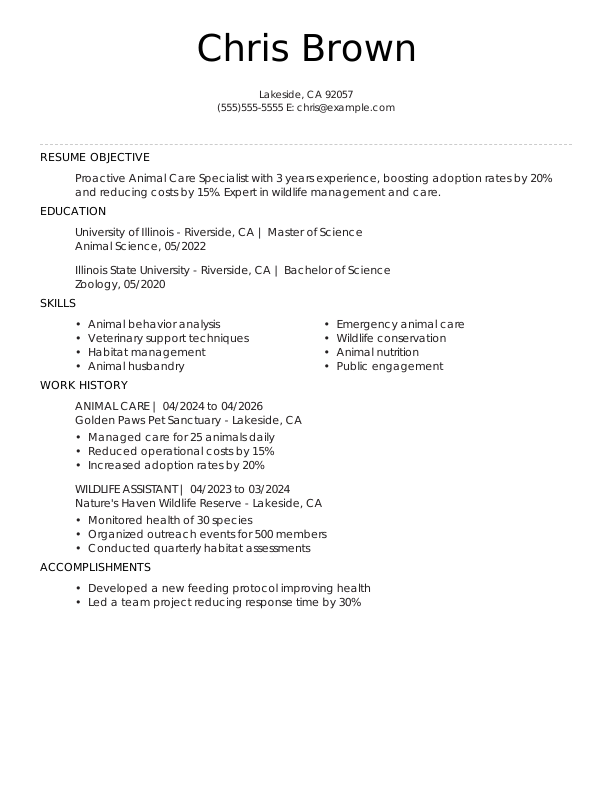
 Free
FreeAnimal Care Entry-Level Resume
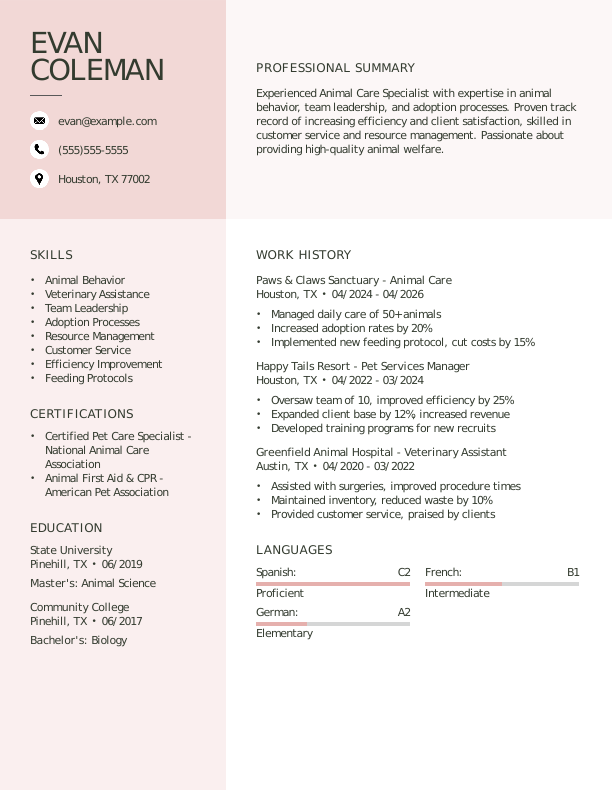
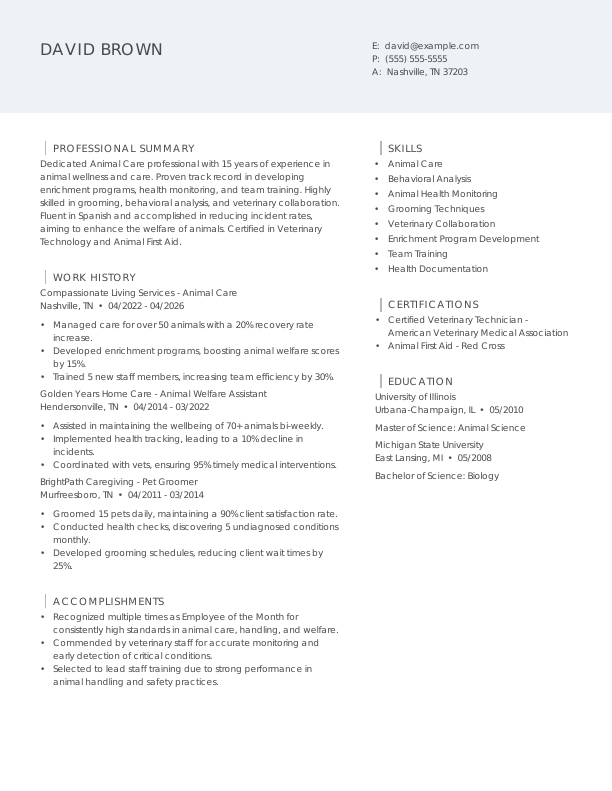
Animal Care Mid-Level Resume
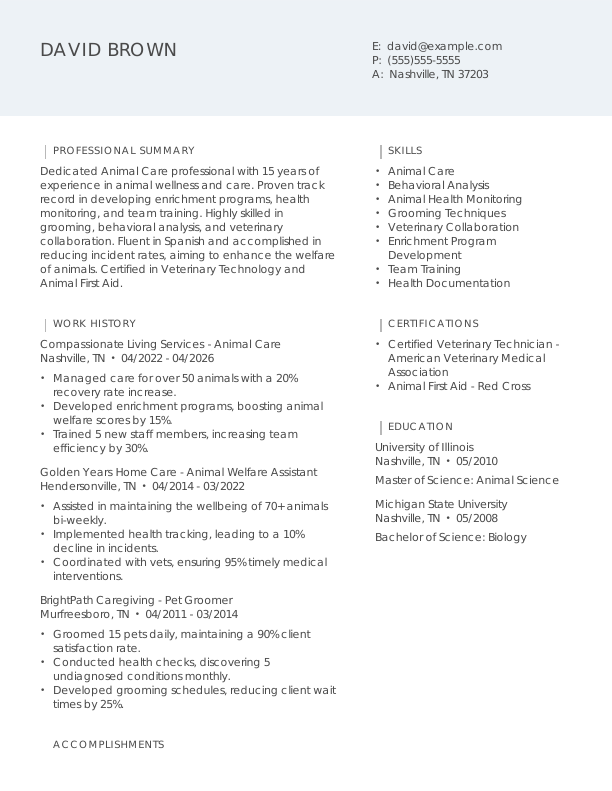
Animal Care Experienced Resume
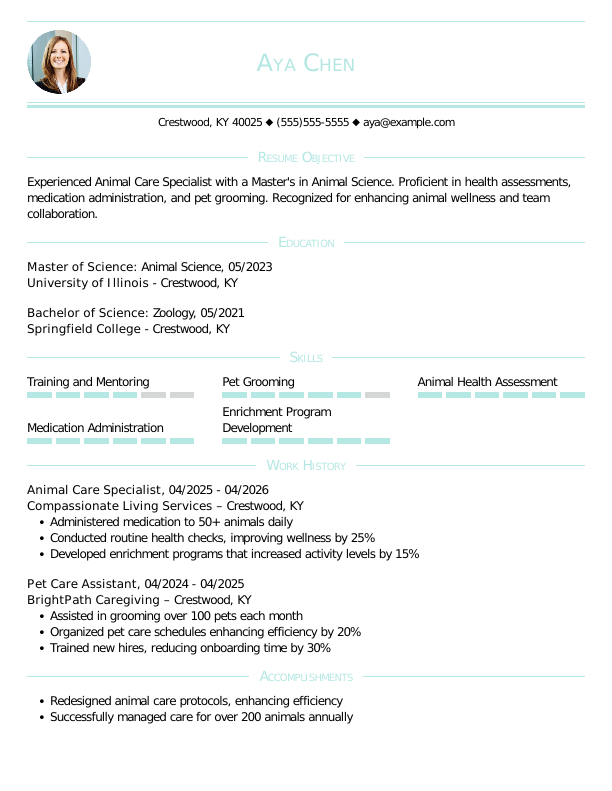
Animal Care Entry-Level Resume 1
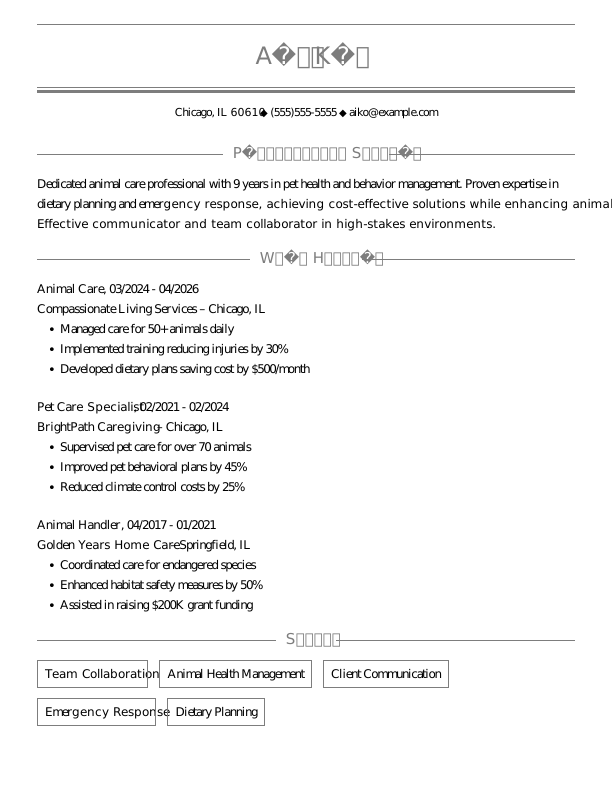

Animal Care Mid-Level Resume 1
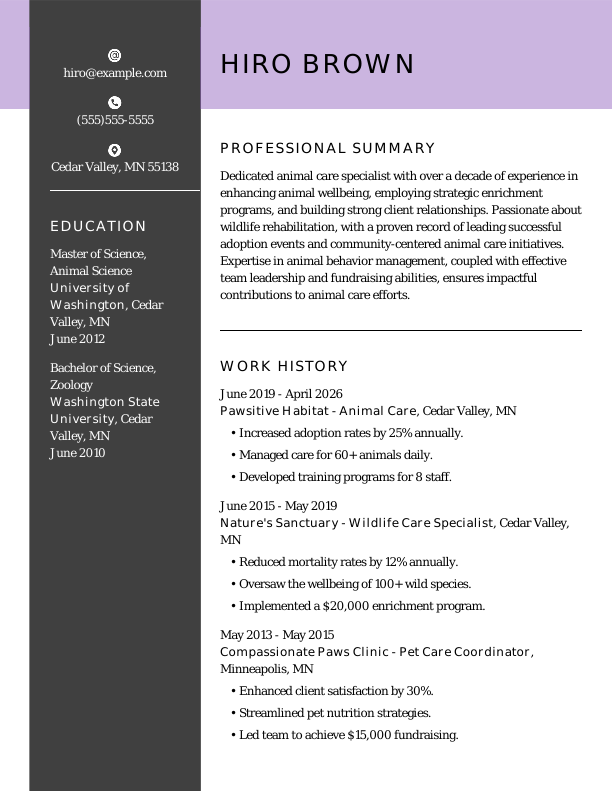

Animal Care Experienced Resume 1
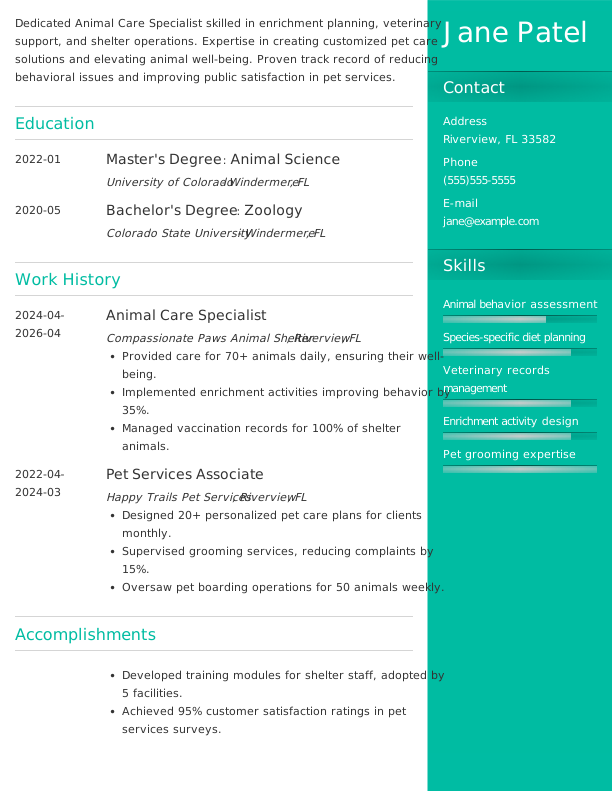
Animal Care Entry-Level Resume 2
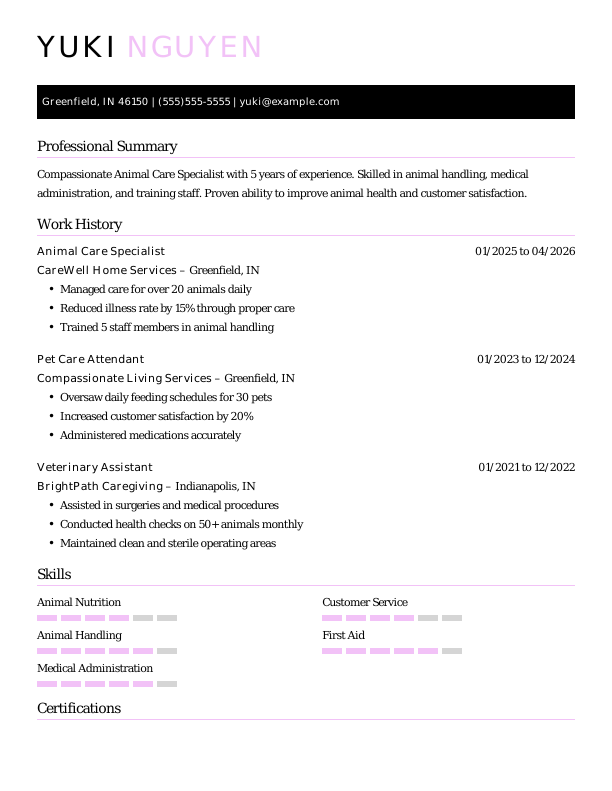

Animal Care Mid-Level Resume 2
Browse Free Resume Templates
- Accounts Payable
- Adjunct Professor
- Artist
- Auto Mechanic
- Baker
- Business Development Manager
- Business
- Certified Nursing Assistant
- Classic & Traditional
- Cleaner
- College Student
- Concierge
- Construction Worker
- Corporate
- Creative & Unique
- Custodian
- Customer Service
- Dental Assistant
- Direct Support Professional
- Entry-Level
- Flight Attendant
- Hospitality & Food Service
- Front Desk Receptionist
- Healthcare
- High School
- Housekeeping
- Hvac Technician
- Hybrid
- Inventory Manager
- Logistics
- Maintenance
- Management
- Modern
- Mortgage Loan Processor
- Pet Sitter
- Phlebotomist
- Production
- Rbt
- Sales
- Security Services
- Restaurant Server
- Simple & Basic
- Social Work
- Teacher
- Technology
Resume Examples for Animal Cares
Animal care resumes should reflect your handling experience and any veterinary or kennel management training. Explore our templates to find one that works for your background.
Entry-Level Animal Care Resume
If you are entering animal care work, this template helps you build an animal care resume by highlighting your pet handling experience, any shelter volunteer hours, and relevant certifications or coursework.

Mid-Career Animal Care Resume
An ideal choice for animal care professionals with experience, this template effectively showcases recent accomplishments and positions them for specialized roles or leadership opportunities.

Experienced Animal Care Resume
An ideal choice for animal care professionals with 10+ years of experience, this template supports applicants pursuing senior-level roles focused on improving animal welfare and team leadership.
Animal Care Resume Template (Text)
The text resume below gives you a starting point for an animal care application. Paste it into your document and update it with your handling experience and relevant certifications.
Emily Liu
Louisville, KY 40206
Professional Summary
Animal Care Specialist with 7 years of experience. Skilled in animal behavior analysis and community outreach, increasing adoption rates by 30%. Dedicated to enhancing animal welfare and forging community connections.
Work Experience
January 2024 – April 2026
Greenfield Animal Sanctuary – Louisville, KY
Animal Care Specialist
- Managed care for 40+ animals with diverse needs
- Improved adoption rates by 30% through outreach
- Developed enrichment programs enhancing welfare
February 2022 – December 2023
Compassionate Living Services – Louisville, KY
Pet Welfare Coordinator
- Coordinated volunteer activities for 50+ events
- Raised $15K annually in fundraising campaigns
- Enhanced community engagement by 25%
April 2019 – January 2022
BrightPath Caregiving – Crestwood, KY
Animal Care Assistant
- Assisted in daily care for 30+ animals
- Implemented health checks, improving wellness
- Supported training sessions for behavior issues
Education
June 2018
University of Washington Crestwood, KY
Master of Science Animal Behavior
June 2016
Washington State University Crestwood, KY
Bachelor of Science Zoology
Certifications
- Certified Animal Care Specialist – Professional Animal Care Certification Council
- Pet First Aid – Red Cross
Skills
- Animal Behavior Analysis
- Veterinary Assistance
- Shelter Management
- Community Outreach
- Enrichment Program Design
- Adoption Counseling
- Volunteer Coordination
- Fundraising Strategy
How to Write an Animal Care Resume
In the field of animal care, knowing how to write a resume means showcasing your relevant skills and experience in a clear format that appeals to potential employers. Apply the recommendations that follow to emphasize your strengths and tailor your resume for the positions you’re aiming for.
1. Contact Info
Your contact information must be clear, professional, and prominently displayed at the top of your resume.
Be sure to include:
- Full name
- Phone number
- Professional email address
- Location (city/state, ZIP code is optional)
- LinkedIn profile or relevant portfolio (if applicable)
 PRO TIP
Avoid including personal details such as your social security number, age, or photos on your resume unless the employer specifically requests them.
2. Resume Profile
A resume profile is a brief introductory section (2–4 sentences) that encapsulates who you’re and highlights your key qualifications. Its primary function is to serve as a compelling pitch to hiring managers, motivating them to delve deeper into your application.
Typically located at the top of your resume, this profile can take the form of either a summary or an objective, each serving distinct purposes. Understanding these differences can improve how you present yourself:
- A resume summary highlights essential skills, relevant experience, and significant achievements in animal care. This format is especially helpful for individuals with a history in the field or transferable abilities who wish to emphasize their contributions as passionate advocates for animal welfare.
- A resume objective highlights your aspirations and outlines what you aim to achieve in your career. This section is particularly helpful for recent graduates, individuals shifting careers, or those with minimal experience, including animal care assistants or volunteers transitioning into professional roles.
Let’s examine examples of a resume summary and a resume objective to understand their distinctions:
Animal care resume summary example:
Dedicated animal care professional with over 6 years of experience in various settings, including shelters and veterinary clinics. Proficient in animal behavior assessment, emergency care, and client education. Acknowledged for improving animal welfare and fostering positive relationships between pets and their owners.
Animal care resume objective example:
Recent graduate with a degree in Animal Care eager to start a career in an engaging animal welfare organization. Committed to promoting animal well-being and looking to contribute strong observational skills and empathy within a shelter or wildlife rehabilitation center.
3. Work Experience
The work experience on your resume serves as an important foundation for showcasing your qualifications. Employers examine not only your job titles and responsibilities but also the tangible impact you’ve made in each position.
This part of your history illustrates how your unique background and skills align with the requirements of the animal care role, improving your candidacy.
The work experience section should contain:
- Job title
- Employer name and location
- Dates of employment (month/year)
- 3–5 bullet points describing your relevant responsibilities and achievements
To improve your work experience bullet points, tailor your content to the specific job by using language that resonates with animal care. Start each statement with strong action verbs like “Cared,” “Trained,” or “Assisted” to convey your contributions effectively.
Incorporate quantifiable metrics to highlight your accomplishments and demonstrate value. Specific figures—such as the number of animals cared for or training hours completed—can make you stand out among other applicants.
In general, consider following the format of:
[action verb] + [responsibility] = [result/achievement]
For example:
Administered daily care to over 30 animals in a busy veterinary clinic, resulting in a 95% recovery rate for post-surgical patients and improved overall patient health.
Note that you can also flip the result/achievement with the responsibility:
Achieved a 20% increase in successful adoptions through dedicated social media outreach and community engagement initiatives.
With these techniques in mind, your resume bullets may look something like:
- Provided daily care and enrichment for over 50 animals, improving overall health outcomes by 20%.
- Trained and supervised a team of 5 volunteers, improving operational efficiency in animal handling tasks.
- Conducted health assessments and administered vaccinations to more than 30 animals weekly, ensuring compliance with veterinary standards.
- Collaborated with veterinarians to develop individualized care plans for diverse species.
- Implemented a new tracking system for animal feeding schedules that reduced food waste by 25%.
4. Skills
The skills section provides a concise overview of your professional abilities in animal care, showcasing relevant qualifications that attract hiring managers. Using an ATS-friendly resume format allows recruiters to quickly assess and highlight the most relevant skills.
Skills can be categorized into three key areas:
- Soft skills are personal qualities that influence how well individuals interact in animal care settings.
- Hard skills are specific, quantifiable abilities that are acquired through education, training, or direct experience.
- Technical skills are the practical abilities required to handle specific tools and technologies in a field.
5 Soft Skills for Your Resume or CV
- Compassionate communication
- Teamwork and collaboration
- Time management skills
- Attention to detail
- Emotional resilience
5 Hard Skills for Your Resume or CV
- Animal handling techniques
- Behavioral assessment methods
- Nutritional planning for pets
- Veterinary software (AVImark, Cornerstone)
- Emergency first aid for animals
In general, aim to include a diverse range of relevant skills that match the job requirements to showcase your qualifications.
PRO TIP
If you’re a newer animal care professional, place your skills section higher on the resume right after your summary. For those with more experience, position this section lower and weave most of your skills into the work history to highlight your practical applications.
5. Education
Understanding how to list education on your resume is essential for showcasing your qualifications. Start with your most recent or relevant degree, including both the degree type and the institution’s name. If you’re fresh out of school, consider adding details like your graduation year, GPA (if it’s 3.5 or higher), any honors received, and relevant coursework to strengthen your application further.
Animal care resume education section example:
Associate of Applied Science in Animal Care
Purdue University, West Lafayette, IN
Graduated: 2023 | Graduated with Distinction
PRO TIP
When listing multiple degrees on your resume, always arrange them in reverse-chronological order, highlighting your most recent qualification first, such as Bachelor of Science in Animal Care followed by Associate Degree in Animal Care.
6. Certifications
Certifications highlight your qualifications and ensure you’re knowledgeable about the latest industry standards. While not always a staple on traditional resumes, including this section can be invaluable for animal care professionals. Employers often seek specific credentials, especially for specialized roles like veterinary technicians or animal behaviorists.
Be sure to showcase relevant certifications that improve your application. Keeping these credentials current and clearly listed is essential for standing out in the competitive field of animal care.
Animal care certification examples:
- Certified Animal Welfare Administrator (CAWA) | The Association for Animal Welfare Advancement | Expires: 11/2027
- Animal Care Technician Certification | American Association for Laboratory Animal Science | Expires: 02/2028
- Pet First Aid and CPR | Pet Emergency Education | Expires: 04/2027
- Professional Dog Trainer Certification | International Association of Canine Professionals | Expires: 05/2028
Start Building Your Job-Winning Resume
Use Your Existing Resume
Import your current resume to transfer your information to one of our professional templates.
Create a New Resume
Start fresh with a template that catches your eye and follow the prompts to add your details.
Tailor Your Work History to Beat the ATS
Your work experience should convey much more than just your previous job titles. It’s an opportunity to highlight the tangible contributions you’ve made to animal welfare, showcasing specific examples of care and improvements in outcomes. This method not only makes your resume stand out but also ensures it’s compatible with applicant tracking systems (ATS) for easier scanning.
To create a compelling work history, tailor your descriptions to align closely with the role you’re targeting. Begin by thoroughly reviewing the job posting and pinpointing essential keywords and phrases. Identify frequently mentioned skills or qualifications, and incorporate those elements into your experience descriptions to improve relevance.
What’s a Fair Animal Care Salary?
Researching salary data is essential for evaluating job offers, negotiating fair pay, and making informed career decisions. The figures provided by the U.S. Bureau of Labor Statistics (BLS) reflect the latest nationwide averages for animal care professionals.
Several factors can significantly impact actual earnings, including geographic location, years of experience, certifications, and specific areas of specialization. For example, animal care workers in veterinary hospitals or specialized facilities often earn higher salaries compared to those in shelters or pet stores.
| Alabama | $31,240 |
| Alaska | $39,950 |
| Arizona | $39,460 |
| Arkansas | $33,340 |
| California | $46,500 |
| Connecticut | $46,350 |
| Delaware | $37,710 |
| District of Columbia | $45,340 |
| Florida | $37,460 |
| Georgia | $34,530 |
| Hawaii | $39,230 |
| Idaho | $35,460 |
| Illinois | $38,890 |
| Indiana | $34,860 |
| Iowa | $34,410 |
| Kansas | $33,870 |
| Kentucky | $33,830 |
| Louisiana | $31,130 |
| Maine | $46,790 |
| Maryland | $44,880 |
| Massachusetts | $47,460 |
| Michigan | $37,580 |
| Minnesota | $41,880 |
| Mississippi | $30,440 |
| Missouri | $34,890 |
| Montana | $36,660 |
| Nebraska | $34,560 |
| Nevada | $37,130 |
| New Hampshire | $35,930 |
| New Jersey | $44,460 |
| New Mexico | $35,320 |
| New York | $43,300 |
| North Carolina | $37,510 |
| North Dakota | $37,400 |
| Ohio | $35,850 |
| Oklahoma | $32,180 |
| Oregon | $42,500 |
| Pennsylvania | $38,070 |
| Rhode Island | $44,050 |
| South Carolina | $36,240 |
| South Dakota | $32,290 |
| Tennessee | $36,510 |
| Texas | $33,170 |
| Utah | $36,980 |
| Vermont | $36,510 |
| Virginia | $37,410 |
| Washington | $43,330 |
| West Virginia | $31,720 |
| Wisconsin | $35,010 |
| Wyoming | $34,360 |
| Puerto Rico | $25,530 |
| Virgin Islands | $27,510 |
Key Takeaways
- Tailor your resume to the job description. Incorporate specific terminology from the listing to resonate with both ATS and hiring managers.
- Highlight quantifiable achievements to demonstrate your value. Include metrics like number of animals cared for or improvement in health outcomes (e.g., recovery rates, adoption numbers) to stand out.
- Select an appropriate format based on your experience level. New entrants might consider a functional layout, while seasoned professionals often prefer a reverse-chronological format.
More Resume & CV Examples
Cover Letters for Your Resume
Browse our library of cover letter examples to complete your application. A resume will have a better chance of getting noticed.
Frequently Asked Questions
Last Update:
What resume format should I use for my animal care resume?
There are three main resume formats to consider when applying for animal care positions. Your choice should reflect your level of experience and highlight the skills or qualifications that matter most for the role:
- Chronological: The chronological resume is the most widely used format, as it emphasizes your work experience along with specific responsibilities and achievements. This approach is particularly effective for applicants with consistent and relevant job history, reinforcing their qualifications and adding credibility to their application.
- Functional: A functional resume, often called a skills-based resume, emphasizes qualifications and a detailed skills section rather than focusing on chronological work history. This format is perfect for those who might not have direct experience in animal care or have employment gaps, as it allows them to showcase their relevant abilities.
- Combination: The combination resume format merges the chronological and functional styles, showcasing both skills and work history. This approach benefits professionals by allowing them to emphasize relevant abilities while also illustrating their career advancement. It’s ideal for those transitioning into new roles or industries.
Should I include a cover letter with my resume?
Yes, including a cover letter with your animal care job application is a good idea. A well-crafted cover letter gives you the chance to show your passion for animal welfare and highlight specific experiences that might not be obvious in your resume. It shows potential employers that you’ve taken the time to personalize your application, giving you an advantage over those who submit a standard application without this added detail.
If you’re unsure about how to write a cover letter, there are plenty of resources available to guide you through the process. Look for articles that specifically address writing cover letters for the animal care field and explore various formats to find one that best showcases your qualifications and enthusiasm.
For those wanting to speed up the writing process, using a cover letter generator can make things easier by providing structured templates and suggestions tailored to your desired position in animal care.
How long should a animal care resume be?
For professionals in animal care with less than 10 years of experience, a one-page resume is typically adequate to highlight relevant skills and certifications. Focus on key experiences that demonstrate your ability to provide proper care, manage health records, and handle emergencies effectively.
Conversely, those in senior or specialized roles may extend their resumes to two pages if the content remains relevant and well-organized. It’s important to prioritize clarity by showcasing leadership experience, specialized training, and contributions to animal welfare without unnecessary embellishments.
What keywords should I include to pass applicant tracking systems (ATS)?
To ensure your resume passes ATS screening, it’s important to incorporate keywords and phrases directly from the job posting. This could include terms like animal husbandry, veterinary care, or behavioral training. By mirroring the language used in the listing, you improve your chances of standing out.
Additionally, be sure to highlight relevant certifications such as CPR for pets and first aid for animals. Mention any specific tools you’re familiar with, like PetPoint or RescueGroups. This will demonstrate that you have the necessary skills and knowledge for the role you’re applying for.
Should I include volunteer work or internships in animal care?
Yes, including volunteer work or internships is important for showcasing your practical skills. This experience highlights your commitment to animal welfare and provides relevant insights into the field, especially if you’re just starting out and lack extensive paid positions on your resume.

Vicki Salemi is a nationally recognized career expert who helps professionals navigate the hiring landscape and find the right fit on Monster. With over 15 years of experience in corporate recruiting and HR, she offers expert guidance on job search strategies, interview preparation, and career development to help candidates land their next role.
See More From Vicki Salemi