

Free Graphic Designer Resume Templates & Examples
A graphic designer resume should highlight your design tools proficiency, portfolio highlights, and ability to deliver across print and digital formats. Explore the examples below to find one that lets your work speak for itself.
Real-World Resumes That Get Results
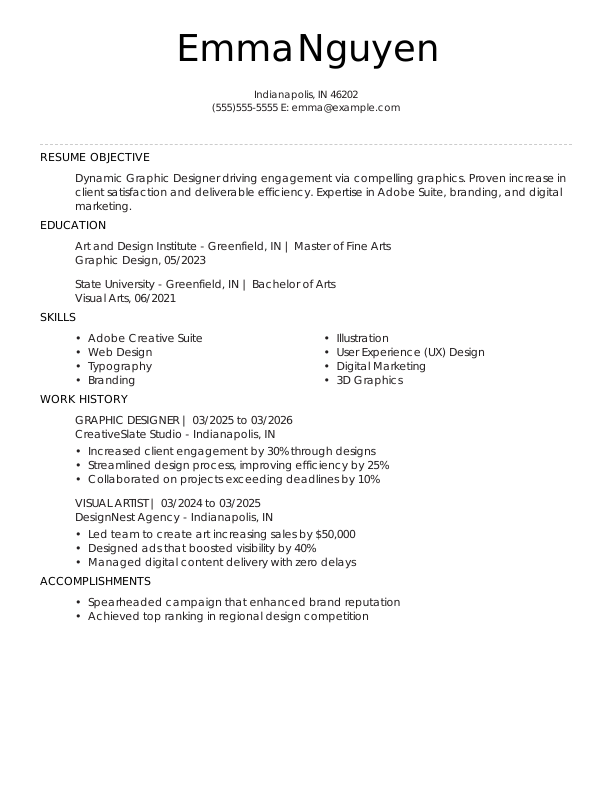
 Free
FreeGraphic Designer Entry-Level Resume
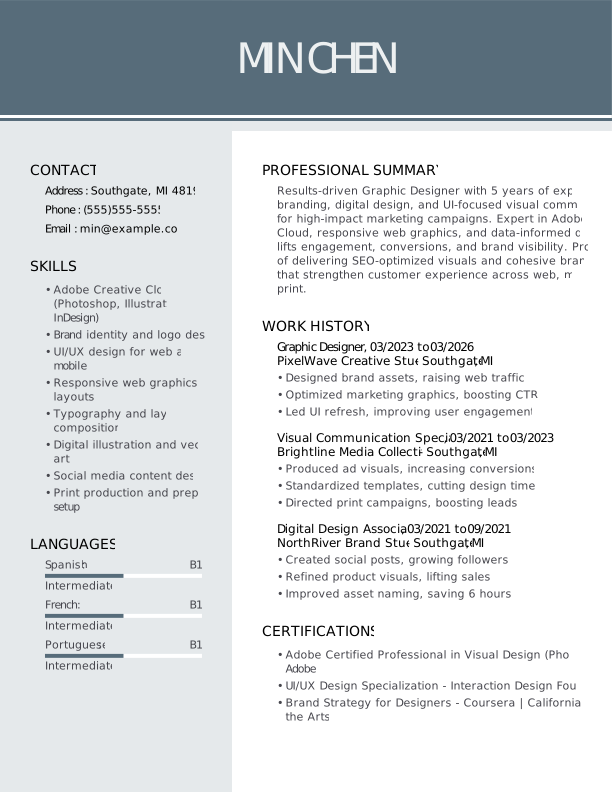
Graphic Designer Mid-Level Resume
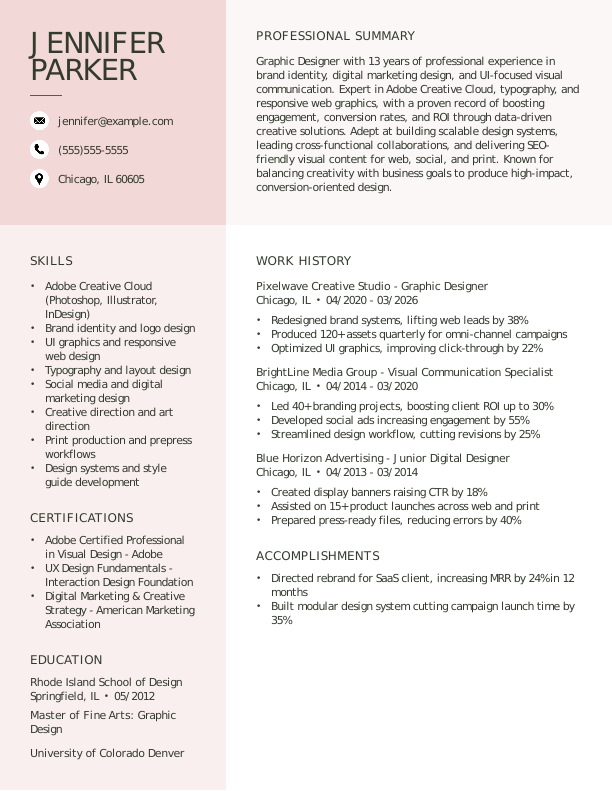
Graphic Designer Experienced Resume
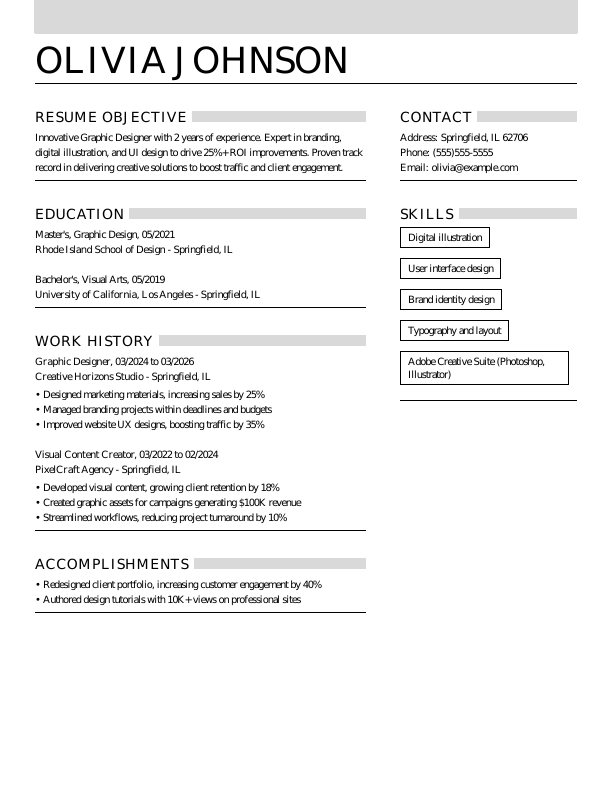
Graphic Designer Entry-Level Resume 1
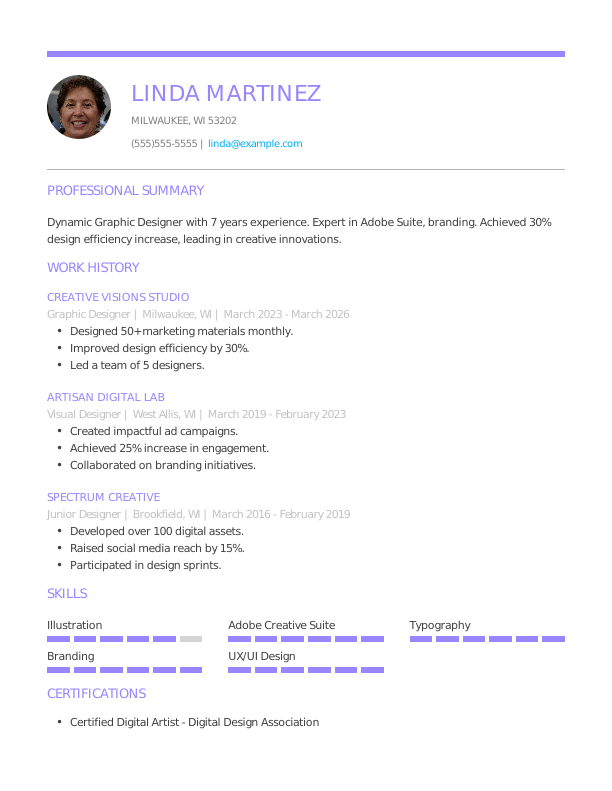
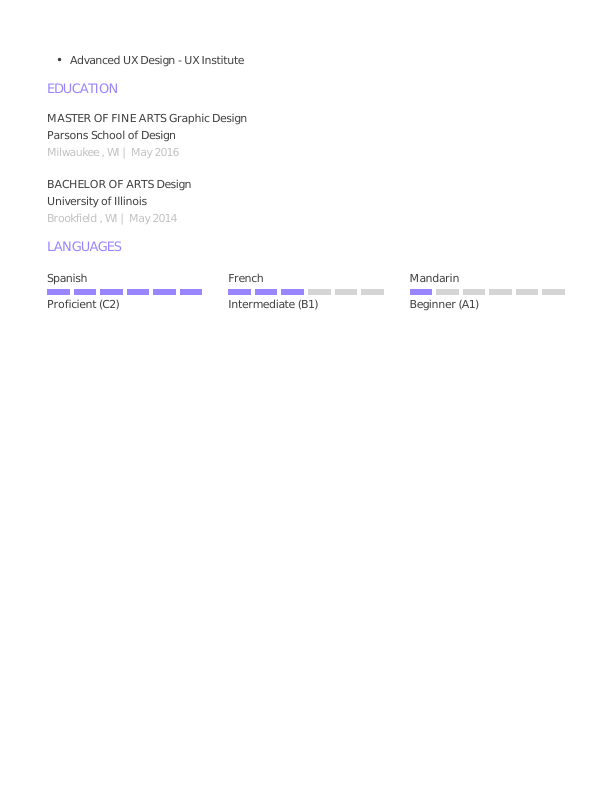
Graphic Designer Mid-Level Resume 1
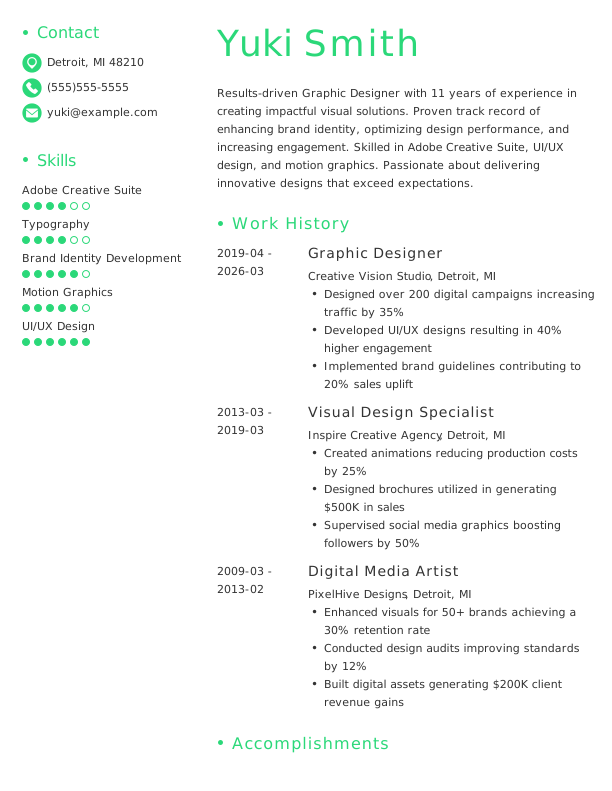
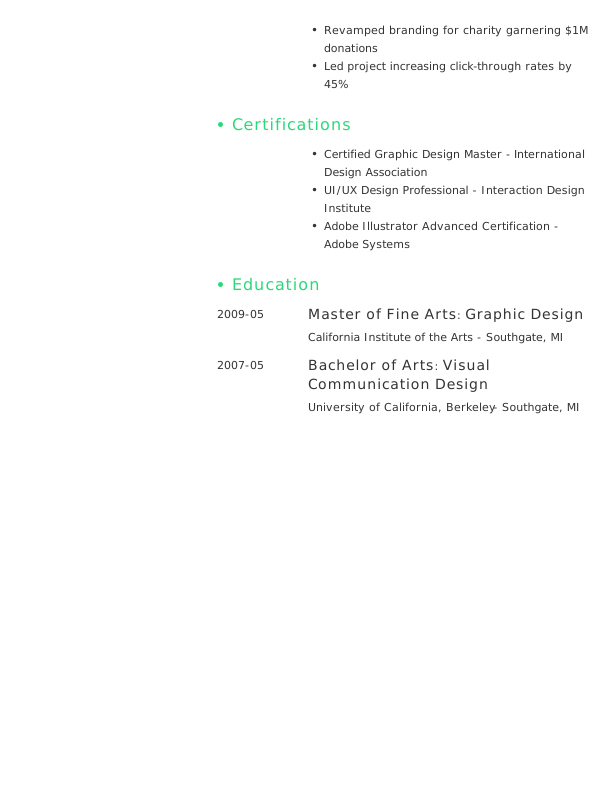
Graphic Designer Experienced Resume 1
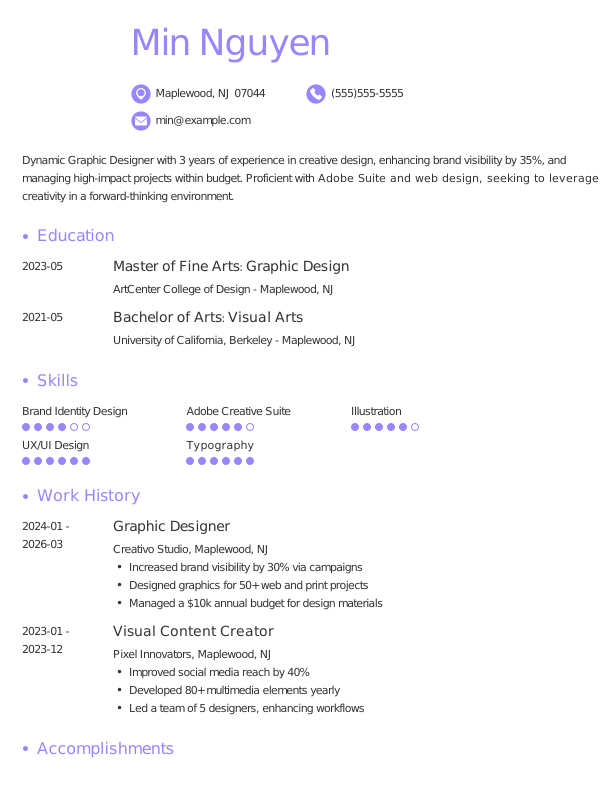

Graphic Designer Entry-Level Resume 2
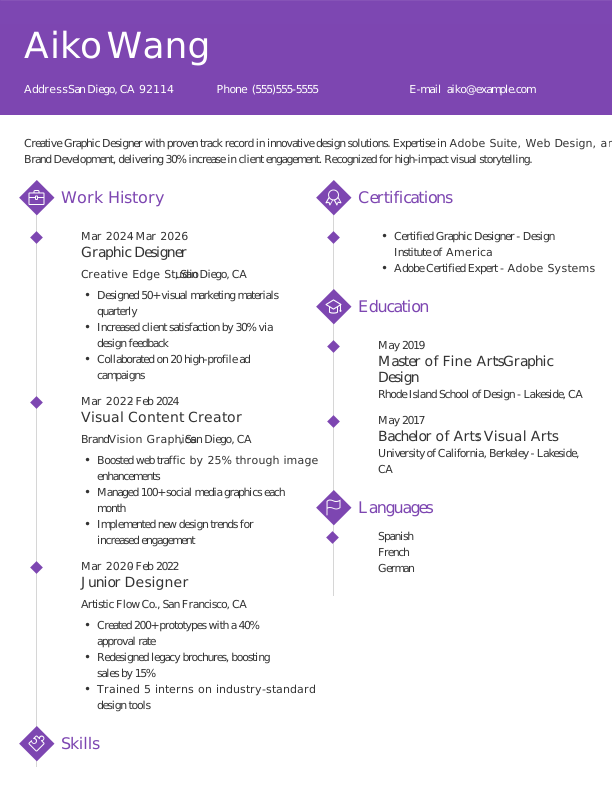

Graphic Designer Mid-Level Resume 2
Browse Free Resume Templates
- Accounts Payable
- Adjunct Professor
- Artist
- Auto Mechanic
- Baker
- Business Development Manager
- Business
- Certified Nursing Assistant
- Classic & Traditional
- Cleaner
- College Student
- Concierge
- Construction Worker
- Corporate
- Creative & Unique
- Custodian
- Customer Service
- Dental Assistant
- Direct Support Professional
- Entry-Level
- Flight Attendant
- Hospitality & Food Service
- Front Desk Receptionist
- Healthcare
- High School
- Housekeeping
- Hvac Technician
- Hybrid
- Inventory Manager
- Logistics
- Maintenance
- Management
- Modern
- Mortgage Loan Processor
- Pet Sitter
- Phlebotomist
- Production
- Rbt
- Sales
- Security Services
- Restaurant Server
- Simple & Basic
- Social Work
- Teacher
- Technology
Resume Examples for Graphic Designers
Graphic designer resumes should reflect your tool proficiency, project range, and client or brand experience. Browse our templates to find a format that complements your portfolio.
Entry-Level Graphic Designer Resume
Great for recent graduates or self-taught designers, this template simplifies creating a graphic designer resume with no professional experience by focusing on your portfolio projects, freelance work, and design tool proficiency.

Mid-Career Graphic Designer Resume
An ideal choice for mid-level graphic designers seeking to advance, this template emphasizes recent accomplishments and positions them for specialized roles in a competitive industry.

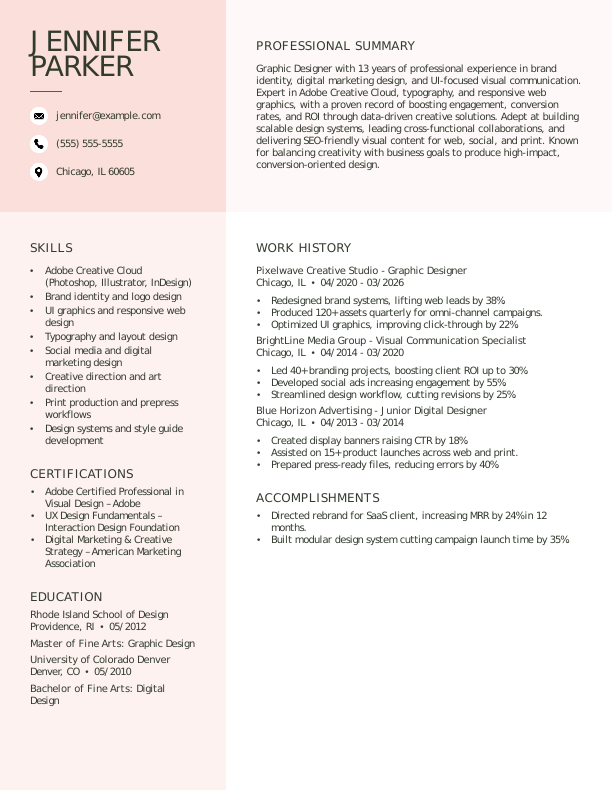
Experienced Graphic Designer Resume
An ideal choice for graphic designers with over 10 years of experience, this template supports professionals seeking advanced roles in creative leadership or specialized design functions.
Graphic Designer Resume Template (Text)
Here is a ready-to-use text version of a graphic designer resume. Copy and customize it with your own tool proficiency, project highlights, and brand experience.
Olivia Kim
Maplewood, NJ 07049
Professional Summary
SEO-focused Graphic Designer skilled in brand identity, digital media, and high-converting marketing assets. Proven record driving engagement, CTR, and lead generation through data-informed visual design. Expert in Adobe Creative Cloud, responsive UI graphics, and collaborative creative workflows.
Work Experience
March 2023 – March 2026
BrightPixel Creative Studio – Maplewood, NJ
Graphic Designer
- Delivered 40+ brand visuals, boosting web leads by 32%
- Optimized marketing graphics, lifting CTR by 18% YoY
- Redesigned UI assets, cutting revision time by 25%
January 2022 – March 2023
LumenWave Digital Agency – Maplewood, NJ
Visual Communication Specialist
- Produced 60+ ad creatives, increasing ROAS by 21%
- Standardized design systems, reducing errors by 30%
- Co-led rebrand project, raising social reach by 45%
March 2021 – December 2021
SilverOak Design Collective – Maplewood, NJ
Brand Identity Designer
- Developed 10+ logo suites for early-stage startups
- Created style guides, improving brand recall by 19%
- Designed packaging that increased shelf clicks by 14%
Education
May 2019
Savannah College of Art and Design Savannah, GA
Master of Fine Arts Graphic Design
May 2017
University of Texas at Austin Austin, TX
Bachelor of Arts Visual Communication Design
Certifications
- Adobe Certified Professional in Visual Design – Adobe
- Brand Strategy & Identity Design Specialization – Coursera | California Institute of the Arts
- UX Design Fundamentals for Graphic Designers – Interaction Design Foundation
Skills
- Adobe Creative Cloud (Photoshop, Illustrator, InDesign)
- Brand identity design and visual systems
- UI graphics and responsive web design assets
- Typography, layout, and color theory
- Social media and digital marketing graphics
- Logo design and vector illustration
- Print production and prepress preparation
- Creative direction and cross-functional collaboration
How to Write a Graphic Designer Resume
As a graphic designer, knowing how to write a resume involves showcasing your creative skills, relevant experience, and an eye-catching format that reflects your style. Use the guidance below to emphasize your unique strengths and tailor your resume for the positions you’re aiming for.
1. Contact Info
Your contact information should be prominently displayed at the top of your resume, ensuring it’s clear and professional.
Be sure to include:
- Full name
- Phone number
- Professional email address
- City and state (ZIP code is optional)
- LinkedIn profile or relevant portfolio (if applicable)
 PRO TIP
Skip including irrelevant personal details such as your age, religion, or social media links unless requested by the employer.
2. Resume Profile
A resume profile is a brief introductory section, typically two to four sentences long, designed to summarize your identity and key qualifications. It serves as a compelling pitch aimed at hiring managers, prompting them to delve deeper into your resume and learn more about your potential contributions.
This profile is positioned at the top of your resume, usually formatted as either a summary or an objective. Each format has its own distinct purpose:
- A resume summary showcases your most relevant creative experience, design skills, and strong projects in visual communication. This format is particularly beneficial for professionals with a history of successful collaborations or transferable expertise who aim to illustrate their contributions as a talented graphic designer.
- A resume objective emphasizes future goals and what you aim to accomplish in your career. It’s particularly useful for recent graduates, individuals shifting careers, professionals looking to enter graphic design, or those seeking a fresh start in a new field.
Let’s examine examples of a resume summary and a resume objective to understand their distinct purposes:
Graphic designer resume summary example:
Creative graphic designer with over 6 years of experience in diverse industries, including advertising and digital media. Proficient in Adobe Creative Suite, branding strategies, and visual storytelling. Celebrated for delivering innovative design solutions that improve brand identity and engage target audiences effectively.
Graphic designer resume objective example:
Recent graduate with a bachelor’s degree in graphic design eager to launch a career in a creative agency environment. Driven by a passion for innovative design and visual storytelling, ready to contribute strong collaboration skills and attention to detail to improve brand identity for clients.
3. Work Experience
The work experience on your resume is an important foundation for showcasing your professional journey. Employers look beyond titles and responsibilities, striving to understand the tangible contributions you made in your previous roles.
This history highlights how your unique skills and creativity as a graphic designer align with the demands of the position you’re pursuing.
The work experience section should contain:
- Job title
- Employer name and location
- Dates of employment (month/year)
- 3–5 bullet points describing your design responsibilities and project achievements
To create compelling work experience bullet points, tailor your content to the job by using industry-specific language. Start each point with action verbs that resonate in the graphic design field, such as “Designed,” “Created,” or “Illustrated.”
Incorporate quantifiable metrics wherever possible. Highlighting specific numbers and achievements not only showcases your contributions but also sets you apart from other applicants by clearly demonstrating your value.
In general, consider following the format of:
[action verb] + [responsibility] = [result/achievement]
For example:
Developed and executed over 15 creative campaigns annually, increasing client engagement by 30% through targeted social media strategies and compelling visual design.
Note that you can also flip the result/achievement with the responsibility:
Increased brand awareness by 40% within six months by implementing innovative graphic design techniques and effective marketing collaboration.
With these techniques in mind, your resume bullets may look something like:
- Designed and executed over 50 branding projects, improving client engagement by 30% through innovative visual solutions.
- Collaborated with cross-functional teams to produce marketing materials for 10+ product launches, increasing sales by 20%.
- Mentored junior designers, fostering creative skills and improving team productivity by 25%.
- Used Adobe Creative Suite to develop visually compelling graphics while adhering to strict deadlines.
- Conducted user research and implemented feedback on design prototypes, achieving a 15% increase in user satisfaction.
4. Skills
The skills section provides a concise overview of your design capabilities, highlighting tools and techniques relevant to graphic design. As an ATS-friendly resume format, it allows recruiters to quickly assess your qualifications.
Skills can be categorized into three essential areas:
- Soft skills are personal qualities that influence how graphic designers collaborate with clients and team members.
- Hard skills are specific, measurable abilities gained through education, training, or hands-on experience.
- Technical skills are the specific competencies required to use tools and software in a profession.
5 Soft Skills for Your Resume or CV
- Visual communication
- Team collaboration
- Client engagement
- Flexibility in design
- Attention to detail
5 Hard Skills for Your Resume or CV
- Adobe Creative Suite (Photoshop, Illustrator)
- UX/UI design principles
- Typography and color theory
- Brand identity development
- Print production techniques
In general, aim to showcase a well-rounded set of skills that directly relate to the graphic designer role.
PRO TIP
If you’re a newer graphic designer, consider placing your skills section right after your summary to showcase your abilities upfront. For those with more experience, it’s best to position this section lower on the resume and weave most of your skills into the descriptions of your work history.
5. Education
Understanding how to list education on your resume is essential for showcasing your qualifications clearly. Begin with your most recent or relevant degree, ensuring you include both the degree type and the institution’s name.
If you’re a recent graduate, consider adding your graduation year, GPA (if it’s 3.5 or higher), any honors received, and relevant coursework to strengthen your application.
Graphic designer resume education section example:
Bachelor of Fine Arts in Graphic Design
Rhode Island School of Design, Providence, RI
Graduated: 2023 | Cum Laude
PRO TIP
When listing multiple degrees on your resume, ensure you present them in reverse-chronological order, starting with the highest degree first, such as Bachelor of Fine Arts (BFA), followed by Associate Degree in Graphic Design.
6. Certifications
Certifications highlight your skills and ensure you stay informed about the latest trends in graphic design. While this section isn’t always part of a typical resume, it holds significant value for professionals in the industry. Employers often look for specific qualifications, especially for roles involving branding, animation, or user experience.
Make sure to list certifications on your resume that bolster your application. Keeping them updated and clearly listed will help you stand out to potential employers.
Graphic designer certification examples:
- Adobe Certified Expert (ACE) | Adobe | Expires: 03/2028
- Certified Graphic Designer (CGD) | Graphic Designers of Canada | Expires: 11/2027
- User Experience Design Certification | Coursera | Expires: 06/2028
- Photoshop CC Masterclass | Udemy | Expires: 08/2027
Start Building Your Job-Winning Resume
Use Your Existing Resume
Import your current resume to transfer your information to one of our professional templates.
Create a New Resume
Start fresh with a template that catches your eye and follow the prompts to add your details.
Tailor Your Work History to Beat the ATS
Your work experience is more than just a collection of job titles. It’s a valuable opportunity to highlight the tangible impact you’ve made in your field through specific examples that resonate with potential employers. This method not only showcases your skills but also creates an ATS-friendly resume that applicant tracking systems (ATS) can easily scan.
To create a compelling work history, tailor it to align with the role you’re pursuing by incorporating relevant keywords. Begin by thoroughly analyzing the job description to identify key skills and qualifications sought by the employer. Be sure to reflect those recurring elements in your experience descriptions, making your application stand out.
What’s a Fair Graphic Designer Salary?
Researching salary information is essential for evaluating job offers, negotiating pay, and making informed decisions about your career as a graphic designer. The data shared here comes from the U.S. Bureau of Labor Statistics (BLS) and reflects the latest nationwide averages for graphic designers.
Several factors can significantly affect your actual salary, including location, years of experience, certifications, and areas of specialization. For example, graphic designers working in advertising agencies or tech companies often earn more than those in smaller firms or freelance roles.
| Alabama | $53,630 |
| Alaska | $59,380 |
| Arizona | $59,910 |
| Arkansas | $53,010 |
| California | $91,760 |
| Connecticut | $71,760 |
| Delaware | $58,540 |
| District of Columbia | $95,050 |
| Florida | $62,750 |
| Georgia | $62,340 |
| Hawaii | $57,840 |
| Idaho | $55,710 |
| Illinois | $64,070 |
| Indiana | $63,490 |
| Iowa | $51,830 |
| Kansas | $55,520 |
| Kentucky | $53,540 |
| Louisiana | $49,380 |
| Maine | $59,100 |
| Maryland | $71,460 |
| Massachusetts | $80,030 |
| Michigan | $57,150 |
| Minnesota | $63,260 |
| Mississippi | $57,070 |
| Missouri | $56,450 |
| Montana | $61,990 |
| Nebraska | $57,000 |
| Nevada | $58,770 |
| New Hampshire | $62,370 |
| New Jersey | $74,200 |
| New Mexico | $62,570 |
| New York | $81,020 |
| North Carolina | $61,010 |
| North Dakota | $51,890 |
| Ohio | $58,930 |
| Oklahoma | $52,670 |
| Oregon | $71,950 |
| Pennsylvania | $61,600 |
| Rhode Island | $70,570 |
| South Carolina | $58,160 |
| South Dakota | $46,160 |
| Tennessee | $58,710 |
| Texas | $60,250 |
| Utah | $62,610 |
| Vermont | $68,440 |
| Virginia | $75,060 |
| Washington | $83,550 |
| West Virginia | $43,870 |
| Wisconsin | $60,140 |
| Wyoming | $50,770 |
| Guam | $34,280 |
| Puerto Rico | $35,060 |
Key Takeaways
- Tailor your resume to the job posting. Use relevant terminology from the description to connect with both ATS and hiring managers.
- Highlight quantifiable achievements in your work. Specify metrics where possible (e.g., project deadlines met, client satisfaction ratings, design awards) to demonstrate your impact.
- Select a format that suits your experience level. Entry-level designers might prefer a functional layout, while seasoned professionals often use a reverse-chronological format.
More Resume & CV Examples
- 3d Animator
- 3d Artist
- Architectural Designer
- Brand Designer
- Costume Designer
- Design Director
- Fashion Designer
- Floral Designer
- Florist
- Game Designer
- Illustrator
- Industrial Design
- Interior Designer
- Jewelry Designer
- Product Designer
- Two-column
- Visual Merchandiser
- Web Designer
Cover Letters for Your Resume
Browse our library of cover letter examples to complete your application. A resume will have a better chance of getting noticed.
Frequently Asked Questions
Last Update:
What resume format should I use for my graphic designer resume?
There are three main resume formats to consider when applying for a graphic designer role. Your choice should reflect your experience level and highlight the skills or achievements you want to showcase:
- Chronological: The chronological resume is the most widely used format, emphasizing your work history and highlighting your responsibilities and achievements. It’s particularly suitable for job seekers with a consistent job background that showcases their qualifications, reinforcing a clear career progression without focusing on skills as other formats might.
- Functional: The functional resume, also known as a skills-based format, highlights your qualifications and skills rather than focusing on your work history. This approach is particularly beneficial for graphic designers who may lack direct experience in the industry or have gaps in their employment history.
- Combination: The combination resume format merges chronological and functional styles, showcasing both relevant skills and work history. This approach benefits professionals by emphasizing their competencies while illustrating career advancements, making it ideal for individuals looking to transition or highlight specific expertise alongside their job experience.
Should I include a cover letter with my resume?
Yes, you should include a cover letter with your graphic designer job application. A well-crafted cover letter improves your resume by allowing you to convey your creative vision and specific design experiences that may not be fully captured in a bullet-point format. It reflects your genuine interest in both the role and the company, helping you stand out from other applicants who might overlook this important opportunity.
If you’re hesitant about writing a cover letter, there are plenty of resources to assist you in the process. You can find guides on how to write a cover letter along with examples tailored for graphic designers. Additionally, exploring various formats can help you choose one that best showcases your skills and fits your personal style.
To make the writing process easier, using a cover letter generator can provide you with structured templates and suggestions that cater specifically to graphic design positions.
How long should a graphic designer resume be?
For graphic designers with less than 10 years of experience, a one-page resume effectively showcases skills, education, and relevant projects. Highlight software skill, design portfolios, and notable achievements to demonstrate your capabilities without overwhelming the reader.
Conversely, experienced designers or those in specialized fields may extend their resumes to two pages if they present focused content. Prioritize showcasing significant projects, leadership roles, and advanced techniques that improve your profile while maintaining clarity to engage potential employers.
What keywords should I include to pass applicant tracking systems (ATS)?
To improve your chances of passing the ATS, use keywords and phrases exactly as they appear in the graphic designer job posting. This might include terms like “branding,” “UI/UX design,” or “Adobe Creative Suite.” Tailoring your resume with these specific skills helps ensure it matches what hiring managers are seeking.
Also, list relevant certifications such as Adobe Certified Expert or Google UX Design Certificate. Mention technical tools you’re proficient with, like Photoshop, Illustrator, or Sketch. Including these details shows you have the qualifications and software expertise needed for the role.
Is it valuable to include freelance projects on my resume?
Yes, including freelance projects is beneficial, especially for those early in their graphic design careers. These projects demonstrate your creativity and ability to deliver results, helping you stand out even if you lack full-time work experience.

Emily March is a career advice writer and visual content creator who empowers job seekers to take control of their career paths using Monster’s comprehensive job search and resume tools. She specializes in creating engaging and informative career content.
See More From Emily March