
Free Utilization Review Nurse Resume Templates & Examples
These free utilization review nurse resume and CV examples help you document your review criteria expertise and interdisciplinary communication. Evaluating medical necessity requires clinical judgment and payer knowledge.
Real-World Resumes That Get Results
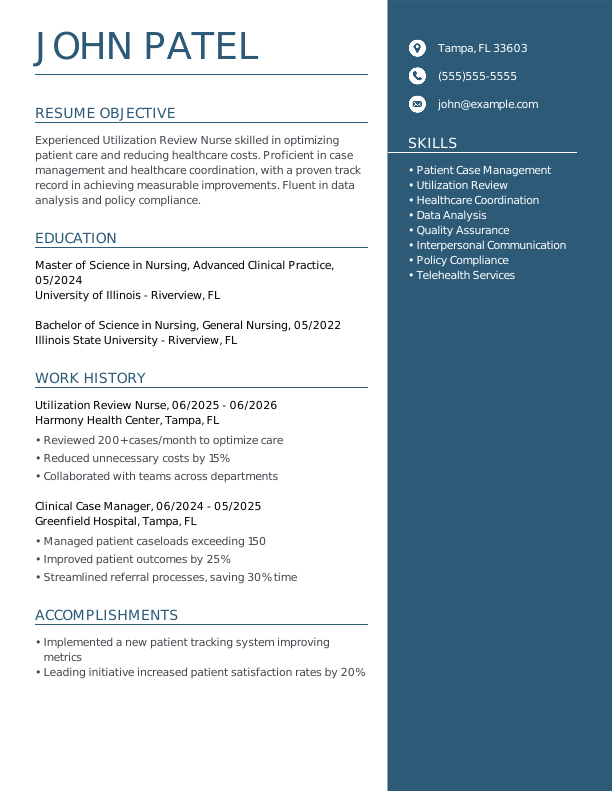
Utilization Review Nurse Entry-Level Resume
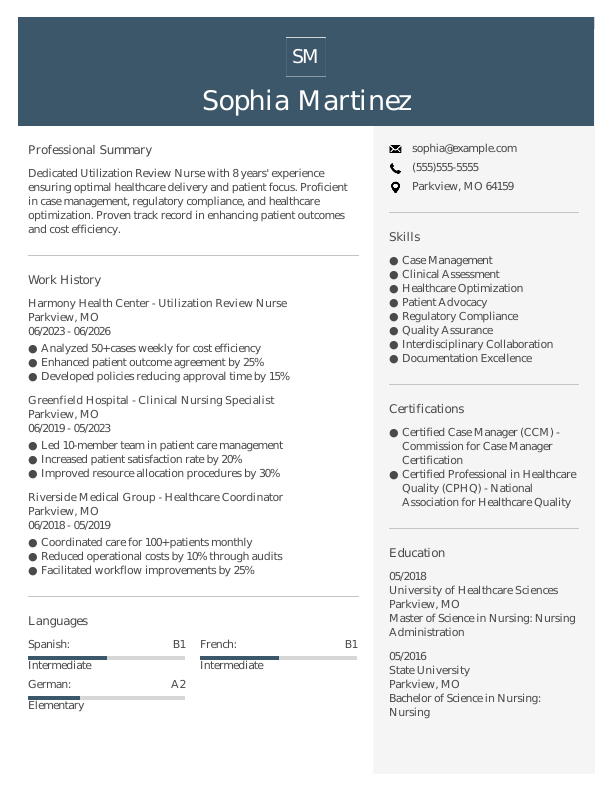
Utilization Review Nurse Mid-Level Resume
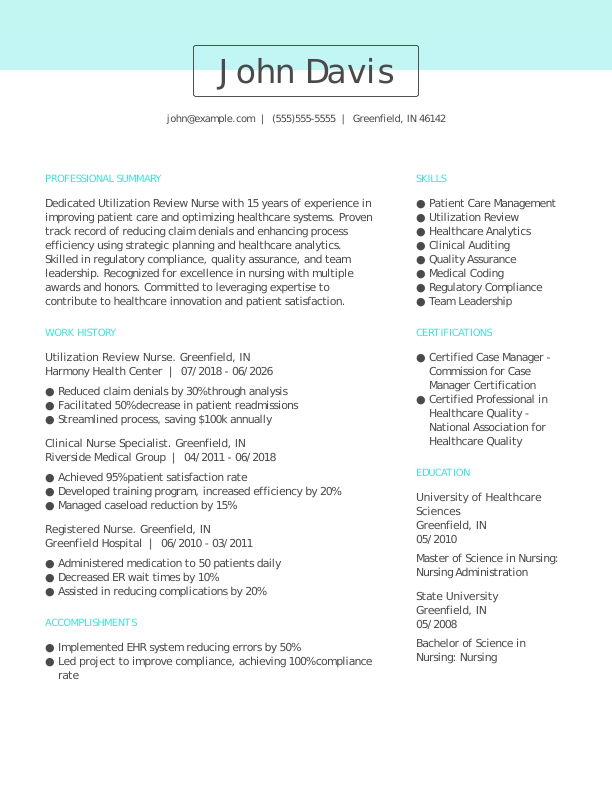
Utilization Review Nurse Experienced Resume
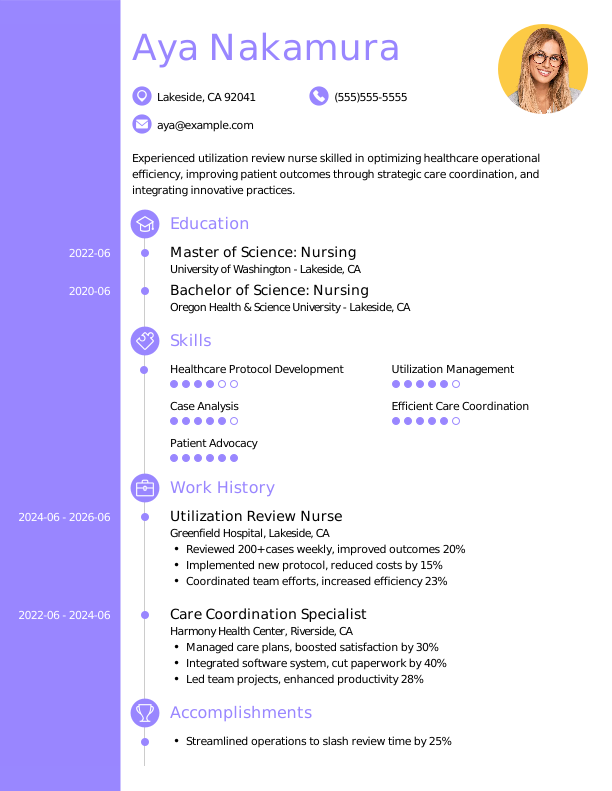

 Free
FreeUtilization Review Nurse Modern Resume
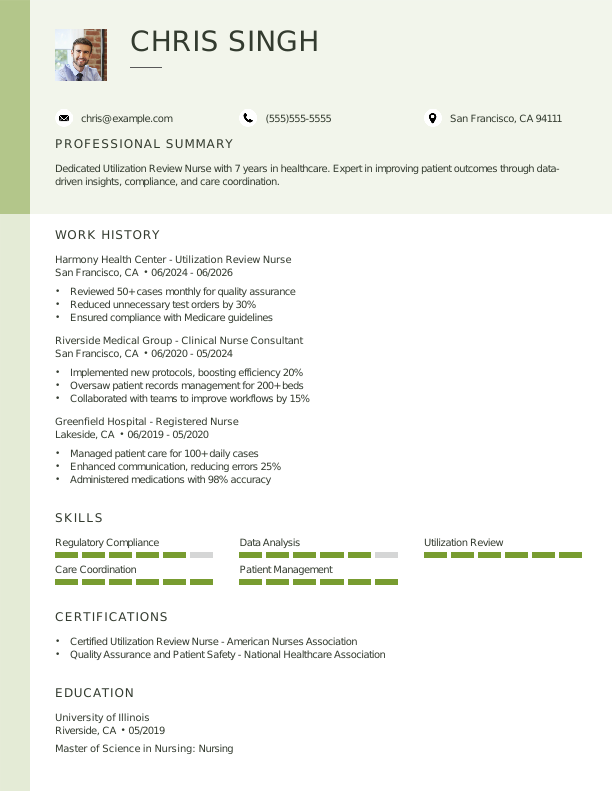
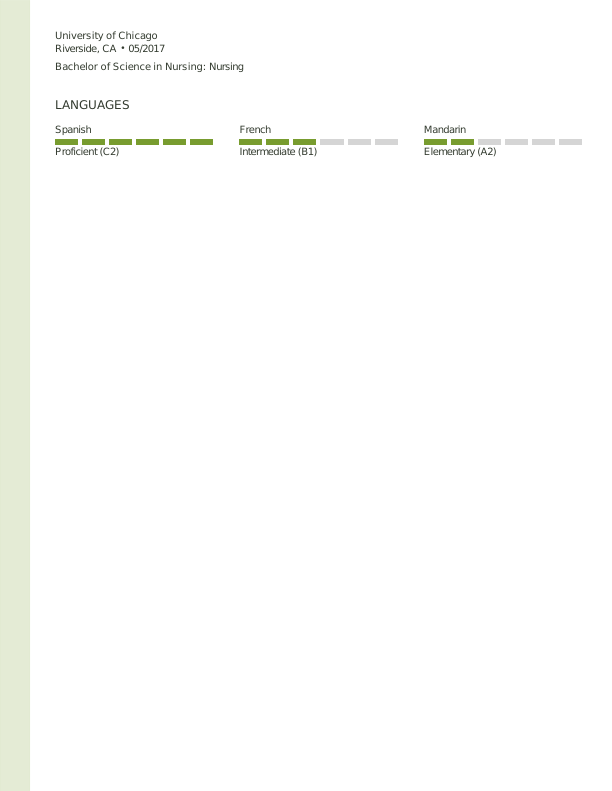
Utilization Review Nurse Creative Resume
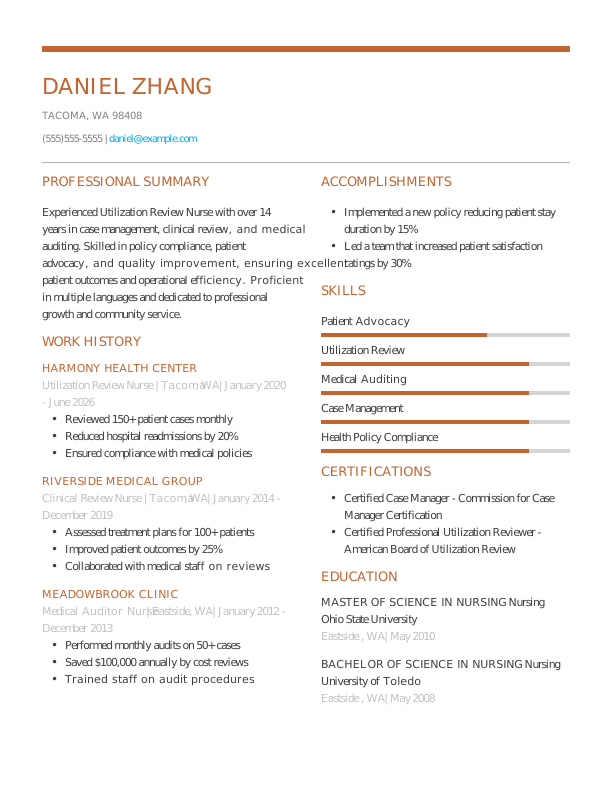
Utilization Review Nurse Traditional Resume
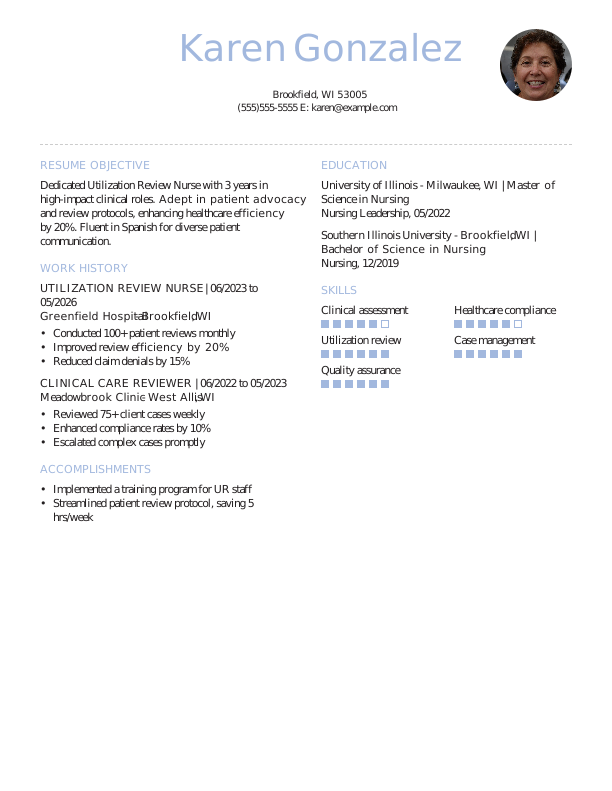
Utilization Review Nurse Simple CV Example
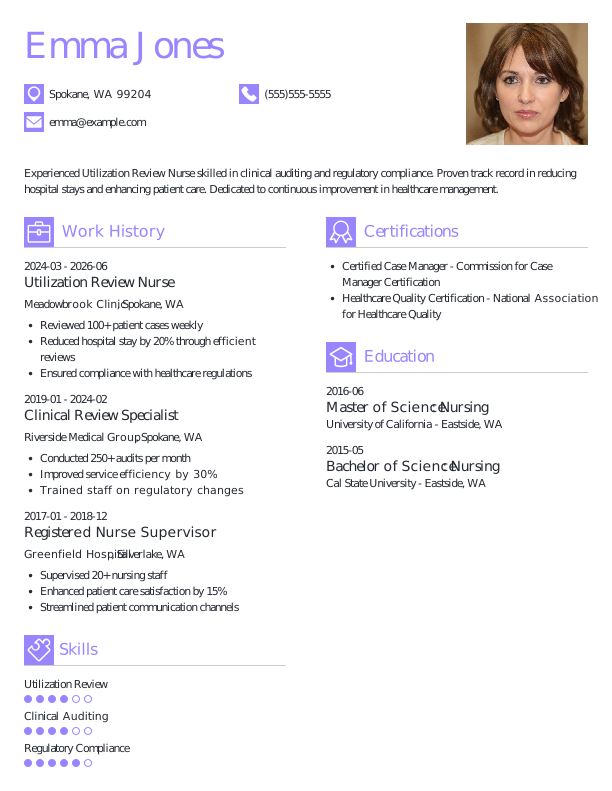
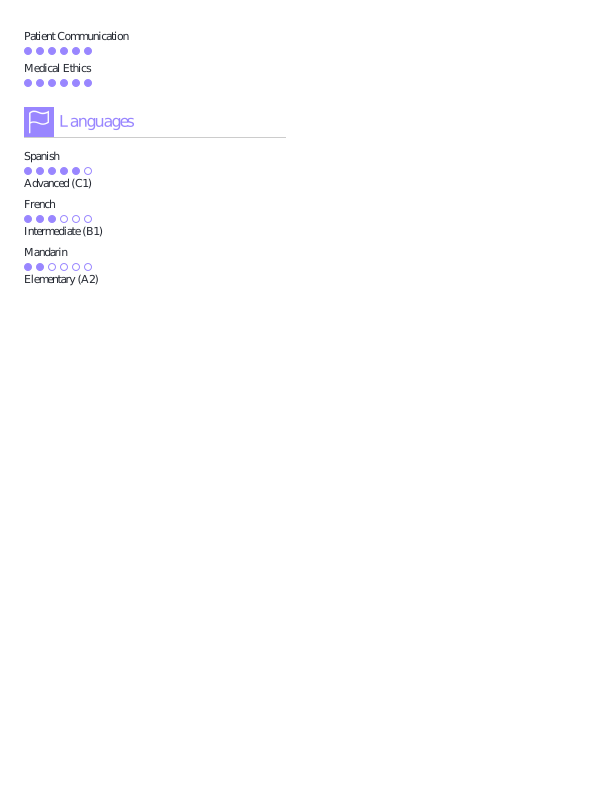
Utilization Review Nurse CV Format
Browse Free Resume Templates
- Accounts Payable
- Adjunct Professor
- Artist
- Auto Mechanic
- Baker
- Business Development Manager
- Business
- Certified Nursing Assistant
- Classic & Traditional
- Cleaner
- College Student
- Concierge
- Construction Worker
- Corporate
- Creative & Unique
- Custodian
- Customer Service
- Dental Assistant
- Direct Support Professional
- Entry-Level
- Flight Attendant
- Hospitality & Food Service
- Front Desk Receptionist
- Healthcare
- High School
- Housekeeping
- Hvac Technician
- Hybrid
- Inventory Manager
- Logistics
- Maintenance
- Management
- Modern
- Mortgage Loan Processor
- Pet Sitter
- Phlebotomist
- Production
- Rbt
- Sales
- Security Services
- Restaurant Server
- Simple & Basic
- Social Work
- Teacher
- Technology
Resume Examples for Utilization Review Nurses
A utilization review nurse’s resume or CV will differ significantly based on experience level. Explore what to highlight at each stage and use our Resume Builder to create your own tailored document.
Entry-Level Utilization Review Nurse Resume
Ideal for recent graduates seeking guidance on how to write a resume with no experience, this template also suits professionals transitioning into utilization review nursing from other healthcare roles.

Mid-Career Utilization Review Nurse Resume
A good fit for utilization review nurses with several years of experience, this template highlights recent achievements and supports progression into more specialized or leadership roles.

Experienced Utilization Review Nurse Resume
An ideal choice for seasoned RNs with over 10 years of expertise, this template supports professionals seeking senior-level roles in utilization review and healthcare management.

Utilization Review Nurse Resume Template (Text)
Use this customizable text template for a utilization review nurse position to copy, edit, and personalize in your document or file.
Jane Jones
Newark, NJ 07102
Professional Summary
Dedicated Utilization Review Nurse skilled in enhancing efficiency and patient outcomes, with expertise in data analysis and healthcare compliance. Proven track record in cost-saving strategies and improving compliance rates.
Work Experience
January 2025 – June 2026
Harmony Health Center – Newark, NJ
Utilization Review Nurse
- Saved 15% on costs through data analysis
- Handled 150 claims monthly with precision
- Improved patient approval ratings by 30%
January 2023 – December 2024
Riverside Medical Group – Newark, NJ
Clinical Review Specialist
- Streamlined workflows, increasing efficiency by 25%
- Reviewed 100 case files weekly for accuracy
- Enhanced compliance rates by 20% annually
January 2021 – December 2022
Greenfield Hospital – Jersey City, NJ
Healthcare Utilization Analyst
- Reduced claims processing time by 40%
- Analyzed patient data, boosting outcomes by 25%
- Managed 200+ cases monthly with accuracy
Education
May 2020
University of Texas Health Science Center Houston, TX
Master of Science Nursing
May 2018
Texas Tech University Lubbock, TX
Bachelor of Science Nursing
Certifications
- Healthcare Quality Certification – American Health Care Association
- Certified Utilization Review Nurse – National Certification Board for Nursing
Skills
- Medical Case Management
- Claims Review
- Data Analysis
- Patient Advocacy
- Healthcare Compliance
- Efficiency Optimization
- Electronic Health Records
- Cost-saving Strategies
How to Write a Utilization Review Nurse Resume
As a utilization review nurse, understanding how to write a resume involves showcasing your clinical skills and relevant experience in a clear format that appeals to potential employers. Use the guidance below to emphasize your unique strengths and tailor your resume for the specific roles you’re aiming for.
1. Contact Info
Your contact information should be clear, professional, and easy to find at the top of your resume.
Make sure to include:
- Full name
- Phone number
- Professional email address
- City and state (ZIP code is optional)
- LinkedIn profile or personal portfolio (if relevant)
 PRO TIP
Avoid including unnecessary personal details like your Social Security number, age, or photos unless specifically requested by the employer.
2. Resume Profile
A resume profile is a brief introductory section, typically consisting of two to four sentences, that highlights your key qualifications and skills. It serves as an initial pitch to hiring managers, designed to capture their interest and motivate them to explore your resume further.
This profile is positioned at the top of your resume and can take the form of either a summary or an objective, each serving distinct purposes. Understanding these differences will help you craft a more effective presentation of your professional story:
- A resume summary emphasizes relevant experience, skills, and achievements that resonate with the healthcare industry. This format is particularly useful for professionals with established work histories or transferable skills who seek to highlight their contributions, making it a perfect choice for utilization review nurses.
- A resume objective highlights your career aspirations and outlines what you aim to accomplish in your next role. It’s particularly useful for recent graduates, those shifting careers, or individuals with limited experience who are looking to make a strong first impression in their desired field.
Let’s take a look at an example of each to see how a resume summary and a resume objective differ:
Utilization review nurse resume summary example:
Detail-oriented utilization review nurse with over 6 years of experience in managed care and clinical settings. Proficient in case management, regulatory compliance, and data analysis. Acknowledged for improving patient care processes and ensuring optimal resource allocation while maintaining high standards of quality and efficiency.
Utilization review nurse resume objective example:
Recent graduate with a BSN and licensed RN excited to start a career in utilization review within a dynamic healthcare setting. Committed to ensuring quality patient outcomes while contributing analytical skills and attention to detail in a collaborative environment focused on efficient care delivery.
3. Work Experience
The work experience on your resume serves as an important foundation for showcasing your expertise. Employers assess your professional history to understand not just where you’ve worked, but also the impact you’ve had in previous roles.
Your background in utilization review demonstrates how your clinical knowledge and analytical skills qualify you for the position.
The work experience section should contain:
- Job title
- Employer name and location
- Dates of employment (month/year)
- 3–5 bullet points describing your relevant responsibilities and achievements
Tailor your content to emphasize relevant experiences for the utilization review nurse role. Start each bullet point with an action verb (like “Reviewed,” “Evaluated,” “Coordinated”) to create a strong impression of your contributions.
Incorporate quantifiable information or metrics whenever possible. Specific numbers and achievements illustrate your impact on patient care and operational efficiency, helping you stand out among other applicants in the field.
In general, consider following the format of:
[action verb] + [responsibility] = [result/achievement]
For example:
Conducted comprehensive utilization reviews for over 100 cases weekly, ensuring compliance with healthcare regulations and achieving a 95% approval rate for services.
Note that you can also flip the result/achievement with the responsibility:
Achieved a 20% reduction in unnecessary hospital admissions through detailed case analysis and effective care coordination.
With these techniques in mind, your resume bullets may look something like:
- Reviewed and authorized medical necessity for 100+ cases weekly, ensuring compliance with regulatory standards and reducing denial rates by 20%.
- Collaborated with healthcare providers to develop individualized care plans for patients, improving overall treatment outcomes.
- Conducted thorough chart reviews to identify potential quality improvement opportunities, resulting in a 15% reduction in preventable hospitalizations.
- Mentored new utilization review nurses on best practices and documentation requirements, improving team effectiveness.
- Used various EMR systems to track patient progress and facilitate communication among interdisciplinary teams.
4. Skills
The skills section provides a concise overview of the professional abilities relevant to a utilization review nurse. This summary allows hiring managers to quickly assess qualifications and fit for the role.
Skills can be categorized into three groups:
- Soft skills are essential interpersonal abilities that influence how well a utilization review nurse collaborates with healthcare teams and patients.
- Hard skills are specific, measurable abilities gained through education, training, or experience.
- Technical skills refer to the specific abilities required to perform tasks involving technology or equipment.
5 Soft Skills for Your Resume or CV
- Critical thinking skills
- Effective communication
- Teamwork and collaboration
- Attention to detail
- Empathy in patient care
5 Hard Skills for Your Resume or CV
- Utilization review processes
- Clinical documentation (THEM, CDI)
- Data analysis for care management
- Quality assurance methodologies
- Interdisciplinary collaboration tools
In general, you want to showcase a diverse range of relevant skills that align with the job requirements to demonstrate your full professional value.
PRO TIP
If you’re a newer utilization review nurse, place your skills section higher on the resume right after your summary. If you have more experience, it’s better to move this section lower and integrate your skills within your work history for a cohesive presentation.
5. Education
Understanding how to list education on your resume is important for showcasing your qualifications. Start by listing your most recent or relevant nursing degree, ensuring you include the type of degree and the institution’s name.
If you’re a recent graduate, consider adding your graduation year, GPA (if it’s 3.5 or above), any honors received, and relevant coursework to improve your application.
Utilization review nurse resume education section example:
Bachelor of Science in Nursing (BSN)
University of Wisconsin–Madison, Madison, WI
Graduated: 2025 | Dean’s List (4 semesters)
PRO TIP
If you’re progressing from an Associate Degree in Nursing (ADN) to a Bachelor of Science in Nursing (BSN), or have earned another relevant degree, list them both in reverse-chronological order.
6. Certifications
Listing certifications on your resume helps demonstrate your competency, particularly when you have limited experience in the field. While not always a standard part of a resume, this section is important for most utilization review nurses. Employers often seek specific credentials, such as Certified Case Manager (CCM) or Certified Professional in Healthcare Quality (CPHQ), for specialized roles.
Focus on including only those certifications that improve your qualifications for the position. Ensure your certifications remain current and are formatted clearly to make a strong impression on hiring managers.
Utilization review nurse certification examples:
- Registered Nurse (RN) License, New Jersey #987654 | New Jersey | Expires: 12/2028
- Utilization Review Certification (URAC) | Utilization Review Accreditation Commission | Expires: 05/2027
- Certified Case Manager (CCM) | Commission for Case Manager Certification | Expires: 07/2028
- Basic Life Support (BLS) | American Heart Association | Expires: 08/2027
Start Building Your Job-Winning Resume
Use Your Existing Resume
Import your current resume to transfer your information to one of our professional templates.
Create a New Resume
Start fresh with a template that catches your eye and follow the prompts to add your details.
Tailor Your Work History to Beat the ATS
Your work experience is more than a list of job titles. It’s a chance to show the measurable impact you’ve had on patient care, resource management, and healthcare efficiency. Including this information can also lead to a more ATS-friendly resume that applicant tracking systems (ATS) can easily scan.
A strong work history should be tailored to the utilization review nurse position you’re applying for by using keywords and terminology aligned with the employer’s needs. Start by reviewing the job description carefully. Look for repeated skills, certifications, or types of assessments mentioned, and then reflect those elements in your experience descriptions when possible.
Key Takeaways
- Tailor your resume to the job listing. Use specific terms from the job description to connect with both ATS and hiring managers.
- Highlight quantifiable outcomes. Focus on measurable results (e.g., approval rates, cost savings, compliance metrics) to improve your profile.
- Select the appropriate format based on your experience. New nurses might prefer a functional or combination layout, while seasoned professionals often use a reverse-chronological style.
More Resume & CV Examples
- Aesthetic Nurse
- Cardiac Sonographer
- Caregiver
- Caretaker
- Certified Medical Assistant
- Chiropractic Assistant
- Clinical Data Specialist
- Clinical Research Associate
- Dialysis Nurse
- Dietitian
- Director Of Nursing
- Ekg Technician
- Entry-level Nurse
- Er Nurse
- Family Nurse Practitioner
- Health Information Technician
- Healthcare Administration
- Healthcare Support
- Healthcare Technology
- Home Health Nurse
- Home Health Care
- Hospice Nurse
- Icu Nurse
- Lab Technician
- Labor And Delivery Nurse
- Lactation Consultant
- Licensed Practical Nurse
- LVN
- Mds Coordinator
- Med-surg Nurse
- Medical Administrative Assistant
- Medical Assistant
- Medical Billing
- Medical Coder
- Medical Courier
- Medical Interpreter
- Medical Office Manager
- Medical Office
- Medical Receptionist
- Medical
- Medical School
- Medical Science Liaison
- Medical Scribe
- Medical Secretary
- Medical Technologist
- Medical Transcriptionist
- Mri Technologist
- New Grad Nurse
- Nurse Case Manager
- Nurse Educator
- Nurse Manager
- Nurse Practitioner
- Nursing Home
- Nursing Instructor
- Nursing
- Nursing Student
- Oncology Nurse
- Operating Room Nurse
- Ophthalmic Technician
- Optician
- Pacu Nurse
- Patient Access Representative
- Patient Care Coordinator
- Patient Care Technician
- Patient Service Representative
- Patient Transporter
- Pediatric Nurse
- Physical Therapist Assistant
- Private Caregiver
- Psychiatric Nurse Practitioner
- Psychiatric Nurse
- Radiologic Technologist
- Registered Nurse
- Sonographer
- Surgical Tech
- Travel Nursing
- Travel Rn
- Unit Secretary
Cover Letters for Your Resume
Browse our library of cover letter examples to complete your application. A resume will have a better chance of getting noticed.
Frequently Asked Questions
Last Update:
What resume format should I use for my utilization review nurse resume?
There are three main resume formats to consider when applying for a utilization review nurse position. Your choice should reflect your experience level and highlight the aspects of your career that you want to showcase:
- Chronological: The most popular format, a chronological resume emphasizes your work experience by detailing responsibilities and achievements in reverse order. This makes it an excellent choice for applicants with relevant job history that reinforces their qualifications and demonstrates their expertise as a utilization review nurse.
- Functional: Also known as a skills-based resume, this format emphasizes a qualifications summary and an expanded skills section to highlight your nursing expertise. By minimizing focus on work history, it’s especially helpful for applicants with gaps in their employment or those lacking relevant experience.
- Combination: A combination resume mixes chronological and functional elements, offering a detailed skills section alongside work history. This format is useful for utilization review nurses as it highlights their expertise in patient care while reflecting career progression, making it suitable for individuals advancing in specialized healthcare roles or shifting to new fields.
Should I include a cover letter with my resume?
Yes, you should include a cover letter when applying for a utilization review nurse position. A tailored cover letter provides an opportunity to explain your passion for the role and how your specific experiences align with the job requirements. It complements your resume by offering context and showcasing your unique qualifications, making a memorable impression on potential employers.
If you’re feeling uncertain about writing a cover letter, remember that there are many resources available to assist you. Websites offer guidance on how to write a cover letter, alongside examples tailored for nursing roles. Exploring different formats can also help you present your information in the best light, ensuring it resonates with hiring managers.
For those looking to simplify the process, using tools like a cover letter generator can be invaluable in quickly producing a polished document tailored to the utilization review nurse position by providing structured prompts and suggestions based on your background.
What keywords should I include to pass applicant tracking systems (ATS)?
When crafting your resume, focus on incorporating keywords and phrases directly from the job posting. For a utilization review nurse position, include terms like “medical necessity,” “clinical guidelines,” and “case management.” This targeted approach helps your application pass ATS filters and demonstrates you understand the role.
Don’t forget to list relevant certifications such as RN, CCM, or CPHQ, which showcase your qualifications. Also mention technical tools you’re familiar with, like MCG or InterQual. These details highlight your expertise and make you stand out in the selection process.
Should I include case management experience or quality improvement projects?
Yes, especially if you’re new to utilization review. Highlighting case management roles and quality improvement initiatives demonstrates your understanding of healthcare processes and patient advocacy, which is valuable when formal experience in utilization review is limited.

Vicki Salemi is a nationally recognized career expert who helps professionals navigate the hiring landscape and find the right fit on Monster. With over 15 years of experience in corporate recruiting and HR, she offers expert guidance on job search strategies, interview preparation, and career development to help candidates land their next role.
See More From Vicki SalemiExplore Related Career Advice


How to Put Transferable Skills on Your Resume: 120 Skills, Examples, & Tips

Updated:
Aug 27, 2026
|
16 min read


How to Write a Functional Resume (Formatting Tips, Template, & Examples)
Updated:
Aug 7, 2026
|
17 min read


Functional vs Chronological Resume: Which Format Is Right for You?
Updated:
Aug 3, 2026
|
16 min read

100+ Resume Adjectives to Help You Write a Stronger Resume in 2026 (With Examples)
Updated:
Jul 30, 2026
|
12 min read