
Free Clinical Data Specialist Resume Templates & Examples
A clinical data specialist resume should highlight your database management skills, knowledge of clinical trial protocols, and experience with data cleaning and validation. Choose an example below that presents your research data background clearly.
Real-World Resumes That Get Results
 Free
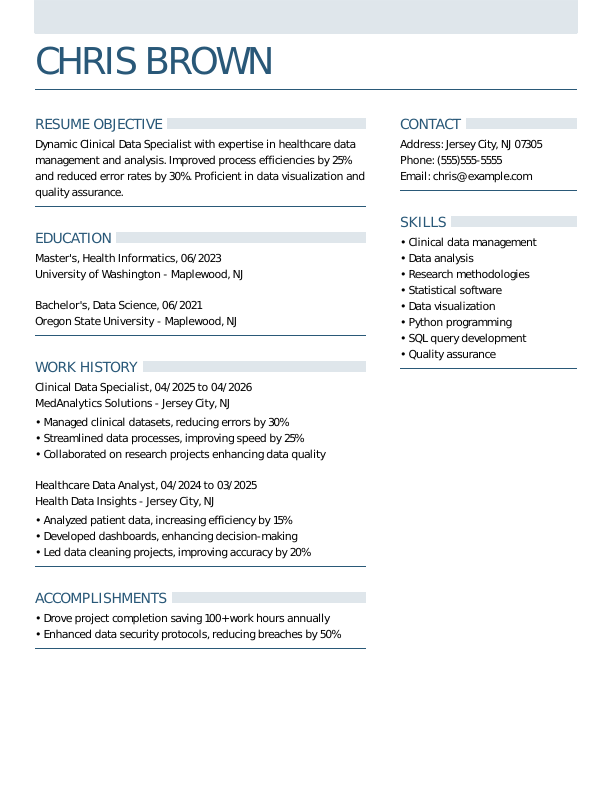
FreeClinical Data Specialist Entry-Level Resume
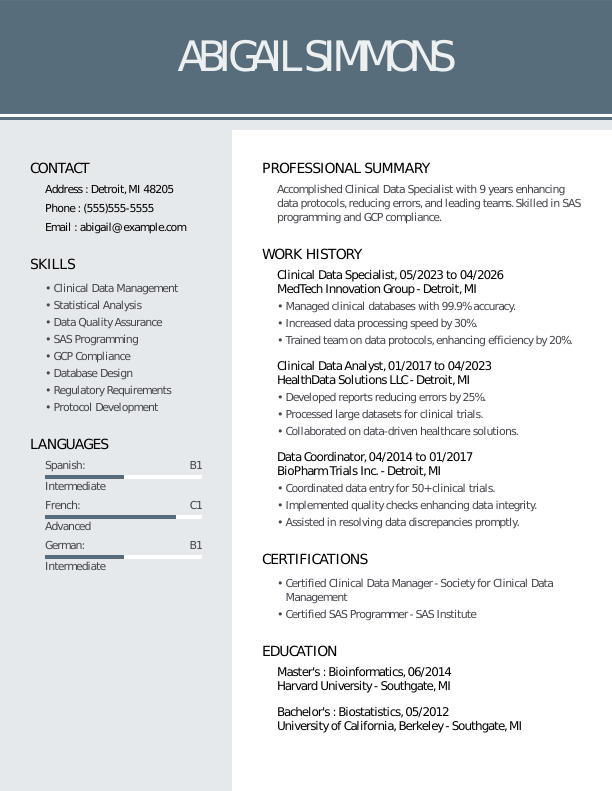
Clinical Data Specialist Mid-Level Resume
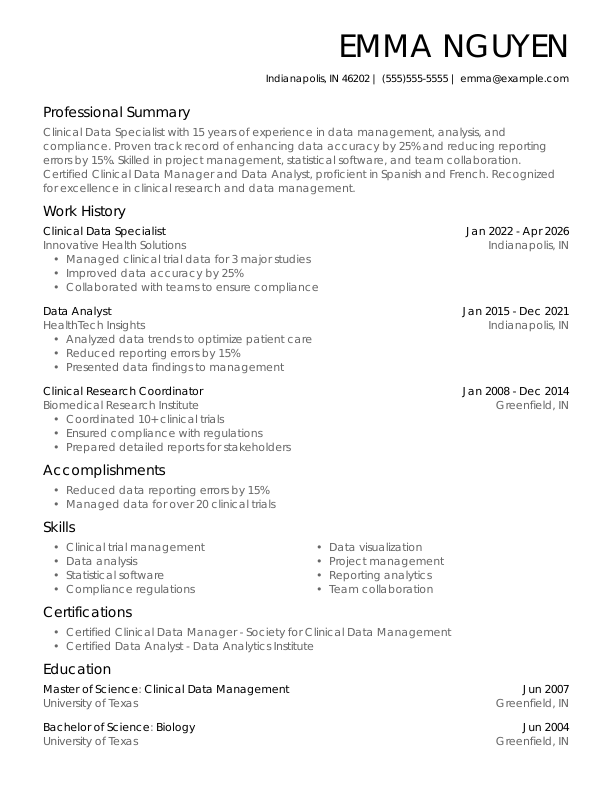
Clinical Data Specialist Experienced Resume
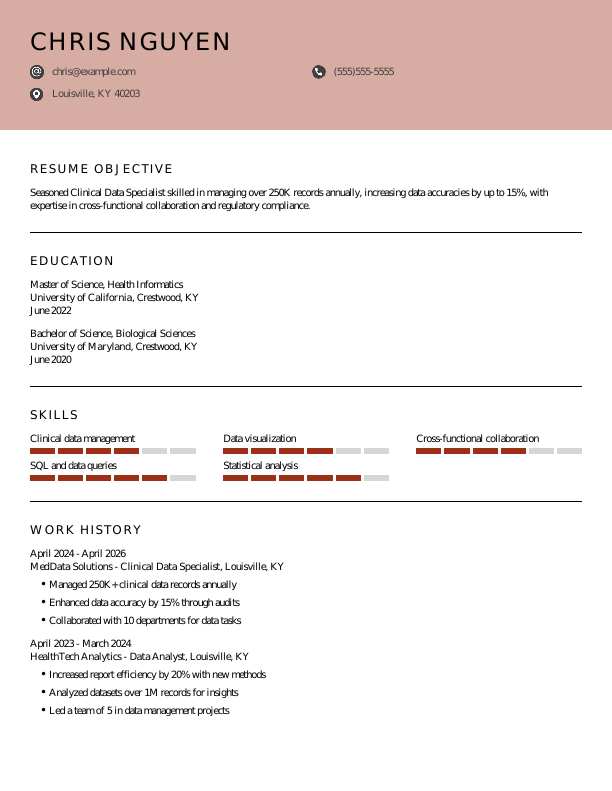
Clinical Data Specialist Entry-Level Resume 1
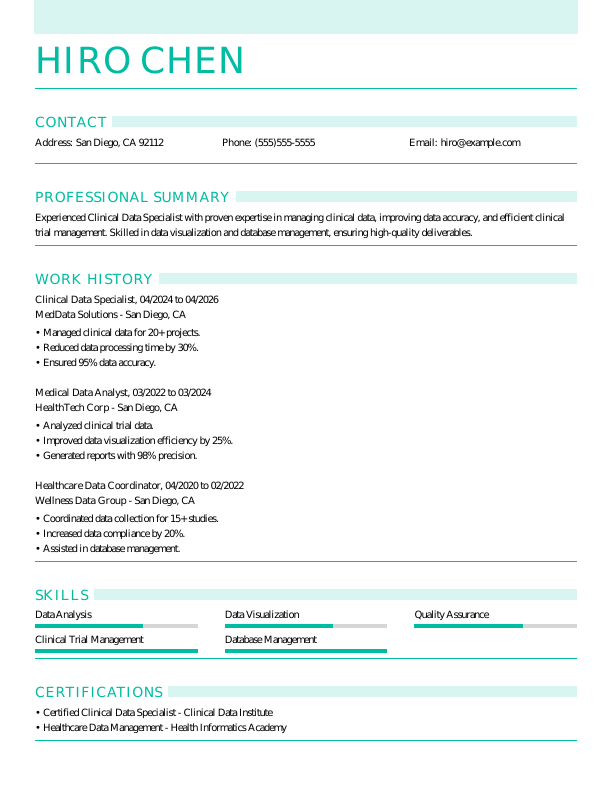

Clinical Data Specialist Mid-Level Resume 1
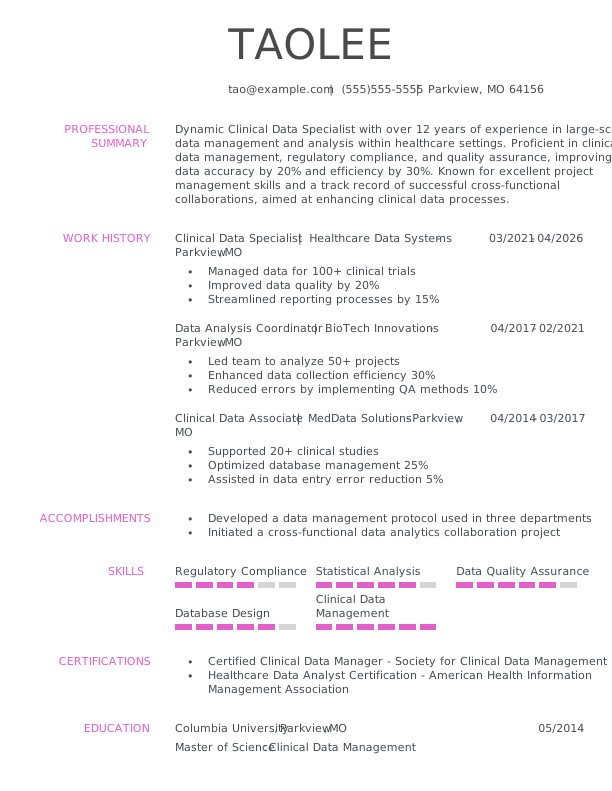

Clinical Data Specialist Experienced Resume 1
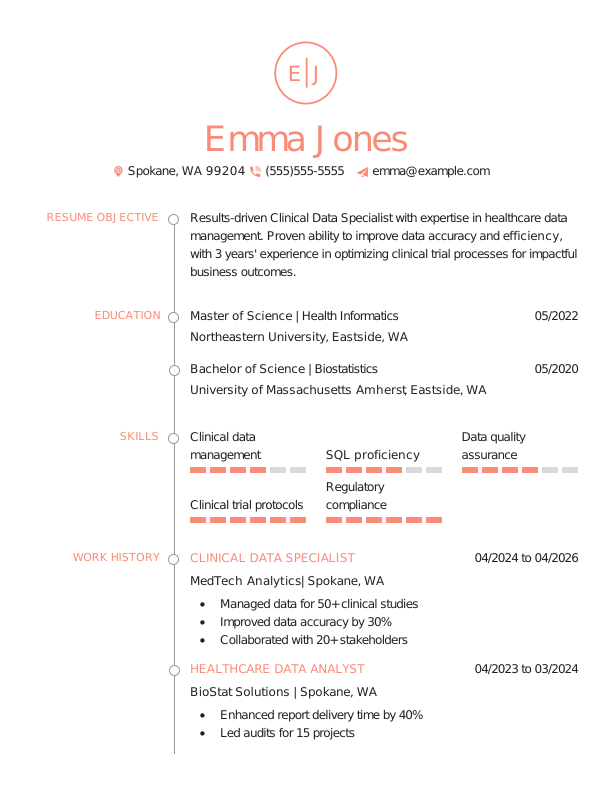

Clinical Data Specialist Entry-Level Resume 2
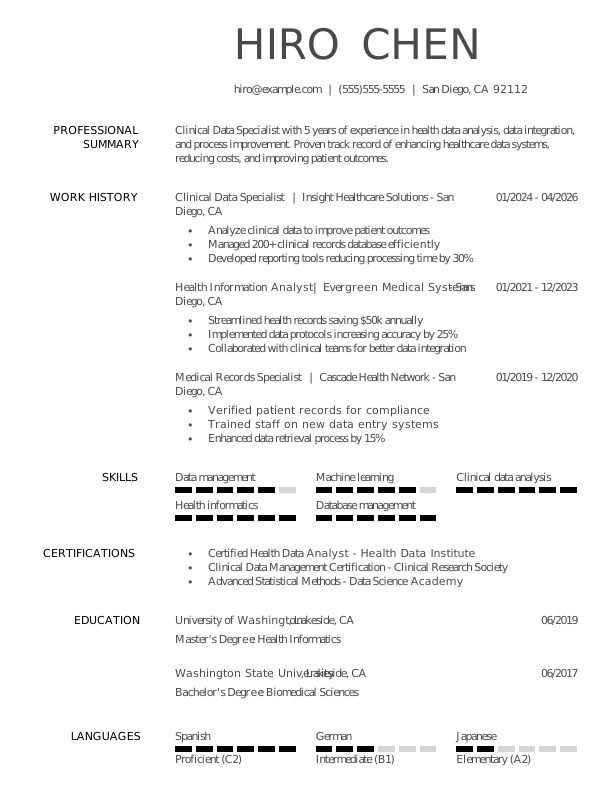
Clinical Data Specialist Mid-Level Resume 2
Browse Free Resume Templates
- Accounts Payable
- Adjunct Professor
- Artist
- Auto Mechanic
- Baker
- Business Development Manager
- Business
- Certified Nursing Assistant
- Classic & Traditional
- Cleaner
- College Student
- Concierge
- Construction Worker
- Corporate
- Creative & Unique
- Custodian
- Customer Service
- Dental Assistant
- Direct Support Professional
- Entry-Level
- Flight Attendant
- Hospitality & Food Service
- Front Desk Receptionist
- Healthcare
- High School
- Housekeeping
- Hvac Technician
- Hybrid
- Inventory Manager
- Logistics
- Maintenance
- Management
- Modern
- Mortgage Loan Processor
- Pet Sitter
- Phlebotomist
- Production
- Rbt
- Sales
- Security Services
- Restaurant Server
- Simple & Basic
- Social Work
- Teacher
- Technology
Resume Examples for Clinical Data Specialists
Clinical data specialist resumes should reflect the databases you work with and the trial phases you have supported. Browse our templates to find one suited to research data roles.
Entry-Level Clinical Data Specialist Resume
Ideal for those entering clinical data management from an academic or lab background, this template helps you put together a clinical data specialist resume by highlighting your database coursework, any clinical trial exposure, and data cleaning skills.

Mid-Career Clinical Data Specialist Resume
An ideal choice for mid-level clinical data specialists, this template effectively showcases relevant experience and prepares job seekers for advanced roles in data management and analytics.

Experienced Clinical Data Specialist Resume
An ideal choice for experienced professionals with over 10 years in clinical data management, this template caters to those pursuing senior-level roles in the healthcare sector.

Clinical Data Specialist Resume Template (Text)
Here is a ready-to-use text version of a clinical data specialist resume. Copy it and fill in your database management experience and clinical trial protocol knowledge.
David Liu
Chicago, IL 60607
Professional Summary
Experienced Clinical Data Specialist with over 8 years in health data management. Proven track record in improving data accuracy and leading data initiatives. Expert in SQL, SAS, and clinical trial data analysis.
Work Experience
April 2022 – April 2026
Innovative Health Solutions – Chicago, IL
Clinical Data Specialist
- Managed database with over 2 million entries
- Increased data accuracy by 15%
- Developed clinical data standards
April 2018 – March 2022
Precision Medical Research – Chicago, IL
Clinical Data Analyst
- Analyzed 500+ clinical trial datasets
- Reduced data processing time by 20%
- Collaborated on data-driven reports
April 2016 – March 2018
HealthTech Analytics – Chicago, IL
Healthcare Data Coordinator
- Coordinated data across 4 departments
- Achieved 10% improvement in data access
- Optimized data collection procedures
Education
June 2016
Harvard University Cambridge, MA
Master of Science Clinical Informatics
May 2014
University of Massachusetts Amherst, MA
Bachelor of Science Health Information Management
Certifications
- Certified Clinical Data Manager – Society for Clinical Data Management
- Clinical SAS Certification – SAS Institute
Skills
- Clinical Data Management
- Data Analysis
- SQL
- SAS Programming
- Clinical Trials
- Data Visualization
- Electronic Data Capture
- Regulatory Compliance
How to Write a Clinical Data Specialist Resume
As a clinical data specialist, understanding how to write a resume involves showcasing your analytical skills, relevant experience, and a clear format that presents you as the ideal applicant. Use the guidance below to highlight your strengths and customize your resume for the positions you’re aiming for.
1. Contact Info
Your contact information should be clear, professional, and prominently displayed at the top of your resume.
Be sure to include:
- Full name
- Phone number
- Professional email address
- City and state (ZIP code is optional)
- LinkedIn profile or personal portfolio (if relevant)
 PRO TIP
Avoid including sensitive personal information such as age, gender, or social media links on your resume unless specifically requested by the employer.
2. Resume Profile
A resume profile is a brief introductory paragraph, typically two to four sentences long, that highlights your key qualifications and skills. It serves as an engaging pitch to hiring managers, designed to spark their interest and motivate them to explore your resume further.
This profile is positioned at the top of your resume and can take the form of either a summary or an objective. Each serves distinct purposes, offering different angles on your professional background:
- A resume summary highlights essential qualifications, analytical skills, and significant accomplishments related to the clinical data field. This format is especially beneficial for job seekers with a history of relevant experience or transferable skills who want to communicate their impact as a clinical data specialist.
- A resume objective highlights your career aspirations and details what you aim to achieve in your professional journey. It’s especially helpful for recent graduates, individuals transitioning between fields, or those with limited experience, such as professionals moving into clinical data roles.
Let’s examine an example of a resume summary and a resume objective to understand their distinctions:
Clinical data specialist resume summary example:
Detail-oriented clinical data specialist with over 6 years of experience in research and clinical trial environments. Proficient in data management, regulatory compliance, and statistical analysis. Acknowledged for improving data integrity and contributing to successful project outcomes through careful attention to detail.
Clinical data specialist resume objective example:
Recent graduate with a degree in clinical data management eager to start a career in a dynamic healthcare setting. Committed to data integrity and patient safety while contributing strong analytical skills and attention to detail to a clinical research organization or healthcare facility.
3. Work Experience
The work experience on your resume serves as an important foundation. Employers analyze not only job titles and responsibilities but also the measurable impact you’ve made in each role. This portion of your background showcases how your unique clinical insights and data management skills make you an excellent fit for the position.
The work experience section should contain:
- Job title
- Employer name and location
- Dates of employment (month/year)
- 3–5 bullet points detailing your data management responsibilities and analysis achievements
When writing your work experience bullet points, make sure to customize your content for the specific role by incorporating industry-related terminology. Begin each point with a strong action verb (such as “Analyzed,” “Validated,” or “Collaborated”) to create an immediate impact.
Use quantifiable metrics to improve your statements. Demonstrating achievements with concrete numbers not only showcases your contributions but also sets you apart from other applicants by highlighting your unique value.
In general, consider following the format of:
[action verb] + [responsibility] = [result/achievement]
For example:
Analyze clinical trial data for over 15 studies, ensuring compliance with FDA regulations and contributing to a 20% faster submission timeline.
Note that you can also flip the result/achievement with the responsibility:
Reduced analysis turnaround time by 25% through implementing advanced statistical methodologies.
With these techniques in mind, your resume bullets may look something like:
- Analyzed clinical data for over 300 patient cases, streamlining reporting processes and reducing turnaround time by 20%.
- Collaborated with cross-functional teams to develop and implement a new data management system, improving data accuracy by 15%.
- Trained 5 junior analysts on data interpretation techniques, fostering professional development and improving team efficiency.
- Used SQL and Tableau to create comprehensive dashboards that facilitated real-time insights for clinical decision-making.
- Reviewed regulatory compliance metrics quarterly, ensuring adherence to standards and decreasing audit findings by 30%.
4. Skills
The skills section offers a concise overview of your clinical data analysis and management abilities. This ATS-friendly resume feature improves compatibility, allowing recruiters to quickly assess your qualifications.
Skills can be categorized into three key areas:
- Soft skills are interpersonal abilities that influence how clinical data specialists collaborate with their teams.
- Hard skills are specific, quantifiable abilities gained through education, training, or hands-on experience.
- Technical skills are the specific competencies required to manage and analyze data using specialized tools and software.
5 Soft Skills for Your Resume or CV
- Analytical thinking
- Effective communication
- Attention to detail
- Team-oriented approach
- Project management skills
5 Hard Skills for Your Resume or CV
- Data management and analysis (SAS, R)
- Clinical trial design
- Regulatory compliance (FDA, ICH guidelines)
- Database programming (SQL, Oracle)
- Statistical reporting (SPSS, STATA)
In general, including a balanced mix of relevant skills that meet the job requirements improves your resume’s appeal.
PRO TIP
If you’re a newer clinical data specialist, consider placing your skills section higher on your resume, right after your summary. If you have more experience, it’s better to position this section lower and weave those skills into your work history for a seamless presentation of your qualifications.
5. Education
Understanding how to list education on your resume is important for showcasing your qualifications. Begin with your most recent or relevant degree, clearly stating the degree type and institution name.
If you have recently graduated, consider including details such as your graduation year, GPA (if it’s 3.5 or above), any honors received, or relevant coursework that highlights your expertise in the field.
Clinical data specialist resume education section example:
Bachelor of Science in Health Information Management
University of California, Berkeley, Berkeley, CA
Graduated: 2024 | Summa Cum Laude
PRO TIP
When listing your degrees on a resume, ensure you present them in reverse-chronological order, starting with the highest qualification first, such as Master of Science in Clinical Data Management (MSc), followed by Bachelor of Science in Biology (BS).
6. Certifications
Certifications illustrate your expertise and keep you updated with industry standards. While not always a standard section in resumes, including them is important for many professionals in the clinical data field. Employers frequently look for specific qualifications when hiring for specialized positions, such as those involving regulatory compliance or clinical trials.
Highlight certifications that improve your application and demonstrate your qualifications. Ensure they are current and presented clearly to make a strong impression on potential employers.
Clinical data specialist certification examples:
- Clinical Data Management Certification | Society for Clinical Data Management | Expires: 01/2028
- Certified Clinical Research Coordinator (CCRC) | Association of Clinical Research Professionals | Expires: 11/2027
- Good Clinical Practice (GCP) | TransCelerate Biopharma Inc. | Expires: 06/2028
- Clinical Trial Management Certification | Duke University | Expires: 09/2027
Start Building Your Job-Winning Resume
Use Your Existing Resume
Import your current resume to transfer your information to one of our professional templates.
Create a New Resume
Start fresh with a template that catches your eye and follow the prompts to add your details.
Tailor Your Work History to Beat the ATS
Your work experience is not just a collection of job titles. It serves as a platform to highlight your contributions and measurable outcomes in the clinical data landscape, showcasing your influence on research and patient care. By emphasizing these achievements, you can create an ATS-friendly resume that applicant tracking systems (ATS) are able to scan effectively.
To make your work history stand out, tailor it to align with the specific role you’re targeting. Begin by thoroughly reviewing the job description for key skills and qualifications. Identify any frequently mentioned competencies or requirements and weave those elements into your experience descriptions to improve relevance.
Key Takeaways
- Tailor your resume to the job description. Align your skills and experiences with the employer’s specific needs—it aids both ATS and human reviewers.
- Use quantifiable achievements to demonstrate impact. Move beyond tasks by including metrics (e.g., accuracy rates, data processing speeds, compliance scores) that highlight your contributions.
- Choose the right format based on experience level. New specialists might choose a functional or hybrid layout, while seasoned professionals often prefer reverse-chronological resumes.
More Resume & CV Examples
- Cardiac Sonographer
- Caregiver
- Caretaker
- Certified Medical Assistant
- Chiropractic Assistant
- Clinical Research Associate
- Dietitian
- Ekg Technician
- Health Information Technician
- Healthcare Administration
- Healthcare Support
- Healthcare Technology
- Home Health Care
- Lab Technician
- Lactation Consultant
- Medical Administrative Assistant
- Medical Assistant
- Medical Billing
- Medical Coder
- Medical Courier
- Medical Interpreter
- Medical Office Manager
- Medical Office
- Medical Receptionist
- Medical
- Medical School
- Medical Science Liaison
- Medical Scribe
- Medical Secretary
- Medical Technologist
- Medical Transcriptionist
- Mri Technologist
- Ophthalmic Technician
- Optician
- Patient Access Representative
- Patient Care Coordinator
- Patient Care Technician
- Patient Service Representative
- Patient Transporter
- Physical Therapist Assistant
- Private Caregiver
- Radiologic Technologist
- Sonographer
- Surgical Tech
- Unit Secretary
Cover Letters for Your Resume
Browse our library of cover letter examples to complete your application. A resume will have a better chance of getting noticed.
Frequently Asked Questions
Last Update:
What resume format should I use for my clinical data specialist resume?
There are three main resume formats available to clinical data specialists. Your choice should reflect your level of experience and highlight the skills or achievements you want to showcase:
- Chronological: The chronological resume is the most widely used format, emphasizing your work history along with specific responsibilities and accomplishments. This layout works well for job seekers who have a consistent job background that reinforces or adds credibility to their professional qualifications.
- Functional: The functional resume, often called a skills-based resume, prioritizes your qualifications and skills over your employment history. This format is useful for those who are transitioning into new fields or have gaps in their work experience, allowing them to highlight their key competencies.
- Combination: A combination resume merges chronological and functional formats, showcasing both skills and work experience. This format is beneficial for professionals as it emphasizes their abilities while illustrating career growth. It’s ideal for those transitioning to specialized roles or highlighting significant achievements.
Should I include a cover letter with my resume?
Yes, you should include a cover letter with your application for a clinical data specialist position. A thoughtfully crafted cover letter improves your resume by allowing you to articulate your specific interest in the role and organization, while emphasizing relevant experiences that might not be immediately visible on your resume. This additional document shows hiring managers that you’ve taken the time to personalize your application, making you stand out among job seekers who may skip this step.
If you’re uncertain about how to write a cover letter, don’t let that deter you from including one. Numerous resources are available to assist you, such as guides tailored for clinical data roles and examples that illustrate effective formats. These tools can help you craft a compelling narrative around your skills and experiences.
To make the writing process easier, consider using a cover letter generator, which provides structure and tailored suggestions for crafting a professional cover letter based on your specific job application.
How long should a clinical data specialist resume be?
For clinical data specialists with less than 10 years of experience, a one-page resume is generally adequate to showcase relevant skills and projects. Highlight your educational background, technical proficiencies, and certifications that align with the role to make a strong impression.
Conversely, those in senior positions or specialized roles can extend their resumes to two pages if the content remains targeted and relevant. Focus on significant contributions to projects, advanced training, and leadership experiences while ensuring clarity and conciseness throughout.
What keywords should I include to pass applicant tracking systems (ATS)?
To improve your resume for ATS, focus on incorporating keywords and phrases directly from the job posting. Look for terms like “clinical trial management,” “data analysis,” or “regulatory compliance” that are relevant to the clinical data specialist role. Ensure you clearly highlight your familiarity with tools such as SAS or R, as well as any certifications like Clinical Research Coordinator or Certified Clinical Data Manager.
Including these specific details will demonstrate your qualifications and help you stand out. Tailor your experience descriptions by emphasizing relevant skills and using industry-specific terminology to improve your chances of passing through ATS filters successfully.
Should I include internships or volunteer roles related to clinical data?
Yes, if you have limited formal experience. Including internships or volunteer roles highlights your practical knowledge in managing clinical data and demonstrates your commitment to the field. This can set you apart from other applicants when applying for positions.

Elizabeth Muenzen is a Certified Professional Resume Writer (CPRW) and member of the Professional Association of Resume Writers & Career Coaches who empowers job seekers to take control of their career paths using Monster’s comprehensive job search and resume tools.
See More From Elizabeth MuenzenExplore Related Career Advice


How to Put Transferable Skills on Your Resume: 120 Skills, Examples, & Tips

Updated:
Aug 27, 2026
|

16 min read


How to Write a Functional Resume (Formatting Tips, Template, & Examples)
Updated:
Aug 7, 2026
|
17 min read


Functional vs Chronological Resume: Which Format Is Right for You?
Updated:
Aug 3, 2026
|
16 min read

100+ Resume Adjectives to Help You Write a Stronger Resume in 2026 (With Examples)
Updated:
Jul 30, 2026
|
12 min read