
Free ER Nurse Resume Templates & Examples
An ER nurse resume should highlight your triage skills, ability to work under pressure, and experience with high-acuity patients. Browse the examples below to find one that presents your emergency nursing credentials clearly.
Real-World Resumes That Get Results
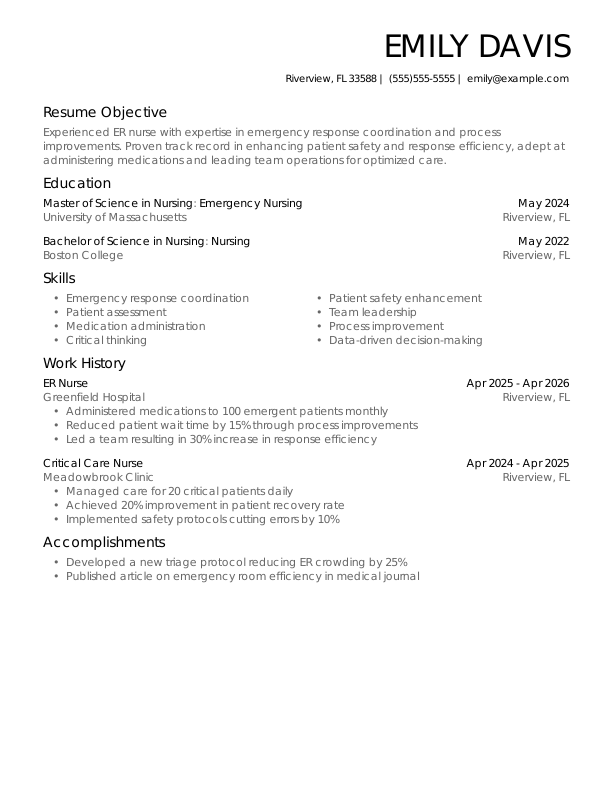
 Free
FreeER Nurse Entry-Level Resume
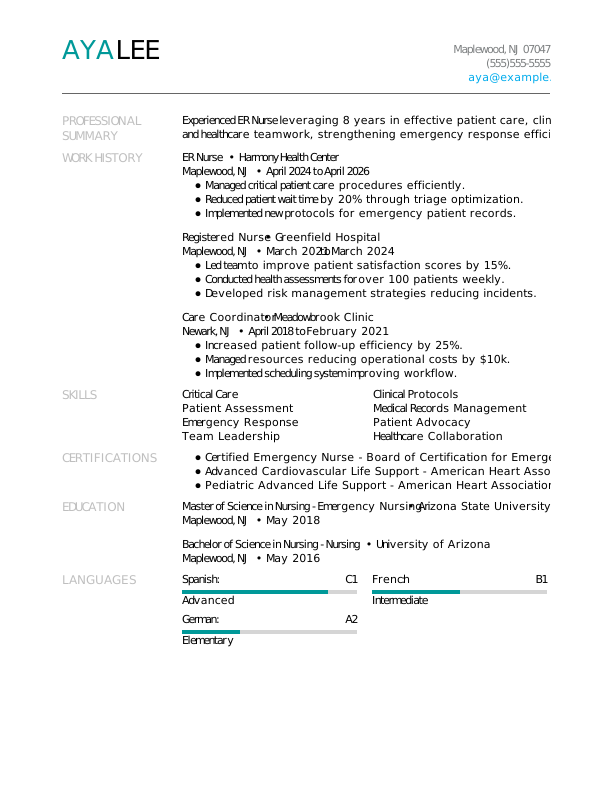
ER Nurse Mid-Level Resume
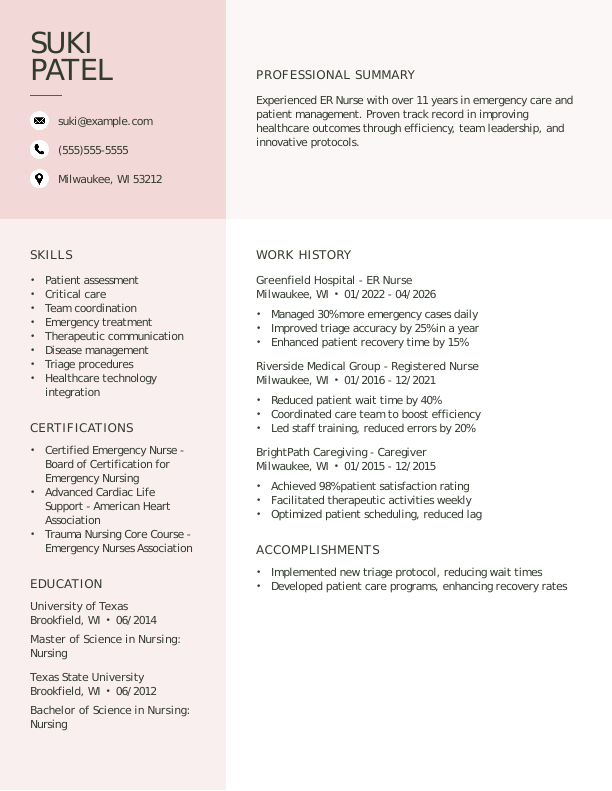
ER Nurse Experienced Resume
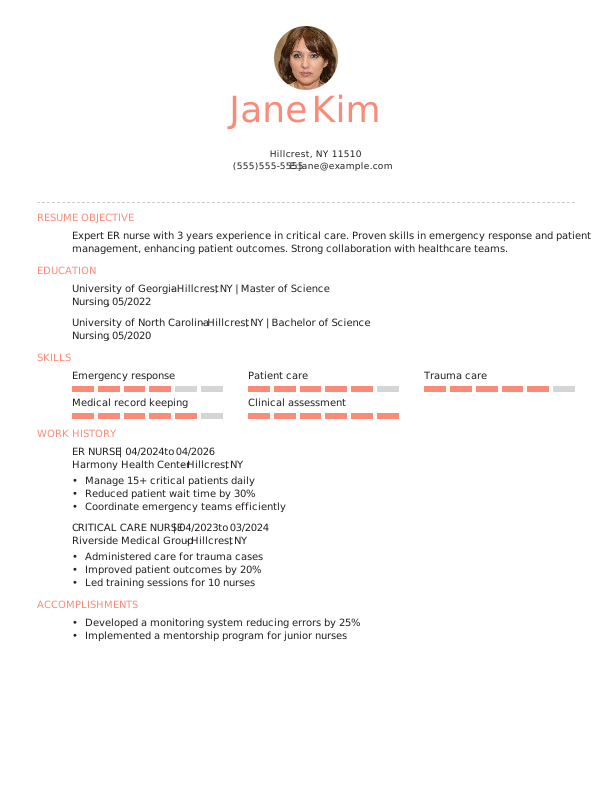
ER Nurse Entry-Level Resume 1
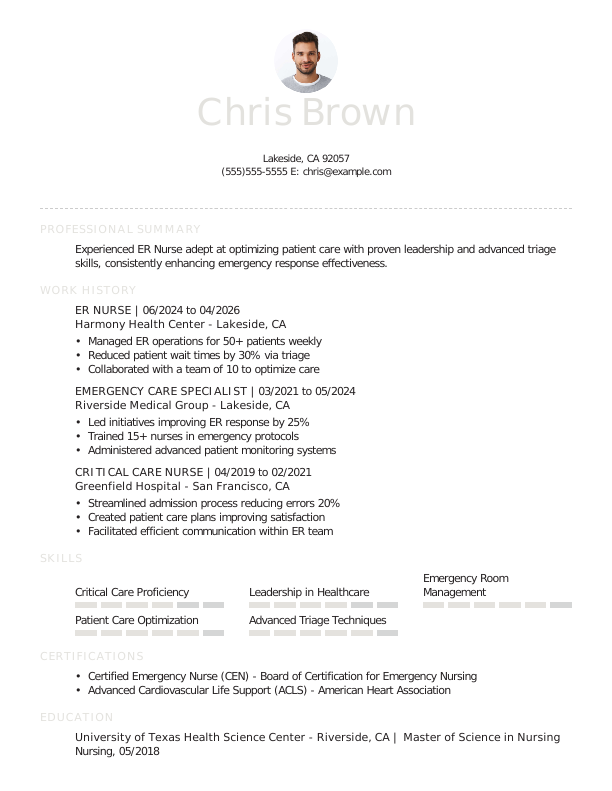

ER Nurse Mid-Level Resume 1
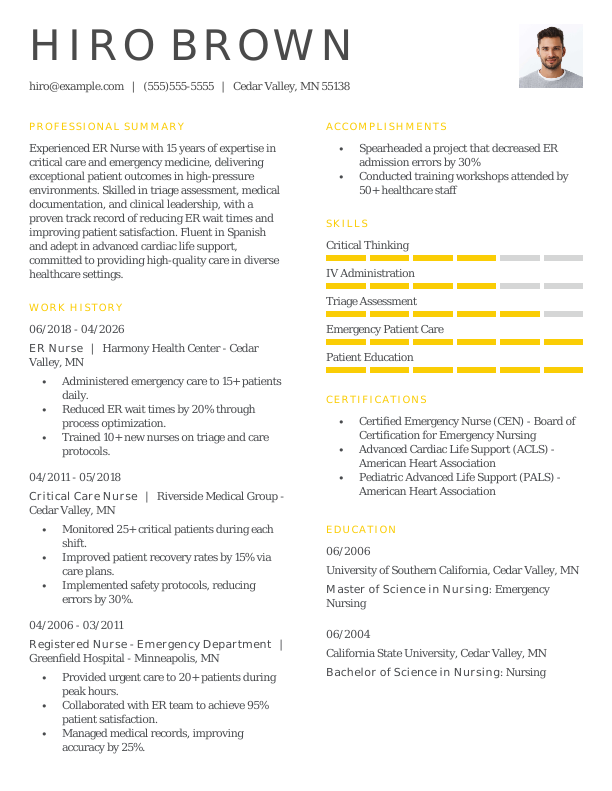
ER Nurse Experienced Resume 1
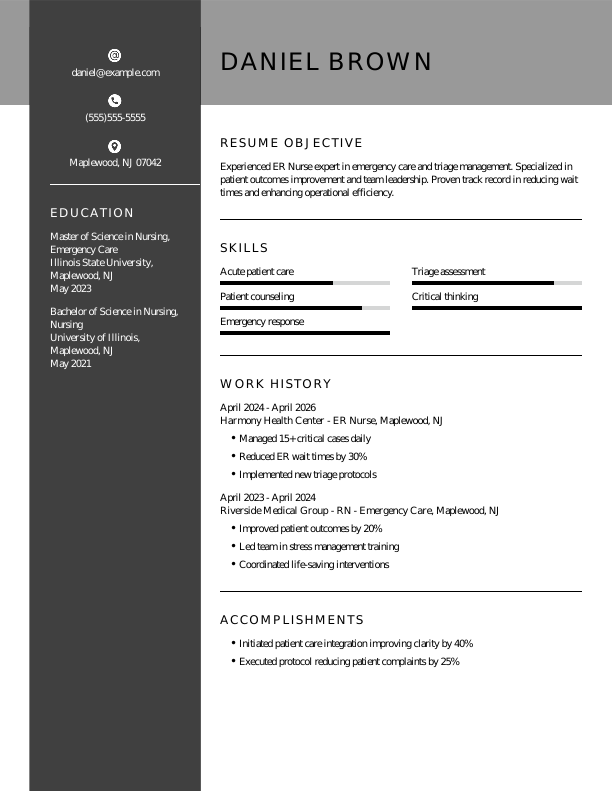
ER Nurse Entry-Level Resume 2
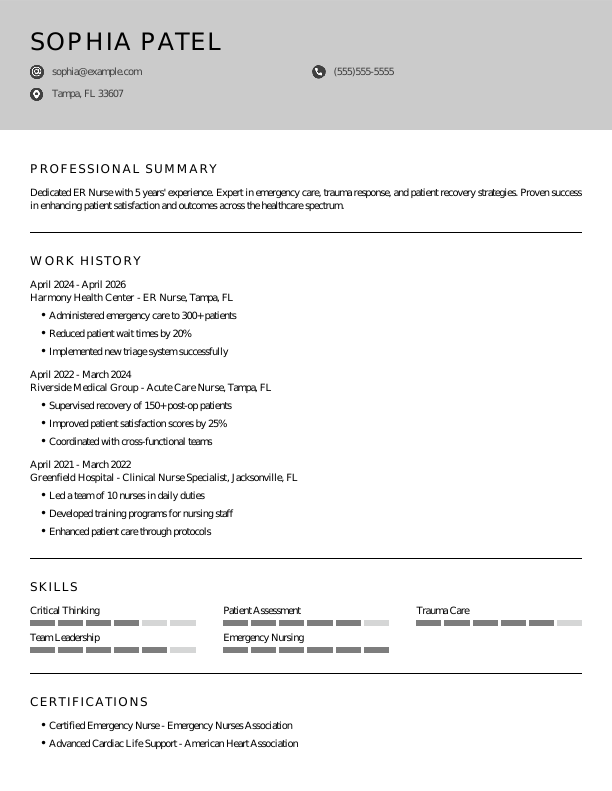

ER Nurse Mid-Level Resume 2
Browse Free Resume Templates
- Accounts Payable
- Adjunct Professor
- Artist
- Auto Mechanic
- Baker
- Business Development Manager
- Business
- Certified Nursing Assistant
- Classic & Traditional
- Cleaner
- College Student
- Concierge
- Construction Worker
- Corporate
- Creative & Unique
- Custodian
- Customer Service
- Dental Assistant
- Direct Support Professional
- Entry-Level
- Flight Attendant
- Hospitality & Food Service
- Front Desk Receptionist
- Healthcare
- High School
- Housekeeping
- Hvac Technician
- Hybrid
- Inventory Manager
- Logistics
- Maintenance
- Management
- Modern
- Mortgage Loan Processor
- Pet Sitter
- Phlebotomist
- Production
- Rbt
- Sales
- Security Services
- Restaurant Server
- Simple & Basic
- Social Work
- Teacher
- Technology
Resume Examples for ER Nurses
ER nurse resumes should reflect your triage expertise and the acuity levels you handle routinely. Browse our templates to find one that presents your emergency nursing credentials clearly.
Entry-Level ER Nurse Resume
This template is designed for RNs transitioning into emergency nursing. It helps you build an ER nurse resume by highlighting your med-surg foundation, any ED clinical rotations, and triage coursework.

Mid-Career ER Nurse Resume
A smart choice for mid-level nurses seeking advancement, this template highlights relevant experience and positions them for specialized roles in emergency care.

Experienced ER Nurse Resume
An ideal choice for ER nurses with over 10 years of experience, this template is designed for professionals seeking advanced clinical roles or leadership positions in emergency care.

ER Nurse Resume Template (Text)
The text resume below provides a starting point for an ER nurse application. Copy it into your document and update it with your triage skills and high-acuity patient experience.
Jane Jefferson
Silverlake, WA 98291
Professional Summary
Experienced ER Nurse skilled in critical care and patient management. Proven track record optimizing healthcare delivery and reducing wait times. Expertise in advanced cardiac care and trauma nursing.
Work Experience
May 2024 – April 2026
Harmony Health Center – Silverlake, WA
ER Nurse
- Managed care for 30+ patients per shift
- Reduced ER wait times by 20%
- Implemented training, improving efficiency
January 2023 – April 2024
Greenfield Hospital – Silverlake, WA
Registered Nurse
- Assisted in surgeries, boosting success rates
- Educated patients on post-op care increased satisfaction
- Collaborated with 10+ departments
January 2022 – December 2022
Meadowbrook Clinic – Spokane, WA
Care Coordination Specialist
- coordinated 500+ patient referrals
- enhanced patient care tracking by 15%
- trained staff in new care protocols
Education
June 2021
University of Washington Seattle, WA
Master’s in Nursing Advanced Practice Nursing
June 2019
Seattle Pacific University Seattle, WA
Bachelor of Science in Nursing Nursing
Certifications
- Trauma Nursing Core Course (TNCC) – Emergency Nurses Association
- Advanced Cardiac Life Support (ACLS) – American Heart Association
Skills
- Emergency patient care
- Critical thinking
- Communication skills
- Time management
- Patient education
- Triage assessment
- Team collaboration
- EMR software proficiency
How to Write an ER Nurse Resume
As an ER nurse, understanding how to write a resume involves showcasing your clinical skills and relevant experience in a clear format that stands out. Use the guidance below to highlight your strengths and tailor your resume for the specific positions you’re aiming for.
1. Contact Info
Your contact information needs to be prominently displayed at the top of your resume, ensuring clarity and professionalism.
Include the following essential information:
- Full name (including RN license if applicable)
- Phone number
- Professional email address
- City and state (ZIP code optional)
- LinkedIn profile or relevant portfolio link
 PRO TIP
Avoid including sensitive personal information such as your Social Security number, full street address, or any irrelevant details unless explicitly requested by the employer.
2. Resume Profile
A resume profile is a brief introductory section, typically two to four sentences long, that highlights your key qualifications and strengths. It serves as a compelling pitch to hiring managers, enticing them to delve deeper into your resume and consider you for the role.
Positioned at the top of your resume, the profile can take the form of either a summary or an objective, each with its distinct function. This placement helps set the tone for your application and grabs attention:
- A resume summary highlights essential experience, expertise, and achievements relevant to emergency care settings. This format is particularly beneficial for applicants with related work history or transferable skills who aim to highlight their impact as an effective ER nurse.
- A resume objective highlights your future aspirations and the specific career goals you aim to accomplish. It’s particularly beneficial for new nursing graduates, professionals transitioning into healthcare, or those with limited clinical experience who are looking to showcase their ambition and dedication in the field.
Let’s explore examples of a resume summary and a resume objective to clarify their distinctions:
ER nurse resume summary example:
Dedicated ER nurse with over 6 years of experience providing exceptional care in high-pressure environments. Proficient in trauma assessment, critical thinking, and patient advocacy. Acknowledged for improving emergency response protocols and consistently achieving positive patient outcomes through effective teamwork and communication.
ER nurse resume objective example:
Recent ADN graduate and licensed RN excited to launch a nursing career in a dynamic hospital environment. Committed to delivering empathetic patient care while leveraging strong teamwork abilities and adaptability to improve the quality of life for patients in acute care settings.
3. Work Experience
The work experience on your resume serves as an important foundation for your job application. Employers assess not just the titles held but also the tangible contributions you’ve made in previous roles.
This part of your CV illustrates how your clinical expertise and hands-on skills make you a strong fit for the ER nurse position.
The work experience section should contain:
- Job title
- Employer name and location
- Dates of employment (month/year)
- 3–5 bullet points describing your relevant responsibilities and achievements
Tailor your work experience bullet points to the nursing field by using specific language relevant to the role. Start each statement with strong action verbs that reflect your contributions, such as “Assisted,” “Administered,” or “Collaborated.”
Incorporate numbers and metrics to showcase your accomplishments. Highlighting details like patient satisfaction scores or reduced wait times can illustrate your impact and set you apart from other job seekers.
In general, consider following the format of:
[action verb] + [responsibility] = [result/achievement]
For example:
Administer medications and monitor vital signs for 30+ patients in a busy ICU, contributing to a 95% recovery rate for critically ill individuals.
Note that you can also flip the result/achievement with the responsibility:
Reduced patient pain levels by 20% through implementing an evidence-based pain management protocol.
With these techniques in mind, your resume bullets may look something like:
- Administered critical care to 15+ patients daily in a fast-paced ER, achieving a 20% reduction in patient wait times.
- Collaborated with interdisciplinary teams to develop and implement care plans, improving treatment efficiency for trauma cases.
- Trained and mentored 5 new graduate nurses, improving team competency and reducing onboarding time by 30%.
- Used Cerner EMR system to efficiently document patient assessments and streamline communication among care providers.
- Conducted triage assessments for incoming patients, prioritizing care based on severity and ensuring timely interventions.
4. Skills
The skills section provides a concise overview of your nursing abilities, highlighting essential competencies for an ER nurse. This ATS-friendly resume format allows hiring managers to quickly assess qualifications.
Skills can be categorized into three areas:
- Soft skills are personal traits that influence how well emergency room nurses collaborate and interact with their team and patients.
- Hard skills are defined as specific, quantifiable abilities that one obtains through education, training, or hands-on experience.
- Technical skills encompass the specific capabilities required to use equipment and software essential for a job.
5 Soft Skills for Your Resume or CV
- Effective communication
- Critical thinking under pressure
- Empathy in patient care
- Rapid decision-making
- Team collaboration
5 Hard Skills for Your Resume or CV
- Patient assessment and triage
- EHR documentation (Epic, Cerner)
- Medication administration
- Wound care and infection control
- IV therapy
In general, aim to showcase a balanced mix of relevant skills that match the job requirements to highlight your qualifications.
PRO TIP
If you’re a newer nurse, place your skills section higher on the resume right after your summary to highlight your qualifications. If you’re an experienced nurse, consider positioning this section lower and weaving your skills into your work history to showcase practical application.
5. Education
Understanding how to list education on your resume is essential for showcasing your qualifications. Begin with your most recent or relevant nursing degree, clearly stating the degree type and institution name.
If you’re a recent graduate, include details such as graduation year, GPA (if it’s 3.5 or above), honors received, or relevant coursework to further improve your profile.
ER nurse resume education section example:
Associate Degree in Nursing (ADN)
Miami Dade College, Miami, FL
Graduated: 2024 | Nursing Student of the Year
PRO TIP
When updating your resume, list your degrees in reverse-chronological order, starting with the highest qualification first, such as Bachelor of Science in Nursing (BSN), followed by Associate Degree in Nursing (ADN).
6. Certifications
Certifications highlight your qualifications and ensure you possess the current knowledge that employers seek. While not always included in a traditional resume, this section is important for many professionals in nursing. Specific credentials are often mandated for specialized roles, such as critical care or pediatrics, making them vital to your application.
List certifications on your resume, as well as licenses, that improve your candidacy. Keeping these credentials current and clearly formatted will make your resume stand out.
ER nurse certification examples:
- Registered Nurse (RN) License, New Jersey #123456 | New Jersey | Expires: 12/2028
- Basic Life Support (BLS) | American Heart Association | Expires: 08/2027
- Advanced Cardiovascular Life Support (ACLS) | American Heart Association | Expires: 03/2028
- Trauma Nursing Core Course (TNCC) | Emergency Nurses Association | Expires: 11/2027
Start Building Your Job-Winning Resume
Use Your Existing Resume
Import your current resume to transfer your information to one of our professional templates.
Create a New Resume
Start fresh with a template that catches your eye and follow the prompts to add your details.
Tailor Your Work History to Beat the ATS
Your work experience should go beyond just listing job titles. It’s a valuable opportunity to highlight the specific ways you’ve positively impacted patients and healthcare teams, showcasing your contributions in measurable terms. This approach not only improves your resume but also makes it more compatible with applicant tracking systems (ATS) that scan for relevant content.
To create an effective work history, tailor your descriptions to align with the role you’re applying for by integrating important keywords and phrases from the job description. Begin by carefully analyzing the requirements listed, identifying key skills or qualifications that are frequently mentioned. Reflect these elements in your experience descriptions to improve your application’s relevance and appeal.
Key Takeaways
- Customize your resume for each job application. Use the specific terms from the job posting to resonate with both ATS and hiring managers.
- Highlight quantifiable results in your experience. Include metrics that reflect your contributions (e.g., patient turnaround times, emergency response rates, team leadership outcomes) to improve your appeal.
- Select a suitable format based on your background. New graduates may find a functional layout helpful, while seasoned ER nurses often prefer a reverse-chronological format.
More Resume & CV Examples
- Aesthetic Nurse
- Dialysis Nurse
- Director Of Nursing
- Entry-level Nurse
- Family Nurse Practitioner
- Home Health Nurse
- Hospice Nurse
- Icu Nurse
- Labor And Delivery Nurse
- Licensed Practical Nurse
- LVN
- Mds Coordinator
- Med-surg Nurse
- New Grad Nurse
- Nurse Case Manager
- Nurse Educator
- Nurse Manager
- Nurse Practitioner
- Nursing Home
- Nursing Instructor
- Nursing
- Nursing Student
- Oncology Nurse
- Operating Room Nurse
- Pacu Nurse
- Pediatric Nurse
- Psychiatric Nurse Practitioner
- Psychiatric Nurse
- Registered Nurse
- Travel Nursing
- Travel Rn
- Utilization Review Nurse
Cover Letters for Your Resume
Browse our library of cover letter examples to complete your application. A resume will have a better chance of getting noticed.
Frequently Asked Questions
Last Update:
What resume format should I use for my ER nurse resume?
When applying for an ER nurse position, there are three primary resume formats to consider. Your choice should reflect your level of experience and highlight the skills or qualifications you want to emphasize:
- Chronological: The chronological resume is the most widely used format, emphasizing your work history while detailing your responsibilities and achievements. This approach benefits job seekers with a consistent job background that reinforces their qualifications and adds credibility to their application.
- Functional: The functional resume, often called a skills-based resume, prioritizes a summary of qualifications and an expanded skills section over work history. This format is particularly beneficial for applicants who may lack direct experience in the field or have gaps in their employment history.
- Combination: The combination resume format mixes elements of chronological and functional styles, highlighting both skills and work history. This method helps professionals emphasize their abilities while providing a clear view of career progression, making it a great choice for individuals moving into new fields or advancing within their current roles.
Should I include a cover letter with my resume?
Yes, you should include a cover letter with your ER nurse job application. A tailored cover letter improves your resume by allowing you to express your enthusiasm for the role and highlight key experiences that are essential in an emergency room setting, demonstrating to employers that you’ve invested time in personalizing your submission over a generic application.
If you’re hesitant about writing a cover letter, there are many resources to assist you. You can find guides on how to write a cover letter and access examples specifically geared toward nursing roles. Reviewing various formats will enable you to choose one that best showcases your qualifications and aligns with the job you’re pursuing.
To make the process easier, consider using a cover letter generator, which offers templates and suggestions designed for nursing applications to help streamline your writing efforts.
How long should an ER nurse resume be?
For emergency room nurses with less than 10 years of experience, a one-page resume is typically adequate. Highlight critical skills, relevant certifications (such as BLS and ACLS), and any clinical rotations that showcase your readiness for fast-paced environments. A well-organized format is essential for clarity.
Conversely, experienced ER nurses in specialized roles may require two pages to effectively communicate their qualifications. Ensure that all information presented adds value, emphasizing advanced training and leadership experiences while avoiding filler phrases that do not improve your narrative.
What keywords should I include to pass applicant tracking systems (ATS)?
To improve your resume for ATS, incorporate keywords and phrases from the job listing. For an ER nurse position, consider terms like “emergency care,” “triage,” and “critical thinking.” These specific phrases will catch the attention of hiring managers and demonstrate that you meet their requirements.
Additionally, include any relevant certifications such as BLS, ACLS, or TNCC, along with technical skills related to software commonly used in healthcare settings like Epic or Cerner. This not only shows your qualifications but also aligns your experience with what employers are seeking.
Is it worthwhile to include volunteer work on my resume as an ER nurse?
Yes, including volunteer work is valuable, especially if you have limited formal experience. It highlights your commitment to healthcare and showcases relevant skills gained in real-life situations, making your application more appealing to potential employers.

Toni Frana is a Certified Professional Resume Writer (CPRW), member of the Professional Association of Resume Writers & Career Coaches, and career expert who empowers job seekers to take control of their career paths using Monster’s comprehensive job search and resume tools.
See More From Toni FranaExplore Related Career Advice


How to Put Transferable Skills on Your Resume: 120 Skills, Examples, & Tips

Updated:
Aug 27, 2026
|
16 min read


How to Write a Functional Resume (Formatting Tips, Template, & Examples)
Updated:
Aug 7, 2026
|
17 min read


Functional vs Chronological Resume: Which Format Is Right for You?
Updated:
Aug 3, 2026
|
16 min read
100+ Resume Adjectives to Help You Write a Stronger Resume in 2026 (With Examples)
Updated:
Jul 30, 2026
|
12 min read