
Free Medical Coder Resume Templates & Examples
A medical coder resume should demonstrate your knowledge of ICD, CPT, and HCPCS coding systems alongside your accuracy and compliance track record. Browse the examples below to find one that puts your certifications and coding proficiency front and center.
Real-World Resumes That Get Results
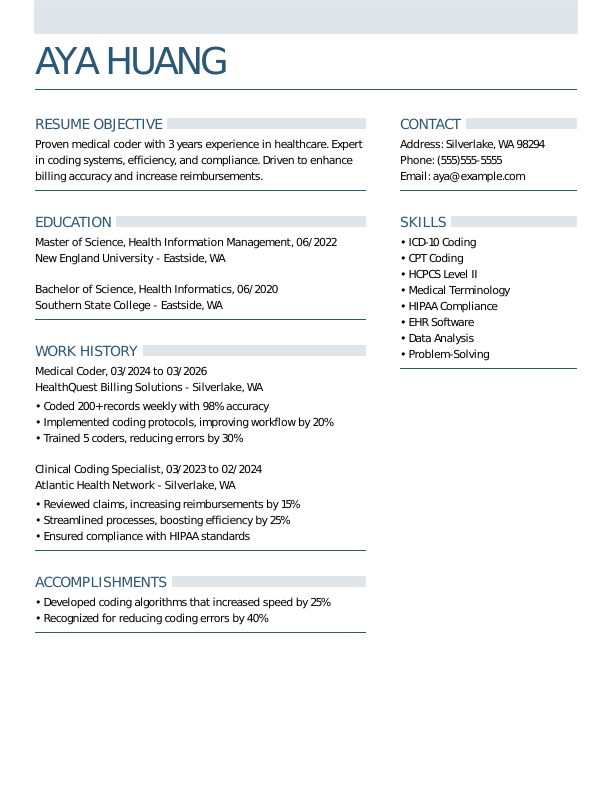
 Free
FreeMedical Coder Entry-Level Resume
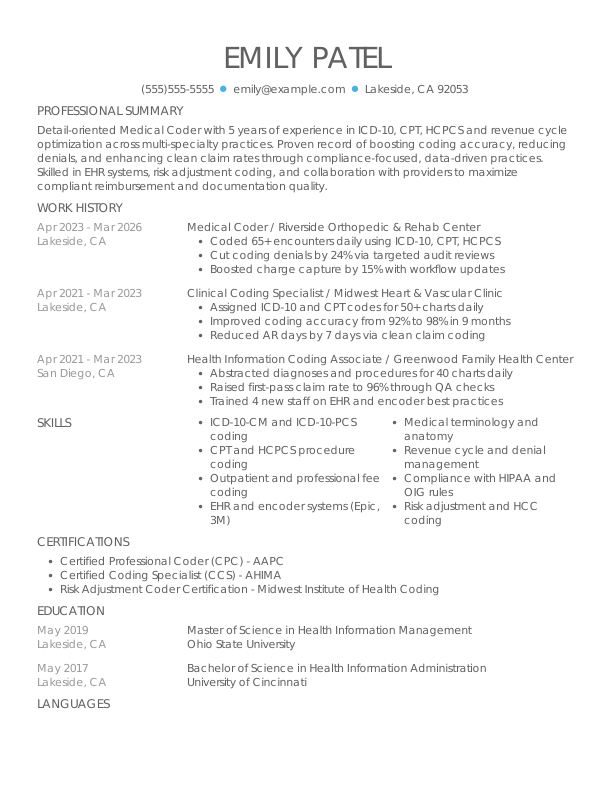
Medical Coder Mid-Level Resume
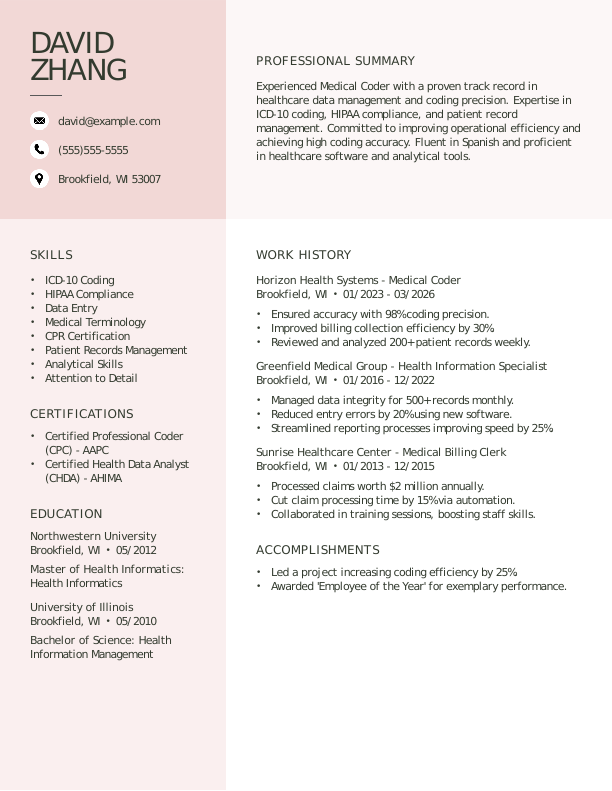
Medical Coder Experienced Resume
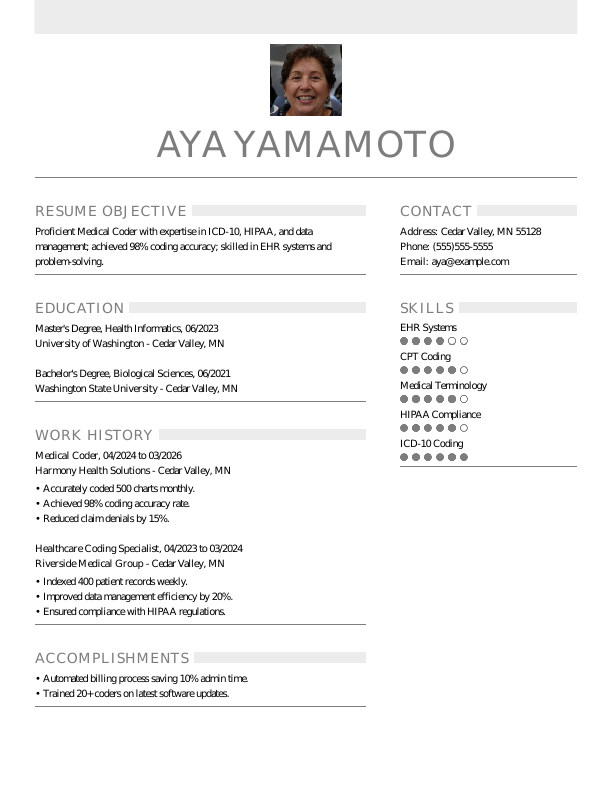
Medical Coder Entry-Level Resume 1
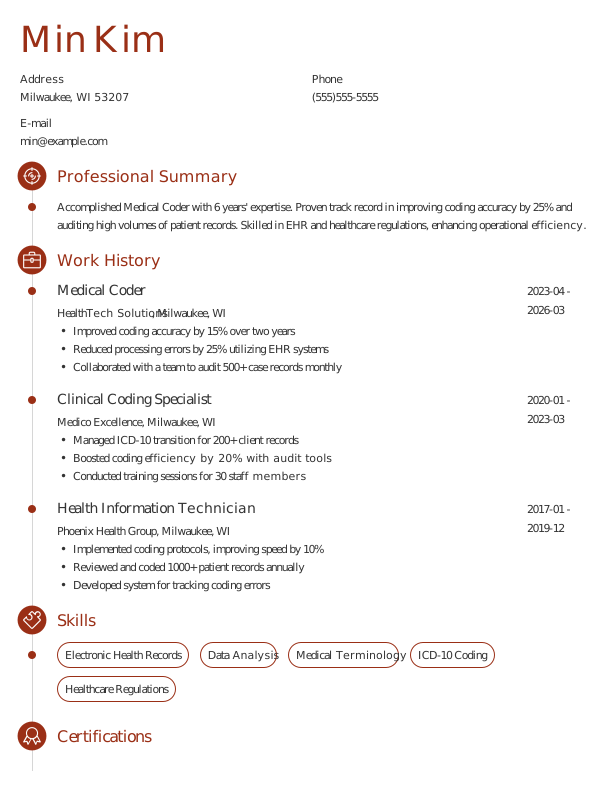

Medical Coder Mid-Level Resume 1
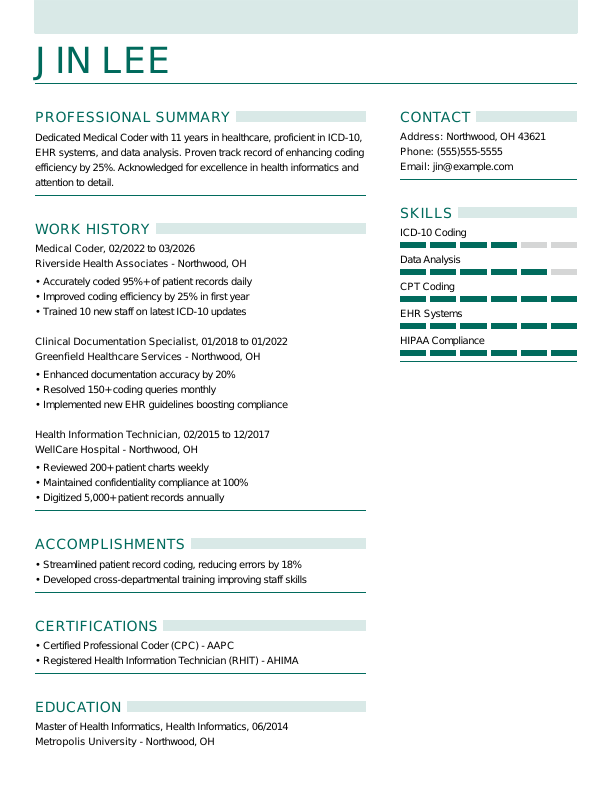

Medical Coder Experienced Resume 1
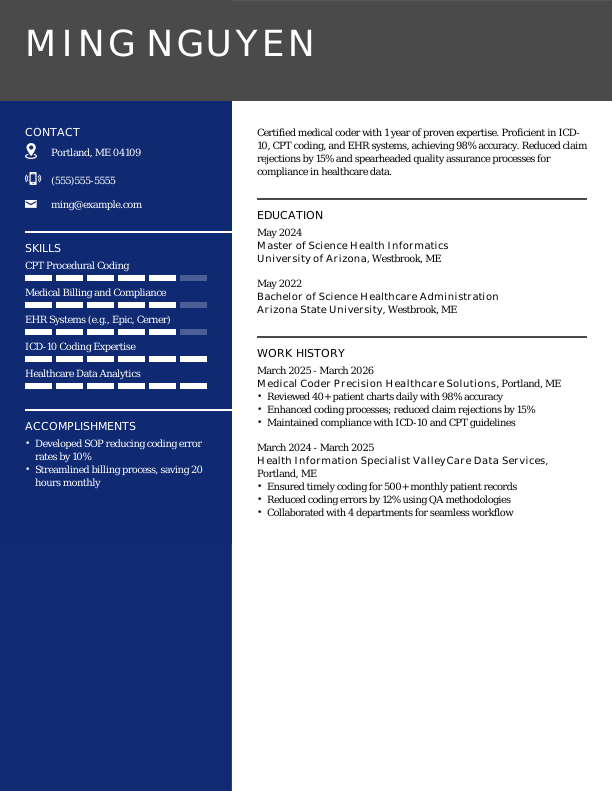
Medical Coder Entry-Level Resume 2
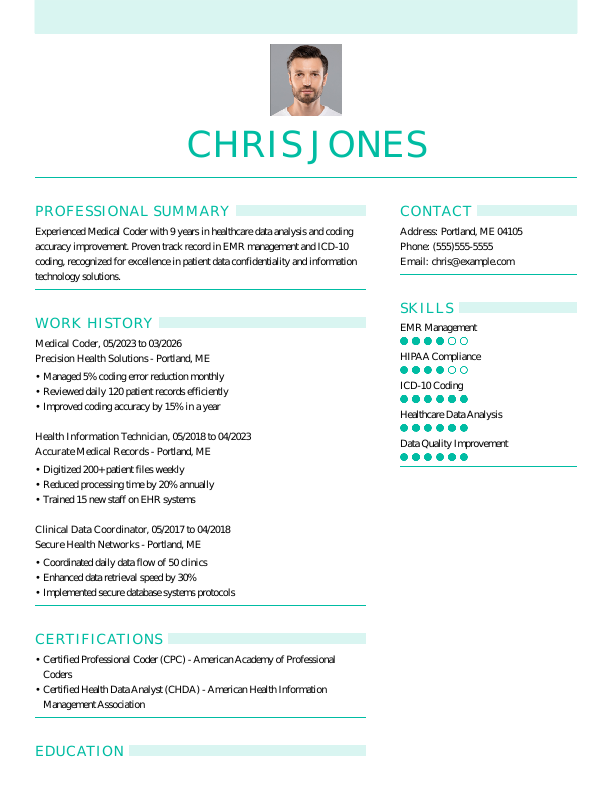

Medical Coder Mid-Level Resume 2
Browse Free Resume Templates
- Accounts Payable
- Adjunct Professor
- Artist
- Auto Mechanic
- Baker
- Business Development Manager
- Business
- Certified Nursing Assistant
- Classic & Traditional
- Cleaner
- College Student
- Concierge
- Construction Worker
- Corporate
- Creative & Unique
- Custodian
- Customer Service
- Dental Assistant
- Direct Support Professional
- Entry-Level
- Flight Attendant
- Hospitality & Food Service
- Front Desk Receptionist
- Healthcare
- High School
- Housekeeping
- Hvac Technician
- Hybrid
- Inventory Manager
- Logistics
- Maintenance
- Management
- Modern
- Mortgage Loan Processor
- Pet Sitter
- Phlebotomist
- Production
- Rbt
- Sales
- Security Services
- Restaurant Server
- Simple & Basic
- Social Work
- Teacher
- Technology
Resume Examples for Medical Coders
Medical coder resumes should reflect the coding systems you specialize in and your certification level. Explore our templates for each experience level, or try our Resume Builder to create a customized application from scratch.
Entry-Level Medical Coder Resume
This template is a strong starting point for those who have recently completed their coding certification. It helps you build a medical coder resume by leading with your ICD and CPT training, practice exams, and any externship or practicum hours.

Mid-Career Medical Coder Resume
A smart choice for mid-level medical coders seeking to elevate their careers, this template effectively showcases relevant experience and positions them for advanced roles in healthcare coding and management.

Experienced Medical Coder Resume
An ideal choice for medical professionals with over 10 years of experience, this template supports applicants aiming for senior-level coding and healthcare data management positions.

Medical Coder Resume Template (Text)
Below is a medical coder resume in plain text that you can paste into your document and customize. The format leads with your coding certifications and accuracy metrics.
Emma Liu
Tampa, FL 33602
Professional Summary
Detail-oriented Medical Coder with 4 years of experience in ICD-10-CM, CPT, HCPCS, and E/M coding across hospital and specialty clinic settings. Proven track record boosting clean claim rates, reducing denials, and supporting revenue cycle optimization with strong clinical documentation improvement. Highly skilled in Epic, Cerner, and compliance-driven coding practices, delivering accurate, audit-ready claims that maximize reimbursement.
Work Experience
January 2024 – March 2026
Lone Star Surgical & Imaging Center – Tampa, FL
Medical Coder
- Coded 65+ encounters daily with 98% audit accuracy
- Reduced coding denials by 22% via NCCI edits
- Improved claim turnaround time by 18% in 6 months
January 2022 – December 2023
Trinity Heart & Vascular Clinic – Tampa, FL
Clinical Coding Specialist
- Abstracted ICD-10-CM codes for 55 charts per day
- Raised clean claim rate from 87% to 96% in a year
- Cut AR days by 12% via CPT and modifier accuracy
April 2020 – December 2021
Northview Community Hospital – Tampa, FL
Health Information Coding Associate
- Indexed inpatient cases using DRG grouping rules
- Supported CDI team; boosted query response 19%
- Assisted in coding audits; cut errors by 15%
Education
May 2019
University of North Texas Health Science Center Windermere, FL
Master of Science Health Informatics & Information Management
May 2017
Texas Woman’s University Windermere, FL
Bachelor of Science Health Information Management
Certifications
- Certified Professional Coder (CPC) – AAPC
- Certified Coding Specialist (CCS) – AHIMA
- Risk Adjustment Coding Specialist (CRC) – AAPC
Skills
- ICD-10-CM and CPT coding
- HCPCS Level II and modifiers
- E/M leveling and documentation review
- Inpatient and outpatient medical coding
- Epic and Cerner EHR navigation
- Revenue cycle and denials management
- Medical terminology and anatomy
- HIPAA compliance and data security
How to Write a Medical Coder Resume
As a medical coder, knowing how to write a resume involves showcasing your coding skills, relevant experience, and using a layout that stands out. Use the guidance below to emphasize your strengths and tailor your resume for the specific positions you’re aiming for.
1. Contact Info
Your contact information should be prominently displayed at the top of your resume, ensuring it’s clear and professional.
Include the following essential information:
- Full name
- Phone number
- Professional email address
- City and state (ZIP code is optional)
- LinkedIn profile or relevant portfolio (if applicable)
 PRO TIP
Avoid including personal information like social security numbers, birth dates, or photographs on your resume unless an employer specifically requests it.
2. Resume Profile
A resume profile is a brief introductory section, typically 2–4 sentences long, that encapsulates your identity and key qualifications. It serves as an engaging pitch to hiring managers, designed to capture their interest and motivate them to delve deeper into your application.
This profile is prominently placed at the top of your resume and can take the form of either a summary or an objective, each serving distinct functions. Understanding these differences will help you choose the best approach for your job search:
- A resume summary highlights key qualifications, coding expertise, and notable achievements tied to the healthcare industry. This approach works well for applicants with prior work experience or transferable skills aiming to emphasize their impact as a medical coder.
- A resume objective highlights your career aspirations and outlines what you aim to achieve in your next role. It’s particularly useful for medical coding bootcamp graduates, individuals transitioning into healthcare, or those with limited experience seeking to enter the field.
Let’s examine both a resume summary and a resume objective to understand their distinct purposes:
Medical coder resume summary example:
Detail-oriented medical coder with over 6 years of experience in hospital and outpatient clinic settings. Proficient in ICD-10 coding, CPT coding, and compliance auditing. Known for ensuring accurate documentation and improving reimbursement processes through careful data analysis.
Medical coder resume objective example:
Recent graduate with a certification in medical coding, eager to launch a career in a dynamic healthcare setting. Committed to accuracy and confidentiality, ready to contribute strong analytical skills and attention to detail to a medical practice or hospital environment.
3. Work Experience
The work experience on your resume is a pivotal selling point. Employers look beyond job titles and tasks to assess how you’ve contributed in your previous roles.
Highlighting this section of the resume showcases how your background in medical coding qualifies you for this position, illustrating your skill in translating patient information into standardized codes accurately.
The work experience section should contain:
- Job title
- Employer name and location
- Dates of employment (month/year)
- 3–5 bullet points describing your coding responsibilities and accuracy achievements
Customize your work experience bullet points to align with the job you’re targeting, using terms specific to medical coding. Start each point with a strong action verb, like “Analyzed,” “Reviewed,” or “Validated” to capture attention.
Incorporate quantifiable data wherever possible. Highlighting specific metrics and accomplishments showcases your contributions and sets you apart from other applicants in the competitive field of medical coding.
In general, consider following the format of:
[action verb] + [responsibility] = [result/achievement]
For example:
Review and code over 300 patient records weekly with a 99% accuracy rate, ensuring compliance with HIPAA regulations and improving billing efficiency.
Note that you can also flip the result/achievement with the responsibility:
Achieved a 15% increase in revenue cycle efficiency by implementing a streamlined coding process, reducing claims denials.
With these techniques in mind, your resume bullets may look something like:
- Reviewed and coded over 1,000 medical records monthly with 98% accuracy, ensuring timely reimbursement.
- Collaborated with healthcare providers to clarify diagnoses and procedures, reducing claim denials by 12%.
- Trained and mentored 5 junior coders on ICD-10 and CPT coding standards, improving team accuracy.
- Used advanced coding software, including 3M and Epic, to streamline documentation processes.
- Analyzed billing data monthly to identify discrepancies, contributing to a 15% increase in revenue capture.
4. Skills
The skills section provides a concise overview of your medical coding abilities, showcasing your expertise in this specialized field and aligning with an ATS-friendly resume. It ensures ATS compatibility, allowing hiring managers to quickly evaluate your qualifications. Skills can be categorized into three key areas:
- Soft skills are personal qualities that influence how well individuals collaborate in the healthcare industry.
- Hard skills are specific, quantifiable abilities gained through education, training, or experience.
- Technical skills refer to the specific competencies required to perform job-related tasks using tools and technologies.
5 Soft Skills for Your Resume or CV
- Attention to Detail
- Effective Communication
- Time Management
- Team Collaboration
- Confidentiality Awareness
5 Hard Skills for Your Resume or CV
- ICD-10 coding
- Medical billing software (Kareo, Medisoft)
- HIPAA compliance
- Data entry and analysis
- Anatomy and physiology knowledge
In general, aim to showcase a well-rounded set of skills that directly correspond with the job’s requirements.
PRO TIP
If you’re a newer medical coder, consider placing your skills section higher on the resume, right after your summary. For those with more experience, it’s better to position this section lower, weaving relevant skills into your work history instead.
5. Education
Understanding how to list education on your resume is important for showcasing your qualifications. Begin with your most recent or relevant degree, and make sure to include the degree type along with the institution’s name. For those who have recently graduated, feel free to add details like your graduation year, GPA (if it’s 3.5 or higher), any honors received, or relevant coursework that highlights your skills.
Medical coder resume education section example:
Associate Degree in Applied Science (AAS) in Medical Coding
Southern New Hampshire University, Manchester, NH
Graduated: 2023 | Graduated with Distinction
PRO TIP
When listing your degrees on a resume, ensure you present them in reverse-chronological order, beginning with the highest degree first, such as Bachelor of Science in Health Information Management followed by Associate Degree in Medical Coding.
6. Certifications
Certifications highlight your expertise and ensure you’re aligned with industry standards. While they might not be a staple in every resume, this section is important for many professionals, particularly in specialized fields like medical coding or billing. Employers often look for specific credentials, especially for roles that require precision and compliance with healthcare regulations.
Make sure to feature relevant certifications that bolster your application. Keep them up to date and present them in a clear format to improve your chances of standing out.
Medical coder certification examples:
- Certified Professional Coder (CPC) | American Academy of Professional Coders | Expires: 01/2028
- Certified Coding Specialist (CCS) | American Health Information Management Association | Expires: 11/2027
- Healthcare Common Procedure Coding System (HCPCS) | Centers for Medicare & Medicaid Services | Expires: 03/2028
- Certified Inpatient Coder (CIC) | American Academy of Professional Coders | Expires: 09/2027
Start Building Your Job-Winning Resume
Use Your Existing Resume
Import your current resume to transfer your information to one of our professional templates.
Create a New Resume
Start fresh with a template that catches your eye and follow the prompts to add your details.
Tailor Your Work History to Beat the ATS
Your work experience tells a story beyond mere job titles. It’s an opportunity to showcase the measurable impact you have made in healthcare settings, emphasizing your contributions to patient care and operational efficiency. This strategy not only highlights your achievements but also results in a resume that is more easily scanned by applicant tracking systems (ATS).
To create a compelling work history, tailor your descriptions to align with the specific role you seek. Begin by thoroughly analyzing the job description for keywords and phrases that recur, then incorporate those into your experience section. Highlighting relevant skills and qualifications will improve your appeal to potential employers and improve your chances of getting noticed.
Key Takeaways
- Tailor your resume to the job description. Incorporate specific terms from the posting to resonate with both ATS and hiring managers.
- Highlight quantifiable achievements. Include metrics that showcase your accuracy rates or coding productivity (e.g., error rates, claims processed) for greater impact.
- Select a format that suits your experience level. New coders might opt for a functional layout, while seasoned professionals often prefer reverse-chronological resumes.
More Resume & CV Examples
- Cardiac Sonographer
- Caregiver
- Caretaker
- Certified Medical Assistant
- Chiropractic Assistant
- Clinical Data Specialist
- Clinical Research Associate
- Dietitian
- Ekg Technician
- Health Information Technician
- Healthcare Administration
- Healthcare Support
- Healthcare Technology
- Home Health Care
- Lab Technician
- Lactation Consultant
- Medical Administrative Assistant
- Medical Assistant
- Medical Billing
- Medical Courier
- Medical Interpreter
- Medical Office Manager
- Medical Office
- Medical Receptionist
- Medical
- Medical School
- Medical Science Liaison
- Medical Scribe
- Medical Secretary
- Medical Technologist
- Medical Transcriptionist
- Mri Technologist
- Ophthalmic Technician
- Optician
- Patient Access Representative
- Patient Care Coordinator
- Patient Care Technician
- Patient Service Representative
- Patient Transporter
- Physical Therapist Assistant
- Private Caregiver
- Radiologic Technologist
- Sonographer
- Surgical Tech
- Unit Secretary
Cover Letters for Your Resume
Browse our library of cover letter examples to complete your application. A resume will have a better chance of getting noticed.
Frequently Asked Questions
Last Update:
What resume format should I use for my medical coder resume?
There are three primary resume formats to consider when applying for a medical coder position. Your selection should reflect your experience level and highlight the skills you wish to emphasize:
- Chronological: The chronological resume is the most widely used format, highlighting your work experience by outlining your responsibilities and achievements. This approach suits applicants with a steady job history that reinforces their qualifications and adds credibility to their application, making it an effective way to showcase relevant past roles.
- Functional: The functional resume, also known as a skills-based resume, highlights your qualifications and features an extensive skills section. This format allows you to minimize emphasis on work history, making it ideal for individuals lacking relevant experience or those with gaps in employment.
- Combination: The combination resume merges chronological and functional formats, showcasing both skills and work history. This structure benefits professionals by emphasizing their competencies while also illustrating career growth. It’s ideal for those transitioning fields or highlighting significant achievements alongside relevant abilities.
Should I include a cover letter with my resume?
Yes, you should include a cover letter with your medical coder job application. A well-crafted cover letter improves your resume by allowing you to explain your interest in the role and how your skills align with the company’s needs. It offers an opportunity to showcase your attention to detail and relevant experience, helping you stand out among applicants who may not personalize their applications.
If you’re hesitant about writing a cover letter, there are many resources available to assist you, including guides that show how to write a cover letter. Look for advice tailored specifically for medical coding positions, as well as examples that demonstrate strong approaches. Additionally, exploring various formats can help you find one that best highlights your qualifications and fits your personal style.
To make the writing process easier, consider using a cover letter generator, which can provide structure and tailored suggestions based on the specific requirements of medical coding roles.
How long should a medical coder resume be?
For medical coders with less than 10 years of experience, a one-page resume is ideal to highlight relevant skills, certifications, and coding specialties. Focus on concise descriptions that showcase your expertise in coding systems such as ICD-10 and CPT, along with any relevant training or certifications.
Conversely, experienced coders in senior roles may extend their resumes to two pages if they can maintain focus on critical information. Prioritize achievements and contributions that demonstrate depth of knowledge while ensuring clarity and organization throughout the document.
What keywords should I include to pass applicant tracking systems (ATS)?
To improve your resume for ATS, focus on integrating keywords and phrases directly from the job posting. For a medical coder position, include terms like “ICD-10,” “CPT coding,” or “medical billing” to ensure relevancy. Highlight any certifications you possess such as Certified Professional Coder (CPC) or Certified Coding Specialist (CCS), as these will demonstrate your qualifications.
Additionally, mention any technical tools you’re familiar with like Epic or 3M CodeFinder. This not only showcases your expertise but also helps your application stand out in the screening process. Tailoring your resume this way increases your chances of landing an interview significantly.
Is it worthwhile to include volunteer coding projects on my resume?
Yes, including volunteer coding projects can highlight your commitment and practical experience in medical coding. This is especially important for those new to the field, as it showcases relevant skills and dedication even if you lack extensive formal employment.

Elizabeth Muenzen is a Certified Professional Resume Writer (CPRW) and member of the Professional Association of Resume Writers & Career Coaches who empowers job seekers to take control of their career paths using Monster’s comprehensive job search and resume tools.
See More From Elizabeth MuenzenExplore Related Career Advice


How to Put Transferable Skills on Your Resume: 120 Skills, Examples, & Tips

Updated:
Aug 27, 2026
|

16 min read


How to Write a Functional Resume (Formatting Tips, Template, & Examples)
Updated:
Aug 7, 2026
|
17 min read


Functional vs Chronological Resume: Which Format Is Right for You?
Updated:
Aug 3, 2026
|
16 min read

100+ Resume Adjectives to Help You Write a Stronger Resume in 2026 (With Examples)
Updated:
Jul 30, 2026
|
12 min read