

Free Acting for Beginners Resume Templates & Examples
Improve your chances of landing auditions using expertly crafted free resume templates. These templates come with valuable writing tips to help you showcase your skills and impress potential directors and casting agents.
Real-World Resumes That Get Results
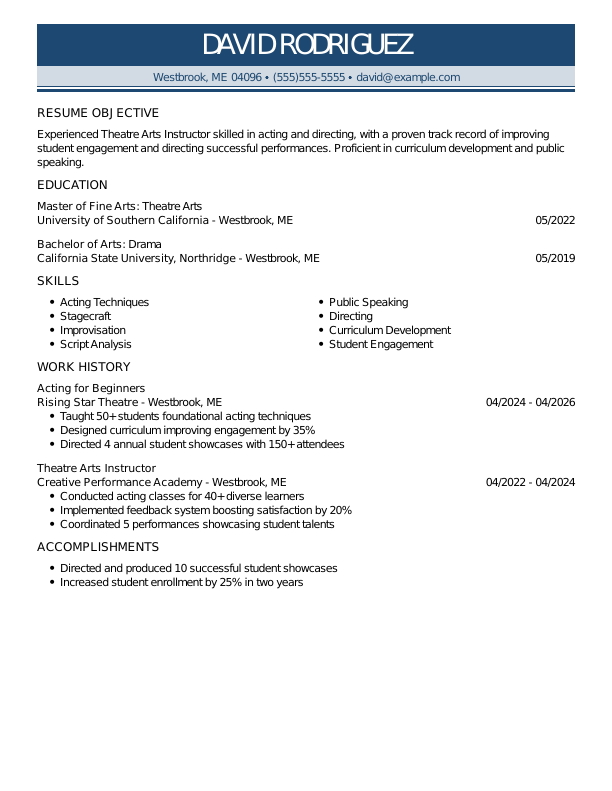
 Free
FreeActing For Beginners Entry-Level Resume
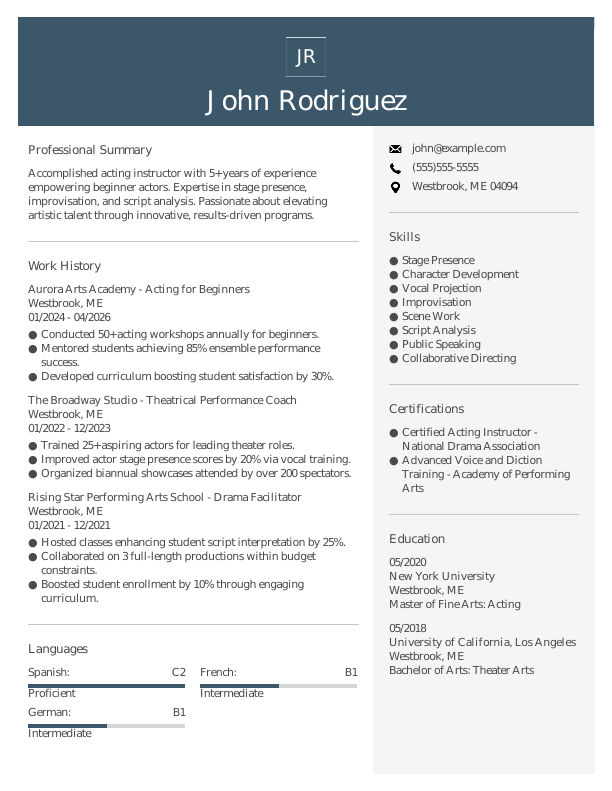
Acting For Beginners Mid-Level Resume
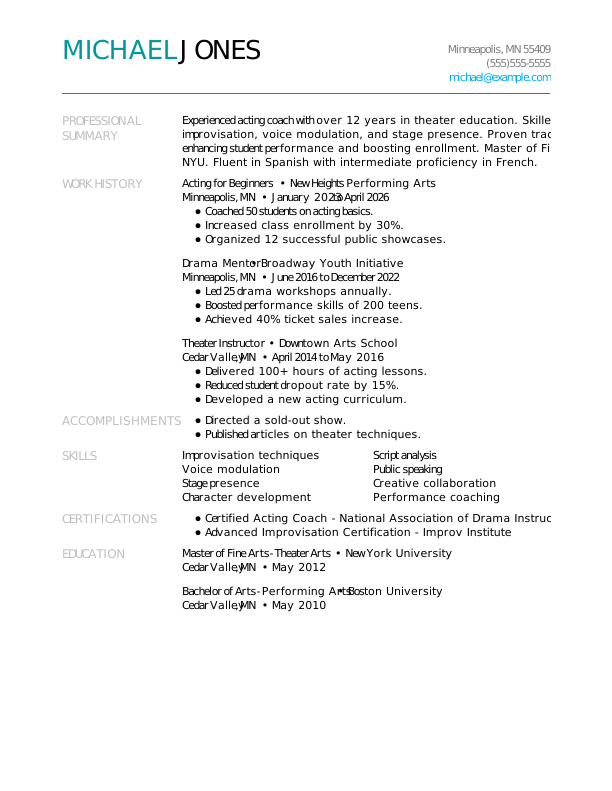
Acting For Beginners Experienced Resume
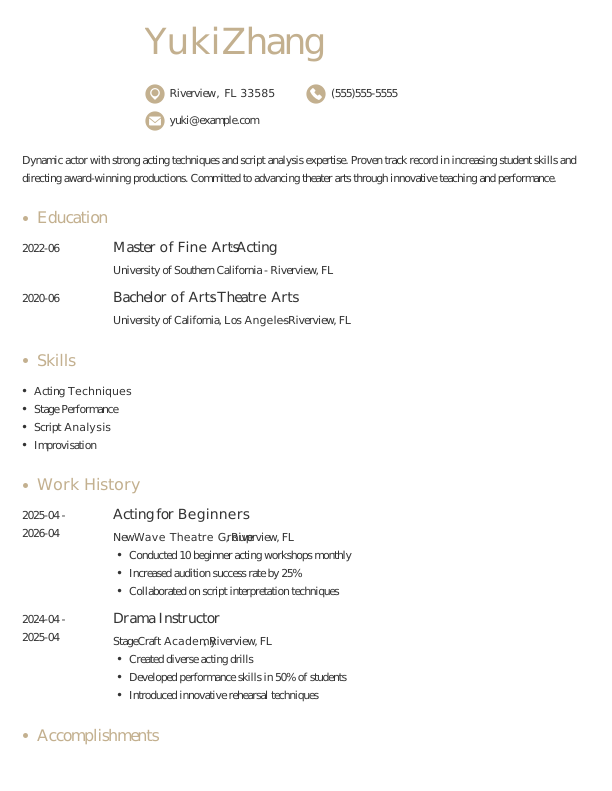
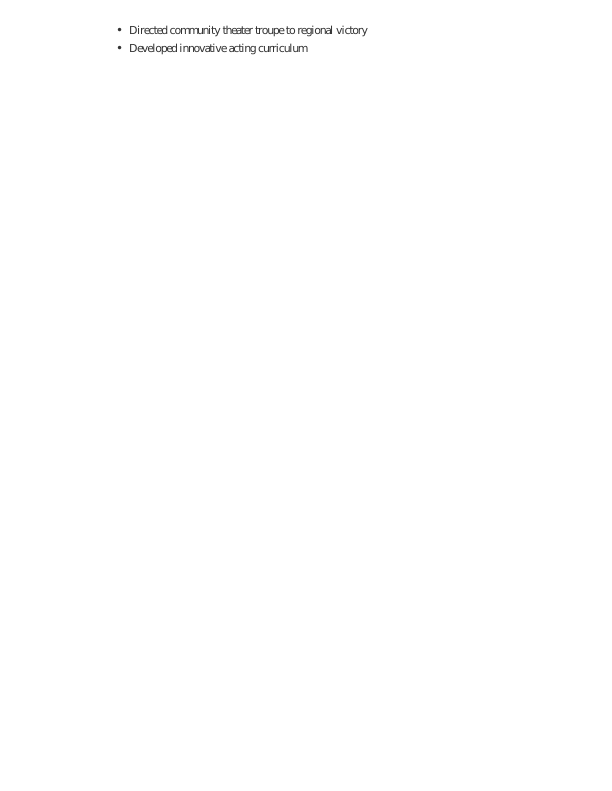
Acting For Beginners Entry-Level Resume 1
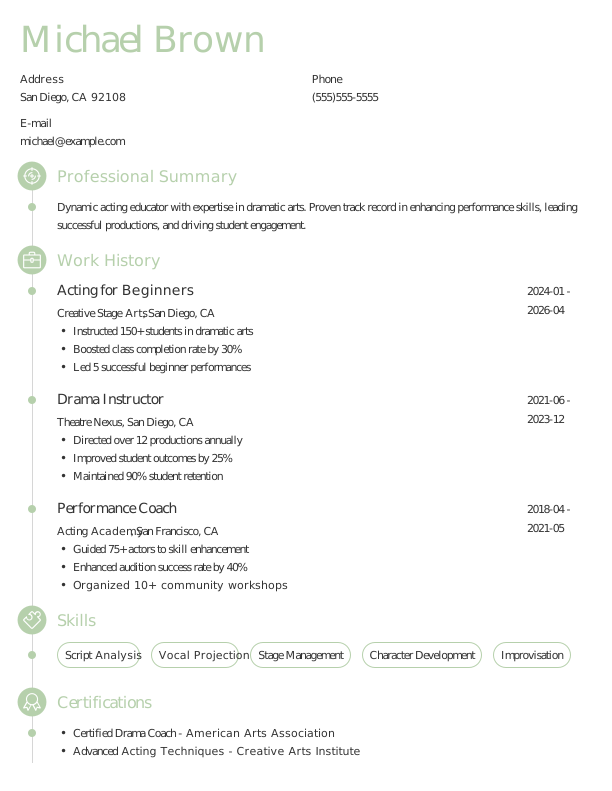

Acting For Beginners Mid-Level Resume 1
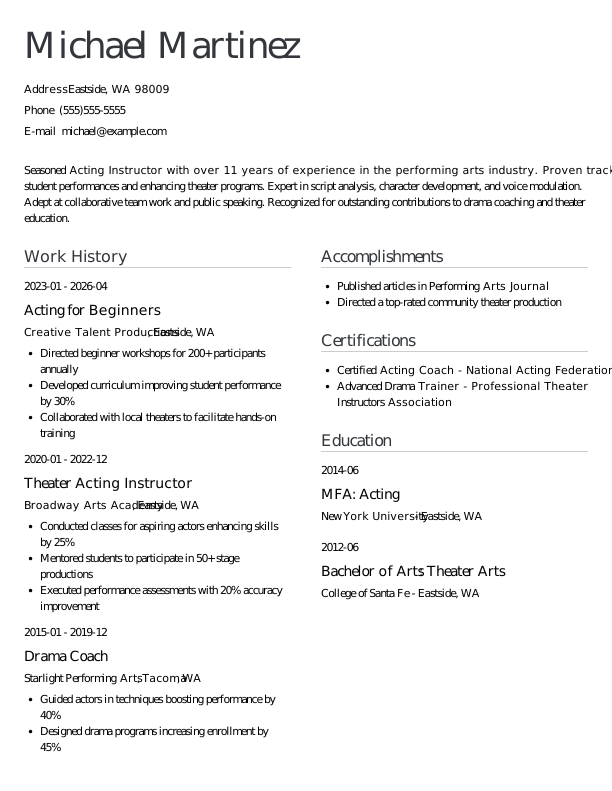

Acting For Beginners Experienced Resume 1
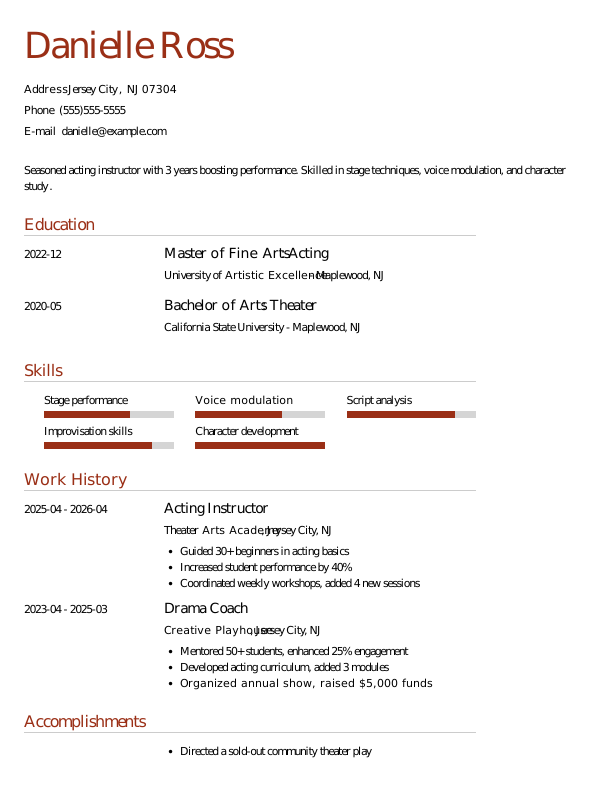

Acting For Beginners Entry-Level Resume 2
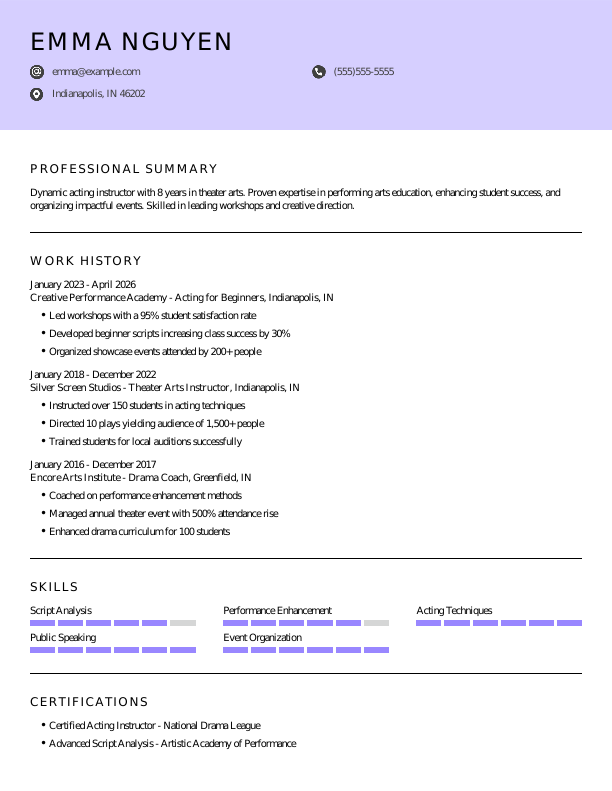

Acting For Beginners Mid-Level Resume 2
Browse Free Resume Templates
- Accounts Payable
- Adjunct Professor
- Artist
- Auto Mechanic
- Baker
- Business Development Manager
- Business
- Certified Nursing Assistant
- Classic & Traditional
- Cleaner
- College Student
- Concierge
- Construction Worker
- Corporate
- Creative & Unique
- Custodian
- Customer Service
- Dental Assistant
- Direct Support Professional
- Entry-Level
- Flight Attendant
- Hospitality & Food Service
- Front Desk Receptionist
- Healthcare
- High School
- Housekeeping
- Hvac Technician
- Hybrid
- Inventory Manager
- Logistics
- Maintenance
- Management
- Modern
- Mortgage Loan Processor
- Pet Sitter
- Phlebotomist
- Production
- Rbt
- Restaurant Server
- Sales
- Security Services
- Simple & Basic
- Social Work
- Teacher
- Technology
Resume Examples for Beginner Actors
Acting resumes and CVs can vary greatly depending on your specialty and experience level. Discover tailored templates for different circumstances and use our Resume Builder to craft your unique acting resume.
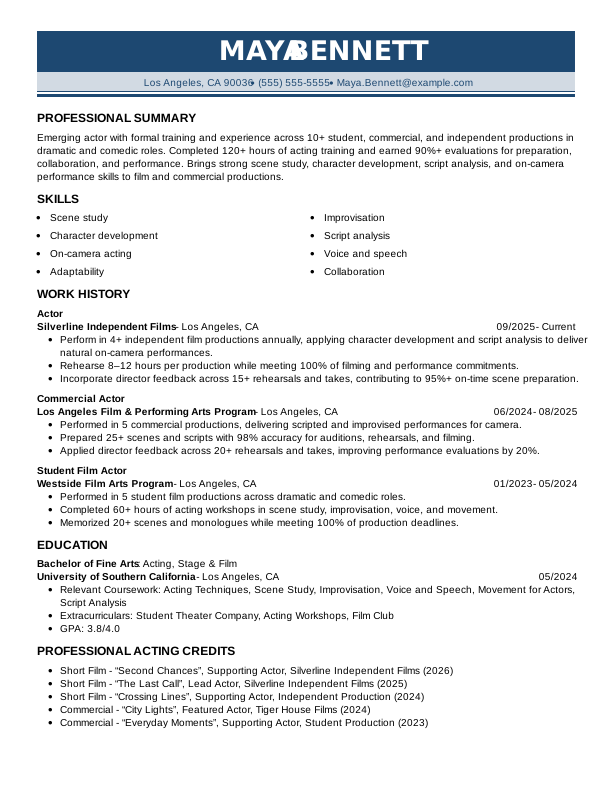
Entry-Level Acting for Beginners Resume
This entry-level acting resume shows beginners how to highlight training, student film experience, relevant skills, and performance credits while they’re still building professional experience.
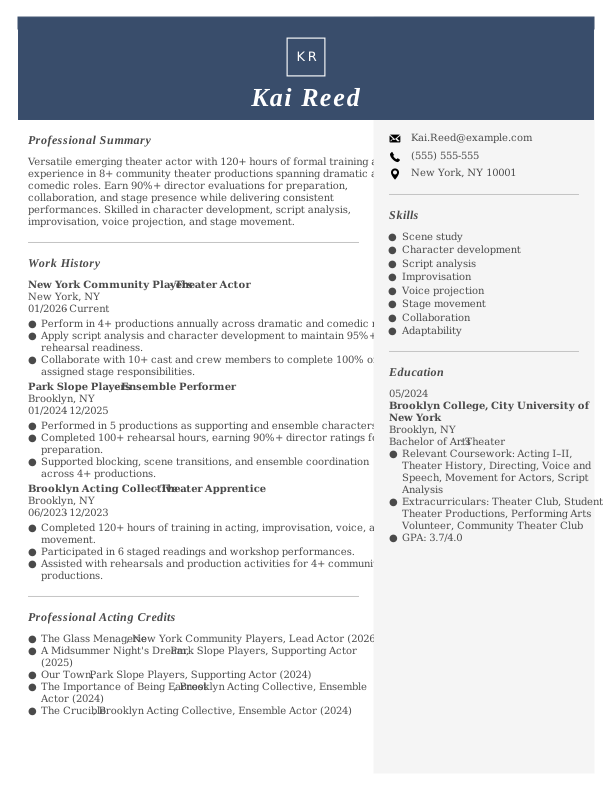
Theatre Acting for Beginners Resume
This theatre acting resume shows beginners how to showcase stage roles, acting training, performance skills, and additional credits in a clear format that emphasizes relevant qualifications.
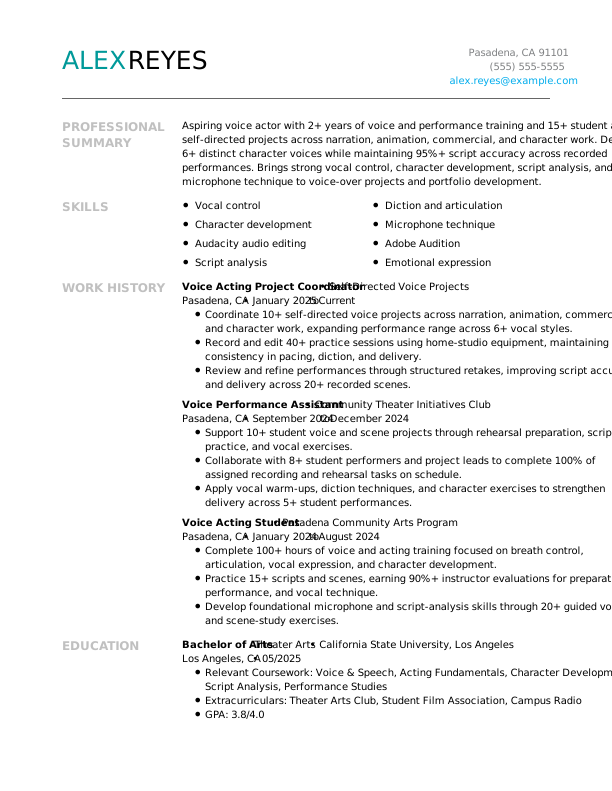
Voice Acting Resume for Beginners
This beginner voice acting resume demonstrates how to highlight voice performance, character work, relevant training, and transferable acting experience when pursuing voice-over opportunities.
Acting for Beginners Resume Template (Text)
Use this customizable text resume template for a beginner actor to copy, edit, and personalize directly in your document.
Olivia Brown
Jersey City, NJ 07307
(555)555-5555
Olivia.Brown@example.com
Professional Summary
Aspiring actor with training in scene study, improvisation, and character development. Experience performing in student and community theater productions, with strong memorization, collaboration, and stage presence skills.
Work Experience
Ensemble Cast Member
Jersey City Community Theatre – Jersey City, NJ
March 2026
- Performed as an ensemble member in a community theater production
- Attended rehearsals and collaborated with cast members on scenes and blocking
- Memorized lines, cues, and stage directions for live performances
Supporting Actor
Hudson Theatre Workshop – Jersey City, NJ
October 2025
- Performed a supporting role in a local theater production
- Used character development and script analysis techniques during rehearsals
- Participated in multiple live performances for public audiences
Student Actor
Garden State Acting Studio – Jersey City, NJ
May 2025
- Performed prepared scenes and monologues in an end-of-course showcase
- Applied training in voice projection, movement, and character development
- Rehearsed scripted and improvised scenes with other beginning actors
Education
Bachelor of Arts in English
New Jersey City University – Jersey City, NJ
May 2024
Acting for Stage and Screen
Garden State Acting Studio – Jersey City, NJ
2025
Certifications
- Certified Theatre Educator – National Theatre Education Association
- Drama Coaching Certification – American Coaching Institute
Skills
- Scene Study
- Script Analysis
- Character Development
- Improvisation
- Voice Projection
- Memorization
- Stage Performance
- Movement
- Collaboration
- Cold Reading
How to Write a Resume for Beginner Actors
As an aspiring actor, writing a resume means showcasing your talents and experience in a format that clearly highlights why you’re the ideal fit for roles. Use the guidance below to emphasize your unique abilities and tailor your resume to align with specific auditions or casting calls.
1. Contact Info
Your contact details must be clearly presented and prominently placed at the top of your acting resume.
Be sure to include:
- Full name
- Phone number
- Professional email address
- City and state (ZIP code is optional)
- LinkedIn profile or personal portfolio (if relevant)
 PRO TIP
Skip including sensitive personal details like your Social Security number, religious affiliation, or photograph on your resume unless the employer specifically requests them.
2. Resume Profile
A resume profile is a concise introduction (two to four sentences) that highlights your key qualifications and sets the tone for your application. It serves as an engaging pitch to hiring managers, enticing them to explore your resume further and learn more about your background and skills.
Typically located at the top of your resume, this section can be presented as either a summary or an objective, each fulfilling distinct roles. Understanding these differences can help you choose the best option for showcasing your strengths:
- A resume summary highlights essential skills, experiences, and accomplishments relevant to the performing arts. This format is especially useful for individuals with acting experience or transferable skills who want to highlight their unique contributions in the competitive acting field.
- A resume objective highlights your aspirations and focuses on your future career goals. It’s particularly effective for recent graduates, career changers, or those with limited experience, such as coding bootcamp graduates or professionals transitioning into creative fields.
Let’s compare a resume summary and a resume objective to understand their distinct purposes:
Acting for beginners resume summary example:
Dynamic aspiring actor with a passion for storytelling and performance in diverse theatrical productions. Proficient in character development, improvisation, and script analysis. Acknowledged for captivating audiences and contributing to collaborative creative environments that foster artistic expression.
Acting for beginners resume objective example:
Recent graduate with a Bachelor of Fine Arts in Acting, excited to embark on a career in theater and film. Committed to storytelling through performance, bringing creativity and adaptability to collaborative projects within a dynamic production environment.
3. Work Experience
Your work history is an important part of your job application. Employers explore your history to assess not just where you’ve worked but also the impact you’ve had in those roles.
This background demonstrates how your experiences align with the skills and qualifications needed for the target position, making you a strong applicant.
The work experience section should contain:
- Job title
- Employer name and location
- Dates of employment (month/year)
- 3–5 bullet points detailing your acting skills and performance accomplishments
When crafting your work experience bullet points, tailor your language to the acting profession. Start with strong action verbs such as “Performed,” “Auditioned,” or “Collaborated” to create compelling statements.
Incorporate quantifiable details where possible. Specific metrics and achievements, like the number of performances or audience size, highlight your contributions and set you apart from other job seekers.
In general, consider following the format of:
[action verb] + [responsibility] = [result/achievement]
For example:
Assist in rehearsing scenes and developing character backstories for a diverse cast of 10 actors, contributing to a production that received positive feedback from 90% of audience members.
Note that you can also flip the result/achievement with the responsibility:
Increased overall audience engagement by 25% through innovative character development workshops.
With these techniques in mind, your resume bullets may look something like:
- Conducted acting workshops for 50+ beginners, improving their performance skills and confidence levels by 20%.
- Facilitated group exercises that improved communication and teamwork among participants, resulting in a more cohesive learning environment.
- Mentored aspiring actors through personalized feedback sessions, fostering talent development and encouraging creative expression.
- Used improvisation techniques to engage students actively, leading to a 30% increase in class participation rates.
- Organized showcases for students to perform in front of an audience, boosting their stage presence and resilience.
4. Skills
The skills section serves as a concise overview of your acting abilities, providing insight into your specific talents in performance arts. This section is formatted as an ATS-friendly resume, allowing hiring managers to quickly assess your qualifications for auditions or roles.
Skills can be grouped into three categories:
- Soft skills are personal qualities that influence how actors collaborate and perform in the entertainment industry.
- Hard skills are tangible abilities that can be measured and are typically gained through formal education or hands-on training.
- Technical skills are the practical abilities required to perform specific tasks effectively within a profession.
5 Soft Skills for Your Resume or CV
- Emotional expressiveness
- Stage presence
- Improvisational skills
- Character development
- Collaboration with directors
5 Hard Skills for Your Resume or CV
- Script analysis
- Character development techniques
- Improvisation exercises
- Voice modulation (breathing and projection)
- Stage combat skills
In general, aim for a well-rounded selection of skills that directly reflect the requirements of the acting roles you pursue.
PRO TIP
If you’re an entry-level actor, consider placing your skills section higher on your resume, just after your summary. For those with more experience, it’s advisable to position this section lower, weaving your skills throughout your work history for a cohesive narrative.
5. Education
Understanding how to list education on your resume is important for making a strong impression in the acting industry. Begin with your most recent or relevant acting roles, clearly stating the production title and your character name.
If you’re just starting out, feel free to include any performance training, workshops attended, or notable achievements like awards or special recognitions that highlight your dedication and skill in the craft.
Acting for beginners resume education section example:
Associate of Arts in Acting
New York Film Academy, New York, NY
Graduated: 2023 | Top Performer in Final Showcase
PRO TIP
When creating your resume, ensure you list your degrees in reverse-chronological order, beginning with the highest qualification first, such as Bachelor of Arts in Acting followed by Associate Degree in Performing Arts.
6. Certifications
Certifications reflect your skills and current knowledge in acting. While they may not always be included on a traditional resume, this section can be particularly beneficial for aspiring actors looking to stand out. Many casting directors seek specific training or credentials, especially for roles in theater or film.
Highlight relevant classes, workshops, and any performance certifications that bolster your application. It’s important to keep these qualifications updated and clearly formatted to ensure they catch the eye of potential employers.
Acting for beginners certification examples:
- Acting Fundamentals Certification | The Acting Studio | Expires: 04/2028
- Voice Training for Actors | Vocal Arts Institute | Expires: 09/2027
- Improvisation Techniques | Comedy School of Chicago | Expires: 01/2028
- Stage Combat Certification | Fight Directors Canada | Expires: 11/2027
Start Building Your Job-Winning Resume
Use Your Existing Resume
Import your current resume to transfer your information to one of our professional templates.
Create a New Resume
Start fresh with a template that catches your eye and follow the prompts to add your details.
Tailor Your Work History to Beat the ATS
You should always tailor your work history to a specific role by focusing on incorporating relevant keywords and phrases.
Begin by thoroughly reviewing the job description for recurring skills or qualifications. Reflect these elements in your experience descriptions to align with employer expectations. This approach results in an ATS-friendly resume that applicant tracking systems (ATS) can effectively scan.
Key Takeaways
- Customize your resume for each application. Use language that resonates with casting directors and highlights relevant skills.
- Highlight specific achievements to demonstrate talent. Include metrics where possible (e.g., roles performed, awards won, training completed) to distinguish yourself.
- Select the right format based on your experience level. Beginners may opt for a more creative layout, while seasoned actors often choose a traditional chronological format.
More Resume & CV Examples
- Acting
- Actor
- Art Director
- Band Director
- Choreographer
- Concept Artist
- Dance
- Fashion
- Musician
- Playwright
- Singer
- Theater
- Two-column
- Wedding Photographer
Frequently Asked Questions
Last Update:
What resume format should I use for my beginner actor resume?
There are three main types of acting techniques to explore as a beginner. Your choice should reflect your personal style and the aspects of performance you wish to emphasize. Consider these options carefully:
- Chronological: The chronological resume is the most commonly used format, showcasing your work experience along with your responsibilities and achievements. This format is particularly effective for job seekers whose job history aligns well with their career goals, as it reinforces their qualifications and builds credibility in the eyes of potential employers.
- Functional: For beginners in acting, it’s essential to build a strong foundation. Focus on developing your skills through classes and workshops, or consider using a functional resume format to highlight your training and abilities. Practice regularly by performing in front of friends or family. Watching plays and films can also inspire you and improve your understanding of different acting styles.
- Combination: The combination resume acting for beginners guide mixes essential skills training with foundational techniques from various styles. This approach allows aspiring actors to develop their craft while understanding the industry’s demands. By balancing skill-building and practical experience, newcomers can confidently navigate auditions and performances.
Should I include a cover letter with my resume?
Yes, you should include a cover letter when applying for acting opportunities. A well-crafted cover letter complements your resume by allowing you to express your passion for performance and detail experiences that showcase your talent in ways that may not be evident on a resume alone.
It reflects your dedication to the craft and demonstrates to casting directors that you’ve invested effort into personalizing your application, giving you an advantage over those who submit generic materials.
If you’re hesitant about writing a cover letter, there are numerous resources available to assist you. You can find guides on how to write a cover letter specifically for actors, as well as examples that highlight different styles of presentation. This exploration will help you choose the format that best showcases your unique abilities and helps you stand out in auditions.
For those looking to streamline the writing process, using a cover letter generator can simplify creating a strong document by providing structured templates and tailored suggestions based on acting roles.
How long should a resume for a beginner actor be?
For those new to acting, a resume should typically be one page, focusing on relevant training, performances, and workshops. Highlight key skills such as improvisation, character development, and vocal techniques that showcase your potential.
Actors with more than 10 years of experience might consider a two-page resume if they have an extensive body of work or specialized training. Ensure every entry supports your narrative, emphasizing notable roles and achievements while avoiding unnecessary fluff to maintain clarity and engagement.
What keywords should I include to pass applicant tracking systems (ATS)?
To ensure your resume makes it through ATS, focus on incorporating keywords and phrases directly from the job posting. Use terms like “improvisation,” “character development,” or “stage presence” that are relevant to acting roles. This not only shows that you understand the profession but also aligns your experience with the expectations of hiring managers.
Additionally, include any notable training programs or classes you’ve completed, such as Meisner Technique or Stanislavski Method. Mentioning performance experiences in theater or film can also improve your profile. By tailoring your resume this way, you increase your chances of standing out among other job seekers.
Should I include community theater or acting workshops on my resume?
Yes, especially if you’re new to the field. Highlighting community theater and workshops demonstrates your commitment to developing your craft and provides evidence of real-world experience, which is valuable when applying for acting roles.

Megan Dawkins is a career industry editor who empowers job seekers to take control of their career paths using Monster’s comprehensive job search and resume tools. She specializes in helping job seekers navigate the flexible job market.
See More From Megan DawkinsExplore Related Career Advice

How to Put Transferable Skills on Your Resume: 120 Skills, Examples, & Tips

Updated:
Aug 27, 2026
|

16 min read


How to Write a Functional Resume (Formatting Tips, Template, & Examples)
Updated:
Aug 7, 2026
|
17 min read


Functional vs Chronological Resume: Which Format Is Right for You?
Updated:
Aug 3, 2026
|
16 min read

100+ Resume Adjectives to Help You Write a Stronger Resume in 2026 (With Examples)
Updated:
Jul 30, 2026
|
12 min read




How to Explain Employment Gaps: Examples for Resumes, Interviews, & More
Updated:
Jul 17, 2026
|
20 min read