
Free Art Director Resume Templates & Examples
An art director resume should showcase your creative leadership, brand development experience, and ability to manage design teams. Choose an example below that reflects both your vision and your management skills, then use our guide to make sure each section lands.
Real-World Resumes That Get Results
 Free
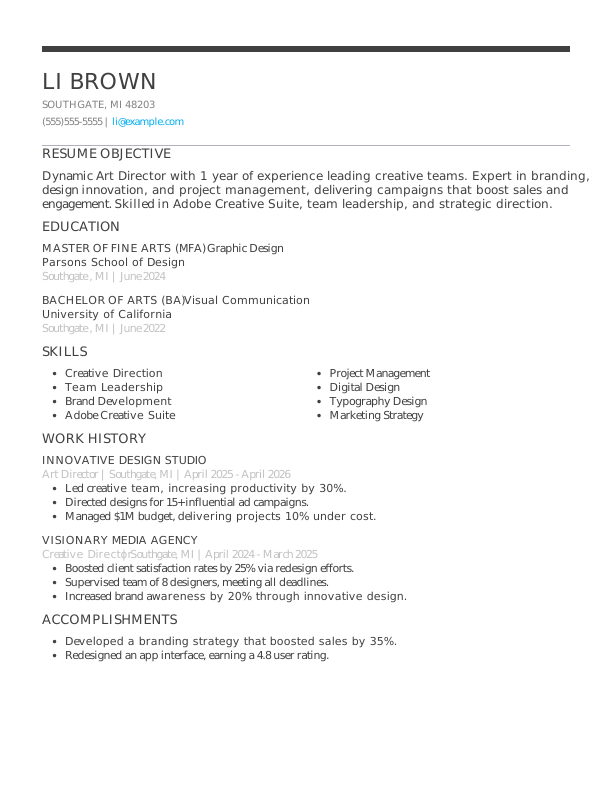
FreeArt Director Entry-Level Resume
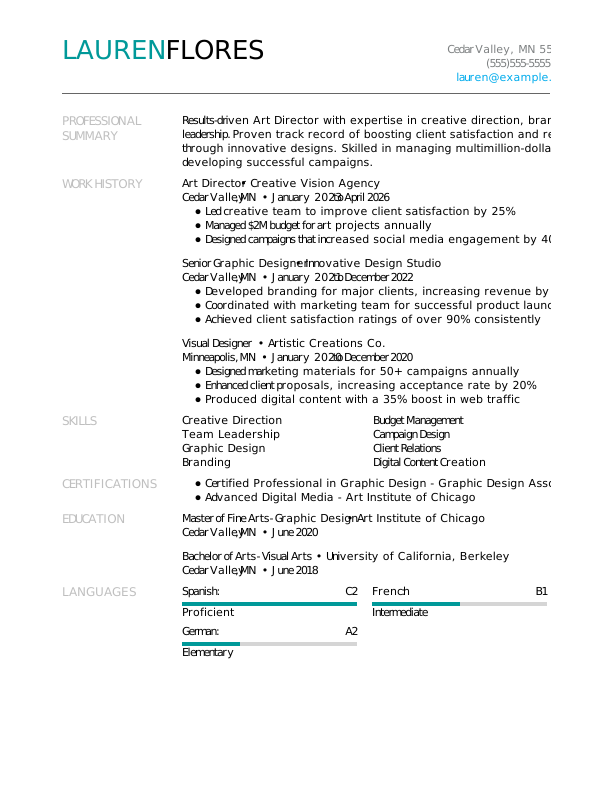
Art Director Mid-Level Resume
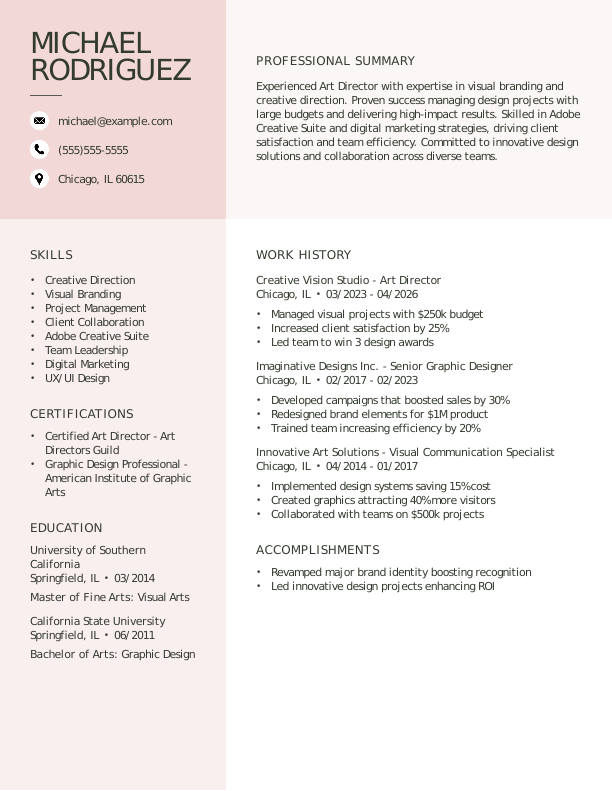
Art Director Experienced Resume
 Popular
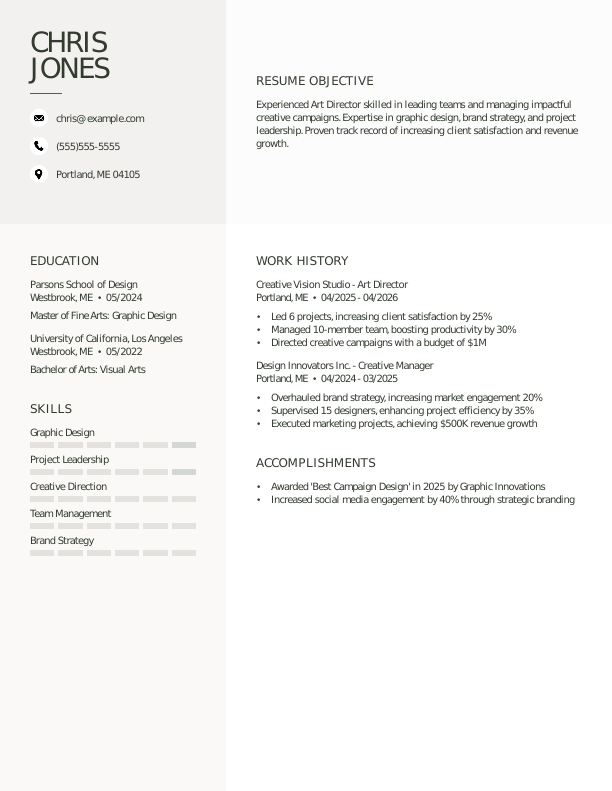
Art Director Entry-Level Resume 1
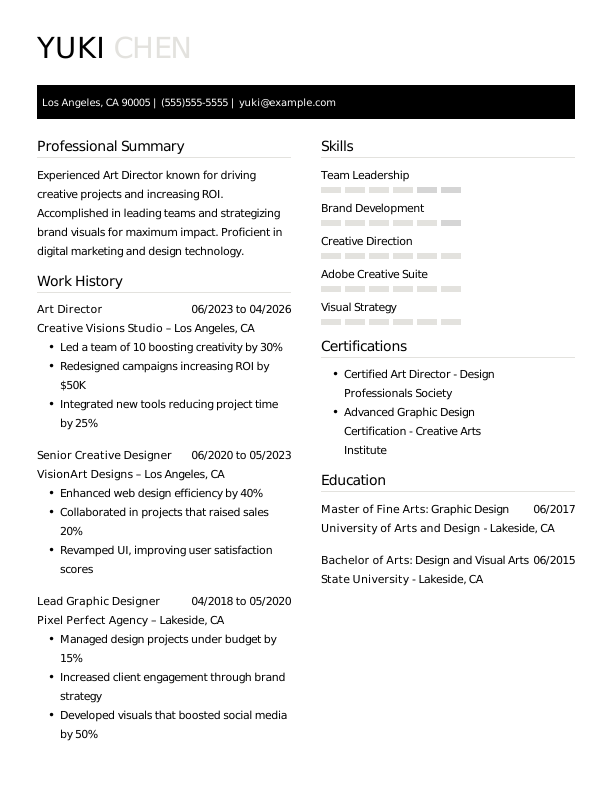
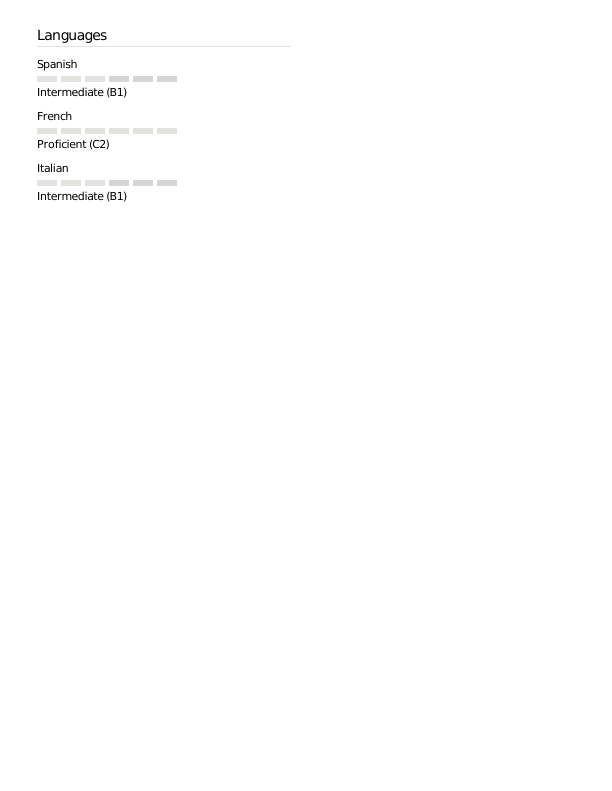
Art Director Mid-Level Resume 1
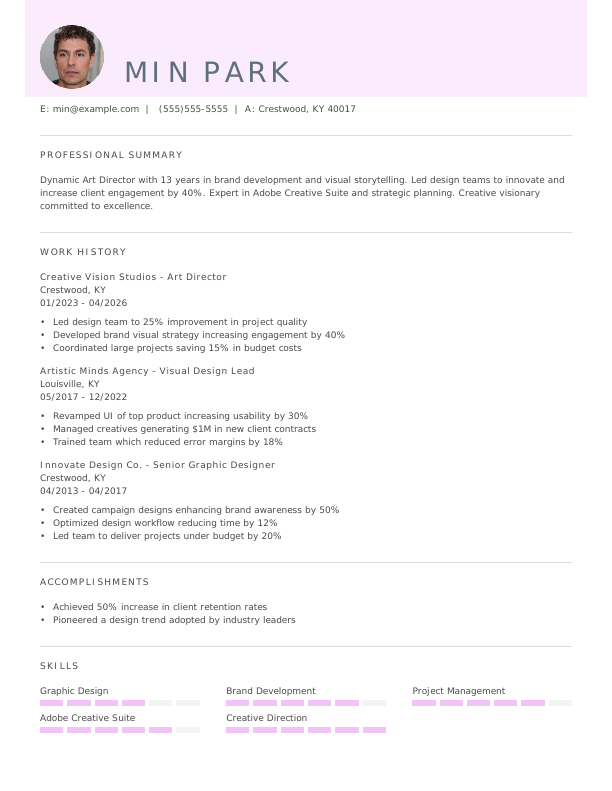
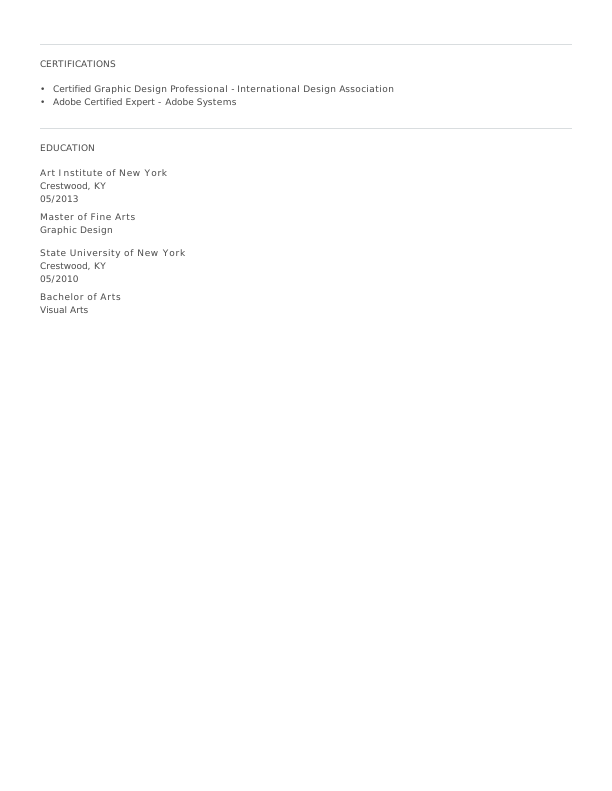
Art Director Experienced Resume 1
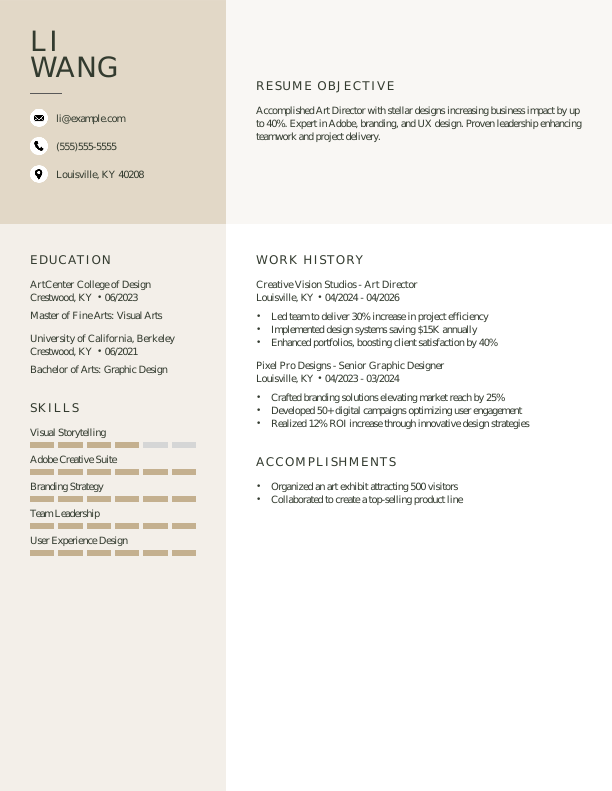
Art Director Entry-Level Resume 2
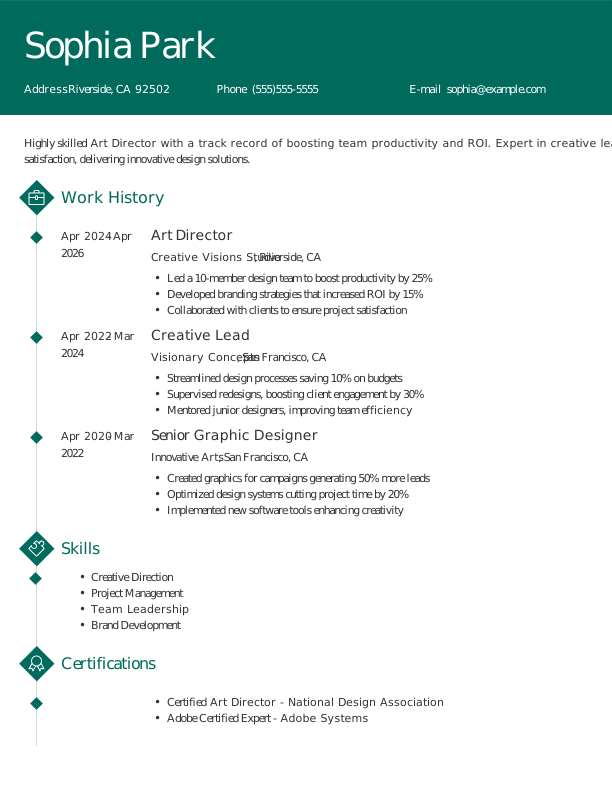
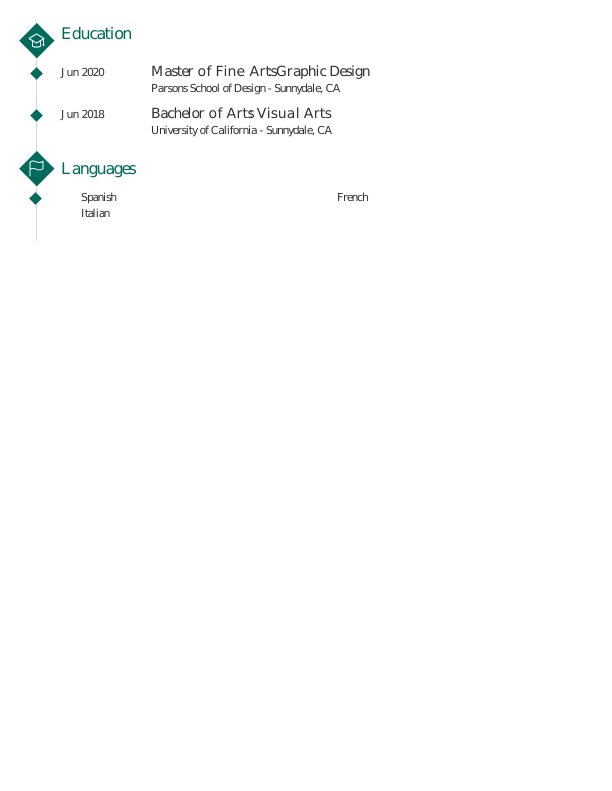
Art Director Mid-Level Resume 2
Browse Free Resume Templates
- Accounts Payable
- Adjunct Professor
- Artist
- Auto Mechanic
- Baker
- Business Development Manager
- Business
- Certified Nursing Assistant
- Classic & Traditional
- Cleaner
- College Student
- Concierge
- Construction Worker
- Corporate
- Creative & Unique
- Custodian
- Customer Service
- Dental Assistant
- Direct Support Professional
- Entry-Level
- Flight Attendant
- Hospitality & Food Service
- Front Desk Receptionist
- Healthcare
- High School
- Housekeeping
- Hvac Technician
- Hybrid
- Inventory Manager
- Logistics
- Maintenance
- Management
- Modern
- Mortgage Loan Processor
- Pet Sitter
- Phlebotomist
- Production
- Rbt
- Sales
- Security Services
- Restaurant Server
- Simple & Basic
- Social Work
- Teacher
- Technology
Resume Examples for Art Directors
Art director resumes should reflect your creative leadership and the brands or clients you have worked with. Explore our templates to find one that balances vision with execution.
Entry-Level Art Director Resume
Great for those moving into art direction from a senior designer role, this template simplifies creating an art director resume by highlighting your team oversight contributions, brand development involvement, and any campaign creative leadership.

Mid-Career Art Director Resume
An ideal choice for mid-level art directors seeking advancement, this template effectively showcases creative achievements and leadership experience to attract specialized roles in a competitive market.

Experienced Art Director Resume
An ideal choice for seasoned professionals with over a decade in creative roles, this template supports applicants pursuing senior leadership opportunities in art direction and visual design.

Art Director Resume Template (Text)
The text resume below gives you a starting point for an art director application. Paste it into your document and update it with your creative leadership experience and brand portfolio.
Min Huang
Indianapolis, IN 46204
Professional Summary
Award-winning Art Director with 6+ years of experience leading design teams to deliver innovative brand storytelling and enhanced user engagement. Expertise in creative strategy, UX/UI design, and campaign management has driven measurable business results, increasing ROI by up to 30%. Passionate about achieving excellence in the art and design ecosystem to transform visions into impactful visuals.
Work Experience
February 2023 – April 2026
Canvas Visual Studio – Indianapolis, IN
Art Director
- Directed 25+ creative projects with 95% client satisfaction
- Optimized visuals leading to 30% better campaign ROI
- Managed a 10-member team for on-time project delivery
January 2020 – January 2023
Visionary Media Solutions – Indianapolis, IN
Creative Design Manager
- Reduced project costs by 15% through creative optimization
- Led cross-functional teams for 20+ product launches
- Increased user engagement by 28% via innovative designs
May 2017 – December 2019
Aurora Creative Agency – Greenfield, IN
Senior Graphic Designer
- Created logos that boosted brand recognition by 22%
- Executed 15+ ad campaigns generating $2M+ in revenue
- Mentored junior designers, improving team output by 20%
Education
May 2017
Pratt Institute Greenfield, IN
Master of Fine Arts Graphic Design
May 2015
University of California, Los Angeles (UCLA) Greenfield, IN
Bachelor of Fine Arts Visual Arts
Certifications
- Certified Art Director – Art Directors Guild
- Graphic Design Mastery – American Graphics Institute
- User Experience Design Certification – Interaction Design Foundation
Skills
- Creative Direction
- Graphic Design
- Team Leadership
- Adobe Creative Suite
- Digital Marketing
- Brand Strategy
- UX/UI Design
- Project Management
How to Write a Art Director Resume
Knowing how to write a resume as an art director means showcasing your creative skills and relevant experience in a format that stands out. Use the guidance below to highlight your strengths and tailor your resume for the roles you’re targeting.
1. Contact Info
Your contact information should be clearly presented and prominently placed at the top of your resume.
Include the following essential information:
- Full name
- Phone number
- Professional email address
- City and state (ZIP code is optional)
- LinkedIn profile
- Online portfolio link (Behance, Dribbble, or personal website)
 PRO TIP
Your portfolio link is arguably more important than any other contact detail for creative roles. Make sure it’s clickable, up to date, and showcases your strongest work first.
2. Resume Profile
A resume profile is a brief introduction (2–4 sentences) that highlights your key skills and experiences. It serves as an engaging pitch to hiring managers, designed to spark their interest and motivate them to explore your qualifications further.
Typically located at the top of your resume, this section can take the form of either a summary or an objective. Each option has its unique focus: one showcases your overall qualifications while the other outlines your career goals. Here’s a closer look at both approaches:
- A resume summary showcases your creative expertise, design leadership, and standout campaigns or projects that define your artistic vision. This format is particularly beneficial for those with established work history or transferable experience aiming to highlight their impact as an innovative art director.
- A resume objective highlights your professional aspirations and outlines the goals you wish to achieve in your career. It’s particularly beneficial for new graduates, individuals shifting careers, or those with limited experience, such as visual arts students or emerging designers looking to enter creative fields.
Let’s explore how a resume summary differs from a resume objective through the following examples:
Art director resume summary example:
Creative art director with over 6 years of experience in dynamic advertising agencies and innovative design studios. Proficient in brand development, visual storytelling, and team leadership. Known for elevating brand identity and leading campaigns that increased engagement by 40% across digital and print channels.
Art director resume objective example:
Recent BFA graduate ready to embark on a creative journey as an art director in a dynamic design studio. Dedicated to innovative visual storytelling and eager to bring strong leadership skills and collaborative spirit to advertising agencies or media production companies.
3. Work Experience
The work experience on your resume serves as a critical foundation for showcasing your professional journey. Employers evaluate not just the roles you’ve held but also the unique contributions you’ve made during those positions.
Your experience demonstrates how your artistic vision and creative leadership qualify you for an art director role.
The work experience section should contain:
- Job title
- Employer name and location
- Dates of employment (month/year)
- 3–5 bullet points detailing your creative direction and project management achievements
Customize your work experience bullet points to align with the art director role by using industry-specific terminology. Begin each point with a strong action verb (consider “Designed,” “Directed,” “Collaborated”) to improve your statements.
Incorporate measurable outcomes or statistics to convey your impact. Highlighting specific achievements and numbers helps illustrate your contributions and sets you apart from other applicants.
In general, consider following the format of:
[action verb] + [responsibility] = [result/achievement]
For example:
Developed and executed creative concepts for over 15 high-profile campaigns annually, resulting in a 30% increase in brand engagement across digital platforms.
Note that you can also flip the result/achievement with the responsibility:
Boosted client satisfaction ratings by 25% through innovative design solutions and effective collaboration with cross-functional teams.
With these techniques in mind, your resume bullets may look something like:
- Developed and executed innovative visual campaigns for 10+ clients, increasing client engagement by 25% within one year.
- Managed a team of 5 designers to deliver high-quality projects on time, achieving a 95% client satisfaction rate.
- Collaborated with marketing teams to create cohesive branding strategies that boosted brand visibility by 30%.
- Created graphics and layouts in Adobe Creative Suite, reducing production time by 20% through templatized design systems.
- Mentored junior designers, improving their skills and fostering a collaborative work environment.
4. Skills
The ATS-friendly resume includes a skills section that provides a concise overview of your creative abilities as an art director. This ensures compatibility with applicant tracking systems, helping hiring managers quickly assess your qualifications.
Skills can be grouped into three key areas:
- Soft skills are personal qualities that influence how well professionals collaborate in creative environments.
- Hard skills are specific, measurable abilities gained through education or hands-on experience.
- Technical skills encompass the practical abilities required to use specific tools and software within a field.
5 Soft Skills for Your Resume or CV
- Visual storytelling
- Team leadership
- Brand development
- Strategic thinking
- Client engagement
5 Hard Skills for Your Resume or CV
- Concept development and visualization
- Adobe Creative Suite (Photoshop, Illustrator)
- Brand identity design
- Print and digital media production
- Collaboration with cross-functional teams
In general, aim to showcase a diverse array of skills that match the job’s demands to highlight your qualifications.
PRO TIP
If you’re relatively new in your role, consider placing your skills section right after your summary to highlight your relevant abilities. For those with more experience, it’s better to position this section lower on the resume, weaving your skills into your work history for a comprehensive view of your capabilities.
5. Education
Understanding how to list education on your resume can improve the clarity and impact of your qualifications. Start by listing your most recent or relevant degree in art, design, or a related field, along with the name of the institution.
If you’re a recent graduate, consider adding details such as your graduation year, GPA if it’s 3.5 or above, any honors received, and relevant coursework in areas like graphic design, typography, or visual communication.
Art director resume education section example:
Bachelor of Fine Arts in Graphic Design
Rhode Island School of Design, Providence, RI
Graduated: 2024 | Summa Cum Laude
PRO TIP
When listing multiple degrees on your resume, present them in reverse-chronological order. For example, list your Bachelor of Fine Arts (BFA) before an Associate Degree in Graphic Design or Visual Arts.
6. Portfolio
For art directors, your portfolio is often more important than any other section on your resume. It’s the proof behind your bullet points—where hiring managers see how you think, execute, and lead creative work.
Include a link to your online portfolio in your contact information, and consider calling out 2–3 standout projects in this section with brief descriptions. Focus on work that demonstrates range (campaigns, branding, digital, print) and your role in each project (concepting, art direction, team leadership).
What to include in your portfolio:
- A clean, easy-to-navigate format (Behance, Dribbble, personal website, or PDF)
- 8–12 of your strongest projects—quality over quantity
- Brief context for each project: client/brand, your role, the challenge, and the outcome
- A mix of work types: brand identity, campaigns, digital, print, motion if applicable
Pro Tip
Tailor your portfolio to the role. If the job emphasizes digital campaigns, lead with that work. If it’s a branding-heavy agency, put identity projects first. Your portfolio should feel curated, not comprehensive.
Start Building Your Job-Winning Resume
Use Your Existing Resume
Import your current resume to transfer your information to one of our professional templates.
Create a New Resume
Start fresh with a template that catches your eye and follow the prompts to add your details.
Tailor Your Work History to Beat the ATS
Your work experience is more than a list of job titles. It’s an opportunity to showcase the tangible contributions you’ve made to campaigns, creative teams, and design outcomes. This detailed approach not only highlights your skills but also helps create an ATS-friendly resume that applicant tracking systems (ATS) can scan effectively.
To maximize the impact of your work history, customize it for each application by incorporating relevant keywords from the job description. Begin by closely examining the posting and identifying recurring skills or qualifications mentioned. Then, integrate these elements into your experience descriptions to ensure alignment with the employer’s expectations.
What’s a Fair Art Director Salary?
Researching salary information is essential for assessing job offers, negotiating compensation, and making strategic career decisions. The data provided by the U.S. Bureau of Labor Statistics (BLS) reflects the latest nationwide averages for art directors.
Several factors can impact actual salaries, such as location, years of experience, education level, and specific industry focus. For example, art directors working in advertising agencies or film production companies tend to earn higher salaries than those in smaller design firms or nonprofit organizations.
| Alabama | $81,740 |
| Alaska | $64,690 |
| Arizona | $99,430 |
| Arkansas | $75,590 |
| California | $150,260 |
| Connecticut | $109,080 |
| Delaware | $97,830 |
| District of Columbia | $126,430 |
| Florida | $99,120 |
| Georgia | $128,630 |
| Hawaii | $101,050 |
| Idaho | $100,100 |
| Illinois | $110,670 |
| Indiana | $118,070 |
| Iowa | $84,410 |
| Kansas | $77,270 |
| Kentucky | $79,340 |
| Louisiana | $80,030 |
| Maine | $79,010 |
| Maryland | $110,270 |
| Massachusetts | $145,220 |
| Michigan | $98,540 |
| Minnesota | $109,120 |
| Missouri | $96,680 |
| Montana | $80,180 |
| Nebraska | $74,380 |
| Nevada | $105,480 |
| New Hampshire | $109,040 |
| New Jersey | $130,770 |
| New Mexico | $63,600 |
| New York | $156,580 |
| North Carolina | $100,270 |
| Ohio | $97,360 |
| Oklahoma | $81,850 |
| Oregon | $150,600 |
| Pennsylvania | $101,410 |
| Rhode Island | $87,200 |
| South Carolina | $82,600 |
| Tennessee | $96,710 |
| Texas | $94,990 |
| Utah | $97,080 |
| Vermont | $106,200 |
| Virginia | $97,980 |
| Washington | $154,700 |
| Wisconsin | $97,430 |
| Puerto Rico | $62,970 |
Key Takeaways
- Tailor your resume to the job description. Mirror the language from the posting to resonate with both ATS and hiring managers.
- Highlight quantifiable achievements. Illustrate your impact with metrics (e.g., project budgets, client satisfaction ratings, campaign results) for greater effect.
- Select an appropriate format based on experience level. Entry-level applicants might prefer a functional layout, while seasoned professionals often use reverse-chronological resumes.
More Resume & CV Examples
- Acting For Beginners
- Acting
- Actor
- Band Director
- Choreographer
- Concept Artist
- Dance
- Fashion
- Musician
- Playwright
- Singer
- Theater
- Two-column
- Wedding Photographer
Cover Letters for Your Resume
Browse our library of cover letter examples to complete your application. A resume will have a better chance of getting noticed.
Frequently Asked Questions
Last Update:
What resume format should I use for my art director resume?
There are three primary resume formats to consider when applying for an art director position. Your choice should reflect your experience level and the aspects of your skills you wish to highlight:
- Chronological: The chronological resume is the most widely used format, highlighting your work history alongside your responsibilities and accomplishments. This format works well for art directors with a steady career progression and a track record of creative leadership across agencies or in-house roles.
- Functional: The functional resume, or skills-based resume, prioritizes your qualifications and features an extensive skills section over work history. This format is particularly beneficial for job seekers who lack direct experience in the field or have noticeable gaps in their employment timeline. Highlighting abilities can draw attention to your potential contributions.
- Combination: The combination resume format mixes chronological and functional styles, highlighting both skills and work experience. This format helps professionals showcase their abilities while also detailing their career progression, making it a strong choice for individuals transitioning between fields or moving forward in their careers.
Should I include a cover letter with my resume?
Yes, you should include a cover letter with your application for an art director position. A tailored cover letter improves your resume by allowing you to express your creative vision and how your unique experiences align with the company’s goals. It demonstrates to employers that you’ve invested time in personalizing your submission, giving you an advantage over those who submit generic applications.
If you’re concerned about writing a cover letter, there are plenty of resources available to assist you. You can find guides on how to write a cover letter specifically for creative roles, along with numerous examples showcasing effective approaches. Exploring different formats will also allow you to choose one that best represents your artistic style and professional background.
To make the process easier, consider using a cover letter generator, which can help craft a visually appealing and well-structured document tailored to the art director role.
How long should a art director resume be?
For art directors with less than 10 years of experience, a one-page resume is typically sufficient to showcase skills and projects. Focus on key accomplishments, relevant software proficiencies, and notable collaborations that illustrate your creative vision and leadership potential.
In senior or specialized roles, a two-page resume may be warranted if it effectively captures the breadth of your experience without unnecessary details. Highlight major projects, awards, and any unique contributions to campaigns while ensuring every element serves to strengthen your professional narrative.
What keywords should I include to pass applicant tracking systems (ATS)?
To improve your resume for ATS screening, focus on incorporating keywords from the job posting. For an art director position, terms like “creative strategy,” “brand development,” and “visual storytelling” can make a significant impact. These specific phrases are often what hiring managers look for to identify suitable job seekers.
Additionally, highlight any relevant software skills you possess, such as skill in Adobe Creative Suite or knowledge of project management tools like Asana. If you have certifications in graphic design or digital marketing, be sure to list those as well. This targeted approach will help ensure your resume stands out during the screening process.
Should I include freelance projects or volunteer work on my portfolio?
Yes, especially if you’re early in your career. Including freelance projects demonstrates your ability to manage creative tasks and collaborate with clients, which can set you apart when formal job experience is limited.

Megan Dawkins is a career industry editor who empowers job seekers to take control of their career paths using Monster’s comprehensive job search and resume tools. She specializes in helping job seekers navigate the flexible job market.
See More From Megan DawkinsExplore Related Career Advice


How to Put Transferable Skills on Your Resume: 120 Skills, Examples, & Tips

Updated:
Aug 27, 2026
|
16 min read


How to Write a Functional Resume (Formatting Tips, Template, & Examples)
Updated:
Aug 7, 2026
|
17 min read


Functional vs Chronological Resume: Which Format Is Right for You?
Updated:
Aug 3, 2026
|
16 min read
100+ Resume Adjectives to Help You Write a Stronger Resume in 2026 (With Examples)
Updated:
Jul 30, 2026
|
12 min read