Free Fashion Resume Templates & Examples
Style, trend awareness, and creative vision drive careers in fashion. These free fashion resume and CV examples help you organize your industry experience and brand collaborations.
Real-World Resumes That Get Results
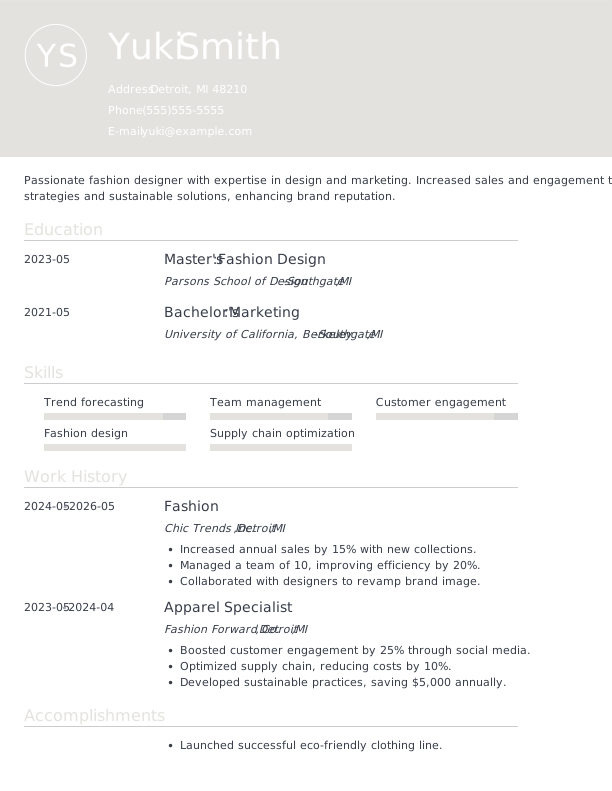
 Free
Free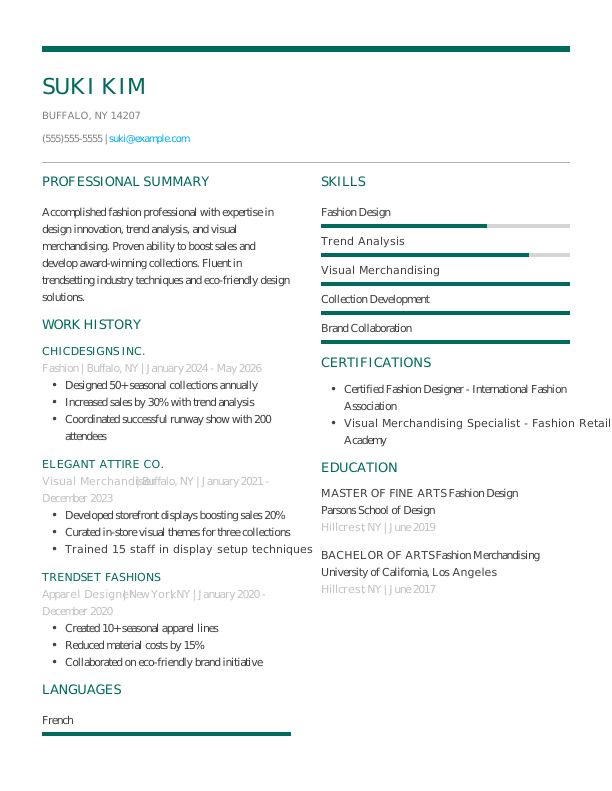
Browse Free Resume Templates
- Accounts Payable
- Adjunct Professor
- Artist
- Auto Mechanic
- Baker
- Business Development Manager
- Business
- Certified Nursing Assistant
- Classic & Traditional
- Cleaner
- College Student
- Concierge
- Construction Worker
- Corporate
- Creative & Unique
- Custodian
- Customer Service
- Dental Assistant
- Direct Support Professional
- Entry-Level
- Flight Attendant
- Hospitality & Food Service
- Front Desk Receptionist
- Healthcare
- High School
- Housekeeping
- Hvac Technician
- Hybrid
- Inventory Manager
- Logistics
- Maintenance
- Management
- Modern
- Mortgage Loan Processor
- Pet Sitter
- Phlebotomist
- Production
- Rbt
- Sales
- Security Services
- Restaurant Server
- Simple & Basic
- Social Work
- Teacher
- Technology
Resume Examples for Fashion
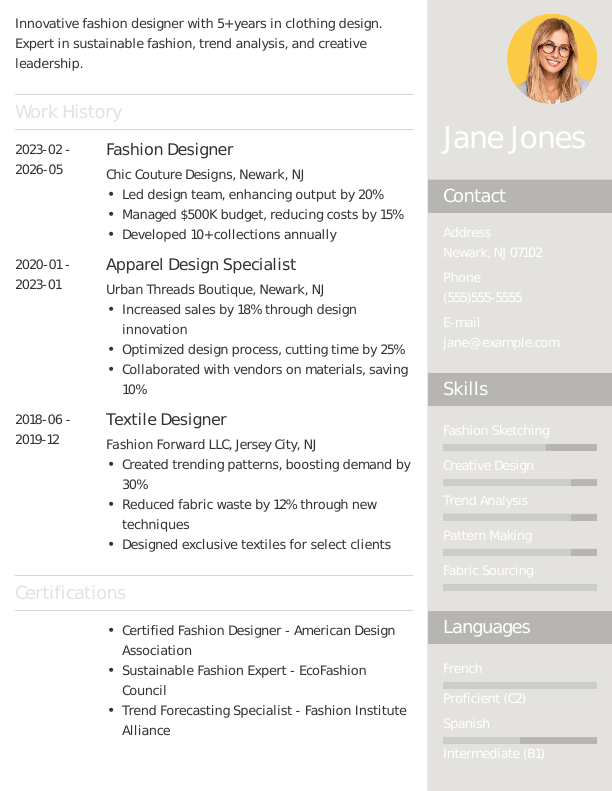
A fashion resume or CV varies significantly based on your experience level, whether you’re just starting or have years in the industry. Explore what to highlight at each stage and use our Resume Builder to create your own tailored document.
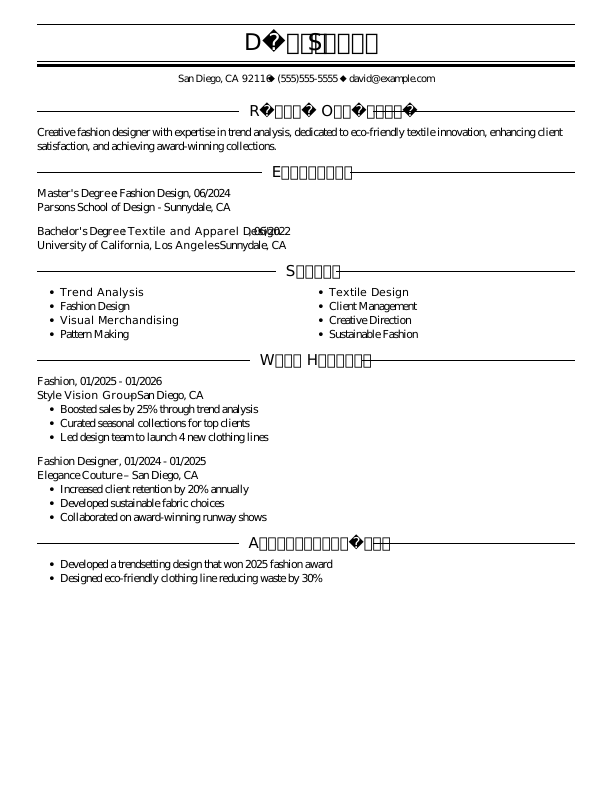
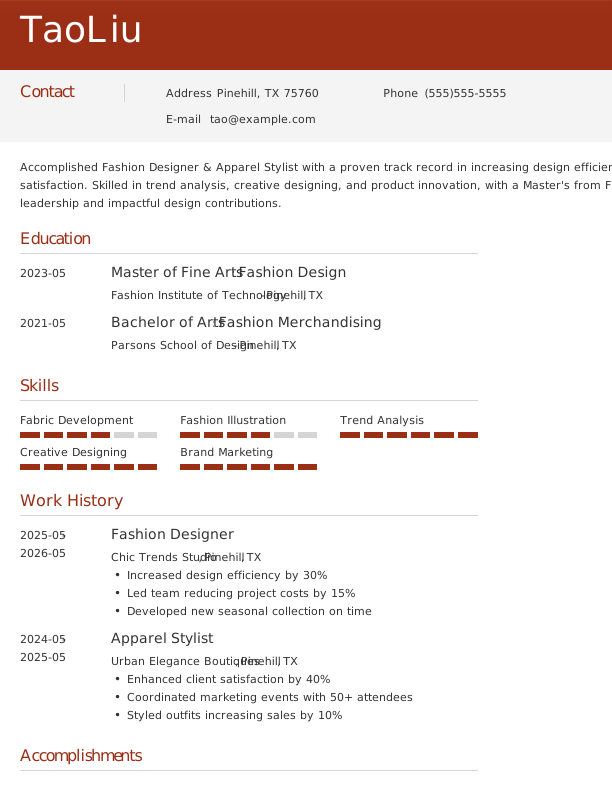
Entry-Level Fashion Resume
Ideal for recent graduates, this resume with no experience template is also perfect for career changers entering the fashion industry from different fields.

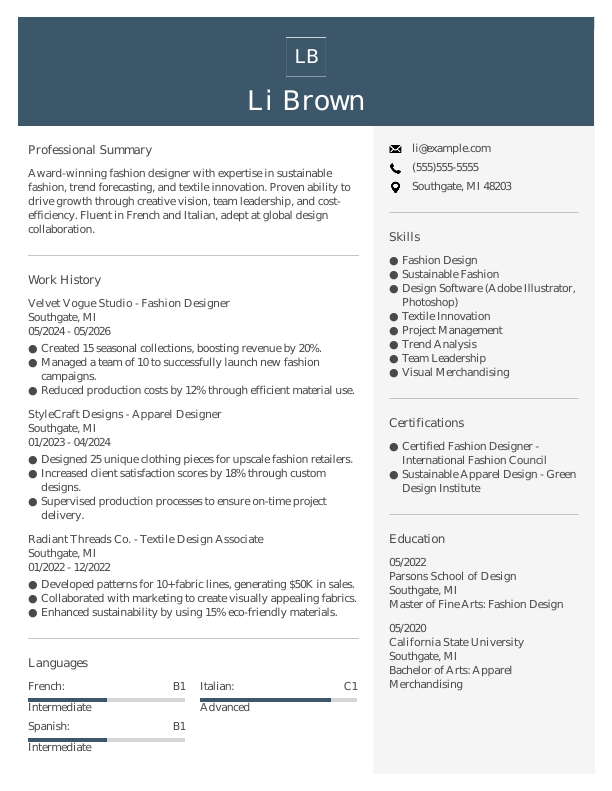
Mid-Career Fashion Resume
A good fit for fashion professionals with some experience, this template highlights recent design projects and fosters opportunities for advancement into leadership or specialized design roles.

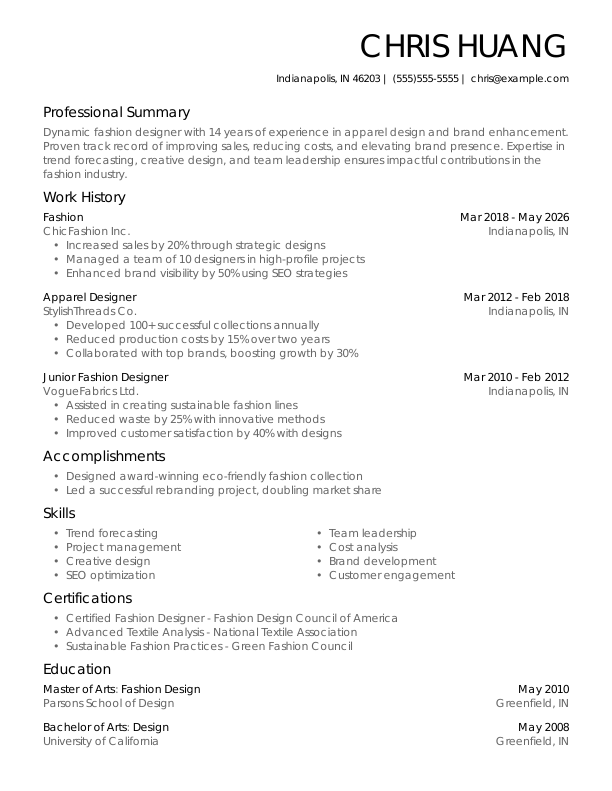
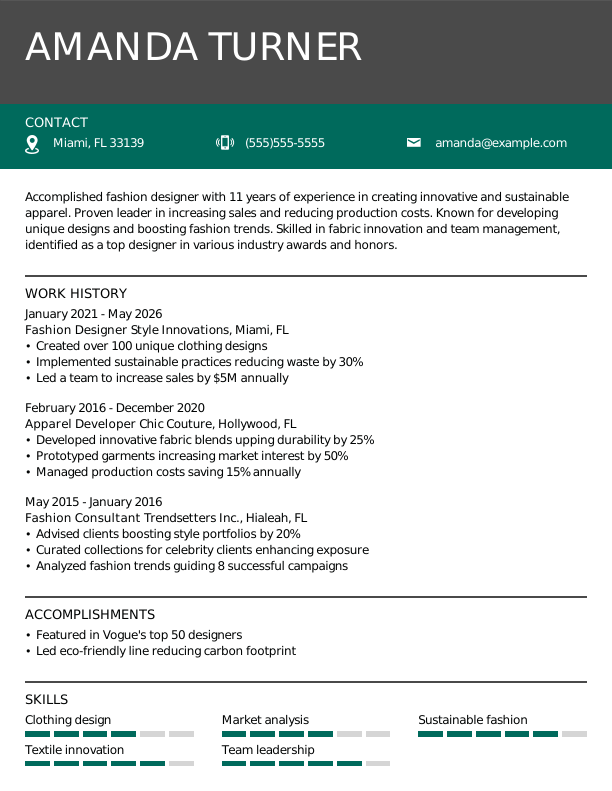
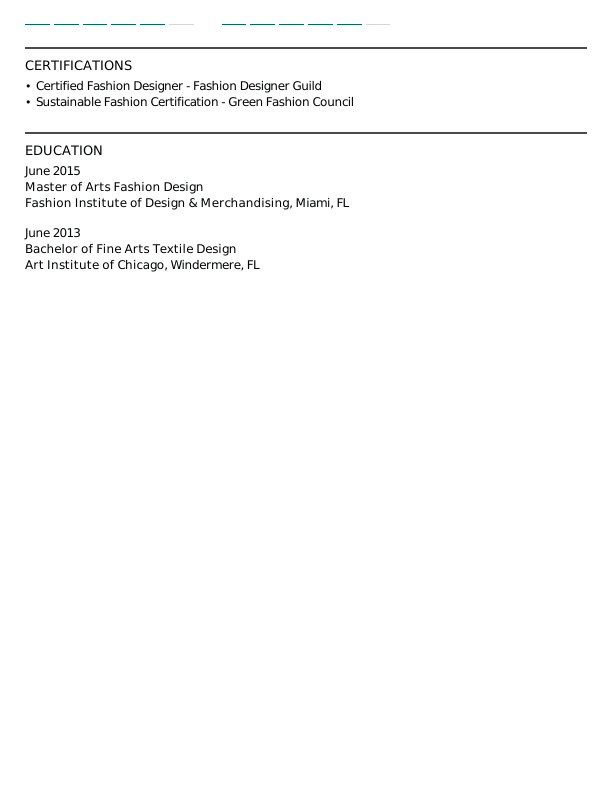
Experienced Fashion Resume
An ideal choice for seasoned fashion professionals with over 10 years of experience, this template perfectly caters to those pursuing senior-level design or leadership roles in the industry.

Fashion Resume Template (Text)
Use this customizable text format of a fashion resume to copy, modify, and tailor directly in your document.
Michael Miller
Springfield, IL 62707
Professional Summary
Dynamic fashion professional with 7 years in design leadership, boosting brand visibility and product innovation through creative strategies. Skilled in trend analysis and team management, driving growth and profitability.
Work Experience
May 2022 – May 2026
Elegance Couture – Springfield, IL
Fashion
- Led design team, increasing efficiency by 20%
- Developed collection, boosting sales by 25%
- Revamped brand image, improved market presence
May 2019 – April 2022
Style Innovators Inc. – Springfield, IL
Apparel Designer
- Crafted seasonal trends, increased clientele by 30%
- Collaborated on successful runway shows, 4 annually
- Optimized design processes, reduced costs by 15%
May 2016 – April 2019
Urban Chic Retail – Springfield, IL
Fashion Merchandiser
- Analyzed market trends, proposed tactics boosting profit
- Enhanced product displays, increased foot traffic by 20%
- Strategized promotions, increased sales revenue by 18%
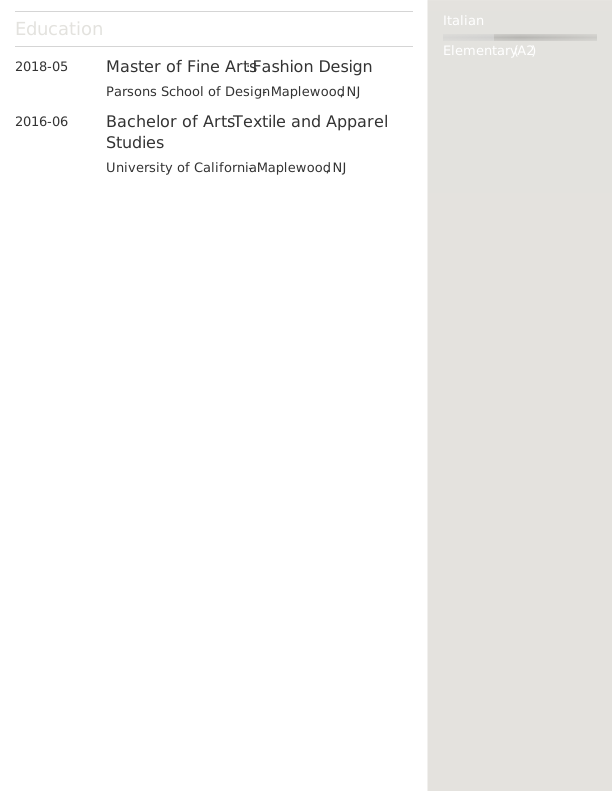
Education
May 2016
Parsons School of Design New York, NY
Master of Arts Fashion Design
May 2014
University of California, Berkeley Berkeley, CA
Bachelor of Arts Design
Certifications
- Professional Fashion Designer – Fashion Industry Association
- Advanced Textile Design – Institute of Textiles
Skills
- Creative design
- Trend analysis
- Visual merchandising
- Brand development
- Product management
- Team leadership
- Fashion illustration
- Adobe Creative Suite
How to Write a Fashion Resume
As a fashion professional, knowing how to write a resume involves showcasing your unique creativity, relevant experience, and an eye-catching format that sets you apart. Use the guidance below to emphasize your talents and tailor your resume for the roles you’re pursuing.
1. Contact Info
Your contact information should be clear, professional, and easy to find at the top of your resume.
Make sure to include:
- Full name
- Phone number
- Professional email address
- City and state (ZIP code is optional)
- LinkedIn profile or personal portfolio (if relevant)
 PRO TIP
Avoid including sensitive information such as your Social Security number, age, or religious affiliation on your resume unless requested by employers.
2. Resume Profile
A resume profile is a brief introductory section (two to four sentences) that highlights your key qualifications and personal brand. This pitch aims to capture the attention of hiring managers, motivating them to explore your resume further.
Typically located at the top of your resume, it can appear as either a summary or an objective. Each serves distinct purposes, providing a snapshot of your career goals or a concise overview of your skills. Understanding these differences can improve your approach:
- A resume summary highlights your most relevant skills, achievements, and experiences in the fashion industry, helping distinguish you from other job seekers. This format is especially beneficial for those with relevant work history or transferable skills aiming to emphasize their contributions to previous roles in fashion.
- A resume objective highlights your aspirations and outlines your career goals. It’s particularly useful for recent graduates, professionals pivoting to new fields, or those with limited experience who want to emphasize their ambitions and direction.
Let’s take a look at an example of each to see how a resume summary and a resume objective differ:
Fashion resume summary example:
Creative fashion designer with over 6 years of experience in high-end retail and runway show production. Proficient in trend forecasting, fabric selection, and garment construction. Acknowledged for innovative designs that improve brand identity and engage diverse audiences.
Fashion resume objective example:
Recent fashion design graduate excited to launch a career in the dynamic retail industry. Committed to innovative styling and sustainable practices while eager to bring strong teamwork skills and creativity to a forward-thinking fashion brand or boutique environment.
3. Work Experience
The work experience on your resume is a key element in showcasing your creative journey. Employers examine your job history to grasp not only where you’ve worked but also the innovative contributions you’ve made to the fashion industry.
Your past roles illustrate how your unique experiences and design skills qualify you for the position you’re aiming for.
The work experience section should contain:
- Job title
- Employer name and location
- Dates of employment (month/year)
- 3–5 bullet points describing your relevant responsibilities and achievements
Tailor your content to highlight experiences and skills relevant to the fashion industry. Start each bullet point with an action verb (like “Styled,” “Designed,” “Coordinated”) to create a strong impact and showcase your contributions.
Incorporate measurable achievements whenever possible. Specific metrics, such as sales increases or successful campaign reach, help illustrate your value and differentiate you from other job seekers in the competitive fashion market.
In general, consider following the format of:
[action verb] + [responsibility] = [result/achievement]
For example:
Designed and curated seasonal collections for a fashion brand, increasing sales by 25% over one year through trend analysis and customer feedback.
Note that you can also flip the result/achievement with the responsibility:
Achieved a 40% increase in social media engagement by launching targeted influencer collaborations and interactive campaigns.
With these techniques in mind, your resume bullets may look something like:
- Developed and launched 15+ seasonal fashion collections, increasing sales by 25% year-over-year.
- Collaborated with marketing teams to create social media campaigns that grew follower engagement by 40%.
- Mentored junior designers, fostering creativity and improving team dynamics within the design department.
- Analyzed consumer trends and sales data to inform design decisions, resulting in a 30% reduction in overproduction.
- Used Adobe Creative Suite for designing apparel graphics and presentations that improved client pitches.
4. Skills
This skills section provides a concise overview of essential abilities in the fashion industry. It allows hiring managers to quickly assess job seekers’ qualifications for roles within this dynamic field.
Skills can be categorized into three distinct groups:
- Soft skills are personal qualities that influence how well individuals interact with others in the fashion industry.
- Hard skills refer to specific, quantifiable abilities gained through education, training, or experience.
- Technical skills refer to the specific knowledge and expertise needed to perform tasks in a particular field.
5 Soft Skills for Your Resume or CV
- Trend forecasting
- Visual communication skills
- Team leadership
- Customer engagement strategies
- Cultural awareness
5 Hard Skills for Your Resume or CV
- Trend analysis
- Fashion design software (Adobe Illustrator, CLO 3D)
- Textile technology
- Production management
- Visual merchandising strategies
In general, aim to showcase a diverse array of relevant skills that align with the fashion industry’s demands to illustrate your full professional potential.
PRO TIP
If you’re a newer fashion professional, consider placing your skills section higher on your resume, just after your summary. If you have more experience, it’s better to position this section lower and weave your skills into the narrative of your work history.
5. Education
Understanding how to list education on your resume is important for showcasing your qualifications. Start with your most recent or relevant fashion degree, clearly stating the degree type and institution name.
For those who have recently graduated, consider including your graduation year, GPA (if it’s 3.5 or higher), any honors received, and relevant coursework to provide additional context about your academic achievements.
Fashion resume education section example:
Bachelor of Arts in Fashion Design
Fashion Institute of Technology, New York, NY
Graduated: 2024 | Magna Cum Laude
PRO TIP
If you’re transitioning from an Associate Degree in Fashion Design to a Bachelor of Fine Arts in Fashion Merchandising, or have earned another relevant degree, list them in reverse-chronological order.
6. Certifications
Listing certifications on your resume showcases your commitment to the fashion industry, which can be especially valuable when you have limited experience in a competitive job market. Although not always a standard component of a traditional resume, this section can be important for many professionals in fashion. Employers often seek specific qualifications for roles such as fashion design or merchandising, emphasizing the importance of relevant credentials.
Include only those certifications that directly improve your candidacy and align with the job you’re pursuing. Additionally, keep your certifications current and format them clearly for easy reading.
Fashion certification examples:
- Fashion Merchandising Certification | Fashion Institute of Technology | Expires: 06/2028
- Certified Fashion Designer (CFD) | International Fashion Academy | Expires: 05/2027
- Digital Marketing for Fashion Professionals | Coursera | Expires: 03/2028
- Sustainable Fashion Certificate | London College of Fashion | Expires: 11/2027
Start Building Your Job-Winning Resume
Use Your Existing Resume
Import your current resume to transfer your information to one of our professional templates.
Create a New Resume
Start fresh with a template that catches your eye and follow the prompts to add your details.
Tailor Your Work History to Beat the ATS
Your work experience is more than a list of job titles. It’s an opportunity to showcase the measurable impact you’ve had in fashion campaigns, design projects, and brand growth. This approach also contributes to crafting an ATS-friendly resume that applicant tracking systems (ATS) can easily scan.
To create an effective work history, tailor it to the specific fashion role you’re targeting by including relevant keywords and industry terminology. Start by closely analyzing the job description. Identify frequently mentioned skills, trends, or design elements and reflect those components within your experience descriptions when possible.
What’s a Fair Fashion Salary?
Understanding fashion industry salaries across the country helps you evaluate job offers, negotiate competitive pay, and make informed career decisions. The data below is sourced from the U.S. Bureau of Labor Statistics (BLS) and reflects the most recent nationwide averages for fashion professionals.
Keep in mind that factors like geographic location, years of experience, education, and specialization can all influence your actual salary. Fashion designers may earn more in metropolitan areas like New York City compared to smaller towns, while specialized roles such as technical designers or merchandisers typically command higher wages due to their specific skill sets.
| Arizona | $46,150 |
| Connecticut | $101,850 |
| Florida | $57,550 |
| Georgia | $77,500 |
| Indiana | $58,670 |
| Kansas | $65,410 |
| Kentucky | $64,220 |
| Massachusetts | $107,560 |
| Minnesota | $44,130 |
| Missouri | $87,290 |
| New Hampshire | $90,750 |
| New Jersey | $96,380 |
| New York | $106,180 |
| North Carolina | $82,370 |
| Ohio | $65,050 |
| Oregon | $134,060 |
| Pennsylvania | $80,740 |
| Tennessee | $117,100 |
| Utah | $71,330 |
| Virginia | $79,150 |
| Washington | $80,350 |
| Wisconsin | $39,200 |
Key Takeaways
- Customize your resume for each job application. Incorporate the specific terminology from the job description to engage both ATS and hiring managers.
- Highlight quantifiable results in your experience. Use metrics that matter in fashion (e.g., sales growth, client retention rates, successful campaigns) to illustrate your contributions.
- Select a resume format based on your career stage. Aspiring designers might opt for a creative layout, while seasoned professionals often choose a chronological style.
More Resume & CV Examples
- 3d Animator
- 3d Artist
- Acting For Beginners
- Acting
- Actor
- Amazon
- Architectural Designer
- Art Director
- Band Director
- Brand Designer
- Choreographer
- Concept Artist
- Costume Designer
- Dance
- Design Director
- Ecommerce Manager
- Ecommerce
- Fashion Designer
- Floral Designer
- Florist
- Game Designer
- Graphic Designer
- Illustrator
- Industrial Design
- Interior Designer
- Jewelry Designer
- Musician
- Playwright
- Product Designer
- Singer
- Theater
- Two-column
- Visual Merchandiser
- Web Designer
- Wedding Photographer
Cover Letters for Your Resume
Browse our library of cover letter examples to complete your application. A resume will have a better chance of getting noticed.
Frequently Asked Questions
Last Update:
What resume format should I use for my fashion resume?
There are three primary resume formats to choose from when applying for a fashion position. The format you select should reflect your experience level and the aspects of your background you wish to highlight:
- Chronological: The most popular format, a chronological resume highlights your work experience in the fashion industry by detailing your responsibilities and achievements. This format is ideal for applicants with a consistent job history that reinforces their qualifications and showcases their growth in the field.
- Functional: Also known as a skills-based resume, the functional format emphasizes a qualifications summary and an expanded skills section to showcase your fashion-related abilities. By minimizing focus on work history, it’s beneficial for job seekers without direct experience in the fashion industry or those transitioning careers.
- Combination: A combination resume integrates elements from both chronological and functional formats, presenting a skills section alongside detailed work experience. This format benefits fashion professionals by allowing them to highlight their creative abilities while demonstrating their career progression and relevant industry accomplishments.
Should I include a cover letter with my resume?
Yes, you should include a cover letter when applying for fashion jobs. A well-crafted cover letter allows you to express your passion for the industry while showcasing your unique skills and experiences that might not be evident in your resume. It demonstrates to potential employers that you have invested time into tailoring your application specifically for their brand, which can set you apart from other job seekers who may overlook this critical step.
If you’re hesitant about writing a cover letter, there are many resources available to guide you. Consider searching for articles on how to write a cover letter, or look at various examples tailored to different roles within the fashion sector. Additionally, exploring different formats can help you find one that aligns with your personal style and professional background.
To simplify the process, using a cover letter generator can provide you with structured templates and personalized suggestions based on the job you’re targeting.
What keywords should I include to pass applicant tracking systems (ATS)?
To ensure your resume passes ATS screening, focus on incorporating keywords from the job posting. Use specific terms related to fashion, such as “trend analysis,” “visual merchandising,” or “sustainable practices.” By mirroring the language of the job description, you improve your chances of being noticed.
Don’t forget to include relevant certifications, like Fashion Design Certificate or Visual Merchandising Certification. Highlight any technical tools you’re skilled in, such as Adobe Illustrator or Sketch. This demonstrates that you possess both the knowledge and practical skills needed for the role, increasing your chances of landing an interview.
Should I include fashion internships or personal styling projects?
Yes, especially if you’re new to the industry. Listing fashion internships or personal projects showcases your creativity and practical skills in real-world settings, helping you stand out when formal experience is limited.

Vicki Salemi is a nationally recognized career expert who helps professionals navigate the hiring landscape and find the right fit on Monster. With over 15 years of experience in corporate recruiting and HR, she offers expert guidance on job search strategies, interview preparation, and career development to help candidates land their next role.
See More From Vicki SalemiExplore Related Career Advice


How to Put Transferable Skills on Your Resume: 120 Skills, Examples, & Tips

Updated:
Aug 27, 2026
|
16 min read

How to Write a Functional Resume (Formatting Tips, Template, & Examples)
Updated:
Aug 7, 2026
|
17 min read

Functional vs Chronological Resume: Which Format Is Right for You?
Updated:
Aug 3, 2026
|
16 min read
100+ Resume Adjectives to Help You Write a Stronger Resume in 2026 (With Examples)
Updated:
Jul 30, 2026
|
12 min read