
Free Musician Resume Templates & Examples
A musician resume should highlight your performance experience, training, and any recording or teaching credits. Choose an example below that follows music industry conventions, then follow our guide for tips on presenting creative careers.
Real-World Resumes That Get Results
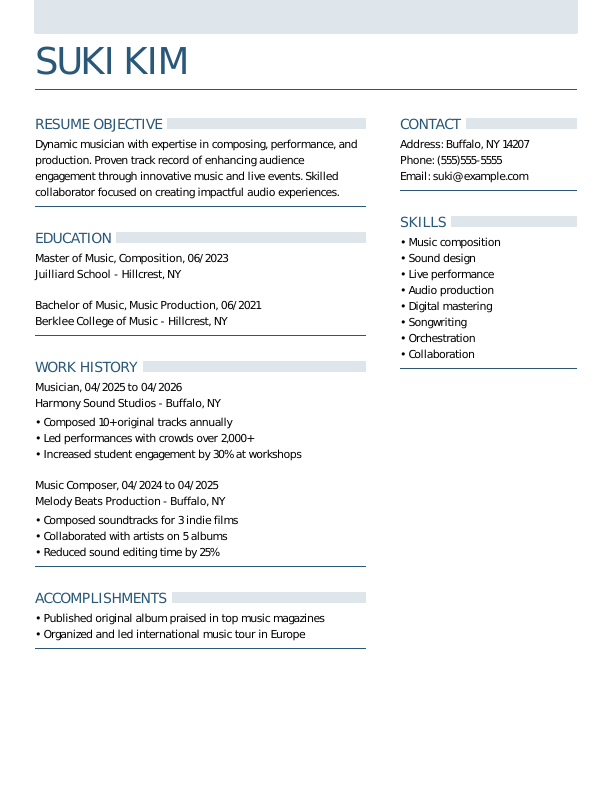
 Free
FreeMusician Entry-Level Resume
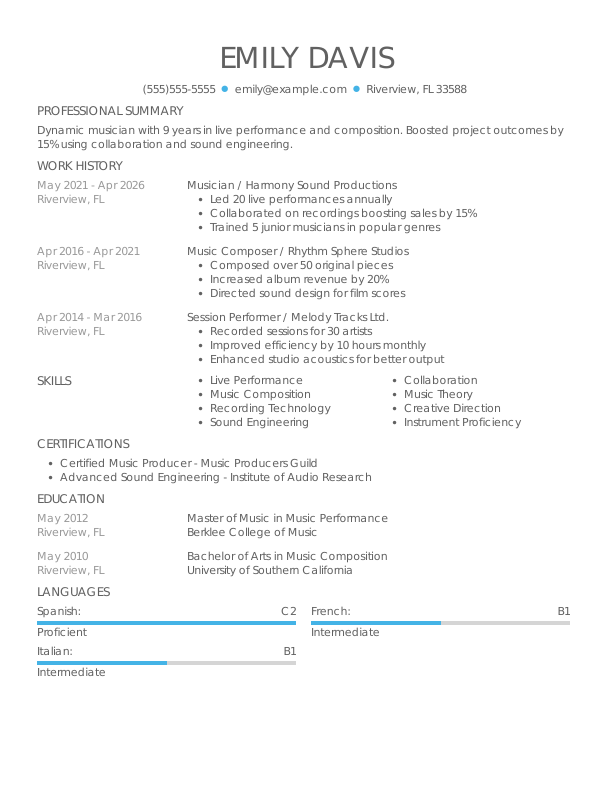
Musician Mid-Level Resume
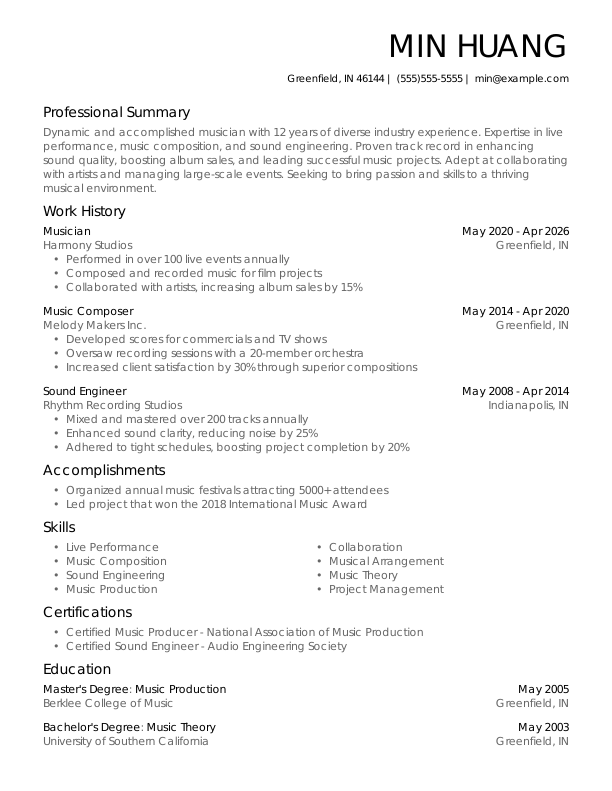
Musician Experienced Resume
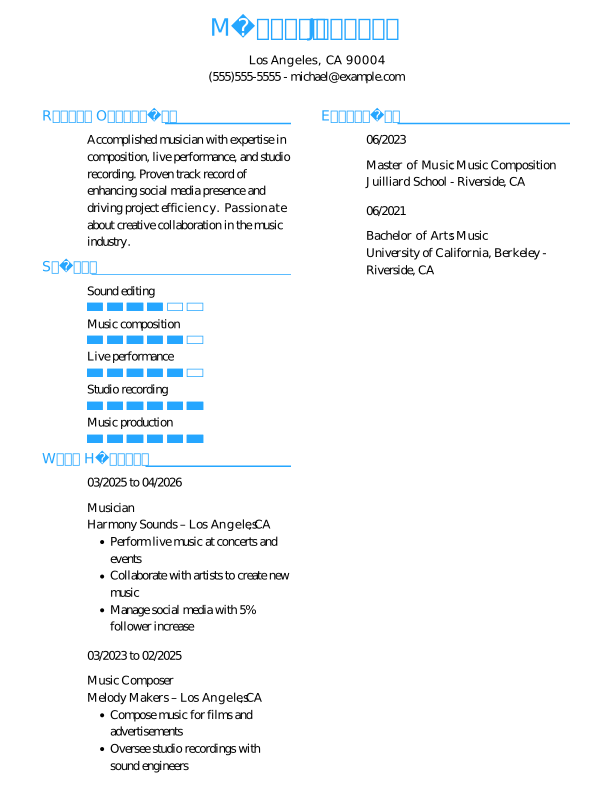
Musician Entry-Level Resume 1
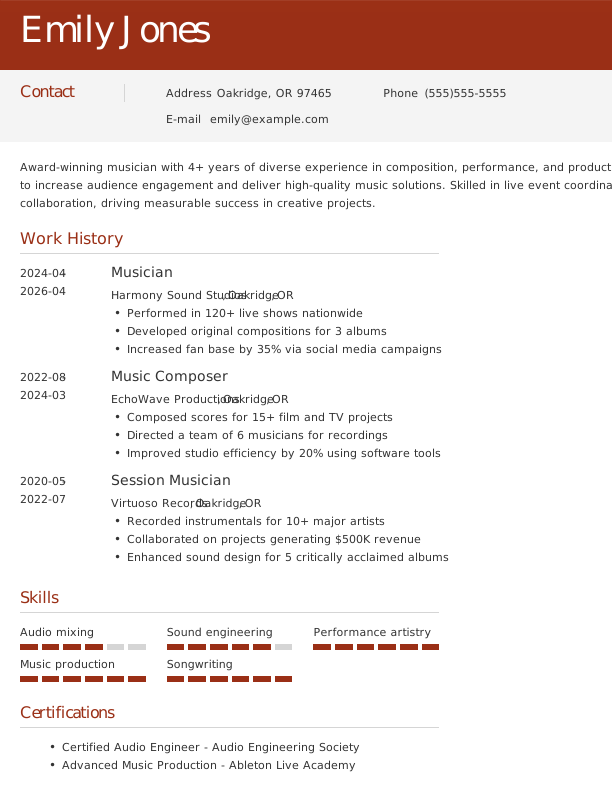

Musician Mid-Level Resume 1
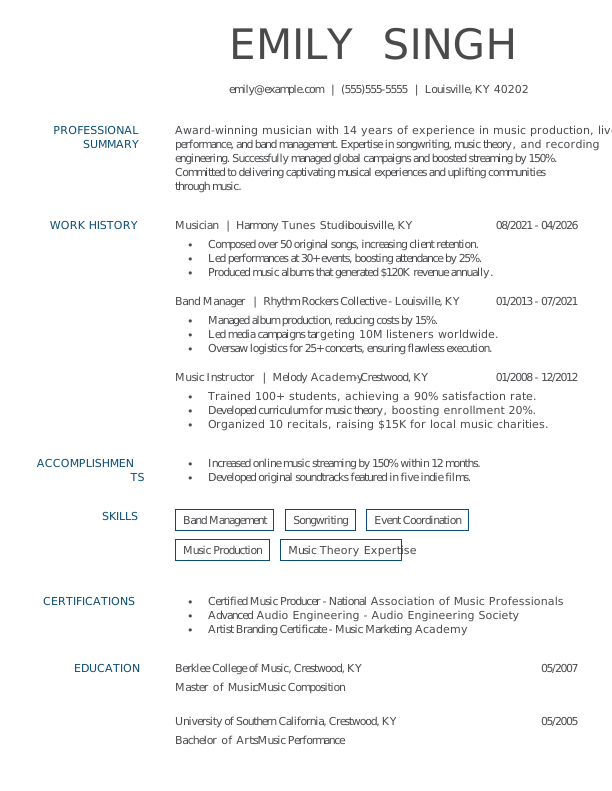
Musician Experienced Resume 1
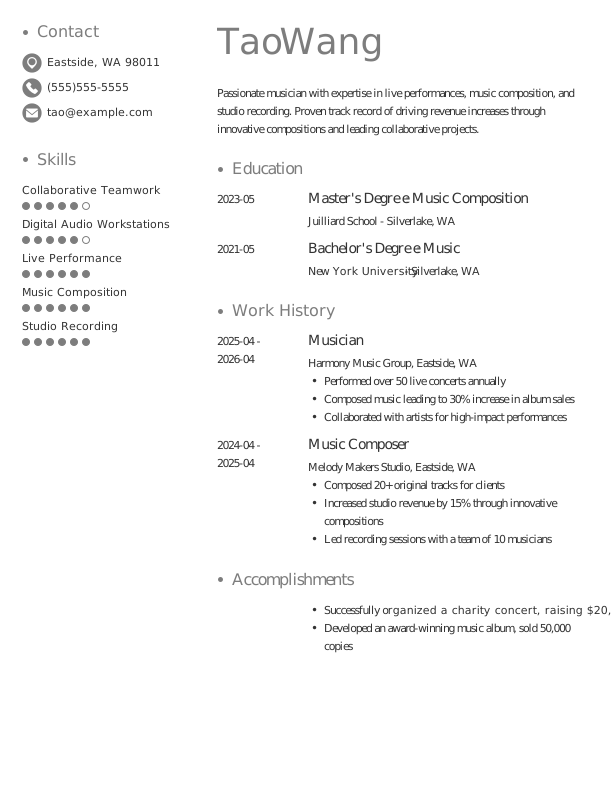
Musician Entry-Level Resume 2
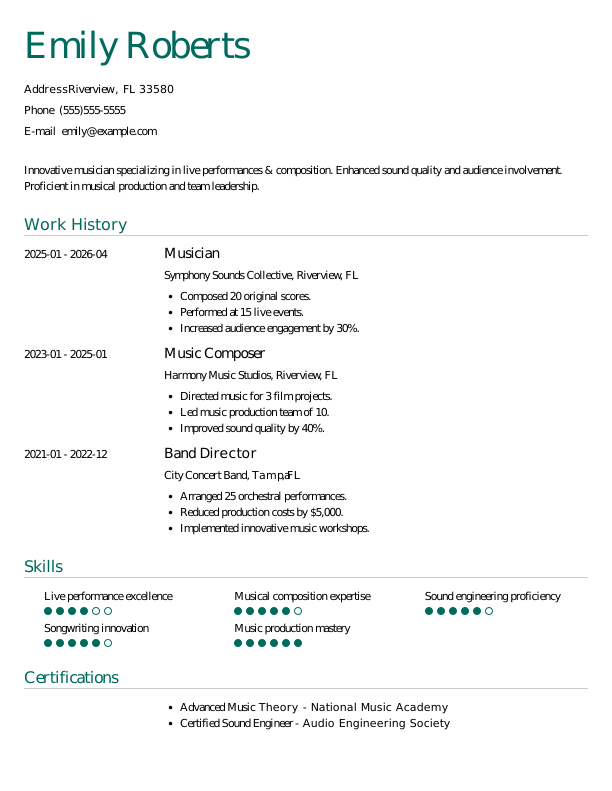

Musician Mid-Level Resume 2
Browse Free Resume Templates
- Accounts Payable
- Adjunct Professor
- Artist
- Auto Mechanic
- Baker
- Business Development Manager
- Business
- Certified Nursing Assistant
- Classic & Traditional
- Cleaner
- College Student
- Concierge
- Construction Worker
- Corporate
- Creative & Unique
- Custodian
- Customer Service
- Dental Assistant
- Direct Support Professional
- Entry-Level
- Flight Attendant
- Hospitality & Food Service
- Front Desk Receptionist
- Healthcare
- High School
- Housekeeping
- Hvac Technician
- Hybrid
- Inventory Manager
- Logistics
- Maintenance
- Management
- Modern
- Mortgage Loan Processor
- Pet Sitter
- Phlebotomist
- Production
- Rbt
- Sales
- Security Services
- Restaurant Server
- Simple & Basic
- Social Work
- Teacher
- Technology
Resume Examples for Musicians
Musician resumes should reflect your performance credits, training, and recording experience. Browse our templates, or put together a music industry resume from scratch.
Entry-Level Musician Resume
If you are building a music career with limited professional credits, this template helps you put together a musician resume with no experience by focusing on your training, recital performances, and studio work.

Mid-Career Musician Resume
An ideal choice for mid-level musicians aiming to elevate their careers, this template effectively showcases recent accomplishments and positions them for specialized opportunities in the music industry.

Experienced Musician Resume
Best for musicians with over a decade of experience, this template suits professionals pursuing leadership or advanced roles in the music industry.

Musician Resume Template (Text)
Below is a musician resume in plain text format. Paste it into your document and adjust it to reflect your performance credits, training, and recording experience.
Aya Nguyen
Portland, OR 97207
Professional Summary
Dynamic musician skilled in live performances, composition, and sound design, consistently increasing engagement by over 30%. Expert collaborator and innovative strategist in music production.
Work Experience
April 2025 – April 2026
Harmony Sounds Studio – Portland, OR
Musician
- Composed 20+ pieces yearly for albums
- Led band to increase concert attendance by 30%
- Managed collaboration with artists across US
January 2021 – March 2025
Melody Craft Productions – Portland, OR
Music Composer
- Created soundtracks for 15+ film projects
- Innovated techniques to boost quality 20%
- Collaborated with 10+ directors on projects
January 2018 – December 2020
Audio Wave Studios – Portland, OR
Sound Engineer
- Reduced noise by 40% in live recordings
- Optimized systems that cut costs by $10k
- Developed audio effects for 25+ music pieces
Education
May 2017
University of Southern California Los Angeles, CA
Master’s Music Composition
May 2014
Berklee College of Music Boston, MA
Bachelor’s Audio Engineering
Certifications
- Certified Music Producer – National Music Association
- Advanced Audio Engineering – Professional Audio Institute
- Digital Sound Design – Institute of Audio Technology
Skills
- Live Performance
- Music Composition
- Sound Design
- Audio Editing
- Collaboration
- Production Management
- Creative Strategy
- Audience Engagement
How to Write a Musician Resume
As a musician, understanding how to write a resume means showcasing your unique talents and experiences in a format that attracts potential employers. Use the guidance below to emphasize your strengths and tailor your resume for the specific opportunities you’re pursuing.
1. Contact Info
Your contact information should be prominently displayed at the top of your resume, ensuring clarity and professionalism.
Include the following essential information:
- Full name
- Phone number
- Professional email address
- City and state (ZIP code is optional)
- LinkedIn profile or personal portfolio (if relevant)
 PRO TIP
Avoid including unnecessary personal information such as your age, gender, or social media profiles unless employers specifically request them in the job application.
2. Resume Profile
A resume profile is a brief introductory section, typically two to four sentences long, designed to summarize your identity and key qualifications. Its primary function is to serve as a compelling pitch that captures the attention of hiring managers, prompting them to delve deeper into your resume.
This profile is prominently placed at the top of your resume and can take the form of either a summary or an objective. Each has its distinct purpose, guiding how you present yourself:
- A resume summary highlights essential skills, relevant experiences, and artistic accomplishments related to the music industry. This format benefits musicians with established careers or transferable talents aiming to highlight their artistic impact and contributions within their field.
- A resume objective highlights your future aspirations and outlines what you aim to accomplish in your career. This section is particularly beneficial for recent graduates, individuals transitioning to new fields, or those with limited experience in the industry, such as entry-level artists or performers.
Let’s explore the differences between a resume summary and a resume objective through the following examples:
Musician resume summary example:
Talented musician with over 6 years of experience performing in diverse venues, including festivals and intimate concerts. Proficient in songwriting, music production, and live sound engineering. Celebrated for engaging audiences through dynamic performances and creating memorable musical experiences that resonate deeply with listeners.
Musician resume objective example:
Recent graduate with a degree in music performance eager to launch a career in a collaborative music environment. Passionate about creative expression and looking to contribute strong teamwork skills and adaptability to a recording studio or live performance setting.
3. Work Experience
The work experience on your resume is an important foundation for showcasing your qualifications. Employers assess not only your job titles and responsibilities but also how you’ve contributed to previous roles and made a meaningful impact.
Your professional journey clearly illustrates how your background aligns with the skills and experiences sought for the musician position, making you an ideal job seeker.
The work experience section should contain:
- Job title
- Employer name and location
- Dates of employment (month/year)
- 3–5 bullet points highlighting your performance, songwriting, and live performance successes
Tailor your work experience bullet points to the musician role you seek by using language specific to the industry. Start each statement with a strong action verb, such as “Performed,” “Composed,” or “Collaborated.”
Incorporate quantifiable achievements where possible. By showcasing metrics—like audience sizes or sales figures—you can effectively illustrate your contributions and set yourself apart from other applicants.
In general, consider following the format of:
[action verb] + [responsibility] = [result/achievement]
For example:
Composed and performed over 50 original songs, resulting in a 40% increase in audience engagement at live shows across multiple venues.
Note that you can also flip the result/achievement with the responsibility:
Drove a 30% rise in music streaming numbers by leveraging social media marketing strategies and collaborations with local artists.
With these techniques in mind, your resume bullets may look something like:
- Performed at over 50 live events annually, improving audience engagement by 20% through interactive performances.
- Collaborated with a team of musicians to produce a successful album that achieved 100,000 streams in its first month.
- Mentored aspiring musicians, providing guidance and support that led to their first public performances.
- Used social media platforms to promote music releases, increasing follower count by 30% within three months.
- Arranged original compositions for a local community orchestra, improving overall performance quality and audience feedback.
4. Skills
The skills section offers a concise overview of your musical abilities, showcasing your unique talents as a musician. This ATS-friendly resume structure allows hiring managers to quickly assess your qualifications in the competitive music industry.
Skills can be categorized into three key areas:
- Soft skills are personal qualities that influence how musicians collaborate with others.
- Hard skills are specific, measurable abilities gained through education, training, or direct experience.
- Technical skills encompass the practical abilities required to use various instruments and technologies in a specific field.
5 Soft Skills for Your Resume or CV
- Team collaboration
- Creative expression
- Audience engagement
- Time management
- Adaptability to feedback
5 Hard Skills for Your Resume or CV
- Music composition and arrangement
- Digital audio workstation skill (Ableton, Logic Pro)
- Live sound engineering
- Music theory and notation
- Instrument skill (guitar, piano)
In general, include a mix of skills that closely match the responsibilities listed in the job description to showcase your capabilities.
PRO TIP
If you’re a newer musician, place your skills section near the top of your resume right after your summary. For those with more experience, it’s better to position this section further down, weaving your skills into the descriptions of your previous performances and projects.
5. Education
Understanding how to list education on your resume is essential for showcasing your qualifications clearly. Begin with your most recent or relevant degree, including the type of degree and the institution’s name.
For those who are recent graduates, consider adding your graduation year, GPA (if it’s 3.5 or higher), any honors received, or relevant coursework to further improve your profile.
Musician resume education section example:
Bachelor of Music in Performance
Berklee College of Music, Boston, MA
Graduated: 2023 | Cum Laude
PRO TIP
When listing multiple degrees on your resume, ensure they are presented in reverse-chronological order, starting with the most advanced degree first, such as Bachelor of Music (BM), followed by Associate of Arts in Music (AA).
6. Certifications
Certifications illustrate your skills and current knowledge in the music industry. While they may not always be included in a traditional resume, this section is important for many musicians. Employers often seek specific credentials for roles such as sound engineers or music instructors, making it essential to highlight these qualifications.
List certifications on your resume that bolster your application and align with your career goals. Remember to keep them updated and present them clearly for maximum impact.
Musician certification examples:
- Certified Music Professional (CMP) | Music Certification Board | Expires: 03/2028
- Pro Tools User Certification | Avid Technology | Expires: 11/2027
- Ableton Live Certified Trainer | Ableton | Expires: 02/2028
- Music Production Certificate | Berklee College of Music | Expires: 09/2027
Start Building Your Job-Winning Resume
Use Your Existing Resume
Import your current resume to transfer your information to one of our professional templates.
Create a New Resume
Start fresh with a template that catches your eye and follow the prompts to add your details.
Tailor Your Work History to Beat the ATS
Your work experience is not merely a collection of job titles. It serves as an opportunity to highlight the tangible contributions you’ve made within your field, showcasing specific achievements that resonate with hiring managers. This method not only improves your credibility but also creates a resume that applicant tracking systems (ATS) can easily scan.
To ensure your work history aligns with the position you’re pursuing, tailor it using relevant keywords from the job description. Begin by thoroughly reviewing the listing and pinpointing frequently mentioned skills or qualifications. Reflect these aspects in your experience descriptions to demonstrate your suitability for the role effectively.
Key Takeaways
- Tailor your resume to the job description. Use language that resonates with the hiring team to connect with both applicant tracking systems and human readers.
- Highlight quantifiable achievements to showcase your impact. Specify metrics (e.g., audience size, streaming numbers, sold-out shows) that illustrate your success.
- Select a resume format suitable for your experience level. New musicians may find a functional or hybrid layout beneficial, while seasoned performers often prefer a reverse-chronological approach.
More Resume & CV Examples
- Acting For Beginners
- Acting
- Actor
- Art Director
- Band Director
- Choreographer
- Concept Artist
- Dance
- Fashion
- Playwright
- Singer
- Theater
- Two-column
- Wedding Photographer
Cover Letters for Your Resume
Browse our library of cover letter examples to complete your application. A resume will have a better chance of getting noticed.
Frequently Asked Questions
Last Update:
What resume format should I use for my musician resume?
There are three main resume formats to consider when applying for a musician role. The format you select should reflect your experience level and highlight the aspects of your career that you want to draw attention to:
- Chronological: The chronological resume is the most widely used format, emphasizing your work experience along with your key responsibilities and accomplishments. This structure is especially beneficial for job seekers who possess a consistent job history, reinforcing their qualifications and adding credibility to their applications.
- Functional: The functional resume, often referred to as a skills-based resume, emphasizes your qualifications and features an expanded skills section. This format shifts focus away from work history, making it ideal for individuals who may lack direct experience in their field or have gaps in their employment.
- Combination: The combination resume format merges the chronological and functional styles, showcasing both skills and work history. This approach benefits professionals by allowing them to emphasize their competencies while also illustrating their career advancement over time, appealing to employers looking for well-rounded job seekers.
Should I include a cover letter with my resume?
Yes, you should include a cover letter with your application for a musician position. A well-crafted cover letter improves your resume by allowing you to express your passion for music and share experiences that showcase your talent and dedication, which might not be evident from your resume alone. It reflects your commitment to the role and helps you stand out in a competitive field where personal connection is key.
If you’re unsure how to write a cover letter, don’t let that stop you from including one. Numerous resources are available to assist you, such as guides on writing cover letters and examples tailored specifically for musicians. You can also explore different formats to find one that best fits your style and experience level while ensuring clarity and professionalism.
To make the writing process easier, consider using a cover letter generator, which can provide helpful prompts and templates tailored for music-related applications.
How long should a musician resume be?
Musicians with less than 10 years of experience should aim for a one-page resume that highlights relevant performances, education, and skills. Focus on showcasing your musical style, notable collaborations, and any awards or recognition to create a powerful summary of your qualifications.
For those in senior or specialized roles, a two-page resume may be appropriate if it remains focused and relevant. Include details about major projects, leadership roles in ensembles, and advanced training while ensuring each entry adds value to your overall narrative without unnecessary filler content.
What keywords should I include to pass applicant tracking systems (ATS)?
To maximize your chances of getting noticed by ATS, it’s important to incorporate keywords and phrases directly from the job posting in your resume. Focus on specific terms such as “live performance,” “music production,” or “collaboration” that are relevant to the musician role you’re pursuing.
Additionally, highlight any relevant certifications like Music Theory or Audio Engineering, as well as software tools you’re familiar with, such as Pro Tools or Ableton Live. This will demonstrate that you possess both the artistic and technical skills required for the position, increasing your likelihood of landing an interview.
Should I include volunteer performances or informal gigs on my resume?
Yes, especially if you’re early in your music career. Showcasing volunteer performances highlights your passion and ability to engage audiences, making you more appealing to potential employers who value real-world experience.

Elizabeth Muenzen is a Certified Professional Resume Writer (CPRW) and member of the Professional Association of Resume Writers & Career Coaches who empowers job seekers to take control of their career paths using Monster’s comprehensive job search and resume tools.
See More From Elizabeth MuenzenExplore Related Career Advice


How to Put Transferable Skills on Your Resume: 120 Skills, Examples, & Tips

Updated:
Aug 27, 2026
|
16 min read


How to Write a Functional Resume (Formatting Tips, Template, & Examples)
Updated:
Aug 7, 2026
|
17 min read


Functional vs Chronological Resume: Which Format Is Right for You?
Updated:
Aug 3, 2026
|
16 min read

100+ Resume Adjectives to Help You Write a Stronger Resume in 2026 (With Examples)
Updated:
Jul 30, 2026
|
12 min read